

Paper is the most persistent clutter in any home.
It arrives daily. It multiplies silently. It spreads from the counter to the desk to the kitchen table to every surface it can reach. You deal with it by moving it from one pile to another — and it never actually goes anywhere.
The paper pile on the desk isn’t a personality flaw. It’s a systems failure.
When paper has nowhere specific to go — it goes everywhere. When every piece of incoming paper has a specific, immediate destination — it stops piling up. The desk stays clear. The important documents get found. The bills get paid on time. The school permission slips get signed.
That’s what a paper organization system does. It gives every piece of paper a home — and a fate.
These 17 ideas give you the complete system — from the initial audit to the weekly habit that keeps paper from accumulating indefinitely.
Save this. The paper clutter ends here.
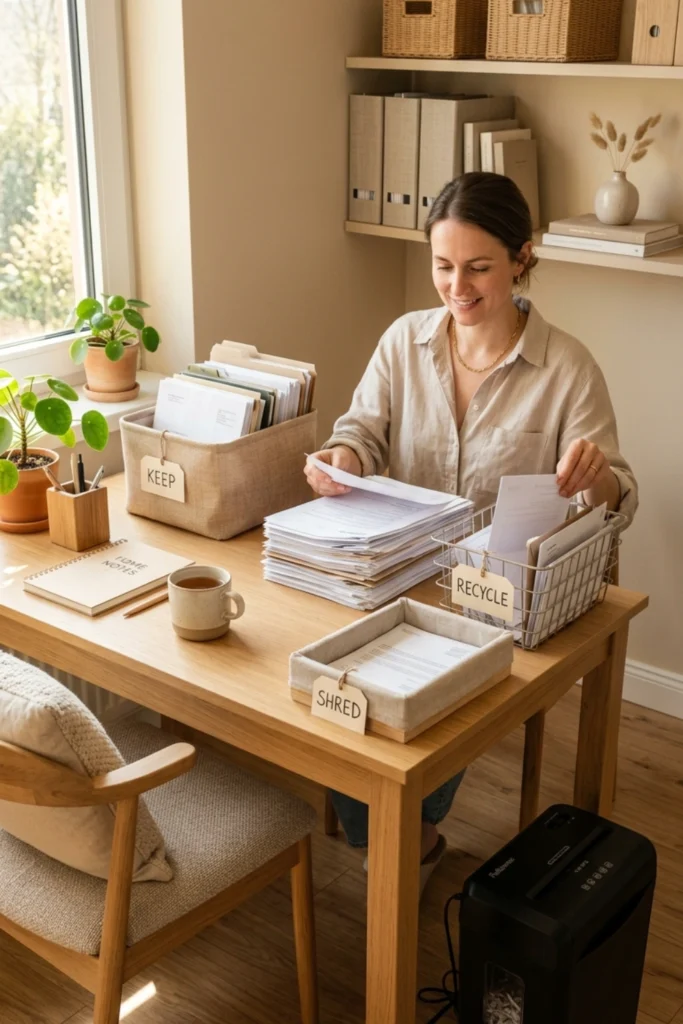
1. The Paper Audit — Start Here
Before filing, sorting, or purchasing a single organizer — audit.
Gather every piece of paper in the home. Every pile on every desk, counter, and table. Every drawer stuffed with paper. Every folder with unfiled contents. Every surface hiding paper underneath something else.
Shred sensitive documents. Recycle the rest.
What remains is the actual paper that needs a system.
The paper audit is the most cathartic home organization project you will ever complete.
2. The Four-Box Paper Sort System
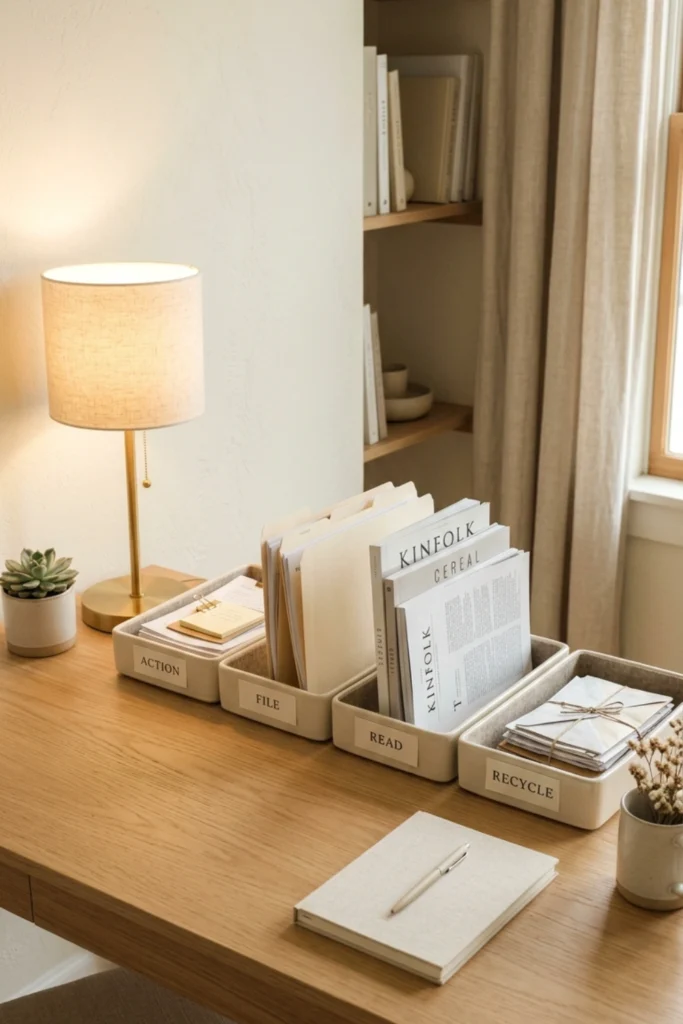
Every piece of paper that enters the home belongs to one of four categories.
Understanding these categories makes every subsequent paper organization decision automatic.
The four paper categories:
- Action — requires something to be done (bill to pay, form to complete, appointment to make)
- File — important document that needs to be kept and stored
- Read — magazine, newsletter, article to read when time allows
- Recycle — junk mail, expired coupons, outdated information, anything not needed
When every incoming piece of paper is immediately sorted into one of these four categories — it never becomes a pile. It goes directly to its destination.
Every piece of paper is either action, file, read, or recycle. There is no fifth category called pile.
3. A Dedicated Inbox Tray
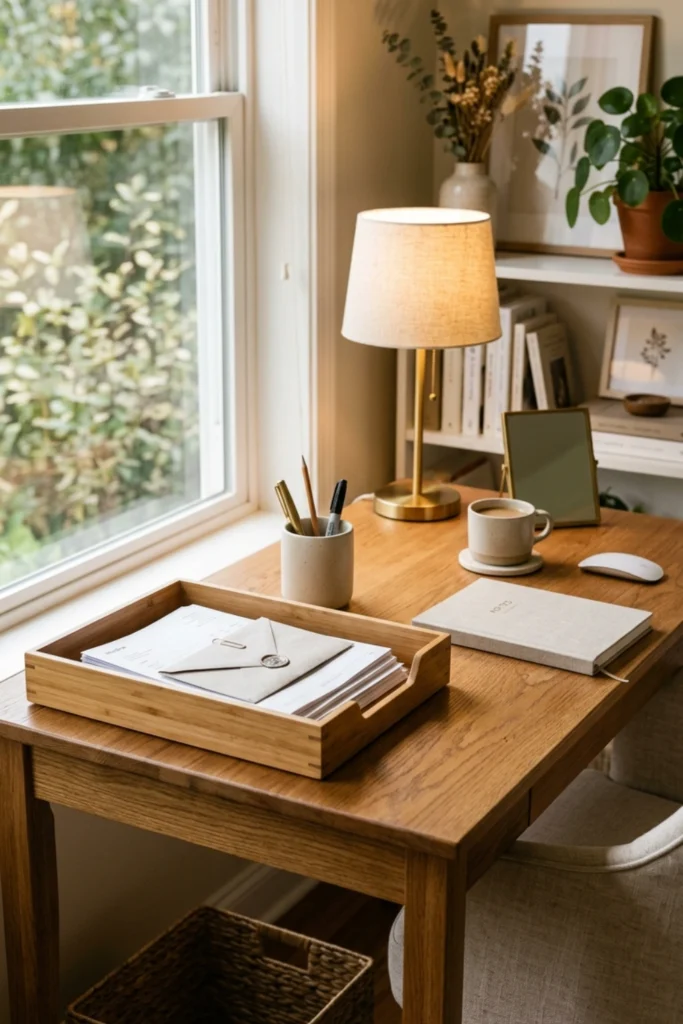
The inbox tray is the most important single piece of paper organization — and the one that prevents pile formation before it starts.
One tray. One location. All incoming paper lands here first.
Mail from the door. School papers from the backpack. Receipts from the wallet. Anything paper that enters the home — lands in the inbox tray before it touches any other surface.
The inbox tray is a temporary holding station — not a filing system. Its contents get processed into the four-box system weekly.
When paper has one designated landing zone — it stops landing everywhere else.
One inbox tray prevents the paper from ever becoming a pile. Also Read: Home Organization Ideas
4. The Action File System
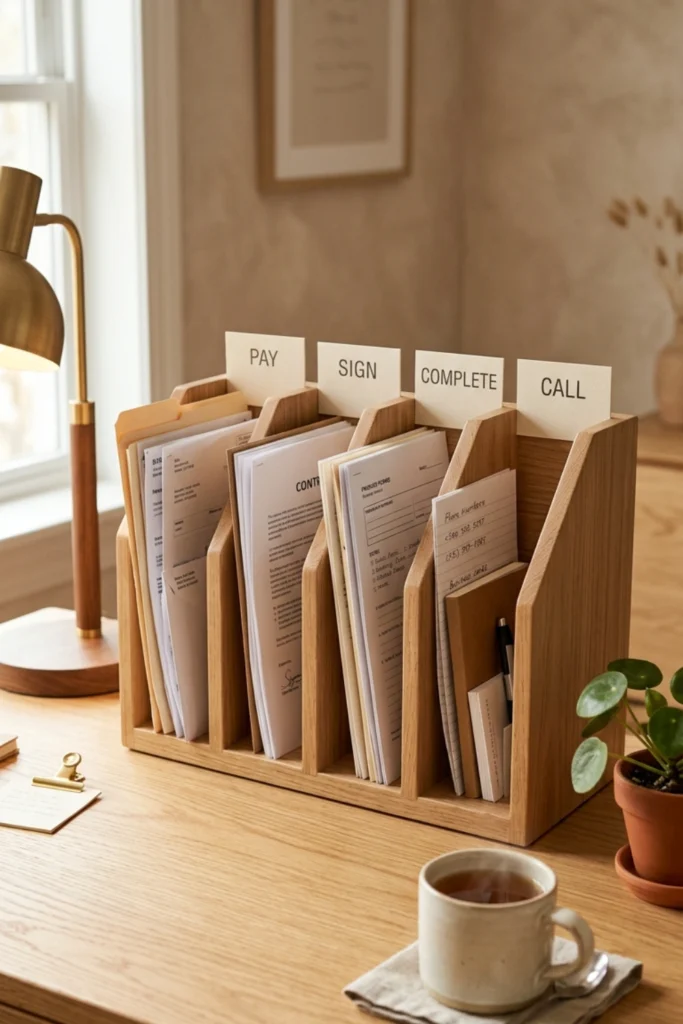
The action file is where paper goes when it requires something to be done — and where it stays until that thing is done.
Without a dedicated action file — action items get buried in piles and missed. With one — nothing requiring action ever gets lost.
The action file is processed on a fixed day every week. Bills day. Admin day. Whatever works for the household — the day is consistent.
The action file means nothing requiring attention ever gets forgotten or buried.
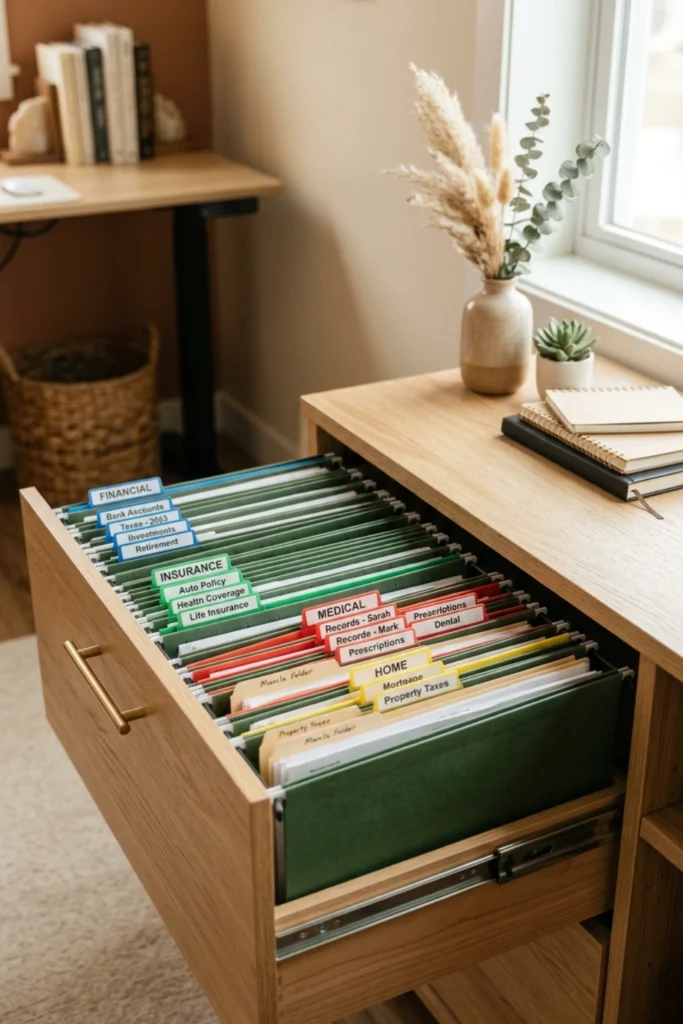
5. The Home Filing System
Paper that needs to be kept permanently — tax documents, insurance policies, medical records, warranty cards — needs a proper filing system.
Not a pile. Not a box. A system with categories, labels, and a consistent location.
Label every folder. File immediately after action is complete.
A home filing system means any document can be found in under sixty seconds. More Inspiration: Home Command Center Ideas
6. The Binder Organization Method
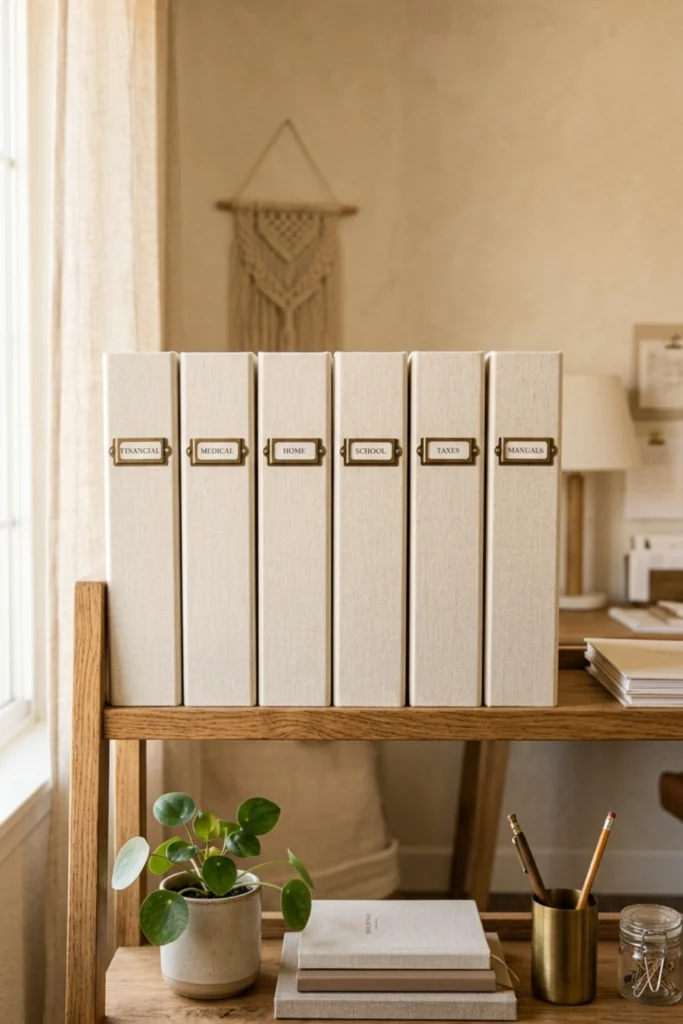
For households that prefer binders over filing cabinets — the binder system offers an equally effective and more visually organized approach.
One binder per category. Spine labeled. Contents divided by tab.
The binder setup:
- A sturdy 2-inch or 3-inch binder
- Labeled spine insert — visible on the shelf
- Tab dividers — one per subcategory
- Sheet protectors — for documents that can’t be hole-punched
Store on a dedicated shelf — spines facing out, all labeled consistently.
A row of labeled binders on a shelf is one of the most satisfying home organization sights. Keep Reading: Junk Drawer Organization Ideas
7. A Beautiful Desktop File Stand
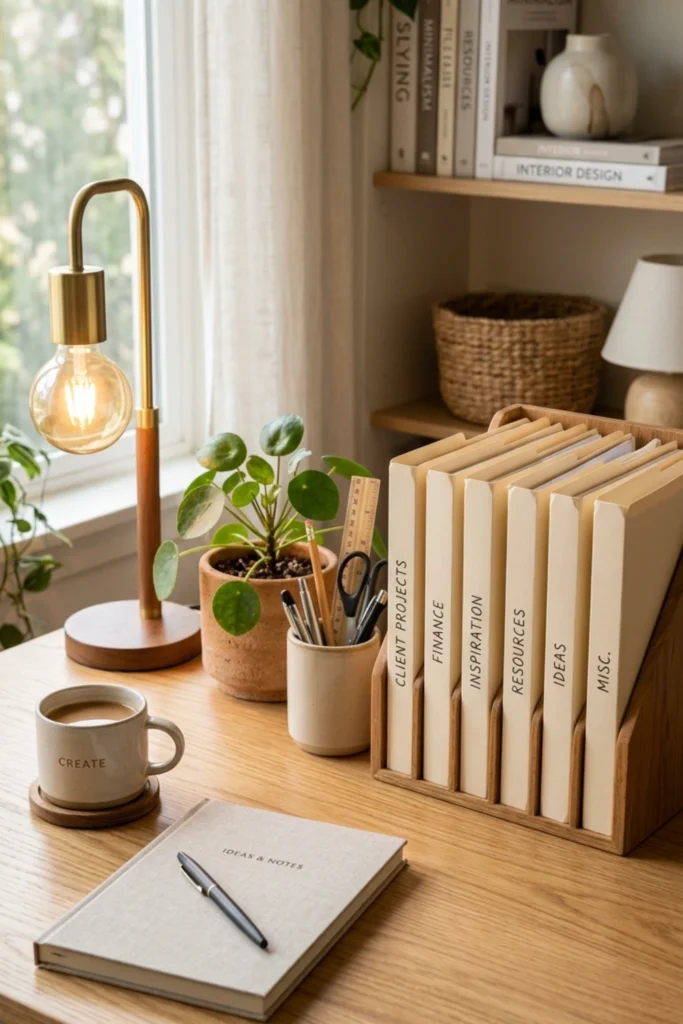
The desk file stand is where active, current projects live — papers that are being worked on, not filed away.
A beautiful file stand — in warm wood, brass-accented acrylic, or woven rattan — keeps current papers upright, visible, and accessible without covering the desk surface.
Choose a file stand that holds five to seven folders maximum. More than that — and current becomes historic.
Everything in the file stand should be actively in use. Completed projects get filed immediately.
A beautiful file stand keeps current work visible without creating surface clutter.
8. The Vertical File Organizer
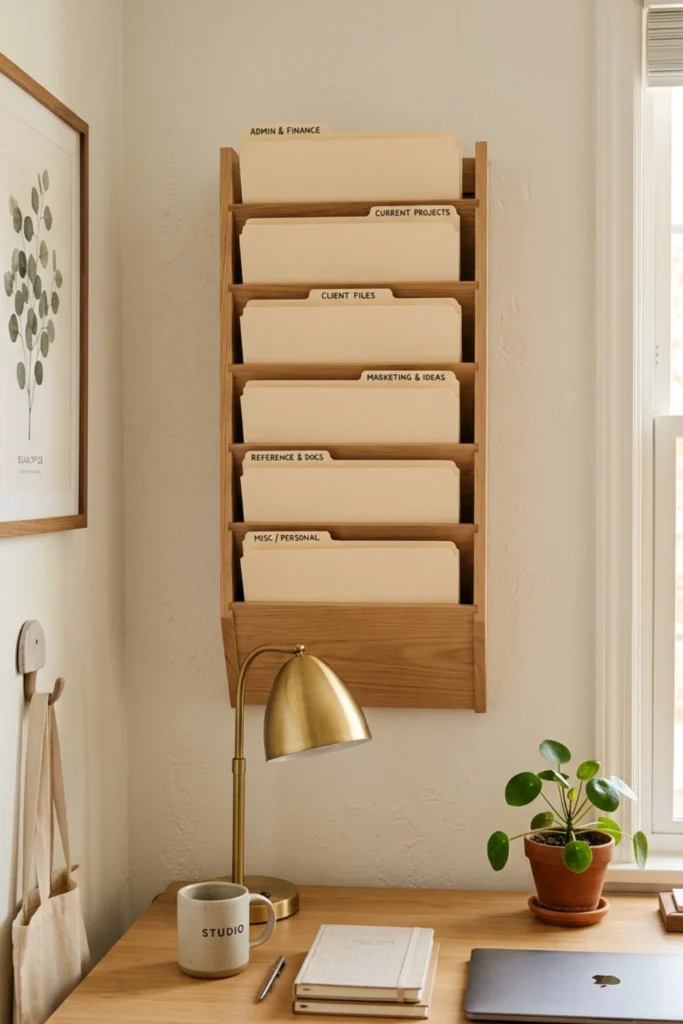
Horizontal paper piles are the enemy. Vertical filing is the solution.
A vertical file organizer — standing upright on the desk or mounted on the wall — holds files and folders in a way that makes every label readable without moving anything.
Choose a vertical organizer with enough slots for current active files only. The rule: when a slot fills up — that category gets filed or purged before anything new goes in. You May Also Like: Minimalist Home Organization Ideas
9. Going Paperless — The Digital System
The most effective paper organization system reduces the amount of physical paper requiring organization.
Going paperless — strategically and deliberately — eliminates entire categories of paper from the home.
The digital organization system:
- Google Drive or Dropbox — folder structure mirroring the physical filing system
- Scanner app — scan important documents, shred originals where safe
- Password manager — all account information in one secure location
- Cloud backup — nothing stored on a single device only
The goal is not to eliminate all paper — some documents require physical originals. The goal is to eliminate every piece of paper that doesn’t.
Every piece of paper you don’t have is a piece of paper you don’t need to organize.
10. The Mail Processing Station
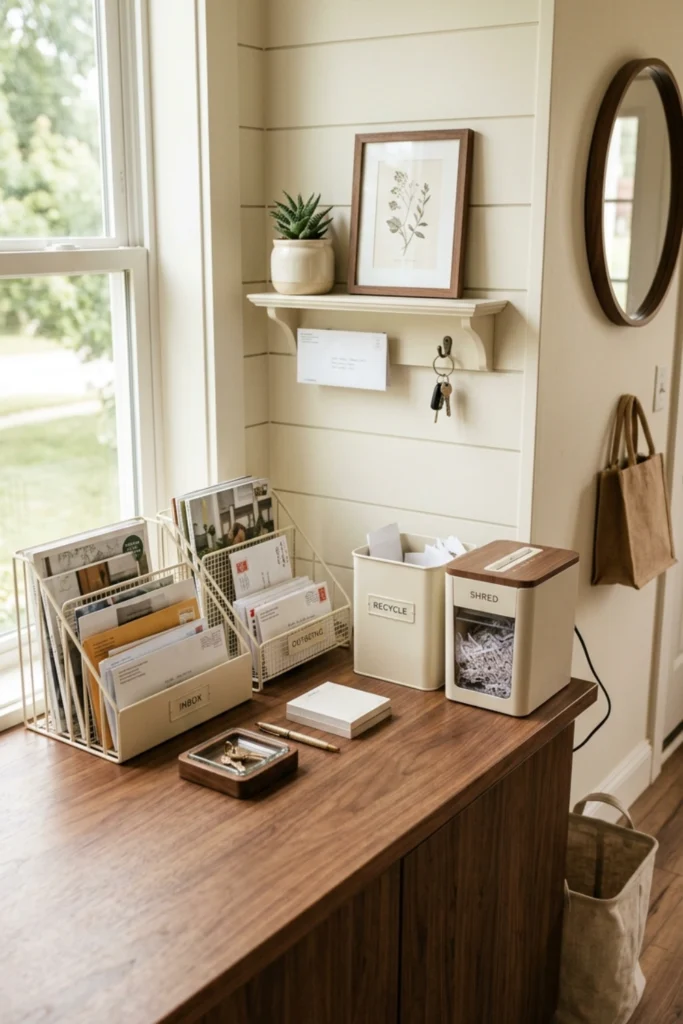
Mail is the primary source of paper clutter in most homes — because it arrives daily and most households have no system for processing it.
The mail processing rule:
Every piece of mail is handled once — at the station, at the door — and goes directly to its destination.
Junk mail: recycle immediately.
Bill: action file.
Statement: file or digital.
Catalogue: read then recycle.
Personal mail: opened, enjoyed, recycled or kept.
Nothing touches a counter or desk surface on the way to its destination.
Mail processed at the door never becomes a pile. Explore Next: Closet Organization Ideas
11. Receipt and Financial Paper System
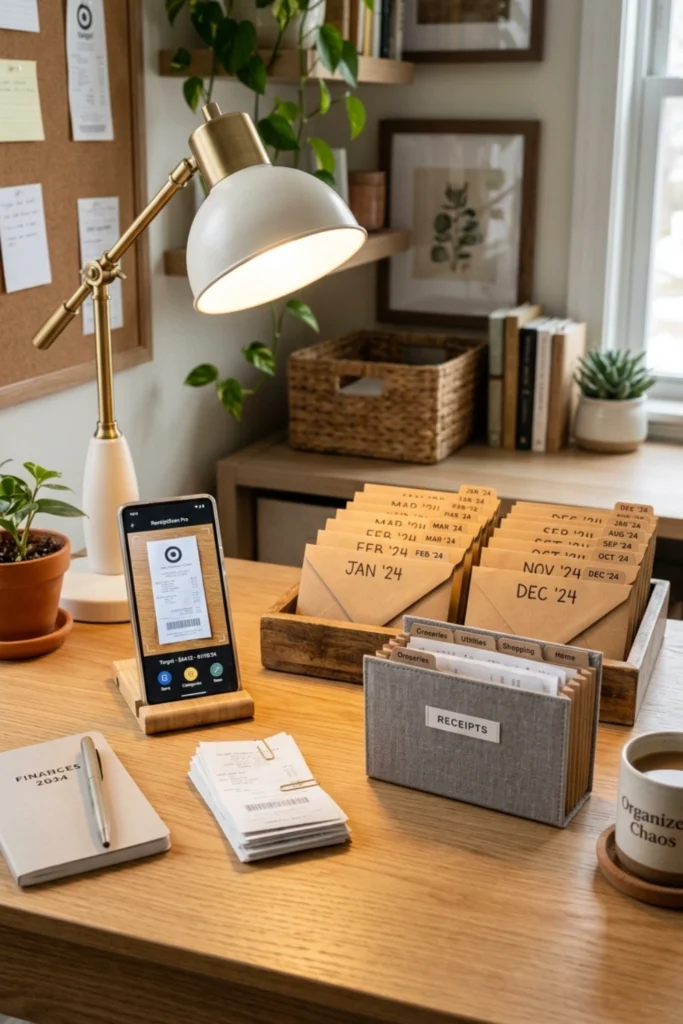
Receipts are the smallest, most proliferating category of paper in any home — and the one most likely to end up in pockets, bags, and kitchen drawers.
For business or freelance receipts:
- A receipt scanning app — photograph and file immediately
- Expense categories predefined — makes tax time simple
- Cloud backup — receipts accessible anywhere
The receipt system works when it has one consistent home and one consistent processing habit.
12. The Important Documents Binder
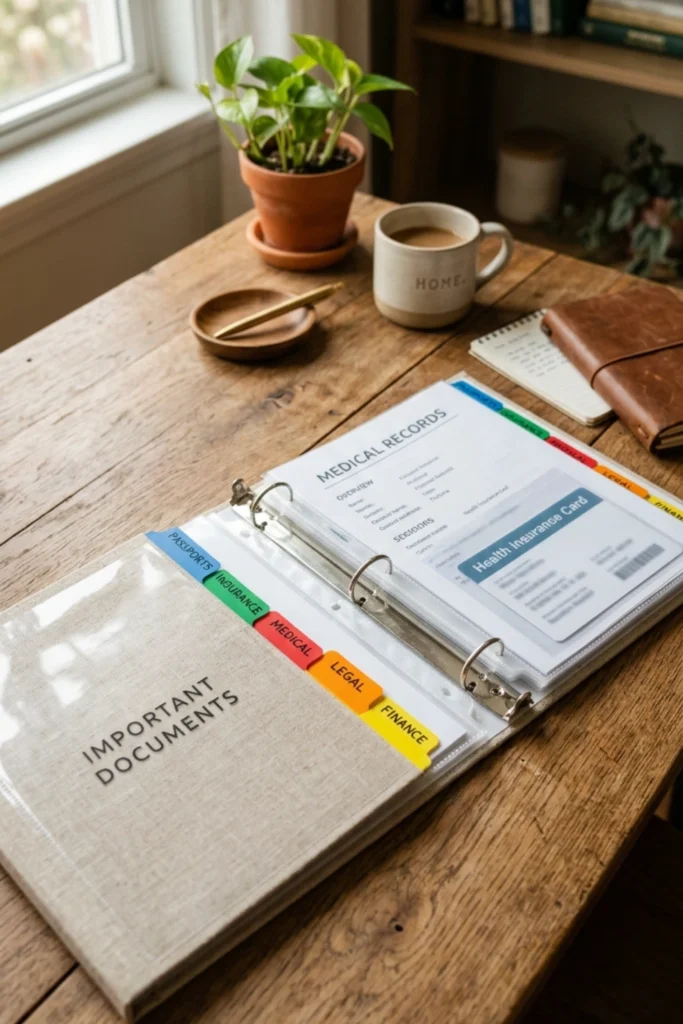
Every household needs one binder that holds the most critical documents — accessible in an emergency, organized for immediate retrieval.
This binder lives in a known, consistent location. Every adult in the household knows where it is. It is updated annually.
The originals of the most sensitive documents — birth certificates, passports, wills — live in a fireproof safe or bank safety deposit box.
The important documents binder is the organizational project that matters most in an emergency.
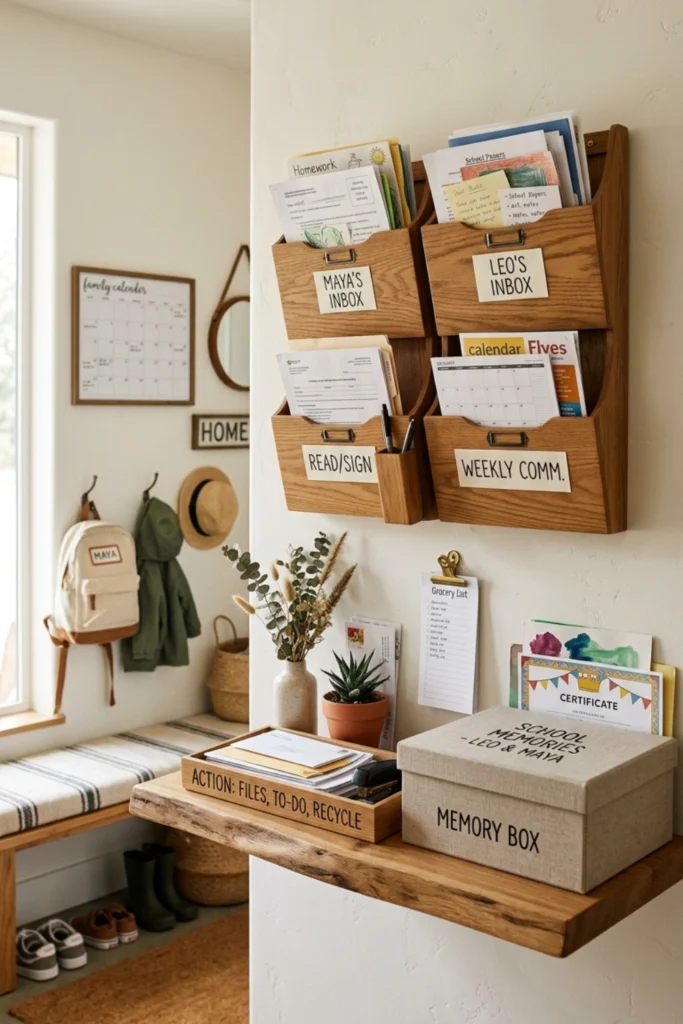
13. The School Paper System for Families
School papers are the most relentless category of household paper — arriving daily, requiring action, needing filing, and generating guilt when handled poorly.
The school paper rule:
Process school papers daily — not weekly. Papers that sit in a backpack for five days become crises.
The permission slip missed. The book fair money forgotten. The school photo order form.
Daily processing takes three minutes. Missed papers cost significantly more.
School papers processed daily never become the permission slip crisis.
14. Label Everything Consistently
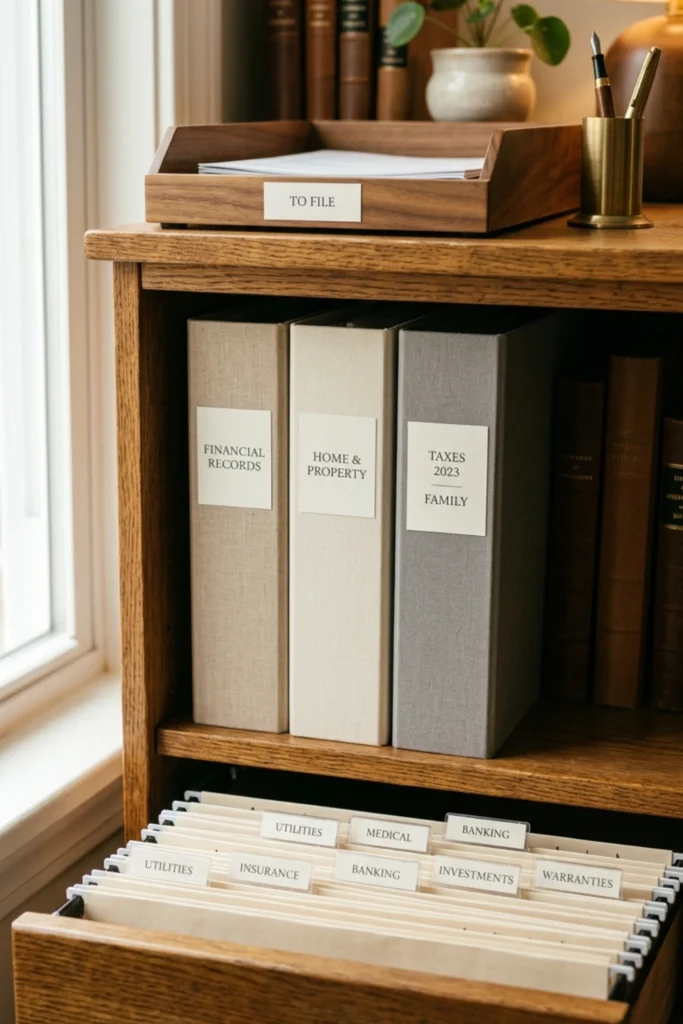
An unlabeled filing system becomes an unnavigable one within months.
Labels are the infrastructure that makes paper organization sustainable — by everyone in the household, without explanation.
The label hierarchy:
- Binder spine — category name in large font
- Tab divider — subcategory in medium font
- File folder label — specific document in standard font
The label system creates a navigation structure. Anyone in the household — or you, six months from now — can find any document without help.
A labeled filing system is a filing system anyone can use.
15. The Magazine and Publication System
Magazines, catalogues, and publications are the paper category most households manage worst — and the one that takes over surfaces fastest.
What lives in the publication basket:
- Current issues only — one per subscription
- Catalogues — current season only, previous season immediately recycled
- Reference publications — maximum five at any time
The basket capacity is the rule. Not a feeling about whether something might be useful.
One basket. Current issues only. When it overflows — something leaves.

16. The Fireproof Safe — Non-Negotiable
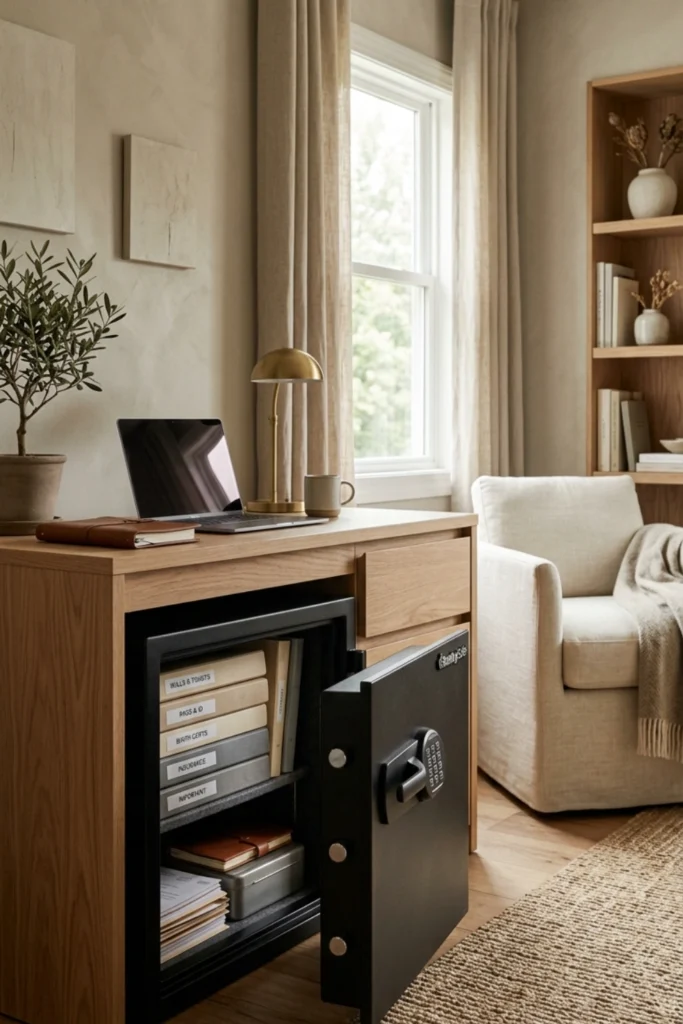
Paper organization isn’t complete without one piece of infrastructure that protects the most important documents from loss.
A fireproof safe — or fireproof document bag — for the original copies of critical documents.
The fireproof safe is not a filing cabinet. It holds originals of irreplaceable documents only. Copies of these documents live in the important documents binder — accessible daily. Originals are in the safe — accessed rarely.
The fireproof safe is the one home organization purchase that protects everything else.
17. The Weekly Paper Processing Habit
The filing system is built. The categories are defined. The labels are consistent.
Now — the single habit that keeps it all functioning.
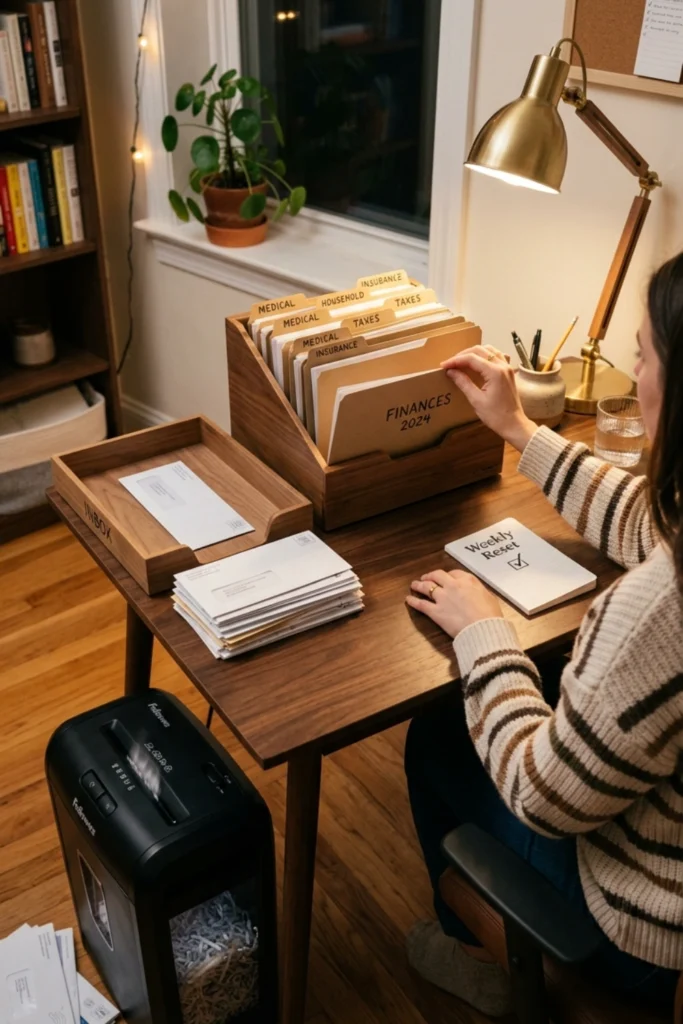
One hour. Once a week. Same day and time — Sunday evenings and Friday afternoons are most common.
One hour. Every week. Without exception.
The desk stays clear. The inbox stays manageable. The filing system stays current. The paper never becomes a pile again.
One hour a week is the complete maintenance system for a paper-free home.
Paper Has Met Its Match
The paper clutter in your home is not inevitable.
It’s the result of paper arriving without a system to receive it. When every piece of paper has an immediate destination — the pile never forms. The desk stays clear. The documents get found. The bills get paid.
That’s what these 17 ideas create.
Not a perfect system. A functional one. One that fits the reality of a household that receives mail, generates receipts, collects school papers, and accumulates documents.
A system that — with one hour of weekly maintenance — stays organized indefinitely.
Save this to your home organization board. Come back this weekend with a full paper audit and a shredder ready.
Which idea are you implementing first? Tell me in the comments.
