
19 Entryway Organization Ideas For A Clutter-Free First Impression
The entryway is the first thing you see when you come home.
After a long day — after traffic and meetings and everything the world asks of you — you open your front door and the entryway is what greets you. It either says welcome home or it says brace yourself.
It sets the emotional tone for everything that follows. A calm, organized entryway makes the rest of the home feel more manageable. A chaotic one — shoes everywhere, bags on the floor, mail stacked on every surface — creates a low-grade stress that follows you through the door and into the evening.
The good news: the entryway is one of the smallest rooms in most homes. Which means it’s also one of the fastest to transform.
These 19 entryway organization ideas give you everything — from the initial edit to the daily habit that keeps it beautiful indefinitely. Whether you have a dedicated entryway, a narrow hallway, or just a corner beside the front door — there is a system here that works for your space.
Save this. Your front door deserves a better welcome.
1. The Entryway Edit — Start Here
Before anything is purchased or installed — the entryway gets emptied.
Every shoe. Every bag. Every piece of mail. Every item on the console table. Every coat on the hook. Everything out.
Now look at what was living in your entryway.
Most entryways are carrying two to three times the items they should. The edit reveals how much of the chaos is unnecessary before a single organizer is introduced.
Start here. Every time.
A clutter-free entryway begins with deciding what actually belongs there — not with buying more storage.
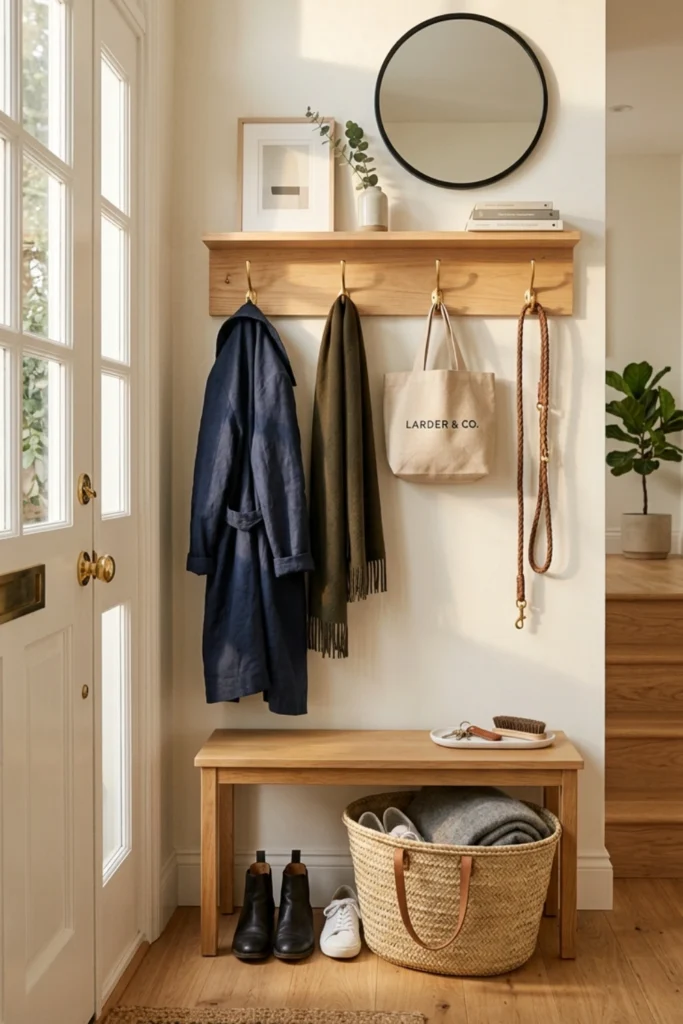
2. A Hook Rail That Does Everything
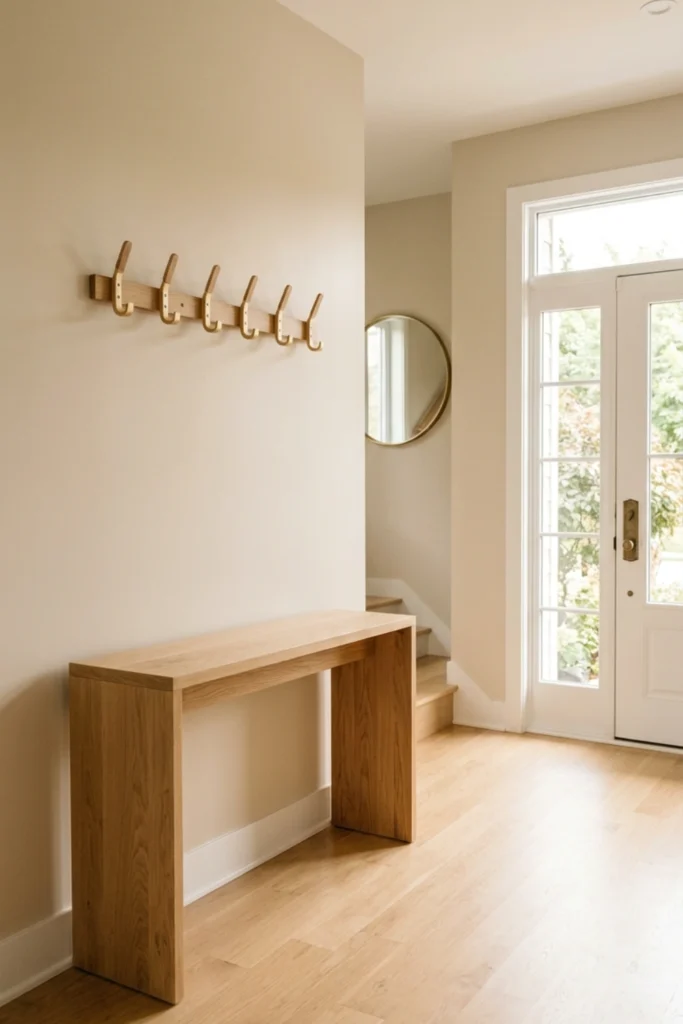
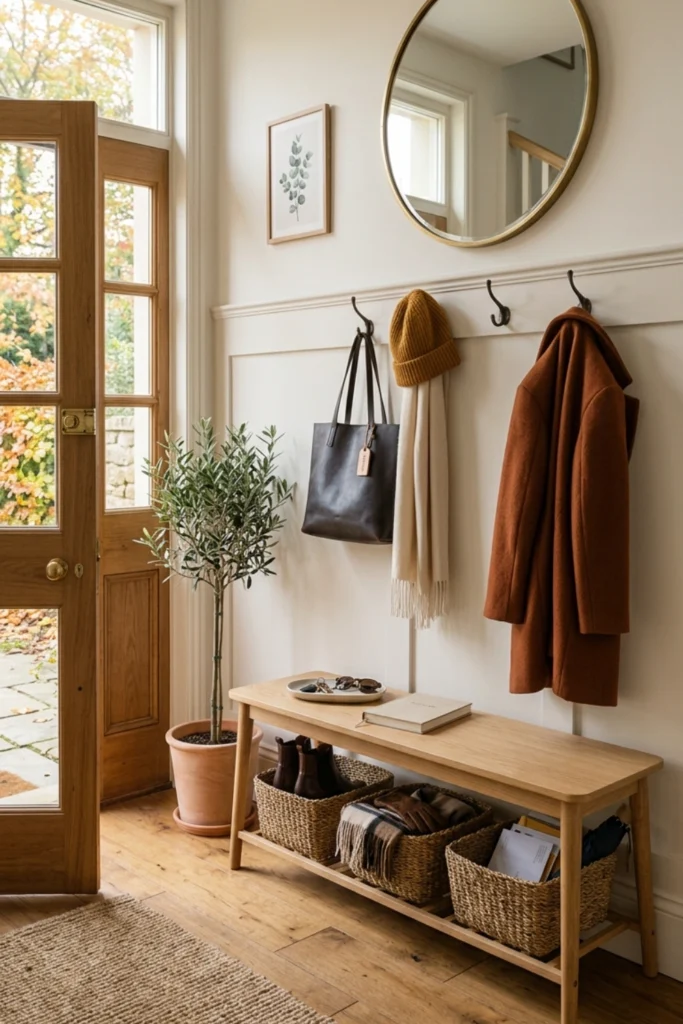
The hook rail is the most functional piece in any entryway — and the one most homes underinvest in.
A well-positioned, well-anchored hook rail handles coats, bags, scarves, dog leads, umbrellas, and reusable shopping bags. It keeps them all off the floor. It makes them instantly accessible when leaving. It makes the entryway look purposeful.
One hook per person. One rule: if it doesn’t hang on the hook, it doesn’t stay in the entryway.
The right hook rail makes arriving home feel like the easiest part of the day.
3. The Entryway Console Table System
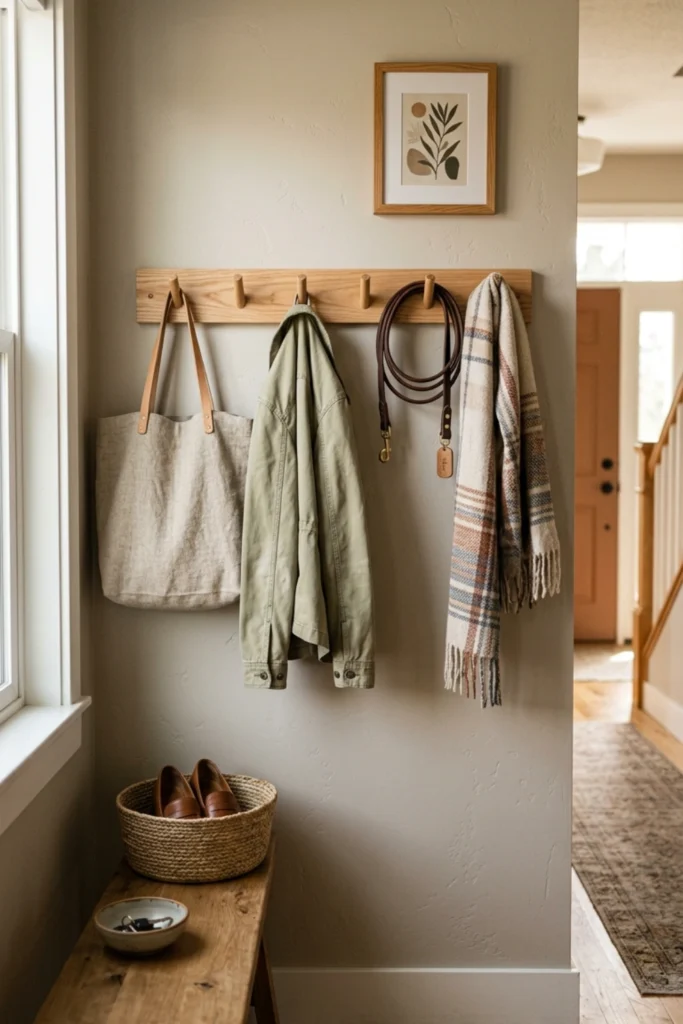
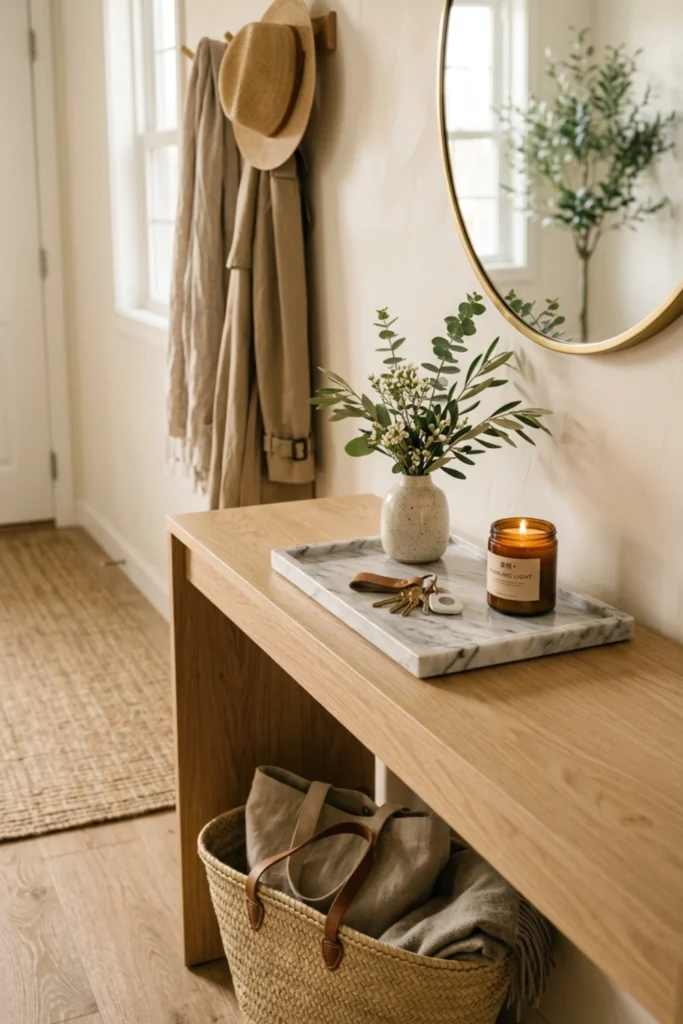
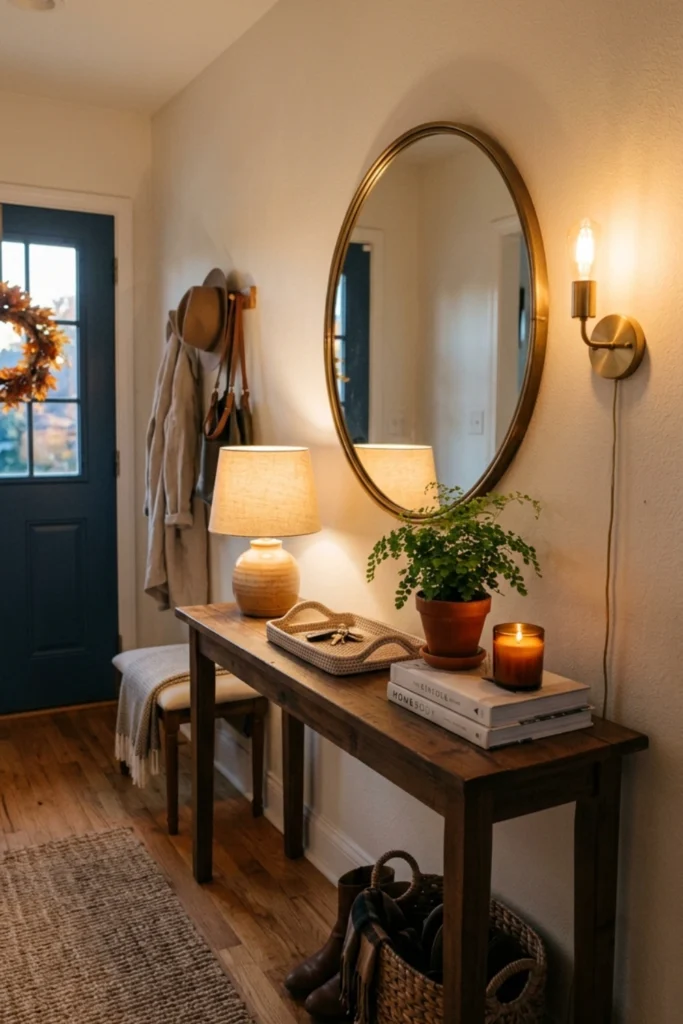
A console table in the entryway is the most versatile organizational surface in the home — when it’s used correctly.
The surface should hold almost nothing. One tray. One small plant or vase. One candle or decorative object.
The table does the heavy lifting underneath and behind. The surface stays clear enough to feel calm and welcoming rather than cluttered.
Choose warm wood tones — light oak, walnut, or rattan — for the most beautiful and welcoming result.
A clear console surface is the visual anchor of a calm entryway. Also Read: Home Organization Ideas
4. Shoe Storage That Doesn’t Look Like Shoe Storage
Shoes on the entryway floor are the fastest way to make any space feel chaotic.
The solution isn’t hiding shoes — it’s containing them beautifully.
Shoe storage options that look beautiful:
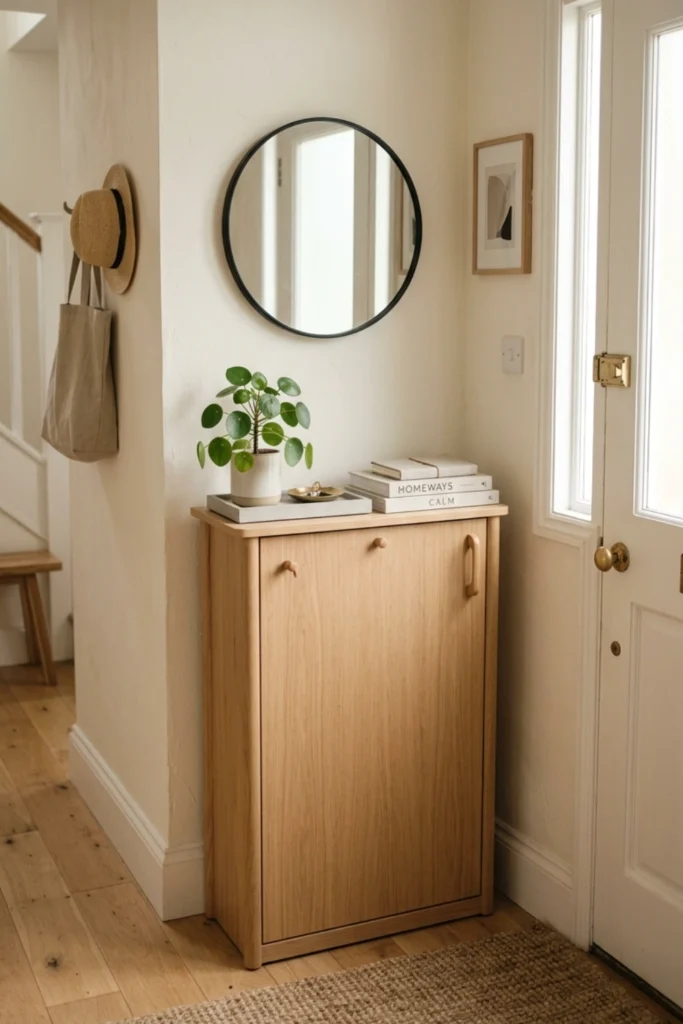
- A narrow shoe cabinet with a flat top that doubles as a surface — completely conceals all shoes
- A woven bench with interior storage — shoes go inside, you sit on top
- A low wooden shoe rack tucked against the wall — open but intentional
- One woven basket at the door — for the current pair only
- An over-door shoe organizer on the coat closet door — invisible when closed
The rule regardless of method: only current-season, actively-worn shoes live in the entryway. Everything else lives in the bedroom closet.
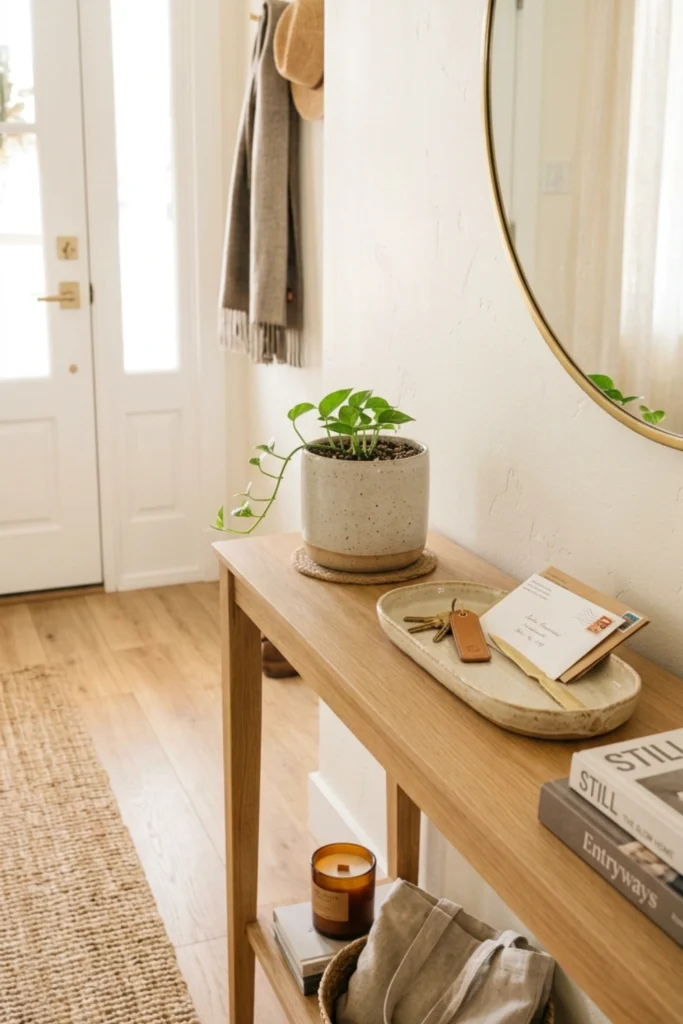
5. A Tray for Keys and Daily Essentials
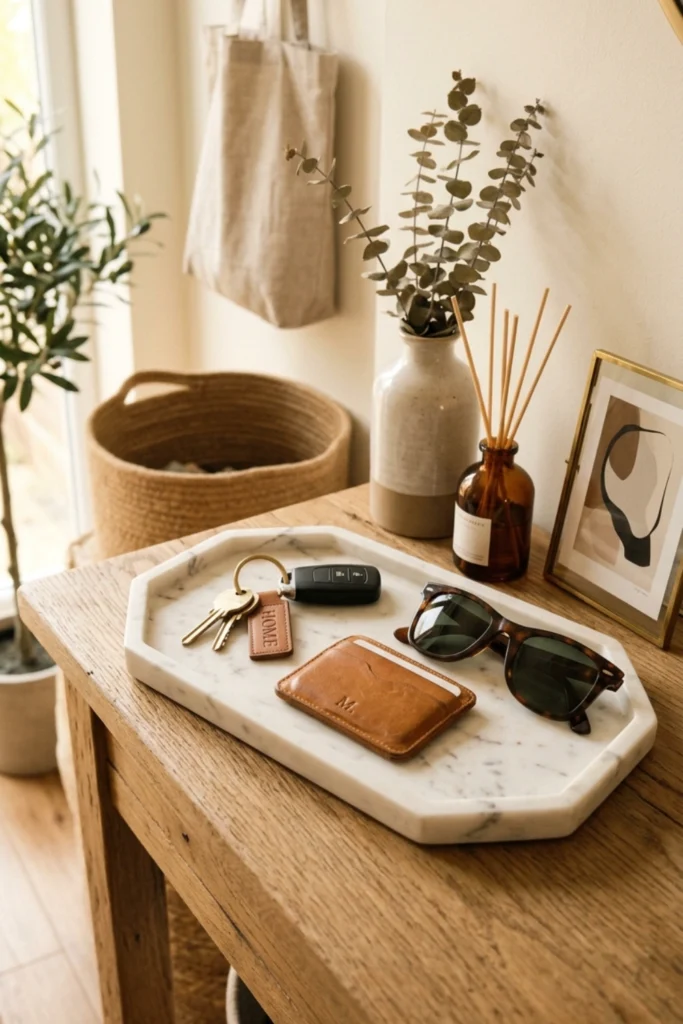
The key tray is the smallest detail in the entryway — and one of the most impactful.
A small marble, ceramic, or wooden tray placed consistently in the same spot on the console table or floating shelf creates a dedicated landing zone for the daily essentials. Keys go here. Wallet goes here. Sunglasses go here. Nothing else.
The tray creates a visual boundary — a container that makes a few small items look curated rather than dropped.
When the tray is empty, the entryway feels complete. When the tray is overflowing, it signals the weekly reset is needed.
A key tray costs almost nothing and prevents twenty minutes of searching every single morning.
6. Floating Shelves for Small Entryways
No room for a console table? The wall is the entryway.
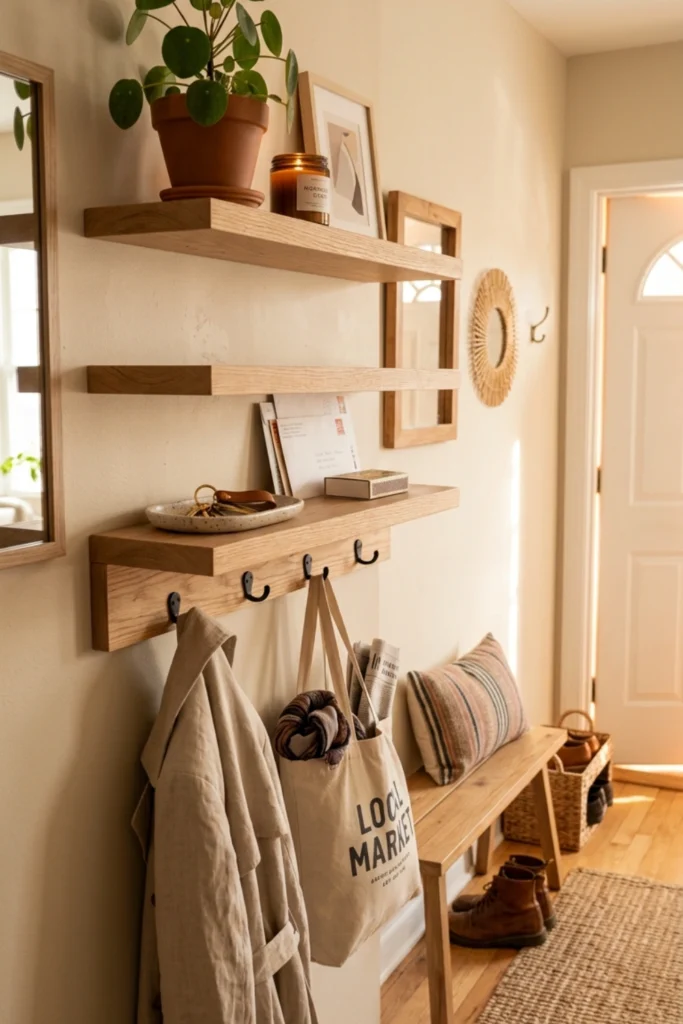
Two or three floating shelves mounted on the entryway wall create the storage and display surface of a console table without taking a single inch of floor space.
The floating shelf entryway system:
- Bottom shelf — hooks mounted underneath for coats and bags
- Middle shelf — tray for keys and daily essentials
- Upper shelf — small plant, candle, decorative object
The entire entryway system lives vertically. The floor stays completely clear. Small entryways feel dramatically larger when the floor is visible.
For renters — adhesive floating shelves hold surprising weight and remove cleanly. More Inspiration: Closet Organization Ideas
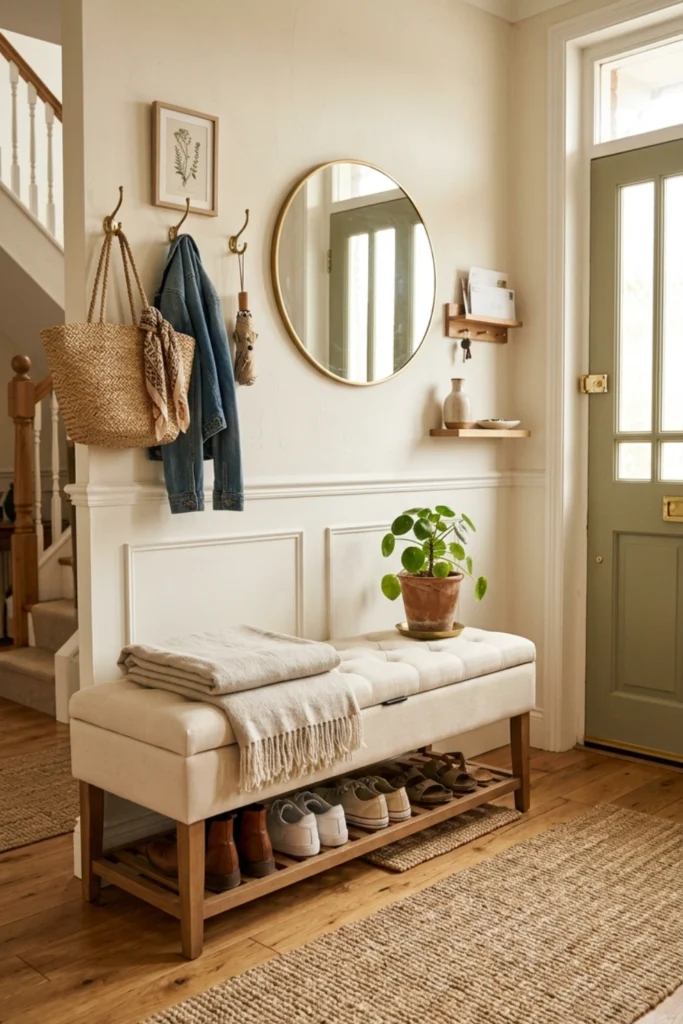
7. The Entryway Bench Moment
An entryway bench is the most hardworking piece of furniture you can add to any entry space.
It provides a place to sit while putting on or taking off shoes — which sounds small until you’ve lived without one. It provides a surface for bags while you’re getting organized to leave. And with the right design, it provides hidden storage inside.
Bench options by space:
- Upholstered storage bench — soft on top, storage compartment inside
- Wooden slatted bench with baskets below — open storage underneath
- Narrow bench with shoe cubby beneath — built for the task
- A simple wood stool — for the smallest entryways with limited depth
Style the bench with one folded throw or one small cushion. Keep it intentional.
An entryway bench turns a transitional space into one that feels genuinely designed.
8. A Mirror That Makes the Space Feel Bigger
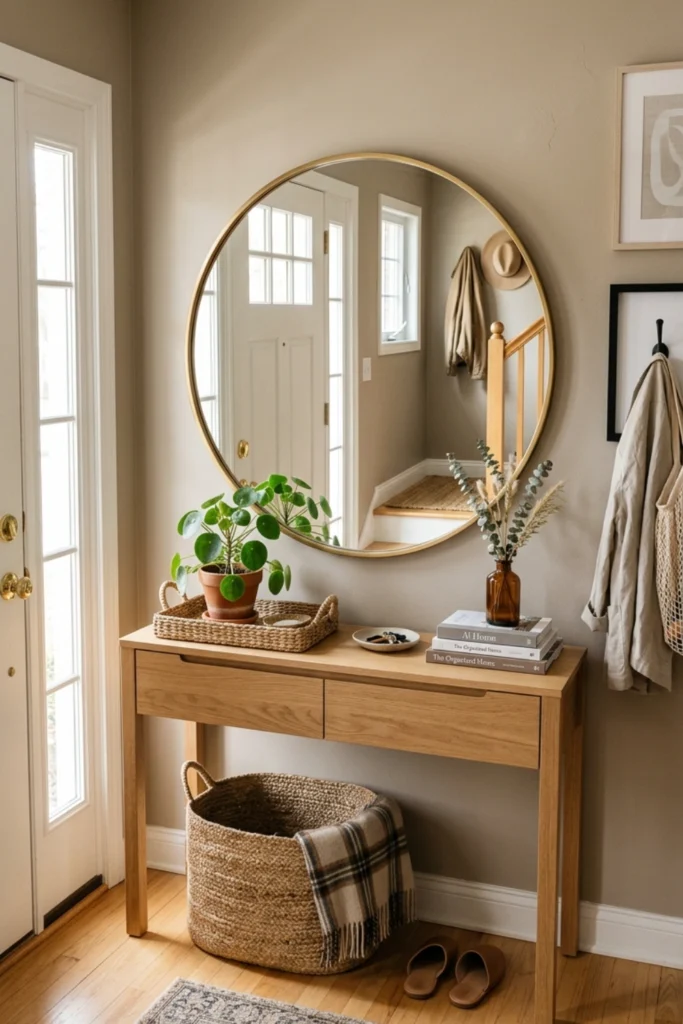
A mirror in the entryway serves three purposes simultaneously — and every organized entryway needs one.
It reflects light. It makes the space feel larger. And it provides the last check before you walk out the door — an irreplaceable function in any busy household.
Mirror placement and style:
- A large round mirror above the console table — classic and always beautiful
- A full-length leaning mirror against the wall — for the bigger entryway
- An arched mirror hung centered on the entry wall — architectural and beautiful
- A small wall mirror above the key tray — functional minimum
Choose warm frames — brass, natural wood, or antique gold — to keep the entryway feeling warm rather than cold.
9. Baskets for Everything Else
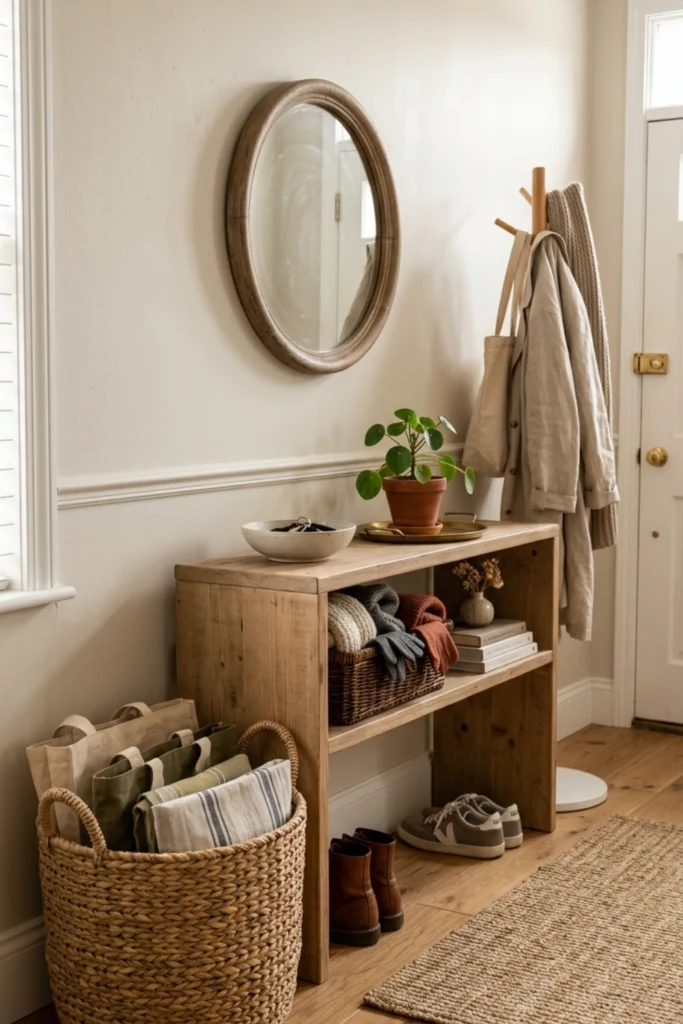
Every entryway generates daily overflow — the things that come in and need a temporary home before being dealt with.
A beautiful basket handles all of it without making the space feel cluttered.
Choose natural seagrass, woven rattan, or jute in neutral tones. The basket should look like a deliberate styling choice — not a solution to a problem.
A beautiful basket is the most versatile organizational tool in any entryway. Keep Reading: Home Command Center Ideas
10. The Mail System That Stops Pile-Ups
Mail is the silent destroyer of entryway organization.
It arrives daily. It accumulates fast. And without a system, it spreads across every surface within reach of the front door.
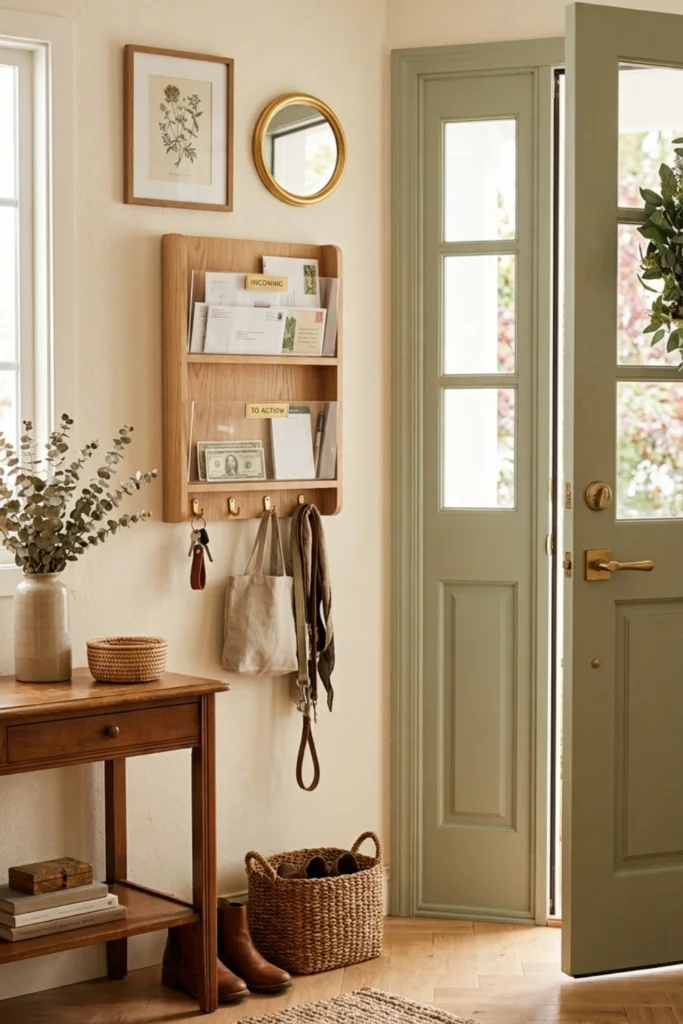
The entryway mail system:
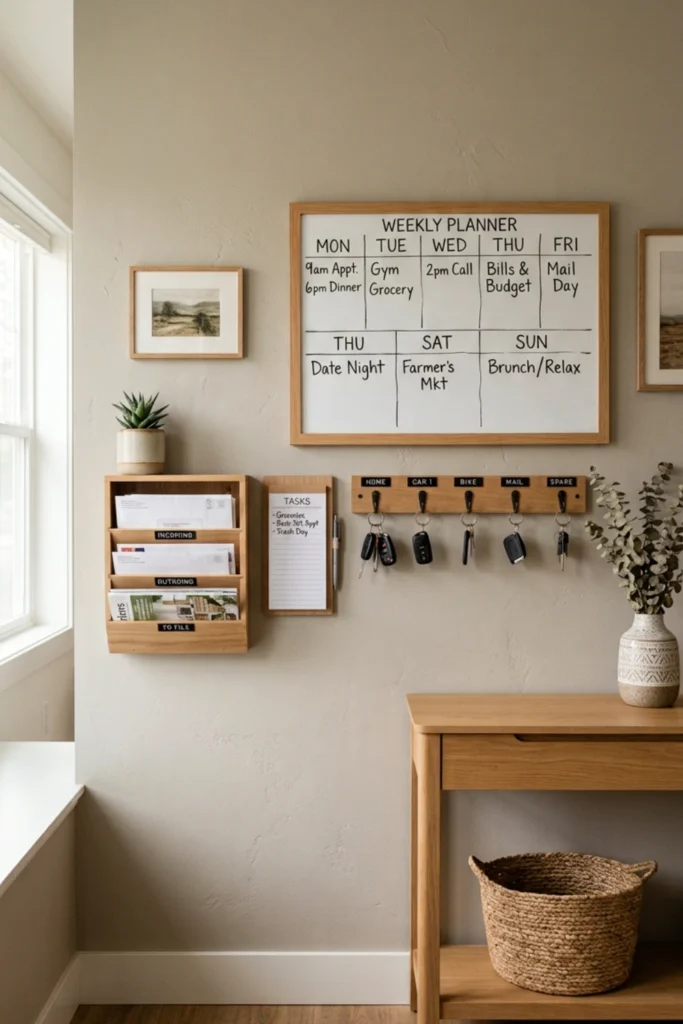
- A wall-mounted mail organizer — two slots: incoming and to-action
- The rule — mail is sorted at the door, immediately, every time it arrives
- Junk mail goes directly into a recycling bag kept nearby
- Bills and important mail go into the action slot — dealt with weekly
- Nothing sits on the console table
A slim wall-mounted mail organizer in warm wood, rattan, or white — positioned beside the door — intercepts the mail before it reaches any surface.
Sort mail at the door. Stop it reaching any surface. The entryway stays clear.
11. Lighting That Makes It Feel Welcoming
A dark entryway feels unwelcoming regardless of how organized it is.
The right lighting transforms the entry experience — from the moment you open the door, the space should feel warm, inviting, and calm.
Entryway lighting options: You May Also Like: Minimalist Home Organization Ideas
- A small table lamp on the console table — warm bulb, warm shade
- A plug-in wall sconce beside the mirror — warm directional light
- An overhead pendant in warm brass or rattan — architectural and beautiful
- Battery-operated puck lights under floating shelves — illuminate the tray and hooks
The entryway should glow warmly — especially in the morning when you’re leaving and in the evening when you’re returning.
Warm entryway lighting makes coming home feel like arriving somewhere beautiful.
12. A Small Plant or Botanical Detail
One living thing in the entryway changes the energy of the whole space.
Not a collection. Not a styled shelf of plants. Just one.
A small trailing pothos on the console table. A single eucalyptus stem in a ceramic vase on the floating shelf. A compact snake plant in the corner beside the bench. Dried pampas in a tall narrow vase beside the door.
The plant communicates that this space is cared for. That someone tends it. That arriving here means arriving somewhere alive and considered. You May Also Like: Minimalist Home Organization Ideas
13. Command Center Wall for Busy Households
For families with children, multiple schedules, or high daily information flow — a command center wall in the entryway changes everything.
The command center intercepts chaos at the door. Schedules are visible. Keys have a home. Important papers have a landing zone. The household runs more smoothly because the entry point is organized for how busy households actually function.
Mount on the wall beside or near the door. Keep it compact. Keep it functional.
14. Seasonal Swap System
An entryway organized for winter becomes overwhelming in summer if nothing changes.
A seasonal swap system keeps the entryway current — only what’s needed for the current season lives at the door.
Twice a year — swap the entryway. Thirty minutes per swap.
The entryway stays functional for daily life rather than holding six months of seasonal items simultaneously.
15. The Minimalist Entryway Approach
The most beautiful entryways on Pinterest are often the most minimal.
One hook. One tray. One plant. One mirror. Nothing else.
The minimalist entryway works because it removes the decision-making from what goes where. There is room for one coat per hook — that’s the limit. The tray holds three items — that’s the limit.
The constraints are the organization. The simplicity is the beauty.
A minimalist entryway is the calmest possible first impression. Explore Next: Garage Organization Ideas
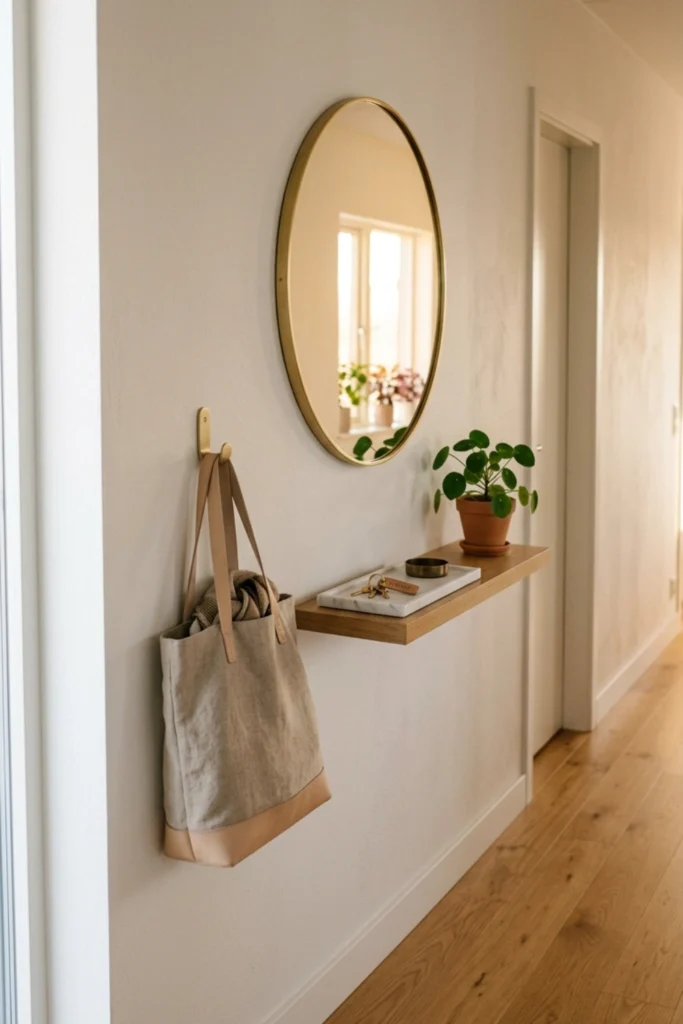
16. Renter-Friendly Entryway Solutions
No drilling. No damage. No lost deposit.
Renter-friendly entryway organization uses entirely adhesive, freestanding, and tension-based solutions that install without tools and remove without a trace.
The renter entryway can be just as beautiful and functional as any installed system.
Renters deserve a beautiful, organized entryway too.
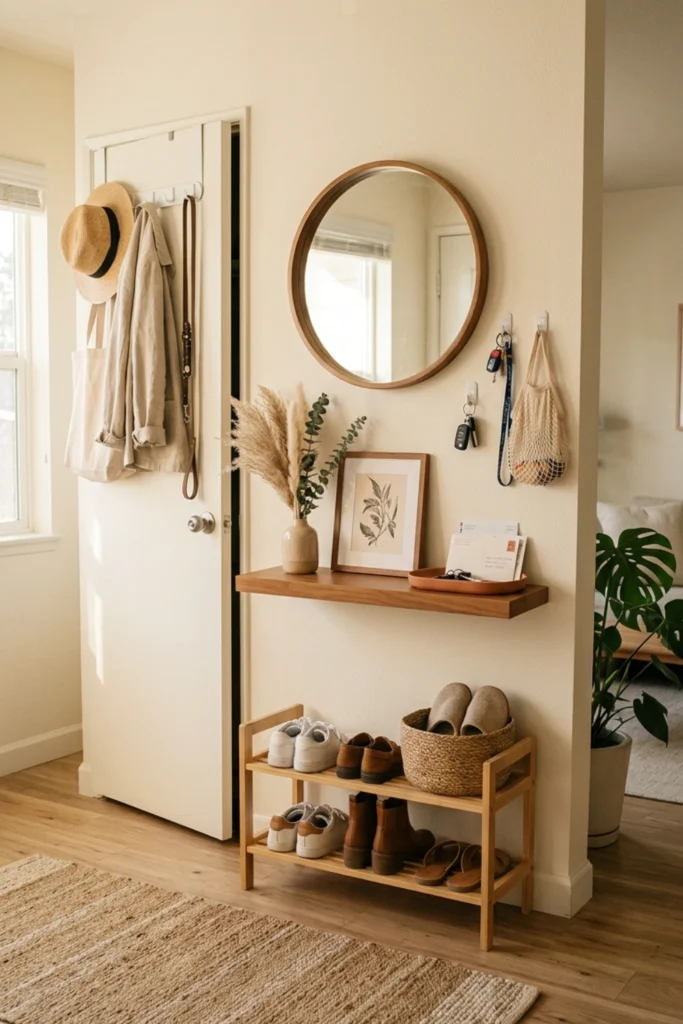
17. The Daily Reset Habit
The organized entryway requires exactly one habit to stay that way.
A daily two-minute reset — before bed or as part of the evening wind-down.
Two minutes. Every evening.
The entryway wakes up each morning calm, clear, and ready for the day. You leave through it without friction. You return through it without stress.
That two-minute habit is the entire maintenance system for every idea in this article.
Two minutes every evening keeps the entryway beautiful indefinitely.
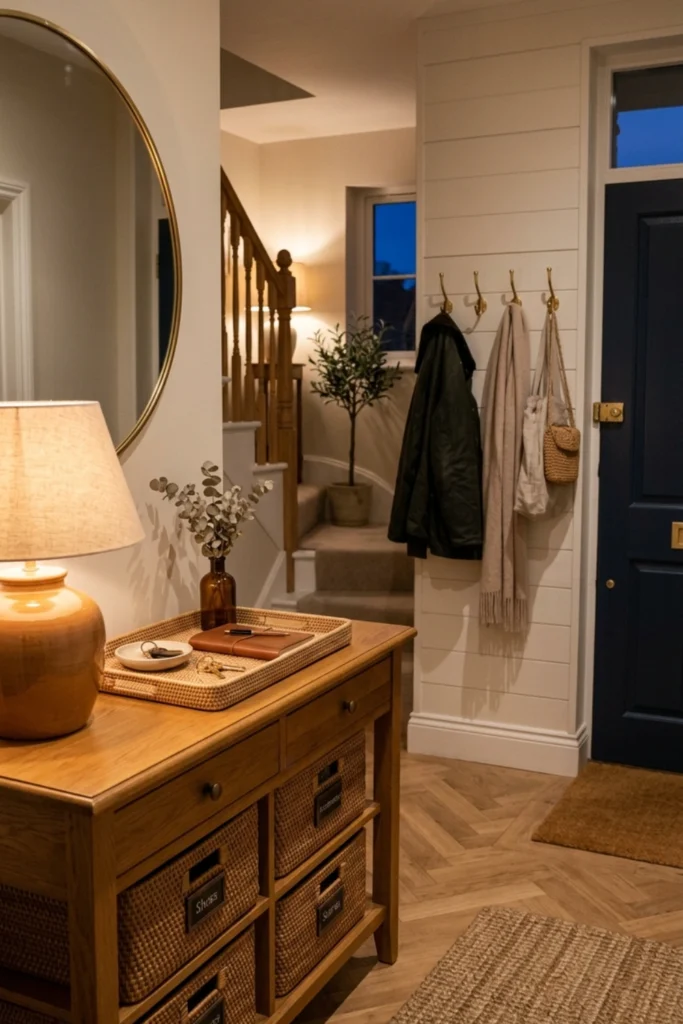
18. The Entryway Smell — The Detail Nobody Mentions
The entryway doesn’t just need to look organized. It needs to feel welcoming the moment the door opens.
Scent is the first sensory experience of arriving home — and it’s the most overlooked entryway detail.
A small reed diffuser on the console table in a warm, clean scent. A soy candle lit in the evenings. A lavender or eucalyptus bunch hung above the door.
The scent should say: you’re home now. Everything is okay.
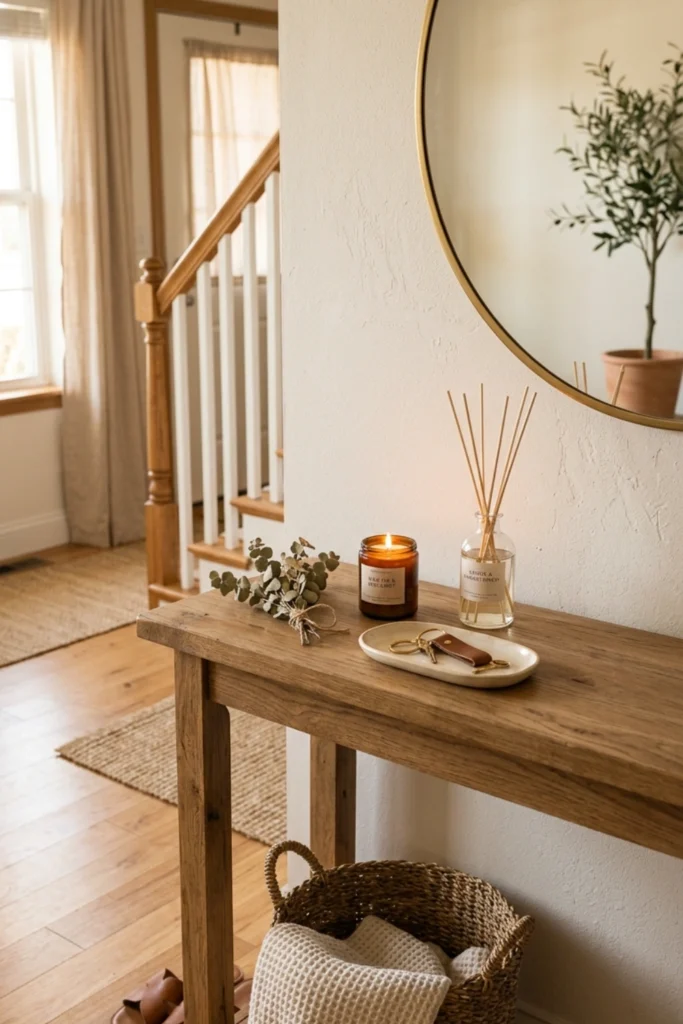
19. The One-Item-In One-Item-Out Entryway Rule
The entryway is a transitional space — things pass through it constantly.
The organizational rule that keeps it from accumulating is the same one that works everywhere in the home.
One item in — one item out.
A new umbrella arrives — the old broken one leaves. A new reusable bag goes on the hook — an old one goes to the car or kitchen. A new coat gets hung — a previous season coat goes to the bedroom closet.
The entryway never grows beyond its organized capacity because the capacity is the rule.
This isn’t minimalism as a philosophy. It’s capacity management as a practical daily system.
The entryway stays organized when the capacity limit is the actual rule — not just the intention.
Your Home Begins Here
The front door is not just an entrance. It’s a daily transition — between the world outside and the life you’ve built inside.
When the entryway is organized, that transition feels different. Arriving home becomes a moment of genuine relief rather than another source of low-grade friction.
You walk in. Everything has its place. The space says welcome — quietly, consistently, every single day.
That’s what a well-organized entryway does. And it takes one afternoon to create.
Save this to your home organization board. Come back when you’re ready to start.
Which idea are you beginning with? Tell me below.