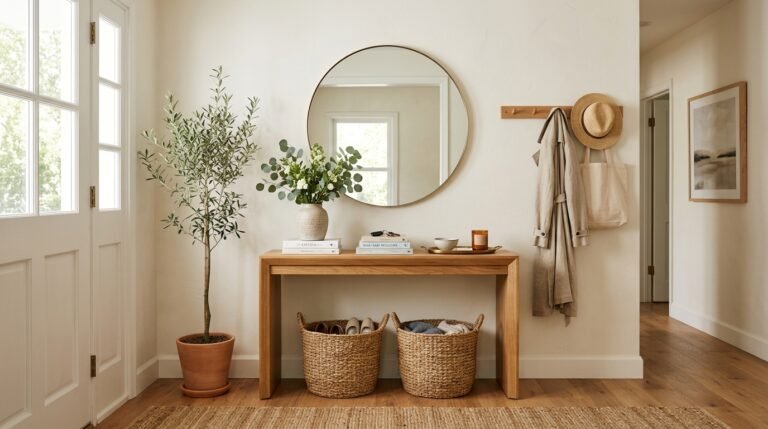

19 Minimalist Home Organization Ideas For A Calmer Home
The most organized home isn’t the one with the most storage solutions.
It’s the one with the fewest things that need organizing.
That’s the principle at the heart of minimalist home organization — and it’s the reason it works so durably while most other organization systems eventually collapse back into clutter.
Minimalist organization is not about white walls and empty rooms. It’s not about deprivation or aesthetic extremism or living without the things that matter to you.
It’s about a deliberate relationship with what the home contains. Every object chosen. Every surface intentional. Every room holding exactly what belongs there — and nothing held by default, habit, or the assumption that more is somehow better.
The result is a home that feels genuinely calm. Not staged. Not sterile. Calm.
The kind of calm that makes mornings easier, evenings quieter, and the daily experience of being at home fundamentally better.
These 19 ideas give you the complete minimalist organization system — from the foundational mindset shift to the weekly habit that sustains it indefinitely.
Save this. A calmer home is built on this.
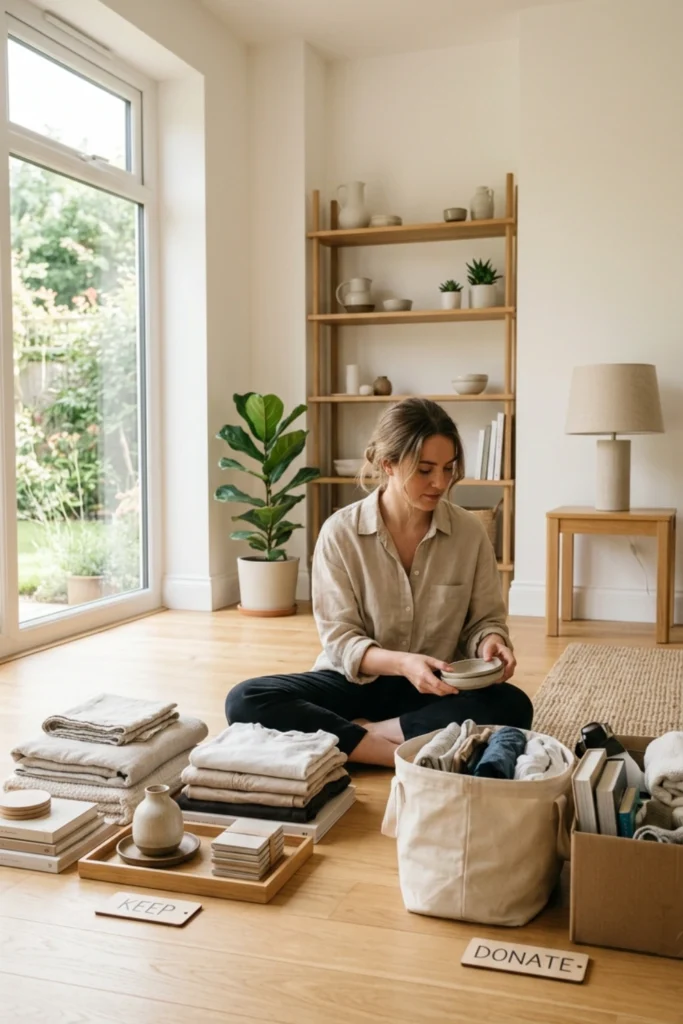
1. The Minimalist Edit — Own Less First
Every minimalist organization system begins with the same first step.
Not buying better storage. Not reorganizing what already exists. Owning less.
The minimalist edit is a whole-home assessment of what the home contains — and an honest reckoning with what it should.
The minimalist edit is not a one-time project. It’s the beginning of a relationship with what the home contains — one that continues as life changes.
You cannot organize your way out of owning too much. The edit comes first. Always.
2. One In One Out — The Rule That Sustains Everything
The single most powerful minimalist organization rule — and the one that makes every other idea on this list sustainable.
Every time something new enters the home — something leaves.
The rule requires no willpower once it becomes habit. It becomes automatic — the natural consequence of bringing anything new home.
One in one out is the rule that makes the minimalist home permanent rather than temporary. Also Read: Home Organization Ideas

3. Clear Surfaces as the Standard
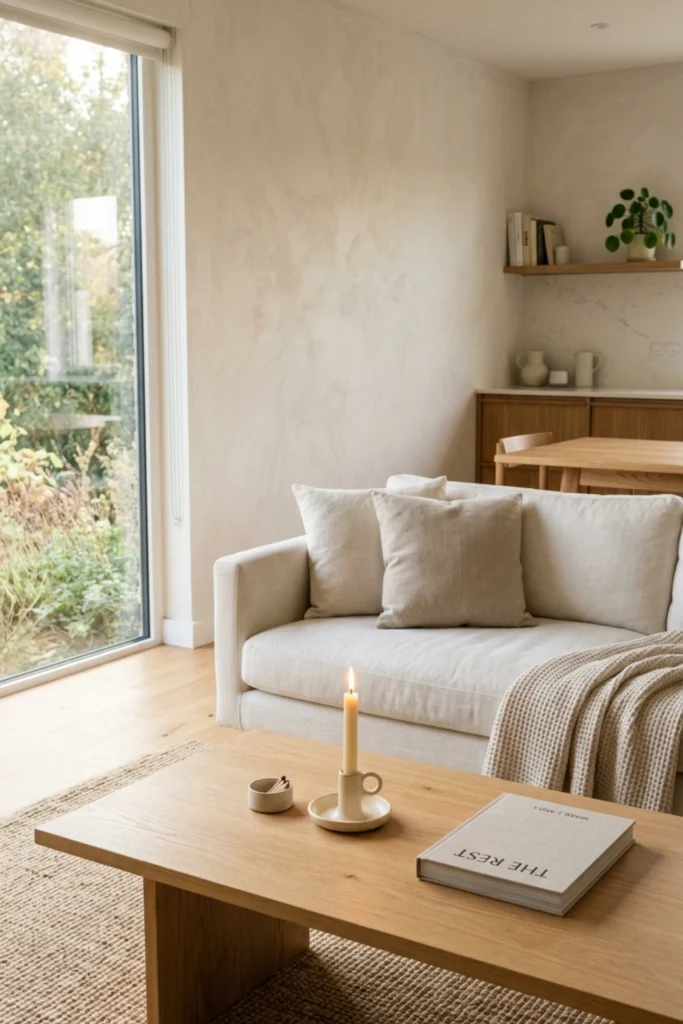
In a minimalist home — a clear surface is not an achievement. It’s the baseline.
Not cleared for guests. Not cleared occasionally. Clear as the permanent standard.
What earns a place on a surface:
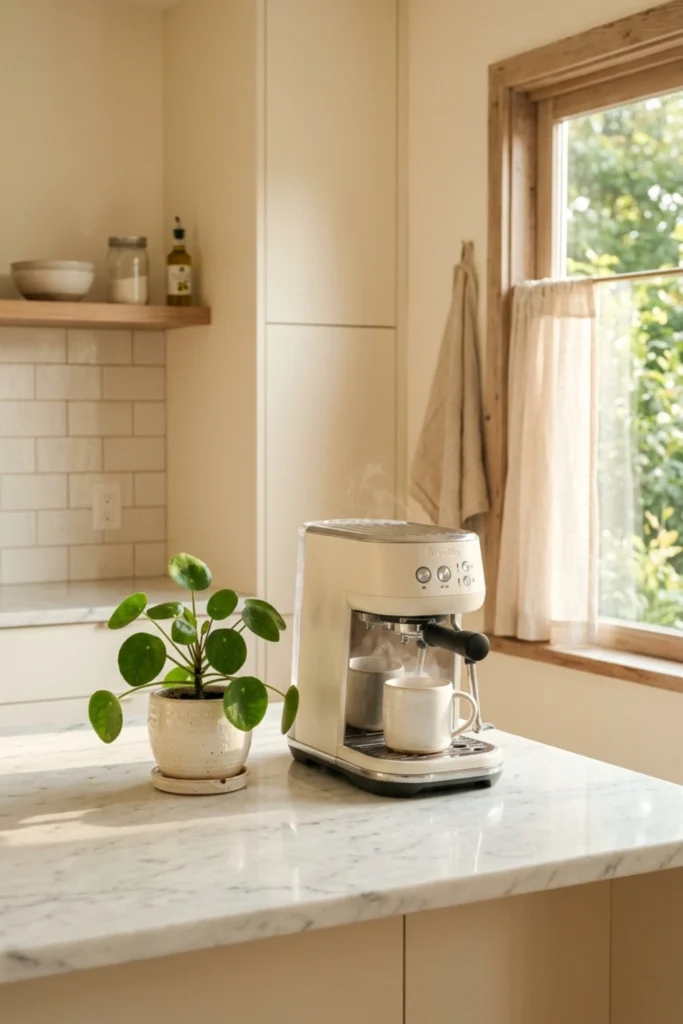
- Functional daily-use items — lamp, coffee maker, soap dispenser
- One deliberately chosen decorative moment — a plant, a candle, a single beautiful object
- Nothing temporary — no mail, no receipts, no items en route somewhere else
Clear surfaces don’t require constant effort. They require the habit of never allowing the accumulation to begin.
A clear surface isn’t empty. It’s intentional.
4. The Capsule Home Method
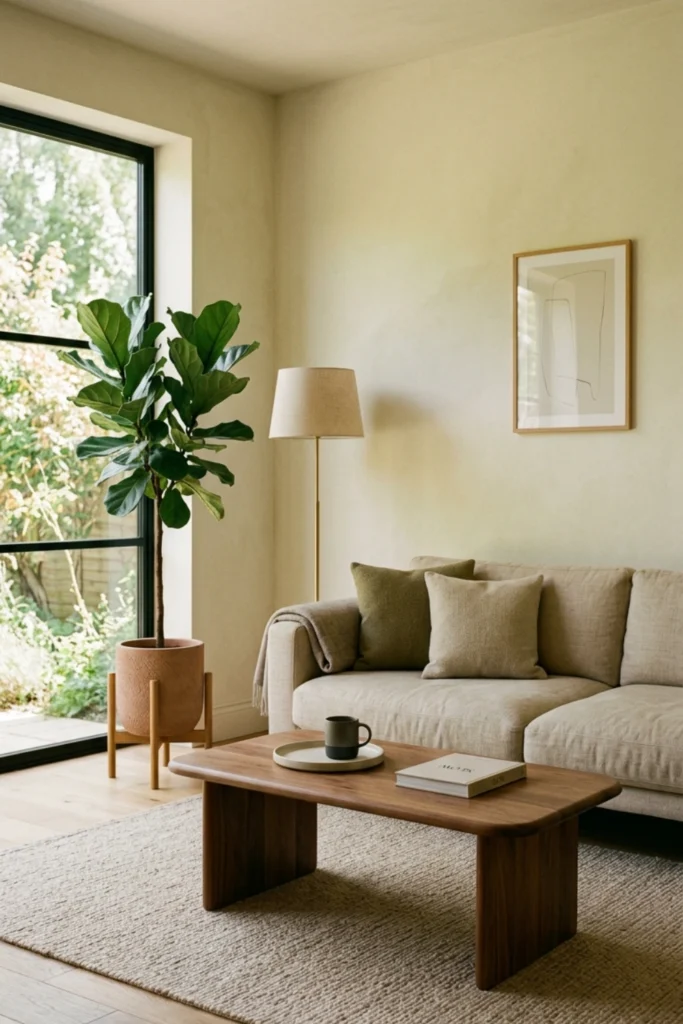
Applied the same way as a capsule wardrobe — but to the entire home.
Every room in a capsule home contains only what is actively used, genuinely loved, and purposefully chosen. Duplicates are eliminated. Rarely-used items are removed. The things that remain earn their place through regular use or genuine
The capsule home method applies one standard everywhere: deliberate presence over default accumulation. More Inspiration: Closet Organization Ideas
5. One Container Per Category
Minimalist organization uses containers differently from conventional organization.
In conventional organization — you buy containers to fit the things you own. In minimalist organization — the container defines the capacity. When the container is full — the category is full. Nothing more enters until something leaves.
The container is not storage. It’s a boundary.
The container doesn’t expand to hold more. The category expands only when the container is changed deliberately.
6. Hidden Storage Over Open Storage
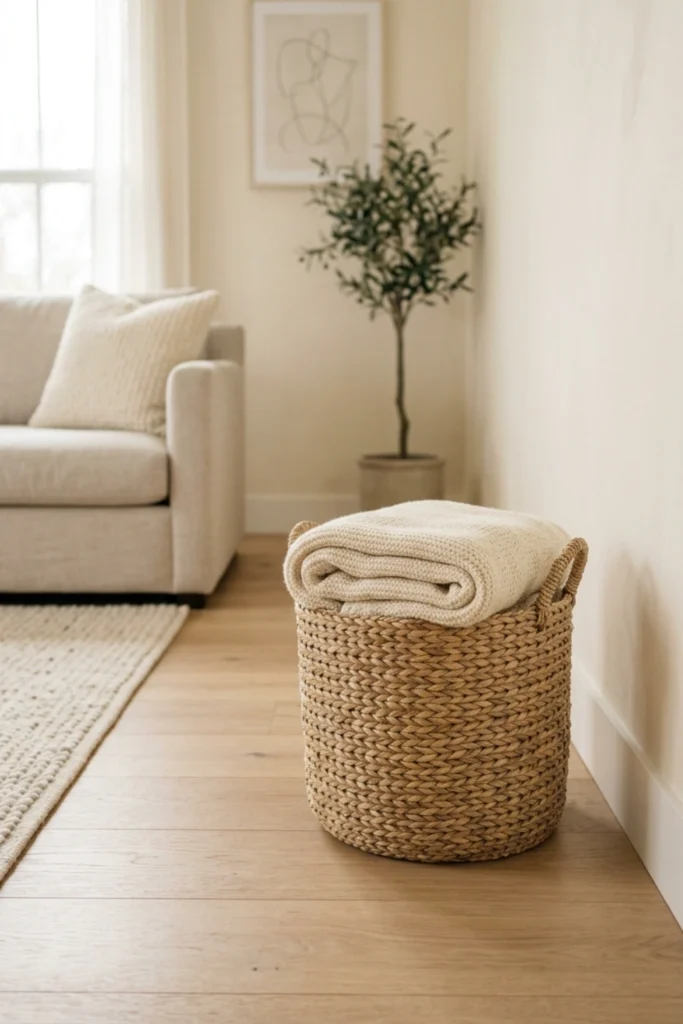
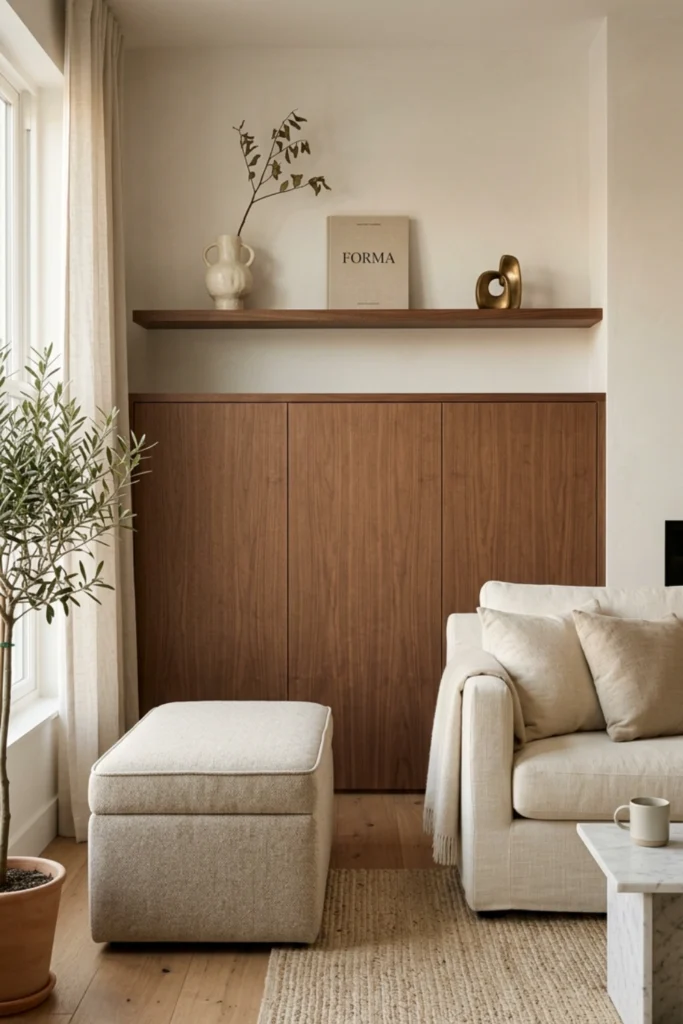
The minimalist home doesn’t hide clutter. It reduces what needs hiding — then stores what remains out of sight.
Open shelving in a minimalist home holds only beautiful, deliberately chosen objects. Everything else — the functional, the utilitarian, the necessary but visually busy — goes behind closed doors.
The minimalist principle: if it doesn’t contribute visual beauty — it should not be visible.
Hidden storage reduces visual noise. Visual noise reduces calm. Keep Reading: Under Sink Organization Ideas
7. The Minimal Kitchen Counter Rule
The kitchen counter is the surface that accumulates fastest — and the one that most visibly affects the feeling of the home.
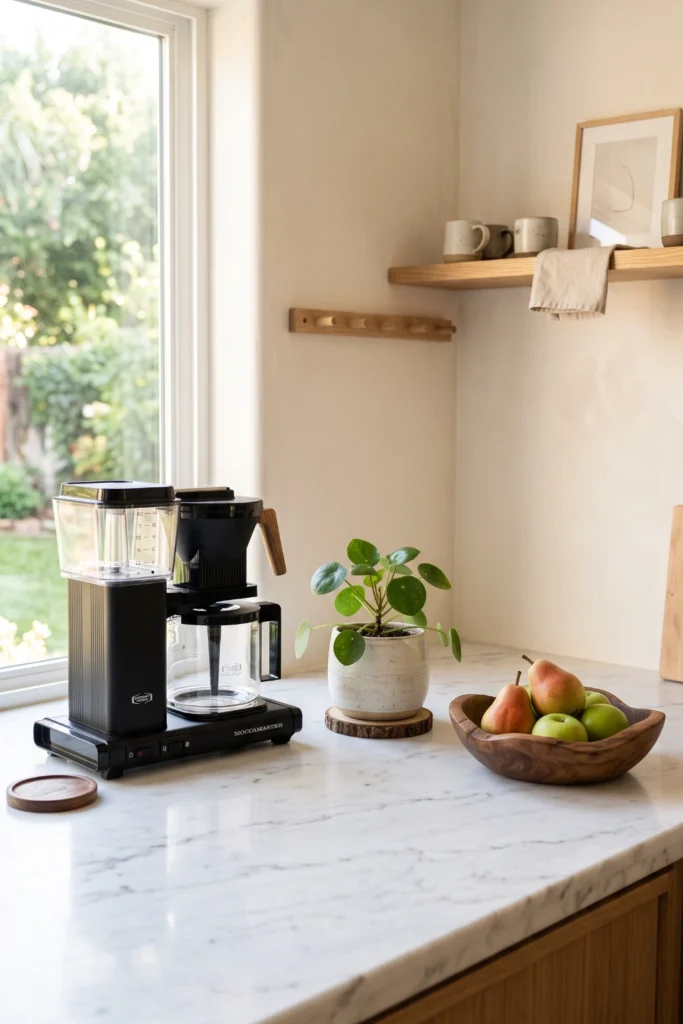
The minimalist kitchen counter rule:
Only daily-use appliances live on the counter. Everything else is stored.
What qualifies for counter space:
- Coffee maker — used daily
- Kettle — if used daily
- One fruit bowl — functional and beautiful
- Knife block — if used daily (a magnetic wall strip is more minimal)
- One small plant or herb
When the counter holds only what’s used daily — cooking feels effortless. The kitchen feels calm. The home’s most visible surface communicates intention.
If it’s not used daily, it doesn’t earn counter space. Store it.
8. A Wardrobe That Only Contains What You Wear
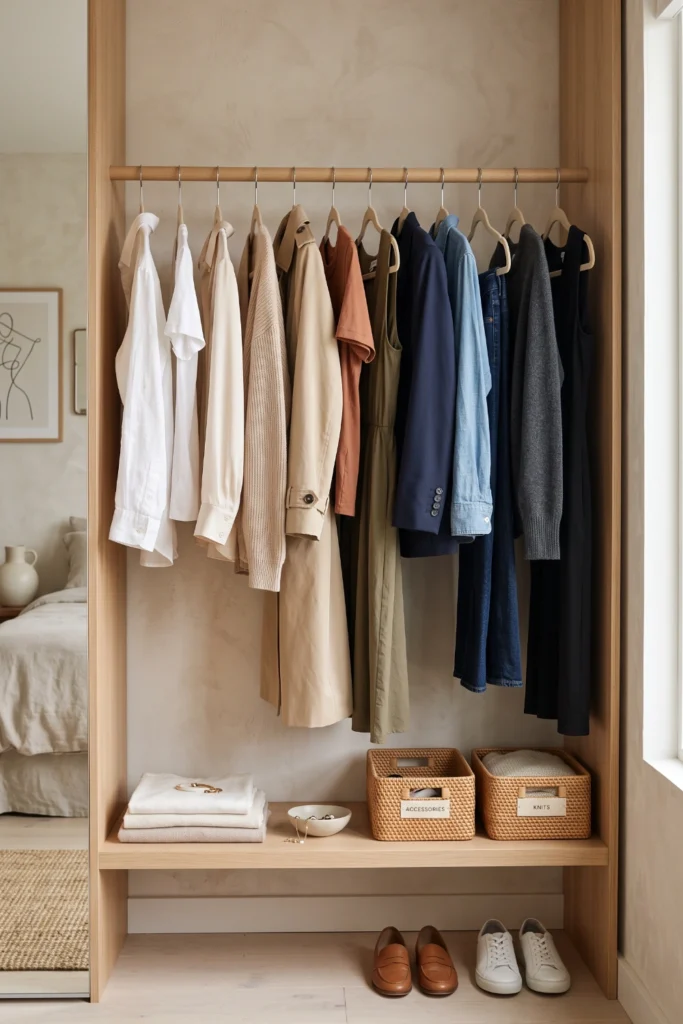
The minimalist wardrobe is not a trend. It’s a decision.
The decision to keep only the clothing that is worn, fits today, feels good, and serves the actual life being lived — not the aspirational life, the past life, or the just-in-case future.
The wardrobe that results has breathing room between hangers. Every item is findable. Getting dressed takes minutes instead of the daily performance of moving things to find other things. You May Also Like: Entryway Organization Ideas
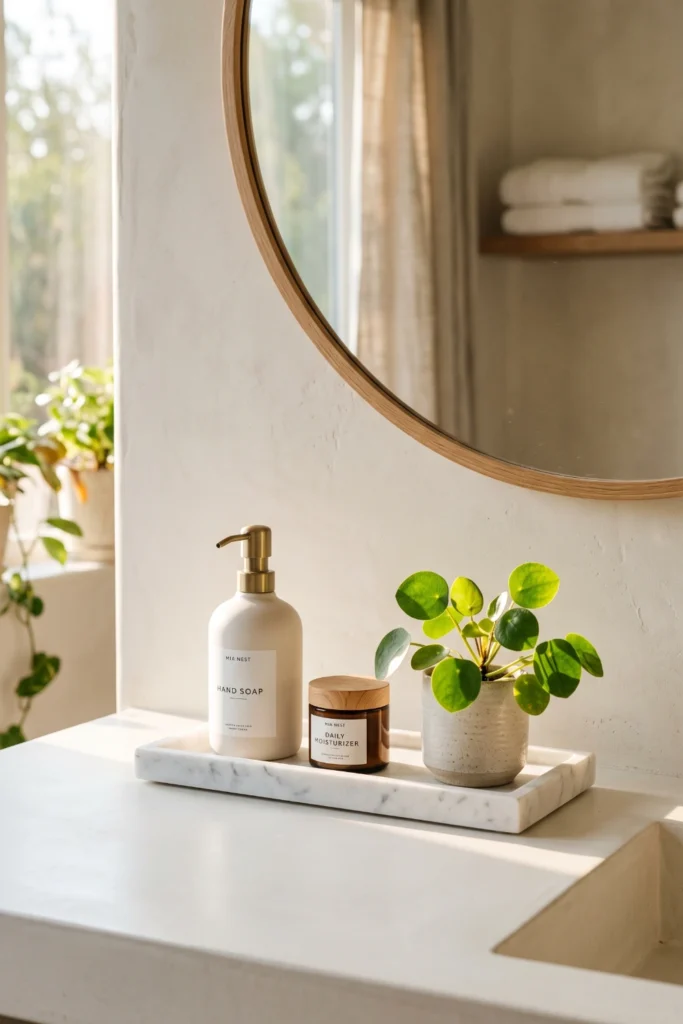
9. The Minimal Bathroom Counter
The bathroom counter is where products accumulate fastest — and where the minimalist principle delivers the most immediate daily calm.
The minimal bathroom counter:
- One tray — holds only the products used in the daily routine
- Five items maximum on the counter surface
- Everything else — in a drawer, under the sink, or removed entirely
- Decanted where possible — one beautiful soap dispenser instead of a branded bottle
- One small plant — life and warmth without visual noise
The minimal bathroom counter is the version of the bathroom that feels like a hotel — calm, clean, everything in its place.
A minimal bathroom counter is five products maximum. Everything else is stored.
10. Empty Space as a Design Choice
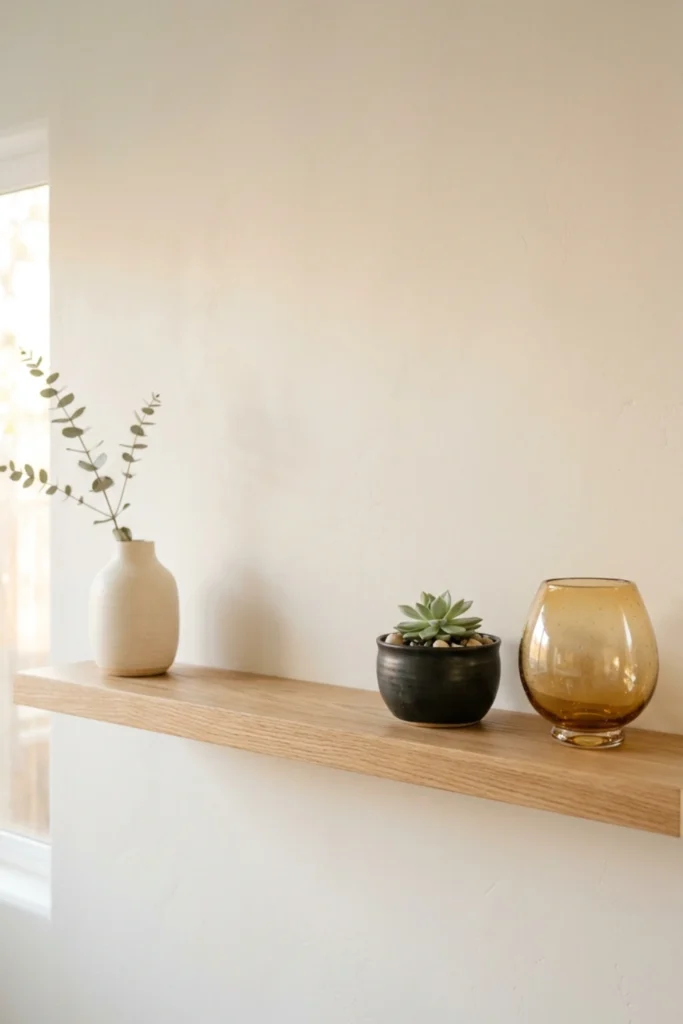
The most radical and most important minimalist principle.
Empty space is not absence. It is a presence — of calm, of intention, of visual breathing room.
A clear kitchen counter communicates something different from one covered in appliances and mail.
A bedroom with a clear nightstand communicates something different from one where every surface is fully occupied.
Protect the empty space. Resist filling it.
The empty space is doing as much organizational work as the storage. Respect it. Explore Next: Home Command Center Ideas
11. The One-Touch Rule
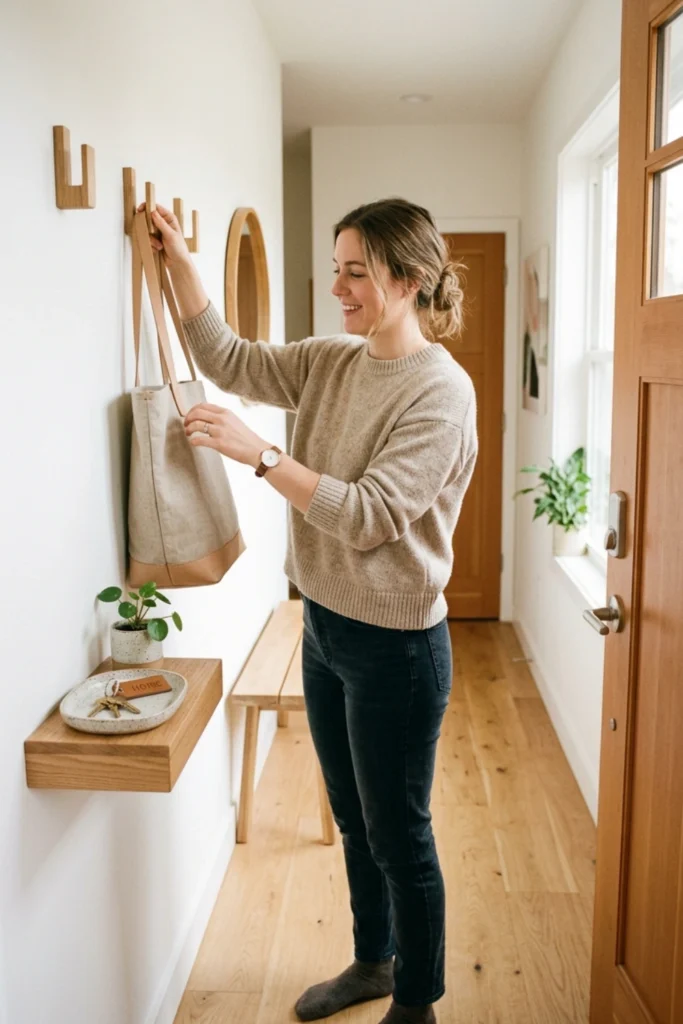
Every item handled — once.
The one-touch rule is the behavioral habit that prevents accumulation more effectively than any organizational system.
When an item is picked up — it goes directly to its permanent home. Not temporarily placed on the counter. Not set down on the coffee table until later. Not moved from one surface to another.
Picked up — and returned.
The one-touch rule doesn’t require organization products. It requires the habit of completion.
Handle it once. Put it where it lives. The surface stays clear.
12. Matching Containers Throughout
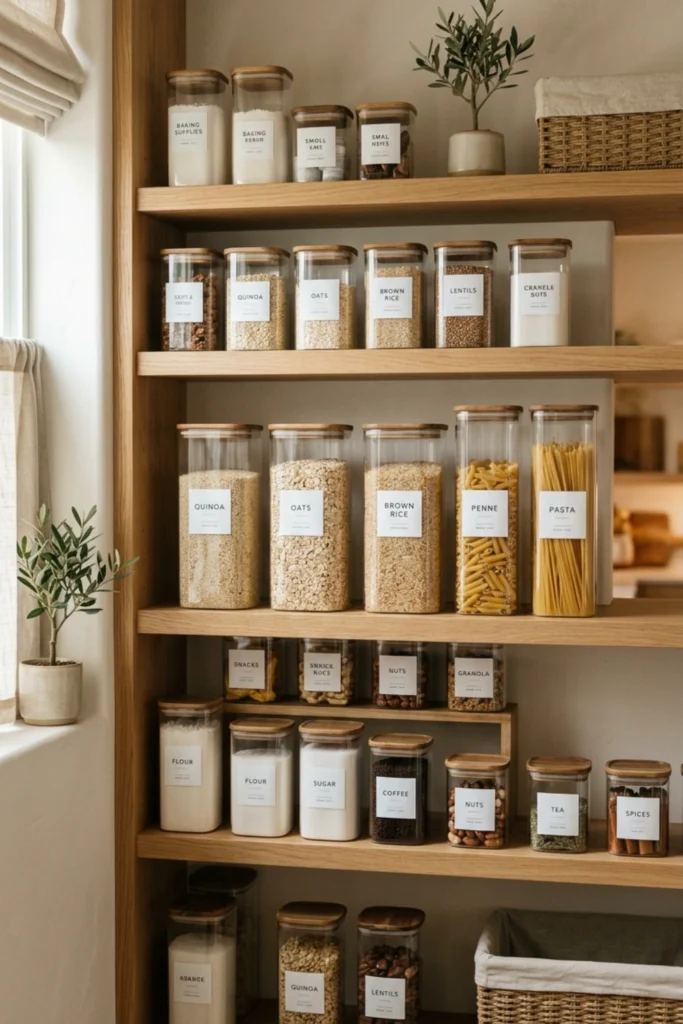
Minimalist organization uses containers — but uses them with visual discipline.
Matching containers — same material, same color, same height — throughout a room creates visual calm that mismatched containers cannot achieve regardless of how organized the contents are.
Choose one material family: all clear acrylic, all natural bamboo, all white ceramic, all woven seagrass.
That single decision — applied consistently — transforms the visual atmosphere of any space.
Matching containers make any space look more calm and intentional than its contents alone can achieve.
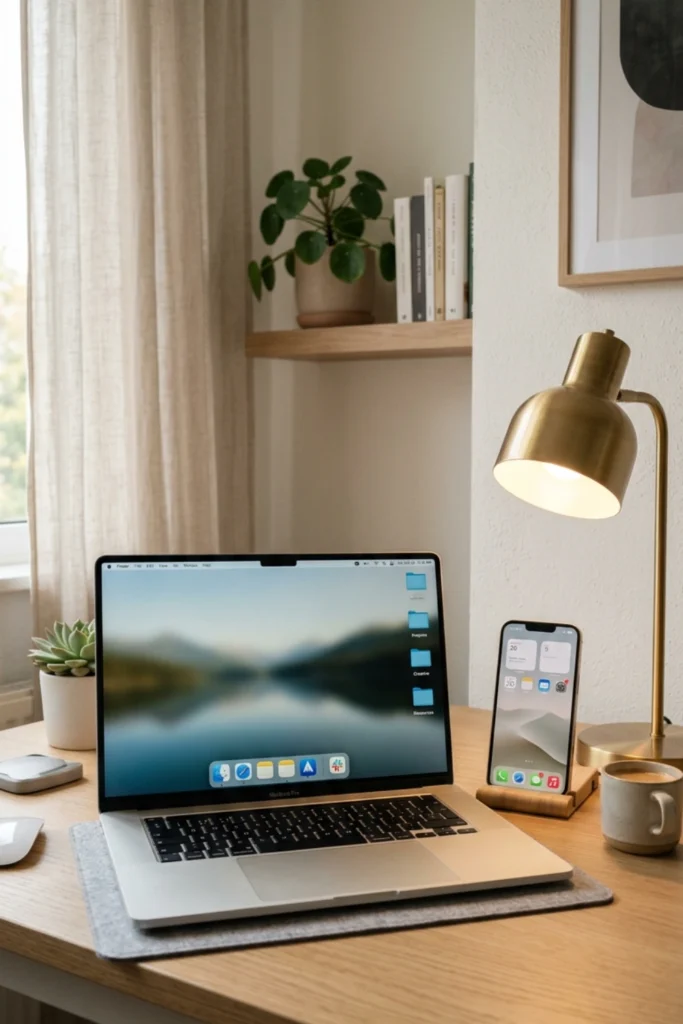
13. The Digital Declutter
The minimalist home includes the digital environment.
A cluttered digital life creates the same low-grade cognitive noise as a cluttered physical space — unread emails, a phone full of unused apps, a desktop covered in files, subscriptions to things no longer needed.
The digital one in one out:
- New app downloaded — an old one deleted
- New subscription — an old one cancelled
A minimal digital environment reduces screen time, improves focus, and removes a significant source of low-level daily stress.
The minimalist home extends to every screen in it.
14. Minimal Bedroom for Better Sleep
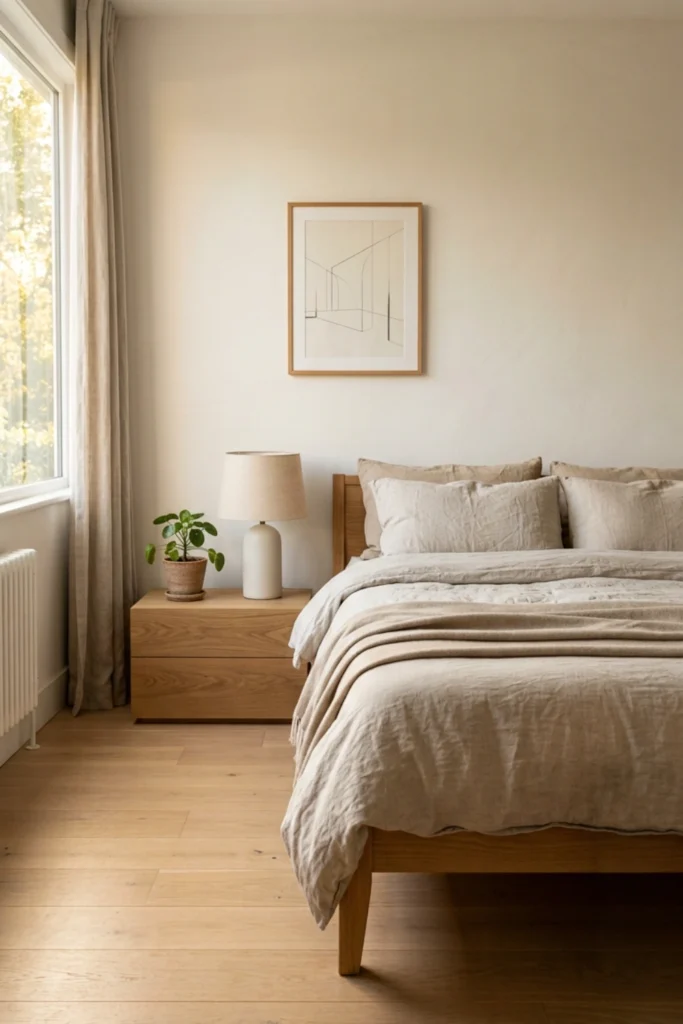
The bedroom is the room where minimalist organization has the most direct physical impact — on sleep quality, morning calm, and the overall sense of personal sanctuary.
The bedroom should communicate one thing when you enter it: this is a place for rest.
Clutter in the bedroom — visual clutter, surface clutter, floor clutter — disrupts sleep psychology. The brain registers it as unfinished business.
A minimal bedroom is not about style. It’s about rest.
15. The Child-Friendly Minimalist Home
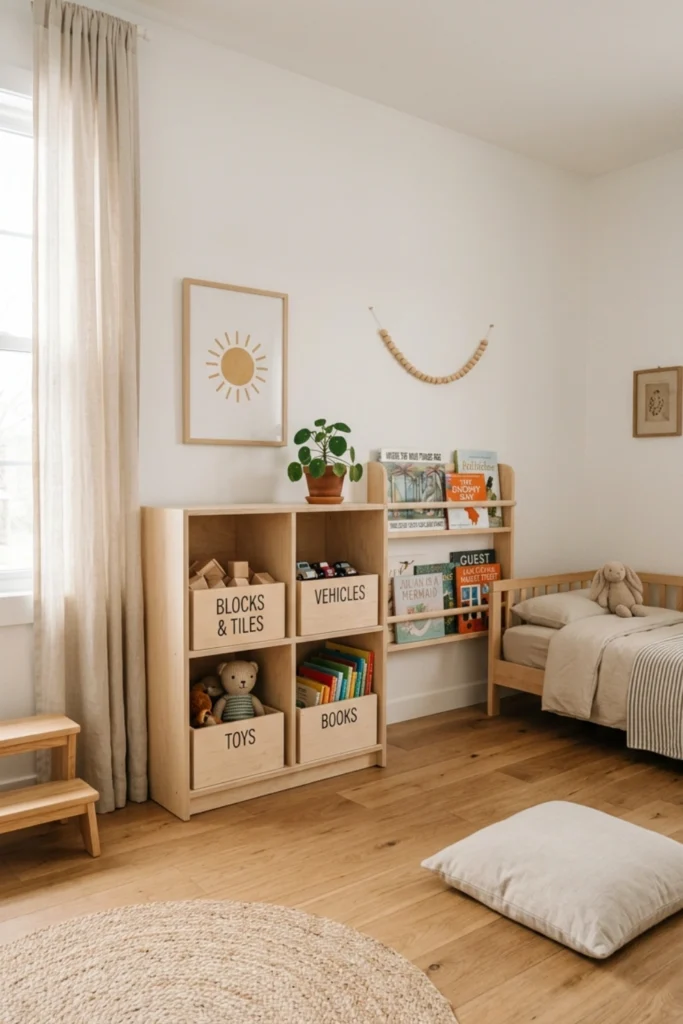
Minimalism and children are not incompatible. They require a different approach.
A child-friendly minimalist home doesn’t deprive children of toys or creativity. It contains toys deliberately, rotates them to maintain engagement, and creates systems children can maintain independently.
The minimalist kids room:
- Toy rotation — one-third of toys accessible at any time, two-thirds stored
- One bin per category — labeled, at child height
- Books — forward-facing, current favorites only on display
- Art supplies — one contained cart or box
- Clothing — what fits, what’s worn, current season only
The minimalist family principle:
Gifts and holidays create natural accumulation points. Before each gift-giving event — rotate out. The home maintains capacity rather than growing indefinitely.
Children raised in minimalist homes develop a different relationship with objects — appreciating what they have rather than constantly wanting more.
A minimalist kids room gives children more — more creativity, more engagement, more calm.
16. Seasonal Living — Only What’s Current
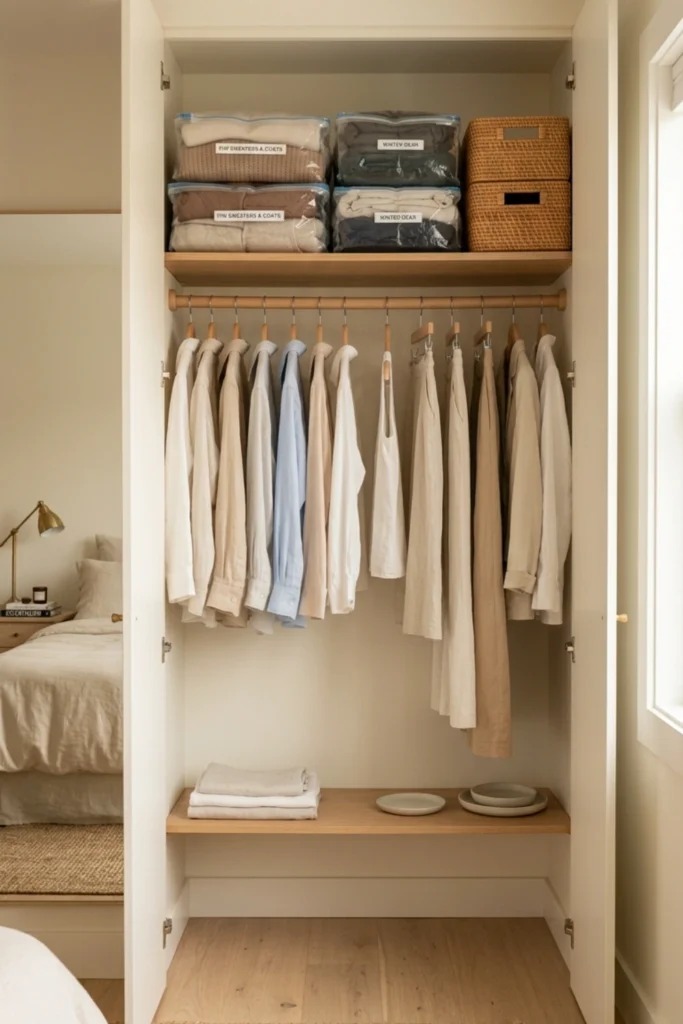
The minimalist home lives seasonally.
Only the current season’s belongings are accessible. Everything else is stored — away from daily living spaces, out of sight, organized and ready for its season.
Seasonal living applied throughout the home:
- Wardrobe — current season only accessible, off-season stored
- Bedding — current weight and warmth for the season, other stored
- Kitchen tools — seasonal cooking equipment stored between seasons
- Decor — seasonal touches only, nothing year-round that doesn’t earn it
- Sports and outdoor equipment — current season accessible, others stored
The home always contains exactly what’s needed — never everything simultaneously.
The seasonal swap is a twice-yearly ritual — an intentional review of what comes in and what goes back.
Seasonal living means the home only holds what’s needed right now.
17. The Weekly Minimal Reset
The minimalist home requires less maintenance than a conventionally organized home — because it contains less to maintain.
But it still requires one habit: the weekly reset.
Thirty minutes. Once a week. The home returns to its baseline.
The minimalist weekly reset:
- Every surface returned to its standard — clear except for intentional objects
- Every item returned to its permanent home — one-touch completed on anything missed
- Inbox processed — mail, papers, anything pending
- Donation basket assessed — anything accumulated during the week that doesn’t belong
- One in one out checked — anything new that arrived, something corresponding leaves
The minimalist reset takes thirty minutes because the home is designed to reset quickly.
A home with fewer things in fewer locations resets faster. That speed is the practical reward for maintaining the minimalist standard.
The minimalist home resets in thirty minutes. That’s the return on the investment of owning less.
18. Shopping Minimally — Preventing the Problem at the Source
The most effective minimalist organization strategy is the one that prevents accumulation before it enters the home.
Minimalist shopping is deliberate shopping.
The minimalist shopping principles:
- Wait 48 hours before any non-essential purchase
- Ask: where will this live in the home?
- Ask: what will it replace — or will something leave to make space?
- Buy quality over quantity — one excellent version of something rather than several mediocre ones
- Avoid sale shopping for things not needed — a discounted item not needed is still clutter
- Avoid trend shopping — buy for longevity, not novelty
The minimalist home stays minimal when what enters it is deliberate.
The 48-hour rule alone eliminates the majority of impulse purchases — the primary source of home accumulation for most households.
Minimalism isn’t about getting rid of things. It’s about not bringing them home in the first place.

19. The Minimalist Mindset — What It Actually Means
The final idea isn’t a product or a system or a habit.
It’s a perspective.
Minimalist organization is not about owning as little as possible. It’s not about aesthetic extremism or proving a point about consumption.
It’s about the deliberate, ongoing choice to have the home serve the life — rather than having the life serve the home.
When the home contains only what belongs there — when every object earns its place, every surface breathes, every room holds what it should — the home stops being something that requires constant management.
It becomes something that simply works.
The morning routine flows. The evening wind-down is calm. The weekend isn’t consumed by cleaning and tidying what accumulated during the week. The home is present — available for the life happening inside it — rather than constantly demanding attention.
That’s minimalist organization done right.
Not a style. Not a sacrifice. A fundamentally better relationship with the space where life happens.
A minimalist home doesn’t ask for constant attention. It gives back the time that clutter was stealing.
Less Is Not Empty — Less Is Enough
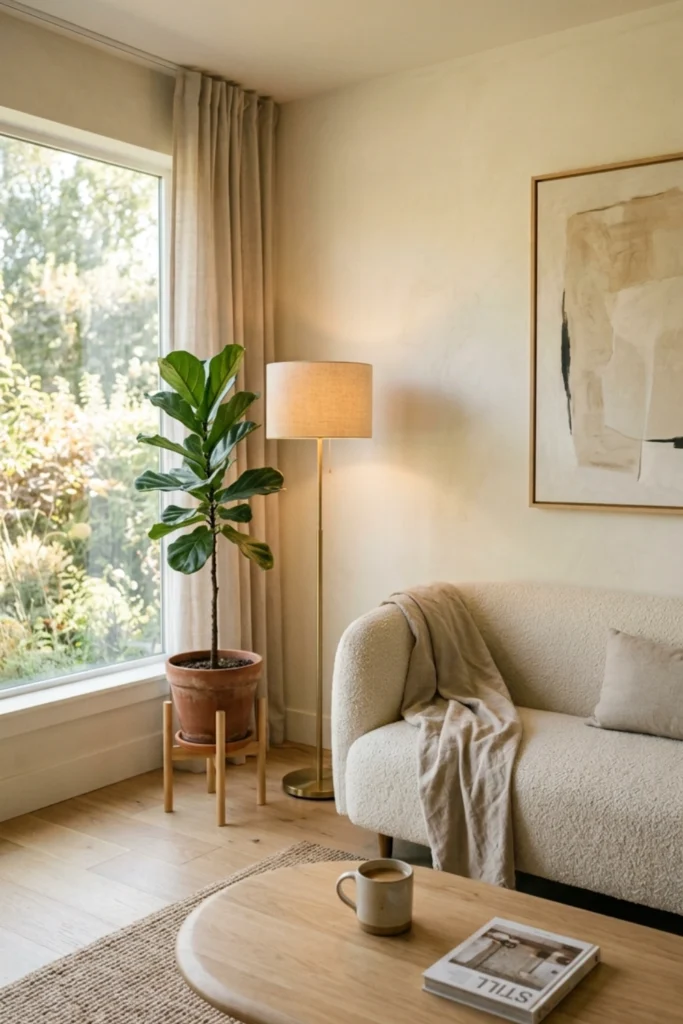
A minimalist home is not an empty home.
It’s a home where everything present is there deliberately. Where the lamp is the right lamp. Where the shelf holds what belongs on it. Where the morning begins without friction because nothing is missing and nothing is in the way.
That’s enough. That’s more than enough.
Save this to your home organization board. Come back when you’re ready to begin with the edit.
Which room are you starting with first? Tell me in the comments.