
23 Kids Room Organization Ideas That Actually Stay Tidy
Every parent has organized the kids room.
Spent an entire Saturday sorting toys, labeling bins, clearing the floor. Stood back, felt genuinely proud of the transformation. Returned twenty-four hours later to find it somehow worse than before.
Here’s what most kids room organization advice misses: a system only works if the child can maintain it.
Not if a parent can maintain it. Not if it looks beautiful in photos. If the child — at whatever age they happen to be — can independently return toys to their correct homes without adult instruction.
That’s the standard. And it changes everything about how a kids room organization system gets designed.
The bin has to be reachable. The label has to be readable — or pictured. The category has to make sense to a child’s logic, not an adult’s. The process of tidying has to take five minutes, not thirty.
These 23 ideas are built entirely around that principle. They create beautiful, functional systems that children can actually maintain — which means they actually do.
Save this. Tidy rooms that stay that way are possible.
1. The Kids Room Edit — Start Here
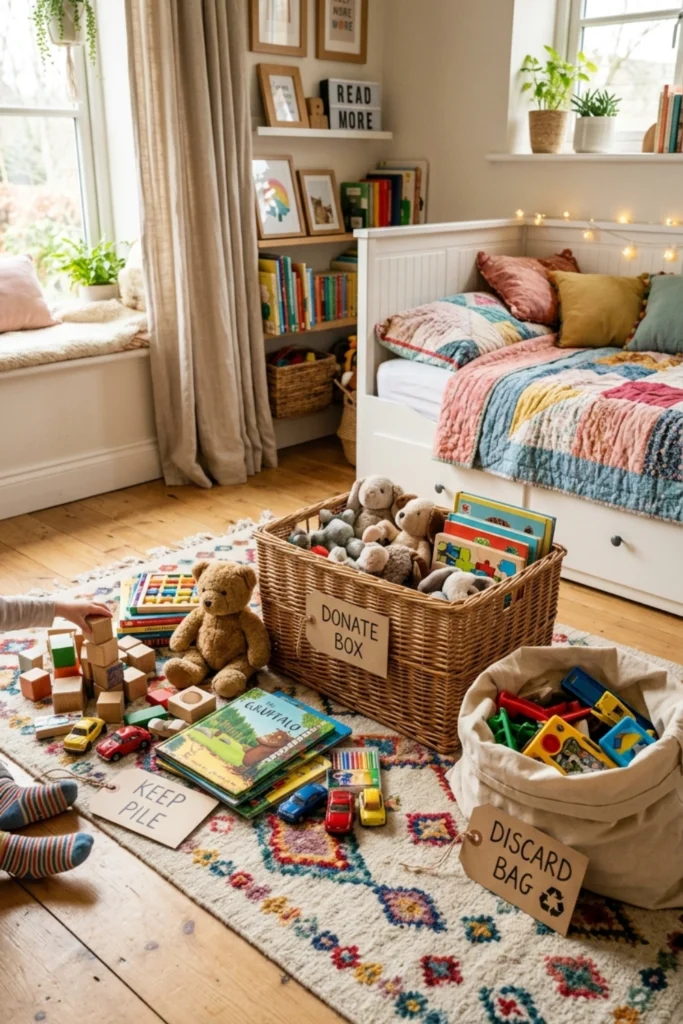
Before organizing — edit.
This step is more important in a child’s room than anywhere else in the home because children’s rooms accumulate more than any other room — birthday gifts, holiday presents, outgrown toys, broken items, duplicates.
The edit is not about minimalism. It’s about capacity. A room with the right number of toys — ones that are actually played with — is a room that can stay organized.
The room stays tidy when it contains only what belongs there. The edit creates that condition.
2. The Golden Rule — Kids Must Do It Themselves
Every organization decision in a child’s room must pass this test:
Can this child return this item to this location without adult help?
If the answer is no — the system needs to change.
When children can maintain the system independently — they do. When they can’t — the parent does it, or nobody does.
Design the room for the child. Not for the photo.
A system a child can use is worth infinitely more than a system that looks beautiful.
3. Low Open Shelving for Everything
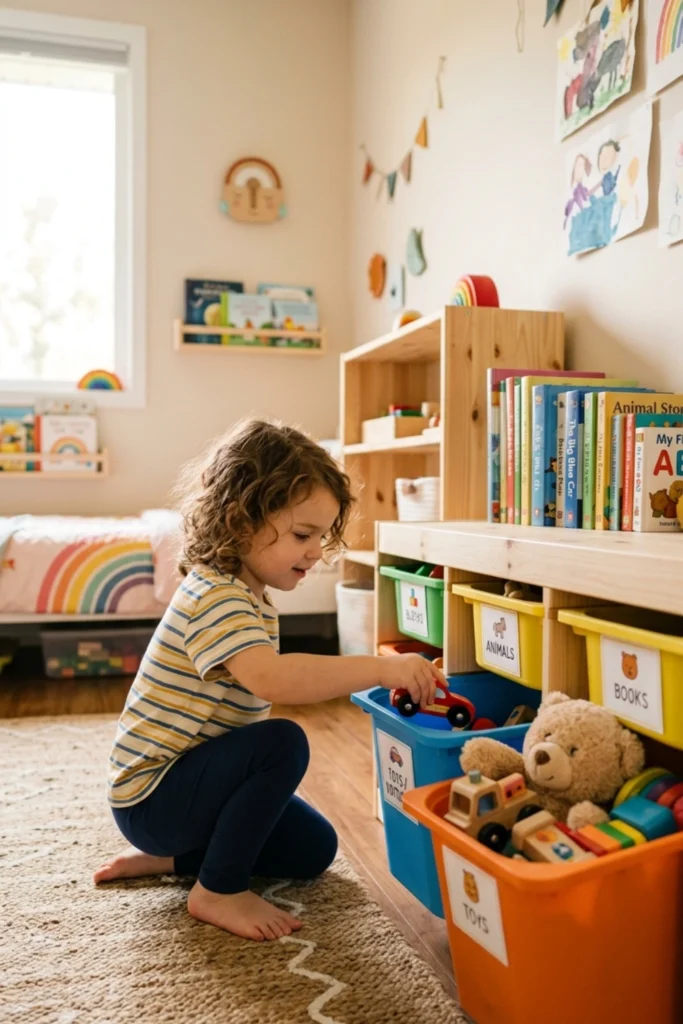
The single most impactful furniture decision in a kids room organization system.
Low open shelves — at or below a child’s eye level — make every toy, book, and item visible and accessible without adult assistance. No climbing. No pulling things down from high shelves. No digging through deep bins.
A low cubby unit with bins in each section is the most functional kids room storage solution that exists. Every other idea in this list builds around it. Also Read: Home Organization Ideas
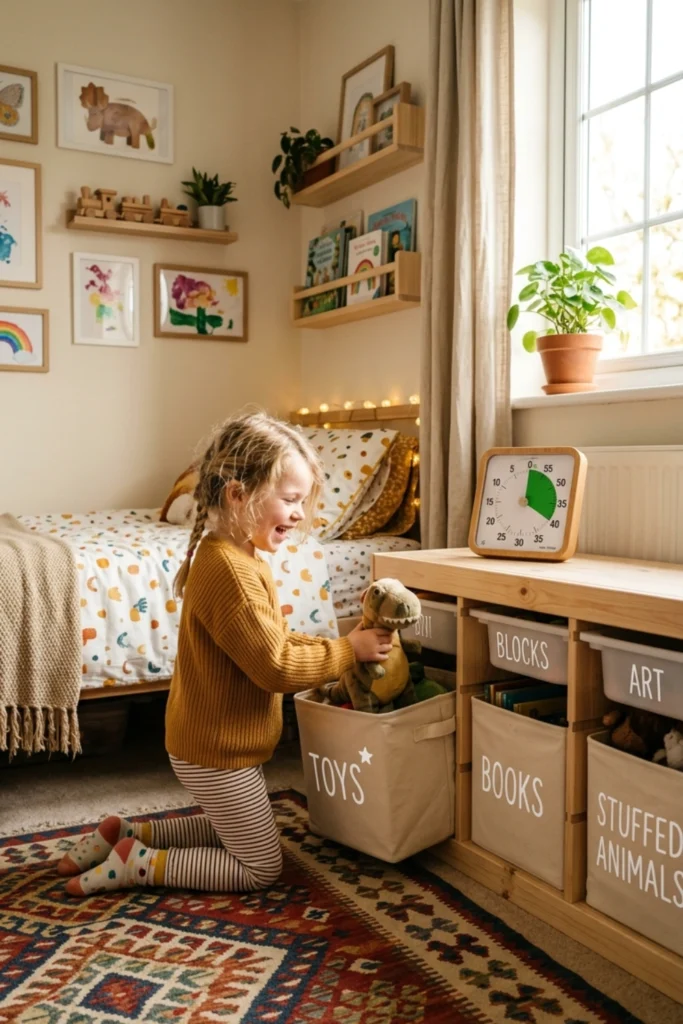
4. One Bin Per Toy Category
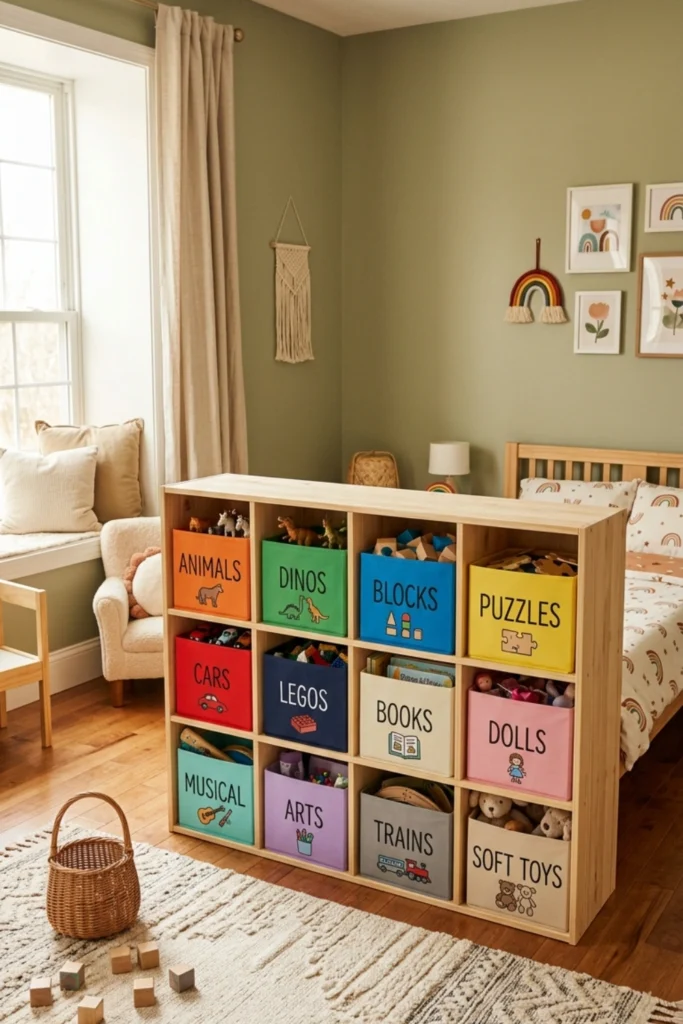
The category bin system is the backbone of any successful kids room organization.
One bin. One category. Nothing mixed.
The categories should reflect how the child actually plays — not the organizational logic of an adult.
If a child always plays with cars and trucks together — they go in the same bin. If a child considers Lego and Duplo completely separate — they get separate bins.
Ask the child. Follow their logic.
Bins organized around how a child plays stay organized by a child.
5. Labels With Pictures AND Words
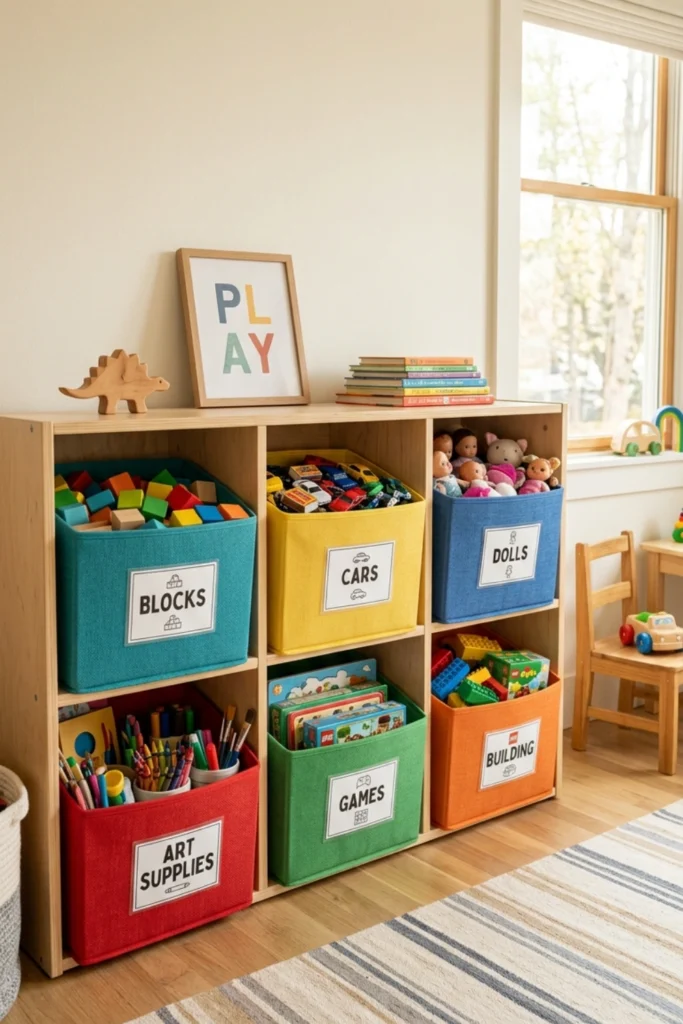
For pre-readers and early readers — a label with only words is no label at all.
A picture label — showing the toy that belongs in the bin — tells every child, at every reading level, exactly where each item goes.
For older readers — words only in a clear, consistent font work well.
When a child can look at a bin label and immediately know what goes there — they return items correctly. Every time.
Picture labels are the difference between a system adults maintain and one children maintain.
6. The Toy Rotation System
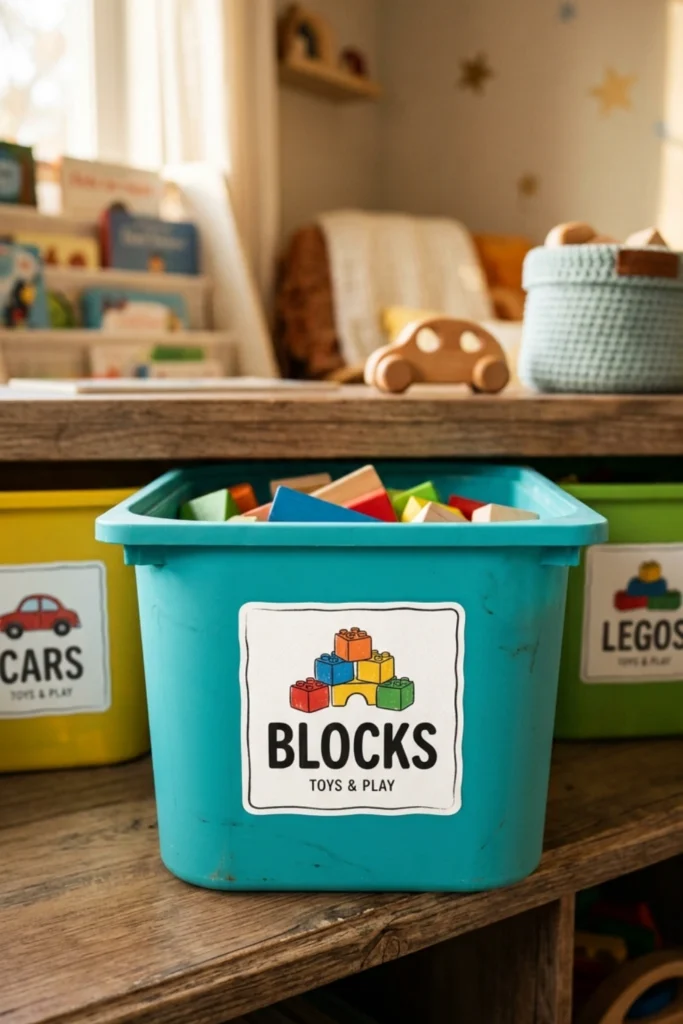
The toy rotation system is the single most effective strategy for reducing toy clutter — and increasing how much children actually play.
Children play more deeply and creatively with fewer toys available at once. Familiar toys feel new again when they return from rotation. The room stays manageable because only a third of the toy collection is in play at any time.
The parents control the rotation. The children experience fresh excitement. The room stays organized.
The toy rotation system reduces toy clutter by sixty percent without removing a single toy. More Inspiration: Closet Organization Ideas
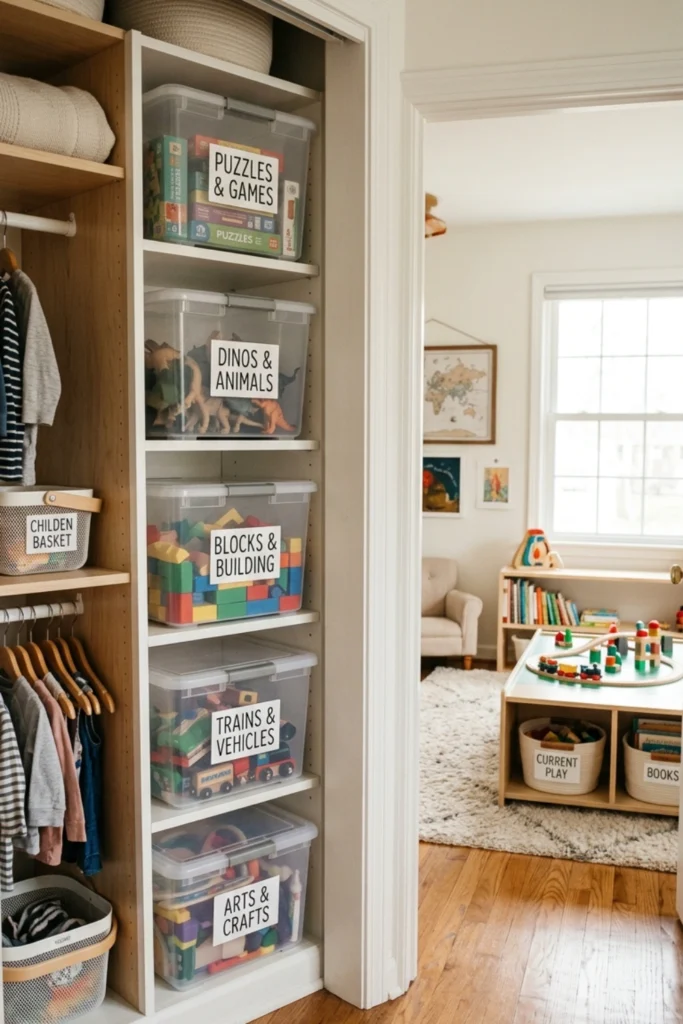
7. A Reading Nook They’ll Actually Use
A reading nook in a child’s room is one of the most used spaces — when it’s designed correctly.
The key: it must feel like a destination. Like somewhere special. Not just a corner with a bookshelf.
Children who have an inviting reading space use it. Repeatedly. Daily.
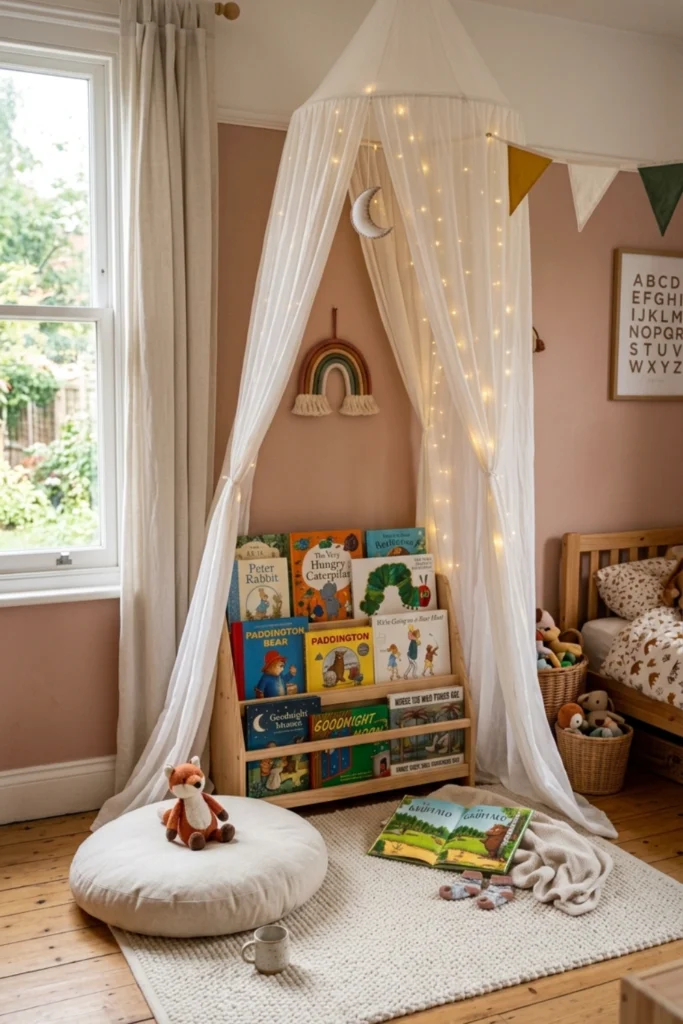
8. Art and Craft Supply Organization
Art supplies are the category most likely to migrate to every surface in the house if they don’t have a dedicated, organized home in the kids room.
The rolling cart keeps art supplies contained and portable — it can move to wherever the child wants to create and return to its dedicated spot afterward.
A rolling art cart keeps creative supplies organized and creativity mobile.
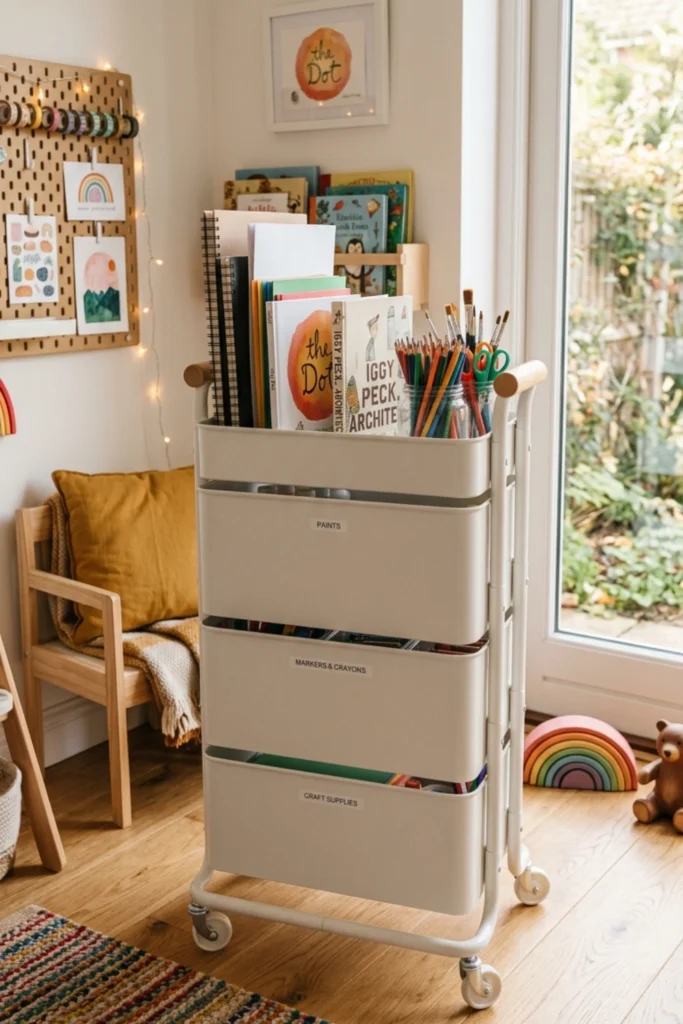
9. The Clothing System That Works for Kids
Kids room clothing organization works when children can dress themselves independently — even on rushed school mornings.
The drawer organization:
- Fold and store vertically (Marie Kondo style) — everything visible at once
- One category per drawer — labeled clearly
When children can manage their own clothing independently — morning routines transform. Keep Reading: Home Command Center Ideas
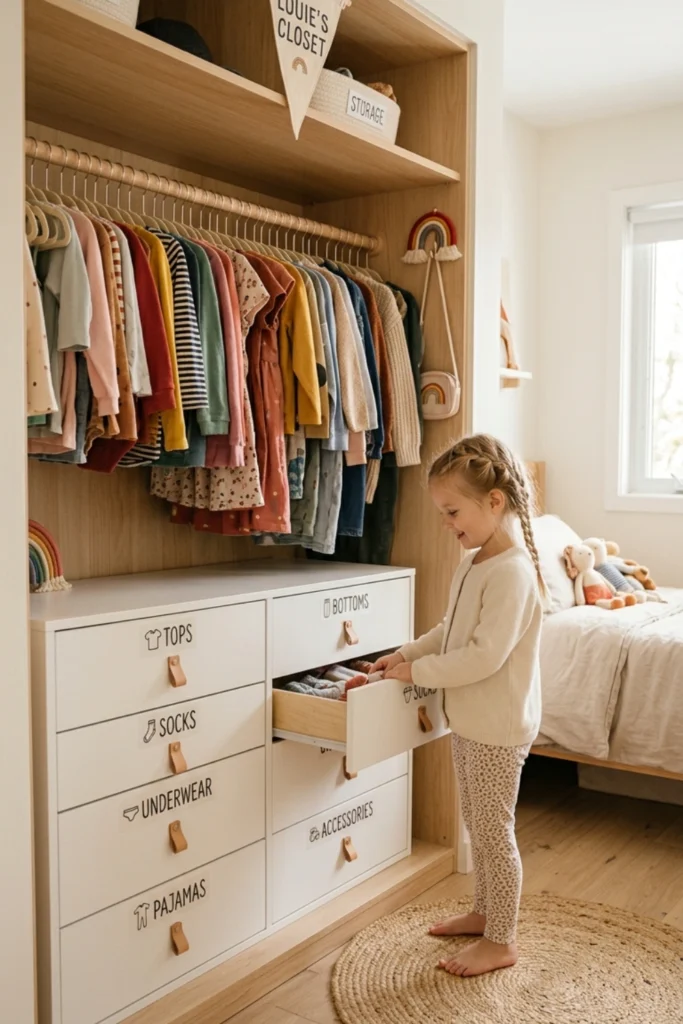
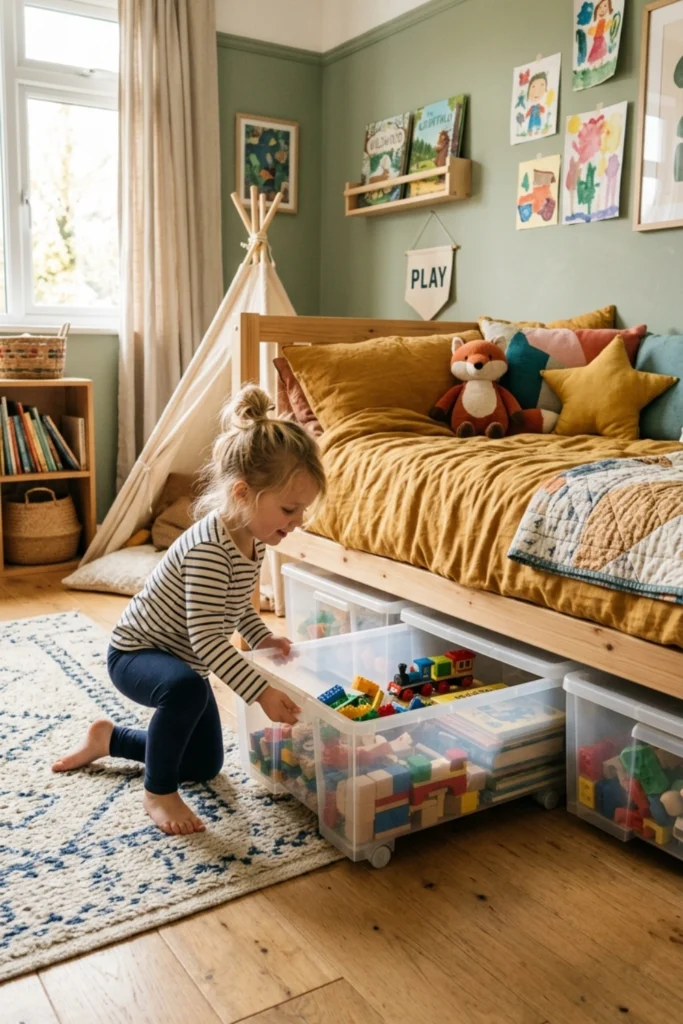
10. Under-Bed Storage for Kids
The space under a child’s bed is premium storage real estate — and when used correctly, it stores the overflow that would otherwise clutter the room.
Under-bed storage for kids:
- Rolling drawers — child can pull out independently for toys or clothing
- Flat linen bins — for seasonal clothing or off-rotation toys
- Clear under-bed boxes — child can see contents without pulling everything out
- Wheeled toy storage — specific toys that don’t need daily access
The rule: only items the child actually needs live under the bed. No adult storage displacing child storage in the child’s room.
11. Wall Hooks at Child Height
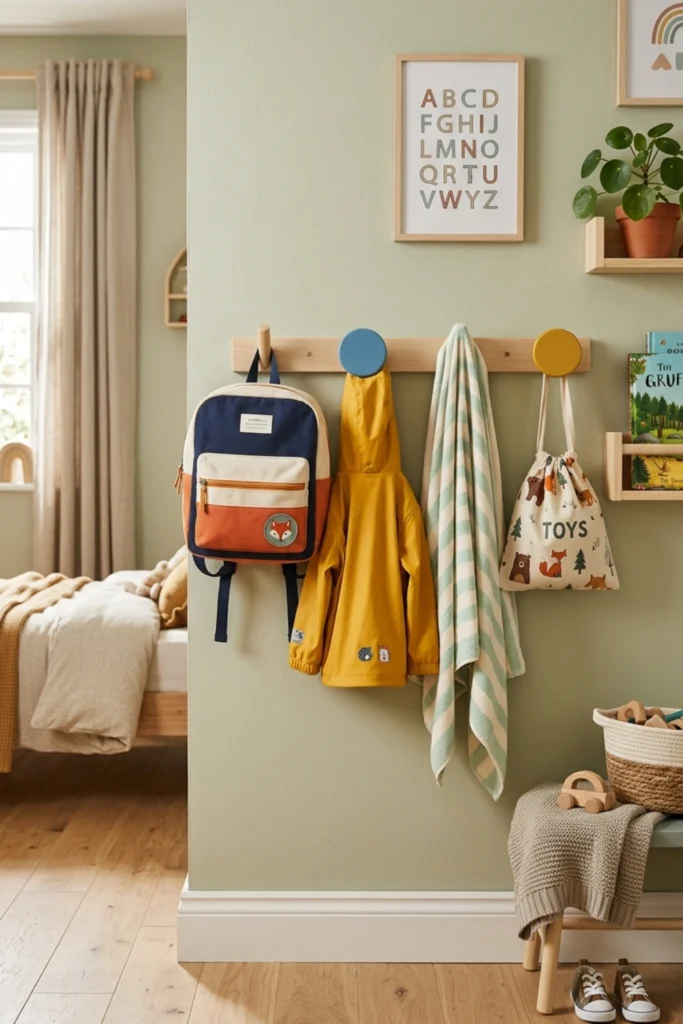
Wall hooks at adult height are useless to children.
Wall hooks at child height — where a child can independently hang and retrieve their own belongings — transform the daily routine.
What child-height hooks handle:
- School bag and backpack — hung as soon as they come home
- Tomorrow’s outfit — on a dedicated hook the night before
- Sports bag and equipment — accessible when needed
- Towel and robe — bathroom routine independence
- Dress-up items — costumes accessible for imaginative play
Mount a row of four to five hooks at the child’s shoulder height. As the child grows — remount higher.
Child-height hooks are the organizational detail that builds genuine independence.
12. A Homework and Study Zone
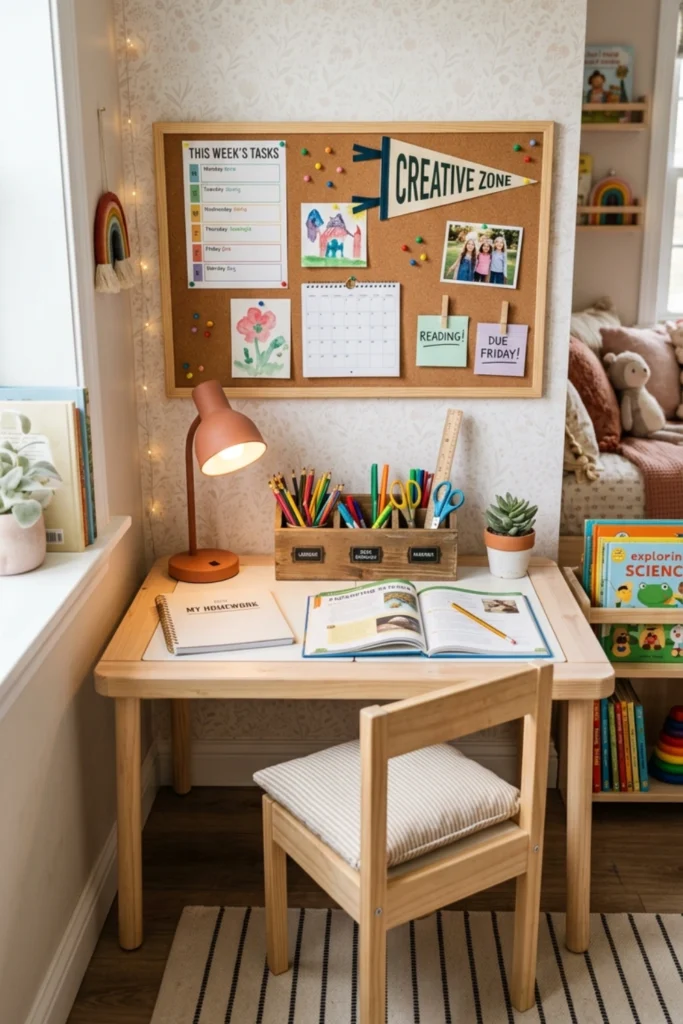
Every school-age child needs a dedicated study zone — even a small one.
When homework has a specific, organized place — it gets done there. Consistently. School supplies stop migrating to the kitchen table and staying there permanently.
Keep the desk surface clear when not in use. Only current homework materials live on the surface. You May Also Like: Minimalist Home Organization Ideas
13. The Book Display System
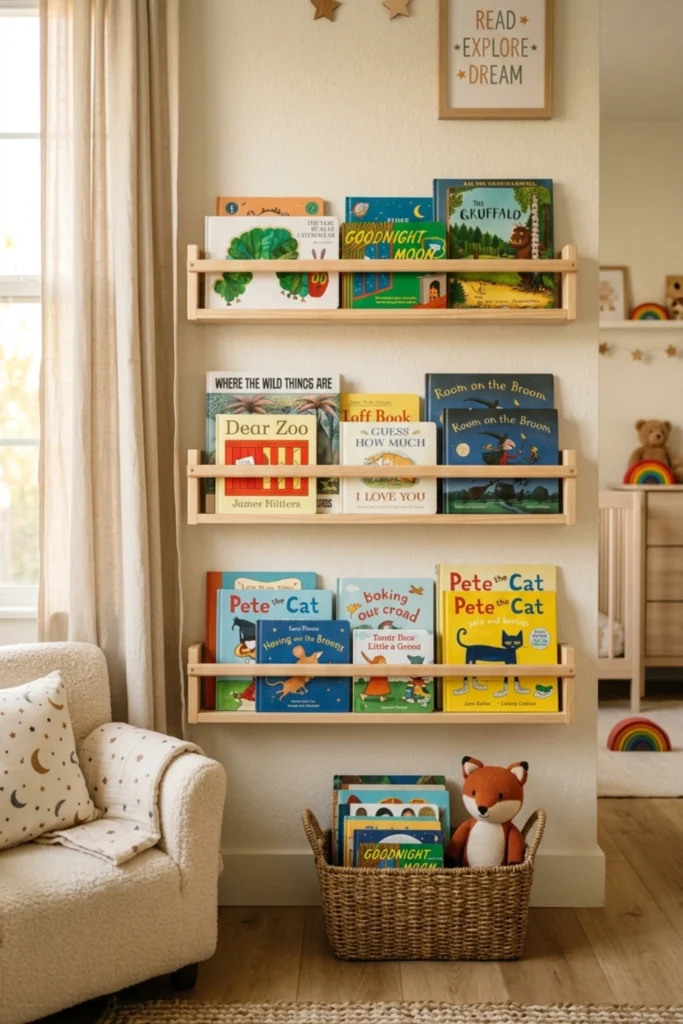
Children’s books stored spine-out on a shelf become invisible to children — and unread.
Books displayed cover-forward become irresistible.
Book display options that work:
- Front-facing wall-mounted book ledges — covers visible, books accessible
- A low forward-facing bookshelf — covers displayed, easily browsed
- A small book basket — current favorites in a handled basket at floor level
- A rotating book display stand — turns to browse available titles
- A fabric wall book pocket — multiple covers displayed on the wall
The rule: if a child can see the cover, they’ll choose the book. Display covers — always.
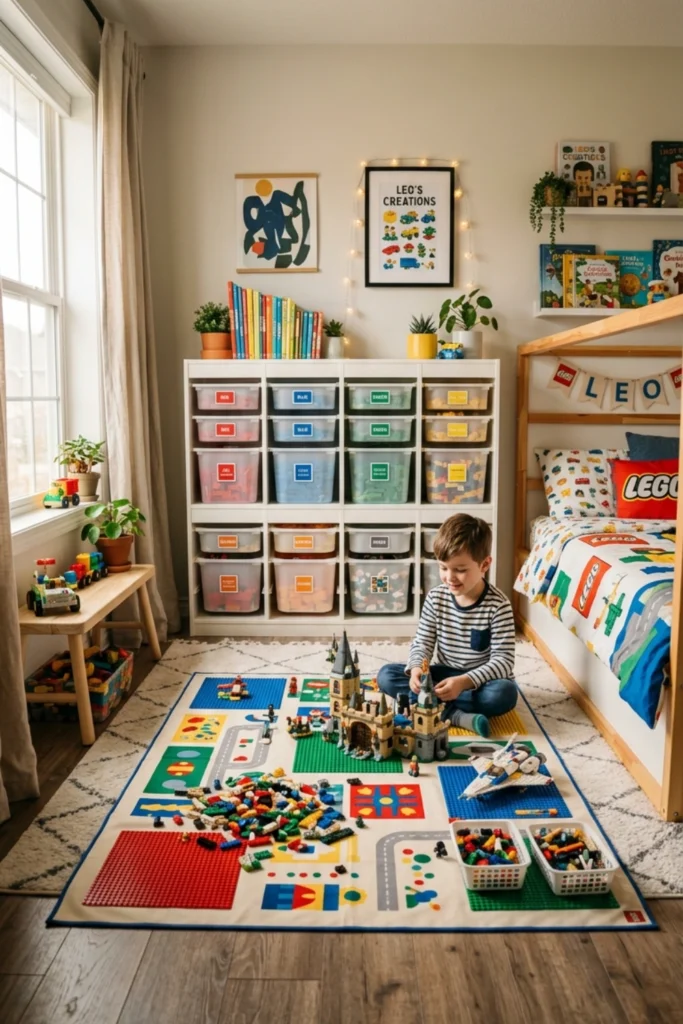
14. Lego and Small Parts Organization
Lego is the toy that defeats more organization systems than any other.
Small parts. Many categories. Sets that combine and separate. A system that requires both storage and play surface simultaneously.
The drawstring play mat is the Lego organization solution Pinterest saves most.
15. Stuffed Animal Storage Solutions
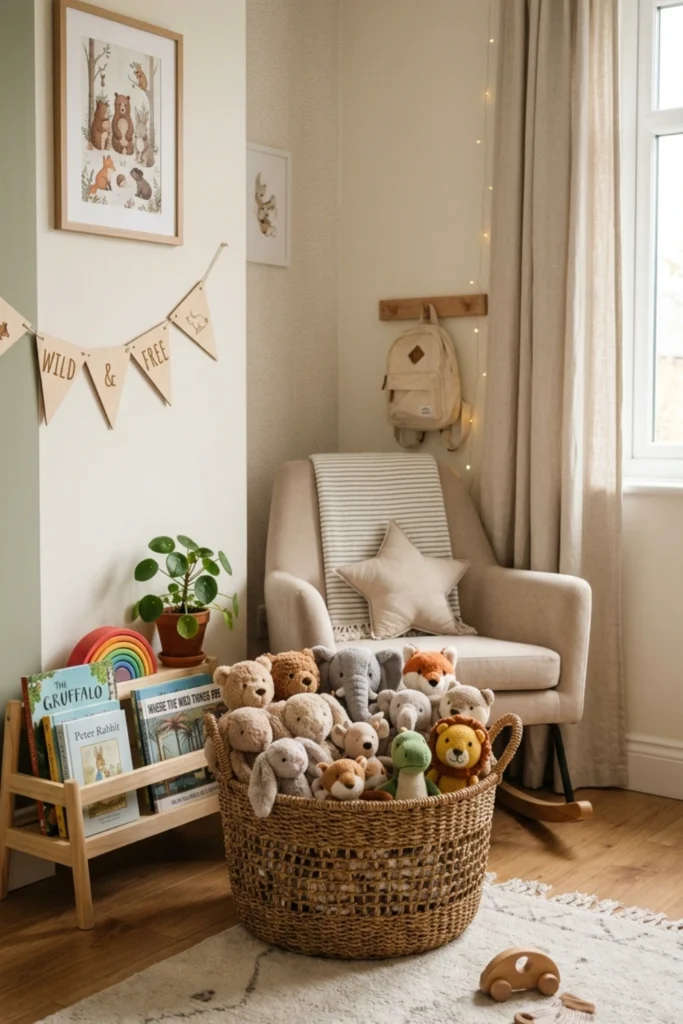
Stuffed animals multiply. They pile on beds, fill corners, spill onto floors.
A dedicated stuffed animal storage solution contains them beautifully — while keeping the child’s favorites accessible.
The rule: if it doesn’t fit in the designated stuffed animal zone — the collection needs editing.
One large basket or hammock net. The collection fits — or gets edited. Explore Next: Paper Organization Ideas
16. A Dress-Up and Costume Zone
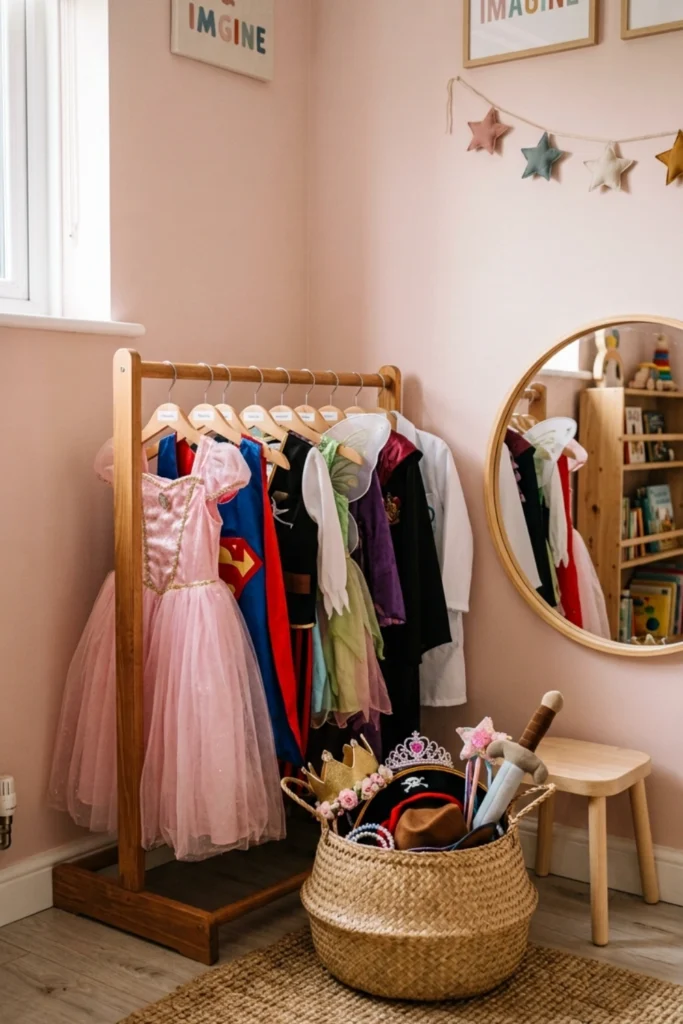
Dress-up clothes and costumes are among the most played-with items in a young child’s room — and among the most chaotic if they don’t have a dedicated space.
The dress-up zone:
- A small low-hanging clothing rail — costumes hung on child-sized hangers
- A mirror at child height beside the rail — the finishing touch for any outfit
- A small basket below — for accessories, crowns, wands, shoes
- A labeled section — keeps the zone defined and contained
When the dress-up zone is accessible, organized, and positioned near a mirror — children use it constantly and return items more reliably.
17. The Daily Tidy Basket
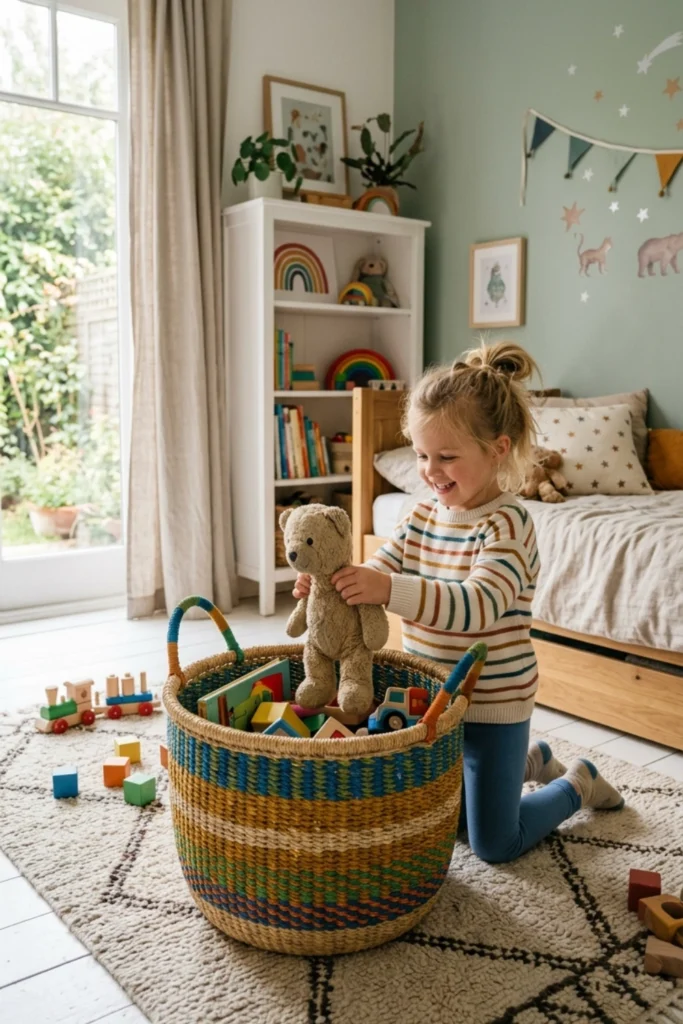
Every kids room needs a daily tidy basket — and it’s the simplest idea on this list.
A single large, beautiful basket — placed in the center of the room or near the door.
At tidy time — everything that doesn’t have an immediate home goes into the basket. Then, and only then, items get returned to their correct bins and shelves.
This two-step process is dramatically faster than trying to return everything to its exact home in one pass. Collect first. Sort second.
Children as young as three can participate meaningfully in this system.
Collect everything into the basket first. Sort second. Tidy time takes half as long.
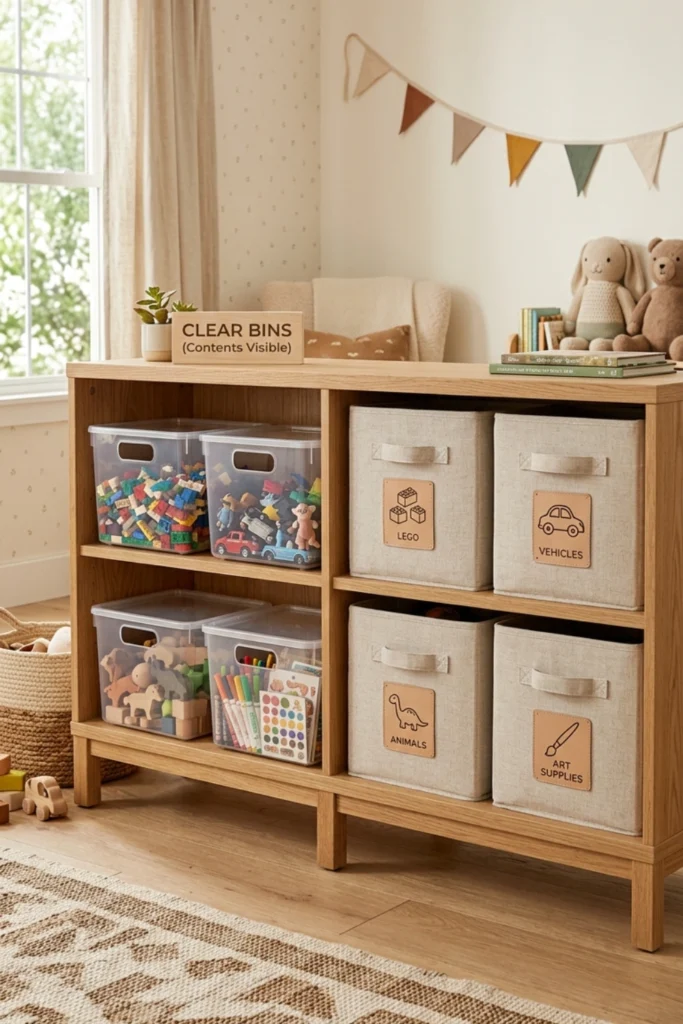
18. Clear Bins vs Opaque Bins
This is the most debated kids room organization decision — and the answer depends entirely on the child.
Clear bins:
- Children can see what’s inside without opening
- Faster to find items
- Faster to return items
- Works better for younger children and pre-readers
- Looks slightly more clinical — less cozy
For children under six — clear bins almost always work better. For children over six with a reliable reading ability — opaque bins with consistent labels work well.
Clear for younger children. Opaque for older ones. The age determines the system.
19. Seasonal Toy Rotation
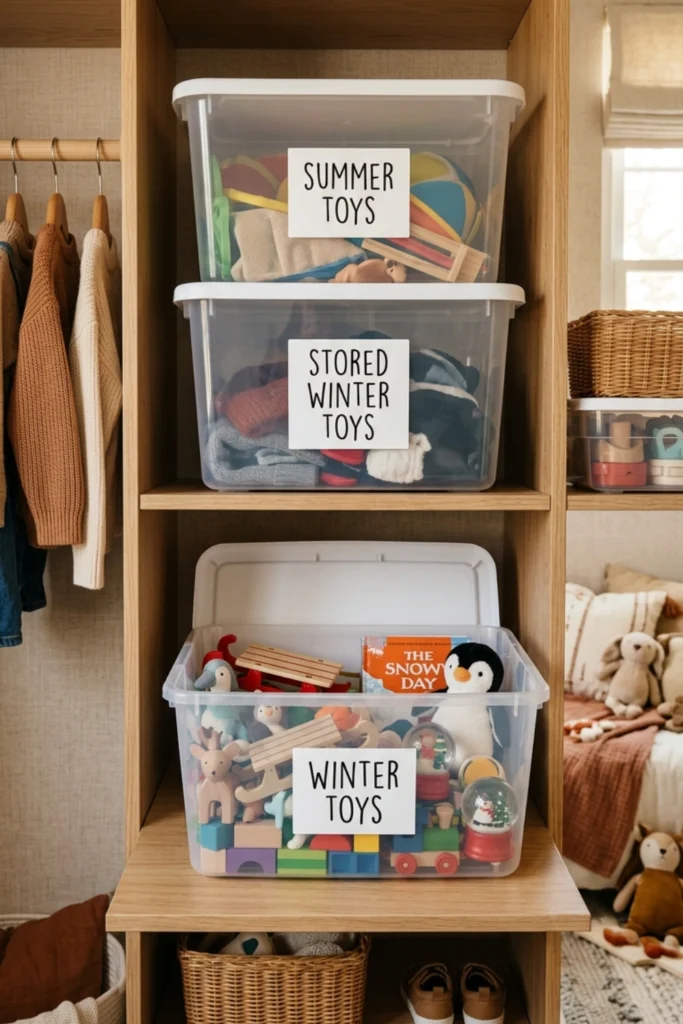
Beyond the weekly rotation — a full seasonal toy swap twice a year.
The seasonal swap also creates a natural opportunity for the full edit — assessing what’s been played with, what’s been outgrown, and what should be donated before the next season’s toys arrive.
The seasonal toy swap is the annual refresh that keeps the room from overflowing.
20. The Back of Door Opportunity
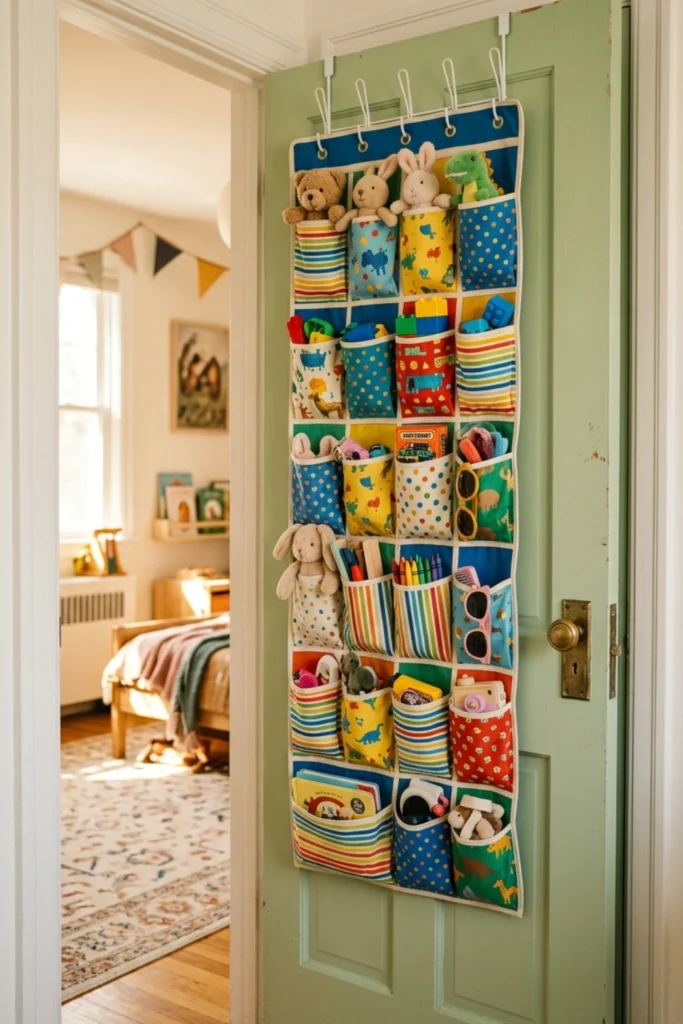
The back of the kids room door is consistently wasted space — and in a child’s room, it’s valuable real estate.
Choose organizers in colors and materials that complement the room. The door organization should feel like part of the design — not an afterthought.
21. A Display Wall for Artwork
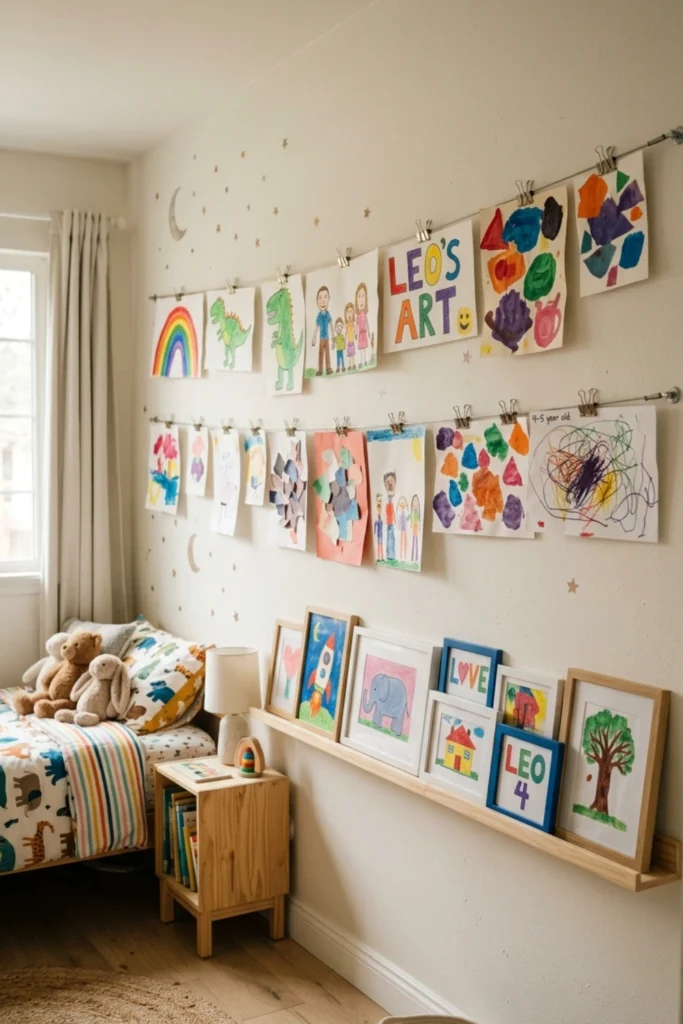
Children create prolifically. Without a system, artwork covers every surface, fills every drawer, and creates guilt-laden clutter.
A dedicated display wall solves this — and makes the child feel genuinely celebrated.
The rule: the display wall has a capacity. When it’s full — the oldest piece moves to the portfolio box or is donated.
A display wall celebrates the child. A portfolio box preserves the art. Both are necessary.
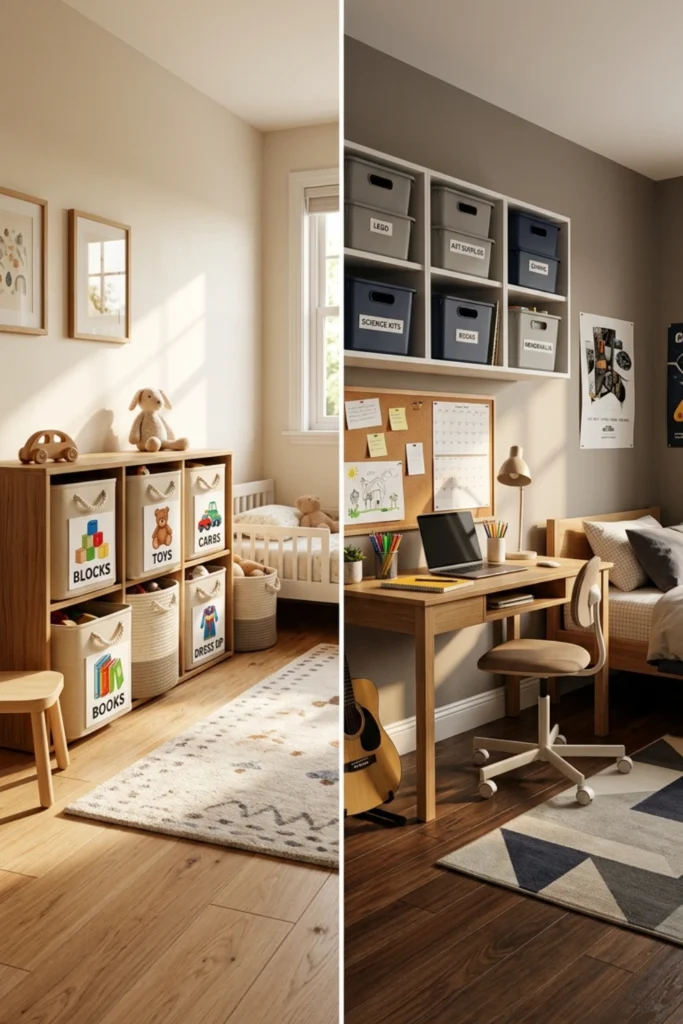
22. Age-Appropriate Organization Systems
The organization system for a two-year-old is completely different from the one for a ten-year-old.
By age:
Ages 2-4:
- Large open bins — one category, easy drop-in
- Picture-only labels
- Maximum five categories total
- Floor-level only — no shelves above waist height
Ages 5-7:
- Clear bins with picture-plus-word labels
- More categories — eight to ten
- Low open shelving system
- Beginning of daily tidy habit
The best kids room organization system is the one designed for the child’s current age.
23. The Five-Minute Tidy Habit
The system is built. The bins are labeled. The zones are defined.
Now — the habit that keeps it working.
The five-minute tidy. Every day. Same time. Non-negotiable but brief.
For older children — it becomes a routine as automatic as brushing teeth.
Five minutes daily prevents the Saturday afternoon marathon tidy session. The room never fully descends into chaos because it’s reset every day.
Five minutes daily. The room never gets bad enough to require a Saturday.
Tidy Rooms Are Built on Systems — Not Willpower
Children don’t tidy rooms because they lack willpower or because they don’t care.
They don’t tidy rooms because the system doesn’t make it easy enough.
When every toy has a bin. When every bin has a label they understand. When everything is at their height. When tidy time takes five minutes instead of thirty.
Children tidy rooms.
That’s the whole secret. The system does the work — not the child’s motivation.
Save this to your kids room organization board. Come back when you’re ready to start.
Which idea are you implementing first? Tell me in the comments.