
17 Fridge Organization Ideas That Keep Food Fresh Longer
Open your fridge right now.
If finding what you need requires moving three things, squinting at expiry dates, or accepting that something in the back has probably been there too long — this is for you.
An unorganized fridge doesn’t just look chaotic. It actively costs money. Food gets buried, forgotten, and wasted. Produce wilts because it’s not stored correctly. Leftovers disappear behind condiments and resurface two weeks later. The weekly grocery shop adds more to an already overfull shelf system that was never designed to hold it all.
An organized fridge changes the entire rhythm of the kitchen.
Cooking becomes faster because ingredients are visible and accessible. Food lasts longer because it’s stored correctly. Grocery shopping becomes more accurate because you can actually see what you have and what you need.
These 17 fridge organization ideas give you the complete system — from the initial edit to the weekly habit that keeps it working indefinitely.
Save this. Your fridge — and your grocery budget — will thank you.
1. The Complete Fridge Empty-and-Edit
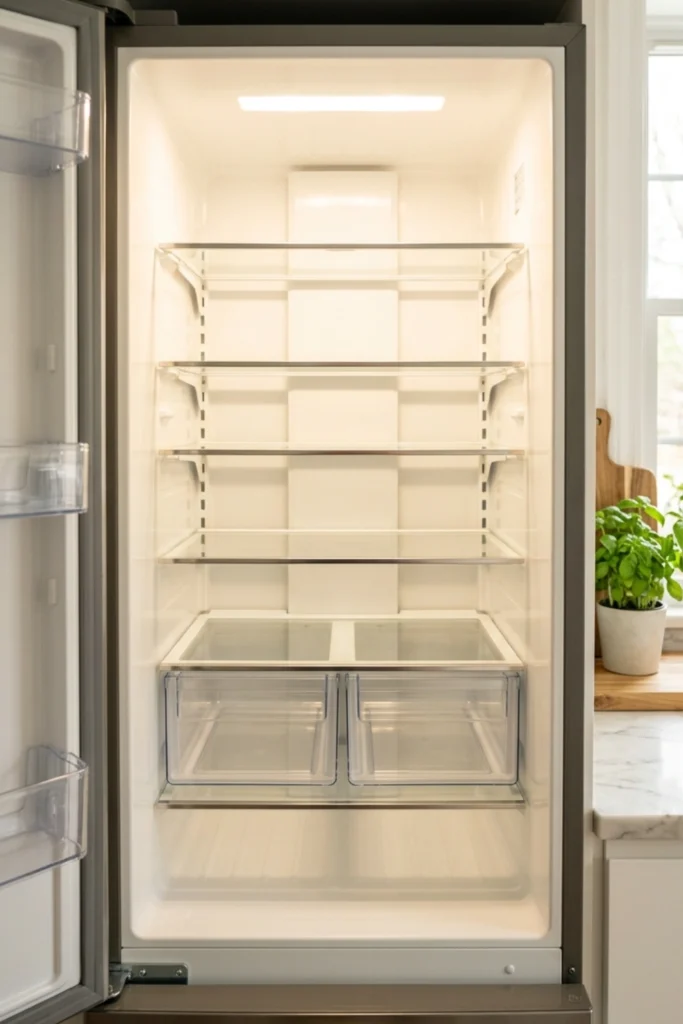
Before a single bin goes in — everything comes out.
Most people discover twenty to thirty percent of their fridge contents is either expired, duplicated, or doesn’t need refrigeration. The edit alone creates significant space before a single organizer is purchased.
Wipe every surface while it’s empty. The organized fridge starts clean.
A clean, edited fridge is the foundation everything else builds on.
2. The Zone System — Every Shelf Has a Purpose
The single most impactful fridge organization principle — and the one that makes everything else work.
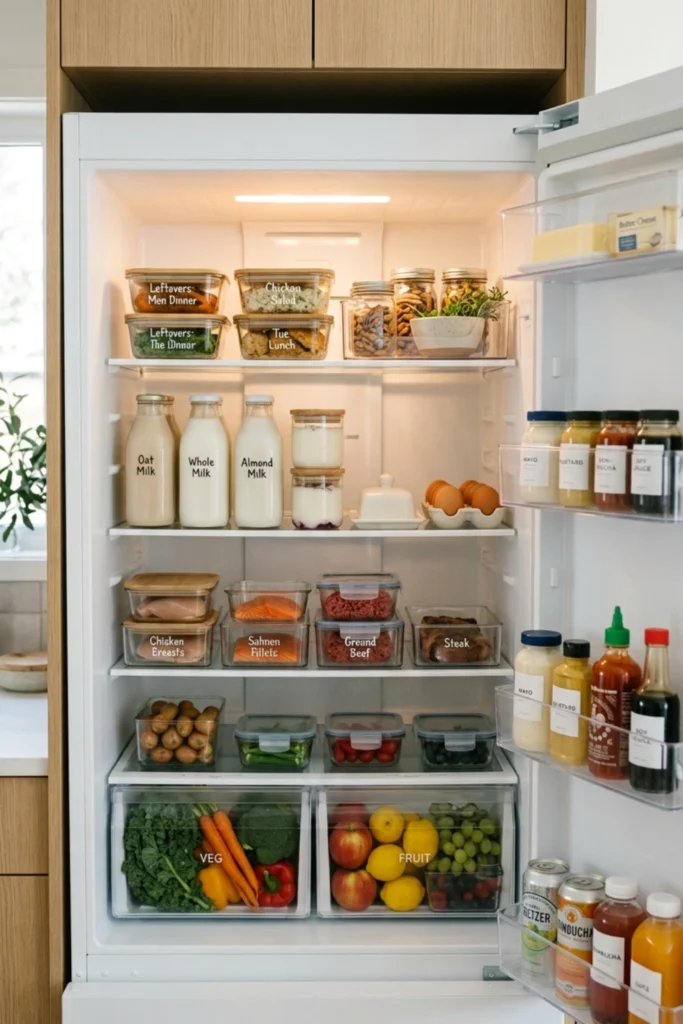
Assign every shelf a specific category. Every item goes on the shelf that matches its category. Every time the fridge is restocked — items return to their correct shelf automatically.
Assign zones first. Buy organizers second. This order matters.
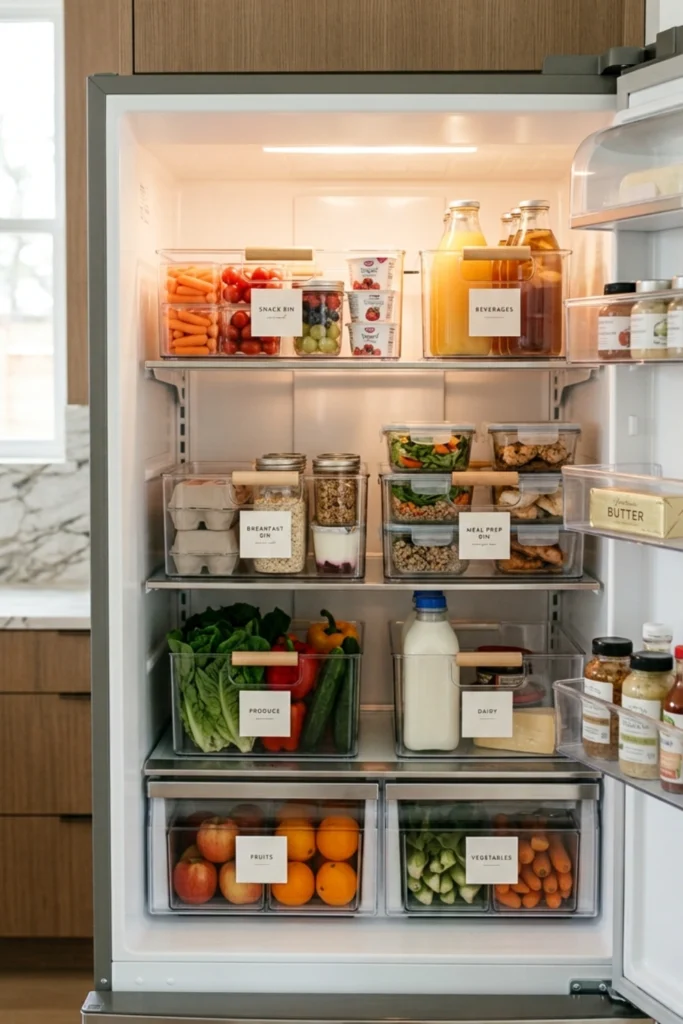
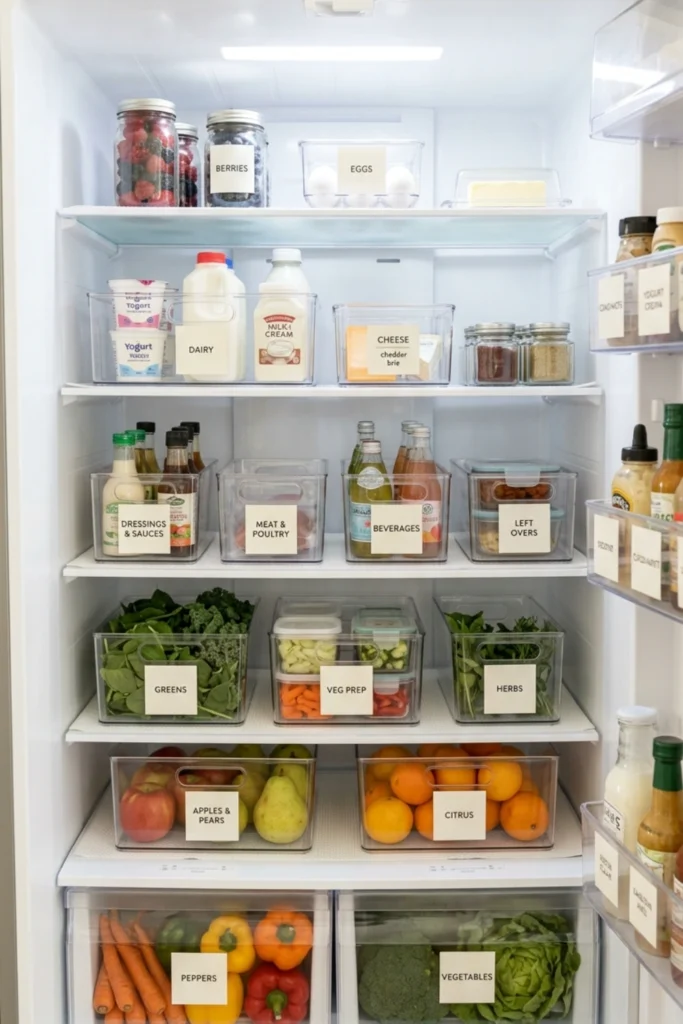
3. Clear Bins for Every Category
Clear bins are the most transformative fridge organization purchase available.
They group similar items together, prevent things from rolling to the back, make every item visible without moving anything, and create a visual order that makes the fridge look intentional rather than stocked.
Choose bins in one consistent style — all clear, all the same height. They should look uniform even when the contents vary.
Clear bins make a refrigerator look like it belongs in a lifestyle magazine. Also Read: Home Organization Ideas
4. The Lazy Susan Turntable
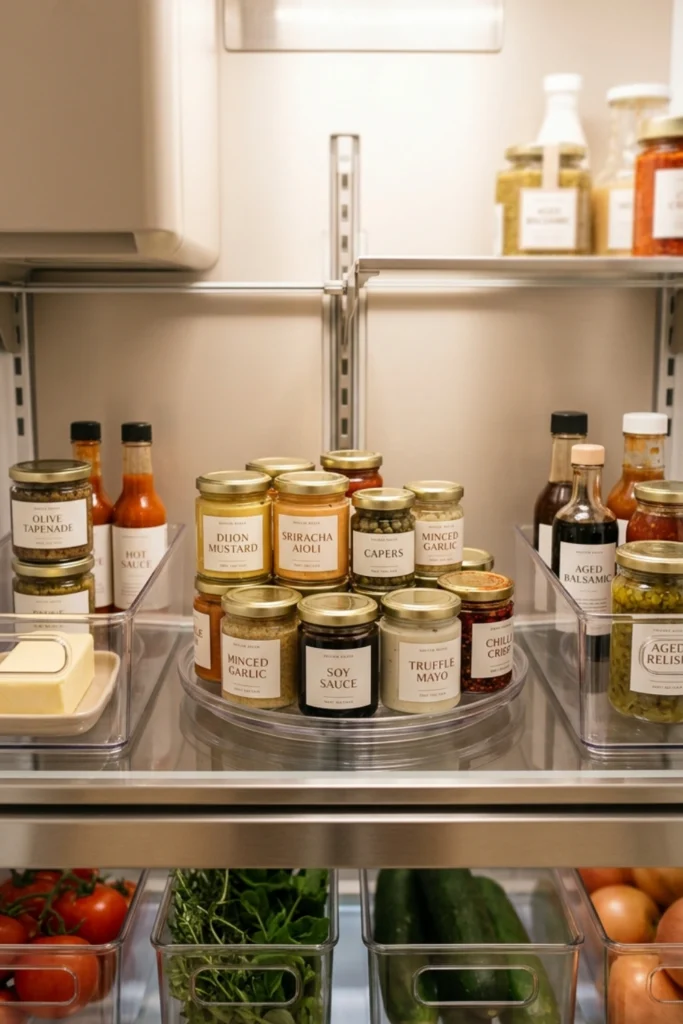
The back of the fridge shelf is where food goes to be forgotten.
A lazy Susan turntable — placed on a shelf or inside the door — brings the back to the front with a single spin. Condiments, small jars, sauces, and drinks rotate into view without reaching or moving items in front.
Choose a clear or white turntable that fits the shelf dimension. Non-slip base prevents spinning during fridge closure.
A fridge lazy Susan is the most underrated five-dollar kitchen purchase.
5. Produce Drawer Liners
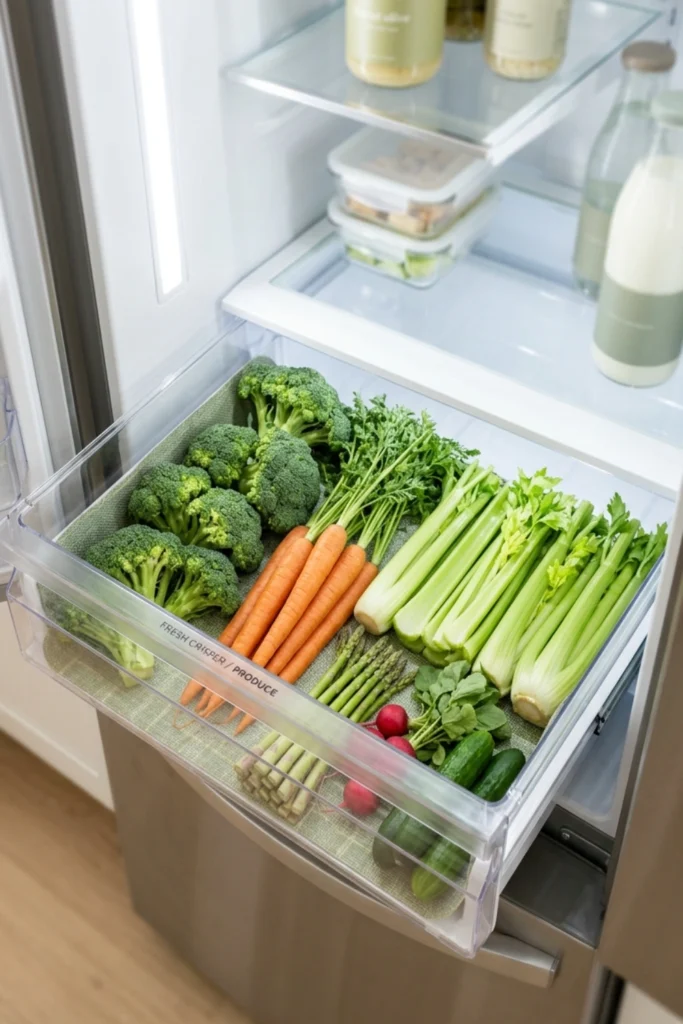
The crisper drawer is where vegetables go to wilt prematurely — in most fridges.
Produce drawer liners solve this by absorbing excess moisture, allowing air circulation beneath the produce, and preventing the ethylene gas build-up that accelerates ripening and decay.
Produce lasts significantly longer — often double the typical shelf life — with a liner in place.
Produce drawer liners might be the most money-saving fridge organization purchase that exists. More Inspiration: Under Sink Organization Ideas
6. The Egg and Dairy Zone
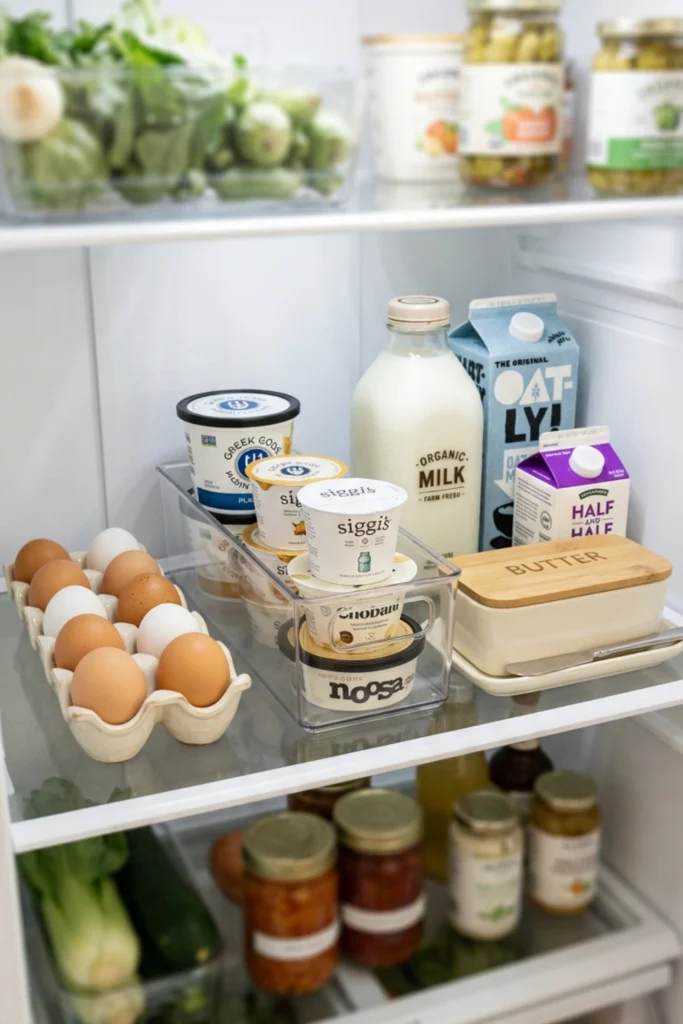
Eggs and dairy are among the most temperature-sensitive items in the fridge — and they’re often stored in the worst possible location.
The fridge door is the warmest part of the refrigerator. Eggs and dairy stored there experience more temperature fluctuation every time the door opens.
The correct egg and dairy storage:
- Eggs — middle shelf, in their original carton or a dedicated egg holder
- Milk — back of the middle shelf, coldest and most consistent temperature
- Butter — front of middle shelf or in the dedicated butter compartment
- Cheese — deli drawer or dedicated cheese bin with slight humidity
- Yogurt — middle shelf, grouped in a clear bin
Moving eggs from the door to the middle shelf alone extends their freshness significantly.
7. A Dedicated Leftover Shelf
Leftovers are the category most consistently lost in an unorganized fridge.
They get pushed to the back. They get buried behind fresh groceries. They get forgotten — and discovered a week later.
A dedicated leftover shelf — the top shelf, most visible, most accessible — solves this permanently.
When leftovers are visible, they get eaten. When they’re buried, they become food waste.
A dedicated leftover shelf is the single change that most reduces food waste. Keep Reading: Junk Drawer Organization Ideas
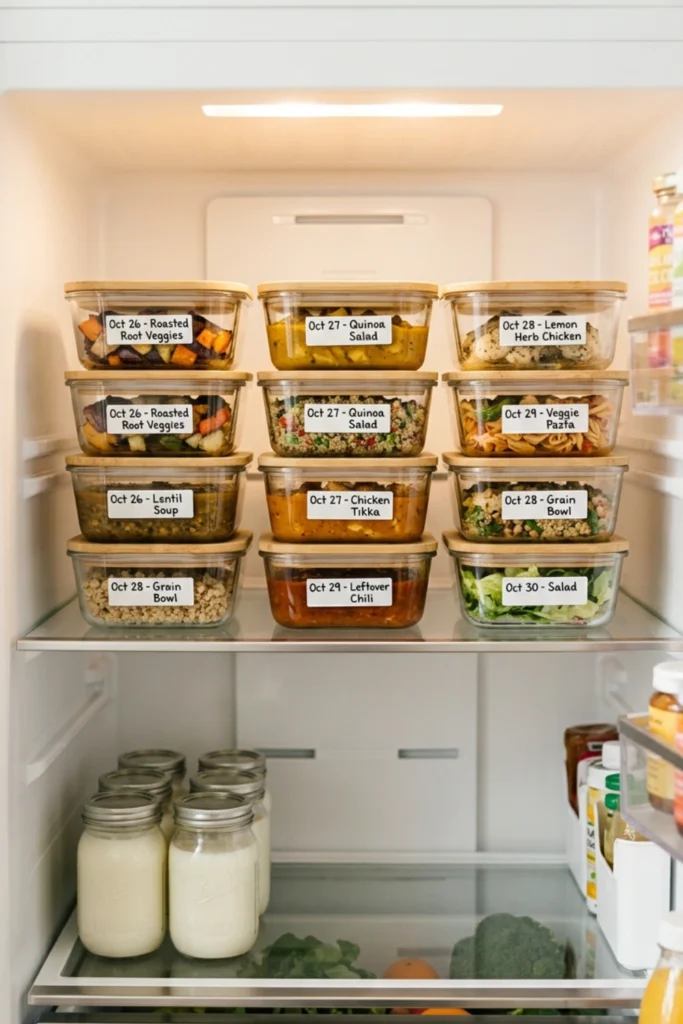
8. Matching Containers for Leftovers
This is the detail that makes a fridge look intentional — and makes food storage more effective simultaneously.
Mismatched takeout containers, plastic bags, and random tubs make a fridge look chaotic even when it’s organized by zone and cleared of expired items.
Matching glass or clear plastic containers — all the same brand, all stackable, all the same lid style — create visual calm and practical function simultaneously.
Why glass containers work best:
- See the contents without opening
- Stack cleanly and uniformly
- Go from fridge directly to oven or microwave
- Don’t absorb smells or stains
- Last significantly longer than plastic
One matching container set transforms the aesthetic of any refrigerator.
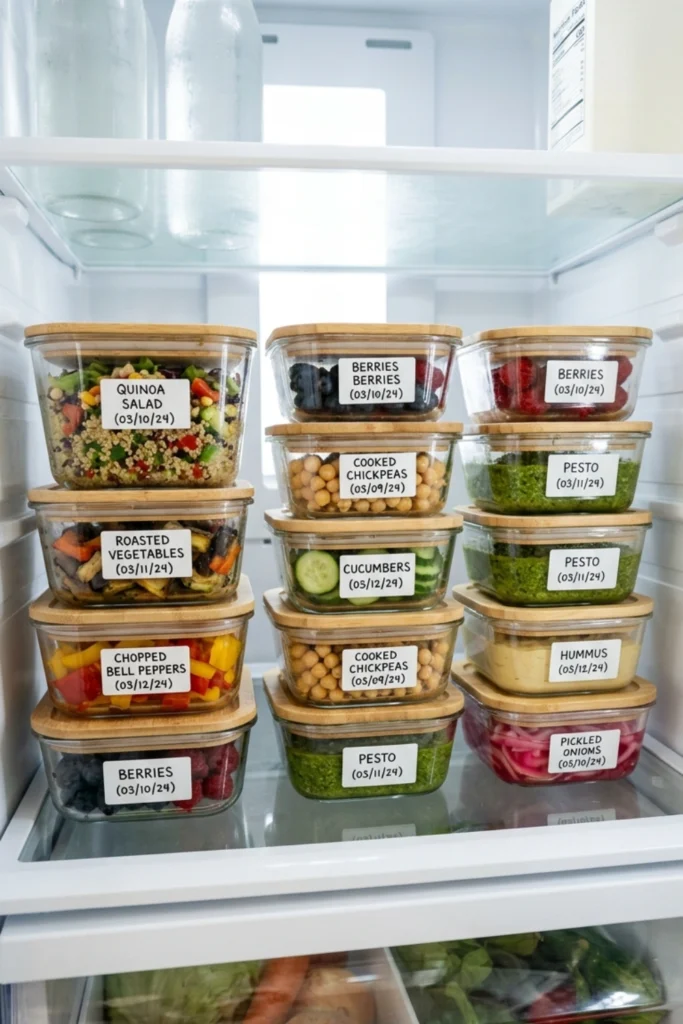
9. The Door Organization Reset
The fridge door is the most disorganized section of most refrigerators — and the section that needs the most intentional system.
The door should hold only what’s used at least twice a week. Everything else relocates. You May Also Like: Minimalist Home Organization Ideas
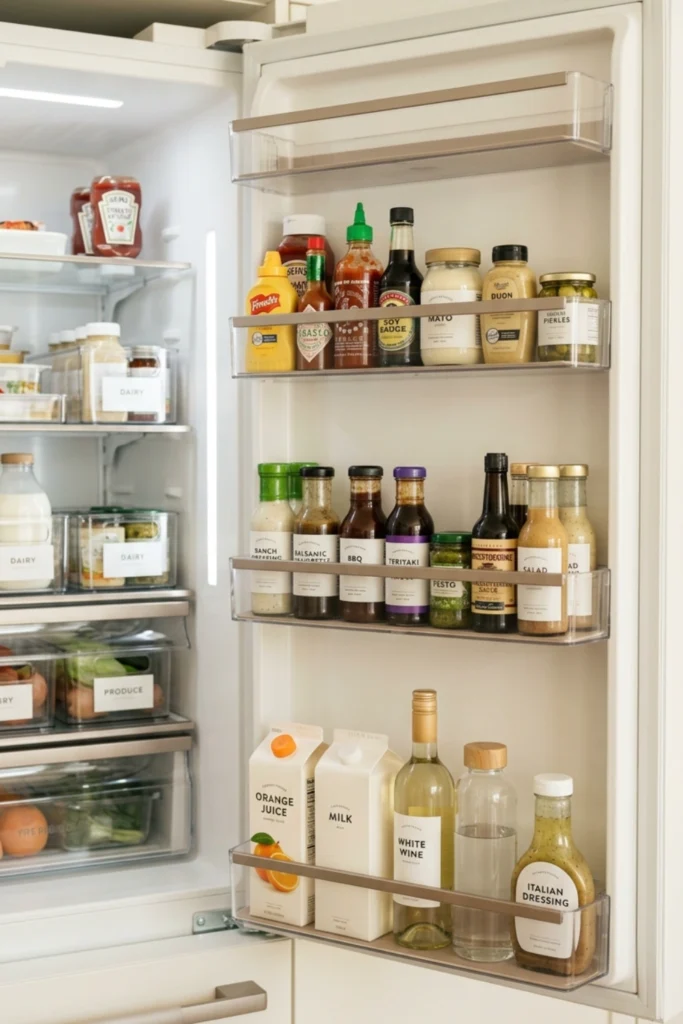
10. Drink and Beverage Organization
Drinks are one of the bulkiest categories in any fridge — and the one most likely to create visual chaos.
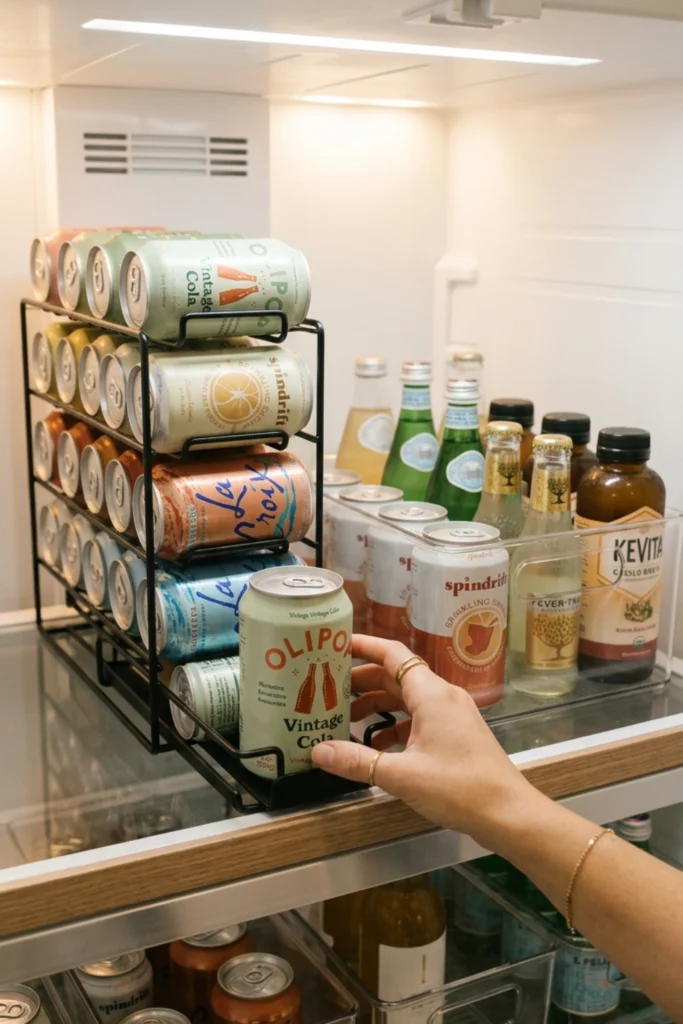
Cans rolling. Bottles falling. A full shelf dedicated to a single type of drink.
When drinks have their own zone — they stop spilling into every other shelf in the fridge.
A can dispenser rack is the most satisfying fridge organization product you’ll ever buy.
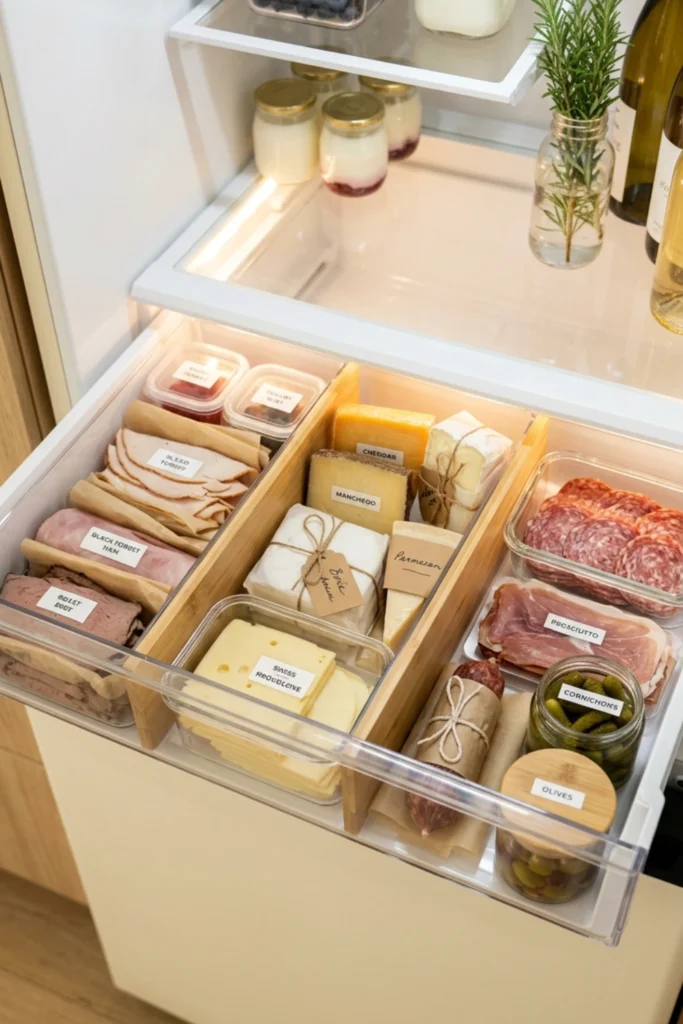
11. The Deli and Cheese Drawer
The deli drawer — or the drawer designated for cold cuts, cheese, and charcuterie — is one of the most-used storage zones in the fridge.
It’s also one of the most consistently disorganized.
The rule: nothing lives in the deli drawer that isn’t deli. When the drawer has one category — it stays organized. Explore Next: Home Command Center Ideas
12. Stackable Produce Containers
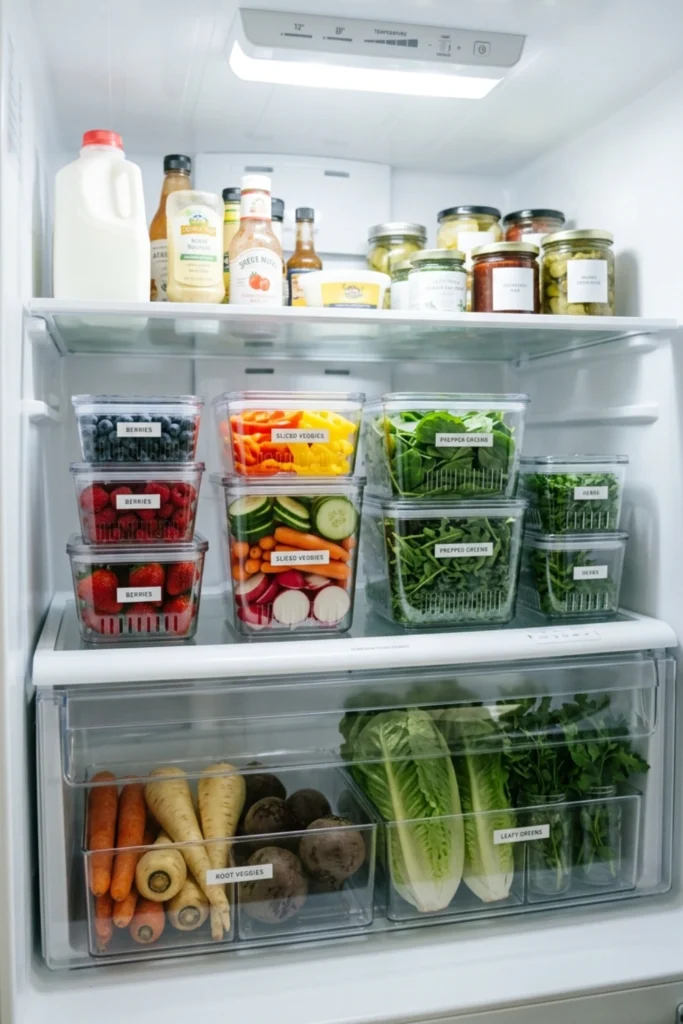
Produce stored loosely in the crisper drawer wilts faster, gets forgotten, and creates the wet, slimy drawer situation that nobody wants to deal with.
Stackable produce containers — designed with ventilation and moisture control — extend the life of fruits and vegetables significantly while keeping the crisper organized and clean.
Produce container benefits:
- Ventilation slots maintain optimal humidity
- Stacking maximizes drawer and shelf space
- Clear sides make contents visible without opening
- Easy to clean when produce is changed out
- Can be used on shelves for pre-washed, ready-to-eat produce
Wash and prep produce when it arrives. Store it in containers. Open the fridge — everything is ready to use.
13. Labels and Expiry Dates
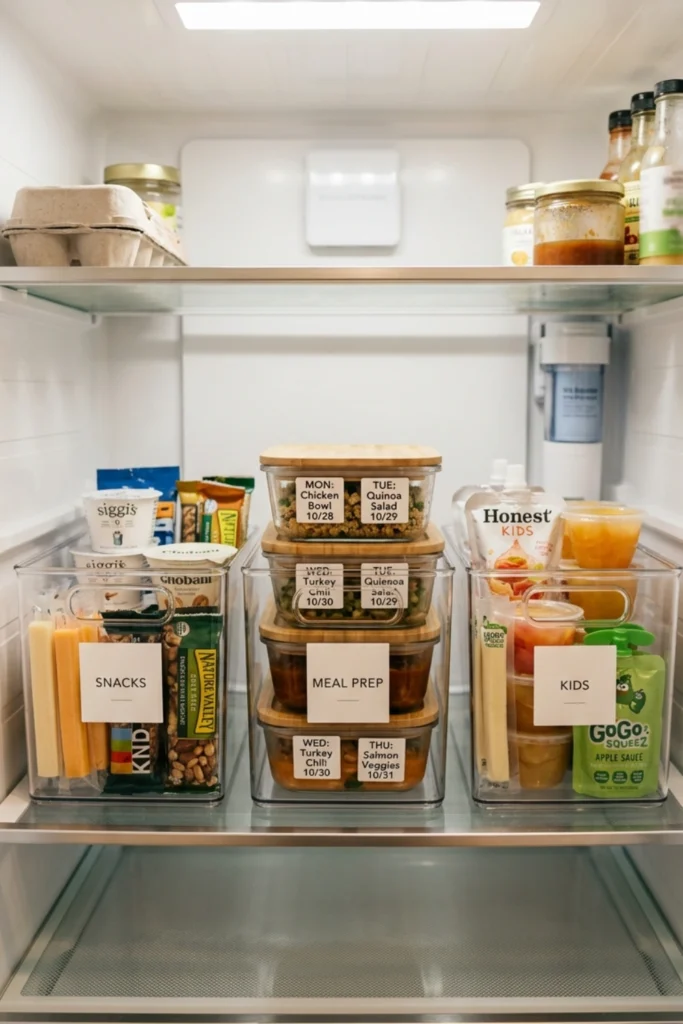
Labels are the organizational detail that prevents food waste — and the one most people skip.
A labeled fridge is a fridge where nothing gets forgotten.
The fridge label system:
- Date labels on all meal prep containers — prepared date on the lid
- Expiry date visible on all items decanted from original packaging
- Category labels on the front of each bin — “snacks,” “meal prep,” “kids”
- Shelf labels — small adhesive label on the shelf edge showing what belongs there
- Leftover containers — “eat by” date rather than preparation date
Choose one label style — write-on chalkboard labels, printed adhesive labels, or a wet-erase marker directly on containers.
Consistency makes the system work for every member of the household.
A labeled fridge is a fridge where nobody eats something expired by accident.
14. The FIFO Rule — First In First Out
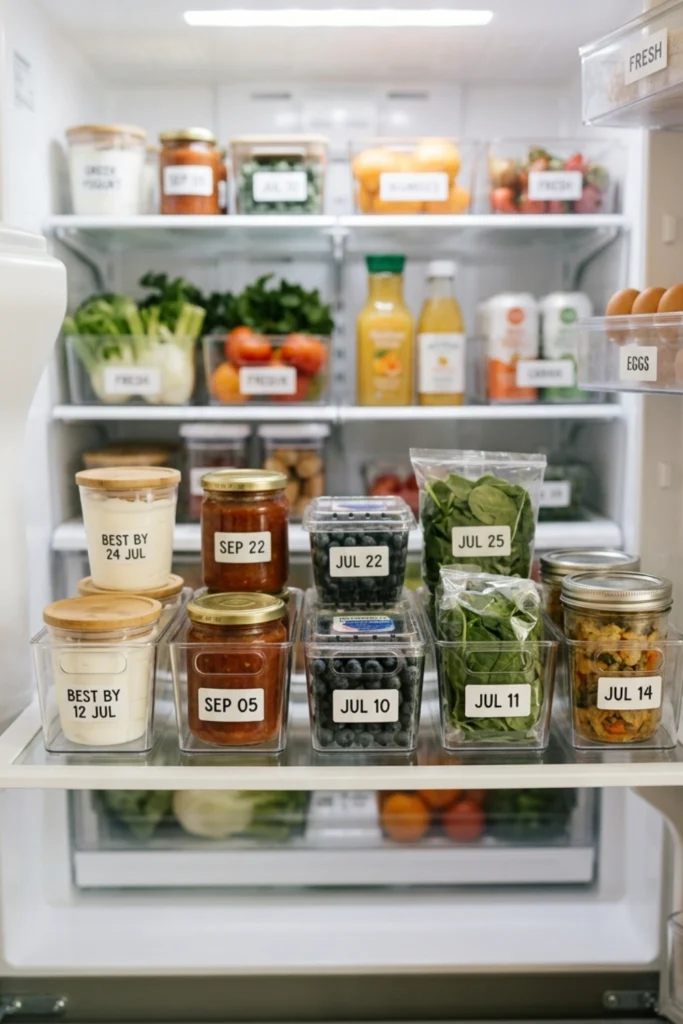
The system used by every restaurant kitchen — applied to the home fridge.
First In First Out means the oldest items always move to the front. New groceries go to the back. The items closest to expiry are always the most accessible.
FIFO applied to the home fridge:
- When unpacking groceries — move existing items to the front, put new ones behind
- Leftovers — oldest containers go to the front of the leftover shelf
- Produce — newest produce goes under, oldest on top in containers
- Dairy — newest goes to back, oldest to front
- Condiments — when a new bottle is opened, the old one finishes first
FIFO is a habit — not a product. But it’s the habit that reduces food waste more than any organizational system.
First In First Out is the rule that saves hundreds of dollars in food waste annually.
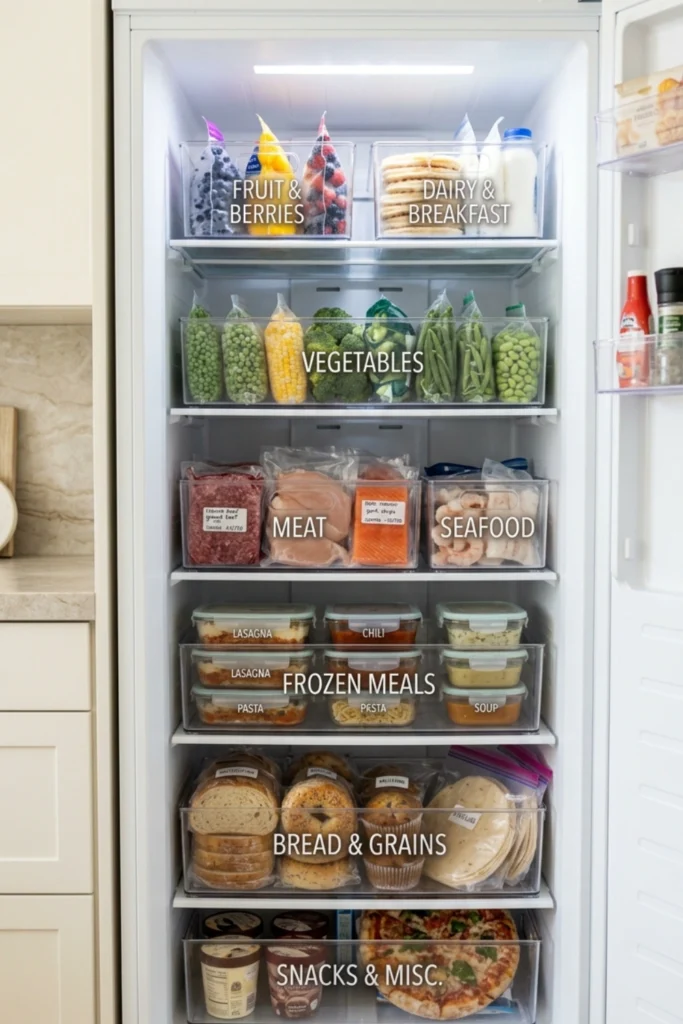
15. Freezer Organization System
The freezer is the most neglected organizational space in the kitchen.
A chaotic freezer wastes food just as effectively as a chaotic fridge — items get buried, forgotten, and eventually discarded with freezer burn.
A freezer inventory list — posted inside the freezer door — prevents buying duplicates of things already in stock.
An organized freezer reduces food waste as much as an organized fridge.
16. The Refrigerator Liner System
A refrigerator liner — a washable mat placed on each shelf — makes the entire fridge easier to maintain and more pleasant to open.
Choose clear or white liners for the most neutral result. Washable and reusable — one set lasts years.
The liner system means the weekly fridge reset involves rinsing a mat rather than scrubbing a shelf. Five minutes instead of twenty.
17. The Weekly Fridge Reset Habit
The most organized fridge in the world becomes disorganized without one habit.
The weekly reset sequence:
- Before the grocery shop — open the fridge, check every item
- Discard anything expired or past its best
- Move all remaining items forward (FIFO ready for new stock)
- Wipe any spills or sticky surfaces
- Do the grocery shop with a clear view of what was actually in the fridge
- Unpack groceries using the zone system — new items to the back
The weekly reset is the maintenance system. The monthly reset is the deep clean.
Fifteen minutes before the grocery shop keeps the fridge organized indefinitely.
The Fridge That Makes Cooking Feel Easy
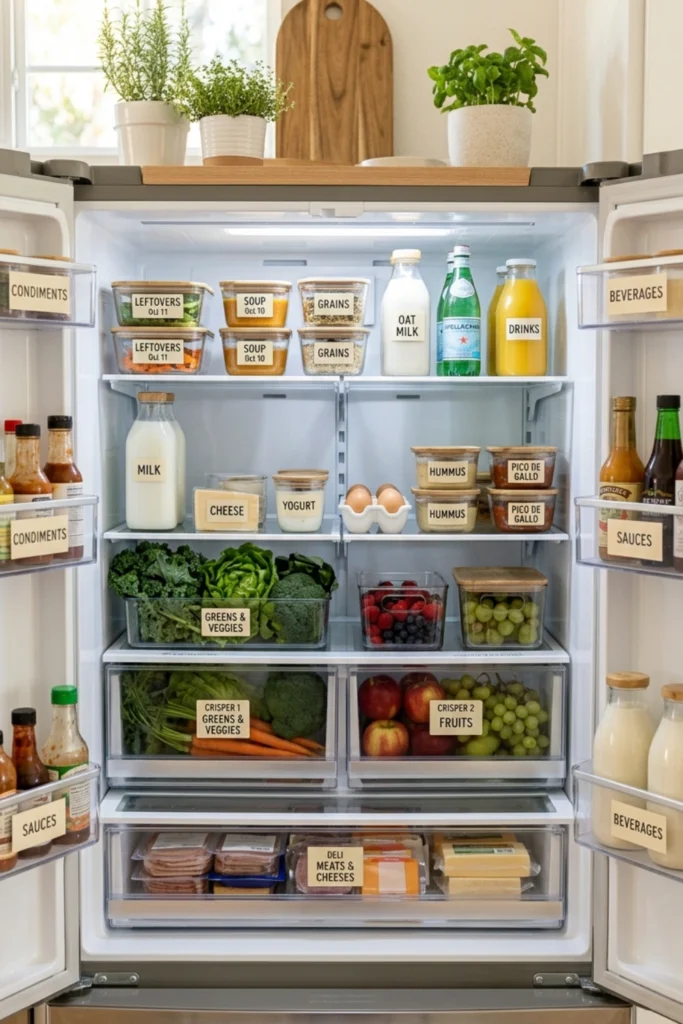
An organized fridge doesn’t just look better.
It changes how cooking feels. Opening the fridge to make dinner and seeing exactly what you have — prepped, labeled, stored correctly — is a completely different experience from rummaging through a full fridge to find one ingredient.
Food lasts longer. Less gets wasted. Grocery shopping becomes more accurate. The kitchen runs more smoothly.
Fifteen minutes this weekend. One edit. A system that maintains itself.
Save this to your home organization board. Come back when you’re ready to empty the fridge and start.
Which idea are you trying first? Tell me in the comments.