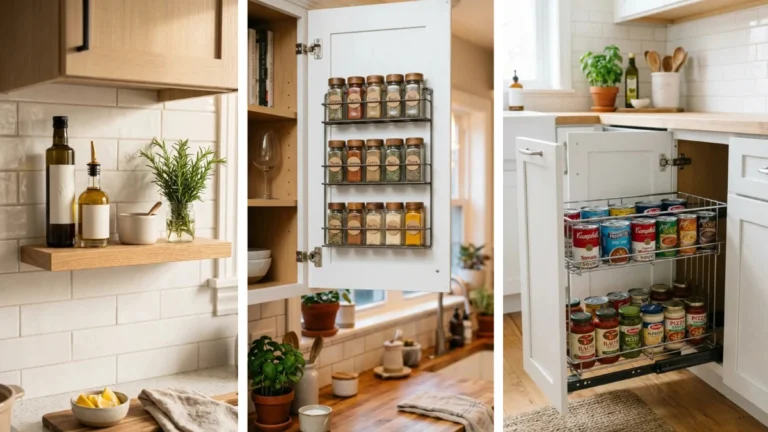
Most small rooms waste the space right under the window. That empty stretch of wall and floor usually collects dust, random bags, or a lonely chair that never gets sat in. Turning it into a window seat with built-in storage fixes two problems at once: you gain a comfortable place to sit and you hide the clutter that makes tight rooms feel smaller.
These 15 window seat storage ideas small space owners keep coming back to range from simple basket cubbies to full L-shaped banquettes and even flip-down desks. Some work for renters. Others suit permanent millwork. All of them add seating without eating extra floor area. You will see lift-top lids, sliding doors, radiator covers, floating benches, and fabric skirts. Pick the style that matches your window depth, your budget, and how much you need to stash. The goal is simple: sit more, see less mess.
1. Pair a Paneled Base with Vertical Bookcases for Small Alcoves
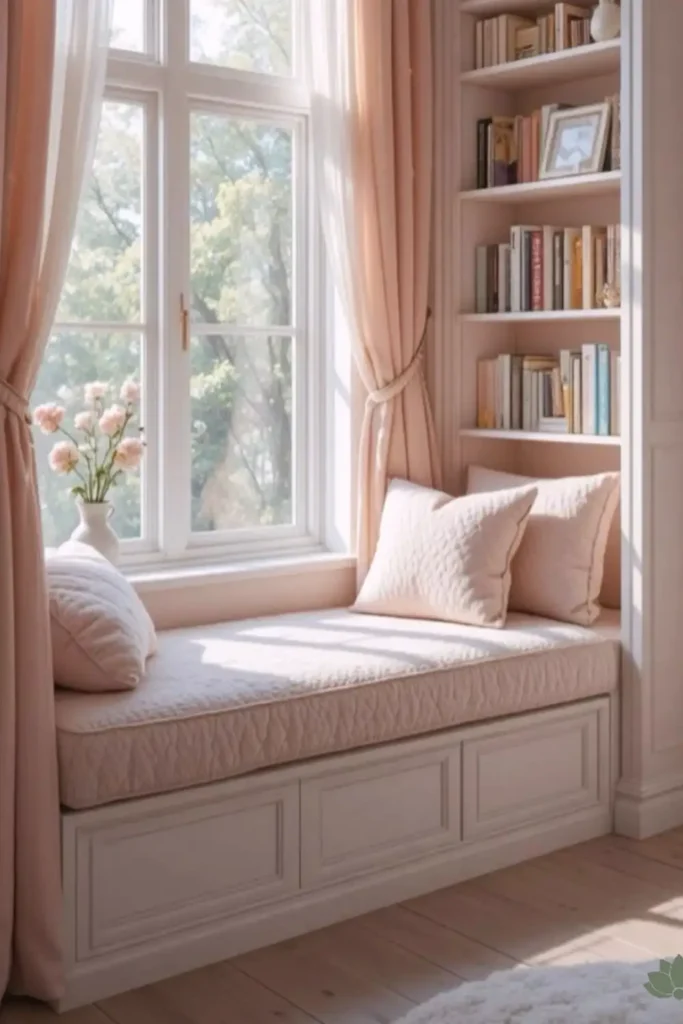
Stacking storage upward turns a tight window nook into a complete reading retreat. Built-in shelving units installed directly against the interior wall frame keep books within arm’s reach while preserving floor space. Below the seat cushion, recessed cabinet panels hide bulky clutter like extra pillows or bed linens out of sight.
- Soft pastel paint unifies the millwork with surrounding walls.
- Side shelves capture unused vertical wall area.
- Deep bottom cabinets tuck heavy items out of sight.
2. Use Low Sliding Doors and Slat Wood Framing for Modern Windows
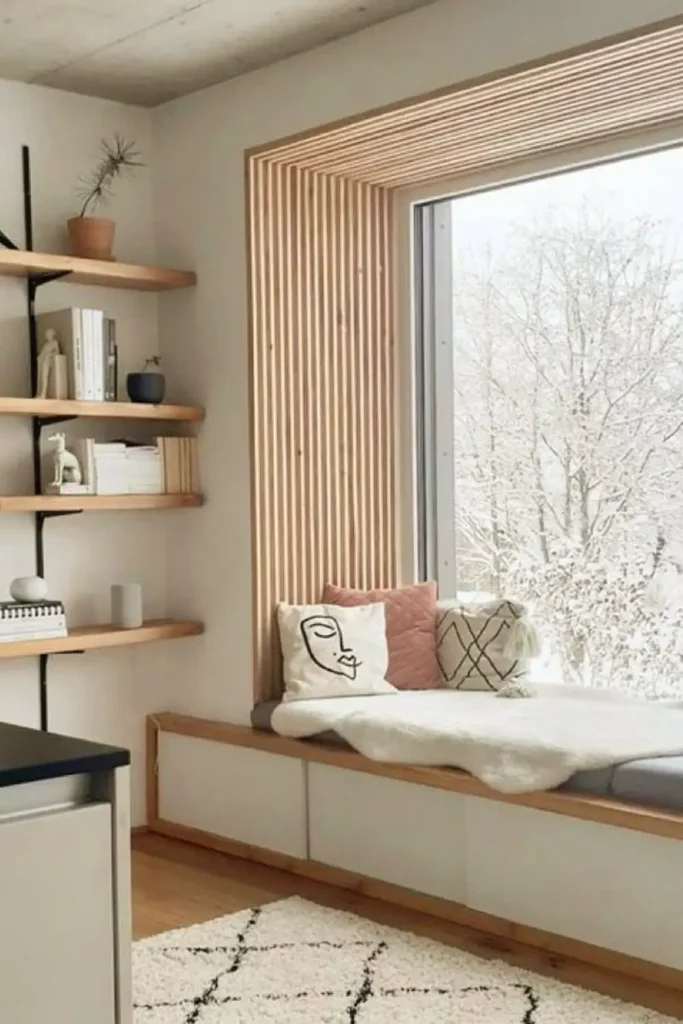
Traditional hinged doors require open floor space in front of a bench. Opting for smooth sliding front panels on a low-slung base allows you to store items without moving rug edges or floor decor out of the way. Wrapping the window bay in vertical wooden slats adds texture while drawing the eye toward natural light.
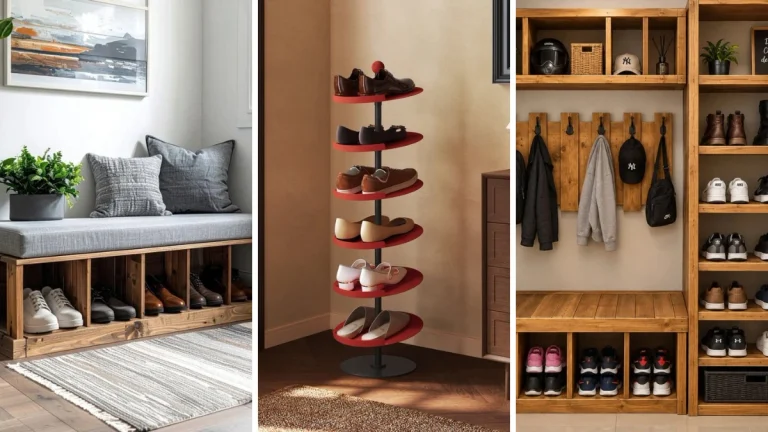
A clean Scandinavian bench design like this keeps narrow modern rooms feeling wide and uncluttered.
Opens smoothly next to rugs.
No extra swing clearance needed.
Bumps into floor cushions.
Requires clear space in front.
3. Frame the Window with Full Wall Bookshelves and Closed Cabinets
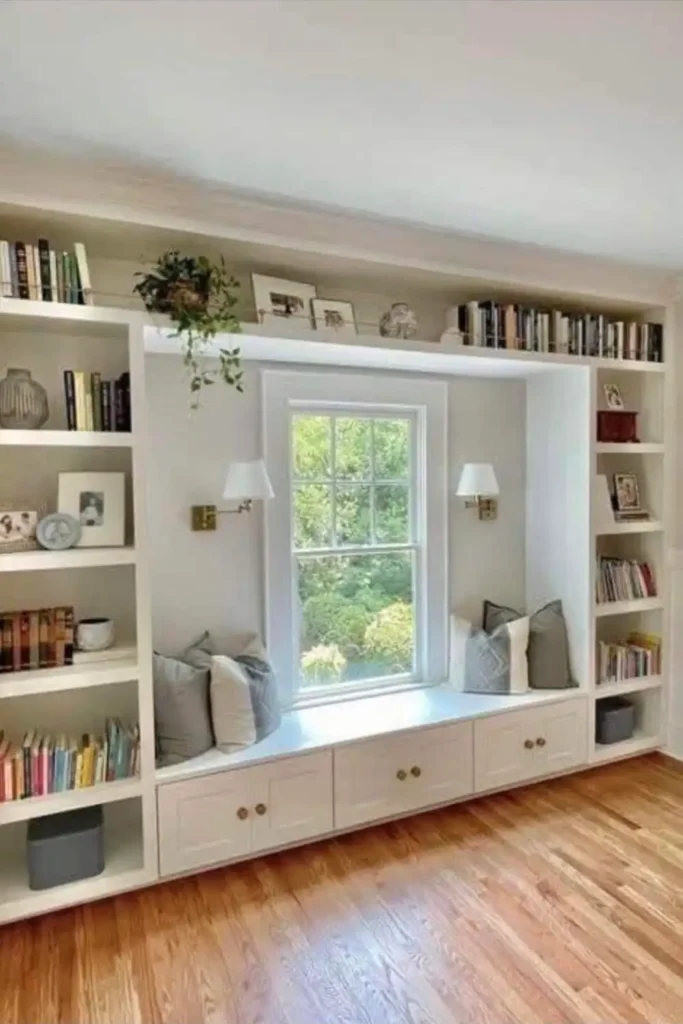
When living room floor space is limited, surrounding a window with floor-to-ceiling millwork maximizes every inch. This full surround design features double side bookcases, an overhead display bridge, and closed bottom cupboards with simple brass knobs.
- Bottom cabinets hide board games, cords, and mess.
- Top shelf holds overflow reading material.
- Brass sconces provide dedicated light for reading without taking up end table space.
💡 Millwork Layout Tip
Keep closed storage at the bottom and open shelving above eye level. This keeps heavy visual weight near the floor so the window area stays light and open.
4. Install Deep Pull Out Drawers for Quick Linen Access
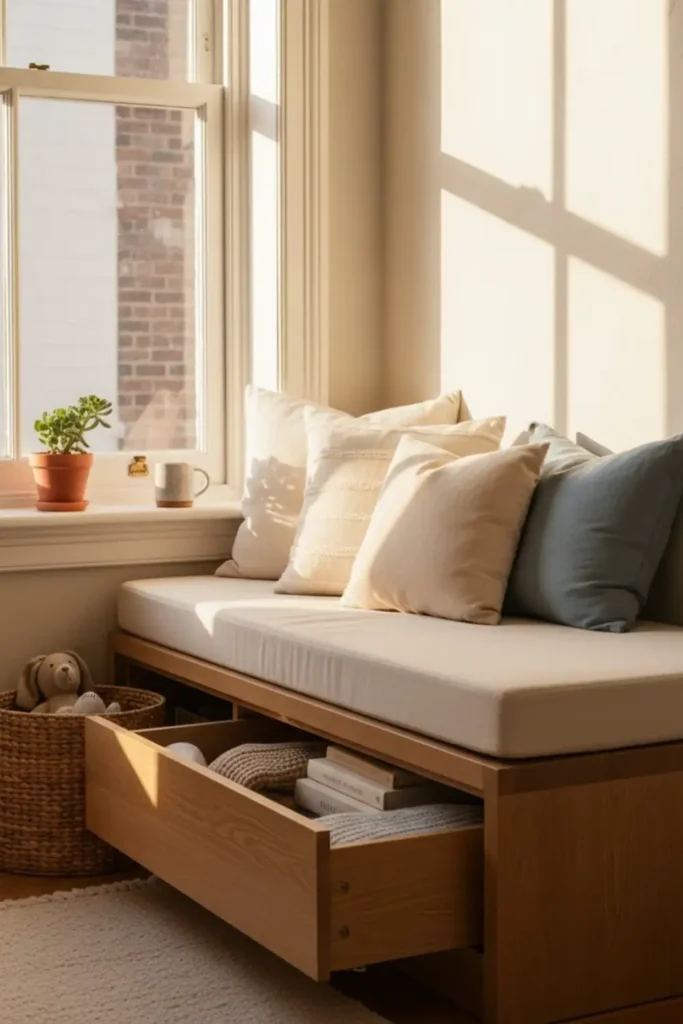
Lift-up bench tops force you to move seat cushions every time you need something inside. Building heavy-duty front drawers into an oak bench base gives you instant access to blankets, books, and winter gear with one smooth pull.
- Measure drawer depth to clear nearby rugs.
- Install full-extension glides for heavy loads.
- Pair natural oak with soft neutral upholstery for warmth.
5. Color Drench a Recessed Nook with Matching Low Drawers
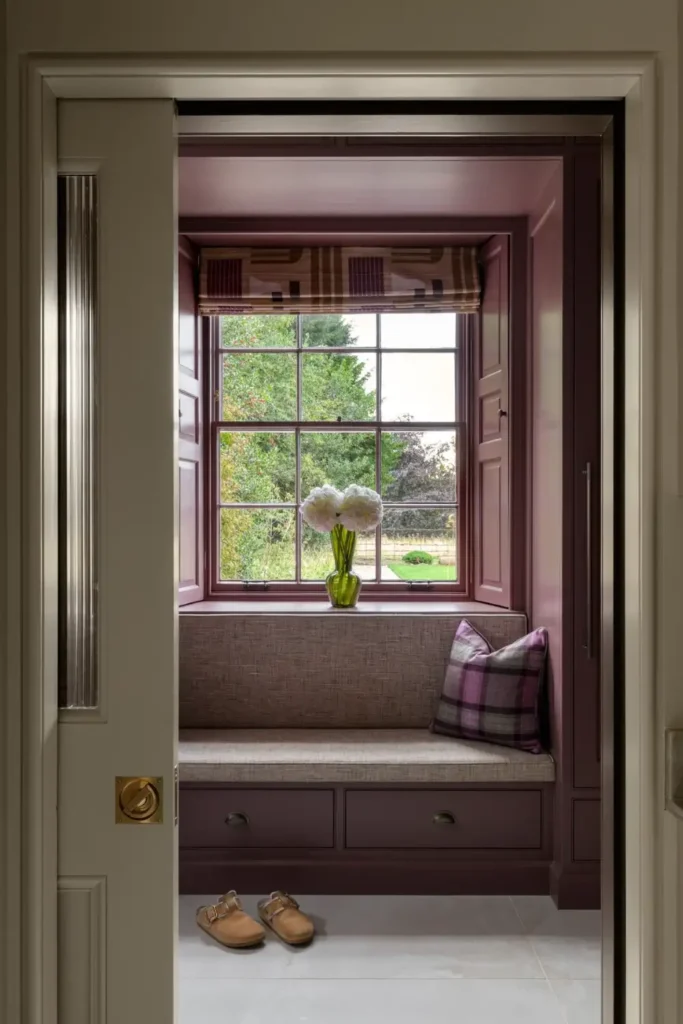
Painting a compact window seat in a single deep tone makes small space nooks look intentional rather than cramped. This plum alcove uses matching low-profile drawers with dark hardware to maintain sleek visual lines. Tucking the seat behind a sliding pocket door creates a quiet reading zone that doubles as discreet mudroom or entryway shoe storage when needed.
White walls with mismatched furniture pieces break up tight corners visually.
Single deep shade on walls, trim, and bench base unifies small nooks into a tailored nook.
6. Build an Extra Deep Daybed Bench with Flush Face Paneling
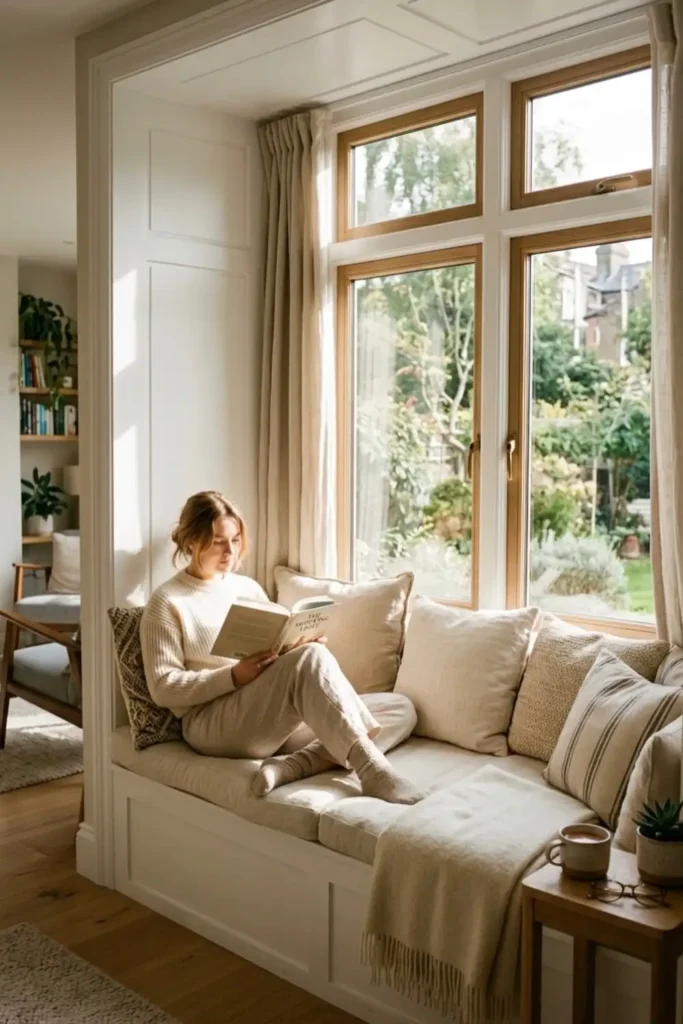
Standard window seats measure roughly 18 inches deep, but expanding the bench depth to 30 inches creates a true sleeping daylight nook. Flush panel doors across the front keep the large base structure clean and minimalist.
Layering linen cushions and woven throws softens the crisp architectural trim. The hollow interior provides enough storage volume for off-season duvets or luggage.
Key Design Features for Extra Deep Benches
7. Wrap Window Seat Storage Ideas Small Space Nooks in Rich Walnut
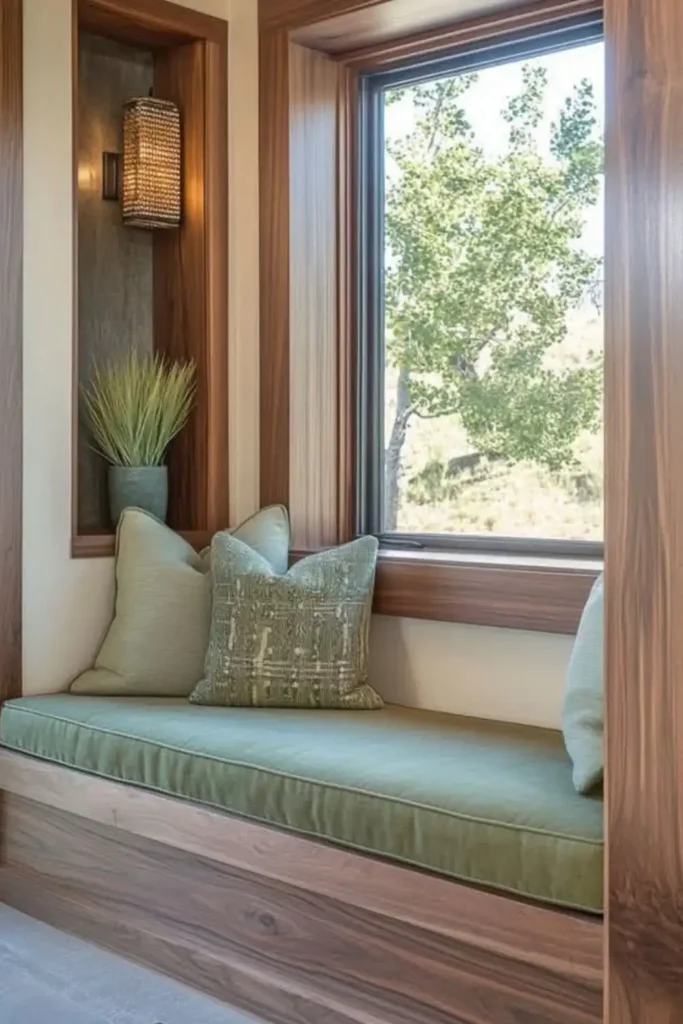
Natural wood paneling frames a window view while creating a cozy, architectural nook. Incorporating a flush walnut bench base maintains a clean floor line, while a small side wall cutout provides an illuminated shelf for plants or lighting.
Using rich timber tone contrasts beautifully with soft sage cushions, proving that compact window nooks can feel luxurious while hiding daily essentials inside a seamless wood frame.
Warm wood framing creates visual depth, turning simple window seat storage ideas small space projects into rich focal points.
8. Add a Lift-Top Lid with Soft-Close Hinges for Blanket Storage
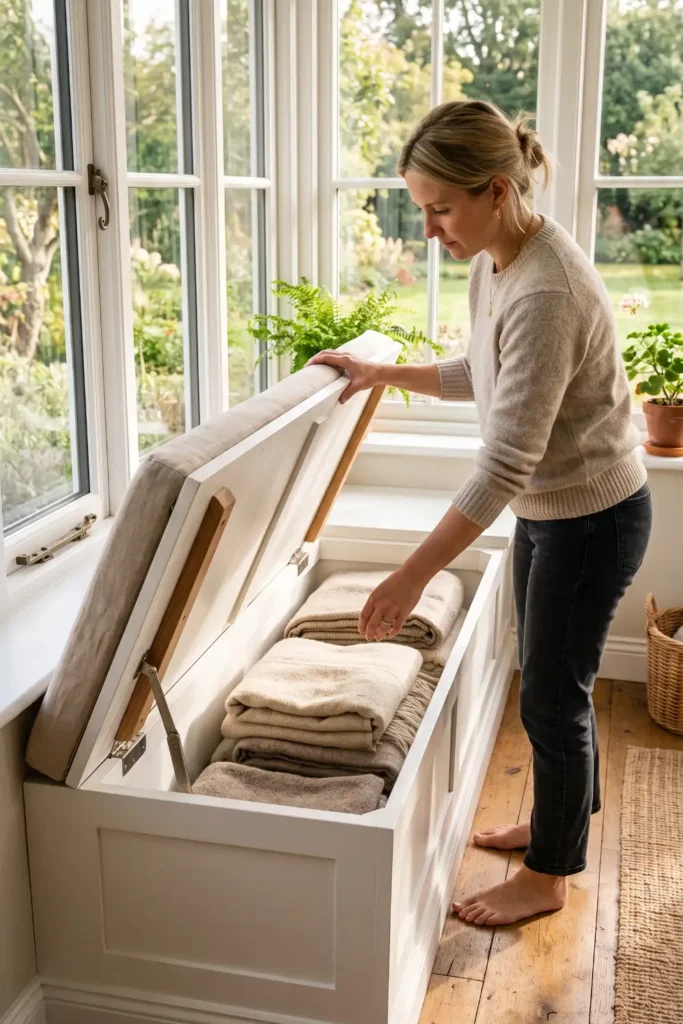
Raising the entire seat cushion reveals a deep hollow cavity perfect for bulky throws and seasonal bedding. Soft-close hinges prevent the heavy lid from slamming shut on fingers, which matters in homes with kids or pets. Keep the exterior face clean with no visible hardware so the bench still reads as built-in seating.
The cavity works best when lined with cedar boards to naturally freshen stored fabrics.
Choose gas struts rated for the full weight of your cushion plus lid.
Line the interior floor with thin plywood so bins slide easily.
Test the open height so the lid clears nearby curtain panels.
9. Fill Open Cubby Bases with Matching Woven Baskets
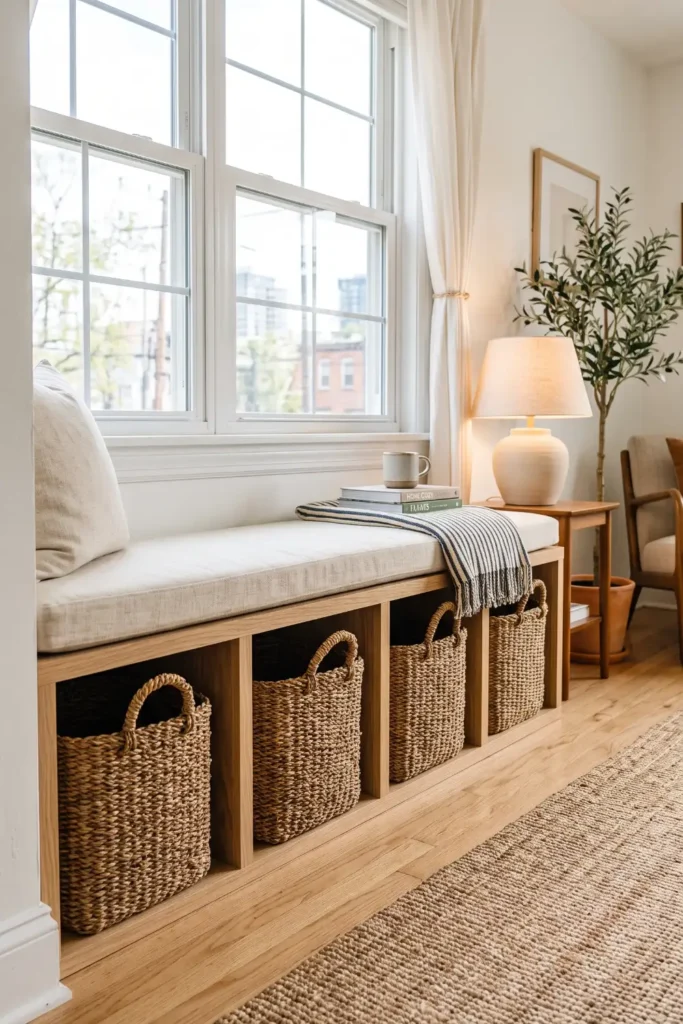
Skip cabinet doors entirely and build a simple grid of open cubbies under the seat. Slide identical woven baskets into each opening so the look stays uniform while still hiding loose clutter. Baskets pull out faster than drawers when you need a quick grab.
This approach keeps costs lower than custom millwork and works well in rental apartments where permanent cabinets are not allowed.
Basket Size Guide for Standard Benches
10. Turn a Corner Window into an L-Shaped Storage Banquette
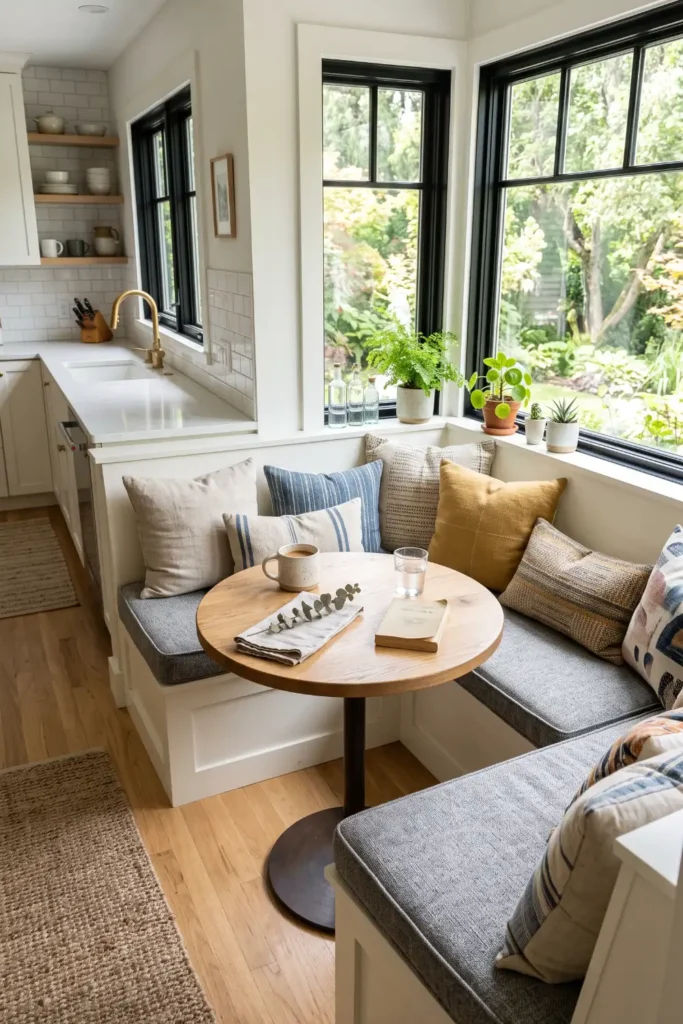
Two walls meeting at a corner window waste floor area unless you build continuous seating along both sides. An L-shaped bench with storage under each leg creates twice the seating and doubles the hidden capacity. Miter the corner cushion so the seat feels seamless.
Place a small round table in the open center to turn the whole zone into a compact breakfast nook.
| Straight Bench | L-Shaped Banquette |
|---|---|
| Seats 2 people max | Seats 4–5 comfortably |
| Single storage run | Storage on both walls |
| Works on one wall only | Claims unused corner space |
11. Cover a Radiator with a Vented Window Bench and Side Cupboards
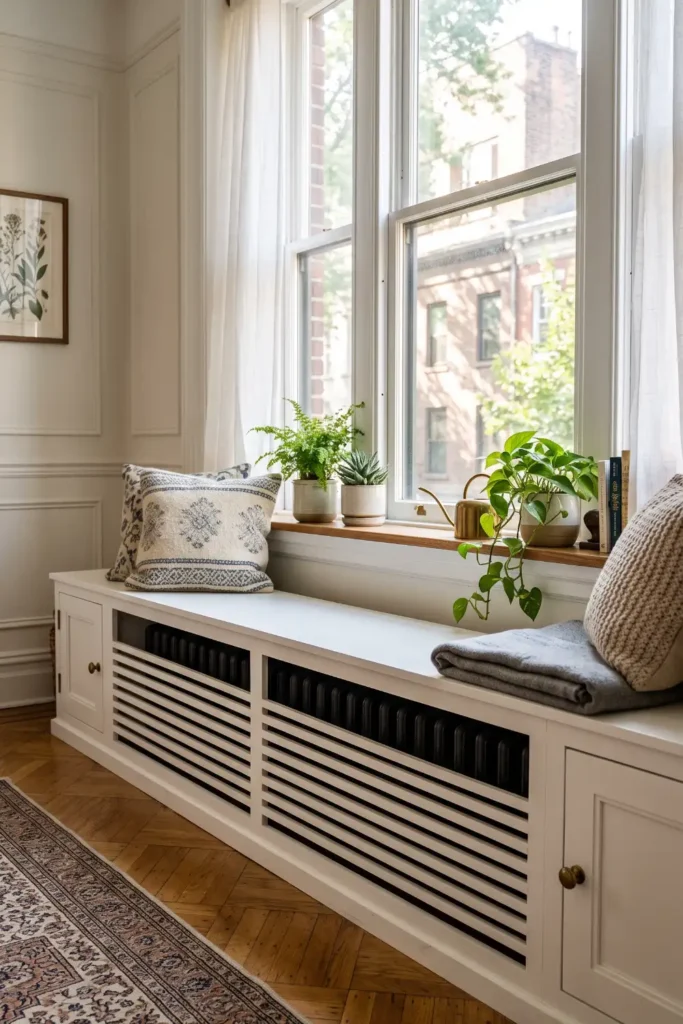
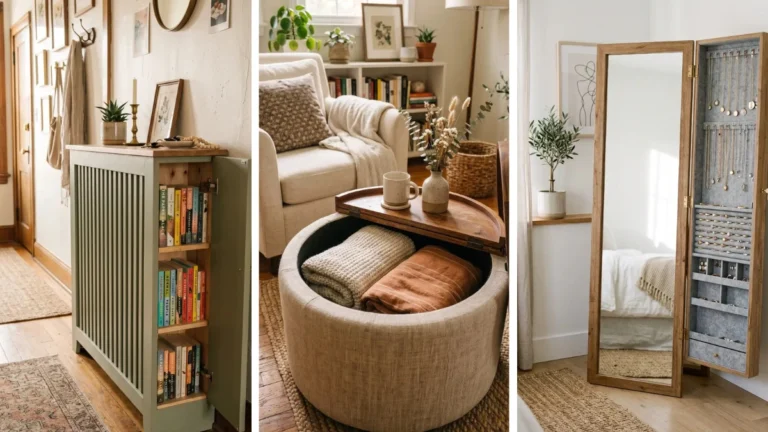
Old radiators under windows steal valuable real estate. Build a bench that sits over the unit with open grille vents along the front face so heat still flows freely. Add shallow cupboards on either end of the radiator for shoes, bags, or cleaning supplies.
Always leave at least 3 inches of air gap above the radiator fins and use heat-safe materials for the underside of the seat.
12. Mount a Floating Bench with Hidden Under-Drawers
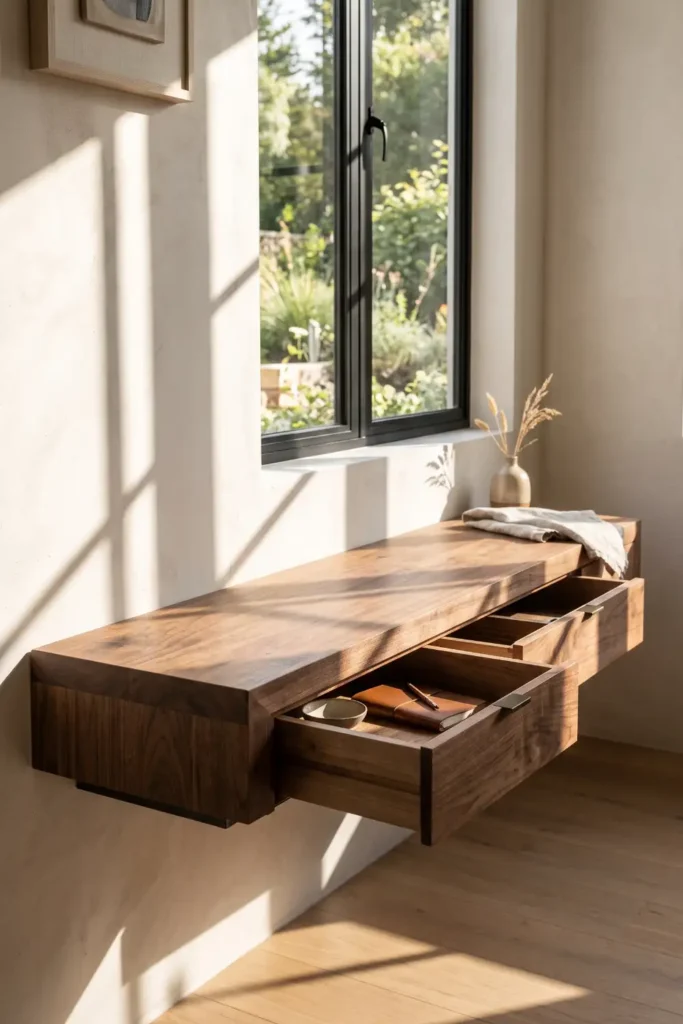
A bench that appears to hover above the floor creates an airy feel in tight rooms. Secure steel brackets into wall studs, then hang a thick solid-wood seat with shallow drawers mounted to the underside. The drawers slide forward without any base cabinet touching the floor.
Dusting becomes simpler and the visible floor space makes the whole room feel larger.
13. Build a Kid Zone Bench with Soft-Close Toy Drawers
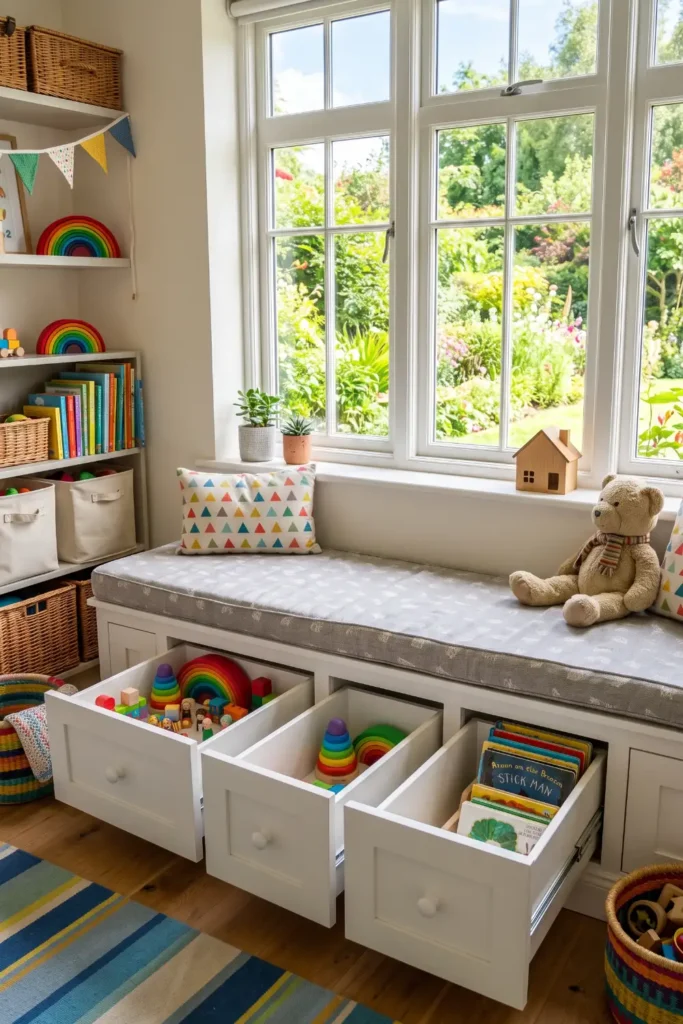
Children collect toys faster than any adult can store them. A low window seat with wide, soft-close drawers lets kids pull out and put away their own items. Label each drawer front with a simple picture icon so even pre-readers know where blocks or stuffed animals belong.
Keep the seat height at 15 inches so little legs can climb up without help.
14. Hide Rolling Bins Behind a Floor-Length Upholstered Skirt
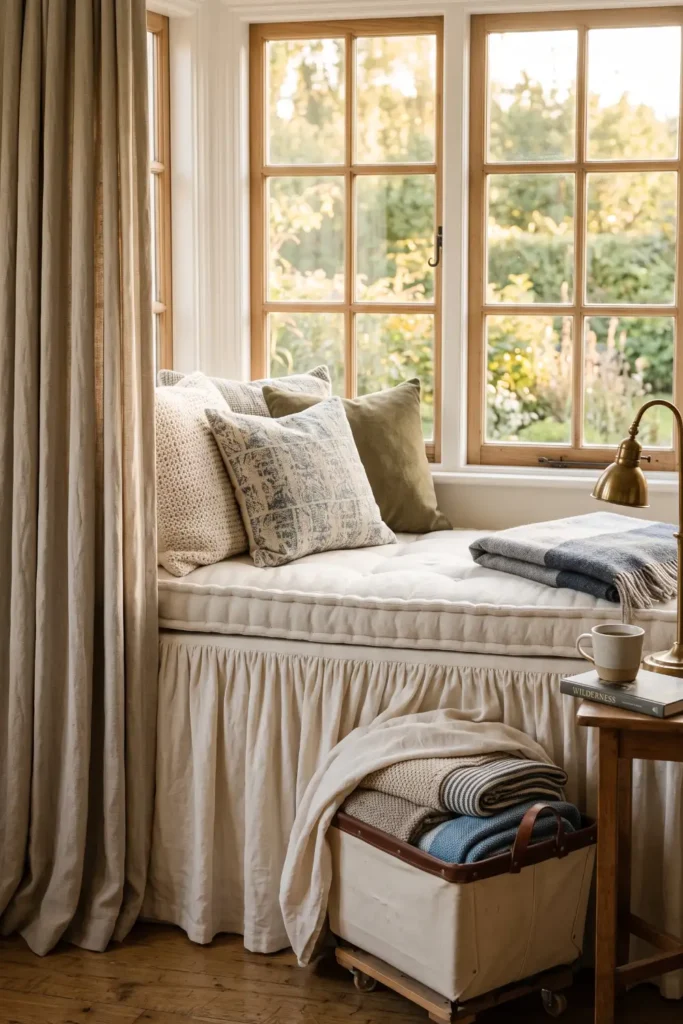
For a softer look, skip hard cabinet doors and attach a gathered or box-pleat fabric skirt around the base of the bench. Behind the skirt, place matching rolling bins that pull out easily for laundry, craft supplies, or dog toys. The fabric adds texture and can match existing curtains or pillows.
Choose performance fabric if the bench sits in a high-traffic sunroom or play area.
15. Combine a Window Seat with a Flip-Down Desk Surface
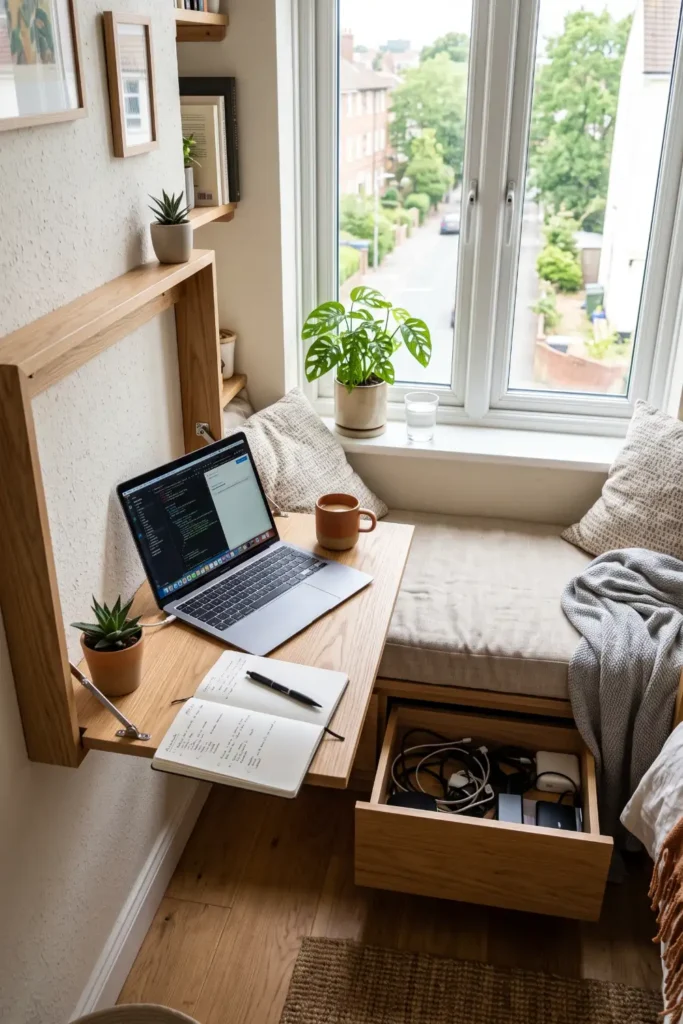
Small apartments often need both seating and a work surface. Hinge a sturdy desk panel to the wall beside or above the window seat so it folds down when needed and lifts away when you want the full bench clear. Under-seat drawers hold notebooks, chargers, and laptop sleeves.
When the desk is stowed, the window seat remains a pure reading or lounging spot with zero visual clutter.
Day-to-Night Conversion
Conclusion:
A well-planned window seat does more than look pretty. It gives you a daily landing spot for reading, morning coffee, or putting on shoes while quietly swallowing the items that used to live on the floor. Start with one idea that fits your exact window width and go from there. Measure twice, choose closed storage where you can, and keep the cushion deep enough to feel like real furniture. Save this roundup to your home board so the next time you walk past that empty window wall you already know what to build.