Changing your wardrobe for a new season usually means lugging heavy plastic storage tubs out of a dark basement or stuffing under-bed bins until they barely slide shut. When you live in a tiny apartment, you do not have extra floor space or deep closet shelves to hoard plastic containers. Learning how to rotate seasonal clothes in a small closet comes down to shifting your active garments forward while compressing off-season knits into flat, flexible bags.
This guide will show you how to reorganize your single clothing rod, protect delicate fabrics, and maximize high vertical shelves without buying a single plastic tub. By using vacuum compression bags and smart rail zoning, you can keep your active clothes accessible and your small closet completely uncluttered.
The entire process takes about 45 minutes, and you only need basic hangers, vacuum bags, and a standard vacuum cleaner. Clear your bed, grab your vacuum, and let us get your seasonal closet organized.
2. Slide Off-Season Garments to the Hard-to-Reach Back Corners
3. Compress Heavy Knits and Jackets in Vacuum Storage Bags
4. Stack Flattened Storage Bags Vertically on Top Closet Shelves
5. Group Active Daily Footwear onto Door-Mounted Wire Racks
1. Clear the Main Hanging Rail to Audit Current Weather Needs
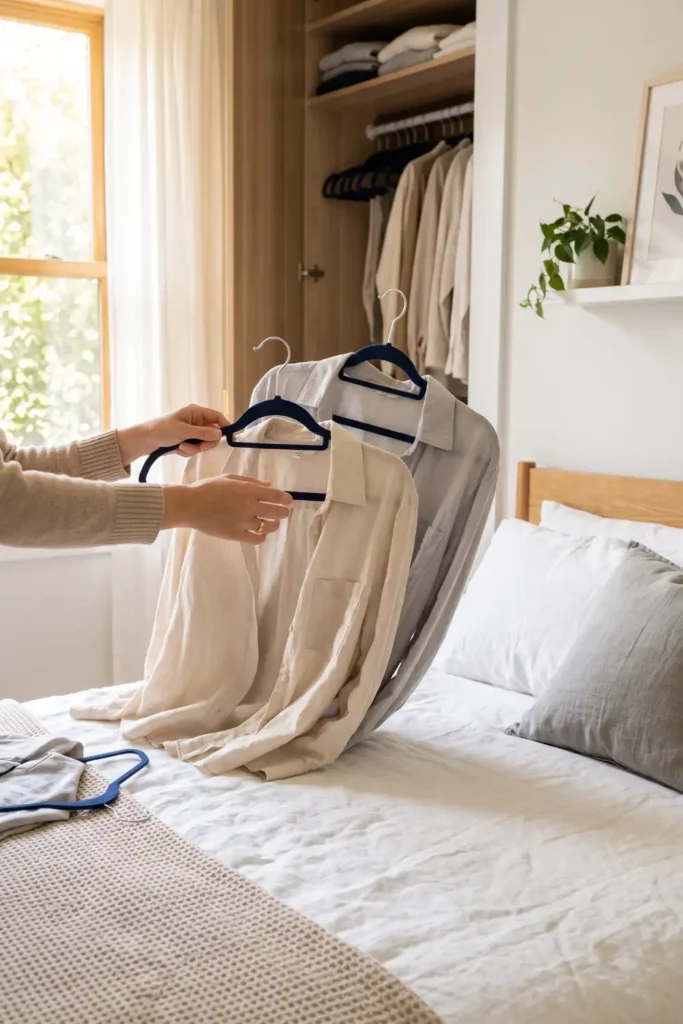
Remove every hanging item from your primary closet rod and lay the clothes flat across your bed. Group the garments into 3 distinct piles: active clothes for the current weather, off-season items that need storing, and pieces that require washing or repair. Wipe down the bare closet rod and top shelf with a damp microfiber cloth to remove dust buildup.
2. Slide Off-Season Garments to the Hard-to-Reach Back Corners
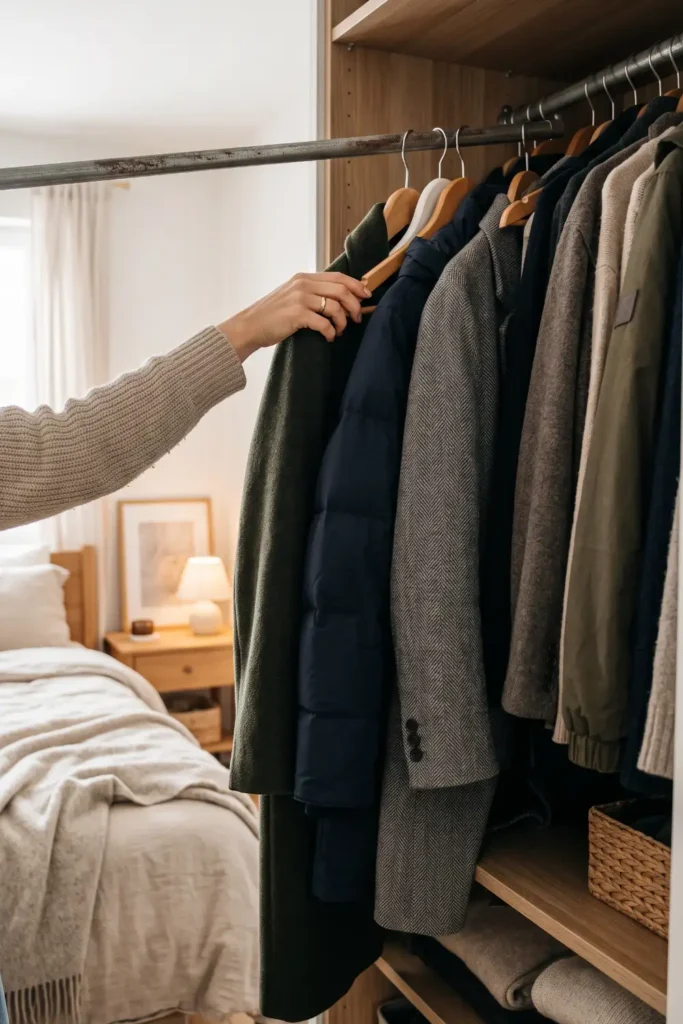
Hang long off-season dresses, formal suits, or lightweight coats on slim velvet hangers at the far back edge of your closet rail. Reserve the prime center 24 inches of your hanging rod strictly for daily weather-appropriate shirts, trousers, and jackets.
💡 Pro Tip
Use garment shoulder covers over off-season hanging items to shield shoulders from dust without needing bulky garment bags.
Positioning off-season pieces in the back corners keeps active clothes within easy reach every morning.
3. Compress Heavy Knits and Jackets in Vacuum Storage Bags
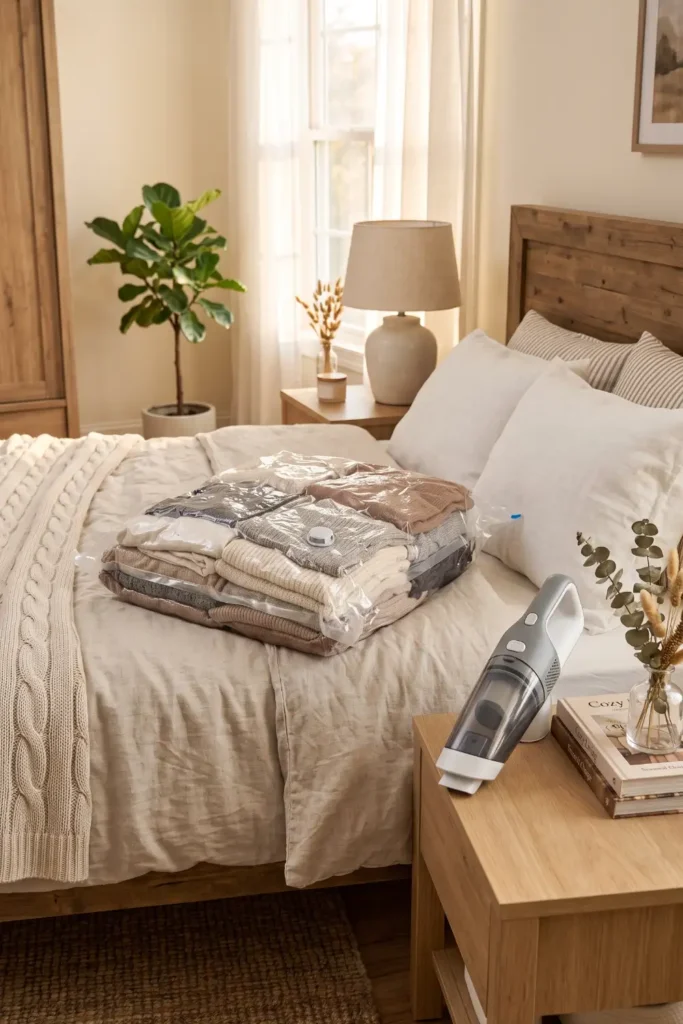
Fold bulky wool sweaters, heavy winter coats, or thick linen shorts neatly into 2 or 3 medium vacuum storage bags. Avoid overfilling the bags past the printed stop line to ensure the zip seal closes completely. Attach your vacuum hose to the circular air valve and run the suction for 30 seconds until all trapped air escapes.
⚠️ Heads Up
Do not vacuum-compress natural leather jackets or down-filled coats for more than six months. Crushing natural feathers destroys their insulation power.
4. Stack Flattened Storage Bags Vertically on Top Closet Shelves
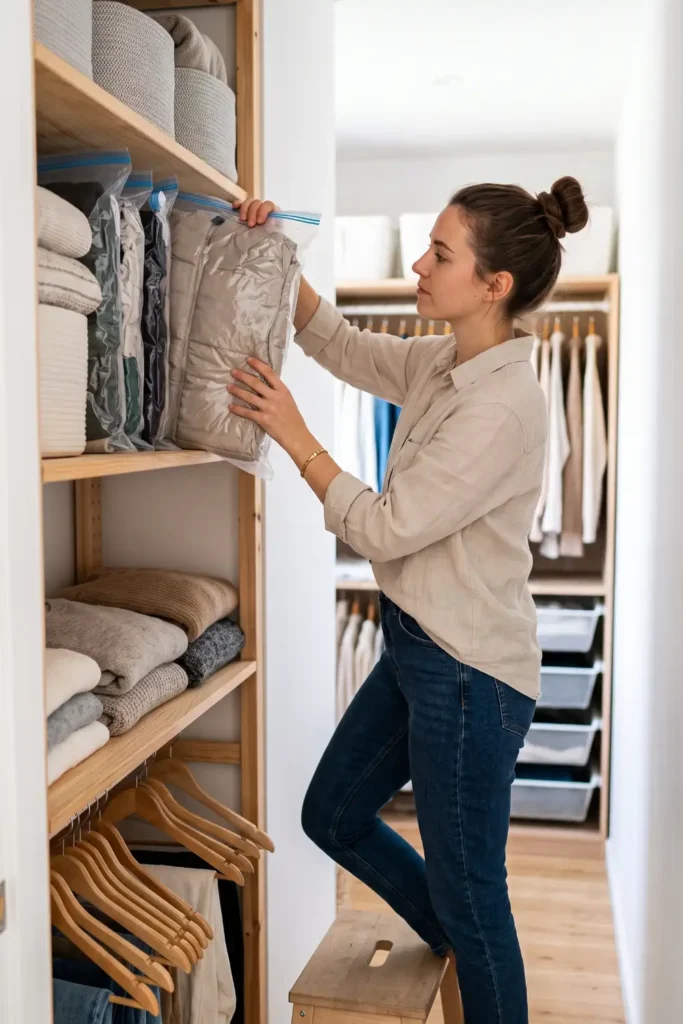
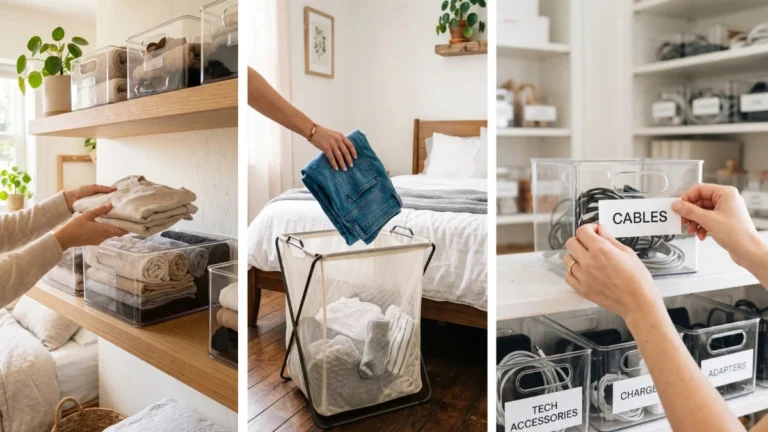
Slide the compressed vacuum bags onto your highest closet shelf. Stacking the flattened bags vertically like books on a bookshelf rather than piling them flat allows you to pull out one bag without disturbing the rest. Leave a 2-inch gap between the top bag and the ceiling for air circulation. Slip a cedar block or lavender sachet between the bags to repel moths and keep fabrics smelling fresh during long months of storage.
5. Group Active Daily Footwear onto Door-Mounted Wire Racks
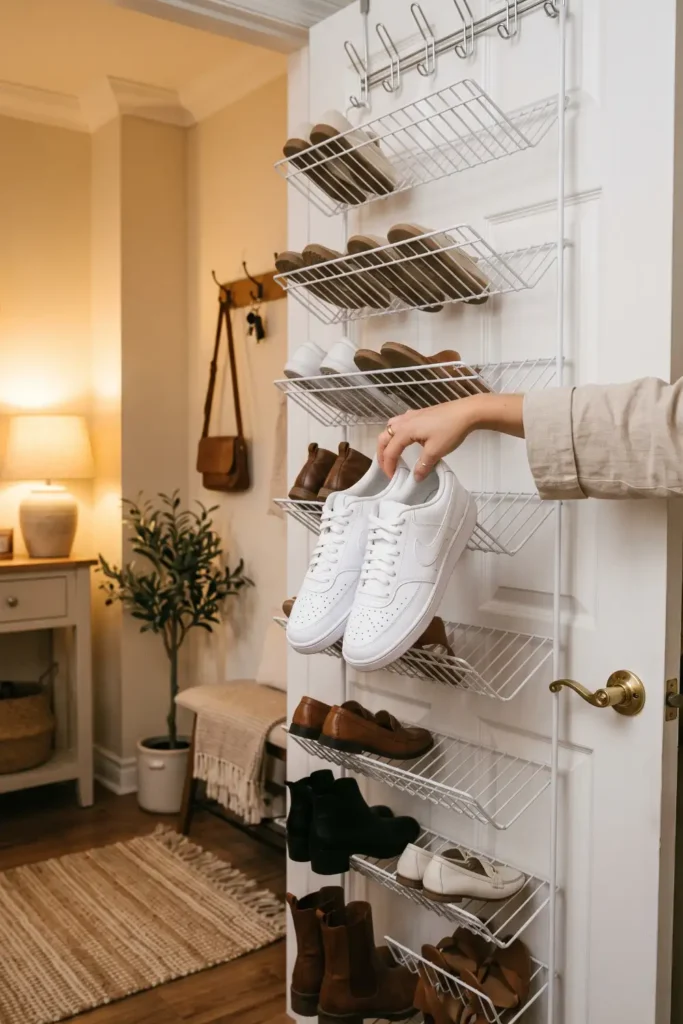
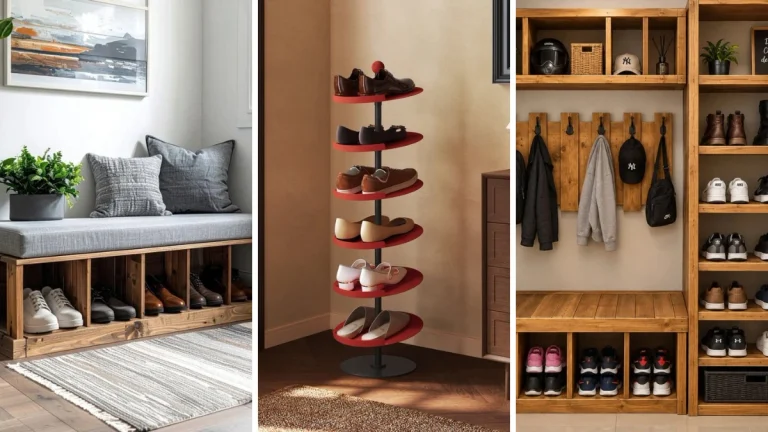
Hang an over-the-door wire organizer on the inside face of your closet door using heavy-duty hooks. Arrange 6 to 8 pairs of current seasonal shoes—such as sandals for summer or boots for winter—into the top wire tiers. Storing off-season footwear on the bottom tiers or inside cotton shoe bags keeps floorboards completely clear. This frees up the closet floor for laundry baskets while keeping active footwear visible at eye level.
2. Slide Back: Move long off-season hanging items to the far back rod corners.
3. Compress Knits: Pack bulky coats and sweaters into vacuum bags and remove air.
4. Stack Vertically: File compressed bags like books on high top closet shelves.
5. Door Shoe Rack: Arrange 6-8 active pairs of seasonal shoes on door-mounted wire racks.
Conclusion
Now you know exactly how to rotate seasonal clothes in a small closet without cluttering your apartment with plastic bins. Shifting off-season garments to back corners and compressing bulky knits onto high shelves keeps your daily wardrobe accessible and your floor space open. Clear your bed, grab your vacuum, and try this simple rotation system today.
Save this guide to your small closet organization boards on Pinterest so you can reference these steps during your next seasonal swap!