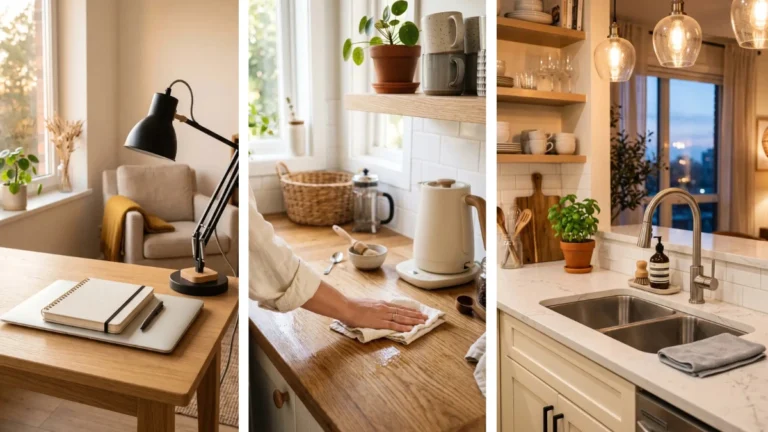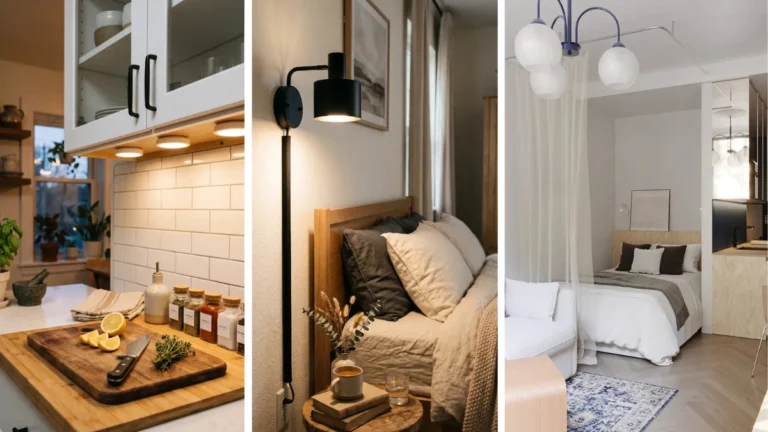
Japan has been solving the small space problem beautifully for centuries.
Not by fitting more in. Not by clever storage tricks alone. But by developing an entirely different relationship with space itself — one that honors emptiness as much as objects, that finds beauty in imperfection, and that understands that calm is not something you add to a room.
It is what remains when everything unnecessary has been removed.
Japanese interior design philosophy — wabi-sabi, ma, danshari — gives small space living a framework that goes far deeper than organization tips or furniture choices. It offers a complete way of seeing the home. Of understanding what a room is for. Of knowing when enough is truly enough.
These 21 ideas bring that philosophy into any small apartment — practically, beautifully, and in a way that will make the space feel not just larger, but genuinely more peaceful.
Save this. The calm small home starts here.
1. The Japanese Small Space Philosophy
Before any furniture decision or color choice — understand the philosophy.
Japanese interior design is built on three ideas that work together:
Together, these three ideas create the Japanese small space — a room that feels calm because it has been genuinely considered. Not styled. Considered.
Japanese small space design doesn’t ask how to fit more in. It asks what truly deserves to be there.
2. The Edit — Own Only What Belongs
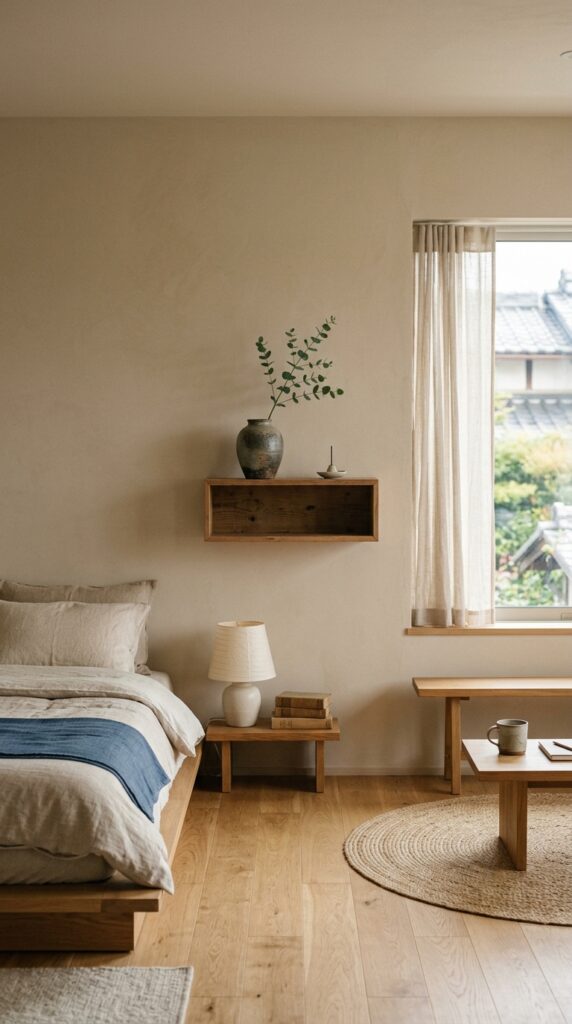
Every Japanese-inspired small space begins with the same first step.
Remove everything that does not belong.
Not a seasonal declutter. Not a tidy. A genuine reckoning with what the small space contains — and a commitment to keeping only what serves a real purpose or brings genuine beauty.
The edited small space is not sparse. It is considered. Everything remaining was chosen. Nothing remains by accident or habit.
In a Japanese-inspired small space, nothing remains by default. Every object earns its place.
3. Low Furniture For High Impact
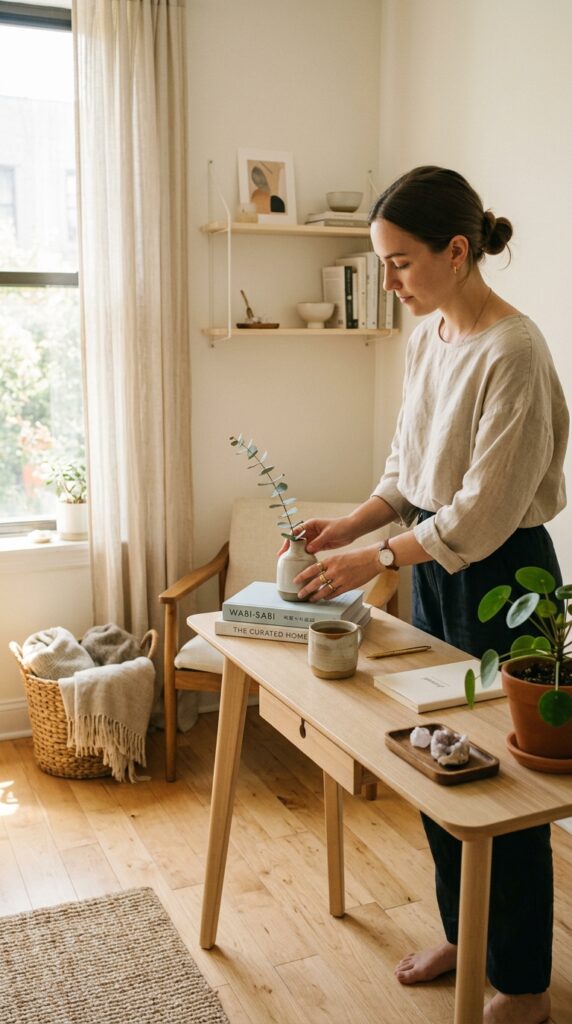
Japanese interior design has historically centered on low furniture — and in a small space, this choice has an extraordinary visual effect.
When furniture is low, the ceiling reads higher. The walls feel taller. The room breathes above the furniture line in a way that conventional furniture height never achieves.
The room furnished at low height feels significantly larger — because the eye has more wall and ceiling to travel across unobstructed.
Low furniture gives the ceiling back to the room. In a small space, that is an extraordinary gift. Also Read: Small Space Living Ideas
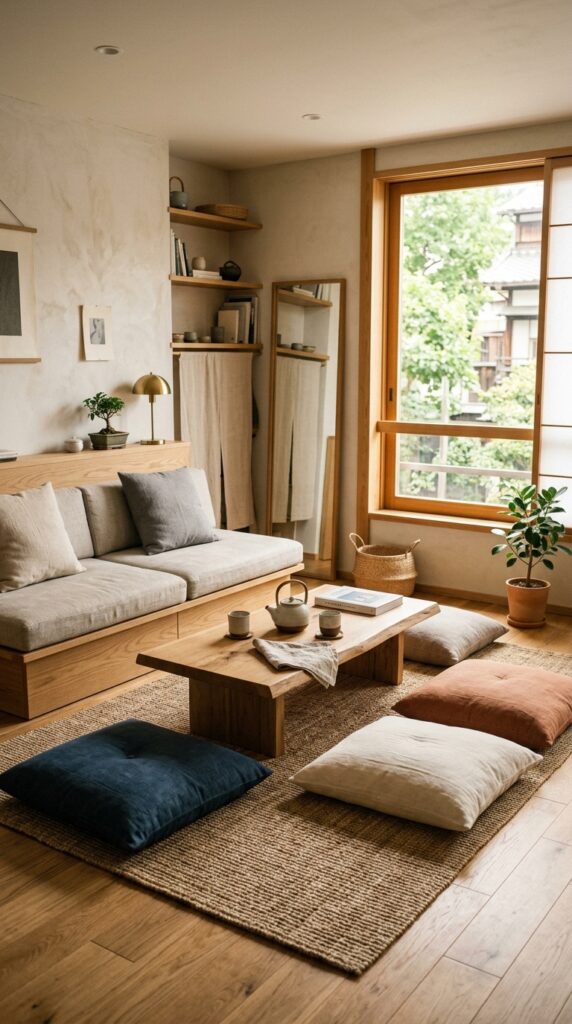
4. The Warm Neutral Japanese Palette
Japanese interior color is not the cold white of generic minimalism.
It is warmer. More grounded. The color of natural materials — rice paper, aged wood, unbleached cotton, tatami grass, warm stone.
Bright white. Cold grey. Saturated color. High-gloss finish. Anything that reads as synthetic rather than natural.
The result is a palette that is simultaneously calming and warm — never clinical, never cold.
The Japanese-inspired palette is the color of nature at rest — warm, muted, and deeply alive.
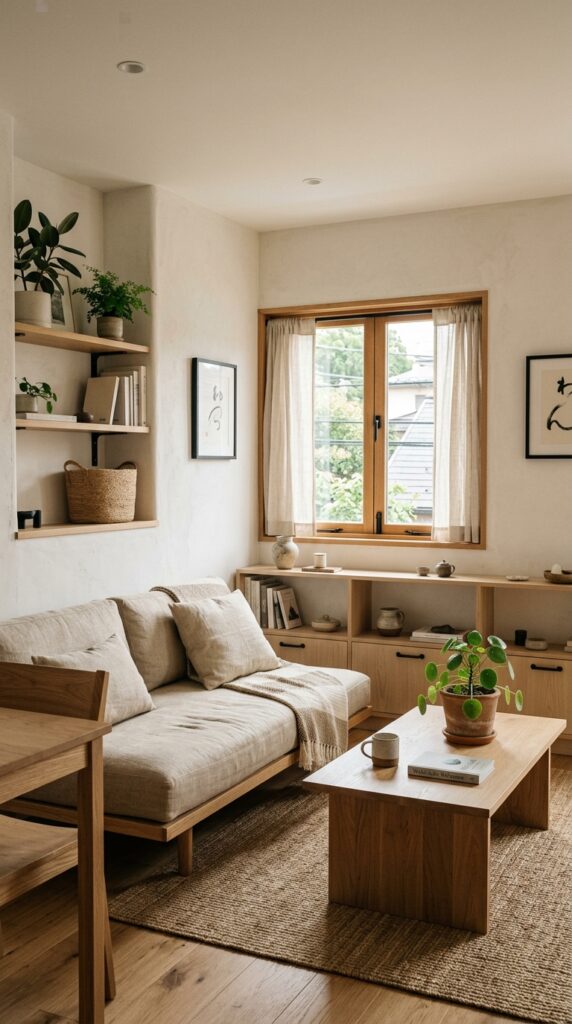
5. Natural Materials As Decoration
In a Japanese-inspired small space, the material is the decoration.
There is no need for printed patterns, bright colors, or ornamental objects when every surface is made from a material with its own inherent beauty — the grain of solid wood, the irregular weave of handmade rattan, the matte surface of a ceramic bowl.
When every material is natural — the room has a coherence and warmth that no amount of decorating can replicate.
In a Japanese-inspired space, the material is always the message.
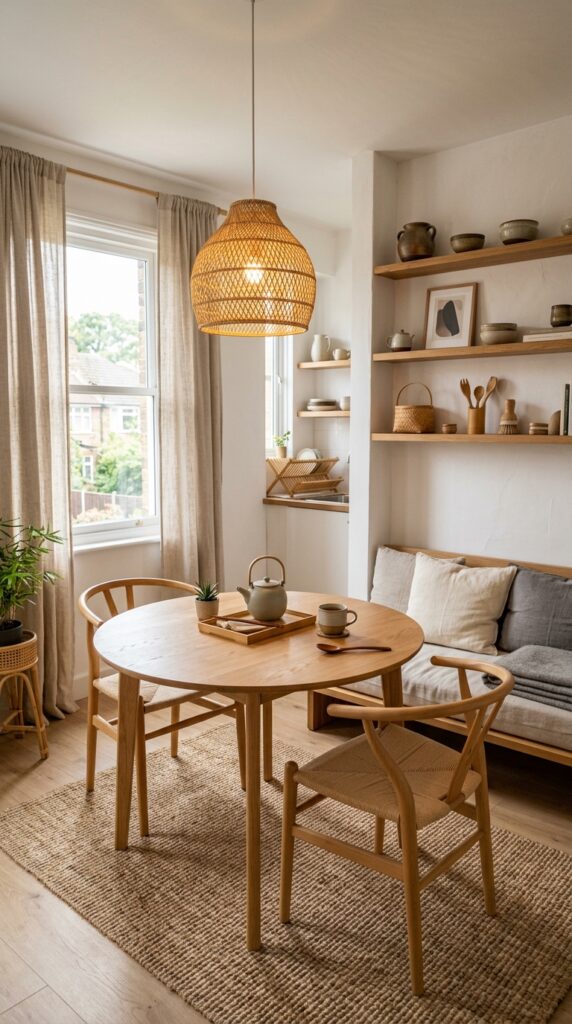
6. The Japanese Living Room Formula
The Japanese-inspired living room is calm because it is specific — every element chosen, nothing included by default.
Surface count:
One coffee table surface. One side surface maximum. Both styled with three objects maximum each.
The Japanese living room does not try to do everything. It does a few things with complete intention.
The Japanese living room small space formula: one of everything needed. Nothing of everything else. More Inspiration: Interior Design Ideas for Small Living Spaces
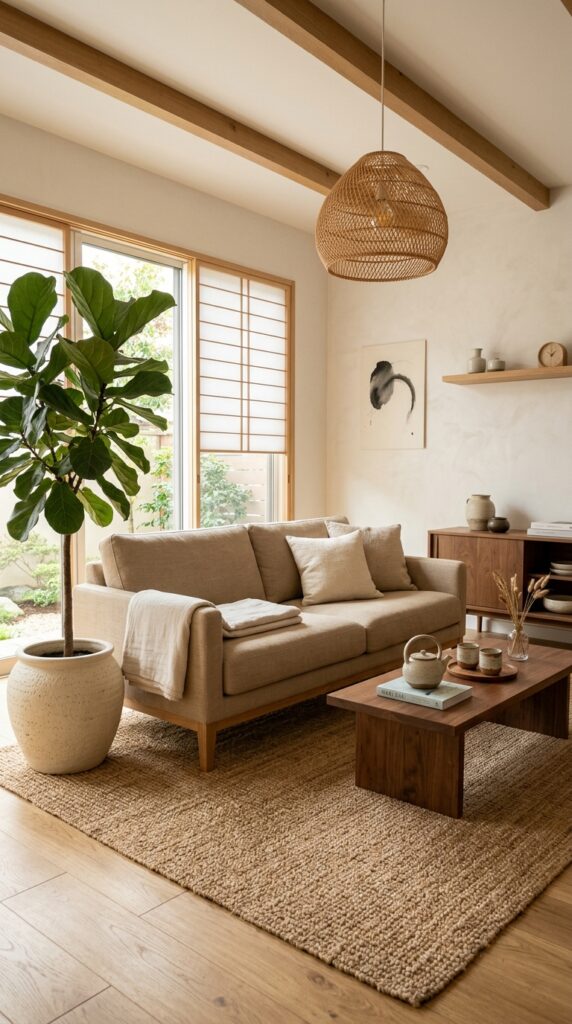
7. Shoji-Inspired Light and Division
The shoji screen — the Japanese sliding panel of translucent paper in a wooden frame — is one of the most elegant solutions to the small space zone-definition challenge.
It creates visual separation and privacy without blocking light. It divides without closing. And the quality of light it creates — warm, diffused, soft — is unlike any other material.
A shoji-inspired divider gives two zones their own identity while giving both zones the most beautiful light imaginable.
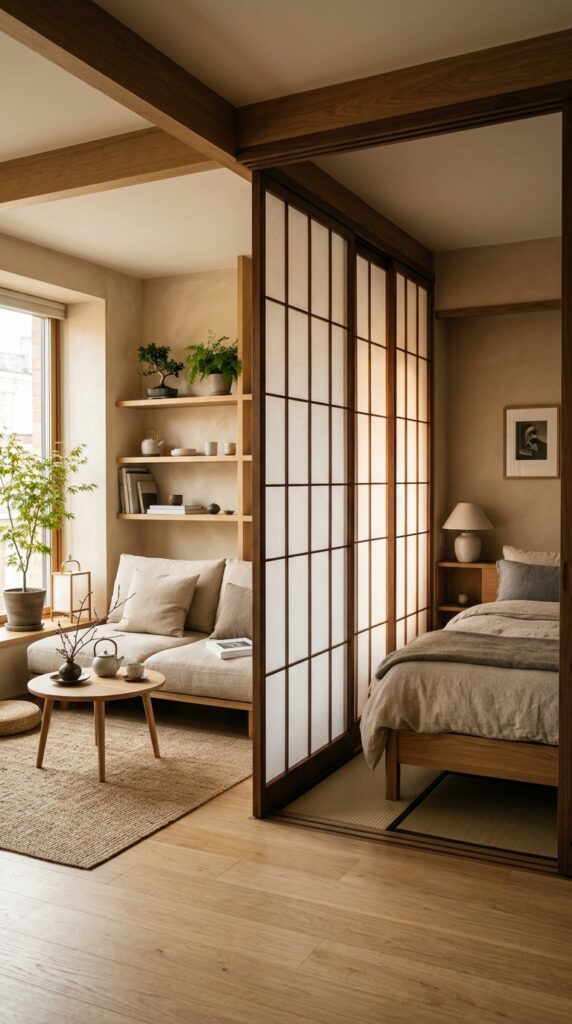
8. The Power of Empty Space
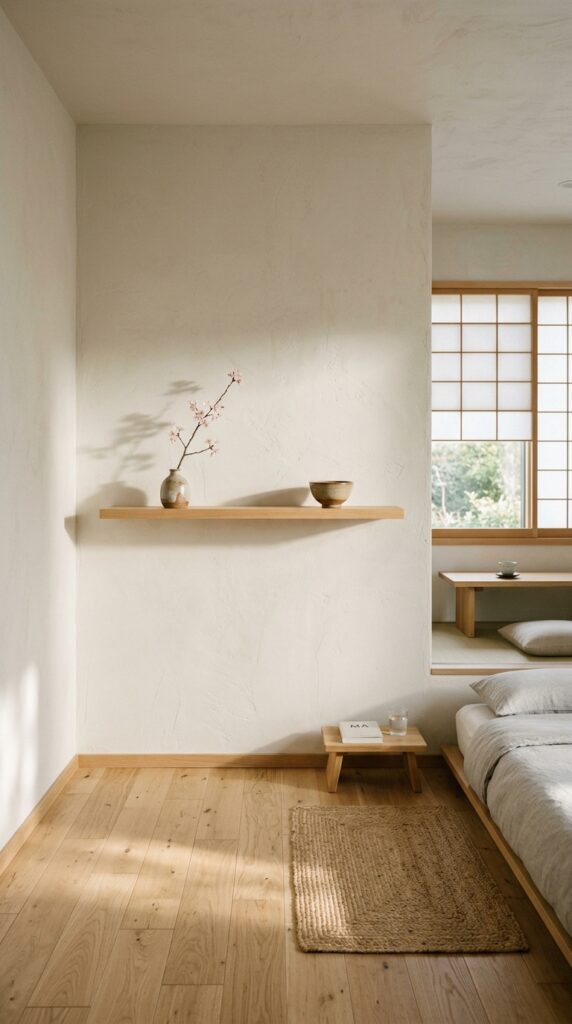
Ma — meaningful empty space — is the concept that most distinguishes Japanese interior design from every other design tradition.
In Japanese philosophy, the empty space between objects is not absence. It is presence. It is the pause that gives the room its rhythm. The silence that makes the music possible.
The small space that applies ma feels paradoxically larger. Because breathing room reads as space.
Empty space in a Japanese-inspired room is not a design decision deferred. It is a design decision made.
9. A Japanese-Inspired Bedroom
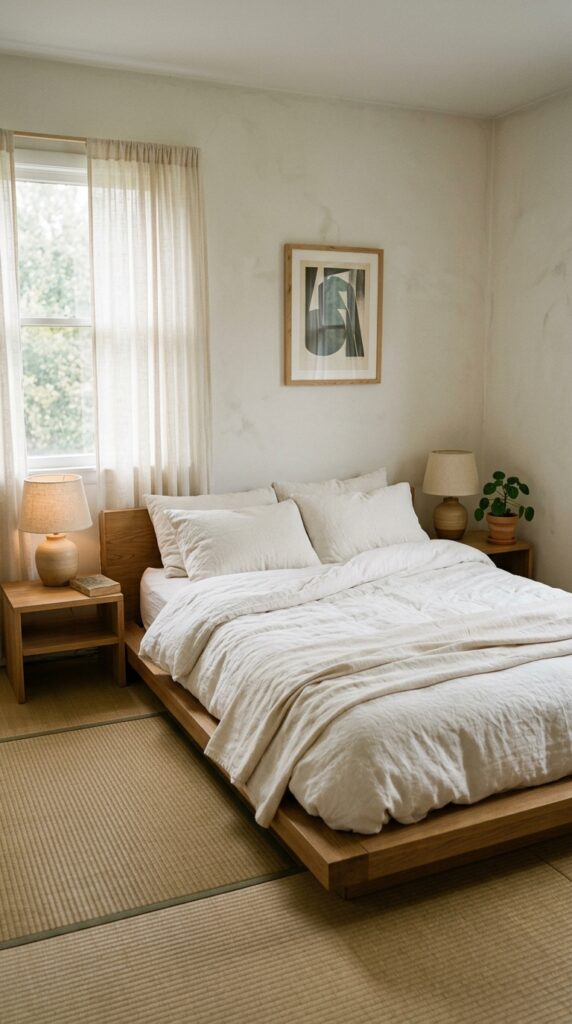
The Japanese bedroom is the room where the philosophy delivers its most immediate personal impact — on sleep quality, on morning calm, and on the private experience of the most personal room in the home.
The Japanese bedroom has one purpose. Everything in it serves that purpose.
The Japanese-inspired bedroom is designed for one thing — rest. Every object either supports that or it doesn’t belong. Keep Reading: Minimal Small Space Living
10. Warm Wood and Dark Accents
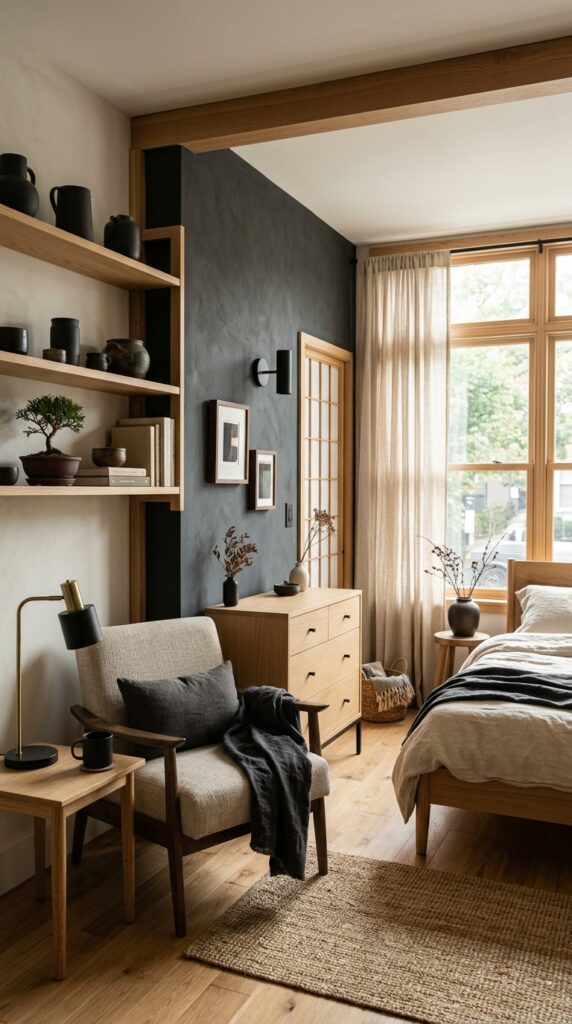
The most distinctly Japanese visual moment in a small space — warm natural wood tones set against deep, warm dark accents.
Light ash or pale oak furniture. Matte black or dark bronze hardware. Deep warm charcoal on one wall. Dark ceramic vessels catching the morning light.
Cool dark tones make small spaces feel cold. Warm dark tones make them feel cozy and sophisticated.
Warm wood against warm dark — this specific contrast is quiet luxury in any small space.
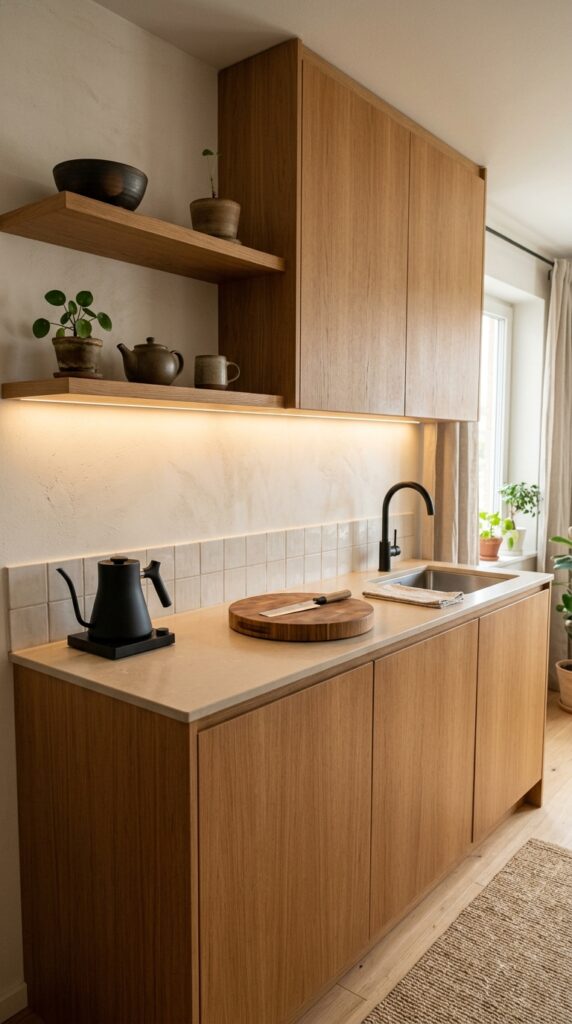
11. The Minimal Japanese Kitchen
The Japanese kitchen is defined by restraint — and in a small open-plan apartment, that restraint protects the visual calm of the entire space.
The Japanese kitchen honors the act of preparing food. Every object used in that act is chosen with care — and the ones not in use disappear.
12. Handmade Ceramics and Wabi-Sabi
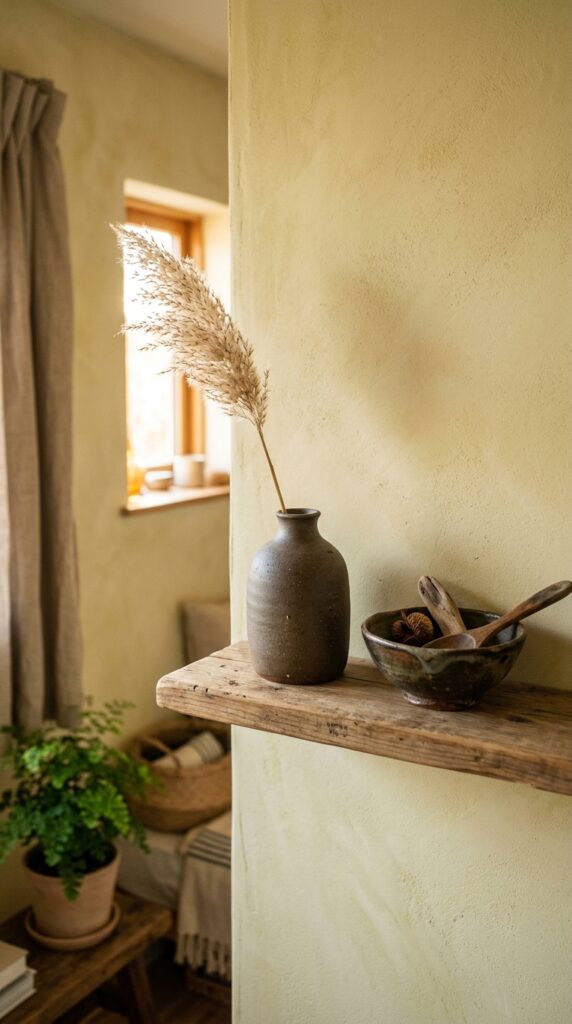
The handmade ceramic is the single object that communicates the entire wabi-sabi philosophy of Japanese design.
Not a perfect machine-made bowl. A handmade piece — with the slight variation in glaze, the fingerprint visible in the clay, the rim that is almost but not quite level — that expresses the beauty of the imperfect and the human.
Choose earthy tones — warm grey, sand, matte black, rust, sage. Avoid bright colors and high-gloss finishes entirely.
One handmade ceramic in a small space carries more beauty than ten perfect mass-produced objects. You May Also Like: Warm Neutral Living Room Ideas
13. One Perfect Plant
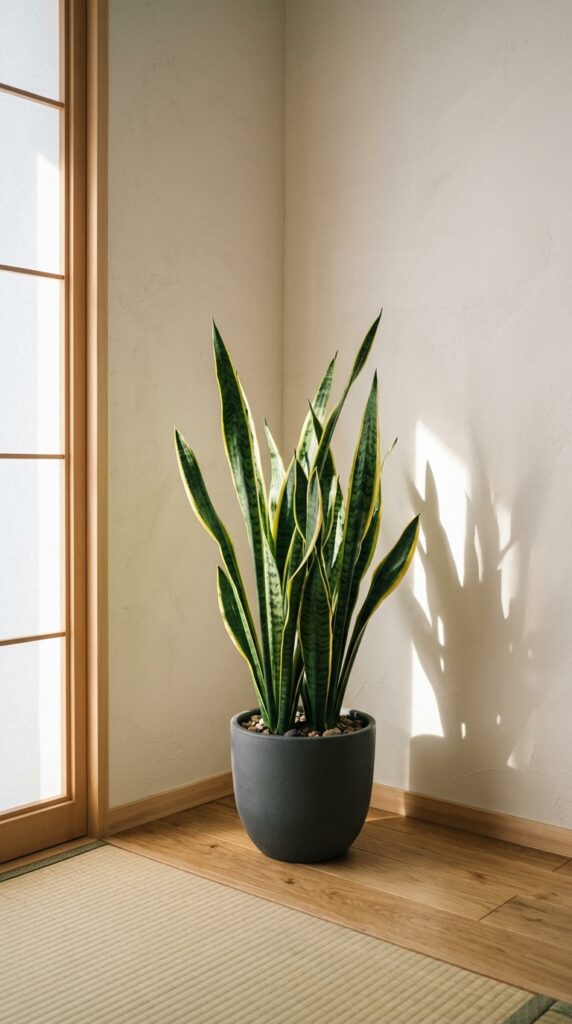
Japanese plant philosophy is built on restraint.
One plant. Chosen with intention. Positioned with care. Never a collection.
The plant pot:
Always ceramic. Always matte. Always earthy — warm grey, natural terracotta, dark charcoal, or sand. The pot is as deliberately chosen as the plant.
One plant in a Japanese-inspired small space is more powerful than twenty. The singular is always stronger.
14. Floor-Level Living
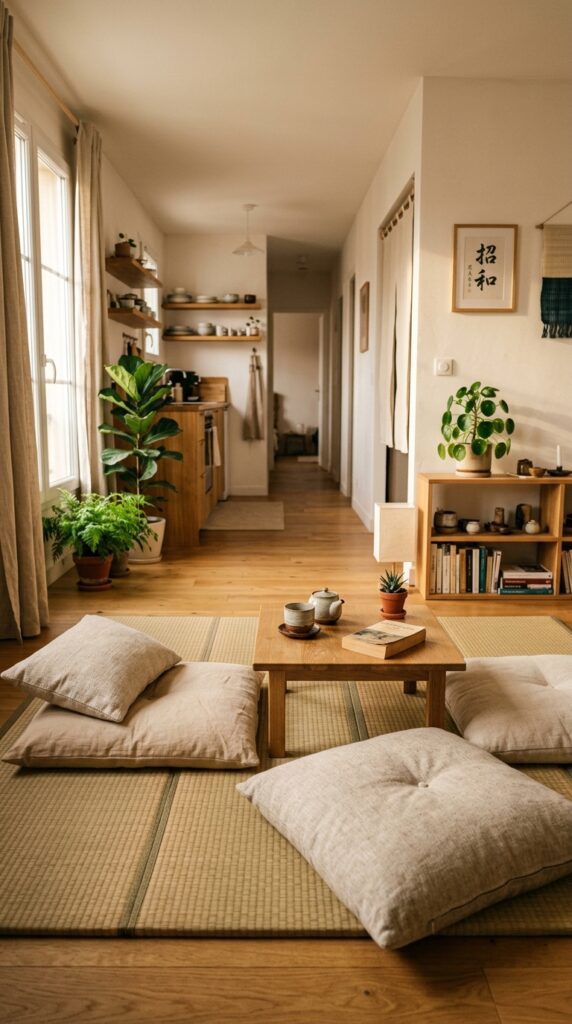
Japanese domestic life has always happened closer to the floor than Western design typically accommodates.
In a small space, floor-level living creates genuine spatial advantages — and an atmosphere of warmth and groundedness that elevated furniture cannot replicate.
Floor-level living recovers the visual height of the room entirely. The ceiling reads at its full height. The room breathes.
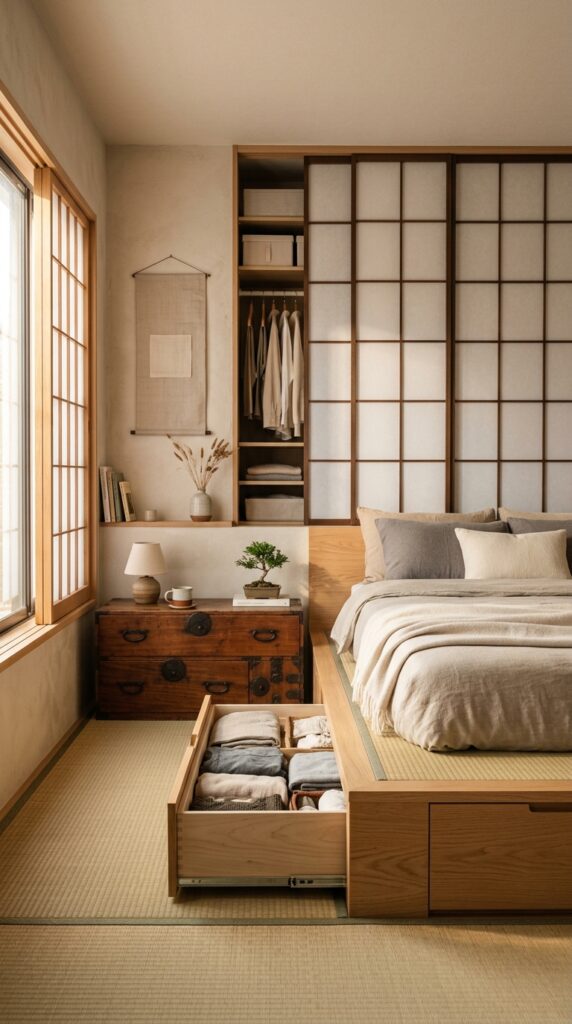
15. Hidden Storage — The Japanese Way
Japanese domestic design has practiced the art of hidden storage for centuries — concealing what is necessary so that only what is beautiful remains visible.
The Japanese storage principle is not about buying storage products. It’s about concealing the functional so the beautiful can breathe.
Japanese hidden storage asks one question: what must be seen? Everything else disappears. Explore Next: Space-Saving Furniture Ideas
16. Warm Ambient Light Only
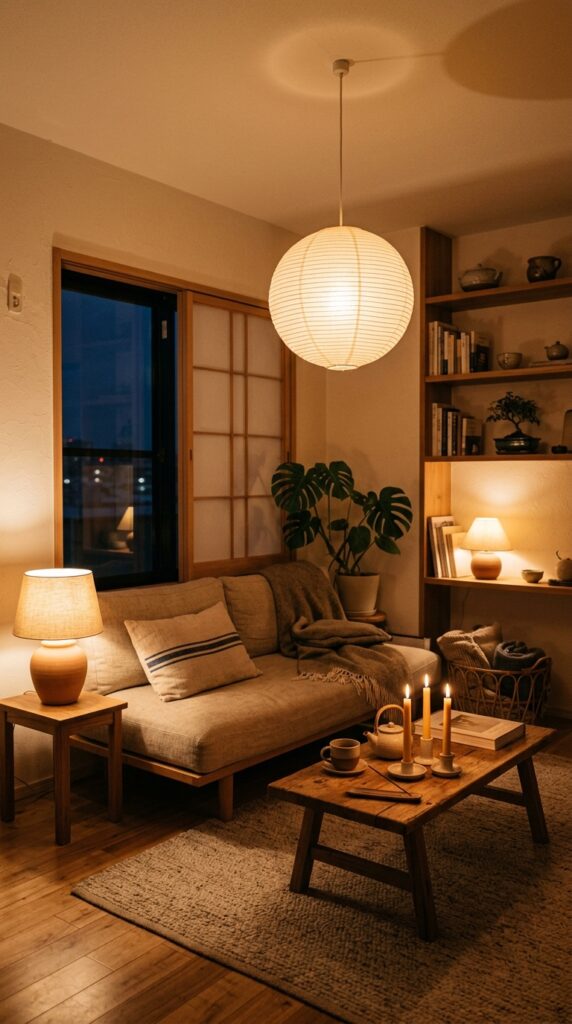
Traditional Japanese homes used paper lanterns, candlelight, and the diffused light of shoji screens — all sharing one quality: warmth and softness.
In a Japanese-inspired small space, this lighting philosophy is the atmosphere.
The Japanese-inspired apartment lit this way — warm lamps, a paper pendant, candles — feels like it exists outside of time. The city disappears. The evening becomes genuinely restful.
Japanese lighting philosophy: the room should feel like sunset. Never like noon.
17. A Calm Japanese Bathroom
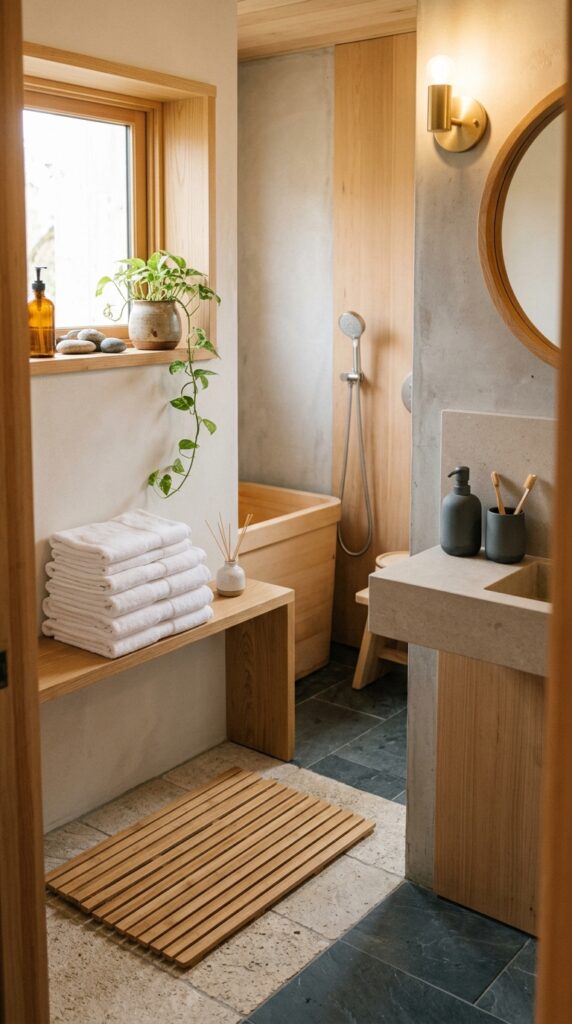
The Japanese bathroom tradition understands that bathing is a ritual — not a utility.
Even in the smallest apartment bathroom, the sanctuary principle can be applied.
The Japanese bathroom, however small, feels spa-like when this formula is applied.
The Japanese bathroom is a sanctuary even in the smallest space. The ritual of bathing deserves this consideration.
18. Linen and Natural Textiles
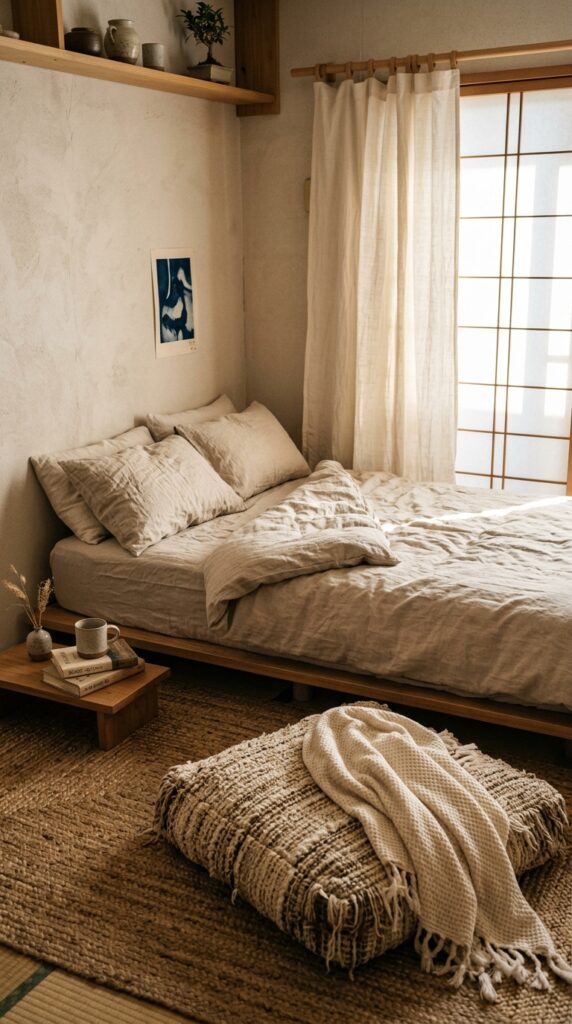
In a Japanese-inspired small space, the textile is as considered as the furniture.
Linen — with its ability to soften with washing, to breathe, to wrinkle in a way that is not a flaw but an expression of natural beauty — is the defining textile of the Japanese-inspired home.
The wabi-sabi textile rule:
Linen wrinkles. Jute is rough. Handwoven textiles have irregularity. These are not flaws. They are the wabi-sabi beauty of natural materials being genuinely themselves.
Natural textiles in a Japanese-inspired small space don’t perform perfection. They age beautifully — and that is better.
19. Seasonal Awareness
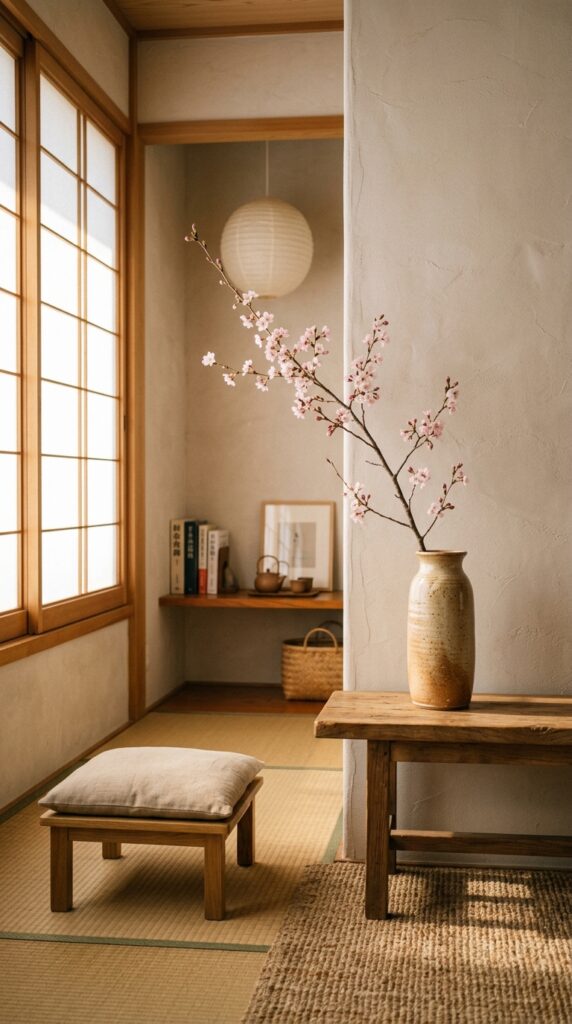
Japanese culture maintains one of the world’s most beautiful relationships with the changing seasons — mono no aware, the gentle awareness of impermanence, expressed through small seasonal gestures in the home.
These changes cost almost nothing. A branch from outside. A throw swapped. A candle lit.
But they create the living seasonal awareness that makes a small home feel genuinely connected to the world outside it — not just sealed against it.
The Japanese-inspired small home notices the seasons. Small gestures. Profound impact.
20. The Japanese-Inspired Small Space Edit Continues
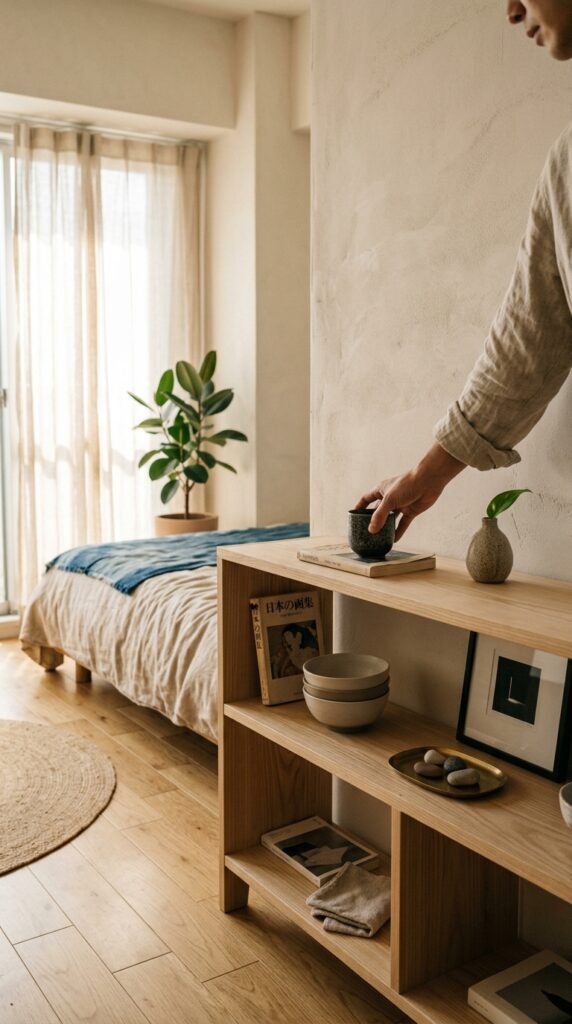
The Japanese-inspired small space is never finished.
It is continuously edited — slowly, seasonally, deliberately.
As life changes, as needs change, as the seasons change — the home responds. Slowly. Without drama. A single object removed. A single new object welcomed after genuine consideration.
The Japanese-inspired small home is not a project that ends. It is a practice that continues.
And that practice — of ongoing attention and deliberate choice — is what makes the home feel genuinely alive.
The Japanese-inspired small home is never decorated. It is continuously considered.
21. The Japanese Small Space Mindset
The final idea — and the one that makes all twenty previous ideas sustainable.
The Japanese small space mindset is the understanding that living beautifully in a limited space is not a consolation prize.
It is a practice. A discipline. And a profound teacher.
Small space living Japanese style is not about sacrifice.
It is about choosing a different relationship with things — one that honors the space between them, finds beauty in their imperfection, and understands that calm is not something you add.
It is what remains when everything unnecessary has been removed.
The Japanese small space mindset offers the most generous life possible in the fewest square feet. That is not limitation. That is art.
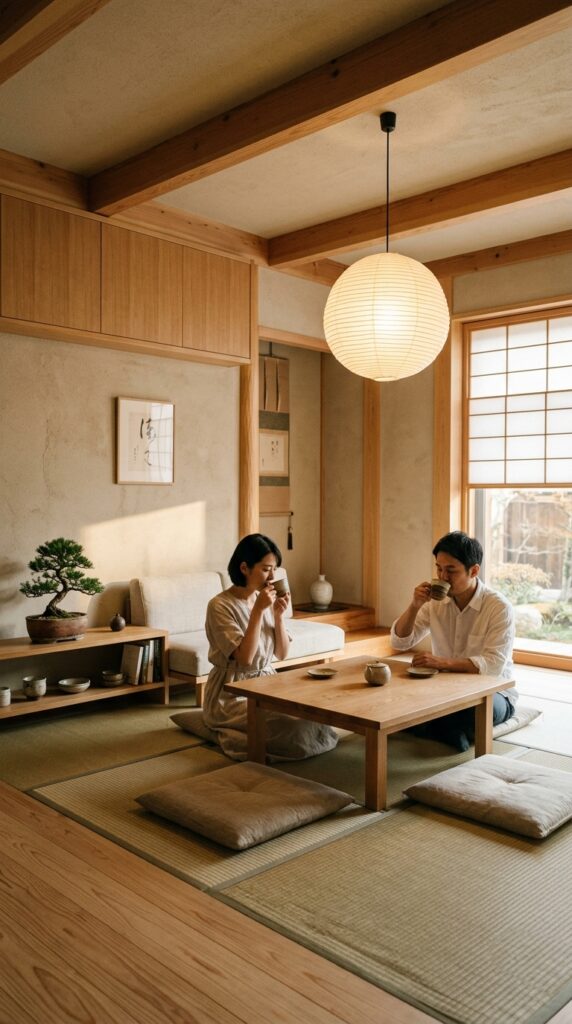
The Calm Home Was Always Possible
Japanese design does not create calm by adding things.
It reveals calm by removing what obscures it.
The low bed that makes the ceiling soar. The single ceramic that holds the shelf. The linen curtain that softens the morning light. The empty wall that lets the room breathe.
These are not sacrifices. They are the most considered choices a home can contain.
And in a small space — that consideration is everything.
Save this to your small space living board. Come back when you are ready to begin with the edit.
Which Japanese design principle speaks most to you? Tell me in the comments.