

17 Minimal Small Space Living Ideas That Still Feel Cozy
There’s a version of minimalism that feels cold.
Stark white walls. A single chair. One plate on a shelf. The kind of space that looks like nobody actually lives there — and maybe nobody does.
That’s not the minimalism that Pinterest can’t stop saving.
The minimalism that stops your scroll is warm. Layered with carefully chosen texture. Lit beautifully. Scented softly. Filled with a small number of things that were chosen with genuine intention — and nothing that was kept simply because getting rid of it felt like too much effort.
In a small apartment, minimalism isn’t a design choice. It’s a functional necessity — because every unnecessary item in a small space costs something. It costs visual calm. It costs breathing room. It costs the feeling of ease that a small space can offer when it’s not fighting itself.
Here are seventeen ideas that create that ease. That warmth. That rare feeling of a small space that contains exactly enough — and nothing more.
1. Edit First. Decorate Second.
The principle that makes every minimalist space work — and the one most people reverse.
Before any new purchase, any rearrangement, any styling decision — edit what’s already there. Remove what doesn’t earn its place. Donate what you’ve kept out of habit. Clear what accumulated without intention.
A small space cannot be decorated into minimalism. It can only be edited into it.
Once the editing is done — once only what genuinely belongs remains — the decorating becomes effortless. Because the space already has clarity. Every addition simply refines it.
2. Choose a Warm Neutral Palette — Not a Cold One
The most common minimalist mistake: confusing minimal with cold.
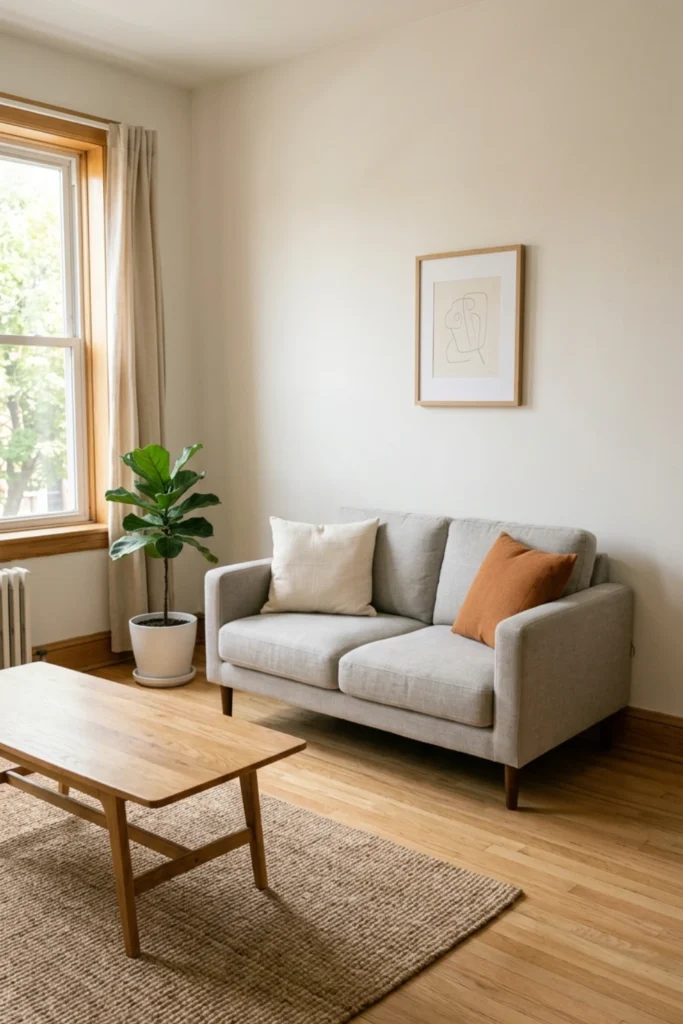
A palette of stark whites, cool greys, and harsh blacks creates a space that feels clinical rather than calm. Warm neutrals — soft cream, warm white, oatmeal, warm greige — create a minimalist palette that’s just as restrained but infinitely more livable.
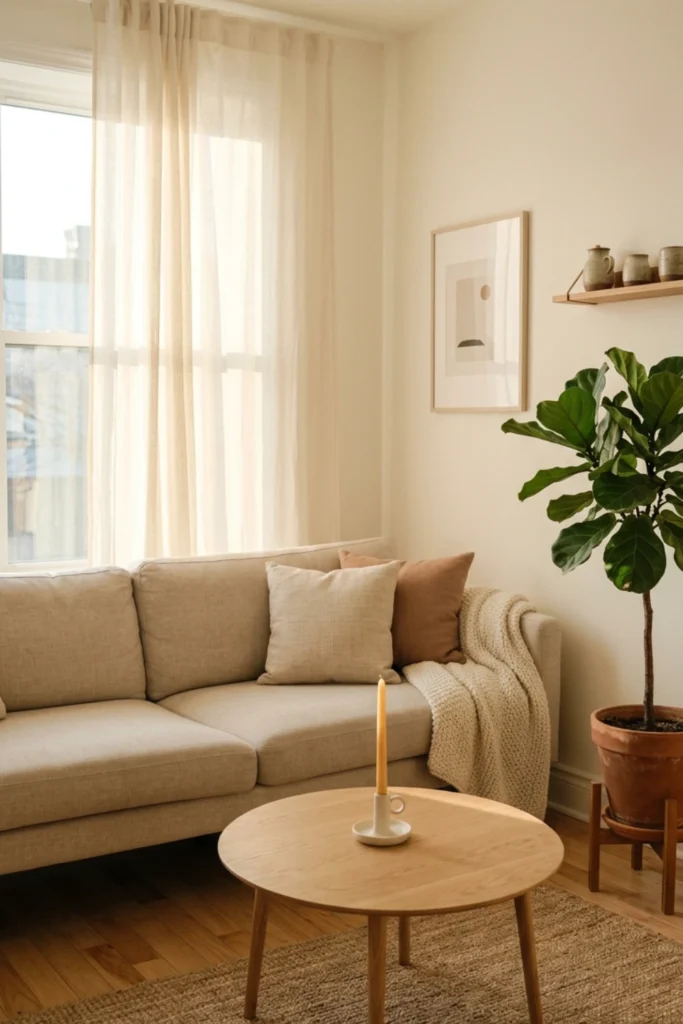
Warm white walls. Cream linen furniture. Natural wood accents. One warm accent tone — dusty sage, terracotta, warm blush — appearing sparingly in a single pillow, a throw, a small plant pot.
Three tones. All warm. Everything cohesive.
3. One Statement Piece Per Room
Minimalism doesn’t mean boring. It means intentional.
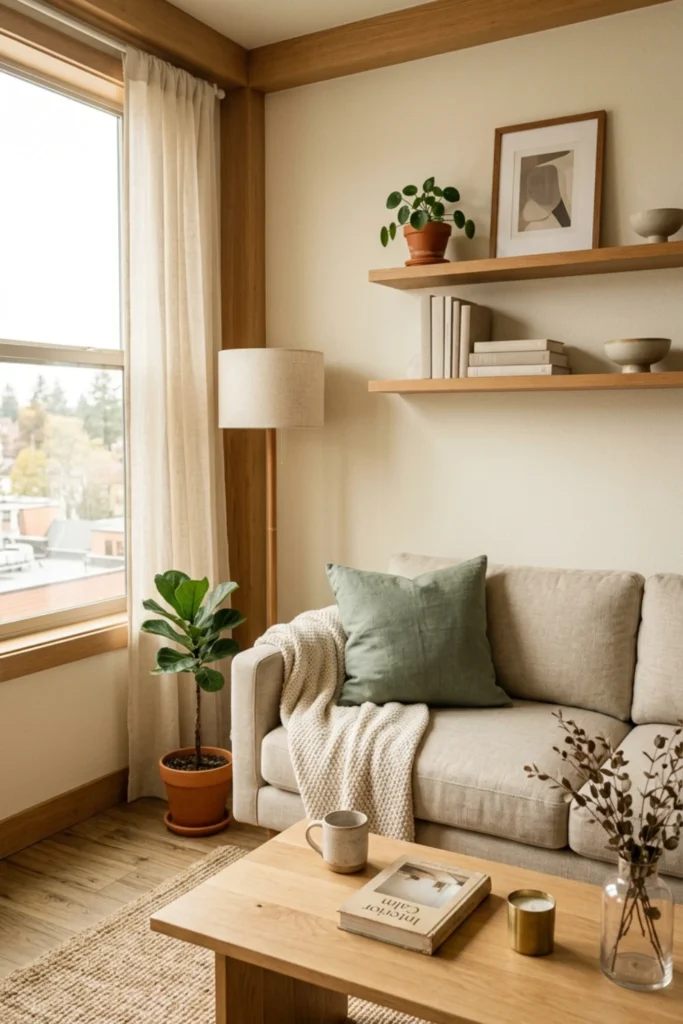
Each room gets one piece that earns all the visual attention — the rest of the room serves it quietly. In the living room: a large piece of art above the sofa or an oversized arched floor lamp that commands the corner. In the bedroom: a beautifully upholstered headboard or a dramatic ceiling-height curtain treatment. In the kitchen: a wall-mounted pot rack or a single stunning open shelf.
One statement. Everything else supporting it. The room feels designed without feeling decorated. Also Read: Cozy Small Space Living Ideas
4. Furniture With Visual Lightness
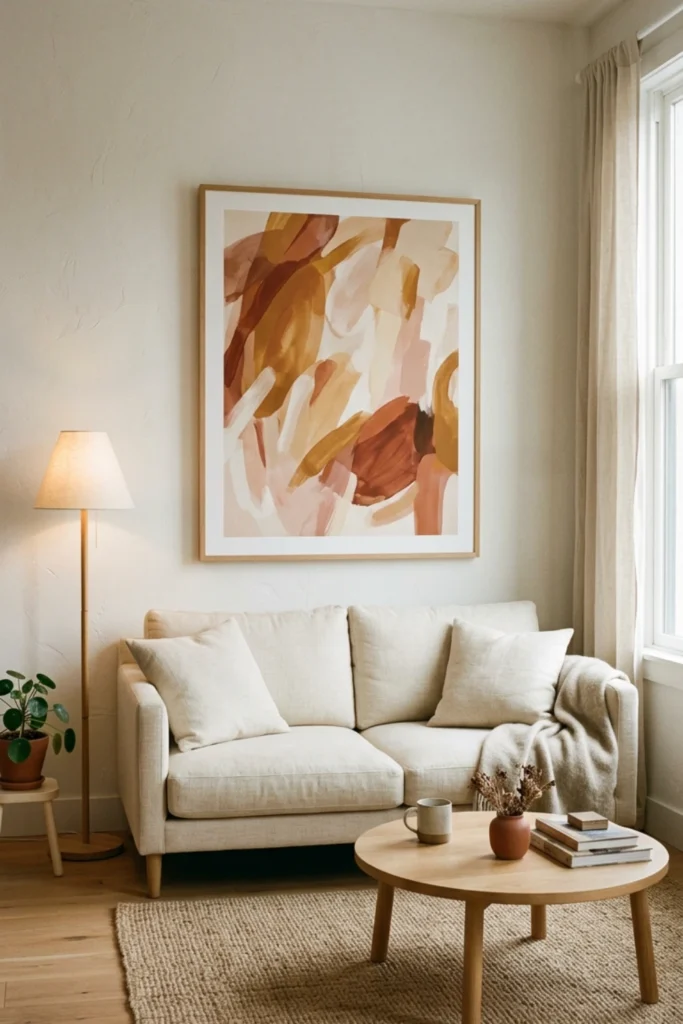
Heavy, dark, solid furniture in a small minimalist space does the opposite of what it should — it makes the space feel smaller and more cluttered even when the room is technically tidy.
Choose furniture with slim legs that show floor beneath. Light-toned wood rather than dark stain. Pieces in natural linen, cream bouclé, or soft velvet rather than heavy patterned upholstery. Glass or acrylic surfaces that the eye passes through rather than stops at.
The furniture is present. The floor is visible. The room breathes.
5. Surfaces Held to Three Items Maximum
The minimalist surface rule that prevents any styled shelf or table from tipping into clutter.
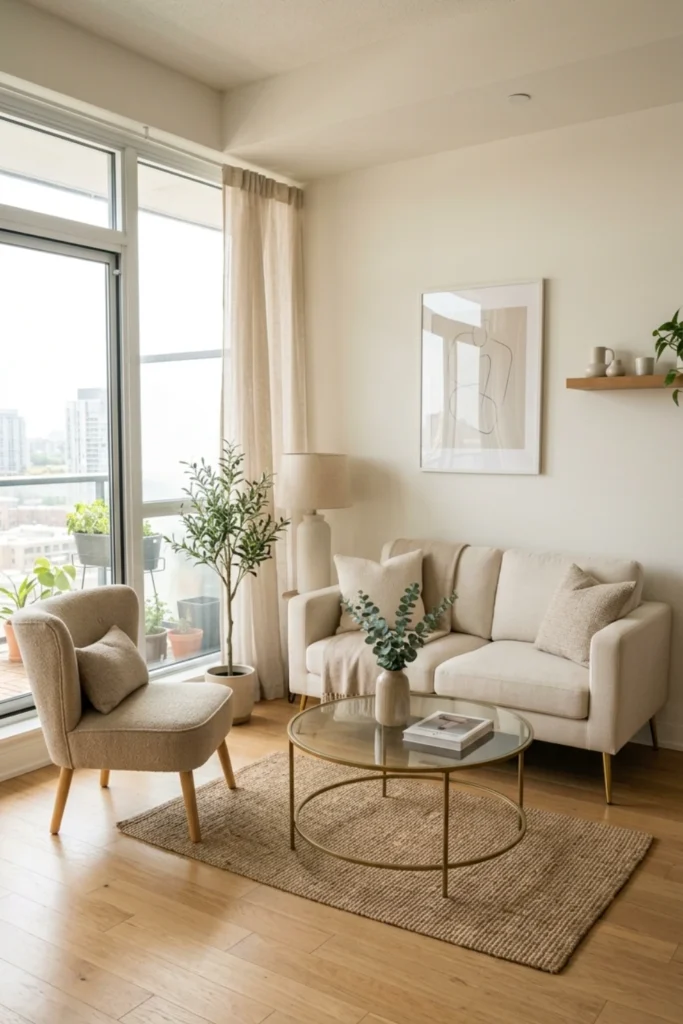
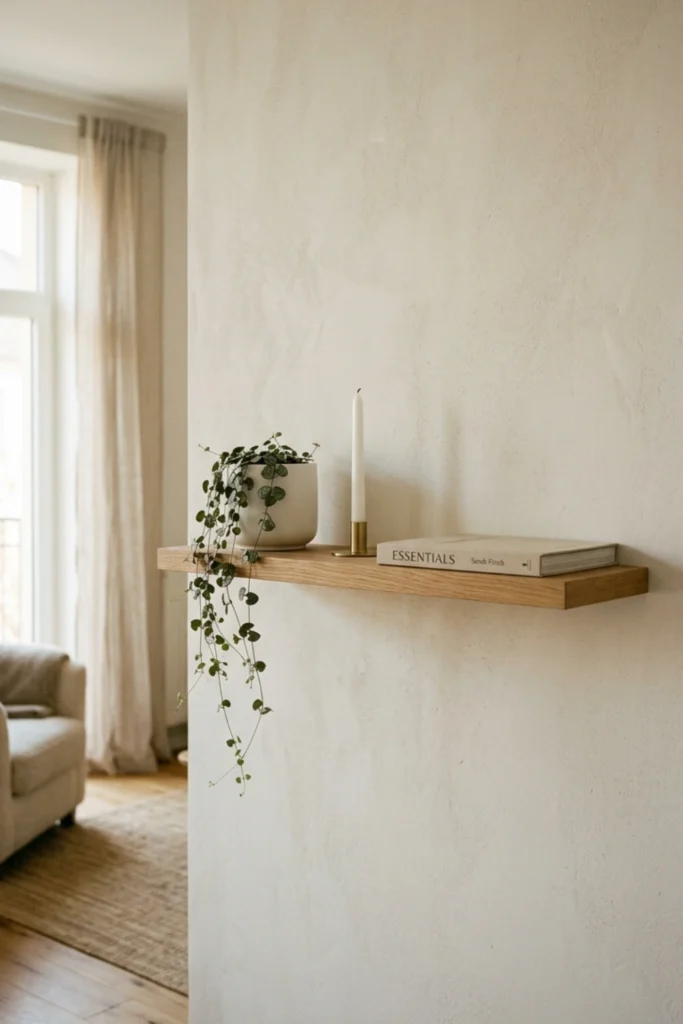
Every surface — the coffee table, the nightstand, the dresser top, the floating shelf — holds three items maximum. Always in odd numbers. Always with deliberate breathing room between them.
One tall item, one medium, one small. A candle, a small plant, a single book. A lamp, a tray, a dried stem in a vase. The composition is complete. Nothing needs to be added. Nothing should be.
6. Linen as the Primary Textile
In a minimalist small space, the choice of textile defines the entire feeling of the room.
Linen is the answer — consistently, across every category.
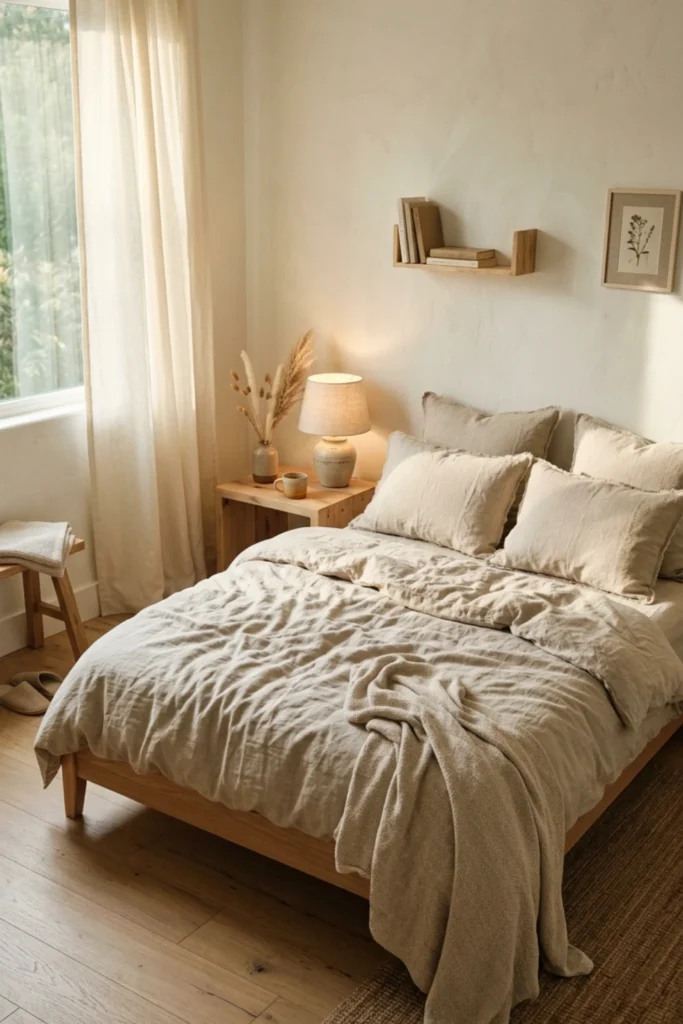
Linen duvet cover. Linen throw pillows. Linen curtains. Linen throw blanket. Even linen-look upholstery on the sofa or chair. Linen has a warmth and softness that photographsbeautifully, wrinkles in a way that looks lived-in rather than neglected, and creates a cohesive texture story across the room that elevates even the most minimal space.
One textile. Every surface. Effortlessly warm. More Inspiration: Small Apartment Decor Ideas
7. One Plant. Well-Chosen. Well-Placed.
A minimalist space doesn’t need a collection of plants.
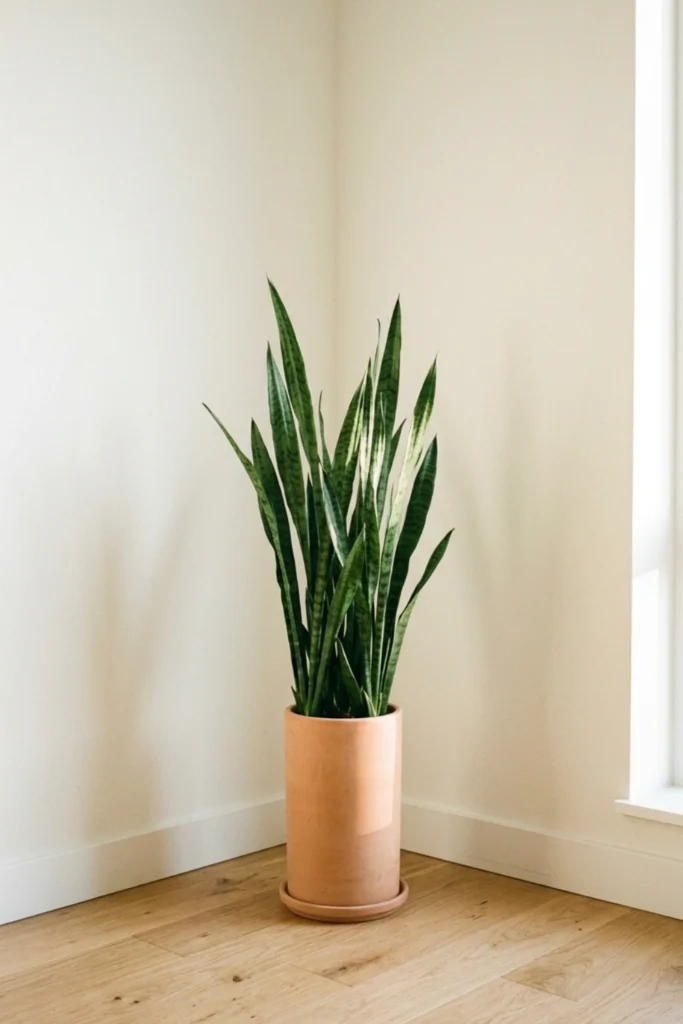
It needs one — chosen intentionally, placed beautifully, and given enough visual space to actually be seen.
A tall snake plant in a slim terracotta pot in the living room corner. A trailing pothos on a single floating shelf in the bedroom. A small sculptural succulent on the coffee table as the one organic element.
The single plant reads as a design decision. Multiple plants in a small minimalist space read as a collection — which is the opposite of minimalism.
8. Hidden Storage Everywhere
Minimalism in a small apartment is only possible when storage is genuinely invisible.
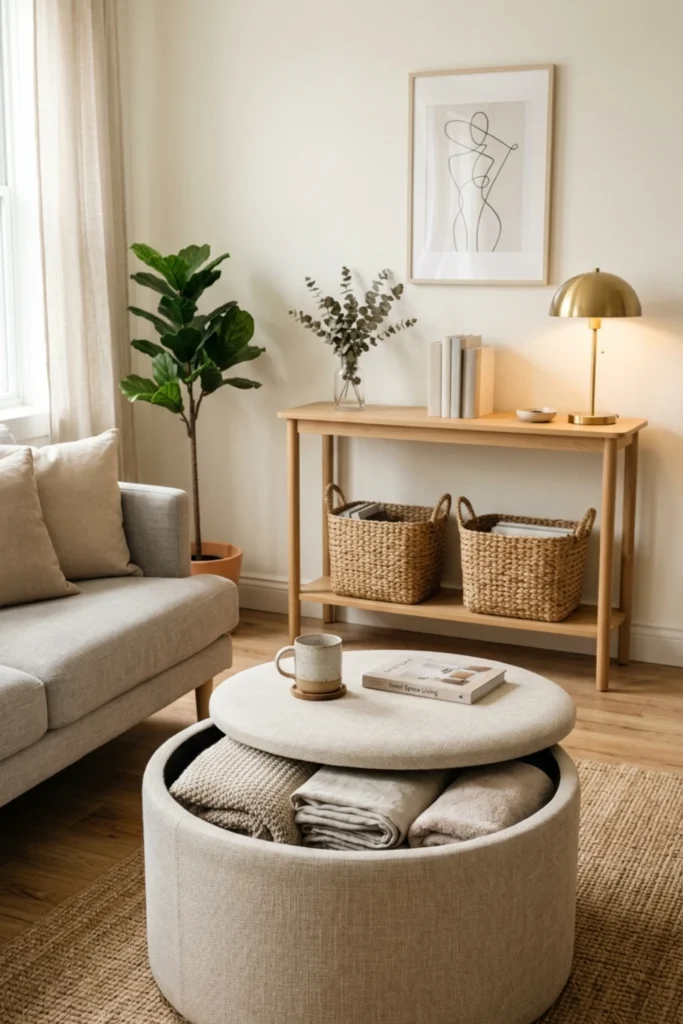
A storage ottoman that holds blankets behind its linen face. A bed frame with drawers that replace a dresser entirely. A console table with baskets on the lower shelf. A bench at the entry with a lift-top compartment for shoes.
The minimalist aesthetic lives on the surface. Behind it — inside it — everything needed for daily life is neatly, invisibly contained. The room looks minimal because the storage is hidden. Not because the storage doesn’t exist.
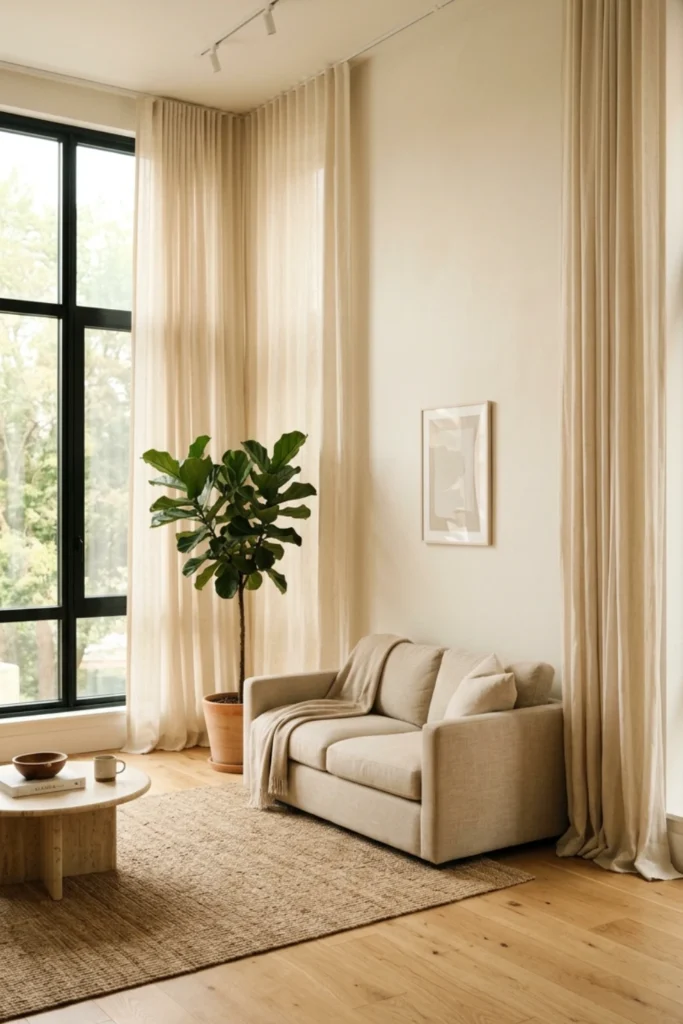
9. Curtains That Do Structural Work
In a minimalist small apartment, curtains are not just window treatments. They’re architectural elements.
Floor-length ivory or cream linen panels hung at ceiling height — extending past the window frame on both sides — make walls taller, ceilings higher, and rooms larger without changing a single piece of furniture.
In a minimalist space, the curtain is often one of the most visually significant elements in the room. Choose the fabric, the color, and the hang height with the same intention you’d choose a piece of art. Keep Reading: Small Living Room Ideas
10. A Single Large Mirror
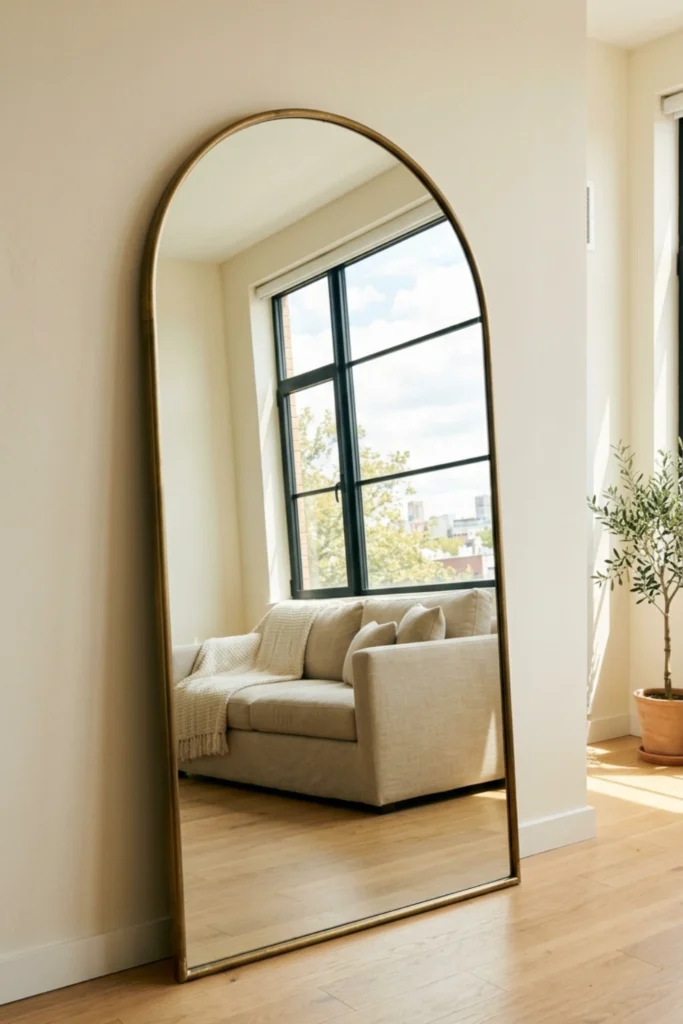
One large mirror in a small minimalist apartment does the visual work of an entire additional window.
Placed across from the primary light source, it doubles the natural light and creates the illusion of a room that continues beyond the wall. In a minimalist space, one large mirror reads as a deliberate design choice rather than a decorative addition.
An arched mirror in a slim brass frame. A large round mirror above the console table. A full-length mirror leaning in the bedroom corner. One mirror. Maximum impact. Zero clutter.
11. The Warm Lamp Instead of Overhead Lighting
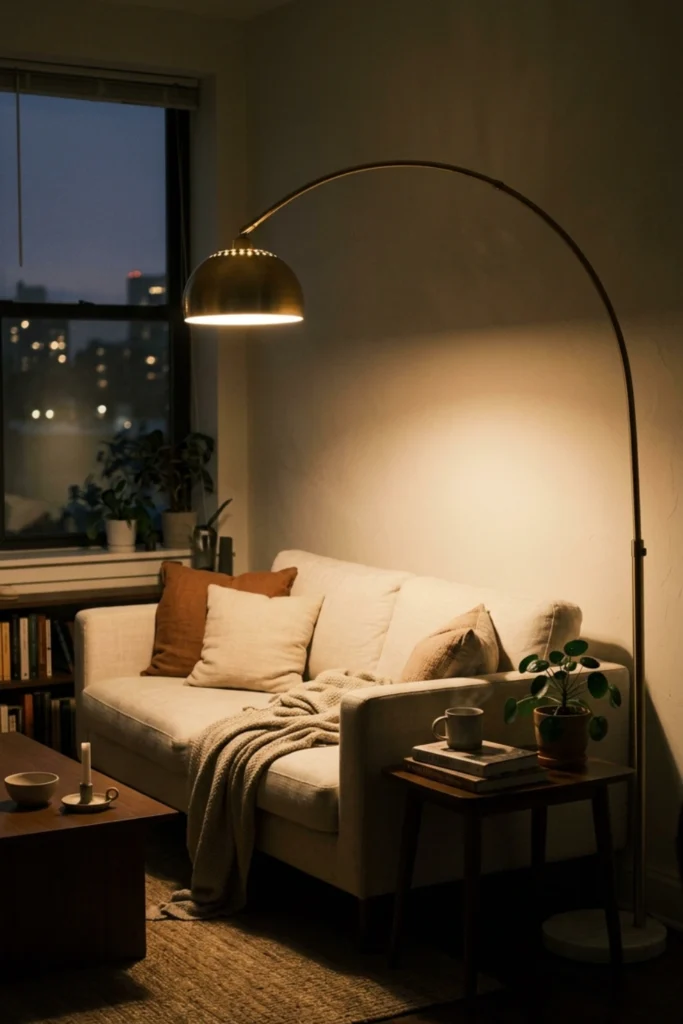
Overhead lighting in a minimalist small space is the design choice that most undermines the entire aesthetic.
It flattens. It hardens. It removes all the warmth and dimension that minimalist spaces need to feel cozy rather than cold.
One warm lamp — a brass table lamp with a linen shade, a slim arc floor lamp casting warm light from above, a plug-in wall sconce beside the bed — transforms the room. The light becomes part of the design rather than a utility service to the space.
In a minimalist apartment, every light source should be warm and intentional.
12. Decant Everything Into Matching Vessels
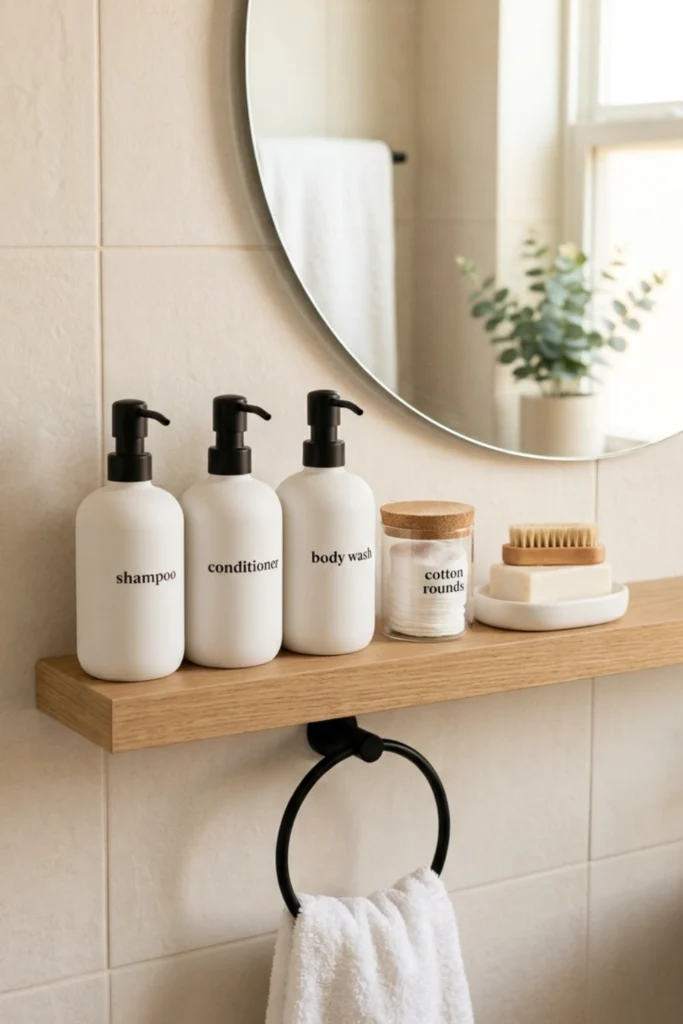
Visual noise in a minimalist home often comes not from too many items but from too much variety in how those items are contained.
Mismatched shampoo bottles. Different-colored cleaning supplies. Random plastic containers in the pantry. Every different label and shape adds to the visual chaos — even when the quantity of items is entirely reasonable.
Decanting into matching vessels — glass pump dis pensers in the bathroom, clear airtight containers in the pantry, matching ceramic dishes in the kitchen — reduces visual noise dramatically without reducing the items themselves. You May Also Like: Small Space Storage Hacks
Same items. Uniform containers. The space reads as minimal.
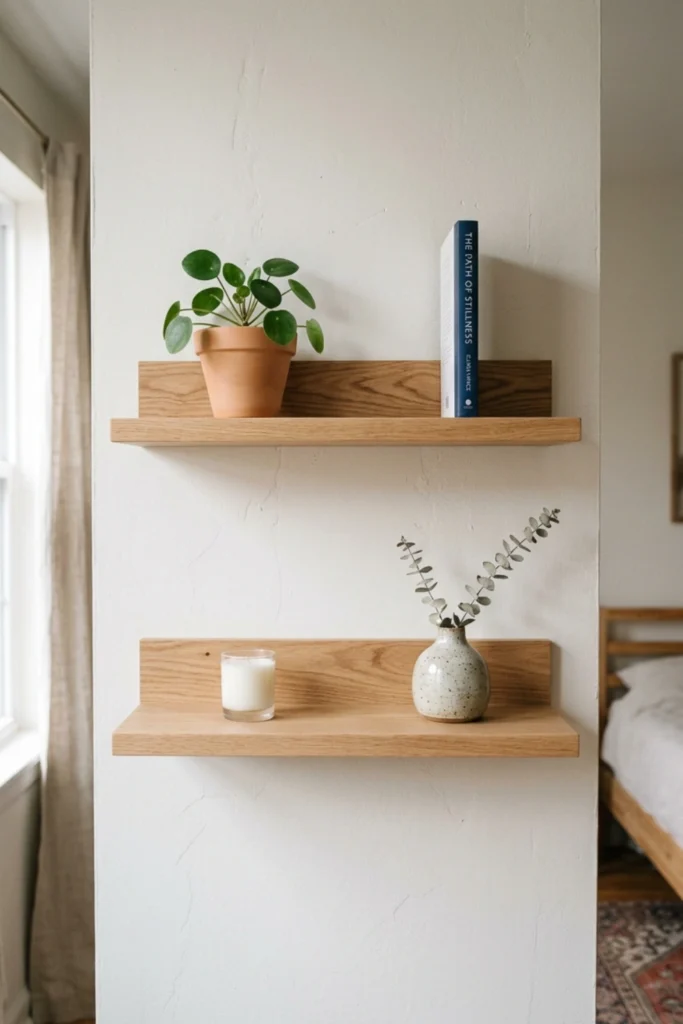
13. Floating Shelves Over Freestanding Furniture
Freestanding furniture in a small minimalist apartment — bookshelves, storage units, display cases — takes up floor space and adds visual weight that works against the open, light feeling minimalism creates.
Two or three floating shelves on a wall hold the same items in a fraction of the visual weight. The floor stays clear. The wall becomes a curated display. And the room feels open in a way that a piece of furniture standing against it simply cannot achieve.
Style each shelf with three items or fewer. Leave the rest of the shelf empty.
14. A Bed That’s the Whole Bedroom
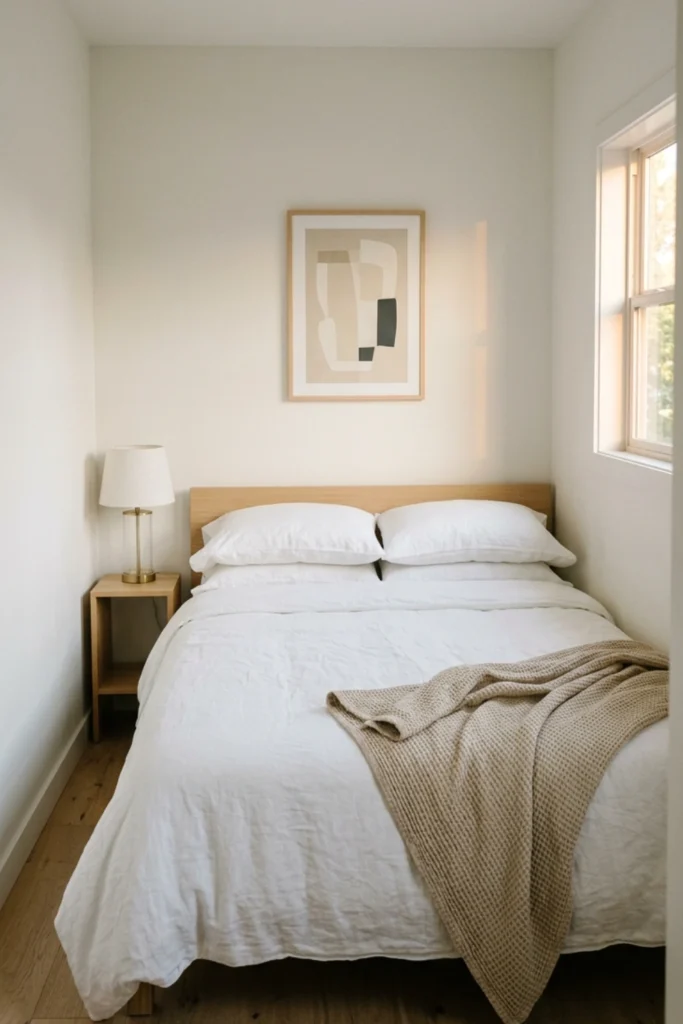
In a minimalist small bedroom, everything that isn’t essential to rest is removed.
No decorative objects on the nightstand beyond a lamp, a candle, and a book. No art on every wall — one piece, above the bed, and nothing more. No extra furniture unless it provides necessary storage.
The bed — beautifully made with linen bedding, the pillows arranged simply, a single throw at the foot — is the room. It takes up most of the space and deserves all of the attention.
Remove everything that competes with it. What remains is a bedroom that feels like a luxury retreat regardless of its size.
15. Scent as an Invisible Layer of Warmth
A minimalist space that smells like nothing feels incomplete.
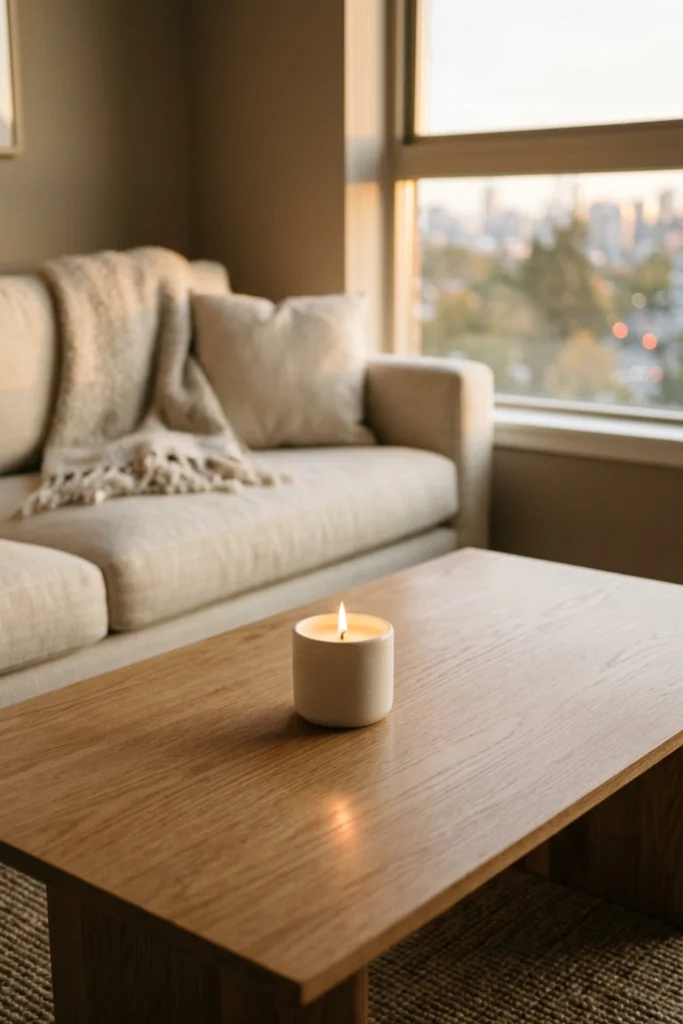
Scent is warmth without visual clutter. A single quality candle on the coffee table. A slim reed diffuser on a bathroom shelf. A linen spray misted on the sofa cushions before an evening in.
Choose one signature scent — warm cedar, vanilla, clean linen, soft sandalwood — and use it consistently throughout the apartment. It becomes the sensory identity of the space. The thing people notice before they notice anything else. The warmth that lives in the room even when all the surfaces are bare.
16. Natural Materials That Add Warmth Without Weight
The danger of minimalism in a small space is a room that feels sterile — all clean lines and edited surfaces but no soul.
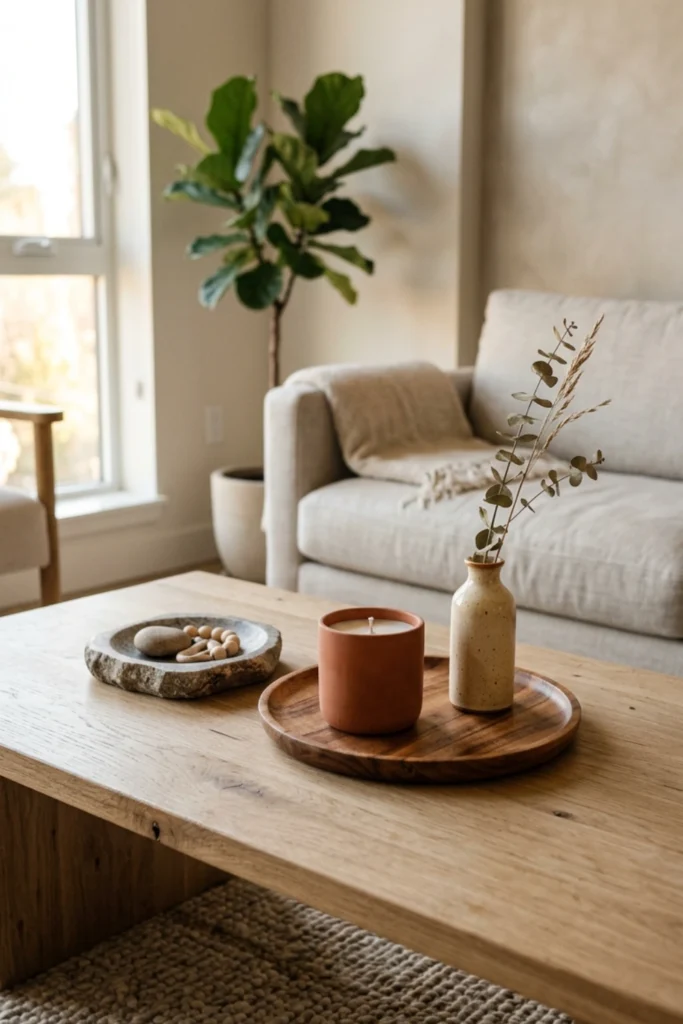
Natural materials prevent this. Wood grain. Woven texture. Stone. Terracotta. Dried botanicals. Cotton. These materials bring organic warmth into a minimal space without adding visual complexity.
A wood tray on the coffee table. A terracotta plant pot. A stone catchall dish on the dresser. A woven basket on the shelf. Each piece adds texture and warmth while keeping the palette neutral and the composition simple. Explore Next: Wall Decor Ideas for Small Apartments
17. The Daily Edit — Two Minutes Every Morning
The habit that makes minimalism permanent in a small space.
Every morning — two minutes. Return anything that migrated from its home. Clear any surface that accumulated something overnight. Put away anything left out the night before.
Two minutes. Every morning. Without exception.
Minimalism in a small space is not a one-time declutter. It’s a daily practice of returning things to their place before the accumulation becomes a problem that requires a significant response.
The apartment stays minimal — consistently, effortlessly, sustainably — because the daily edit maintains what the initial clearing created.
Two minutes. Every morning. The apartment stays exactly as calm as the day it was designed.
Minimal Doesn’t Mean Less. It Means Exactly Enough.
The minimalist small apartment isn’t one that went without.
It’s one where every object was considered. Every surface was edited. Every decision was made with the understanding that in a small space, what you choose to include matters as much as what you choose to leave out.
The result isn’t a room that feels empty.
It’s a room that feels free.
Warm. Intentional. Calm in the way that only happens when a space has exactly what it needs — and nothing it doesn’t.
That’s the minimalism worth living in.


