
17 Small Space Living Ideas For Families Without The Clutter
Small space living with a family is one of the most underrepresented conversations in home design.
Most small space content assumes one person. Maybe two. Clean surfaces. Minimal belongings. A candle on the nightstand and a single coffee cup by the window.
Families of four living in 800 square feet don’t have that luxury.
They have backpacks by the door and art projects on the table. Homework that needs a surface. Four people sharing one bathroom and one closet that was designed for one. Toys that multiply when nobody is watching. School papers that arrive daily and demand attention.
Small space family living requires a completely different approach from small space solo living. It requires systems — not aesthetics alone. Routines that the whole family maintains. Furniture that serves multiple people simultaneously. Zones that give each family member a sense of their own space within a shared home.
And it requires the understanding that a beautiful family home is not a home without evidence of life. It’s a home where the evidence of life has somewhere to go.
These 17 ideas give you the complete framework for a small space family home that functions beautifully — with four people, limited square footage, and real daily life happening inside it.
Save this. The clutter-free family home is achievable.
1. The Family Small Space Edit
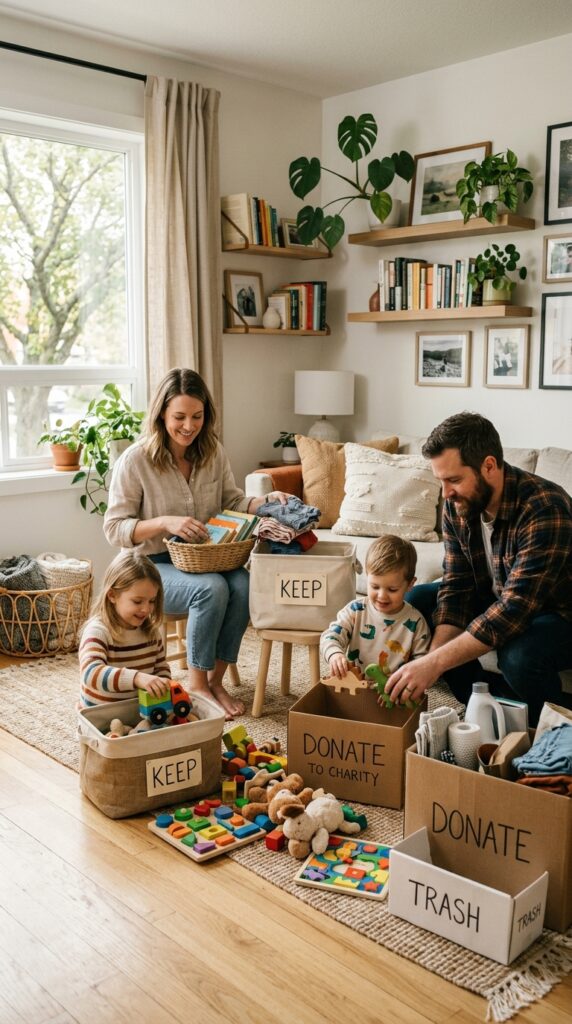
The family small space edit is harder than the solo small space edit — and more necessary.
Because families accumulate more than any other household type. Birthday presents, holiday gifts, school supplies, sports equipment, clothing in four sizes simultaneously, toys for multiple age ranges, and the general accumulation of a life being lived by multiple people.
The family edit rule:
For every item a child receives as a gift — one item that has been outgrown or is no longer played with leaves.
This rule, applied consistently at every birthday and holiday, prevents the accumulation that makes small family homes feel overwhelmed.
The family small space edit is not about taking things from children. It’s about making room for the things they actually love.
2. Every Person Gets a Zone
The most important principle in small space family living — and the one that prevents the whole home from feeling like nobody’s space at all.
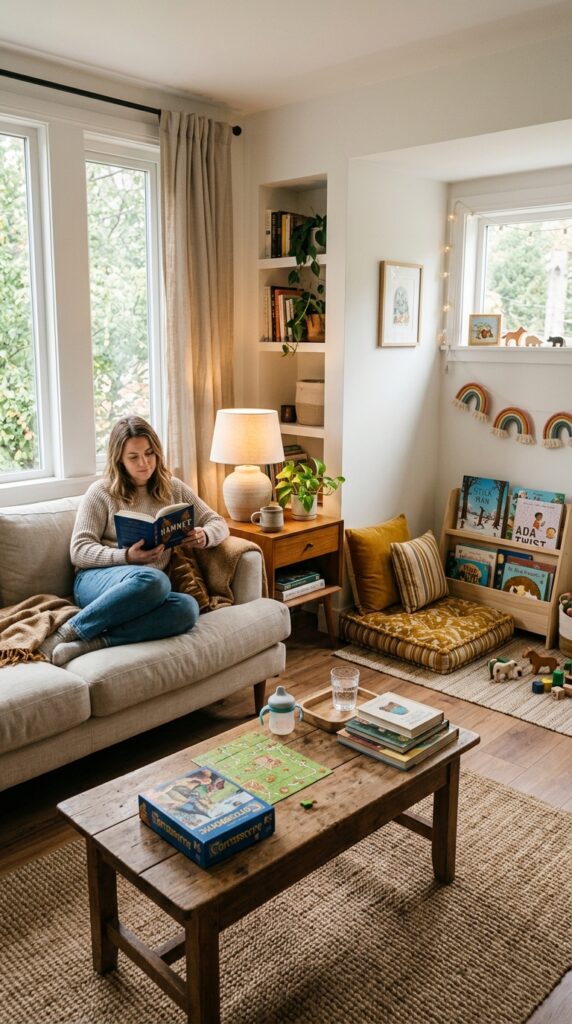
Every person in the family — including the youngest child — needs a designated zone that is theirs. A space within the shared home where their things live, where they can retreat, and where they have some sense of autonomy and ownership.
In a small space, zones don’t require separate rooms. They require a dedicated chair, a shelf, a corner, a basket.
The child who has a designated reading corner — even if it’s just a cushion on the floor beside a bookshelf — has a zone.
In a small family home, a zone can be a corner. What matters is that it belongs to one person.
3. Multi-Function Furniture Throughout
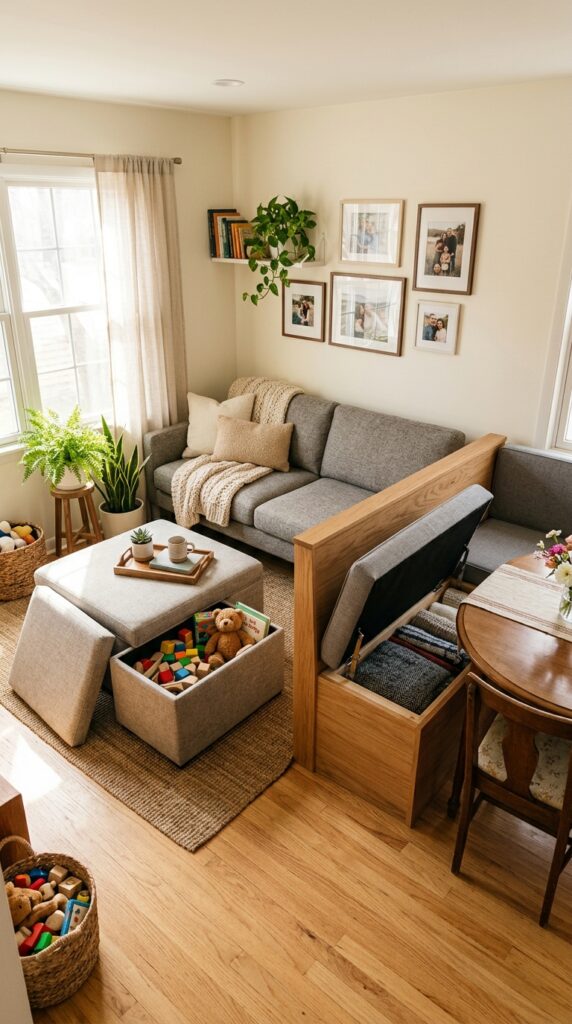
In a small space family home — single-function furniture is an indulgence the space cannot afford.
Every significant piece of furniture must perform at least two functions. Ideally three.
Every piece that does double or triple duty reduces the number of pieces the space needs to contain — which reduces the footprint and increases the breathing room.
In a small family home, furniture that does one thing is furniture that isn’t working hard enough. Also Read: Small Space Living Ideas
4. The Family Command Center
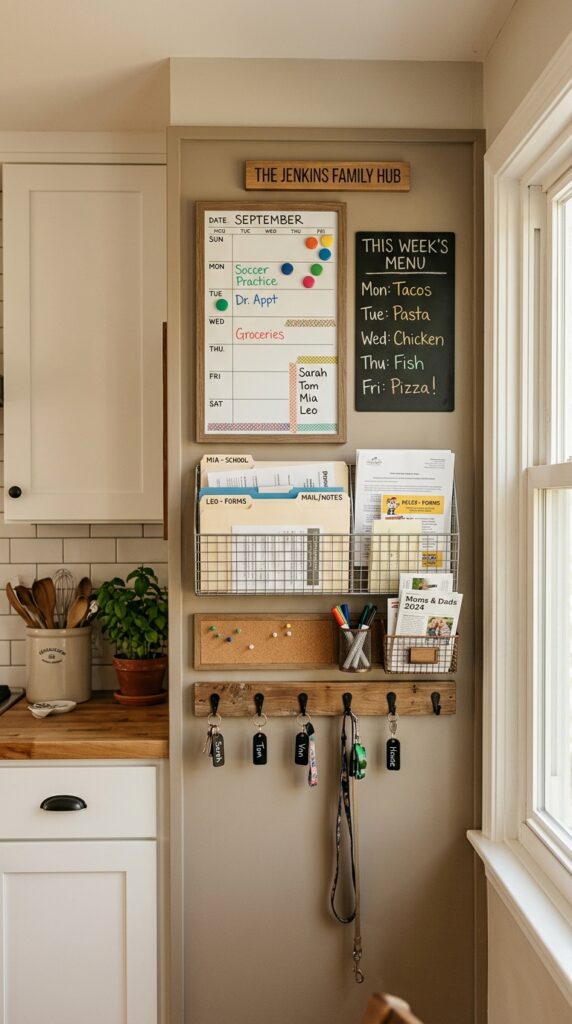
In a small space family home, household information lives in one location — or it lives everywhere and nowhere simultaneously.
The family command center is the organizational infrastructure that keeps the family’s shared life coordinated in a limited space.
In a small home, the command center typically lives in the kitchen — the room everyone passes through most frequently.
It doesn’t need to be large. A 24-inch wide section of kitchen wall, organized with intention, is enough.
The family command center is the organizational brain of the small family home. Without it, the information lives on the counter.
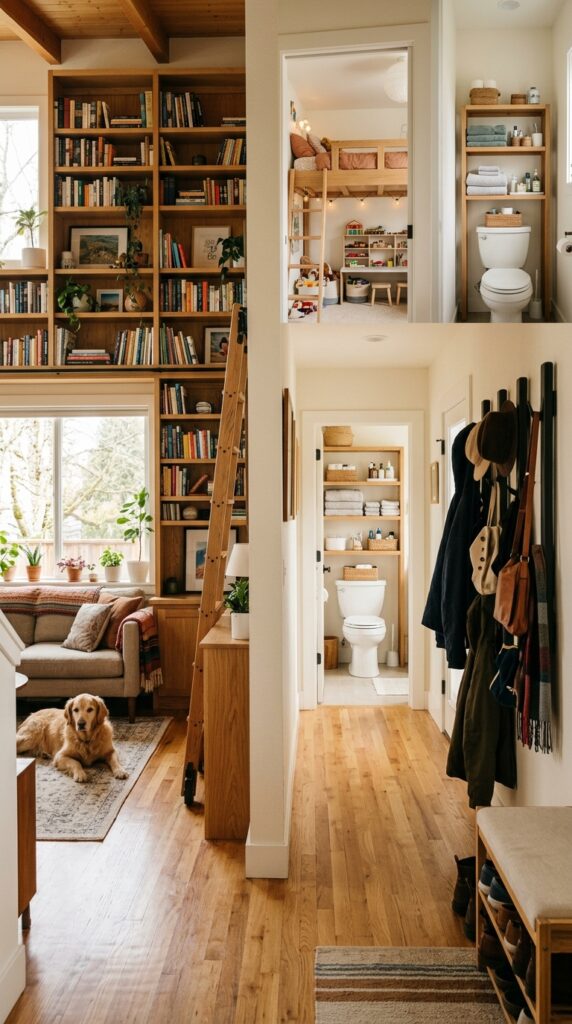
5. Vertical Storage for Every Room
Families generate more items than solo dwellers — which means the storage challenge in a small family home is proportionally greater.
The solution is the same in every room: go vertical.
The vertical approach recovers the equivalent of entire rooms worth of storage — without requiring any additional square footage.
When storage goes up — the floor goes free. And free floor space in a small family home is breathing room.
Going vertical in every room is the most space-efficient decision a small space family can make.
6. The Toy Rotation System
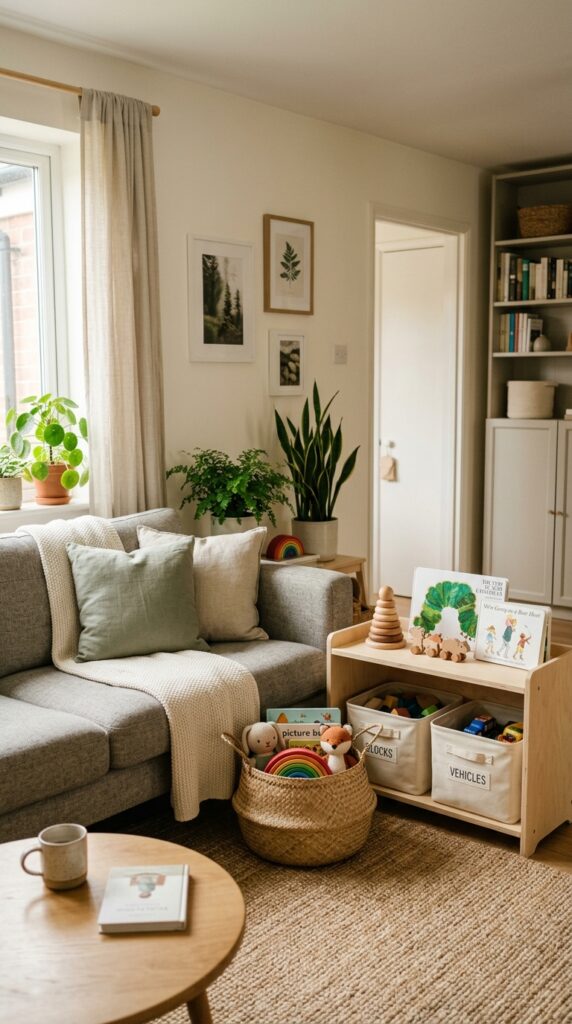
The single most effective strategy for managing toy clutter in a small family home — and the one that most improves children’s engagement with their toys simultaneously.
Toy rotation means only a portion of the family’s toys are accessible at any time. The rest are stored — rotating in as interest in the current selection wanes.
The small space benefit:
With one-third of toys accessible rather than all of them — the living room or kids room holds a manageable amount. The floor stays clearer. Tidy time takes five minutes instead of thirty.
Toy rotation reduces toy clutter by sixty percent without removing a single toy from the home. More Inspiration: Small Living Dining Room Combo Ideas
7. Shared Bedroom Solutions
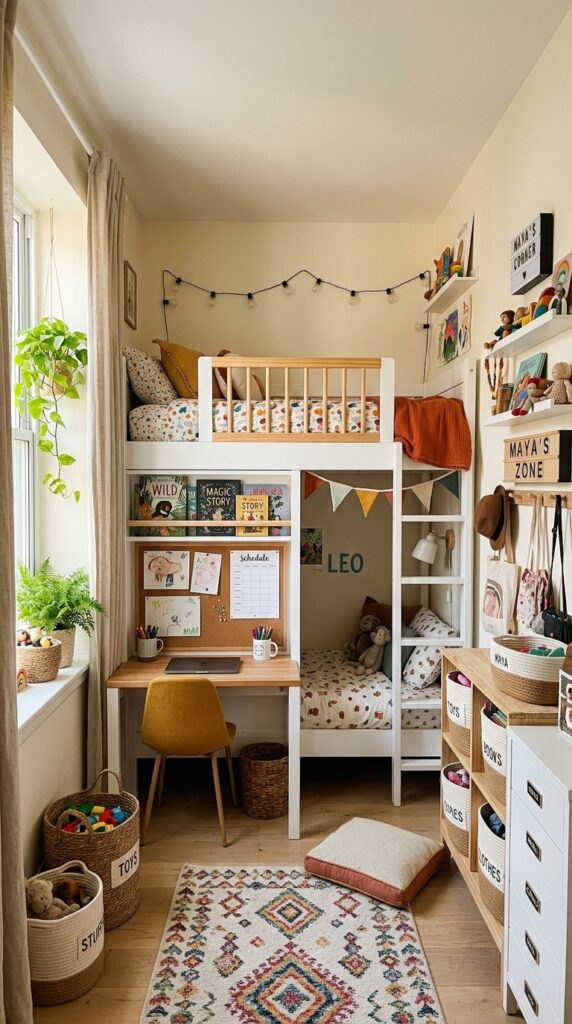
Two or more children sharing a small bedroom is one of the most common small space family challenges — and one with genuinely beautiful solutions when approached creatively.
The shared bedroom that works is the one where each child has a clear sense of what is theirs — and where it lives.
A shared bedroom works when each child has their own zone within it — however small.
8. A Family Drop Zone That Works
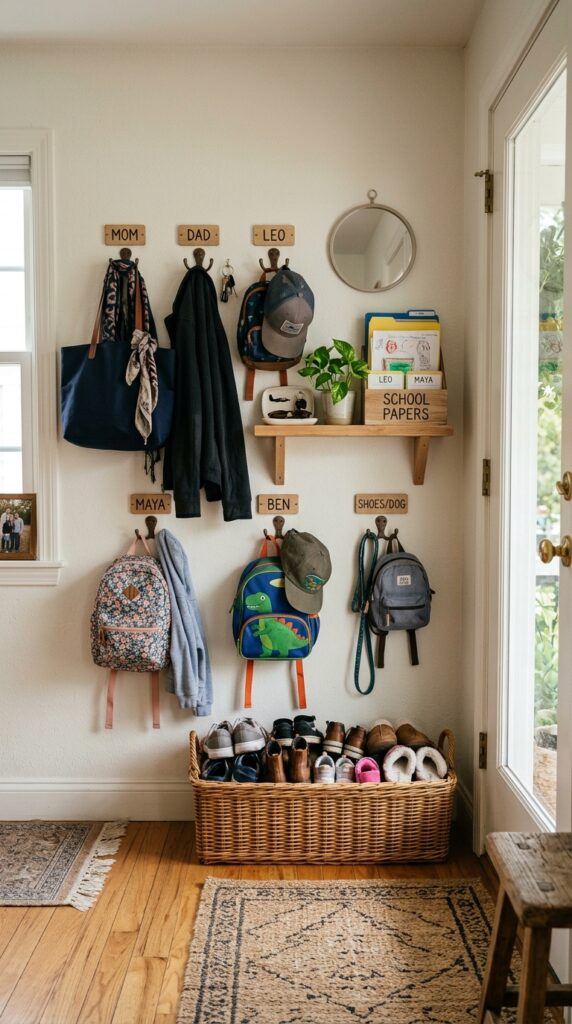
The drop zone is the first organizational system a small family home needs — and the one that prevents the daily accumulation of backpacks, shoes, coats, and papers from spreading through the entire home.
In a small home without a mudroom, the drop zone lives in the entryway, in a hallway closet, or on the wall immediately inside the front door.
It must be the first place everyone goes when they arrive home. The habit is as important as the furniture.
The family drop zone stops the daily avalanche at the door — before it reaches every surface in the home.
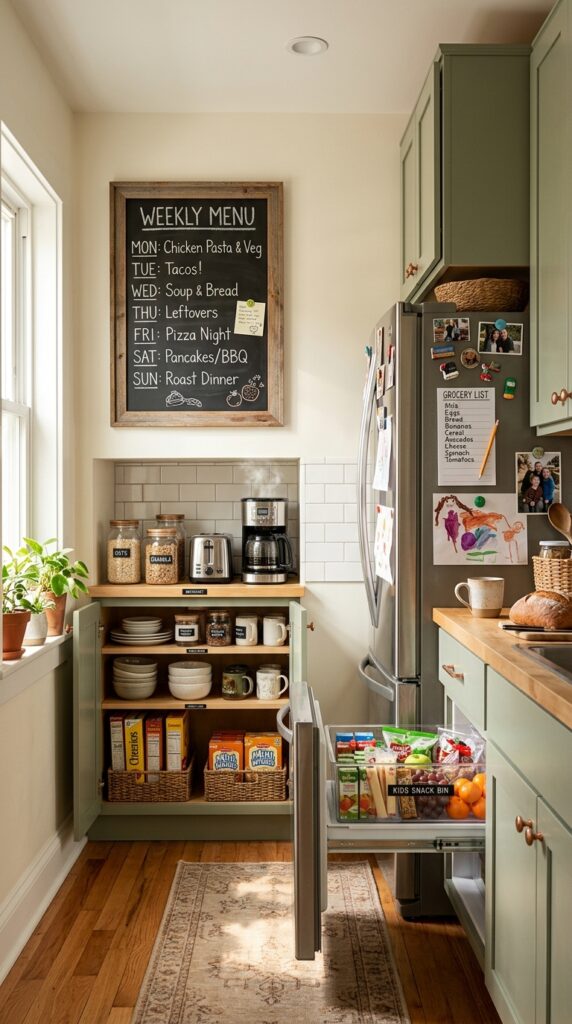
9. The Kitchen That Feeds a Family Efficiently
Feeding a family in a small kitchen requires organization that makes cooking faster, grocery shopping more accurate, and the kitchen itself calmer between meals.
The family kitchen that functions well reduces the daily decision fatigue that comes with feeding multiple people — because the decisions have already been made.
A planned, organized family kitchen removes the exhausting daily question of what’s for dinner. Keep Reading: Interior Design Ideas for Small Living Spaces
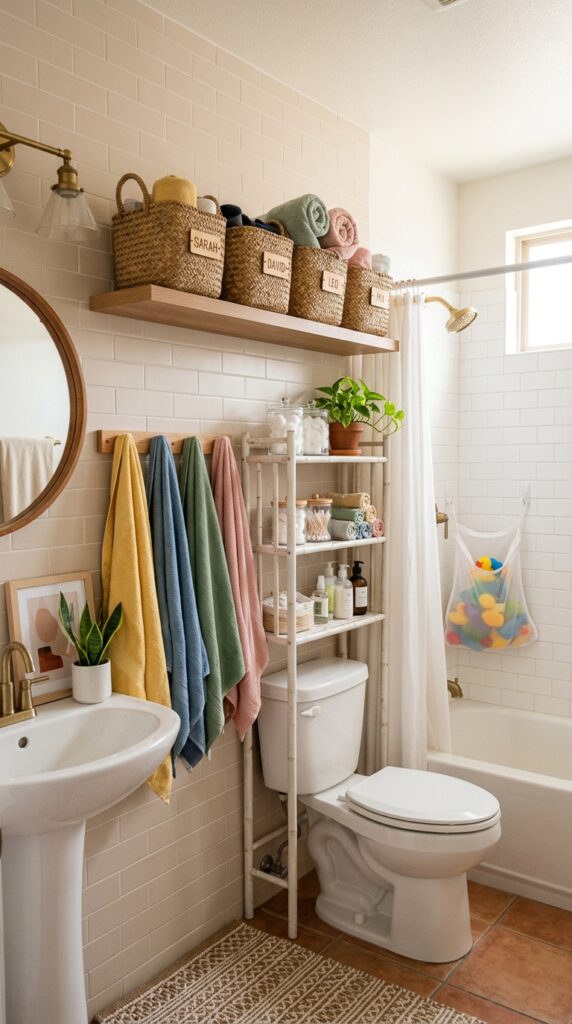
10. Bathroom Organization for Multiple People
One bathroom shared by four people requires systems specific to each person — and storage that serves multiple routines simultaneously.
The family bathroom that functions well gives every person their own defined storage area — even if the area is small.
Color-coded towels alone resolve one of the most persistent small space family bathroom frustrations.
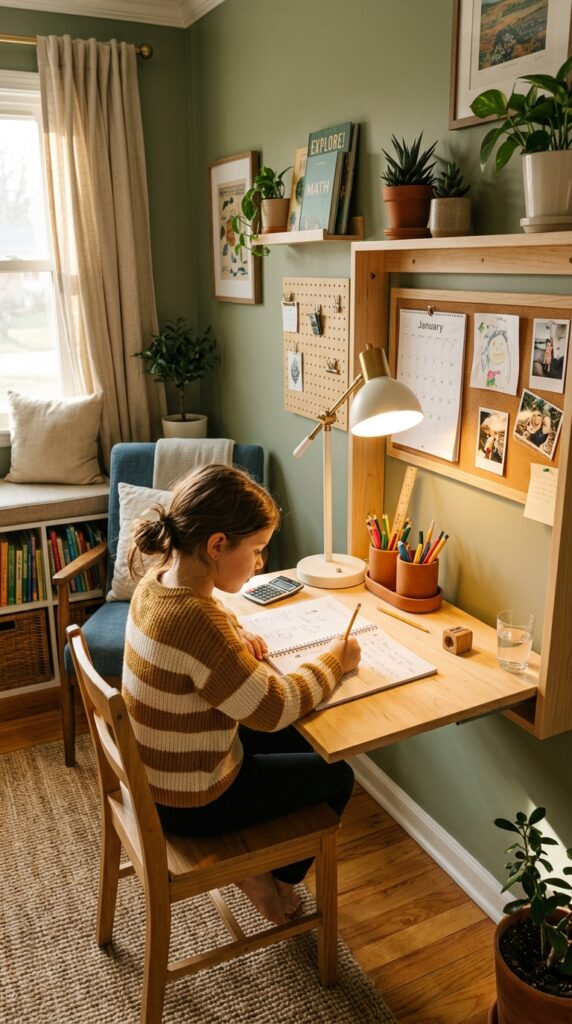
11. Homework and School Zone in Small Spaces
Every school-age child in the family needs a consistent, dedicated homework zone — even in a small home.
Not a room. A zone. A surface, a lamp, the right supplies, and the expectation that this is where homework happens.
The homework zone supplies:
- Pens, pencils, ruler, scissors — in a small caddy or cup
- Current homework only on the surface — nothing else
- A lamp — proper task lighting prevents the homework-on-the-sofa habit
- A homework schedule — visible, showing when each subject is due
A consistent homework zone ends the negotiation about where and when homework happens.
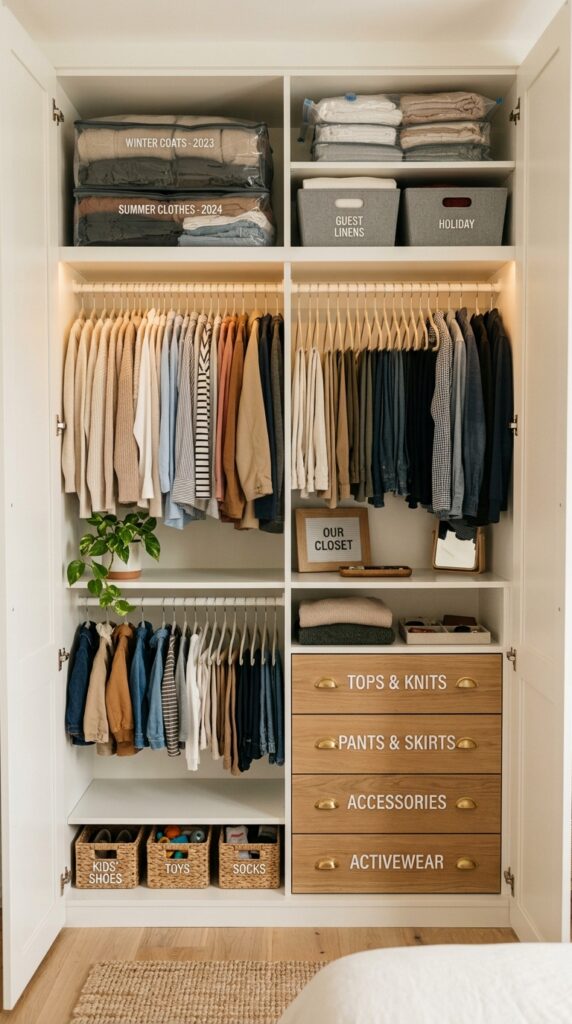
12. Family Clothing Systems That Stay Organized
Family clothing in a small home is a perpetual organizational challenge — four wardrobes competing for the storage capacity designed for one.
For children specifically:
- Child-height hanging rod — children hang and retrieve their own clothing independently
- A daily outfit hook — tomorrow’s clothes chosen the night before, hung and ready
- School uniform simplified — fewer decisions, less storage required
A capsule wardrobe for every family member in a small home is not a sacrifice. It’s a liberation. You May Also Like: Space-Saving Furniture Ideas
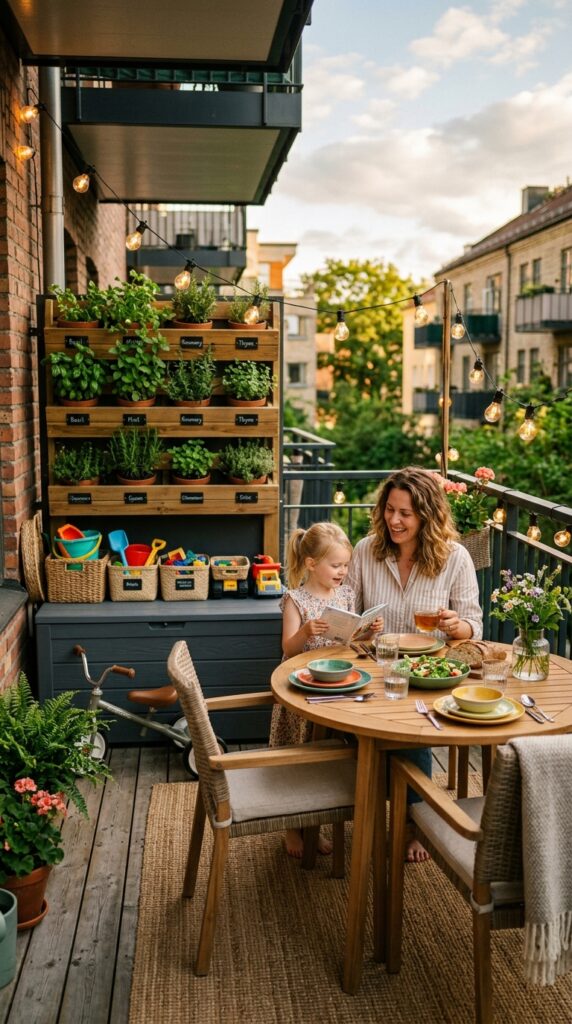
13. Outdoor Space as an Extension of the Home
For small space families — any outdoor space available is not bonus space. It is essential living space.
A small balcony, a backyard corner, a shared courtyard, a fire escape landing — all become extensions of the family’s living square footage when used intentionally.
Every hour the family spends in the outdoor space is an hour the indoor space breathes.
For small space families, outdoor space is not a luxury. It is square footage.
14. The Privacy System in a Small Family Home
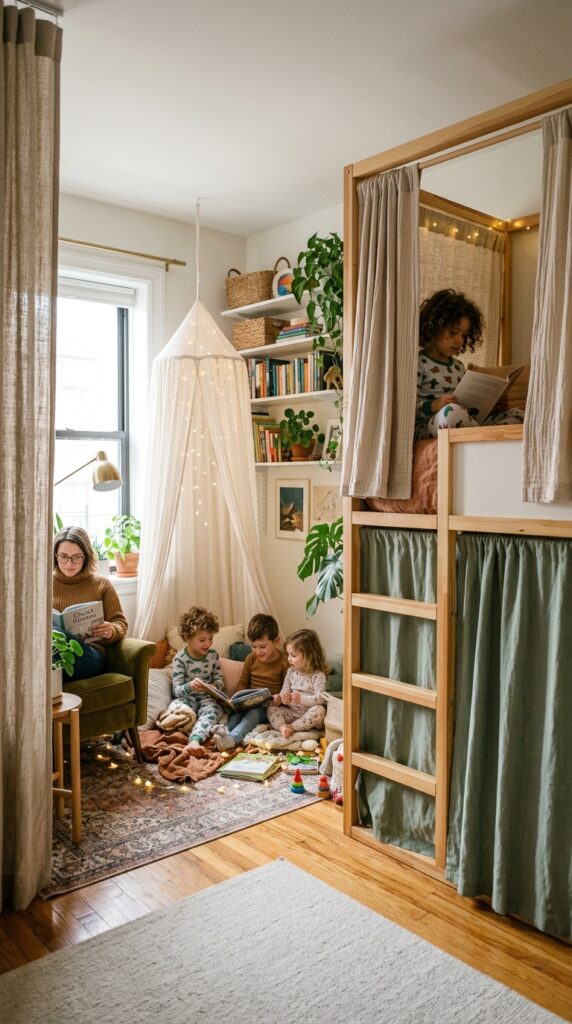
Privacy in a small family home is a genuine need — for adults and for older children — and one that requires intentional solutions when walls are limited.
Privacy in a small family home is not about separation. It’s about permission — the permission to be alone, even briefly, within a shared space.
Privacy in a small family home is created by curtains, corners, and the family culture that honors individual time.
15. The Family Weekly Reset Ritual
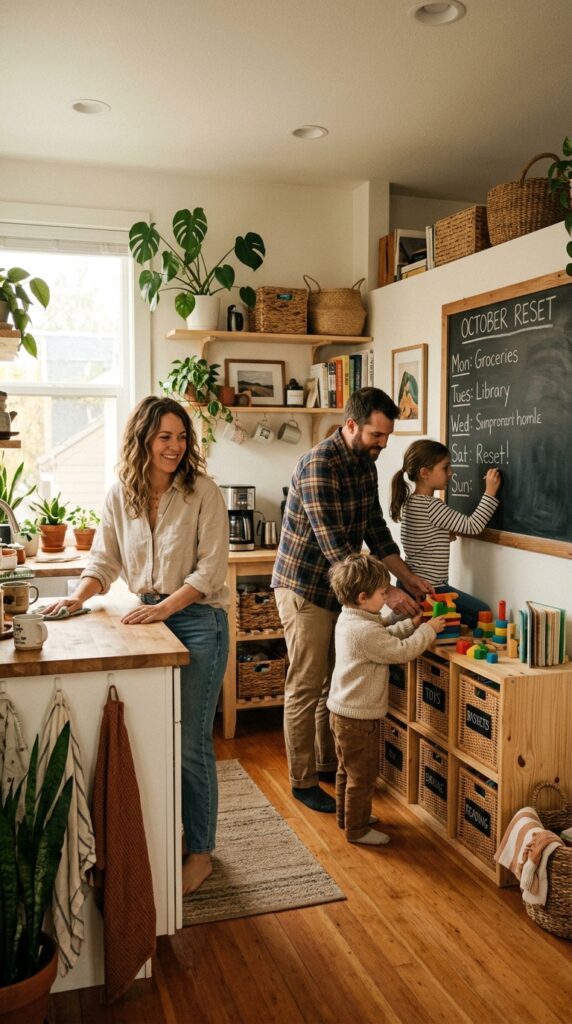
The small space family home that stays organized has one habit above all others.
The weekly reset. Every week. The whole family. Together.
Not a deep clean. A reset — returning everything to its starting position so the week begins from a baseline of calm.
Making the reset a family activity rather than a parental responsibility teaches children that the home’s organization is a shared responsibility — not something that happens to them.
Children who participate in the reset maintain the systems between resets significantly better than children who don’t.
The weekly family reset teaches children that a calm home is everyone’s responsibility — not just the adults’. Explore Next: Renter-Friendly Small Apartment Ideas
16. Teaching Kids the System
The most beautiful organizational system in a small family home fails if only the adults maintain it.
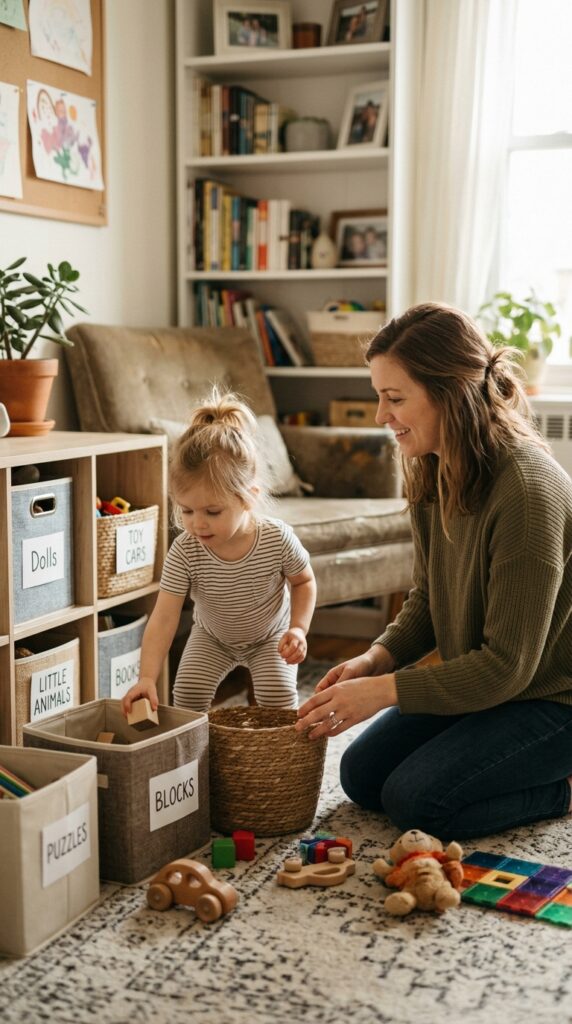
Teaching children the system — genuinely, age-appropriately, with patience and consistency — is the investment that makes the whole small space family approach sustainable.
Teaching the system by age:
- Ages 2-4 — picture labels on bins, one category per bin, large toy basket for tidy time
- Ages 5-7 — picture-plus-word labels, category bins, daily tidy habit with timer
- Ages 8-12 — word labels, zone responsibility, weekly reset participation
- Teens — zone ownership, self-managed clothing system, drop zone habit
Children taught the system become the system’s best maintainers.
17. The Small Space Family Mindset
The final idea — and the one that holds everything else together.
Small space family living is not a compromise waiting to end. It is a complete, intentional way of living that has genuine advantages over larger home living — when approached with the right mindset.
The mindset shift:
The small family home is not a smaller version of the large family home. It is a different kind of home — one that asks different questions and rewards different decisions.
The question is not how do we fit more in? The question is what do we actually need, and how do we make it beautiful?
The families who thrive in small spaces are the ones who ask the second question.
The small space family home is not a lesser home. It is a more intentional one.
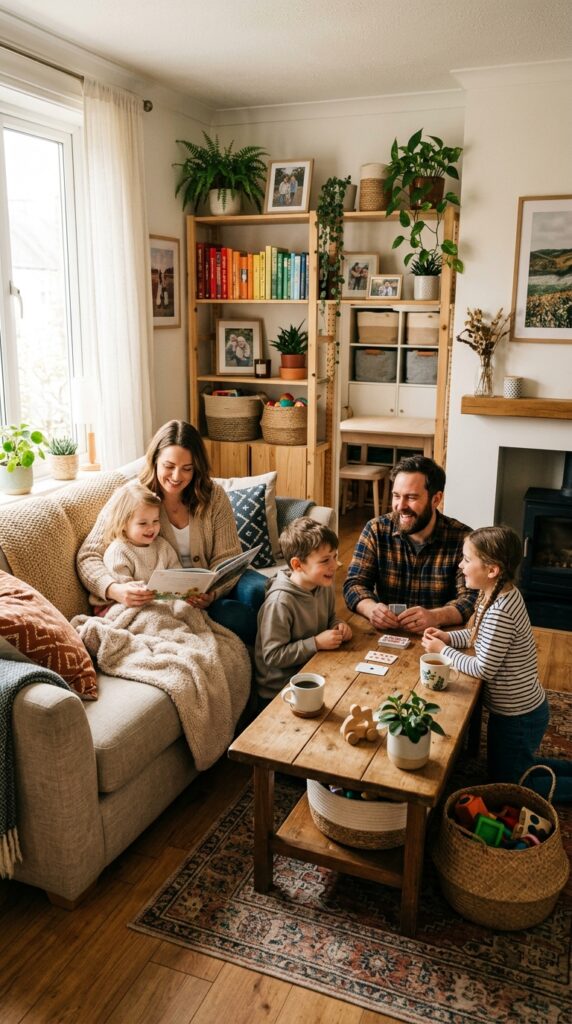
Four People. One Home. Completely Enough.
The small space family home can be calm. Beautiful. Organized. And genuinely enough for the life happening inside it.
Not by eliminating evidence of family life. But by giving that evidence somewhere beautiful to live.
Four coats on four hooks. Four towels in four colors. Four people who know where their things belong and return them there.
That’s the small space family home working perfectly.
Save this to your small space living board. Come back to it one system at a time.
Which idea are you implementing first? Tell me in the comments.


