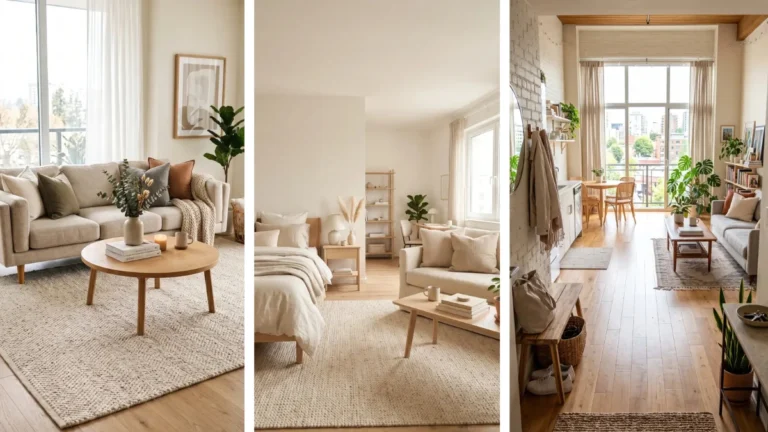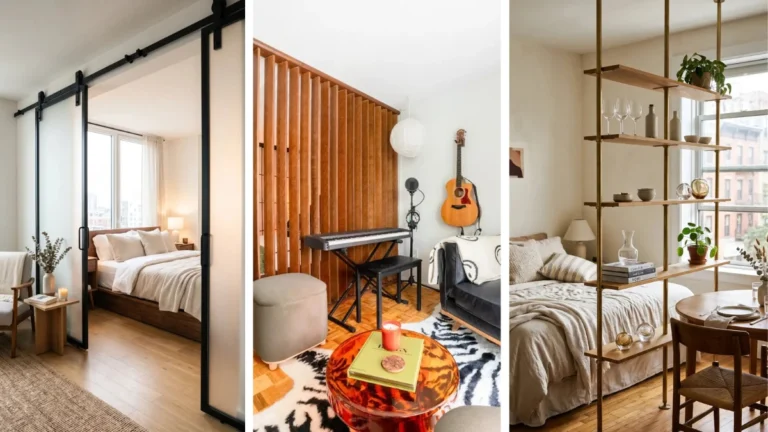
Living in a single open room often means your bed is the first thing guests see when they step through the front door. You want your sleeping corner to feel quiet and tucked away, but building permanent drywall partitions is rarely an option in rental units. Heavy solid walls can also block window light and leave half your home sitting in dark shadows.
Finding functional studio apartment privacy ideas comes down to choosing lightweight, light-filtering dividers that separate your floor plan without making it feel small. Floating open shelves, carved screens, sheer drapes, and tall headboard walls establish clear visual boundaries while keeping sightlines airy.
Whether you need to hide an unmade bed, block laptop glare, or muffle room echoes, these nineteen rental-friendly strategies show you how to divide a studio layout so it feels thoughtful, comfortable, and organized every single day.
1.Intricately Carved Folding Screens That Filter Light and Hide Sleeping Corners
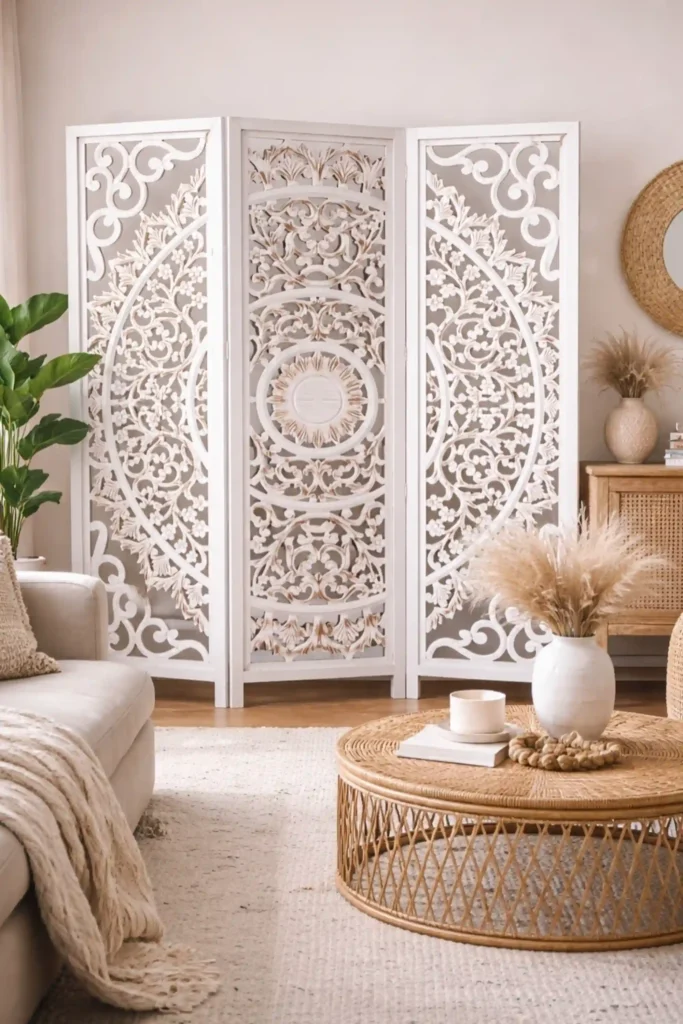
A freestanding carved wooden screen creates instant visual privacy without blocking natural light. The open cutout pattern lets sunshine pass through while obscuring bed lines or unmade sheets from guests standing in your living room.
- Place the screen directly between your sofa back and the head of your bed.
- Fold the panels slightly at an angle so the divider stands stable without wall anchors.
- Choose cream or light whitewashed wood finishes to keep neutral living rooms feeling open.
Move the panels against a wall whenever you want your entire studio open for company.
2.Double-Sided Open Bookcases That Divide Living and Sleeping Zones
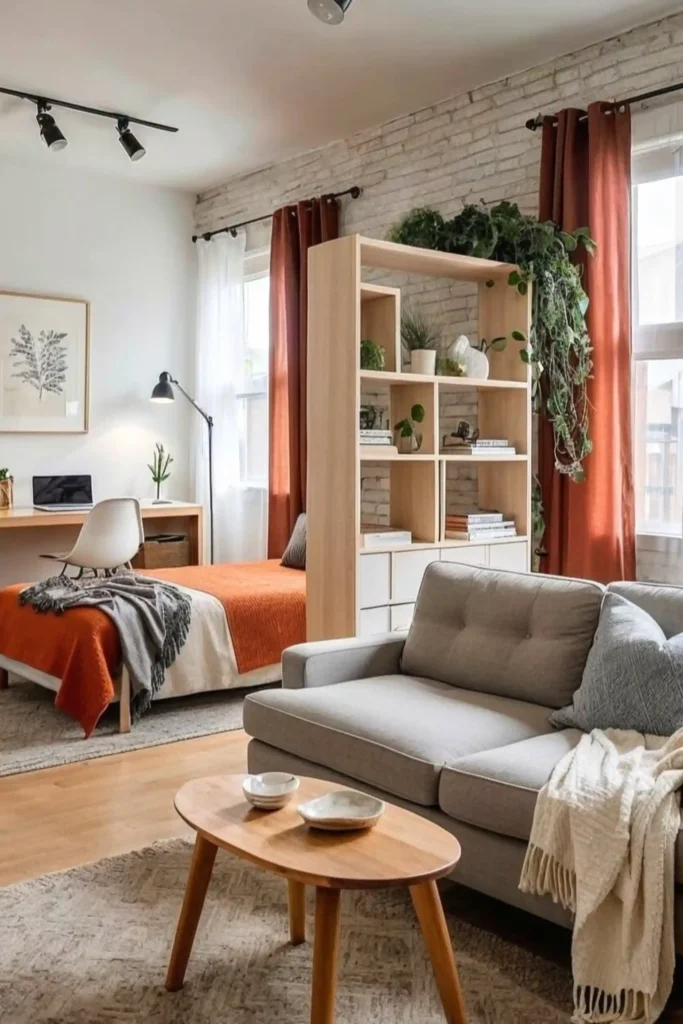
An open wooden shelving unit placed perpendicular to a brick wall creates two clear rooms out of one long studio footprint. Leaving the top cubbies partially open preserves daylight from nearby windows, while lower drawers hide folded clothes and clutter out of view.
📌 Placement Tip
Staggering potted trailing plants on the top shelf softens the hard geometric edges of the cabinet while adding organic height.
| Open Shelving Dividers | Solid Wall Partitions |
|---|---|
| Passes natural window light to both zones | Blocks daylight and creates dark corners |
| Provides storage accessible from bed and couch | Takes up floor width without adding storage space |
3.Narrow Vertical Shelving Units with Built-In Cantilevered Floating Desks
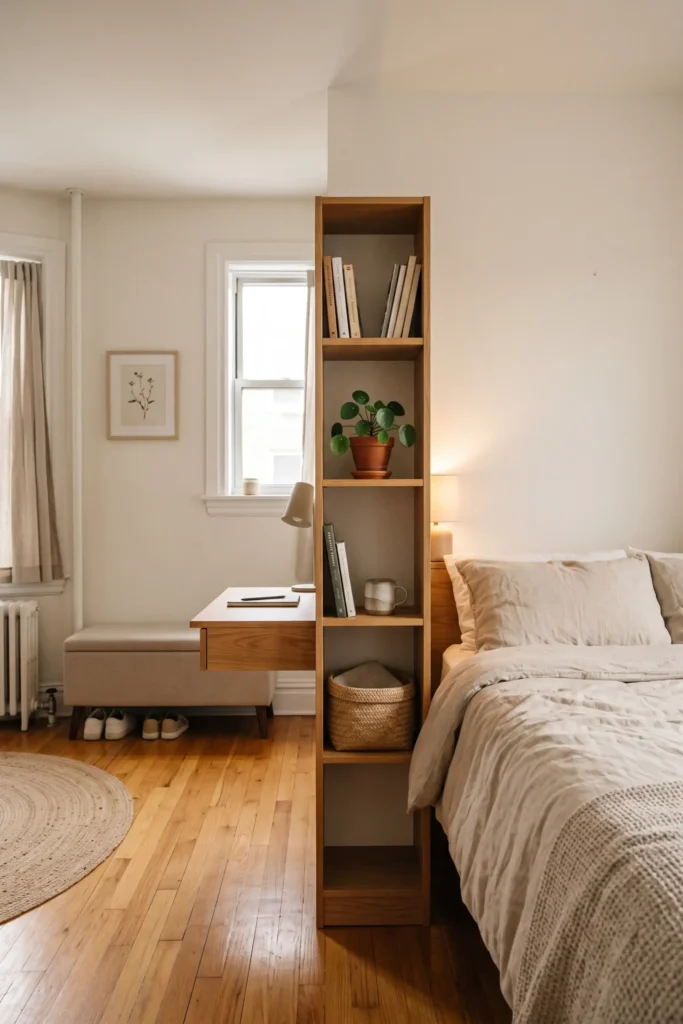
A floor-to-ceiling slender oak bookcase with a cantilevered desk extending from one side marks the line between your entryway, workstation, and bed. Storing books and ceramic mugs on the vertical shelves leaves the desktop clean for a laptop and lamp.
- Anchor the top shelf bracket securely into wall studs for complete stability.
- Keep a small potted plant on the middle shelf to bring greenery to your desk.
- Tuck a padded storage bench under the desk when work hours end.
4.Floor-to-Ceiling Timber Frame Shelves That Preserve Window Light
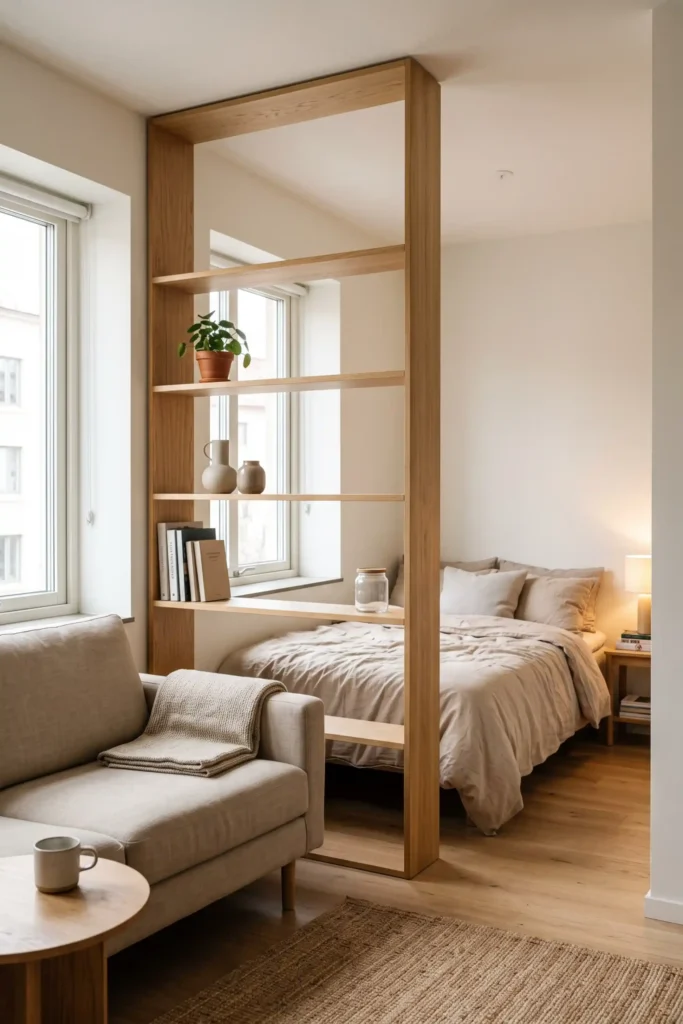
Custom open-frame oak shelving running from floor to ceiling creates an architectural partition between your couch and bed. Because the shelves have no back panel, daylight from window wells reaches every corner of the room.
- Line up the wooden frame directly with the back cushion of your sofa.
- Place low ceramic jugs and small book stacks on the middle shelves.
- Leave at least two shelf openings completely clear to maximize sightlines across the apartment.
Full-height wood frames create distinct rooms while open shelf backs keep your entire apartment feeling bright and connected.
5.Oversized Upholstered Headboard Walls That Block Workspace Noise and Sightlines
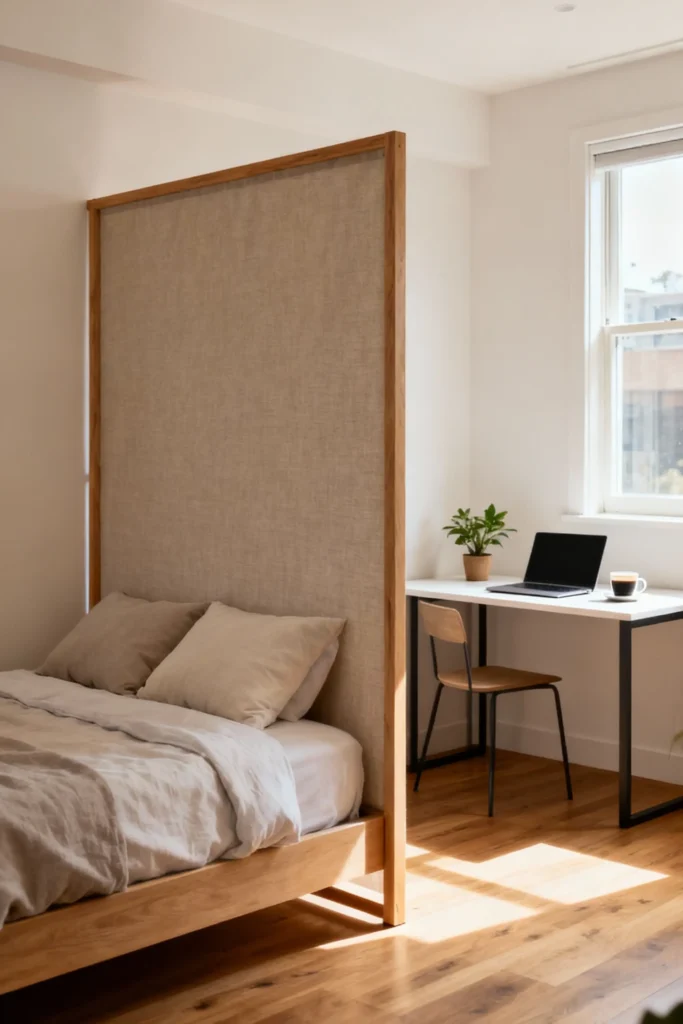
Extending a padded fabric headboard up to five feet tall creates a physical sound buffer between your bed and a desk tucked near the window. The textured linen backing faces the work desk, keeping your sleeping area completely hidden from view when sitting at your computer.
This setup keeps work stress out of your bed area during off hours.
Choose neutral woven fabrics like linen or tweed for the headboard back.
Place the desk surface right against the padded divider wall.
Avoid low headboards that let monitor light spill into your sleeping space.
Do not leave loose power cords hanging behind the frame.
6.Ceiling-Mounted Sheer White Curtains That Glide Open or Closed on Demand
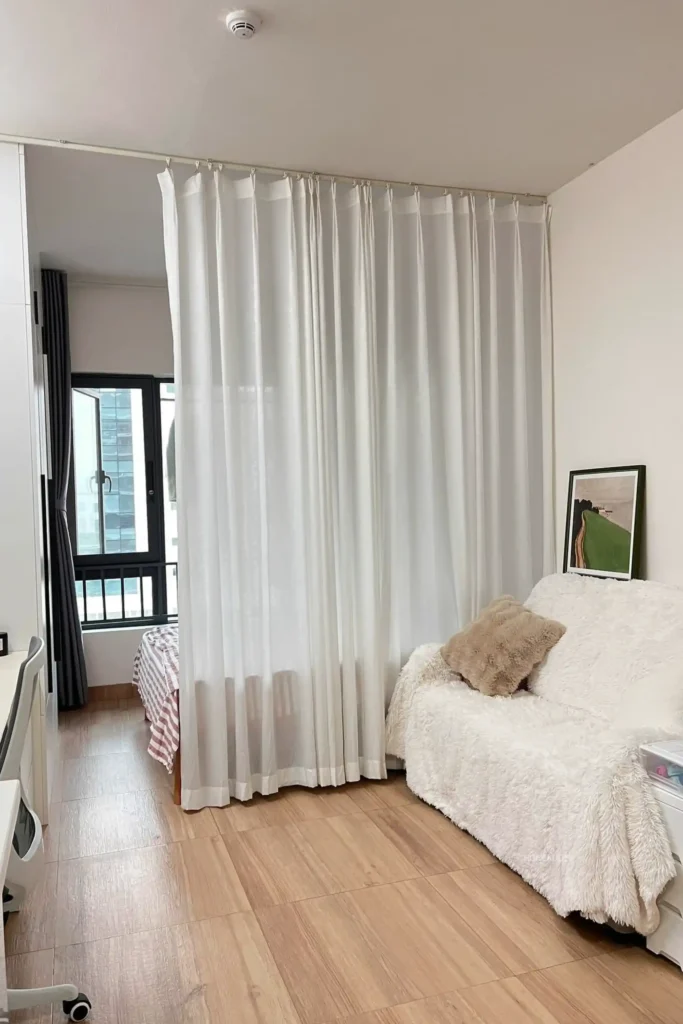
Mounting a white curtain track directly to the ceiling gives you flexible privacy whenever company arrives. Sheer fabric panels soften harsh sunlight while fully hiding a bed or wardrobe area when drawn closed.
- Install ceiling track runners right over wood joists for heavy fabric support.
- Hem the fabric so it clears the floor boards by half an inch.
- Pull the curtains back against the side wall during morning hours to maximize floor space.
A simple pull of the fabric shifts your studio from an open lounge to a private bedroom.
Recreate this look
7.Illuminated Vertical Wood Slat Walls That Filter Light and Add Warmth
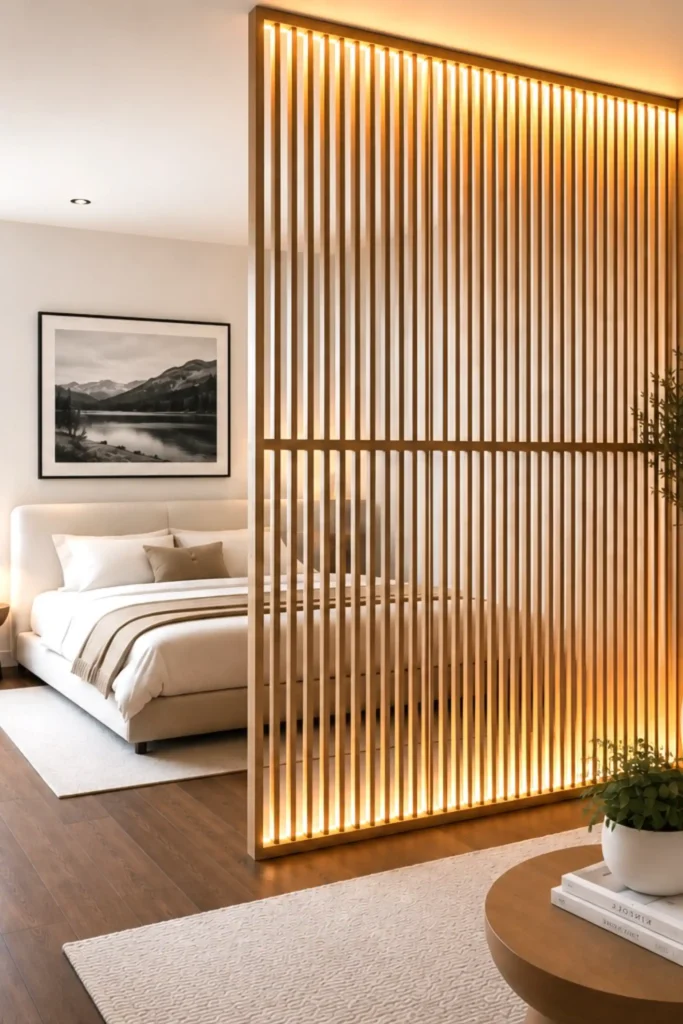
Floor-to-ceiling oak slats spaced two inches apart separate a modern desk and couch from a restful sleeping nook. Embedding soft LED strip lighting inside the top frame casts a gentle glow down the wood grain during evening hours.
The warm backlighting functions as ambient night lighting without taking up extra nightstand space.
8.Frosted Glass Bi-Fold Panels for Instant Light-Filled Bedrooms
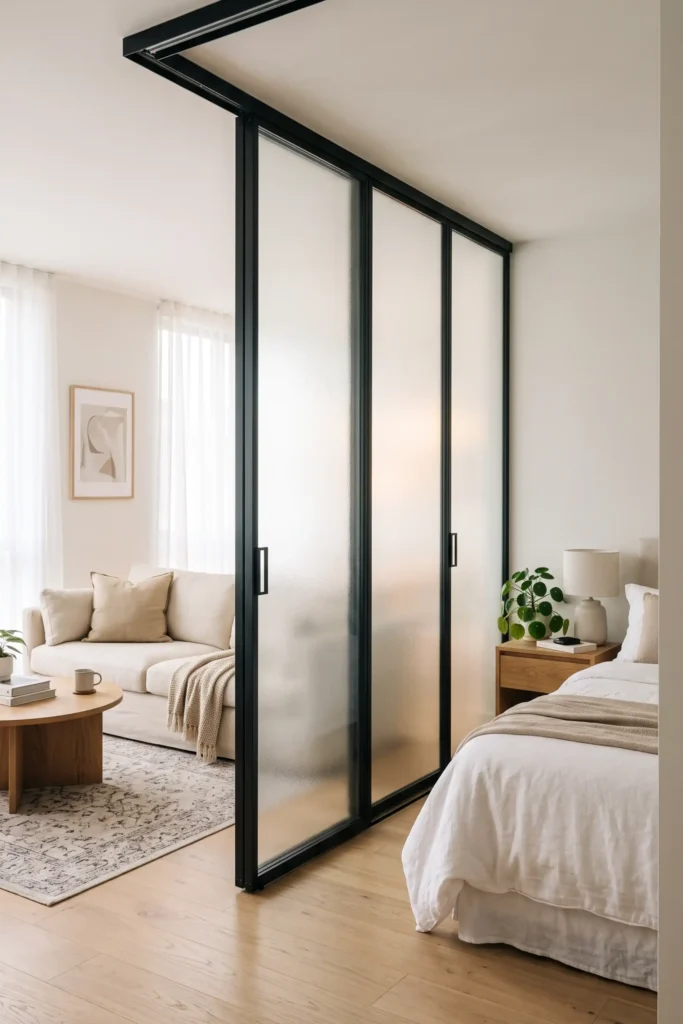
Glass accordion doors mounted on a ceiling track slide completely closed when sleep time arrives. The milky frosted panels hide unmade bedding and mattress lines, yet natural window sunlight still flows through to keep the adjacent living space bright.
Setting up this sliding layout takes three straightforward steps:
Secure a heavy-duty aluminum track into ceiling joists directly above the mattress edge.
Hang top-pivoting bi-fold door frames fitted with tempered frosted safety glass.
Fold the panels completely flat against the wall during daytime hours to expand your floor plan.
Gliding the panels wide open during daytime hours reclaims your full floor plan instantly.
9.Hanging Macramé Rope Walls for Subtle Bohemian Texture
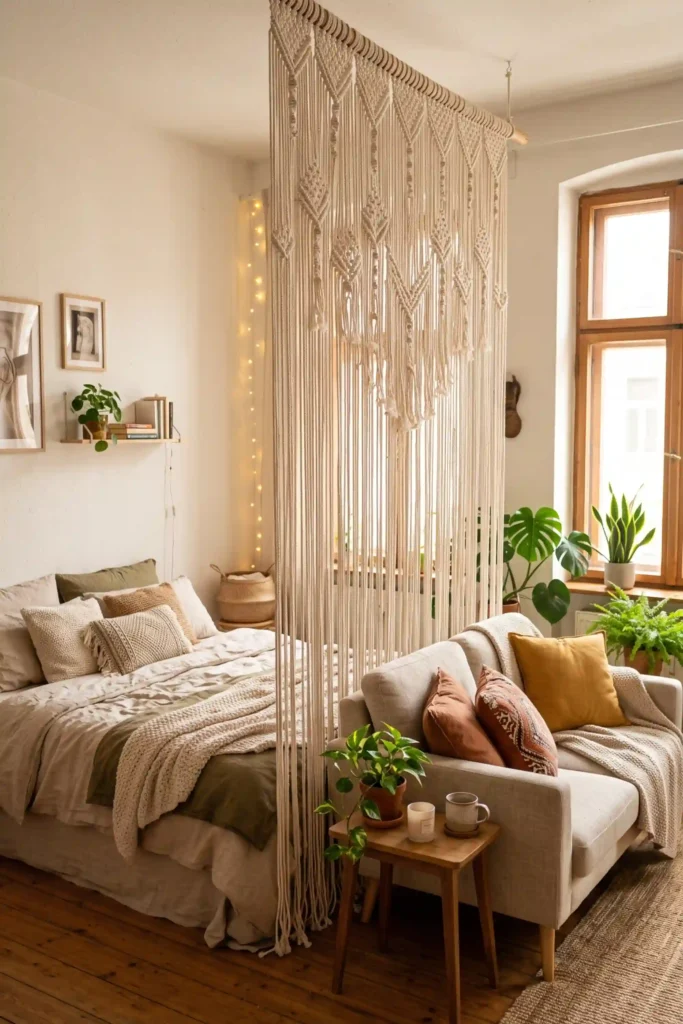
Heavy cotton cord knotted into a floor-length tapestry creates an organic border between your couch and bed. The woven knots break up direct sightlines across the studio while adding rich tactile warmth to plain white walls.
- Mount a thick wooden dowel rod to ceiling hooks using heavy-duty anchors.
- Tie unbleached cotton cord into open lattice patterns that stretch six feet down.
- Allow the fringed bottom edge to hover two inches above the hardwood floor.
Exposed bed sheets visible directly from the front door entrance.
Soft woven cord screen that filters sightlines while keeping air moving freely.
This textile approach works especially well for renters because the entire assembly weighs under ten pounds and leaves only two tiny ceiling screw holes to patch later.
10.Low-Profile Storage Headboards with Built-In Planter Troughs
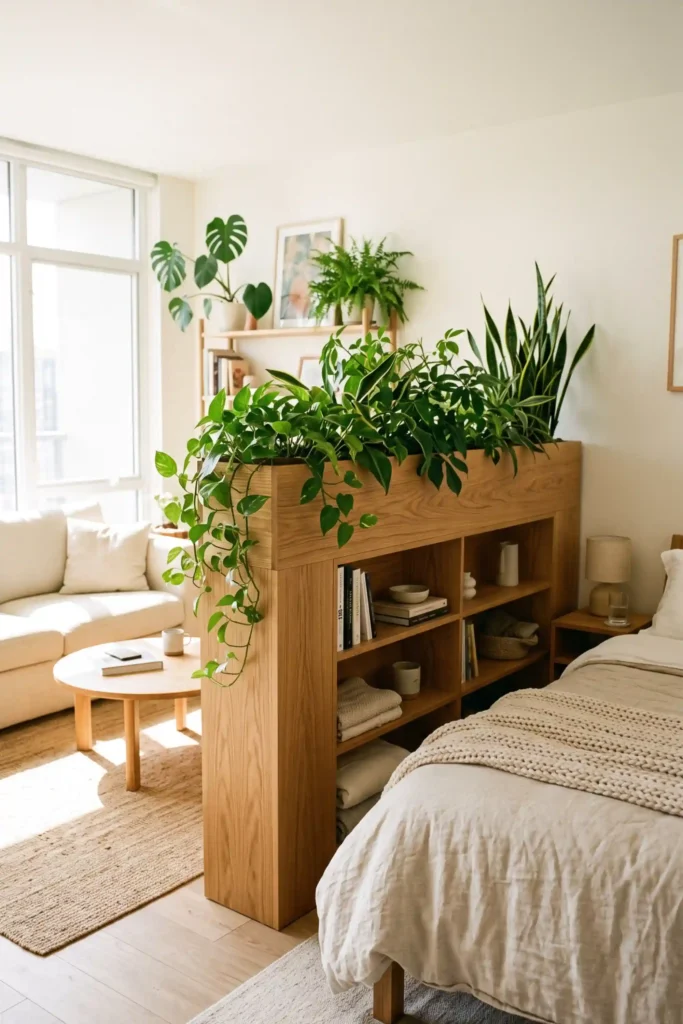
Positioning a forty-inch tall cabinet behind your mattress establishes a solid boundary without closing off upper ceiling air. Filling a recessed trough along the top ledge with indoor greenery creates a living wall that shields your pillow area.
Pothos, snake plants, and trailing ivy flourish in high natural sunlight, giving you a fresh green view from both your desk chair and your bed.
💡 Quick Tip
Line the internal planter trough with a waterproof plastic tray before adding potted plants to protect the underlying wooden cabinet from moisture damage.
Storing extra bedding inside the lower cabinet drawers keeps guest linens organized and out of sight.
11.Canvas Drop Cloth Panels Suspended from Industrial Leather Straps
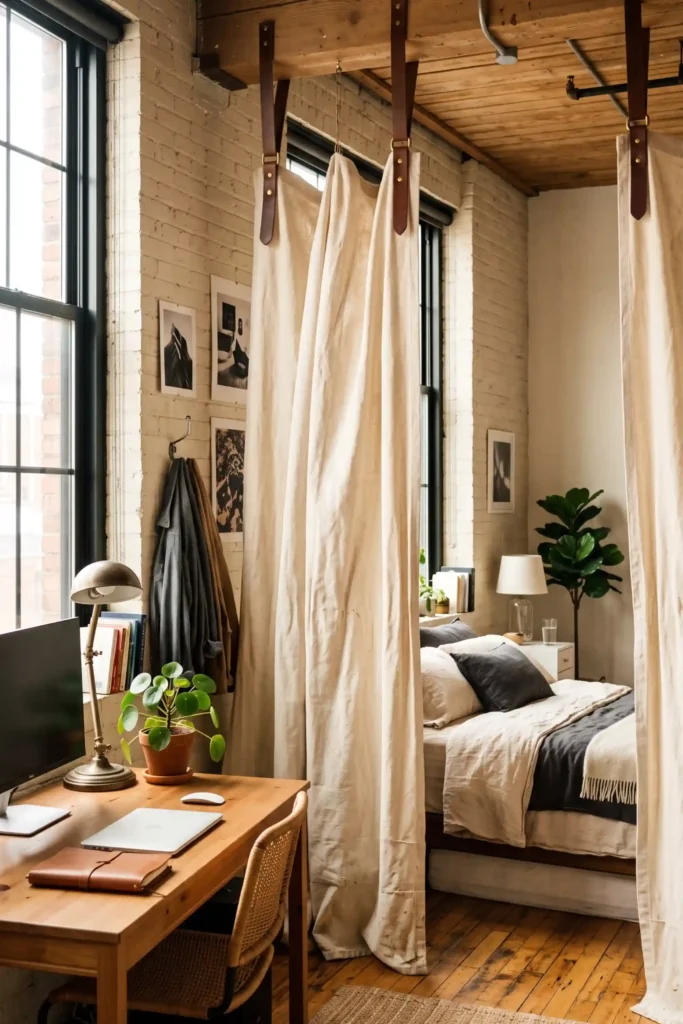
Heavy canvas utility cloth hung from brass wall hooks offers a durable, budget-friendly shield for home office setups. The thick cotton duck weave absorbs ambient background noise while blocking laptop screen glare during workday hours.
Choosing raw canvas over polished drapery gives your apartment a casual studio loft aesthetic.
Unclipping the leather straps allows you to wash the heavy canvas whenever dust accumulates.
12.Swivel Media Cabinets That Rotate TV Screens Between Zones
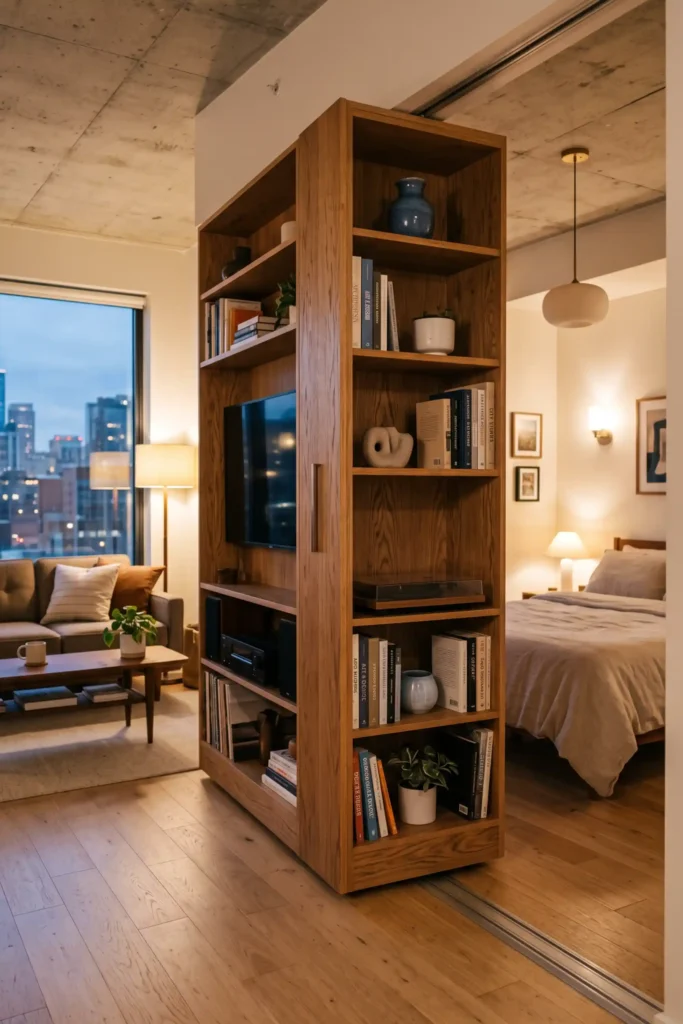
Mounting a television inside a rotating central wood pillar allows viewing from the living room couch or the bed. The full-height wooden frame creates a solid room partition while eliminating the need to buy two separate televisions.
- Integrate concealed internal wiring channels so cords never tangle during rotation.
- Build open side shelving into the cabinet frame for books and game consoles.
- Lock the swivel mechanism in place with a spring pin when you want fixed privacy.
Having one media central wall gives both functional zones a clean, built-in feel.
13.Acoustic Felt Ceiling Panels That Muffle Studio Echoes
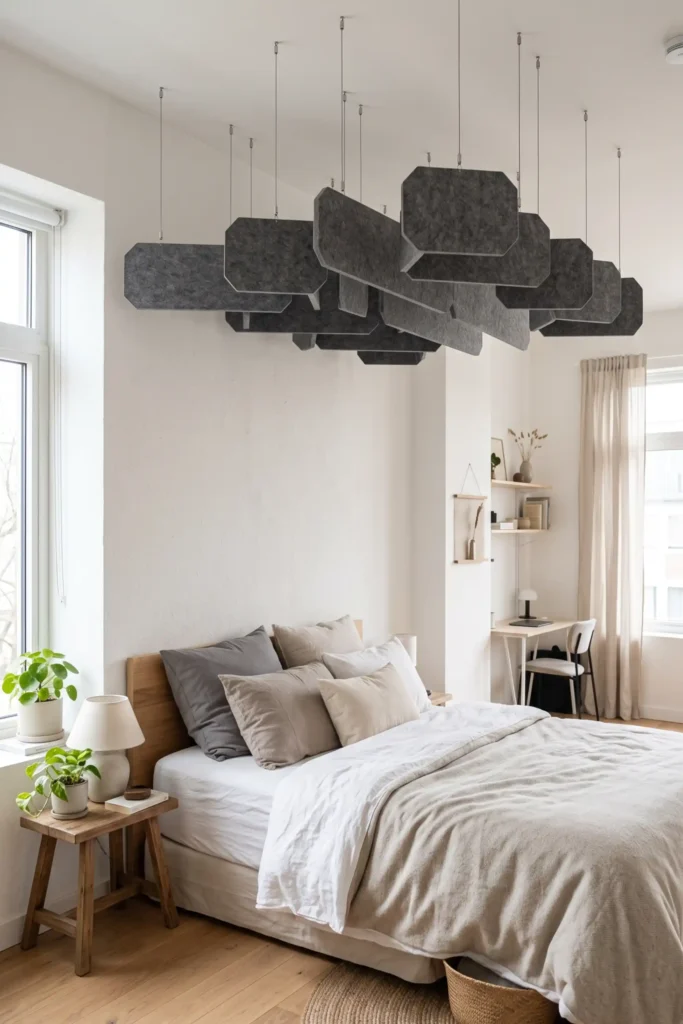
Dense PET felt baffles suspended overhead absorb echoing chatter while visually anchoring your sleeping area. Hanging grey or oak-toned felt panels in a parallel grid creates an architectural canopy above the mattress.
| Acoustic Felt Baffles | Hard Wooden Dividers |
|---|---|
| Absorbs ambient sound and reduces room echo | Reflects noise and bounces sound waves back |
| Suspends from thin wire cables with zero floor footprint | Rests on floor boards and consumes floor space |
Combining sound control with visual zoning makes shared studio living far more restful.
14.Wicker Folding Screens Anchored by Heavy Wood Planter Boxes
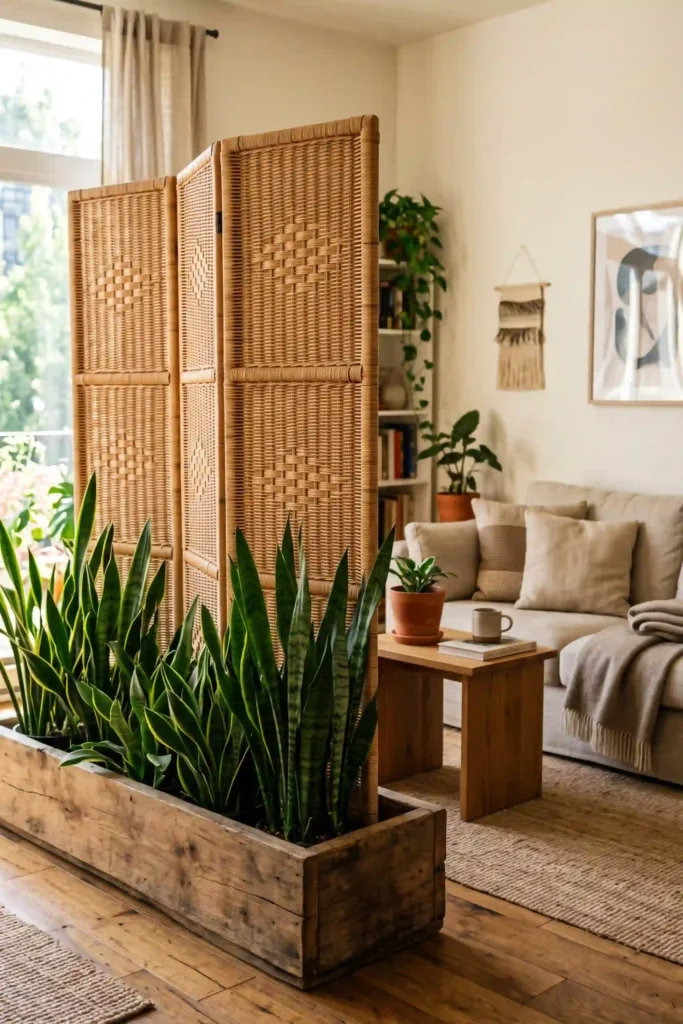
Slotting three woven rattan panels directly into a weighted floor planter stops freestanding dividers from tipping over. The dense wicker weave blocks direct line of sight completely while adding natural organic warmth.
- Fill the base box with heavy potted palms or ornamental grasses.
- Choose natural unvarnished rattan to match light oak flooring.
- Angle the outer folding wings slightly to stabilize the frame against drafts.
Recreate this look
Moving the weighted base unit takes seconds if you decide to rearrange your layout later.
15.High-Backed Velvet Sofas Pressed Flush Against Bed Footboards
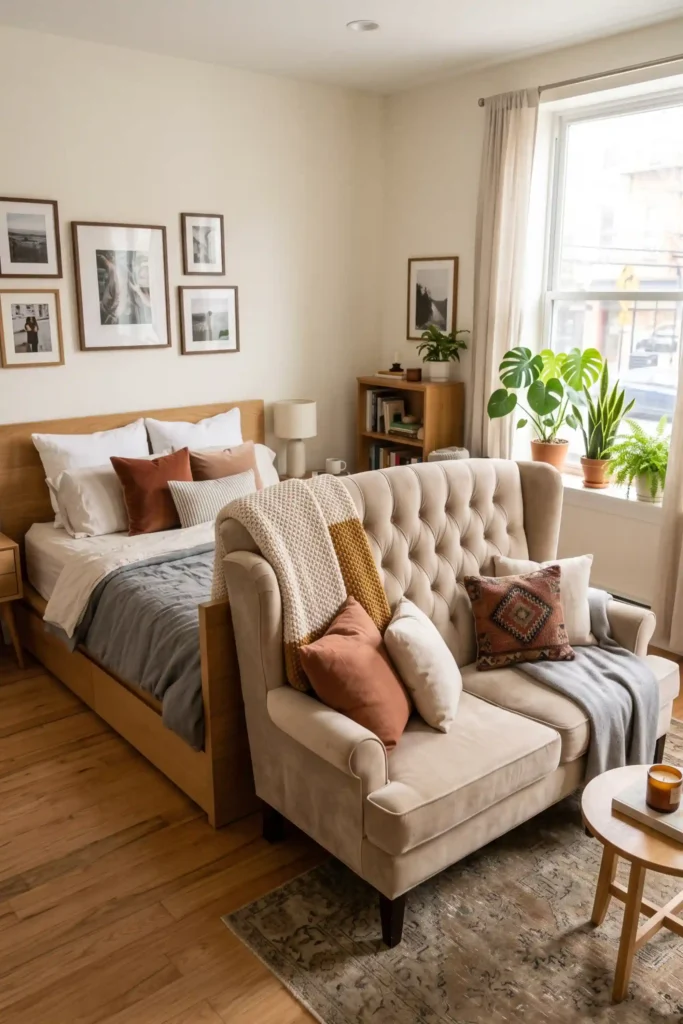
Backing a tall, structured sofa directly against the end of your mattress hides unmade bedding completely from the front door. The plush upholstered backrest acts as a solid upholstered pony wall between your living area and bed.
Positioning heavy furniture back-to-back creates two distinct functional rooms without wasting an inch of floor space.
Choosing a couch back height of at least thirty-six inches guarantees full coverage above mattress lines.
16.Modular Cube Staircases That Step Up Storage and Privacy
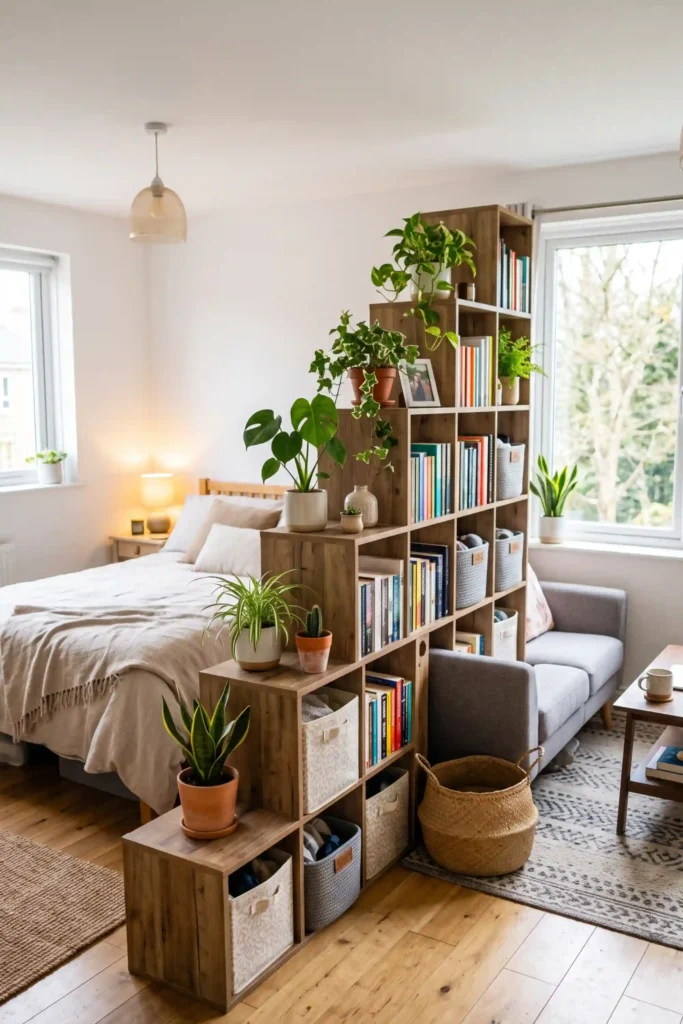
Stacking open storage cubes in a stepped diagonal line creates a functional partition that gets taller near the bed headboard. The lower steps keep sightlines open near window wells while the higher cubes block view of your pillows.
Place heavy books in the bottom cubes for floor stability.
Use fabric bins in middle cubes to hide personal clutter.
Avoid stacking unanchored cubes higher than five feet.
Do not overload the top steps with heavy glass items.
Adding woven canvas storage bins into select cubes conceals small items while leaving remaining compartments open for books.
17.Floor-to-Ceiling Tension Poles Fitted with Fabric Privacy Backdrops
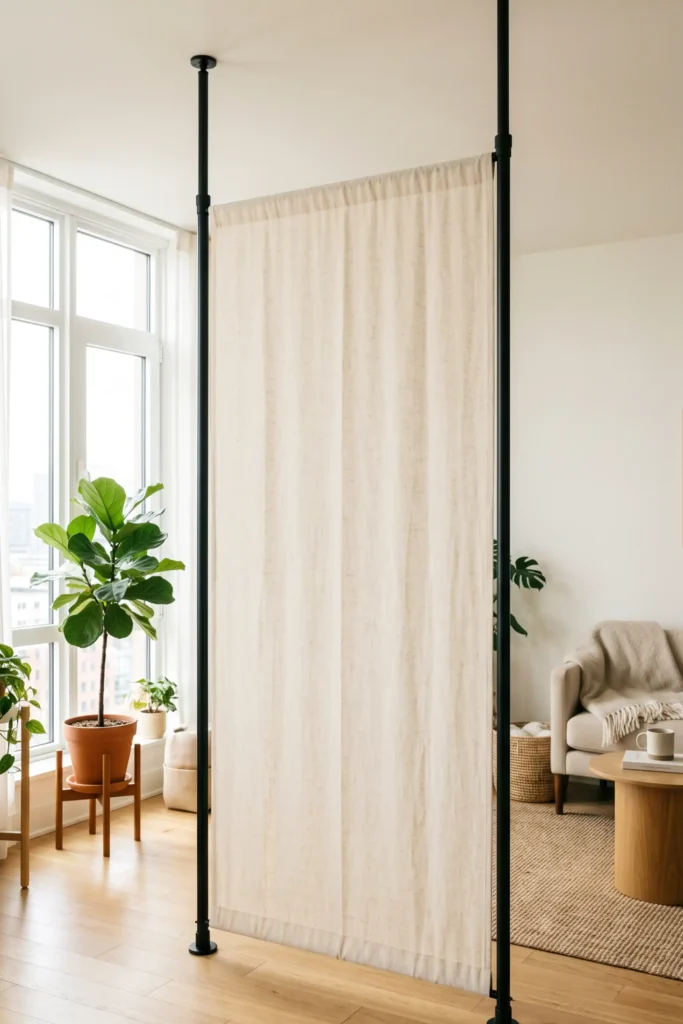
Black steel tension rods wedged between floor and ceiling hold stretched linen panels without driving a single screw into drywall. Spring-loaded rubber end caps lock the vertical posts firmly in place on hardwood or carpet.
- Tighten the internal tension springs until the vertical poles hold firm.
- Slide lightweight linen fabric panels onto horizontal crossbars.
- Adjust panel height anytime to suit changing furniture arrangements.
- ▸Zero drywall drilling required, making it 100% rental friendly.
- ▸Adjustable crossbars fit ceilings from seven to nine feet tall.
- ▸Fabric panels pop off easily for quick machine washing.
Renters get complete floor-to-ceiling privacy without risking their security deposit.
18.Sliding Shoji Paper Screens for Gentle Diffused Sunlight
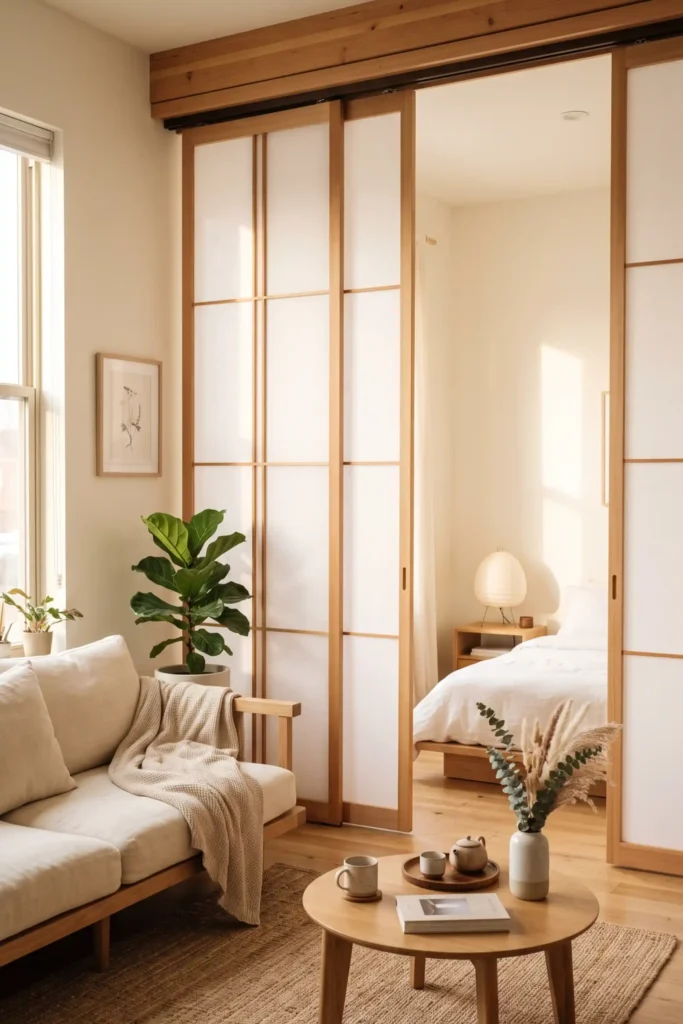
Lightweight wooden frames stretched with translucent paper give your studio classic Asian-inspired architecture. Top tracks mounted to ceiling joists allow the delicate screens to slide effortlessly across your bed opening.
- Install a dual-channel ceiling track across your bedroom nook.
- Hang lightweight cedar Shoji frames fitted with tear-resistant rice paper.
- Slide the panels overlapping during evening hours for quiet seclusion.
Mount parallel top tracks directly into ceiling framing.
Hang sliding rice paper screen panels onto quiet nylon rollers.
Slide screens together at bedtime to filter ambient streetlights.
The semi-opaque paper blocks intrusive streetlight glare while keeping your space feeling light and airy.
19.Curved Corner Ceiling Tracks for Wrap-Around Blackout Drapes
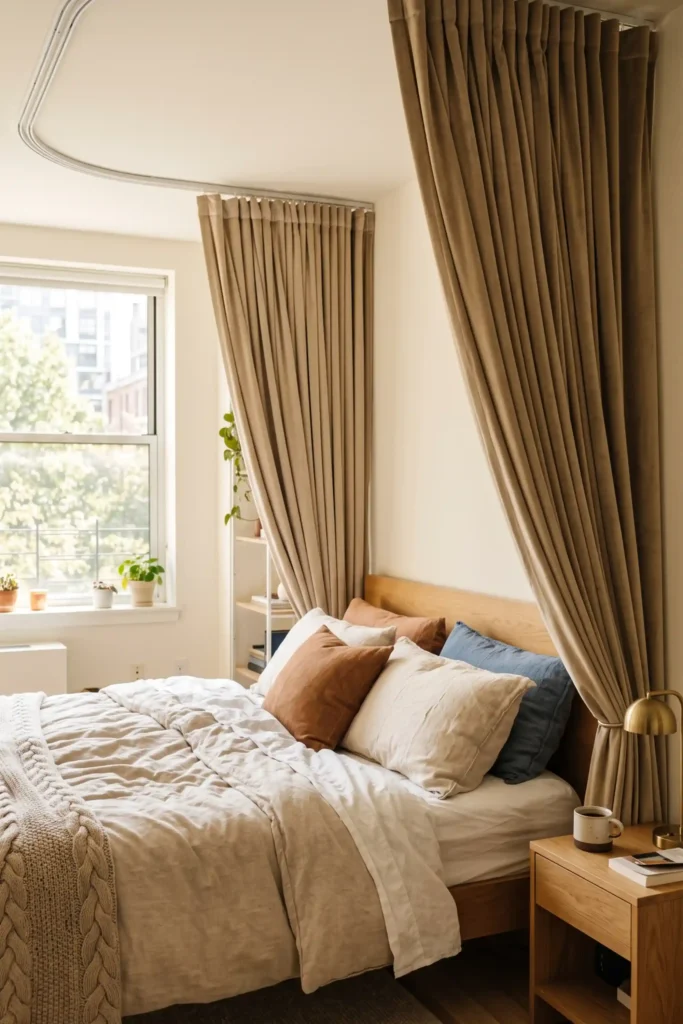
Bending flexible curtain track into a tight ninety-degree arc turns any plain studio corner into a fully dark cocoon at night. Heavy velvet drapes glided along the curved track seal off your bed from workspace monitors and kitchen noise.
⚠️ Watch Out
Use heavy-duty metal ceiling anchors when hanging dense velvet blackout curtains to prevent the track from sagging over time under fabric weight.
Tucking the velvet drapes back against the corner wall during daytime hours keeps your main living area wide open.
Conclusion: Creating a Studio Layout That Works Every Day
Splitting a studio into distinct living zones does not require major construction or closing off your floor plan. By choosing soft, light-filtering partitions like open bookshelves, ceiling drapes, or woven screens, you create a private retreat for sleeping without losing natural daylight. Focus on how you move through your apartment daily, and pick a divider style that fits your routine without blocking walkways. Trying out one or two of these studio apartment privacy ideas gives you the cozy seclusion you want while keeping your home open and welcoming.
📌 Golden Divider Rule
Always maintain a clear 28-inch walkway around your dividers so traffic flows smoothly between your bed, sofa, and kitchen zones.
Save these privacy strategies to your Pinterest small space board so you have them handy whenever you are ready to refresh your studio layout!