Bringing a baby home to a single-room studio apartment can feel overwhelming when baby gear starts taking over your floor space. Squeezing a crib, changing table, and feeding station into one room requires smart multi-functional furniture and clever organization systems. Finding practical studio apartment with baby ideas allows you to build a peaceful nursery zone for your little one while keeping your main adult living space tidy.
Organizing a studio for a baby comes down to using vertical wall height and choosing mobile furniture. Swapping full-sized cribs for narrow mini cribs, adding closet rod extenders, and using rolling bottle carts keeps daily baby supplies within reach without blocking narrow walkways. In this guide, we gathered 17 practical studio layout and storage ideas that make parenting in a single room feel easy and organized. Here is how to style a functional studio home for your growing family.
1.Pair a Compact Mini Crib with a Swivel Glider in Light Window Nooks
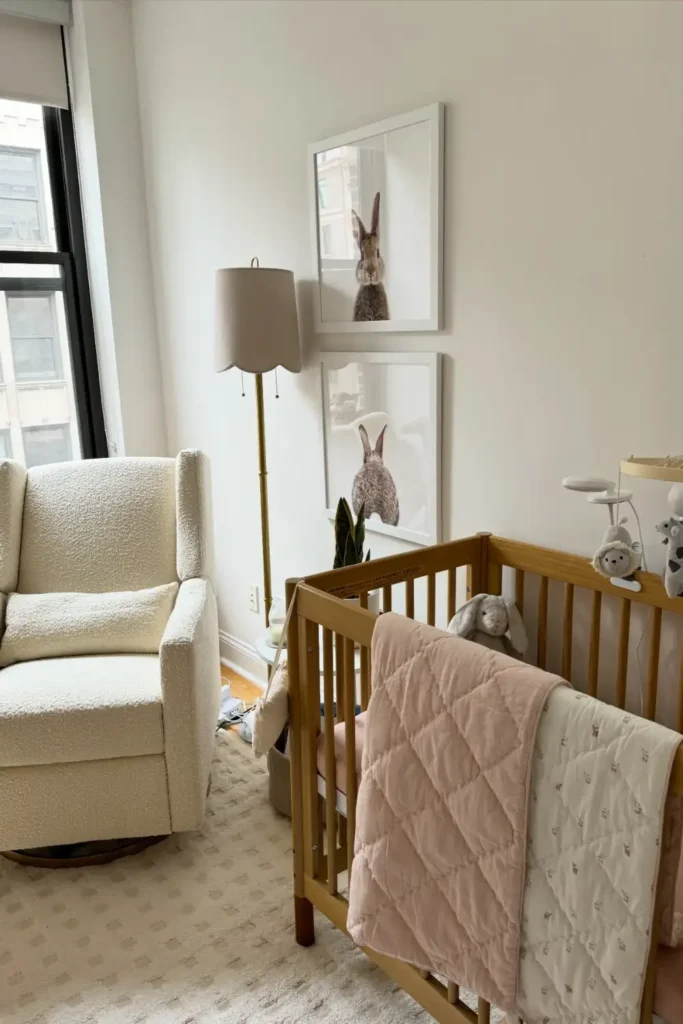
Setting up a baby zone inside a single-room studio works best when you anchor the nursery in a bright, underutilized window corner.
- Choose a narrow wooden mini crib instead of a bulky full-sized crib to save several feet of floor space.
- Place a plush cream bouclé swivel glider right beside the crib for night feedings and gentle rocking.
- Stack matching framed art vertically on the wall to draw the eye upward without crowding the room.
Keeping your nursery footprint tight near natural light keeps the rest of your studio feeling spacious and open.
2. Double Your Storage with a Dresser Changing Station and Tiered Wicker Cart
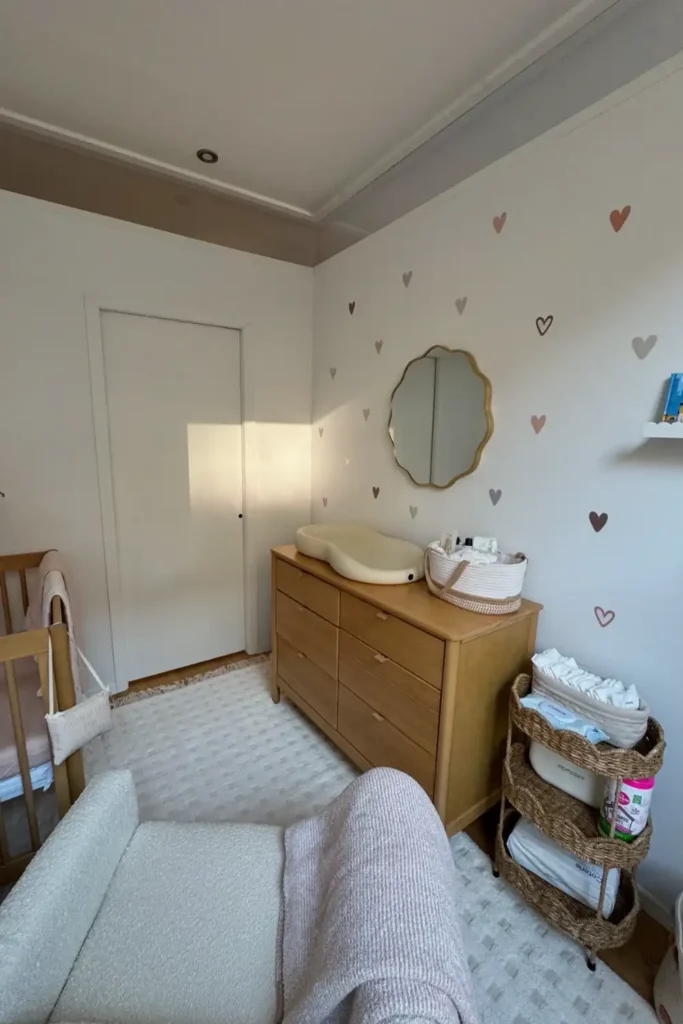
Dedicated changing tables take up too much floor space in a small studio. Placing a wipeable contoured changing pad on top of a wide wooden six-drawer dresser turns everyday clothing storage into a double-duty station.
- Store baby onesies, swaddles, and footies inside the top wooden dresser drawers.
- Keep a slim three-tier woven cart right beside the dresser for extra diapers, wipes, and lotion jars.
- Wheel the cart over to your feeding chair whenever you need supplies during late night routines.
💡 Quick Tip: Hang a small decorative wall mirror at adult eye level above the pad to reflect natural light and make the changing corner feel like an intentional mini room.
3. Frame a Studio Nursery Alcove with Ceiling-Hung Curtains and Star Wallpaper
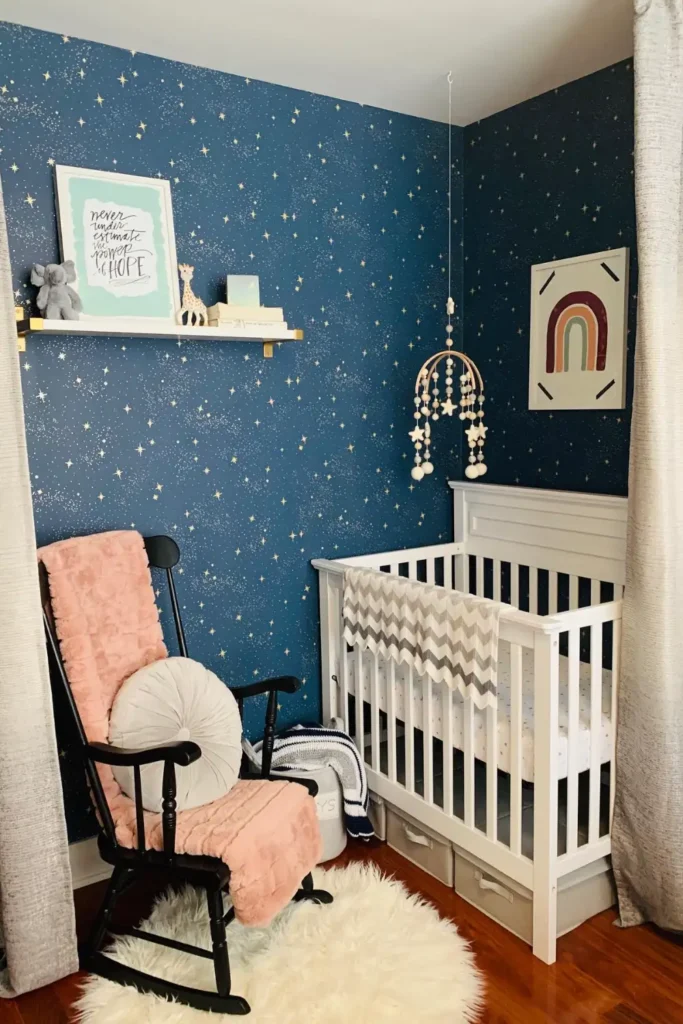
Creating a sense of privacy for your baby in a one-room apartment does not require building drywall partitions. Suspending full-length floor drapes from ceiling tracks lets you close off the crib corner during naptime.
💡 Privacy Track Strategy
Mounting ceiling curtain tracks around a corner lets you block out ambient TV light and kitchen noise when your baby sleeps.
Adding dark starry wallpaper behind a white mini crib gives the alcove its own distinct personality. Sliding fabric bins under the crib mattress base captures extra storage for spare sheets and burp cloths. Drawing the curtains back during the day restores full floor visibility across your apartment.
Here are the remaining 14 ideas (Entries #4 through #17) to complete your 17-item roundup, followed by the article wrap-up.
4. Hang Over-Door Fabric Organizers for Baby Shoes and Pacifiers
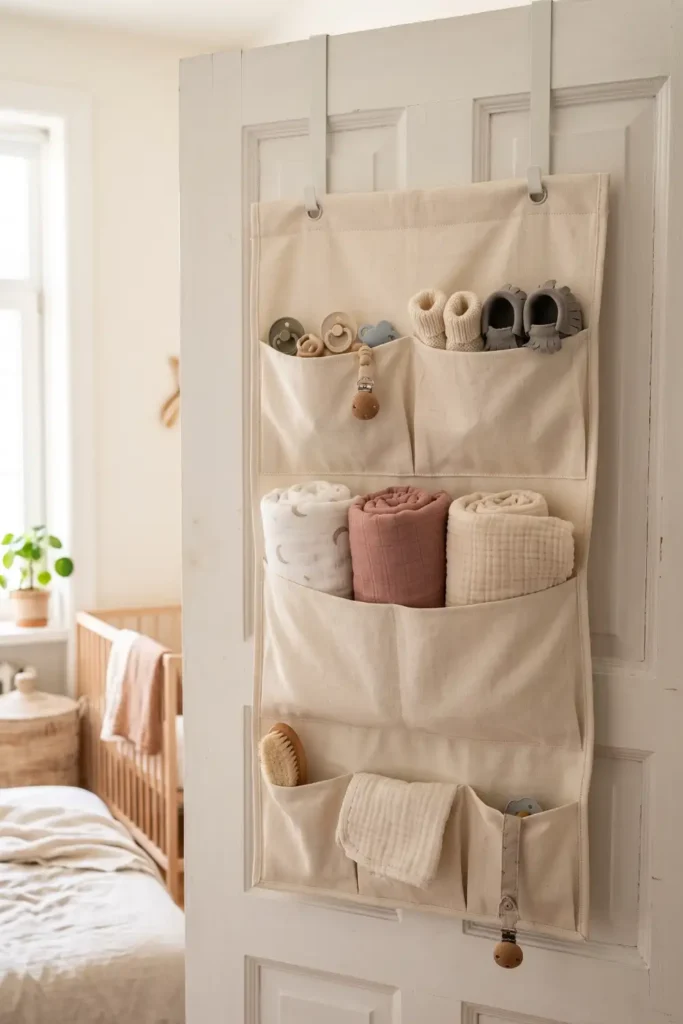
Utilizing the back of your closet or bathroom door adds instant pockets without taking up wall space. A structured canvas organizer gives you clear slots for tiny baby accessories that easily get lost in deep drawers.
- Place everyday items like pacifiers, nail clippers, and thermometers in top eye-level pockets.
- Store rolled crib sheets and extra swaddles in wider middle compartments.
- Tuck small soft-soled baby shoes and booties into bottom slots.
Choosing neutral cream canvas instead of clear plastic keeps your apartment looking clean and intentional when doors sit open.
5. Choose a Slim Rolling Bassinet to Shift Sleeping Spots Effortlessly
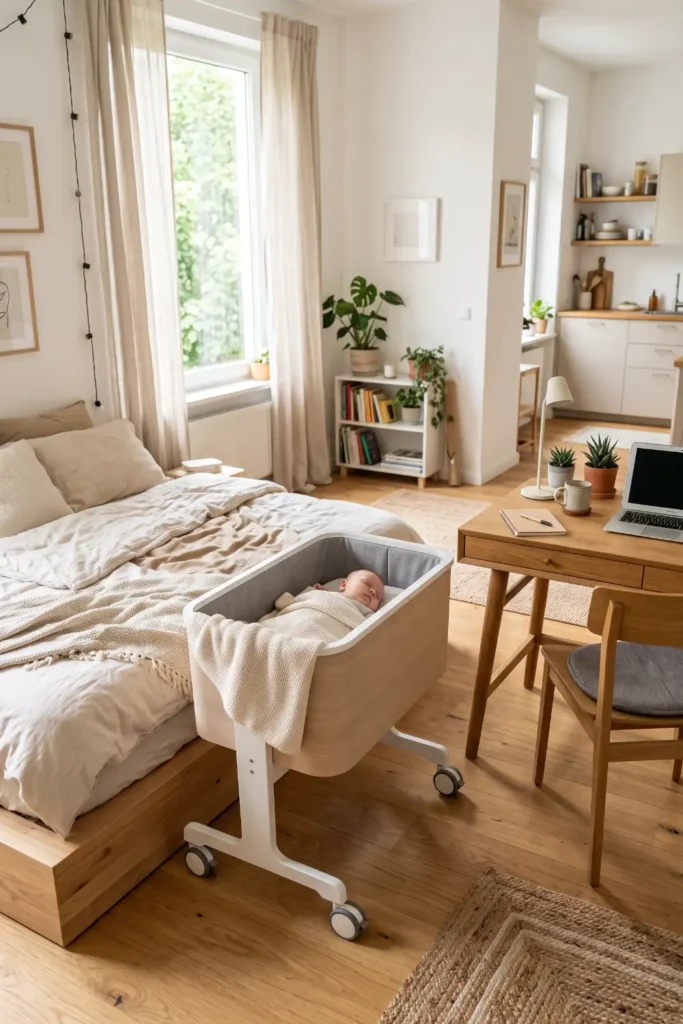
Moving a lightweight bassinet between your bed and work desk lets you keep an eye on your napping newborn all day. A narrow frame with lockable caster wheels slides through studio doorways without bumping into furniture corners.
- Keep the bassinet near your bed frame for easy night feedings.
- Wheel the sleeper next to your sofa or desk during day nap times.
- Lock all four caster wheels securely whenever the bassinet is in position.
Selecting a model with lower storage pockets keeps extra burp cloths right at your fingertips while moving between room zones.
6. Mount a Fold-Down Changing Table to Save Floor Space
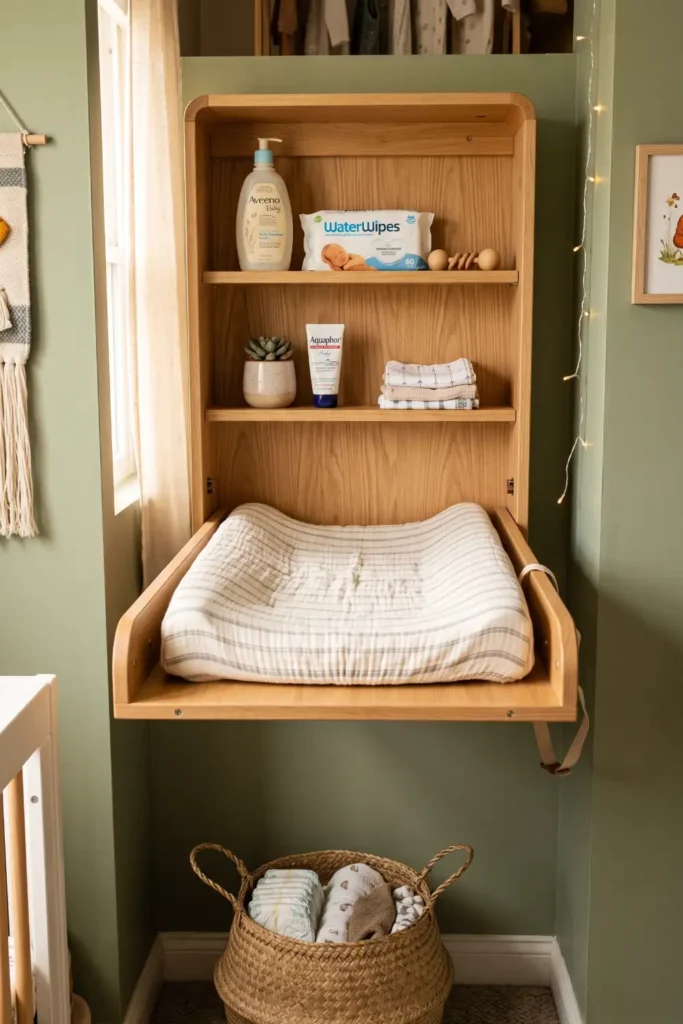
Small studio floors get crowded fast when every piece of baby furniture stands on legs. A wall-mounted wooden changing table opens down to provide a secure changing surface, then folds back up completely flat against your wall when diaper changes are complete.
💡 Wall Anchor Safety Rule
Always mount fold-down changing tables directly into two solid wood wall studs using heavy-duty lag bolts rated for high weight capacity.
Interior shelf slots inside the folded unit hold cream tubes and wipes, keeping your supplies completely hidden when the table is closed.
7. Display Storybooks Cover-Out on Shallow Floating Wall Ledges
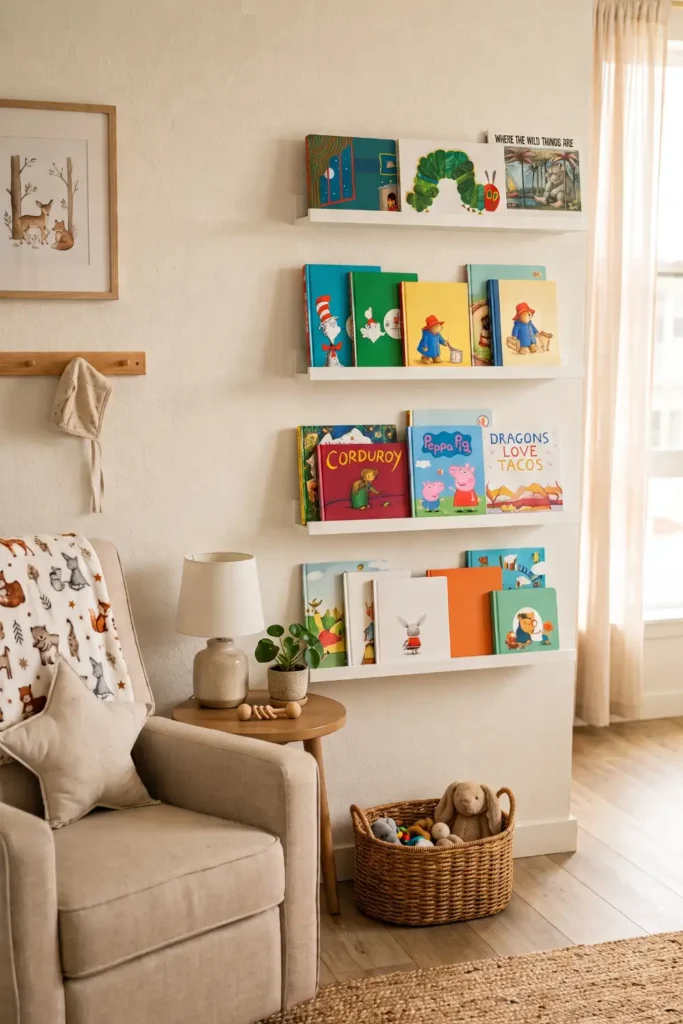
Deep bookcases take up walking clearance that single-room layouts cannot spare. Mounting narrow wooden picture ledges on empty drywall lets you display children’s books with their covers facing forward like a mini library.
- Install three parallel wooden ledges spaced 12 inches apart vertically.
- Place lightweight board books face-out so your baby sees colorful covers.
- Rotate storybooks weekly to keep reading time fresh without buying new furniture.
Keeping shelf depths under four inches ensures you never bump into the display when walking past.
Measure Height: Position lower ledges within reach of sitting gliders.
Level and Mount: Anchor narrow 3.5-inch deep ledges into wall studs.
Arrange Books: Place colorful storybook covers facing forward.
8. Elevate Sound Machines on Floating Wall Brackets
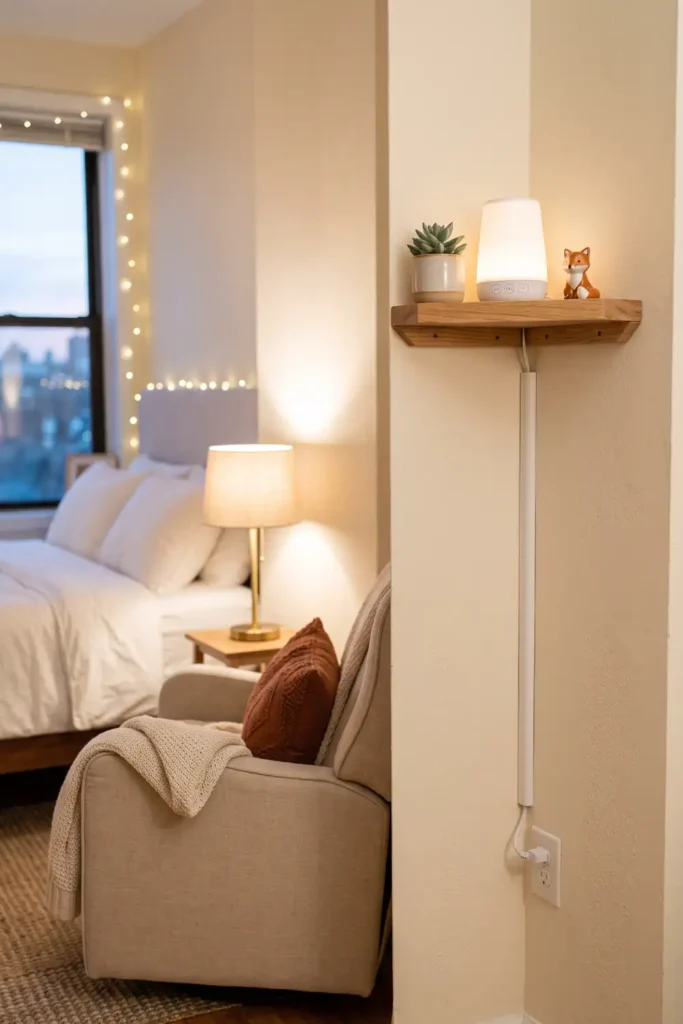
Nightstands get cluttered quickly when bottle warmers, lamps, and white noise machines compete for surface area. Securing a small floating corner bracket right above your glider keeps your sound machine and nightlight off tabletop space.
Keeps cords organized and nightstand surfaces completely clear for bottles.
Increases the risk of knocking over water glasses or noise machines in the dark.
Routing electrical cords through adhesive wall channels keeps dangles safely out of baby reach.
9. Store Foldable Silicone Baby Tubs on Closet Door Hooks
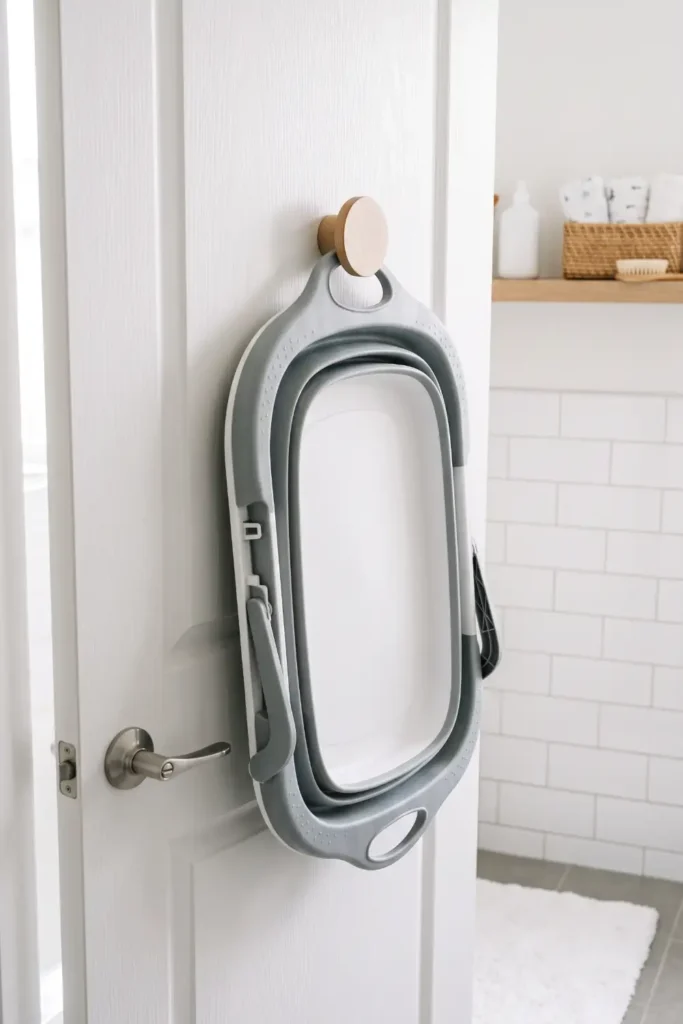
Standard plastic infant tubs take up half a bathroom closet shelf. Switching to a flexible silicone baby bathtub that collapses down to two inches thick allows you to hang the tub on a simple adhesive hook behind your bathroom door.
- Collapse the silicone body flat after bath time finishes.
- Wipe remaining water droplets off with a dry towel.
- Hang the built-in hook hole over an over-door peg.
Reclaiming bathroom shelf space keeps spare towels and bath supplies organized.
10. Seal Outgrown Baby Clothes in Vacuum Bags Under Bed Frames
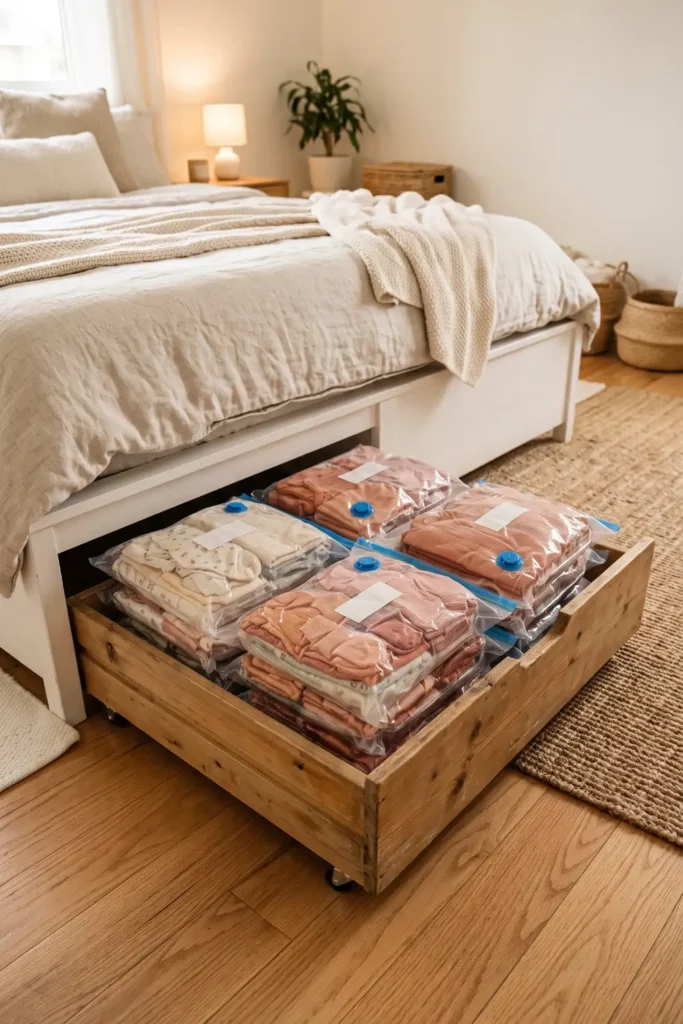
Babies grow out of clothing sizes every few months, leaving parents with piles of barely worn bodysuits. Packing outgrown clothes into clear vacuum compression bags removes excess air, shrinking bulky piles down to slim flat packages.
Labeling bag fronts with size tags makes pulling clothes out for future siblings simple.
11. Mount a Modular Pegboard for Daily Toys and Burp Cloths
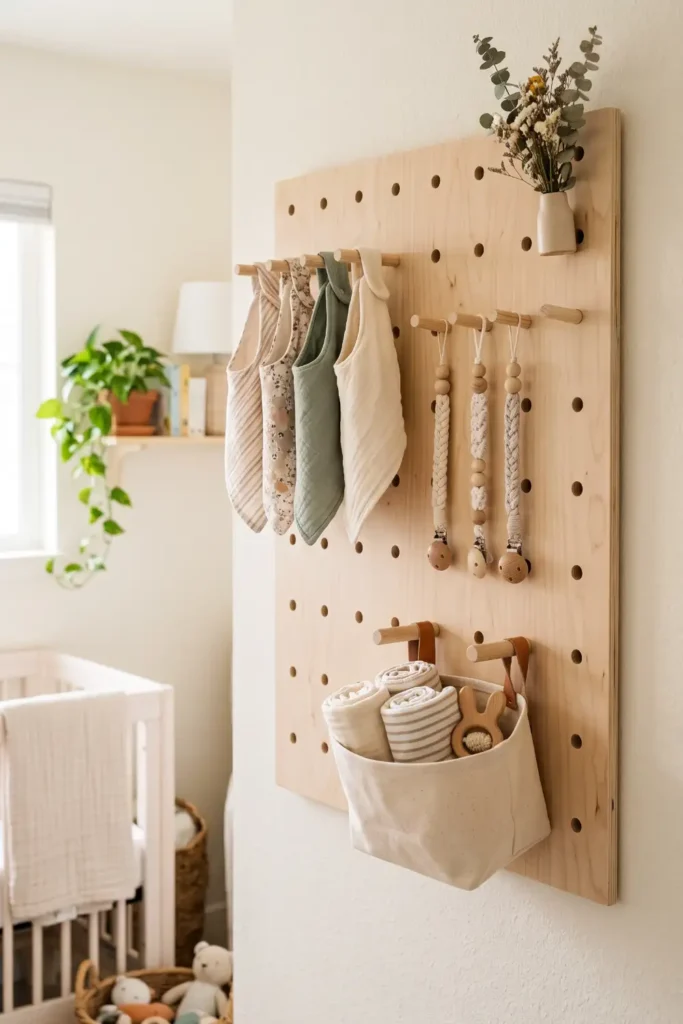
Small accessories like bibs, rattles, and teethers easily get lost in deep dresser drawers. Hanging a smooth wooden pegboard grid near your nursing chair keeps daily essentials organized on adjustable pegs.
- Slot wooden pegs into holes to hang pacifier clips and soft bibs.
- Rest small wooden ledges across two pegs to support teether rings.
- Attach a small canvas basket on lower pegs for clean burp cloths.
Rearranging wooden dowels as your baby grows keeps your wall organization flexible.
Customizing pegboard layout heights lets you grab clean burp cloths with one hand while holding your baby in the other.
12. Add a Second Hanging Rod inside Closets for Tiny Clothes
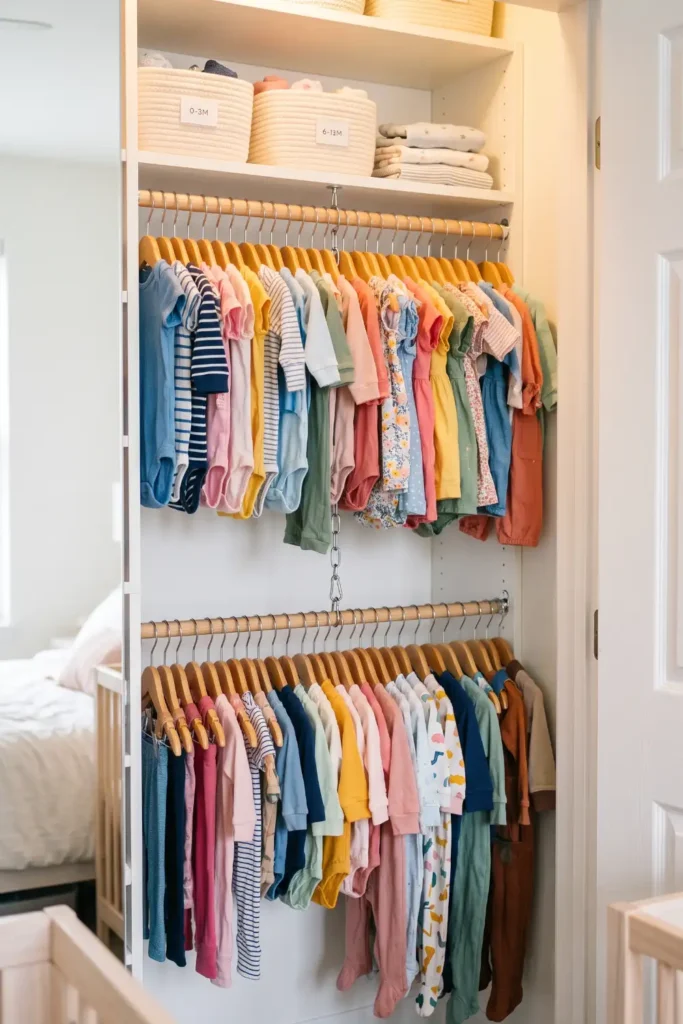
Baby coats and bodysuits take up less than twelve inches of vertical hanging space, leaving half your closet height empty. Installing an adjustable hanging closet rod extender drops down from your main rod, instantly doubling your closet hanging capacity.
Hanging baby outfits by size category keeps morning dressing fast and effortless.
13. Separate Baby Laundry with Dual-Bag Corner Hampers
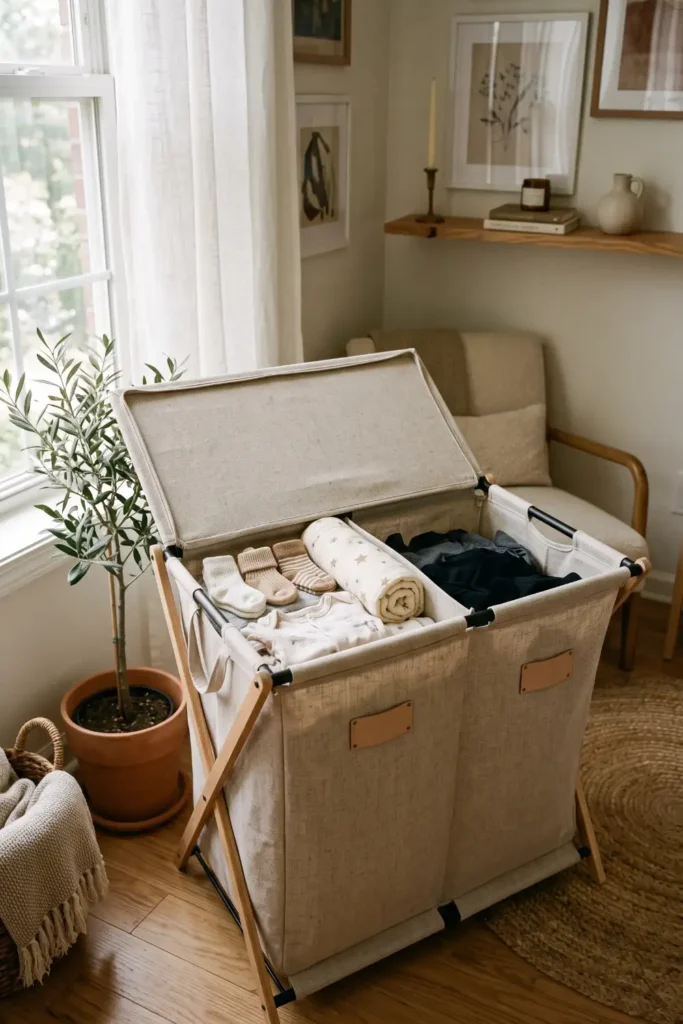
Washing delicate baby bodysuits alongside heavy adult jeans can damage soft cotton fabric. Placing a dual-compartment hamper in a living room corner keeps baby laundry separated from the start.
- Toss spit-up rags and bibs directly into the left mesh bag.
- Place adult clothing into the right compartment.
- Lift the removable mesh laundry bag out by its handles on laundry days.
Keeping baby clothes separate prevents harsh adult detergents from causing skin sensitivity.
Small baby socks get lost inside adult sweater sleeves and jeans.
Keeps baby socks and swaddles sorted for quick gentle washing cycles.
14. Turn a Three-Tier Cart into a Mobile Bottle Station
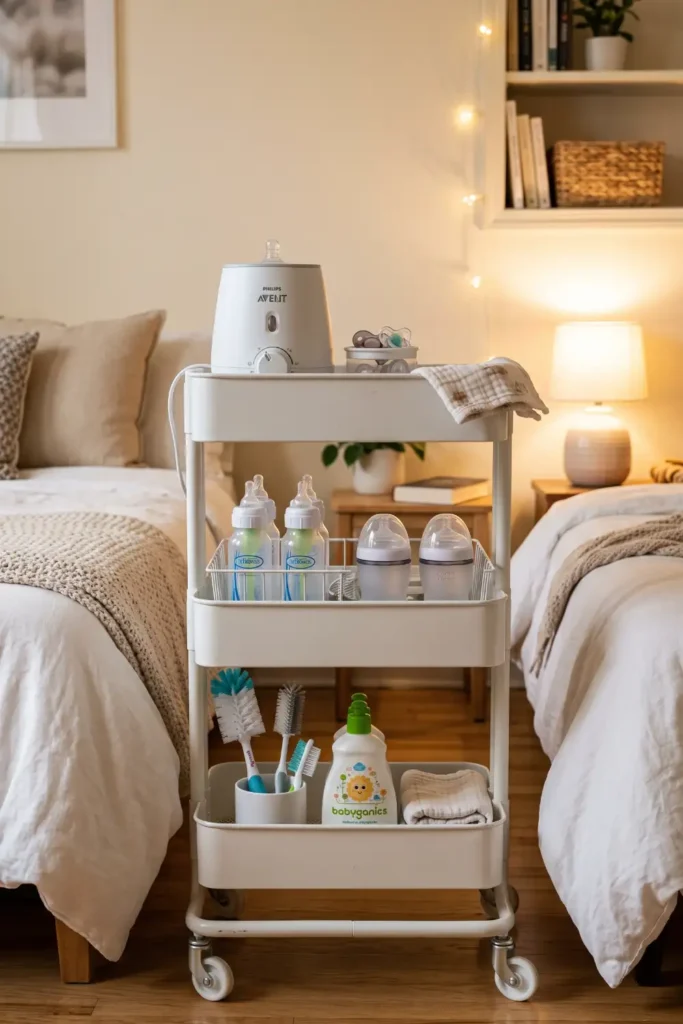
Late-night kitchen runs across a dark studio apartment interrupt sleep cycles for both parents and baby. Setting up a rolling metal cart with a bottle warmer, formula containers, and clean bottles creates a self-contained feeding station next to your bed.
- Place the electric bottle warmer and water dispenser on the top shelf.
- Store clean bottles and formula powder dispensers on the middle shelf.
- Keep drying mats and extra bottle brushes on the bottom tier.
Wheel the cart out of sight into your closet corner during daytime hours.
15. Store Bulk Diaper Packs on High Wall Shelves in Fabric Bins
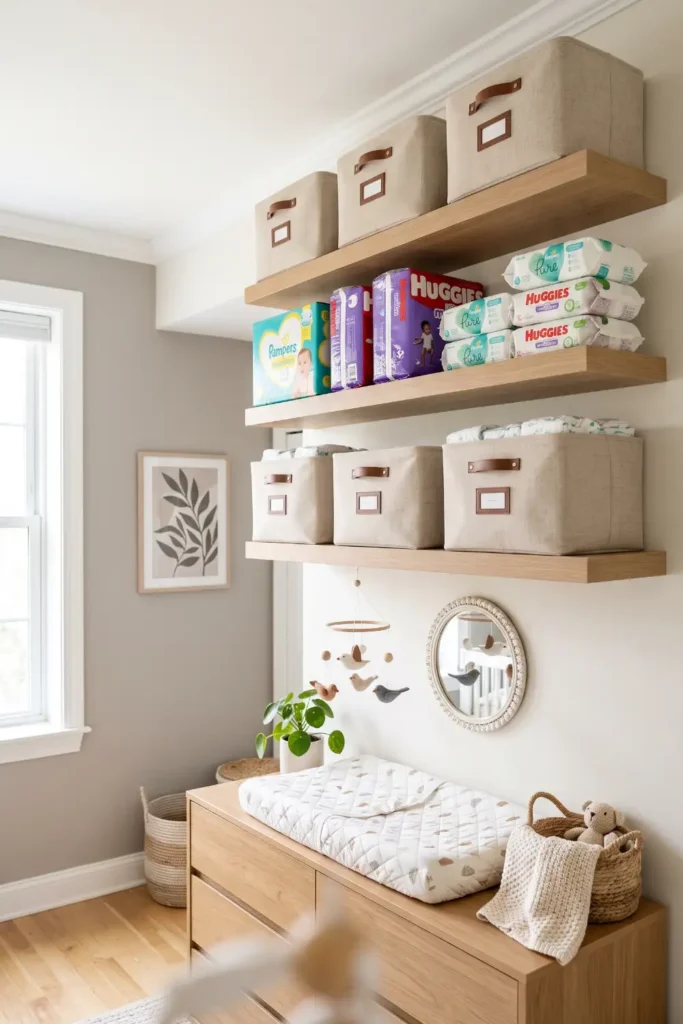
Buying diapers and wipes in bulk saves money, but big cardboard boxes clutter studio entryways. Stash bulk diaper refills inside decorative linen bins placed on high floating wall shelves near the ceiling.
High Shelf Organization Checklist
Storing extra packs up high leaves main dresser drawers open for daily baby outfits.
16. Hide Toys Inside Padded Storage Ottomans in Lounge Areas
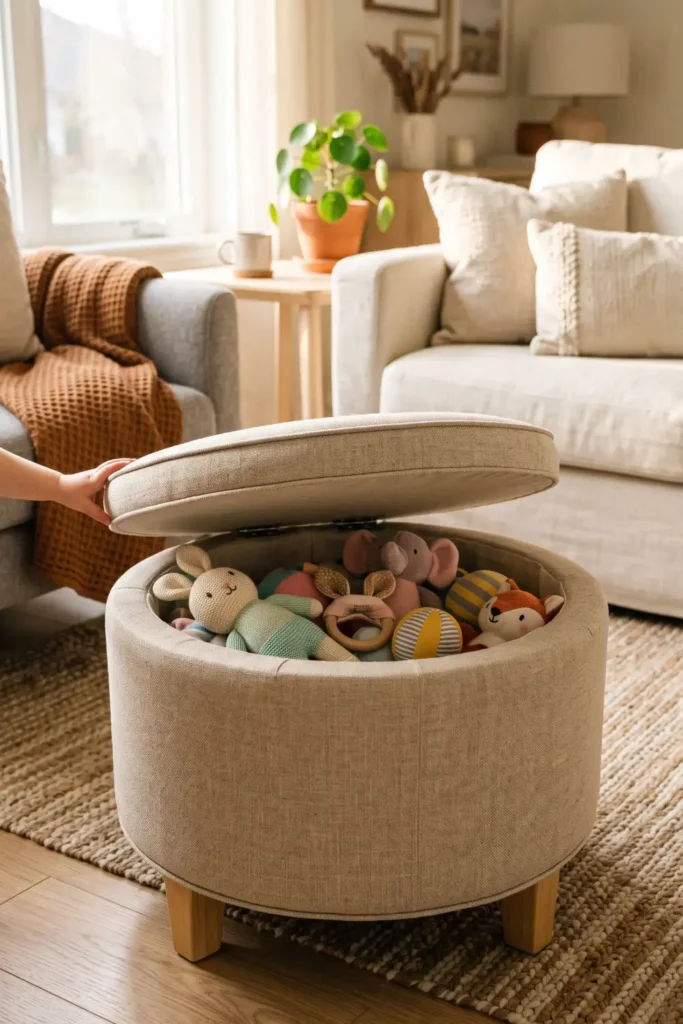
Bright plastic baby toys can quickly overrun your main adult living area. Replacing standard coffee tables with a soft-upholstered storage ottoman gives you a place to kick up your feet while hiding plush toys inside its hollow base.
- Lift the cushioned ottoman lid to toss soft rattles and blocks away at night.
- Close the top lid to instantly restore a clean adult living room layout.
- Rest coffee trays on top of the padded surface during afternoon hours.
Soft rounded furniture corners protect cruising toddlers from sharp coffee table edges.
17. Block TV Light and Noise with an Acoustic Felt Room Divider
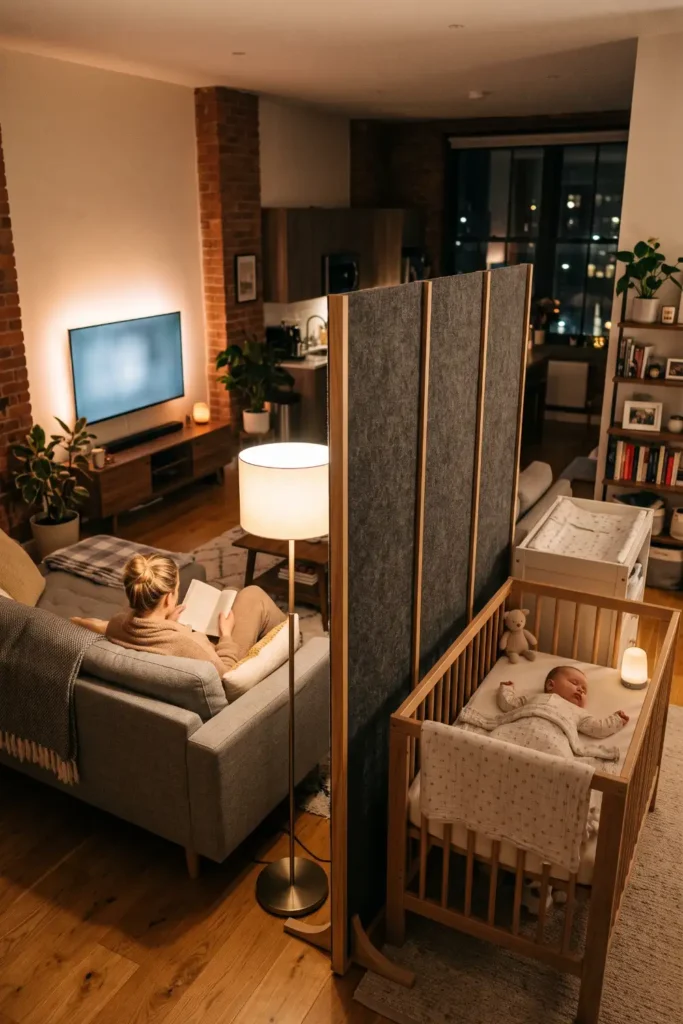
Watching TV or working late while your baby sleeps in the same room requires light and sound control. Standing an acoustic felt partition screen between your couch and crib dampens room noise while blocking television light glare.
Folding the lightweight screen flat against your wall during the day restores open walking space.
Conclusion
Creating an organized studio apartment for your baby is all about establishing clear zones and utilizing space-saving furniture. Combining vertical storage, double-duty dressers, and mobile supply carts keeps your living area open, functional, and free of clutter.
Start with one simple idea today, like adding an over-door organizer or setting up a mobile bottle cart, to see how much floor area you instantly win back. Save your favorite studio baby pins to your Pinterest board to start planning your apartment makeover!
💡 Studio Baby Safety Rule
Always secure tall dressers, floating bookshelves, and heavy wall art to studs using anti-tip furniture straps before your baby starts crawling.