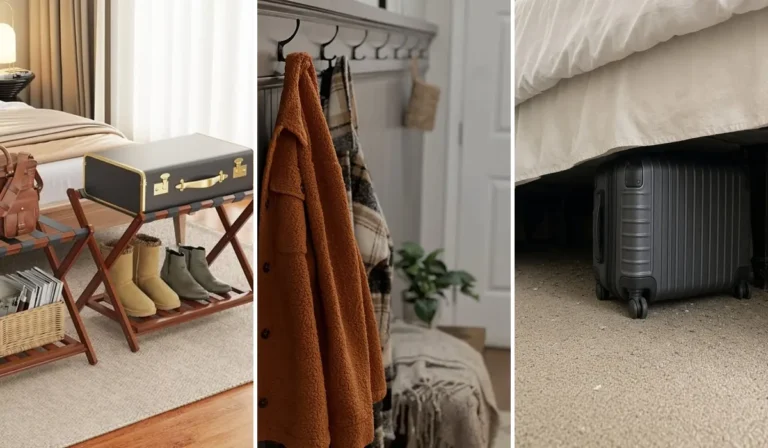
Your coats and sweaters have nowhere to go now the cold has arrived, and the closet holds everything else you own. Learning how to store winter clothes in a small apartment starts with editing the pile, not buying more boxes: wash what you keep, shrink what is bulky, and use the space you already have, from under the bed to the top of the wardrobe. These eight ideas fit your winter clothes into the flat you live in, so the door still closes and spring finds everything clean and labeled.
1. Edit the Pile Before You Store a Thing
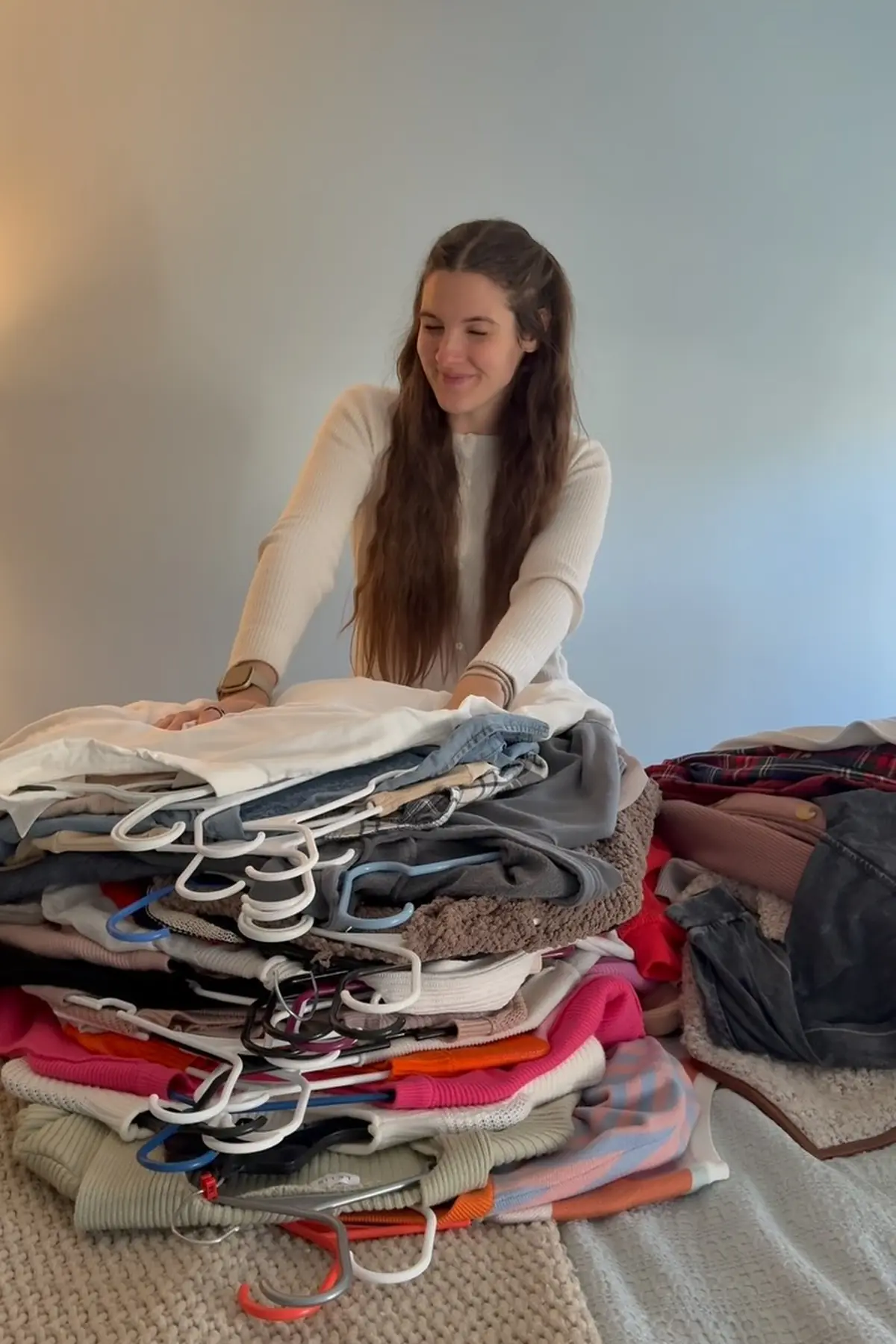
Coats and sweaters heap across the bed where you sleep, sleeves spilling over the edge and hangers tangled in the middle. Before you buy one bin or bag, pull every winter piece out where you can see it. Pick each one up, try it on, and ask the questions: does it fit, did you wear it last winter, and do you still like it?
- ☐ Keep: it fits, you wore it last winter, and you reach for it.
- ☐ Donate: it never leaves the hanger, or it fits someone else better.
- ☐ Pass on: a friend or family member will wear it this winter, so it leaves home with a plan.
- ☐ Store: only the keeps earn a spot, folded clean and ready for winter.
The three-question test for every piece
2. Wash and Dry Everything Before It Goes Away
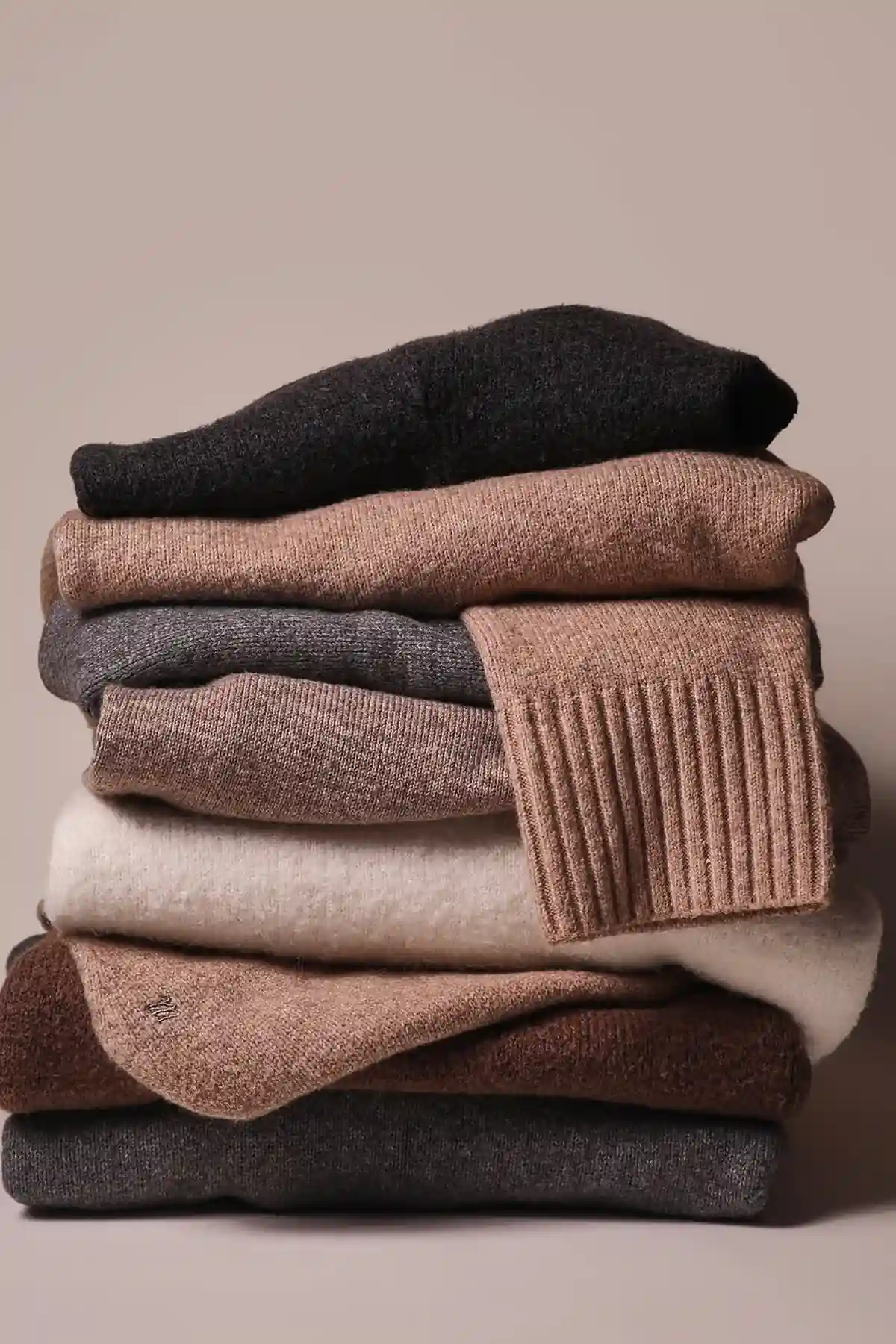
Last spring your favourite sweater came out of its box smelling faintly of last winter, with a small stain you had missed now set for good. Dirt and damp left in storage for months give stains time to set and knits time to turn musty. Wash each piece now, and it will come back out clean next year.
- Read the care label on each piece and set aside anything marked dry clean only.
- Dab spots first with gentle soap and cool water.
- Wash knits cold and gentle, by hand or machine, then press the water out in a towel.
- Lay knits flat on a dry towel to air dry, and hang coats until fully dry.
- Fold each piece only when it feels dry right through.
Three checks before a knit goes away
Label first. The care label decides the method: hand wash, gentle machine wash, or dry cleaner.
Flat, never hung. A wet knit stretches under its own weight on a hanger, so dry it flat to keep its shape.
Touch test. Press your palm to the middle of the knit: if it feels cool, it is still damp and not ready to fold.
3. Vacuum-Seal the Bulky Knits and Coats

Your puffiest coat swallows half a shelf on its own, and two chunky knits beside it leave no room for anything else. A vacuum-seal bag pulls the air out of that pile until it lies flat enough to stack, so the same shelf holds far more. Fold each piece, slide it in, seal the zip, then draw the air out with a vacuum or hand pump. Keep the bags flat and out of damp spots, and label each one so you can find a coat without opening them all.
| Storage option | Best for | Downside |
|---|---|---|
| Vacuum-seal bag | Puffy coats and chunky knits | Never for down or leather |
| Lidded bin | Folded knits you grab often | Coats still take space |
| Hanging rail | Coats you wear every week | Takes the most room |
What goes in the bag, and what stays out
| Seal it flat | Keep it out |
|---|---|
| Puffy coats and chunky knits | Down coats, the squeeze flattens their fill |
| Fleece layers and spare blankets | Leather jackets, the creases stay |
| Out-of-season scarves, in bulk | Coats you wear every week |
4. Slide Flat Bins Under the Bed
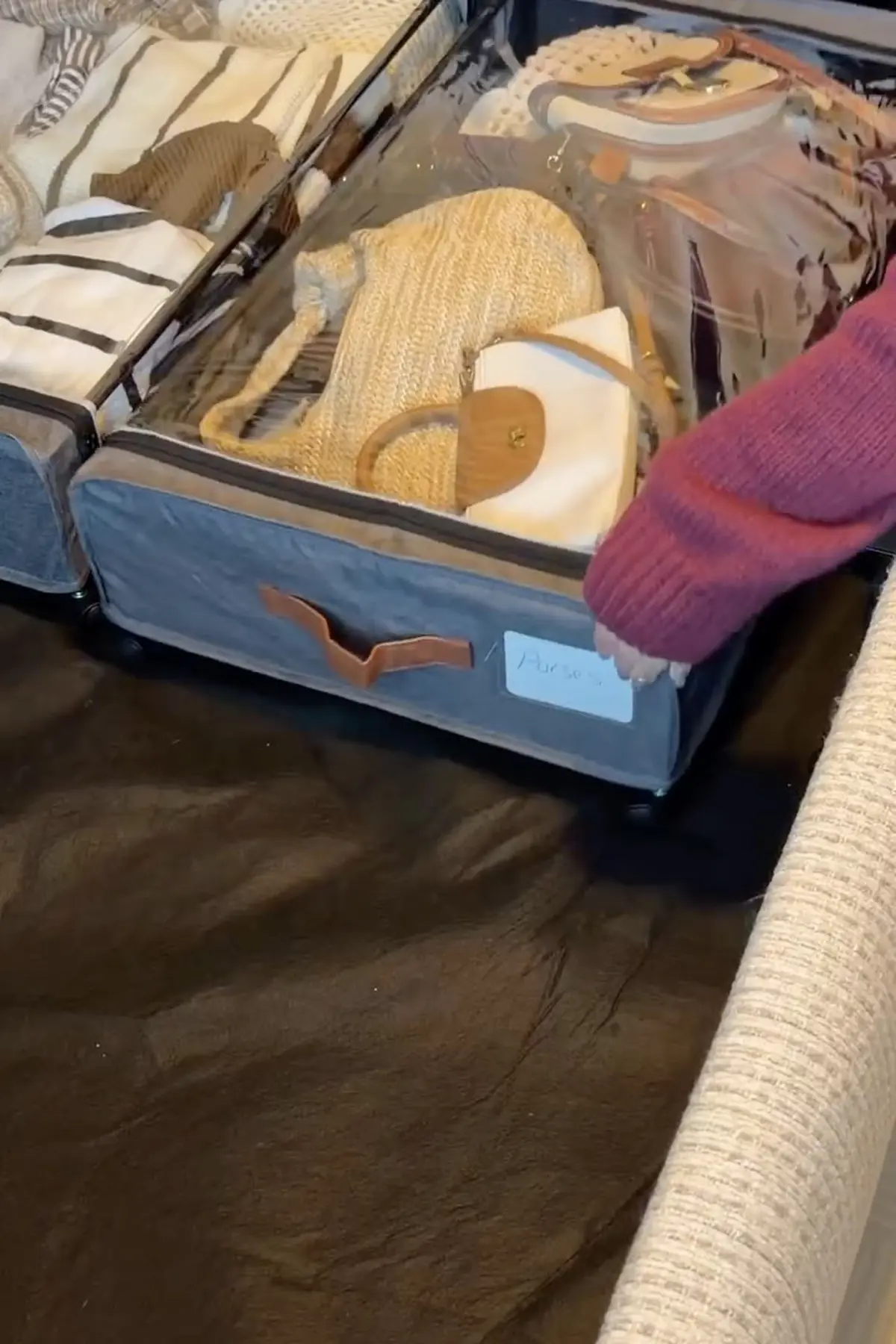
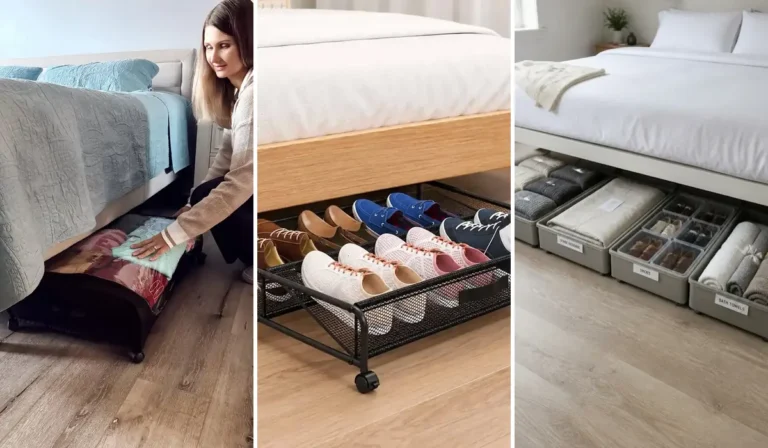
Dust coats the floor under your bed, and the space sits empty while your sweaters crowd the closet. A flat box with a lid slides into that gap on the first try, once you know the height of the gap, and your winter knits gain a home that costs no floor space at all.
Measure the gap from the floor to the bed frame first, then pick low clear bins that sit at least half an inch below it. Fold your sweaters flat, lay the ones you reach for most on top, and zip the lid shut so dust stays out. When you need a sweater, pull the bin out by its handle, take what you need, and slide it back.
The gap under your bed, put to work
BEFORE
Sweaters fill every closet shelf, and the space under the bed gathers dust.
AFTER
Low clear bins fit the measured gap, lids shut, with the sweaters you wear most on top of each bin.
Leave half an inch of air above each bin so the lid never scrapes the frame.
5. Claim the Top of the Wardrobe
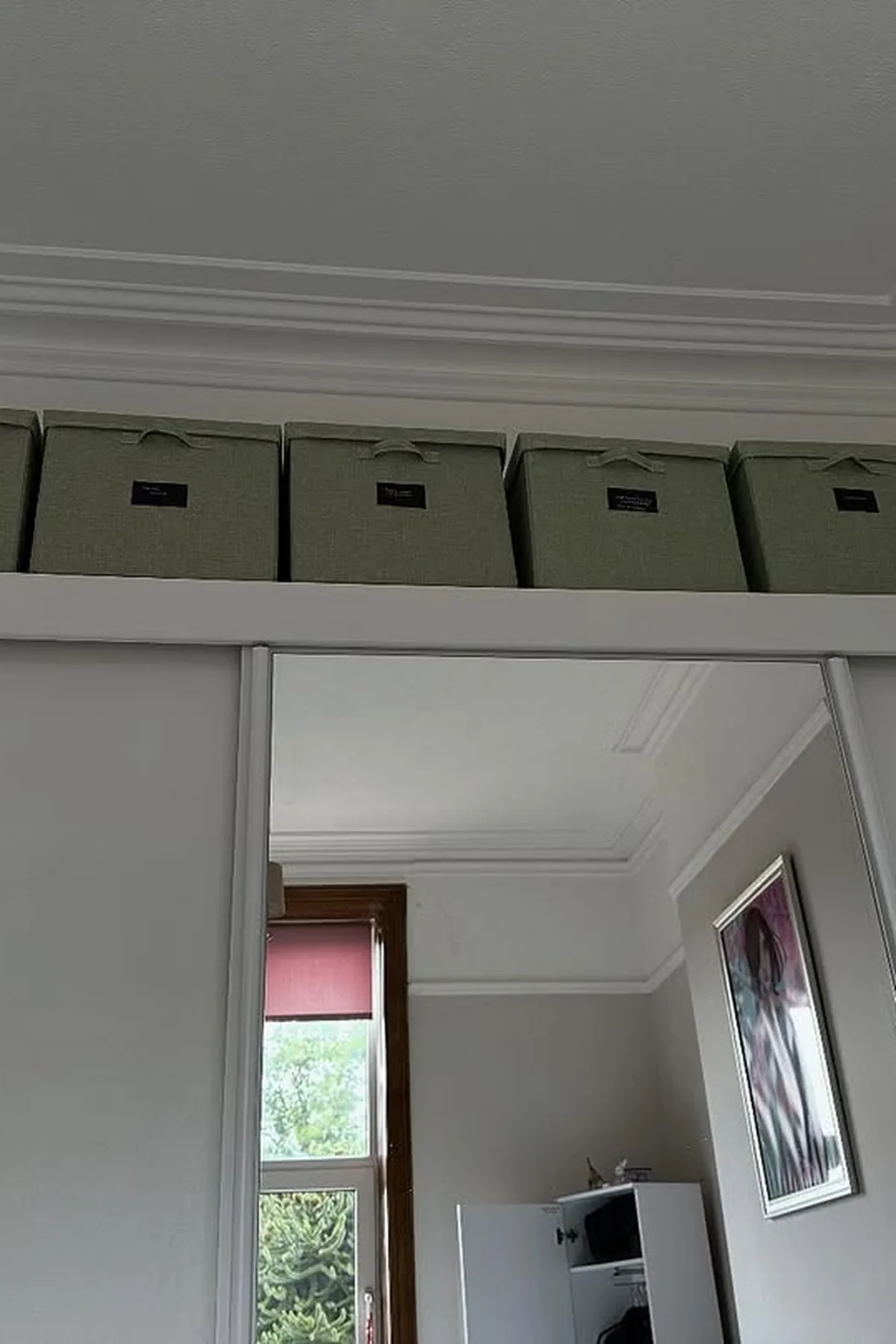
The dusty top of your wardrobe is the shelf you never look at, and it is also free storage waiting to be used. Lidded boxes of folded winter clothes sit up there out of the way, safe from dust till spring. Put the heavy boxes low, where you can lift them down without a stretch, and save the top shelf for light boxes of scarves, hats, and thin knitwear. Keep a small step stool nearby so you can reach up with both hands free and both feet steady.
Do: label every box on the side you can see from the floor, and keep the lids on so dust stays out. Don't: stack boxes higher than you can safely lift down, or pile loose clothes up there with no box.
Up high, weight decides the order
Do
Heavy boxes low, light boxes high.
Label the side you see from the floor.
Step stool close by, both feet steady.
Don’t
No loose piles with no box at all.
No stack taller than your safe reach.
No heavy box above your head.
6. Hang a Second Rail Behind the Door
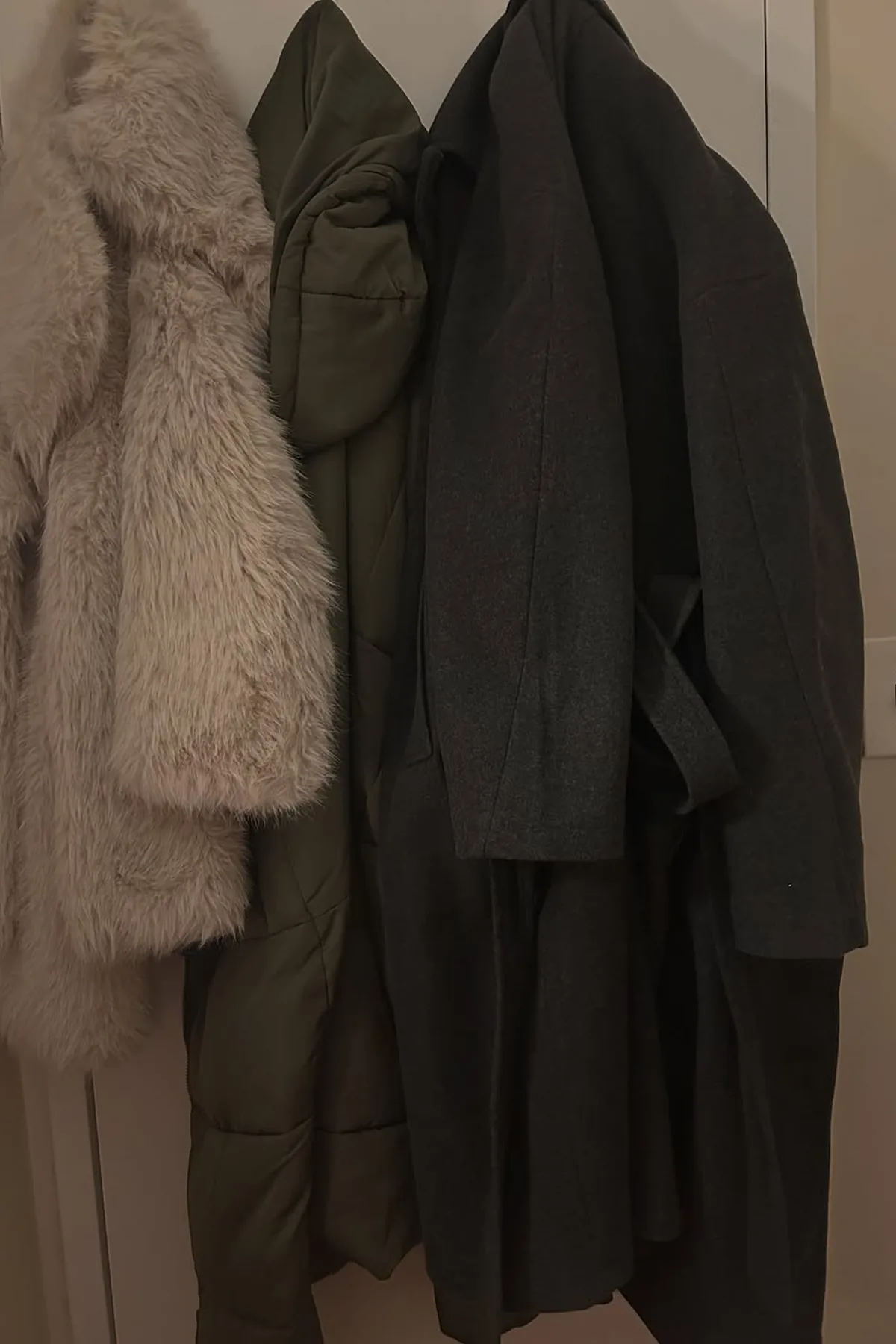
The back of the bedroom door stands bare except for a single hook holding your everyday coat, and that small patch of wood is doing nothing for you yet. A short over-door rail or a row of hooks turns it into a second rail for the two or three coats you reach for each day, so your closet rail keeps only the coats you wear less often. Hang the daily coats there, close the door to check it still shuts flat, and leave the rest of the rail empty.
Tip: keep two or three coats on the door at most, and move any coat you have not worn in a week back to the closet.
WHY THIS WORKS
The door already swings through empty air, so coats hung there cost no floor space and no closet rail.
Daily coats stay in sight and in reach, the closet keeps the rest, and the door still closes because only two or three coats hang there.
7. Roll a Garment Rack Into the Dead Corner

Behind the door, the corner where the laundry basket lives stays empty. A slim rolling rack fits right there, and it holds this week's coats plus the bulky knits you reach for every cold morning. When guests come, you roll it into the bedroom. Your closet rail stays free for the rest.
Q: Will a rack hold heavy winter coats without tipping? A: Pick a sturdy frame with a wide base and lockable wheels, and hang the heaviest coats near the centre posts.
Q: Where do the boots go? A: Use the lower shelf for boots, so they stay off the floor and dry between wears.
Q: What if the corner is too small? A: Measure the corner first and pick a rack a few inches narrower.
A rack that earns its corner
Pick the rack
Slim frame, wide base, lockable wheels, and a lower shelf for boots.
Load it for the week
This week’s coats and bulky knits up top, boots below, heaviest coats near the centre.
Roll it away
Slide it into the bedroom when guests come, then roll it back to the corner after.
8. Label the Swap and Set the Spring Date
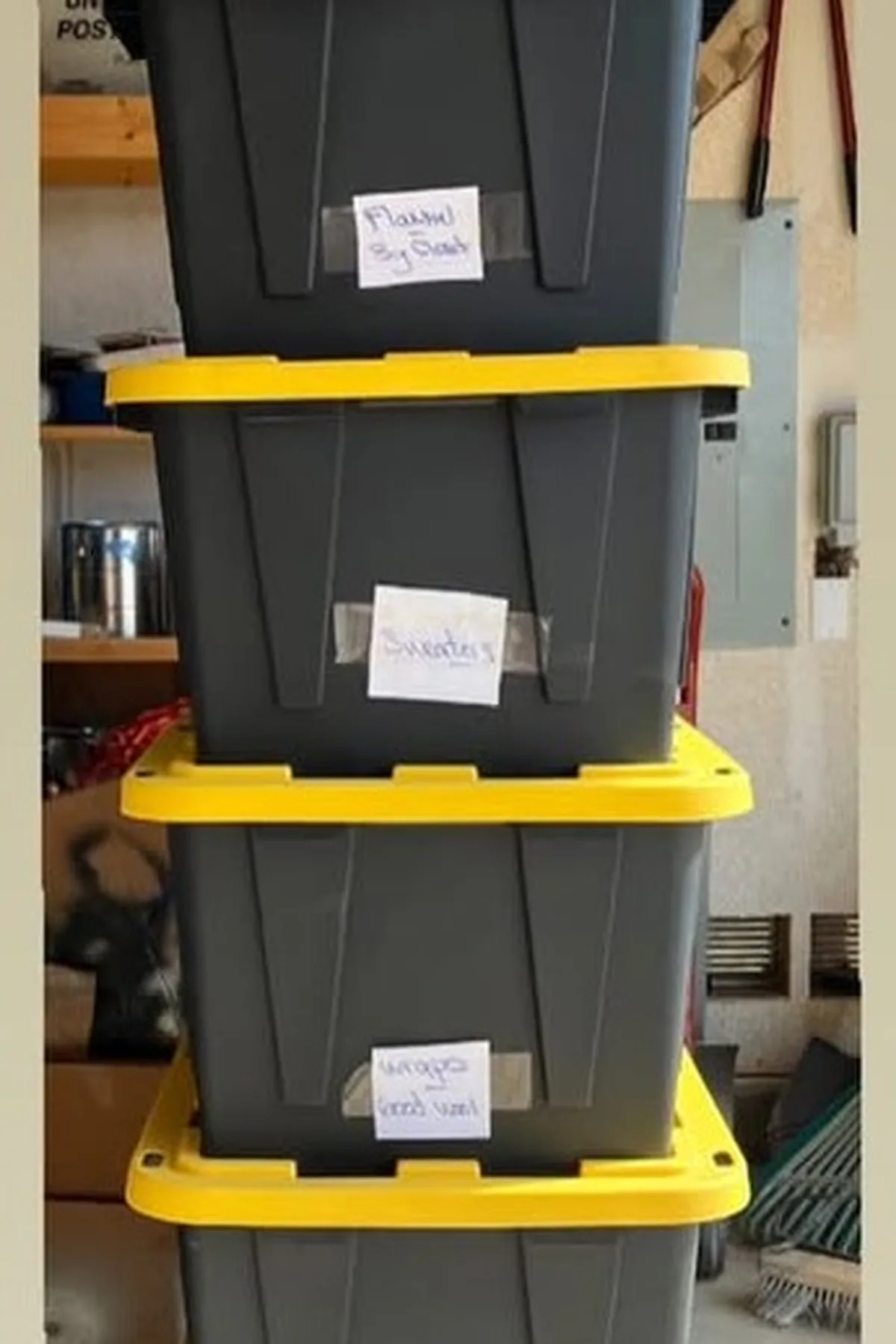
The marker pen and the roll of masking tape sit on top of the first box, ready before you pack a single sweater. Last year one box went up to the shelf with no label at all, and by spring you had opened every box in the stack before you found your favourite coat. A label takes ten seconds, and it saves you that whole hunt.
Write what is inside and the season on every box, in big letters you can read from the floor. Tape a one-line list to the front of each box, then pick your spring swap date now and write it on the calendar and on the top box. When that date comes, you will know exactly which box to pull down first.
Quick Tip
Write every label in the same three lines, so you can read it at a glance from the floor:
1. Season, such as WINTER
2. What is inside, such as sweaters and scarves
3. Swap date, such as the first weekend of spring
Start by editing the pile, then wash and dry what you keep. Vacuum-seal the bulky knits, slide flat bins under the bed, and claim the top of the wardrobe for the rest. The coats you wear every day live behind the door or on the rolling rack, and every box carries a label with the season and the spring swap date. Nothing here needs a spare closet, just the space your flat has, used on purpose. When the warm weather comes back, open the labels first, air the knits out, and put the system away for next winter, ready to use again.
Frequently Asked Questions
Where is the best place to store winter clothes in a small apartment?
The space you already have works best: flat lidded bins under the bed, labeled boxes on top of the wardrobe, and vacuum-sealed bags on a high shelf. Keep the coats you wear every day on hooks behind the door or on a small rolling rack, so the closet rail stays free for the rest. Measure each spot first, so the bins and bags you buy actually fit.
Should I wash winter clothes before storing them?
Yes, wash and dry everything before it goes away. Stains and body oils set in over months, and even a little damp can turn musty in a sealed bag or bin. Check the care label, wash knits on a cold gentle cycle, and lay them flat to dry. Fold each piece only when it feels dry right through, with no cool damp patches left.
Can I vacuum-seal all my winter clothes?
No. Vacuum bags suit chunky knits, fleece, and synthetic puffers, which bounce back when you open the bag. Keep down coats and leather jackets out, because the pressure crushes down fill and can crack leather. Hang those pieces instead, or store them flat in a lidded bin with room to breathe.
How do I stop stored winter clothes from smelling musty?
Dry them fully before packing, and store them in lidded bins or sealed bags, not open piles. A cedar block or a small lavender sachet in each box helps, and a dry spot matters more than anything: avoid the floor beside an outside wall. When you open the boxes in spring, air the knits out for a day before you wear them.
How do I store coats with no closet space at all?
Use the back of the bedroom door for the one or two coats you wear daily, on sturdy over-door hooks or a short rail. A slim rolling rack in a dead corner holds the rest of the week's coats and rolls away when guests come. Keep the rack to daily wear only, so it stays tidy and the door still closes.
When should I swap my winter clothes back in?
Pick the date when you pack them away and write it on the top box and on your calendar, so the swap is a plan and not a guess. In most places the swap falls in early spring, when the heavy coat stays home for a week without you missing it. Open the labeled boxes first, air everything out, and wash anything that smells of storage before you wear it.