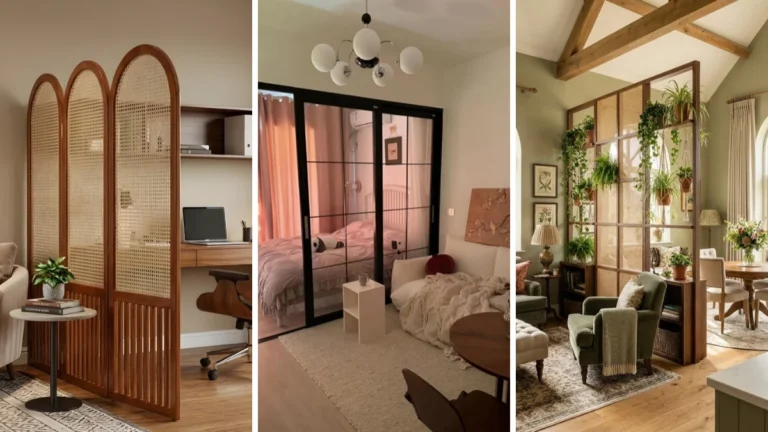
Tripping over piles of sneakers the second you open your front door is a quick way to make a small apartment feel cramped. Narrow front hallways rarely have room for bulky dressers or wide coat closets, leaving daily footwear scattered across the floor.
You need smart storage solutions that organize shoes vertically without blocking walking paths or preventing interior doors from swinging open.
Incorporating targeted slim shoe cabinet ideas small entryway spaces require transforms tight corridors into streamlined entry points. From ultra-thin tilt-out drawers and revolving corner towers to floating wall bins and recessed stud shelves, these fifteen practical ideas make every inch of wall space count. Each design keeps footwear organized, protects shoes from dust, and keeps your front entry clean and welcoming.
1.Staggered Wood Tree Shelves That Use Vertical Air Space
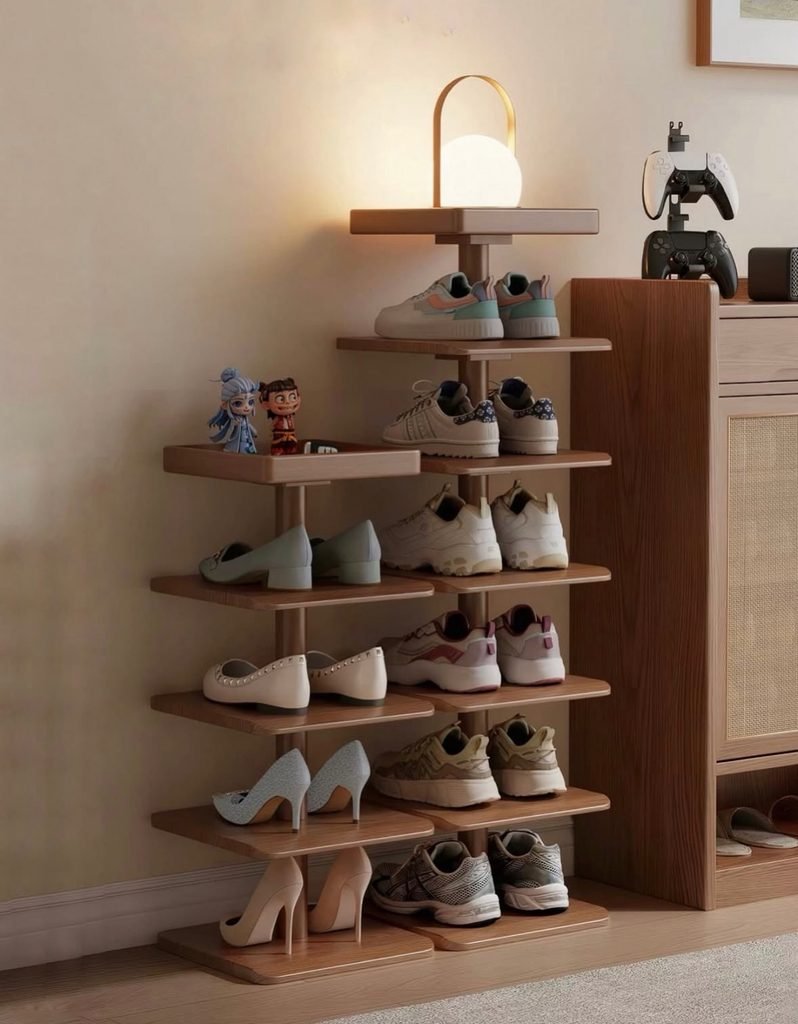
Stacking shoes vertically on alternating wooden trays keeps your floor clear in tight entryways. A central support post holds offset square ledges, allowing heels, sneakers, and loafers to rest side by side without overlapping.
Top ledges work exceptionally well for holding small accent lamps, keys, or media controllers. Placing this freestanding column right next to an existing sideboard gives you instant multi-level shoe capacity using only one square foot of floor space.
2.Low Wooden Entryway Benches with Built-In Shoe Cubbies
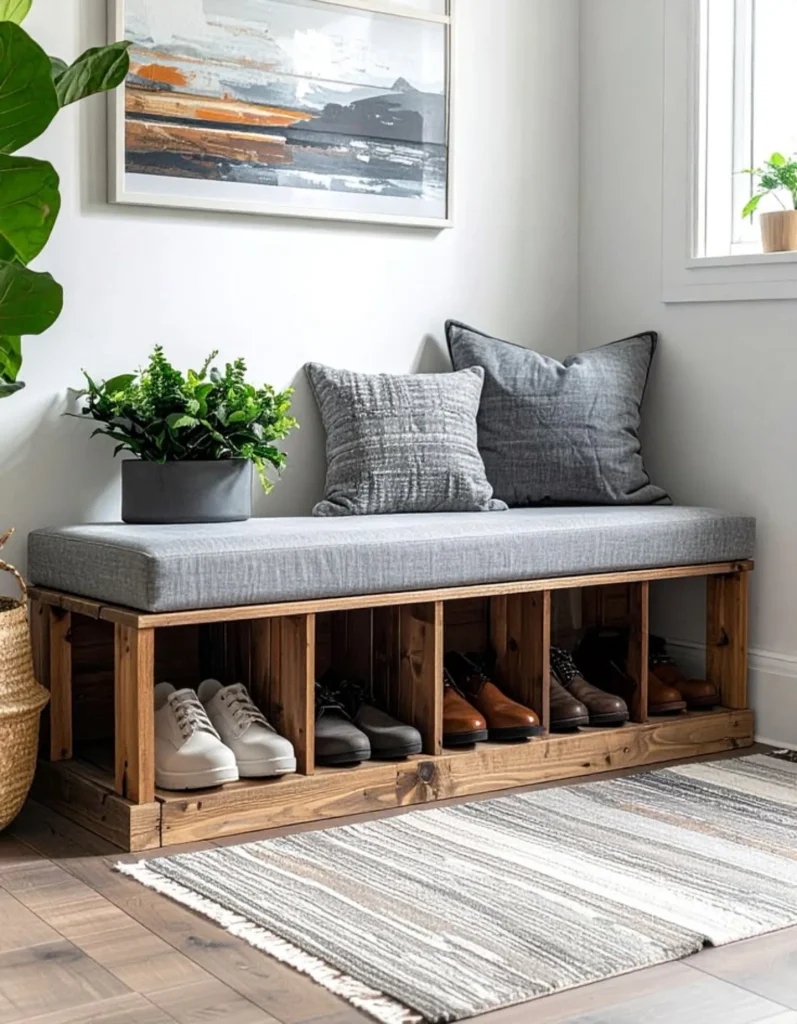
Combining a place to sit with open floor-level storage makes morning routines easier. Raw timber framing forms wide open compartments that hold bulky boots and everyday sneakers right where you need them.
- Seating cushion: A fitted grey fabric pad provides a comfortable spot to lace up shoes.
- Open cubbies: Divider walls separate individual pairs so footwear does not pile up.
- Low profile: Fits neatly underneath low front windows without blocking natural light.
Keeping open shoe compartments right near the floor encourages household members to slide their footwear away the second they walk through the door.
Key Setup Details
3.Revolving Vertical Corner Towers for Tight Alcoves
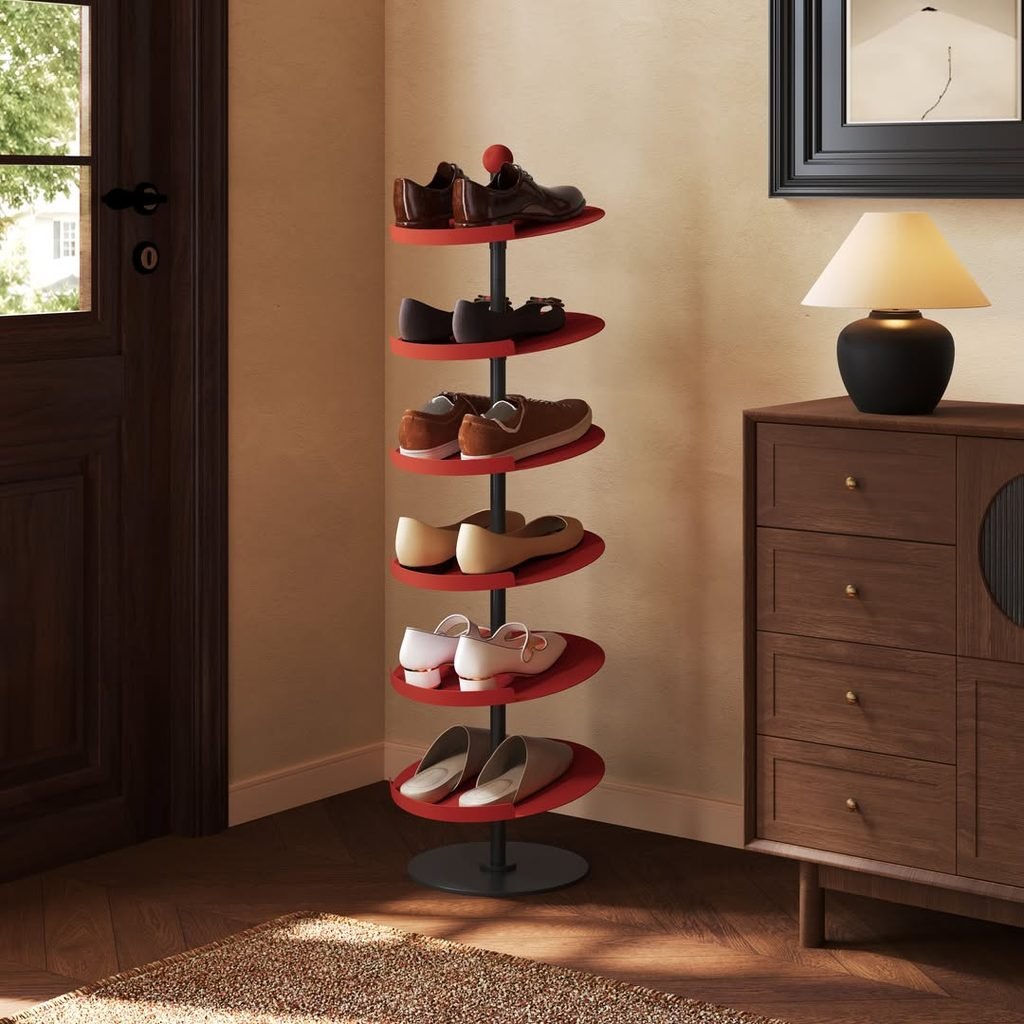
Narrow corner spots right beside front doors often go completely unused. Mounting round tray shelves on a single steel column gives you a spinning rack that takes up minimal floor space while holding six or more pairs of shoes.
📌 Placement Strategy
Position a rotating column in the tight dead zone between your door frame and adjacent furniture to make use of narrow wall corners.
Bright accent colors like terracotta red add a playful element to neutral entryways. Selecting tiered shelves with slight lip edges keeps leather soles securely in place while you spin the column.
4.Full-Height Hall Trees with Integrated Side Shoe Shelving
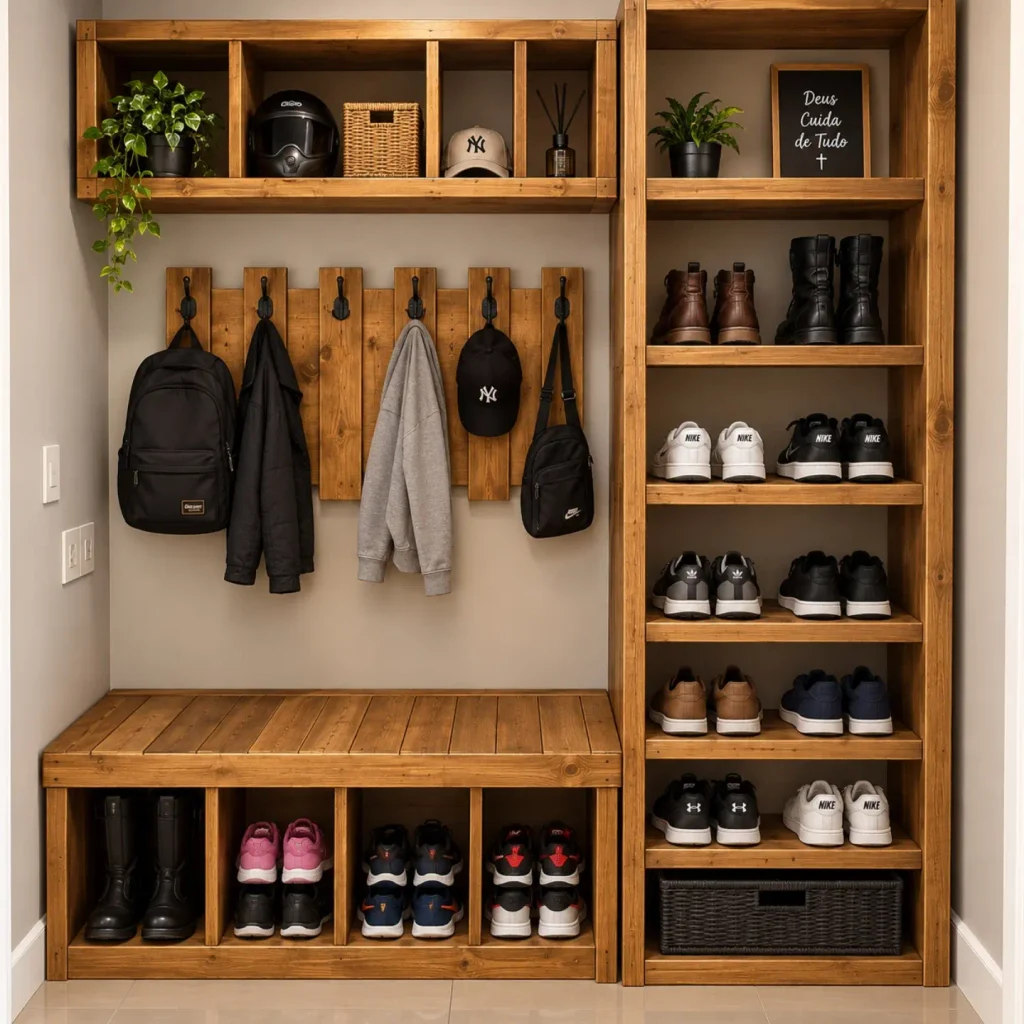
Building a complete mudroom wall along one side of your entryway organizes jackets, headwear, and footwear together. Deep bottom cubbies keep taller work boots upright, while a tall side shelving tower holds sneakers at eye level.
| Storage Zone | Best Used For |
|---|---|
| Tall Side Tower | Daily sneakers, running shoes, and low boots. |
| Bench Bottom Cubbies | Tall rain boots, heavy work boots, and storage baskets. |
| Upper Cubby Shelf | Helmets, hats, diffusers, and seasonal gear. |
Symmetric wooden peg rails give you room to hang coats and backpacks above the bench, creating a centralized drop zone for your entire household.
5.Built-In Oak Benches Fitted with Recessed Shelf Lighting
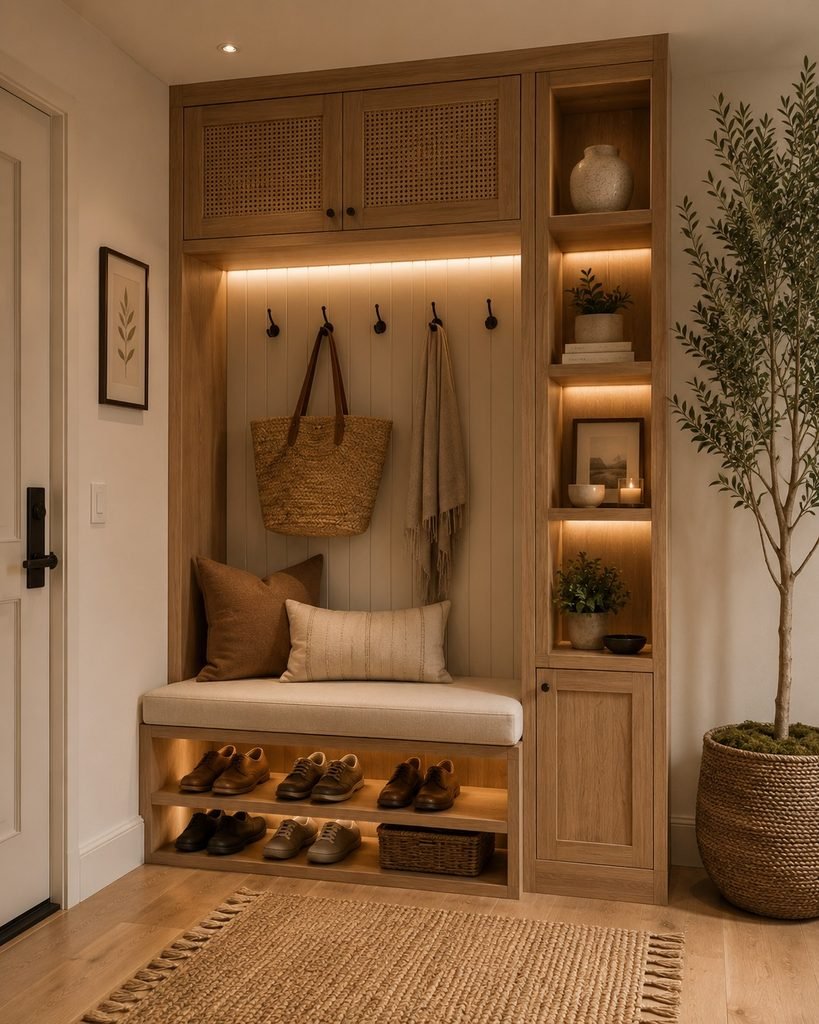
Under-cabinet LED strip lights transform dark lower shoe compartments into an easily visible display. Tailored oak cabinetry pairs soft bench seating with woven rattan top cupboards to stash out-of-season footwear out of view.
Warm LED strips mounted beneath lower cubby edges make it simple to spot dark shoes without turning on bright overhead hallway lights.
Open low shelves keep dress shoes accessible, while illuminated side alcove ledges offer dedicated space for small potted greenery and framed photos.
6.Slide-Out Vertical Pantry Cabinets for Deep Wall Alcoves
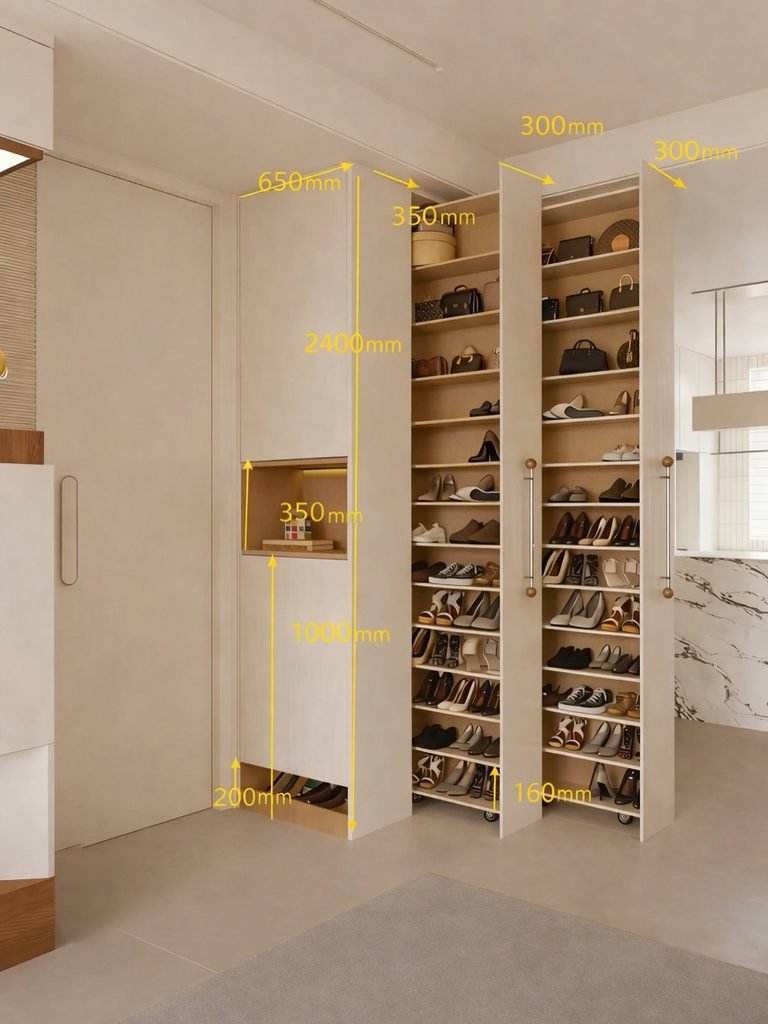
Deep narrow gaps between walls can hold dozens of pairs when you use full-height sliding tracks. Tall cabinet fronts pull straight out on floor casters, revealing multiple tiered shelves for shoes and handbags from both sides.
- Install heavy-duty full-extension runner tracks inside your wall recess.
- Build narrow 300mm vertical shelf columns mounted onto floor wheels.
- Pull handles outward to access shoes, then push the column flush against the wall to hide everything.
This hidden mechanism allows you to store upwards of thirty pairs of shoes in an alcove only twelve inches wide.
7.Twin Metal-Frame Shelf Towers with Top Storage Drawers
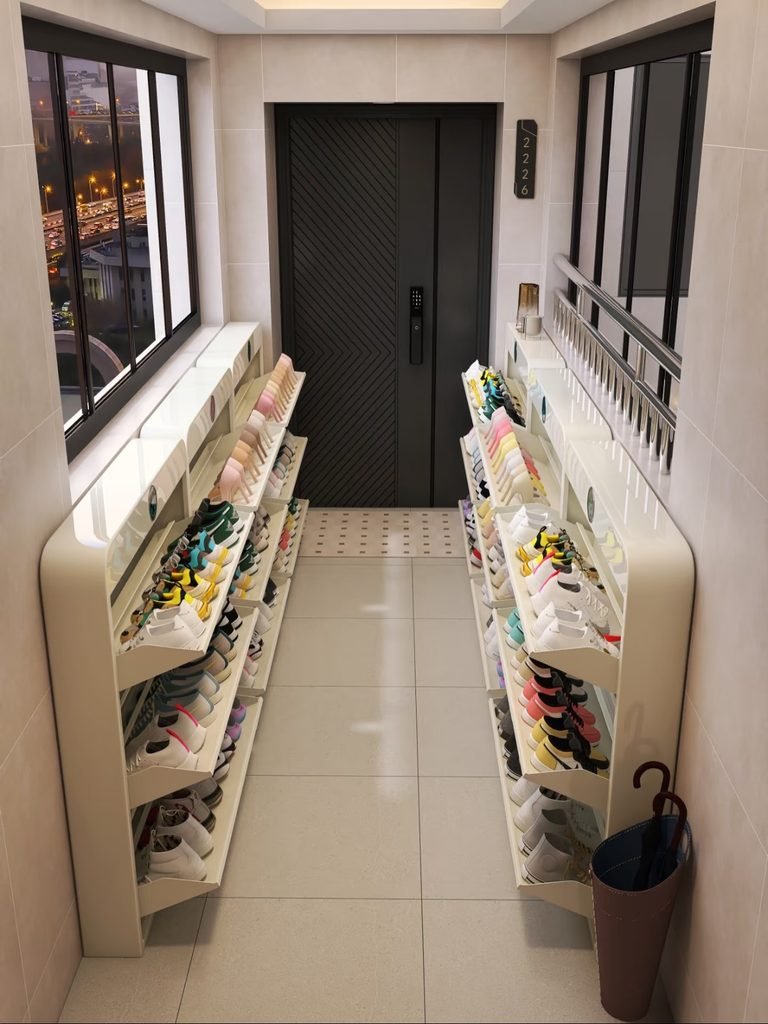
Pairing two slim open-frame steel units side by side doubles your vertical capacity without blocking wall space. Wood shelves feature side rails to keep footwear from slipping off, while top catch-all drawers store keys, mail, and shoe polish.
8.Ultra-Slim Tilt-Out Cabinets Under Eight Inches Deep
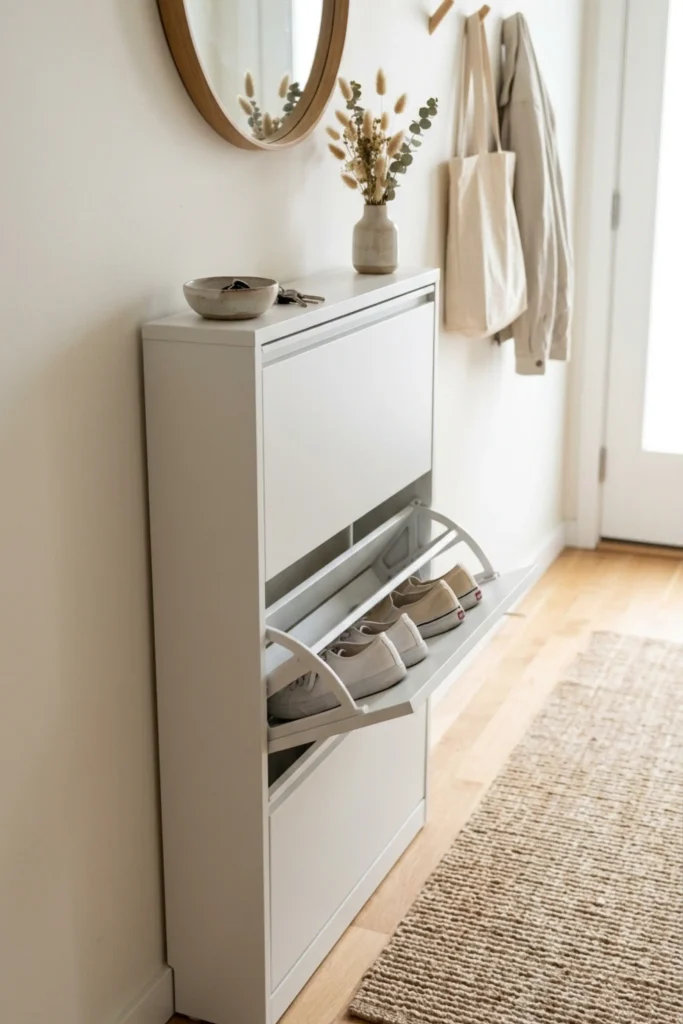
Mounting a shallow tilt-out cabinet against a narrow hallway wall stops footwear clutter without blocking foot traffic. Downward-opening drawer fronts hold shoes vertically along internal pocket dividers, keeping the entire profile under eight inches deep.
💡 Depth Advantage
Tilt-out drawers store shoes angled downward on their toes, reducing cabinet depth by half compared to flat horizontal shelves.
Top surface ledges provide space for mail trays, scented diffusers, and small key bowls right by your entry door.
9.Wall-Mounted Floating Bins Lifted Off the Floor
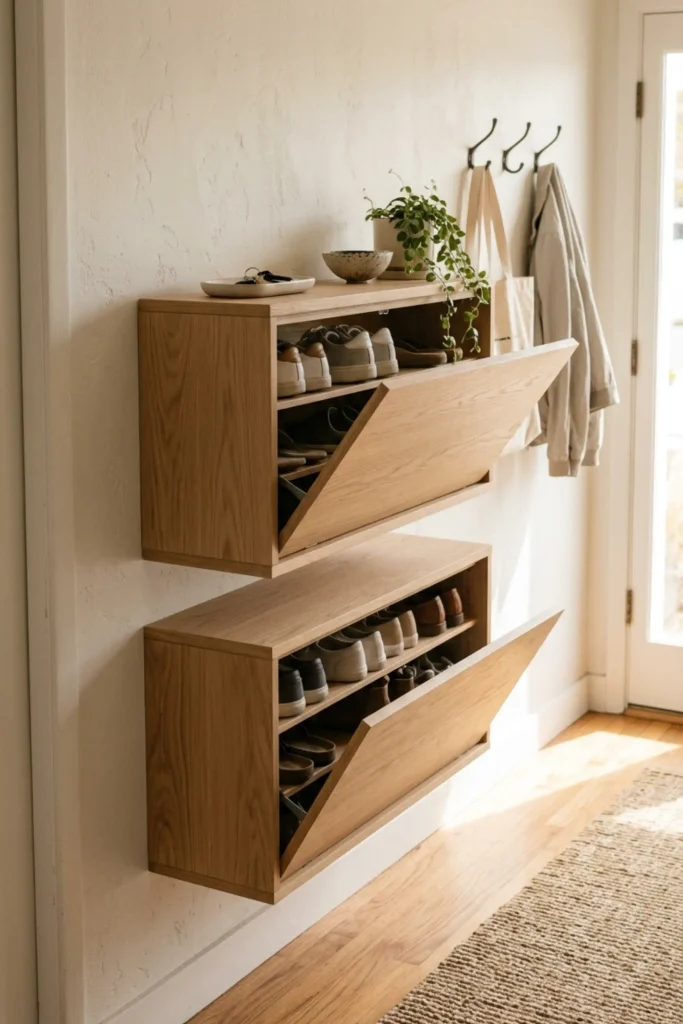
Lifting storage boxes off your floor surface gives small entryways a lighter feel while leaving ground space clear for easy vacuuming. Hanging individual shoe boxes directly onto drywall studs allows you to customize the height according to your household members.
Leaving six inches of open space underneath the bottom unit gives you a quick drop zone for damp wet-weather boots before they get put away.
10.Full-Length Mirror Cabinets with Concealed Shoe Slots
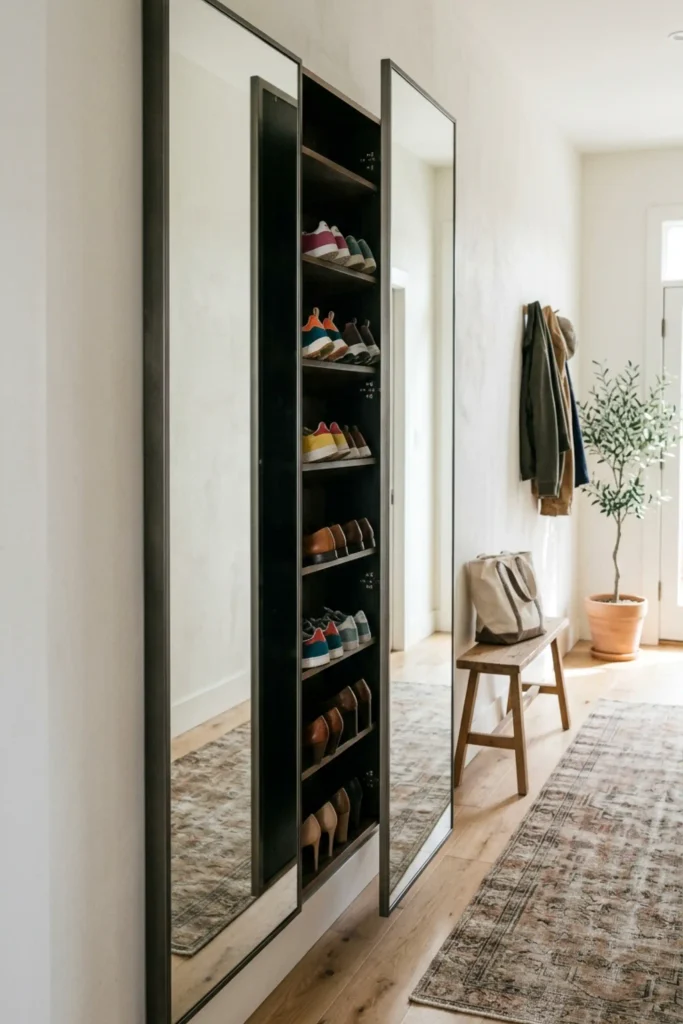
Combining a full-length dressing mirror with hidden internal shoe shelves solves two hallway problems in one wall-mounted footprint. Swiveling or opening the mirrored door reveals shallow angled shelves designed specifically for flats, heels, and daily sneakers.
Reflective mirror glass bounces ambient daylight down narrow windowless corridors.
Choosing swing doors that hit adjacent doorframes when opened fully.
Having an integrated mirror right where you put your shoes on streamlines outfit checks before heading out the door.
11.Slatted Bamboo Drop-Down Benches with Angled Shelves
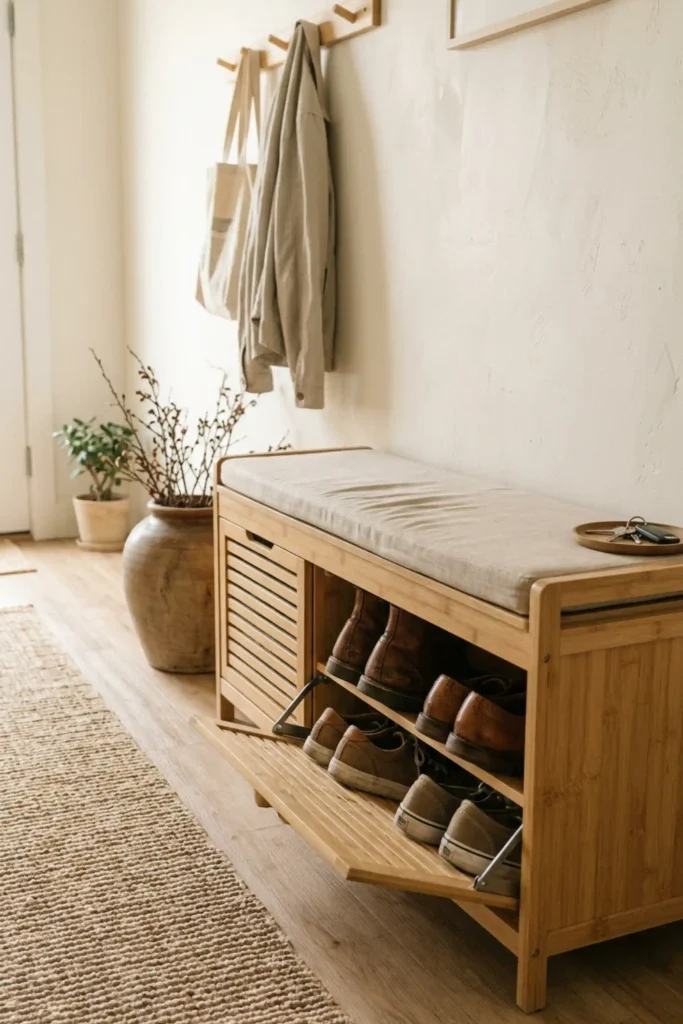
Natural bamboo slatted doors allow constant airflow to reach stored footwear while keeping shoes hidden behind clean wooden lines. Drop-down front panels pull forward to reveal slanted internal rails that hold two rows of footwear securely.
Assembly & Feature Checklist
The compact height provides comfortable seating for taking off shoes while keeping overall hallway sightlines open and airy.
12.Recessed Wall Niche Shelving Between Drywall Studs
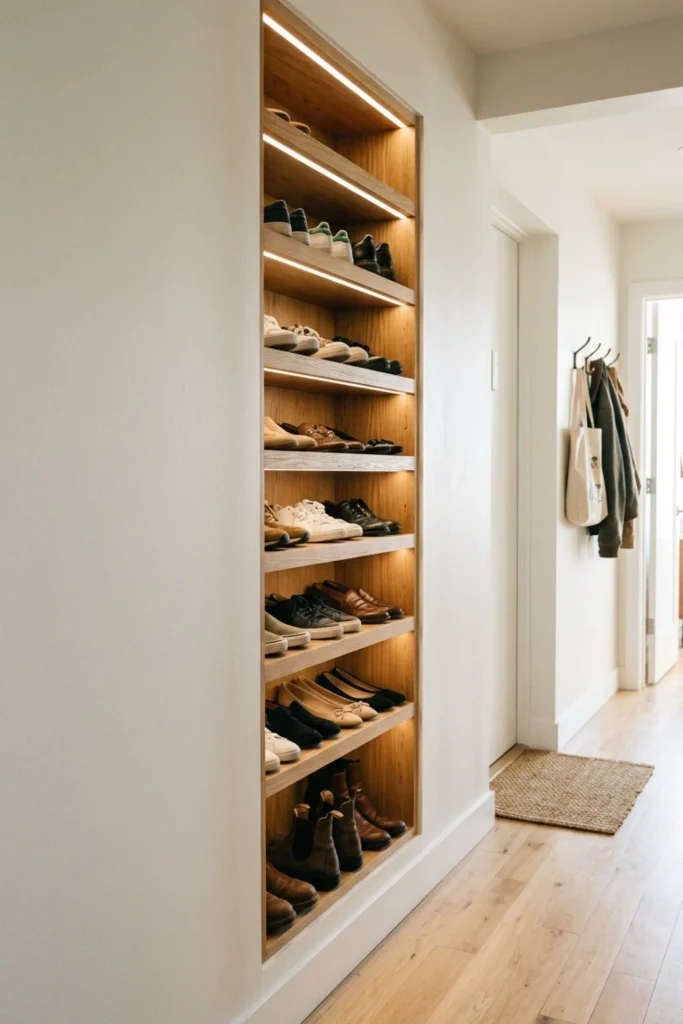
Carving out storage space between existing wall studs utilizes dead interior wall space without stealing a single inch of hallway width. Inserting custom wooden shelf inserts between sixteen-inch stud centers creates a flush storage rack for shoes.
Protrudes 10 to 14 inches out into narrow walking paths.
Sits completely flush inside wall cavity with zero floor intrusion.
Painting the inner alcove a contrasting dark shade frames your footwear collection while turning functional storage into a built-in wall feature.
13.Clear Drop-Front Shoe Bins on a Narrow Console Rack
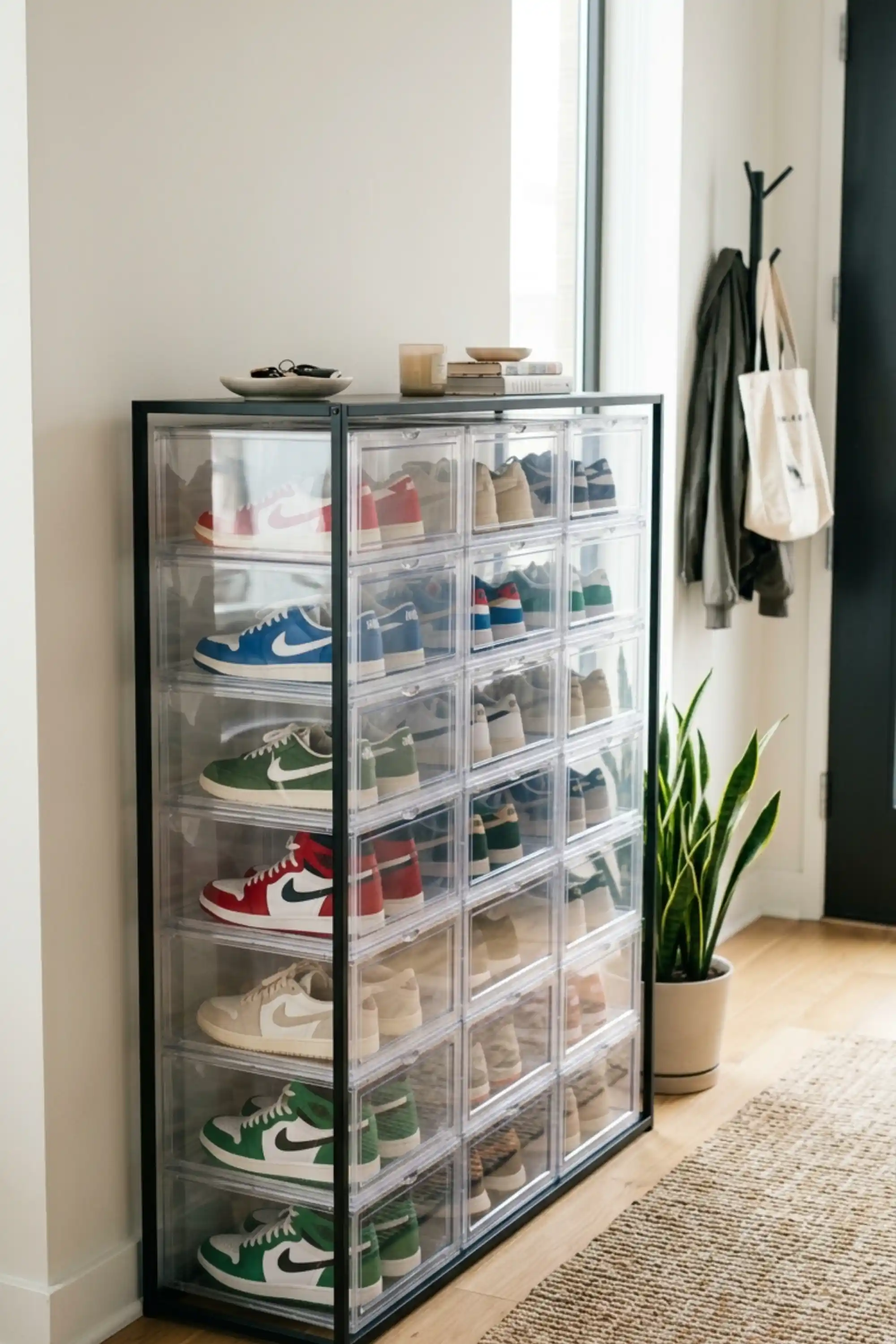
Transparent drop-front containers keep high-rotation sneakers protected from dust while letting you see every pair instantly. Stacking uniform acrylic boxes onto a narrow iron console table stabilizes the stack and keeps your entryway visually structured.
Drop-front magnetic doors make it easy to grab specific shoes without taking down the entire stacked column above it.
14.Accordion Wire Mesh Wall Grids for Heels and Accessories
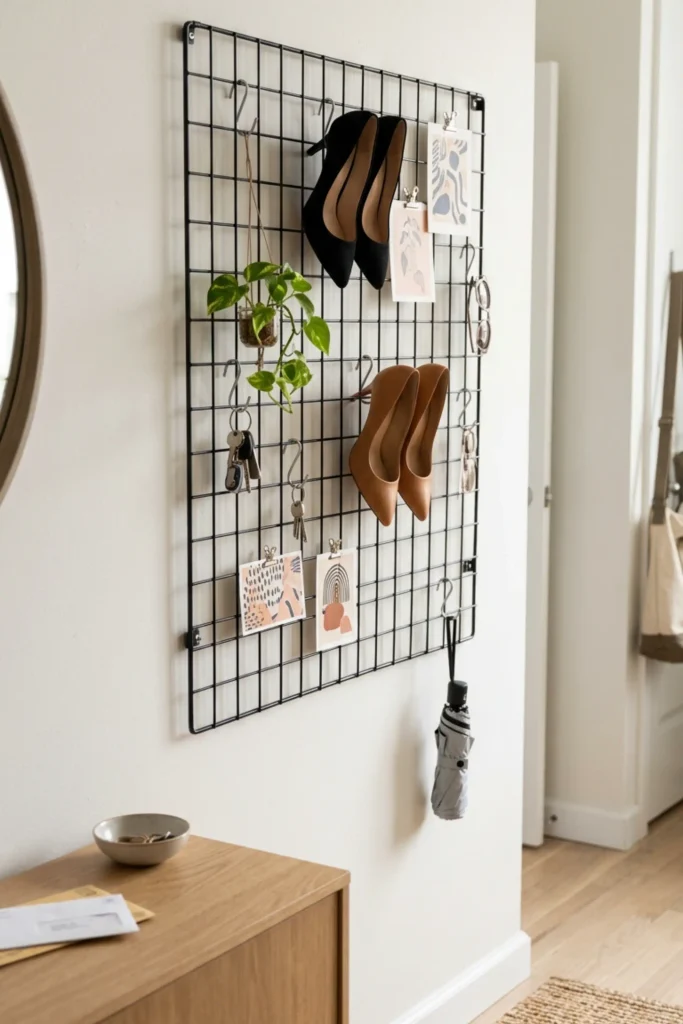
Hanging an industrial metal mesh grid on a front hall wall turns vertical space into a flexible hanging display for heels, umbrellas, and sunglasses. S-hooks and heel-notch brackets lock onto the wire frame without taking up any floor real estate.
- ▸Heel support: Catch high heels directly over horizontal wire rungs.
- ▸Hook attachments: Hang shoe horns, dog leashes, and small umbrellas along the bottom.
- ▸Flat clearance: Extends less than three inches out from plaster wall surfaces.
Moving metal hooks around takes seconds, making it simple to reconfigure your setup whenever your shoe collection changes.
15.Entryway Console Tables with Slatted Shoe Base Rails
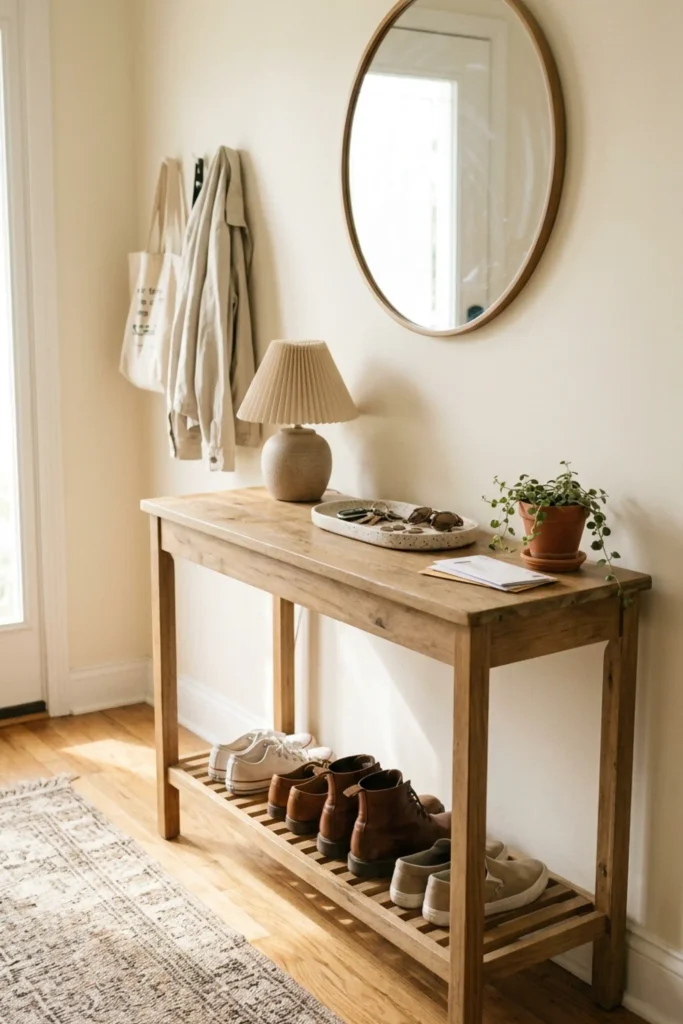
Placing a slim sofa-style console table near your front door creates a designated key landing spot on top and a shoe shelf down below. Open wooden slatted rails on the bottom shelf hold four to five pairs of everyday footwear off the rug.
Combining top-surface entry storage with an open bottom shoe rail provides daily functionality while maintaining an uncluttered aesthetic.
Clearing shoe clutter from a tight front hallway does not require expensive built-in remodeling or sacrificing walking space. Selecting a vertical shoe storage unit tailored to your specific entry width keeps daily footwear organized while keeping floor space clear. Remember to keep high-rotation footwear on accessible middle shelves and place seasonal boots in lower or enclosed compartments.
💡 Entryway Organization Rule
Store heavy boots and wet footwear near floor level, and reserve upper drawers for keys, mail, and daily accessories.
Save your favorite narrow shoe storage setups to your Pinterest home organization board to plan your ideal small entry layout!