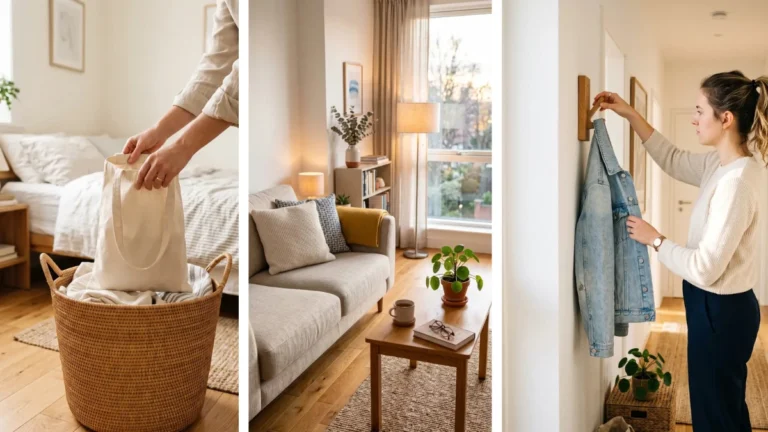
Living in a small apartment often feels chaotic when every counter, table, and shelf gets piled with daily clutter. Walking into a room where visual noise competes for your attention makes relaxing almost impossible.
You do not need to move to a bigger home or buy expensive storage units to fix this. Knowing how to make a small space feel peaceful starts with editing what your eyes see the moment you step through the door.
This guide will walk you through a simple system to clear physical surfaces, open up movement pathways, and balance your room lighting. By stripping away visual clutter, arranging furniture to breathe, and establishing a fast daily reset, you will create a quiet room that actually lets you unwind. The hands-on work takes about 45 minutes, and you can finish the entire process in a single afternoon using basic household items. Gather a few empty boxes, clear off your floor, and let us get your room feeling quiet and spacious.
2. Group Daily Loose Items into Two Closed Baskets
3. Shift Heavy Furniture Three Inches Off the Main Pathways
4. Lower Hanging Wall Decor to Sitting Eye Level
5. Swap Overhead Ceiling Lights for Warm Floor Lamps
6. Set Up a Five-Minute Nightly Surface Reset
Clear Every Flat Surface Down to the Bare Base
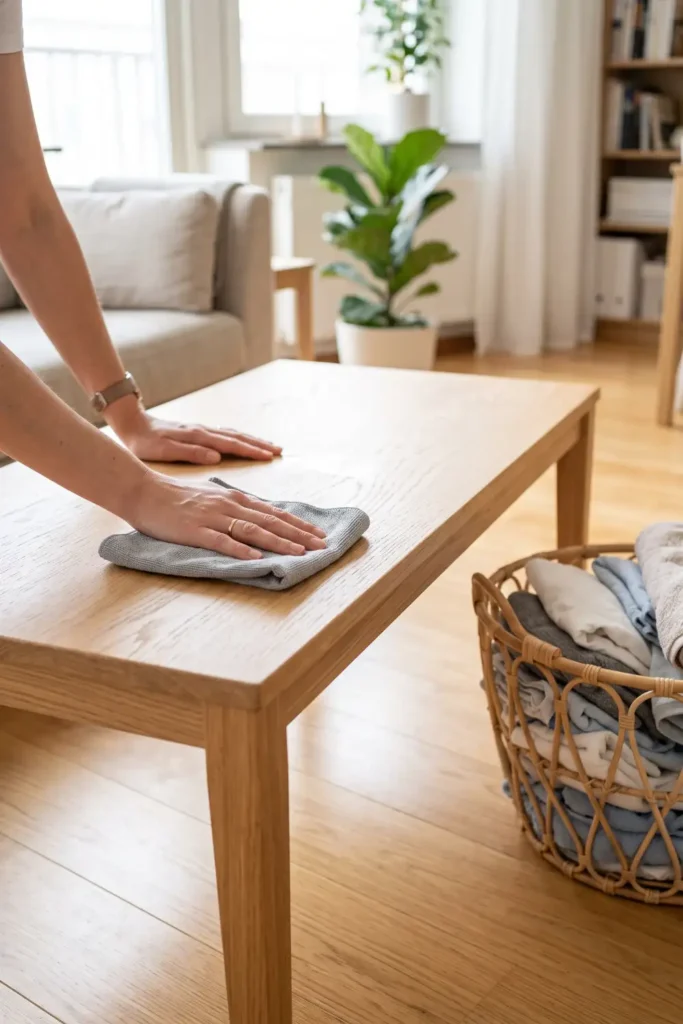
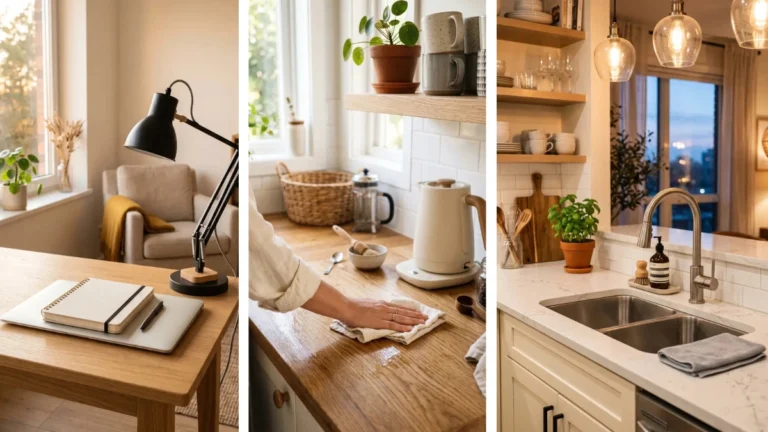
Pick one main table, desk, or dresser top to start. Remove every single item off the wood or glass until the top is 100% bare, placing the items into an open laundry basket on the floor. Leaving even one or two small coasters behind ruins the visual reset. Wipe down the exposed top with a damp microfiber cloth to remove dust and stray crumbs.
⚠️ Heads Up
Do not sort through the items while emptying the table. Sorting during this phase slows you down and causes decision fatigue before you finish clearing the room.
Group Daily Loose Items into Two Closed Baskets

Open basket piles belong inside hidden storage rather than scattered across your coffee table. Sort the loose clutter sitting in your temporary floor box into 2 baskets with solid lids or thick woven sides. Reserve one container strictly for daily essentials like keys and chargers, while placing secondary items like books and mail into the second bin. Return no more than 3 items to the freshly wiped table surface.
Shift Heavy Furniture Three Inches Off the Main Pathways

Tight walkways make rooms feel smaller than they actually are. Measure the space between your sofa edge, coffee table, and doorway frames to verify you have at least 30 inches of clear walking width. Slide your couch and side tables 3 inches away from wall trim to let shadow lines fall behind the cushions. This small air gap breaks up rigid perimeter alignment and creates immediate visual depth.
💡 Pro Tip
If your sofa rests on hard floorboards without a rug, stick felt furniture pads under the feet so you can slide heavy frames smoothly without scratching the wood finish.
Lower Hanging Wall Decor to Sitting Eye Level

High art pulls your gaze upward awkwardly, emphasizing low ceilings and creating visual tension. Rehang wall art so the center of the frame sits 48 to 52 inches above the floor line instead of standard gallery height.
- Measure up from the floorboards to the frame center with your tape measure.
- Adjust the wall hook or nail so the canvas rests flush against the wall.
Keeping art lower aligns frames directly with your sightline when seated on the sofa, instantly settling the room down.
Swap Overhead Ceiling Lights for Warm Floor Lamps

Central ceiling fixtures create harsh downlight that casts deep shadows into corners, visually shrinking the room. Position 2 warm floor lamps fitted with 2700K soft white LED bulbs in opposite corners of your living area instead. Turn off the main overhead light and let the corner lamps bounce gentle illumination off the walls. Diffused warm light softens hard furniture edges and makes small floor plans feel calm and expansive during evening hours.
Set Up a Five-Minute Nightly Surface Reset
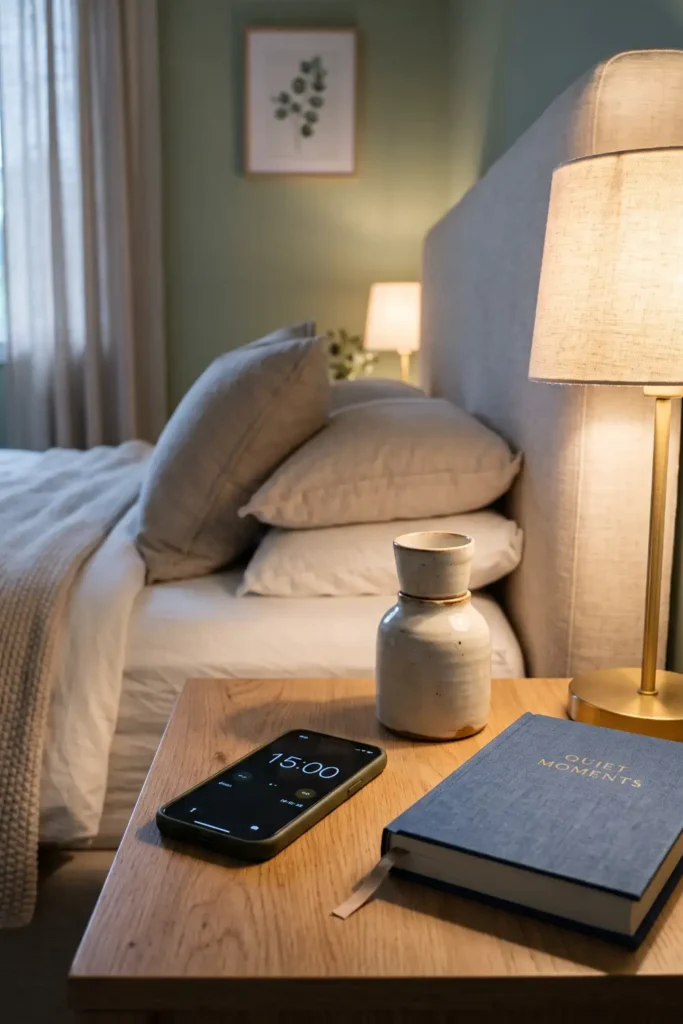
Preventing visual noise from returning requires a short routine before you go to bed. Set a timer on your phone for 5 minutes every evening at 9:00 PM. Walk through the main room and place stray cups, mail, or shoes back into their assigned closed baskets or kitchen sinks. Once the timer rings, stop cleaning immediately. Performing this short reset daily stops small piles from turning into overwhelming weekend chores.
2. Sort Baskets: Group loose items into 2 closed bins (max 3 items on tables).
3. Shift Furniture: Pull couches 3 inches off walls (ensure 30-inch walkways).
4. Lower Art: Rehang wall frames at 48 to 52 inches from the floor.
5. Warm Lighting: Turn off overhead lights and use 2 corner floor lamps.
6. Nightly Reset: Set a 5-minute timer at 9:00 PM to return stray items.
Conclusion
You now have a clear, actionable system for how to make a small space feel peaceful without spending a fortune on new furniture. Clearing your main table, widening walkways, and switching to soft corner lighting instantly calms visual noise. Pick one crowded surface to clear right now, and build your momentum from there.
Save this guide to your small space decor boards on Pinterest so you can reference these steps whenever your living room needs a quick reset!