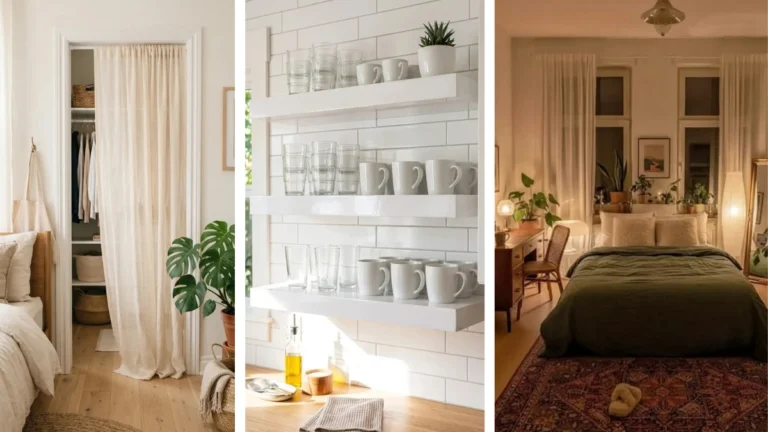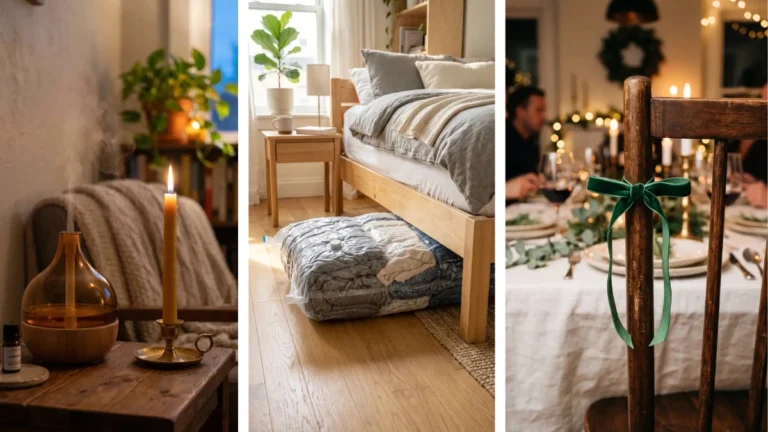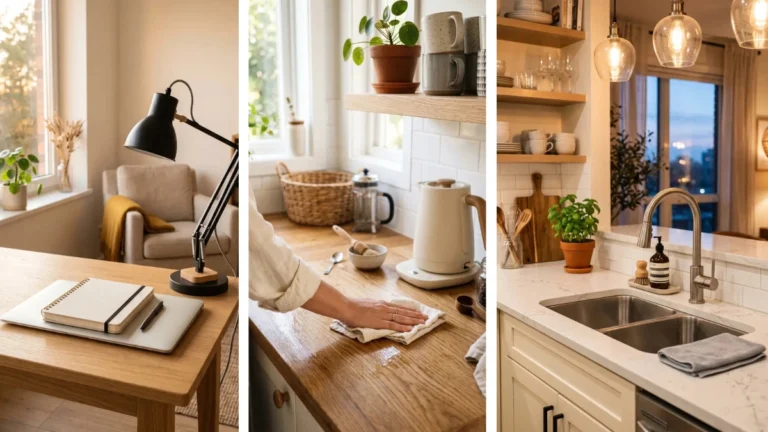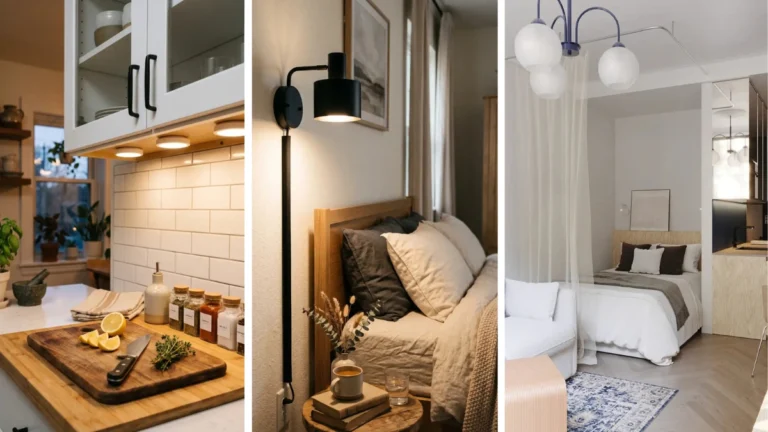
You tidy up your coffee table, fold the throw blanket, and align the sofa cushions, yet an hour later the room looks chaotic again. Understanding why your small space always feels messy comes down to how clutter accumulates on flat surfaces and floor paths. Small rooms do not have the visual margin for error that large houses enjoy.
When three or four items rest out of place in a tight room, your brain registers the entire floor plan as messy.
Fixing this loop does not require discarding all your belongings or installing expensive built-in closets. You can break the cycle by setting up targeted drop zones, clearing floor boundaries, and building a quick daily routine.
The practical work takes about 45 minutes, using items you already own around your home. Walk into your main room, grab a notebook, and let us turn your tight layout into a clean, functional space that stays organized.
2. Clear the Floor Bounds to Unblock Walking Paths
3. Assign One Closed Landing Bin for Daily Essentials
4. Mount Wall Hooks to Elevate Loose Floor Items
5. Group Small Tabletop Items onto Shallow Trays
6. Establish a Two-Minute Reset Before Leaving the Room
1. Audit Every Surface to Identify Your Clutter Hotspots
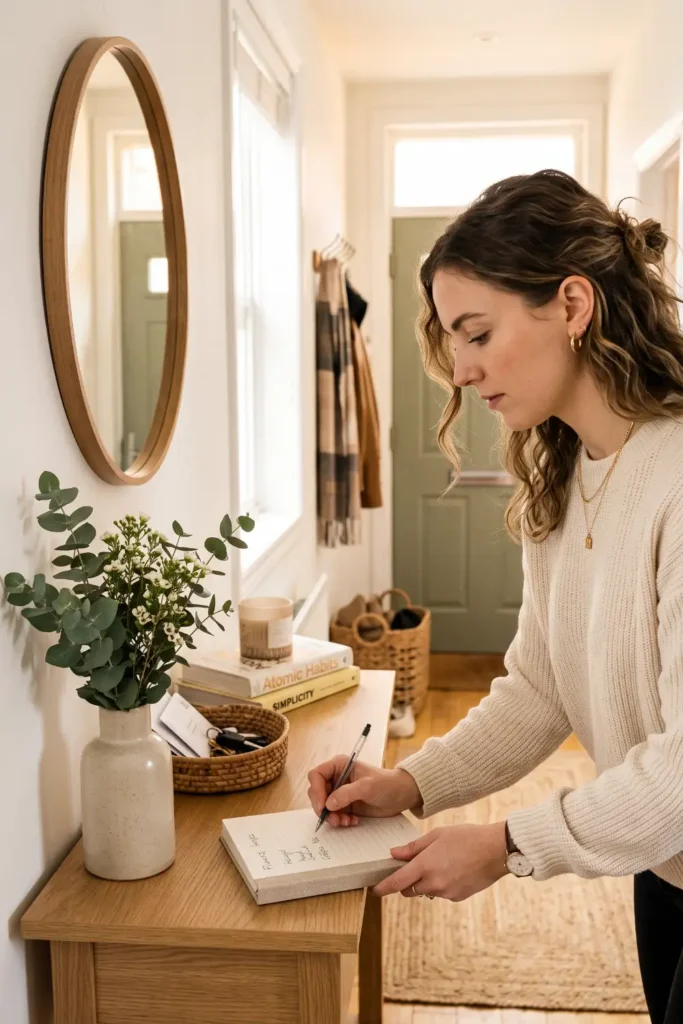
Stand in your main doorway for 30 seconds with a pad of paper. Count every flat surface—tables, desks, counters, windowsill ledges—holding more than 3 loose items. Note the specific spots where mail, keys, and laundry pile up first. Identifying these exact drop zones highlights where your current storage setup is failing so you can fix those target areas first.
2. Clear the Floor Bounds to Unblock Walking Paths
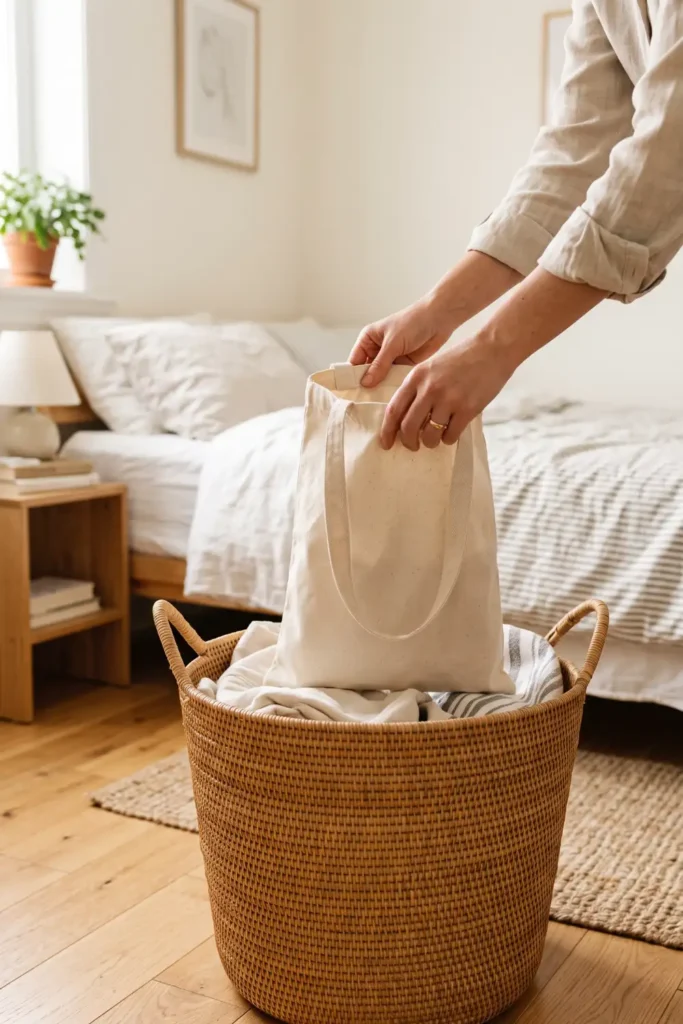
Remove every shoe, tote bag, and stray box resting on the floorboards within 2 feet of your main furniture pathways. Place those items into a temporary laundry hamper on your bed. Seeing open floorboards extending across the room immediately tricks your eyes into perceiving more space.
⚠️ Heads Up
Avoid storing overflow boxes directly on the floor along baseboards. Ground clutter disrupts visual sightlines faster than table mess.
3. Assign One Closed Landing Bin for Daily Essentials
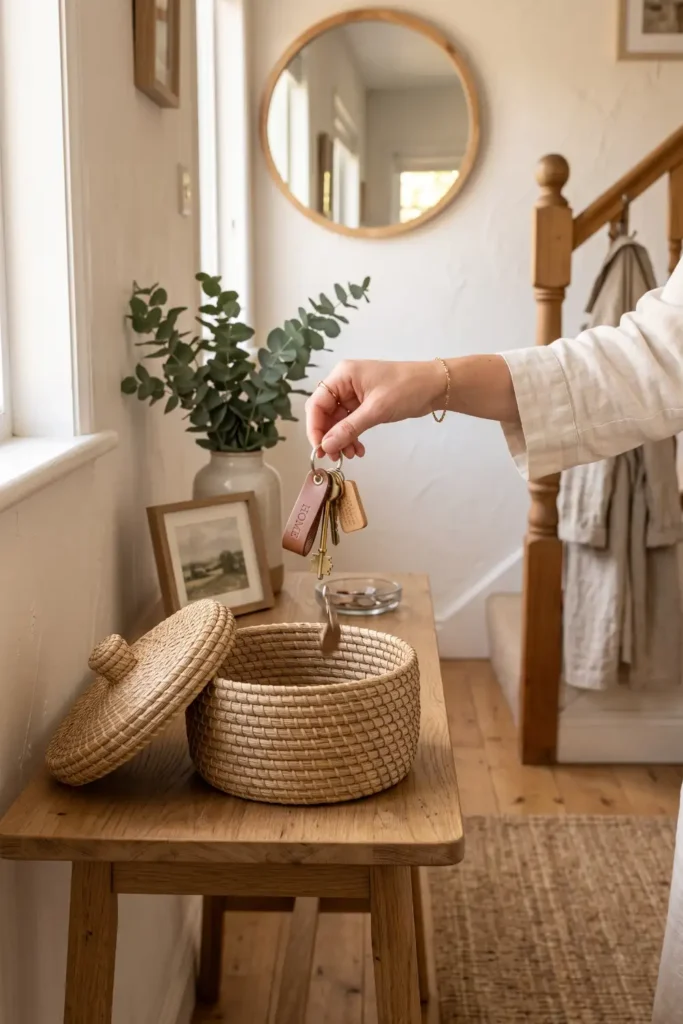
Position a single lidded bin or solid woven basket within 3 feet of your front entrance or main work desk. Drop loose keys, wallet, pocket mail, and chargers inside this container the moment you step into the room. Keeping daily items inside an opaque container conceals random shapes while keeping essentials easy to find when leaving tomorrow morning.
💡 Pro Tip
Pick a container with a fitted lid or fabric cover. Open baskets still expose visual clutter to your eyes as you walk past.
4. Mount Wall Hooks to Lift Loose Floor Items
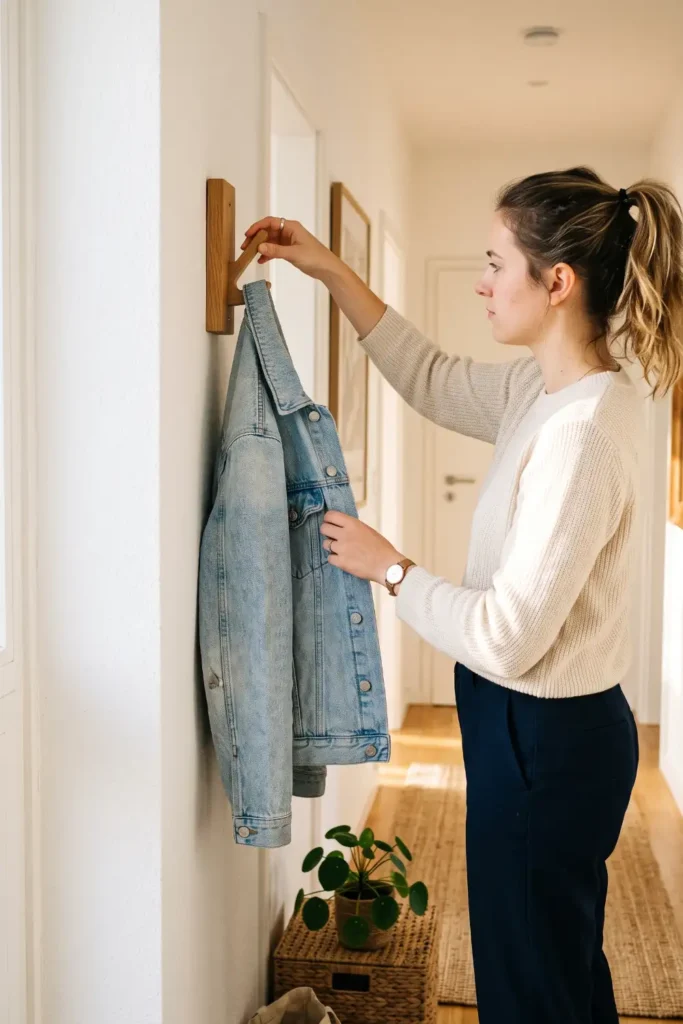
Attach 2 sturdy wall hooks to the entryway or bedroom wall at 5 feet above the floorboards. (If you are renting, use heavy-duty adhesive hooks rated for at least 5 pounds). Hang your daily jacket, handbag, and work tote on these hooks instead of draping them over sofa arms or dining chairs. Lifting soft goods off your furniture instantly restores clean sightlines across your main seating area.
5. Group Small Tabletop Items onto Shallow Trays
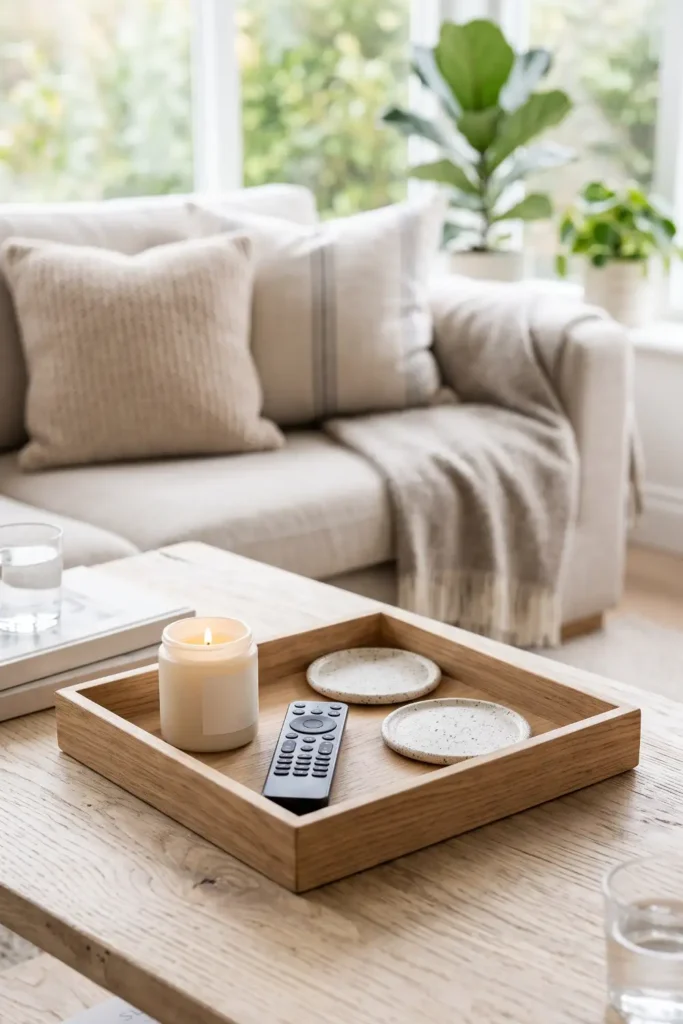
Loose objects scattered individually across a table create multiple stopping points for your eyes. Position 1 shallow wooden tray on the center of your coffee table or desk. Gather your hand cream, TV remotes, and a small candle together inside the tray borders. Collecting 3 or 4 small items into one bordered container registers as a single visual object rather than fragmented clutter.
6. Establish a Two-Minute Reset Before Leaving the Room
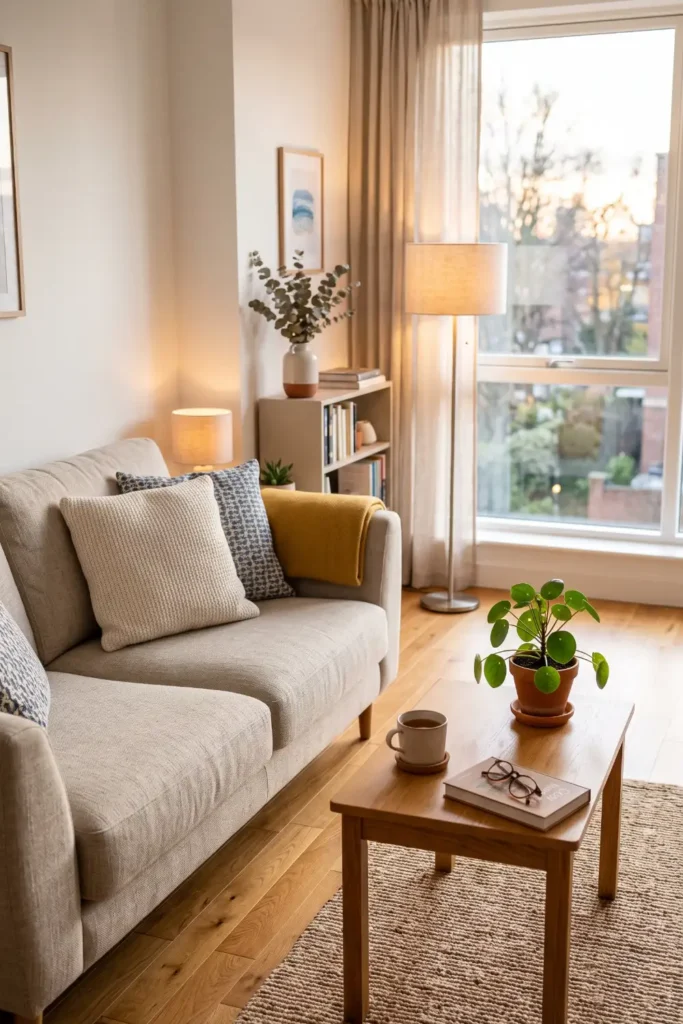
Set a quick habit every time you transition to a new activity or leave the area. Before standing up from your desk or couch, spend exactly 120 seconds returning dirty mugs to the kitchen sink and tossing loose papers into your closed landing bin. Stopping small messes right away prevents daily clutter from building back up into an overwhelming weekend chore.
2. Unblock Floors: Clear all shoes and bags within 2 feet of walkways.
3. Closed Landing Bin: Place 1 opaque lidded bin near the entry for daily gear.
4. Elevate on Hooks: Mount 2 wall hooks at 5 feet for coats and totes.
5. Group on Trays: Corral small tabletop items inside 1 shallow tray.
6. Two-Minute Reset: Spend 120 seconds tidying before leaving any room.
Conclusion
You now know exactly why your small space always feels messy and how to break the cycle for good. By clearing your floor bounds, using closed bins for daily drop items, and building a quick two-minute habit, your room will stay tidy without constant effort. Start by auditing your main surface hotspots today to see where clutter gathers first.
Save this guide to your small space organization boards on Pinterest so you have this quick action plan handy whenever your flat needs a fast refresh!