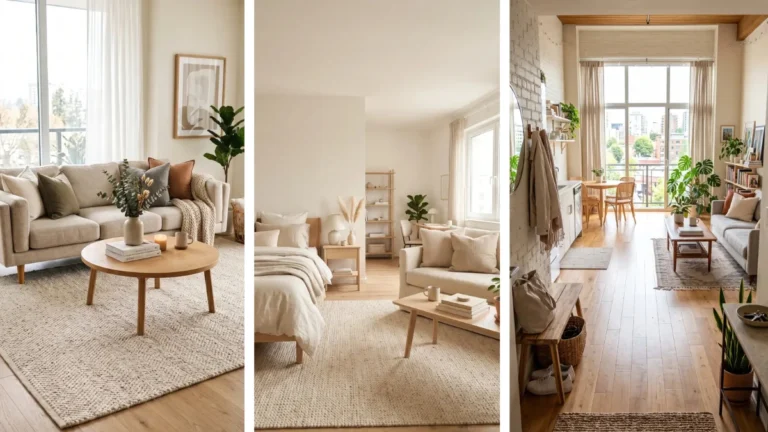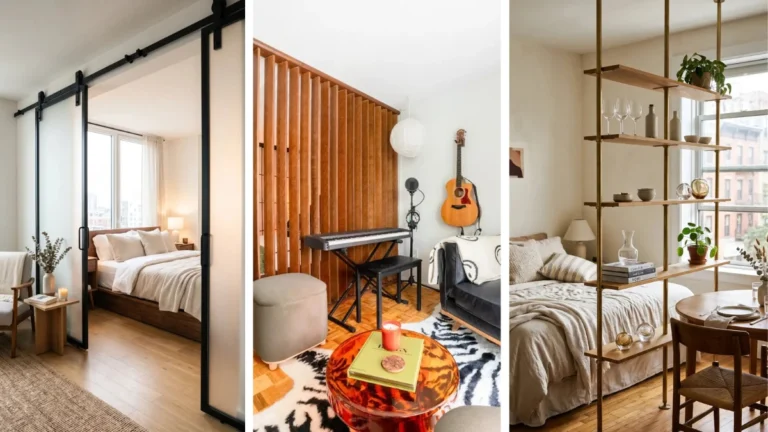
Living in one open studio room means your bed, desk, and kitchen are constantly on display. When guests visit or your roommate stays up late, you have nowhere to retreat. Building drywall dividers is out of the question if you rent.
Learning how to create privacy in a studio apartment lets you separate your bed area from your living room without risking your security deposit. We use lightweight ceiling tracks, open shelving units, and tall greenery to block direct sightlines while keeping daylight moving across the whole layout.
Setting up a full privacy layout takes about 2 hours of simple measuring and hardware mounting. Gather your tape measure and let us build a cozy, divided layout that feels like a real multi-room home.
2. Install ceiling-mounted curtain tracks or tension rods
3. Position open-backed bookshelves as room dividers
4. Hang light-filtering privacy curtains
5. Set up folding room screens around sightlines
6. Arrange tall indoor plants to create natural visual barriers
Map your functional zones on floor grid paper
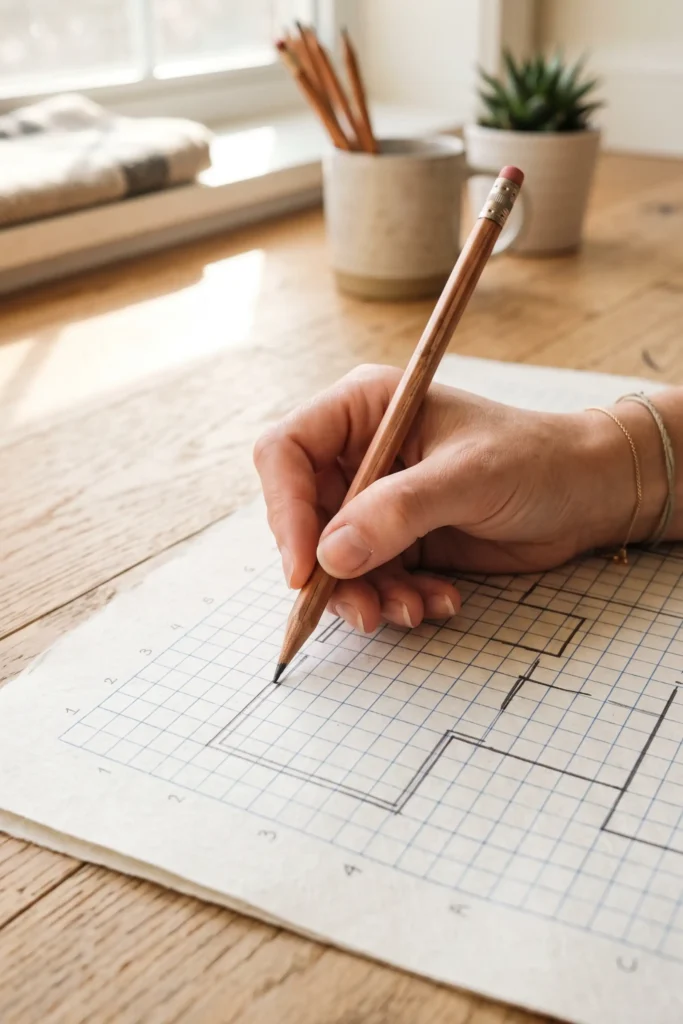
Sketch your studio floor plan on grid paper, marking doors, windows, and electrical outlets first. Measure the perimeter around your sleeping area, leaving at least 36 inches of walkway room between the bed edge and your main living path. Draw dedicated boxes for sleep, work, and lounging so you know exactly where visual barriers must start and stop before buying hardware.
Install ceiling-mounted curtain tracks or tension rods
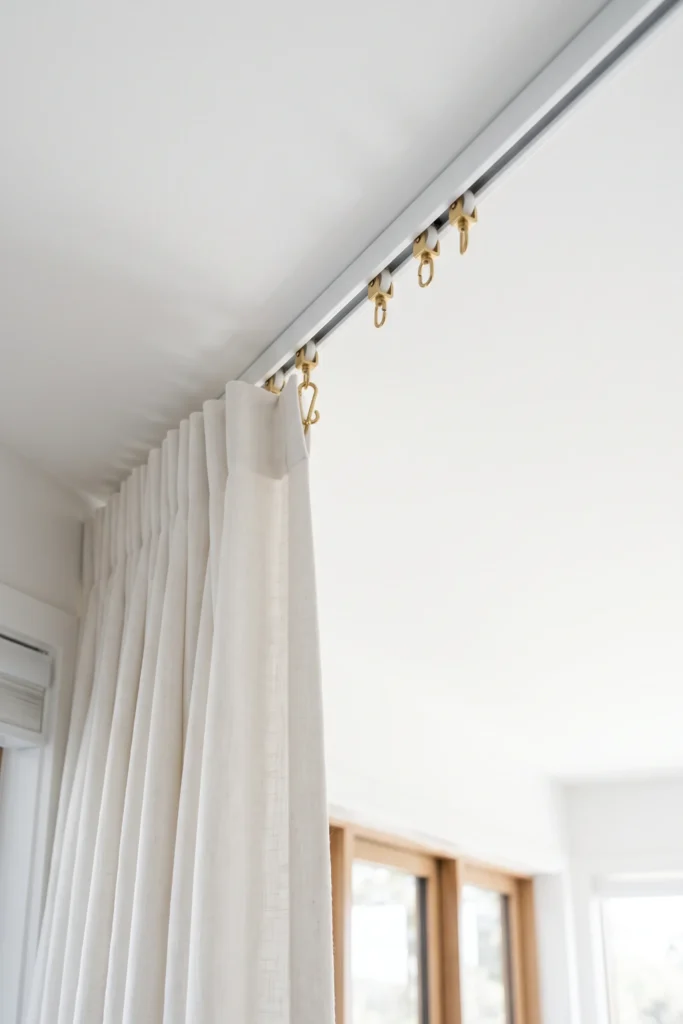
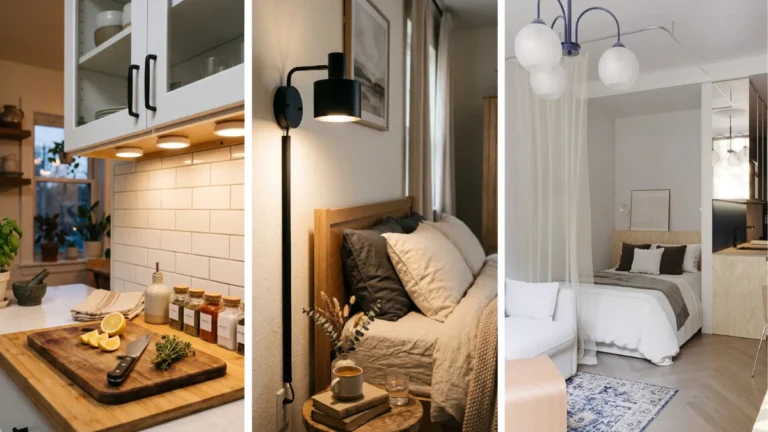
Mount a flexible aluminum track directly to ceiling studs using drywall anchors spaced 16 inches apart. (If your landlord forbids ceiling holes, wedge a heavy-duty tension rod between two solid wall studs instead). Double-check that your track run leaves 2 inches of clearance from light fixtures so hanging curtains do not touch warm bulb housings.
⚠️ Heads Up: Ceiling Anchor Weight Limits
Never screw curtain tracks into plain drywall without plastic toggle anchors. A heavy linen drapes panel will pull bare screws straight out of plaster, damaging the ceiling surface.
Position open-backed bookshelves as room dividers
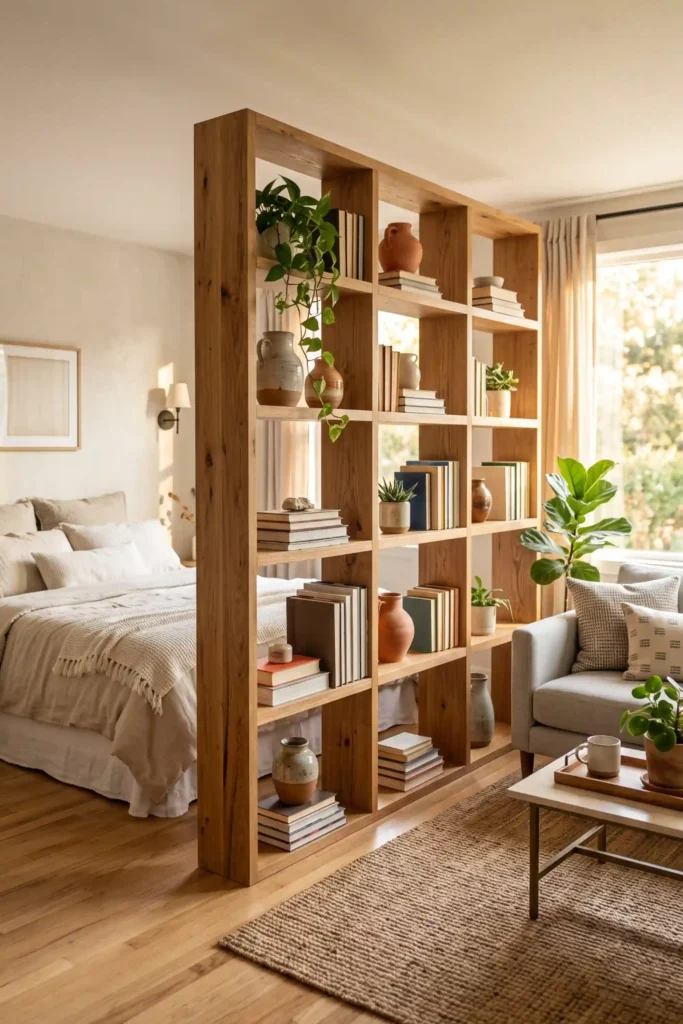
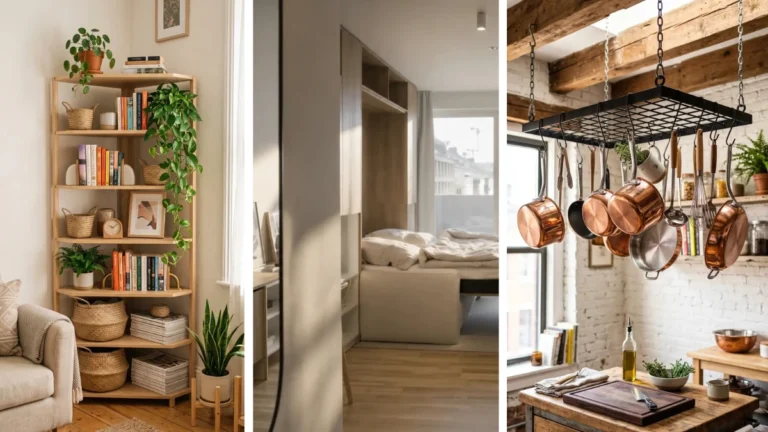
Slide a tall, open-grid bookshelf perpendicular to your long wall, placing it right at the foot of your bed. The open cubbies block views of your mattress while letting light pass from the window into your living area. Anchor the top frame to wall studs using L-brackets to prevent tipping when loading books or ceramic decor.
💡 Pro Tip: Weight Balance
Place heavy hardcover books on the lowest two shelves of an open bookcase divider. Lowering the center of gravity keeps freestanding shelf units stable on carpeted studio floors.
Hang light-filtering privacy curtains
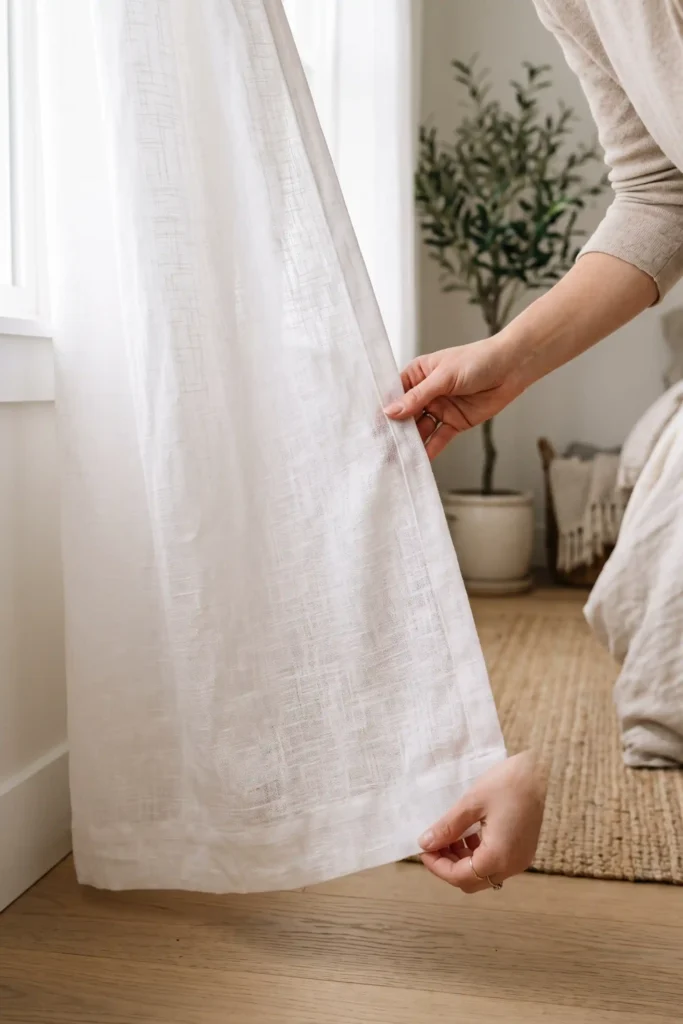
Standard 84-inch drape panels work best for normal 8-foot ceiling heights. Attach curtain hooks into your track gliders every 4 inches so the fabric hangs evenly without sagging in the middle. Leave 0.5 inches of clearance between the bottom hem and your floor so the drapes slide smoothly without collecting dust or cat hair.
Set up folding room screens a
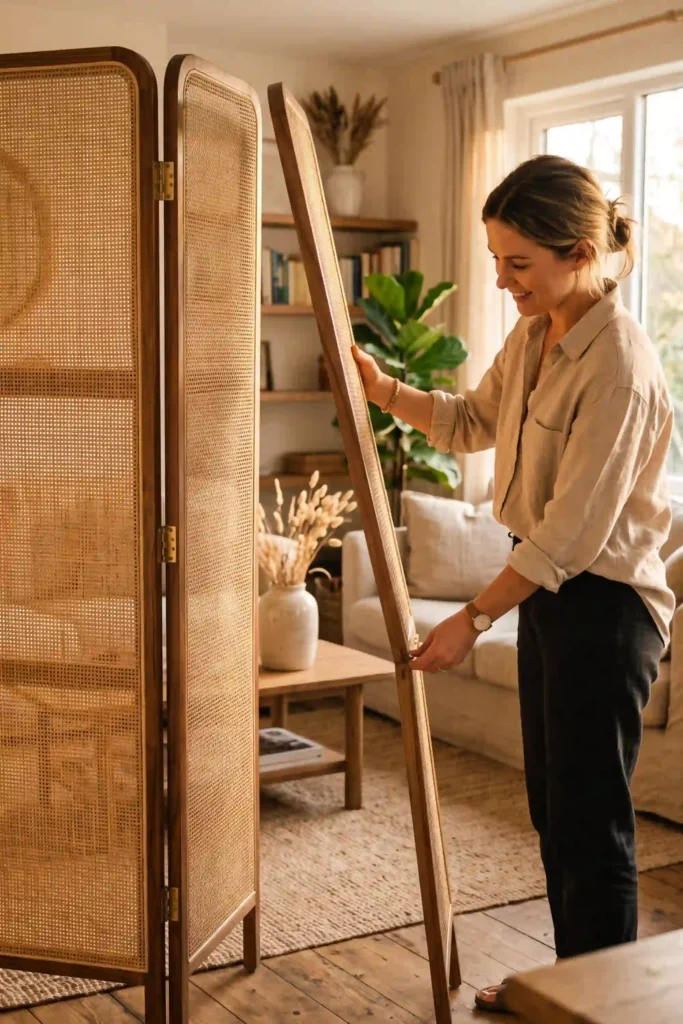
Three-panel woven or wooden folding screens give you instant privacy right where ceiling tracks cannot reach. Angle each hinged panel at a 45-degree bend to keep the frame balanced on your floor. Position the screen near your main entryway path to block the direct line of sight from your front door straight to your mattress.
Arrange tall indoor plants to create natural visual barriers
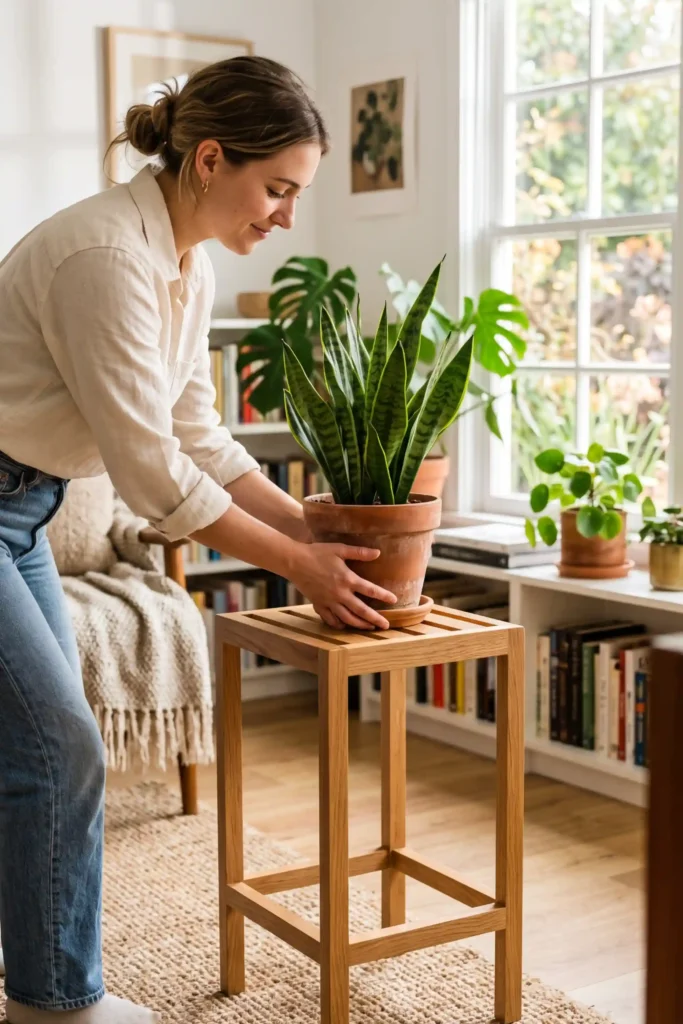
Grouping three potted plants of varying heights fills visual gaps between furniture edges and hanging drapes. Place a tall snake plant or fiddle leaf fig reaching at least 4 feet high next to your open bookshelf divider. Set medium-sized planters onto 24-inch raised wooden stands to bring foliage up to eye level, creating a soft green screen that filters light without looking heavy.
2. Mount ceiling track with anchors spaced 16 inches apart.
3. Position open-backed bookshelf at the foot of your bed.
4. Hang linen curtain panels 0.5 inches off the floor.
5. Set up folding screens angled at 45-degree bends.
6. Group tall plants on 24-inch stands for green barriers.
Wrapping Up Your Privacy Layout
You now have a clear plan for turning your open floor layout into a cozy, divided home. Taking time to divide your room into visual zones keeps your personal sleeping space hidden while keeping your living area bright and welcoming. Knowing how to create privacy in a studio apartment gives you a peaceful retreat without building real walls or risking your security deposit.
Grab your tape measure and pick up your track hardware or open bookshelf this weekend to start setting up your layout. Save this pin to your small space decor board so you can double-check measurements when you shop!