

17 Decluttering Ideas That Make Your Home Feel Instantly Peaceful
1. Start With the Surface Reset
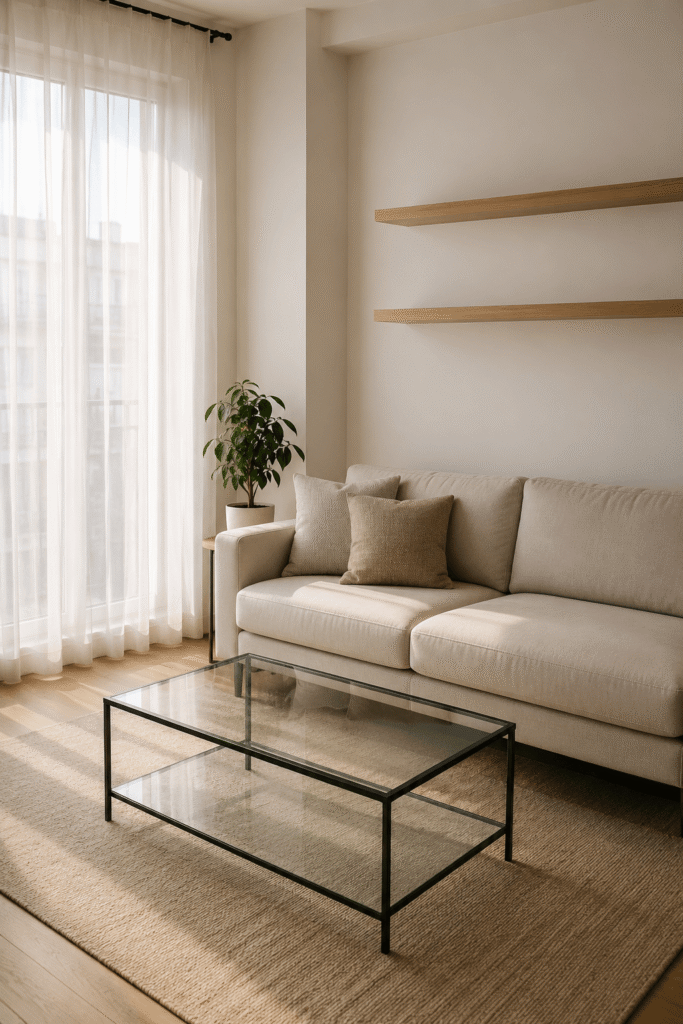
Before anything else — before systems, before donations, before any organizing — clear every surface in one room.
Everything comes off. The counter, the shelf, the coffee table, the nightstand. Everything.
Now look at the room.
That breath you just took? That’s what your nervous system has been waiting for.
Put back only what genuinely belongs there. What you use daily. What you actually love. Everything else finds a real home — or it goes.
This single step resets the entire energy of a room in under twenty minutes.
2. The “Doesn’t Belong Here” Basket
Every home has items that migrate.
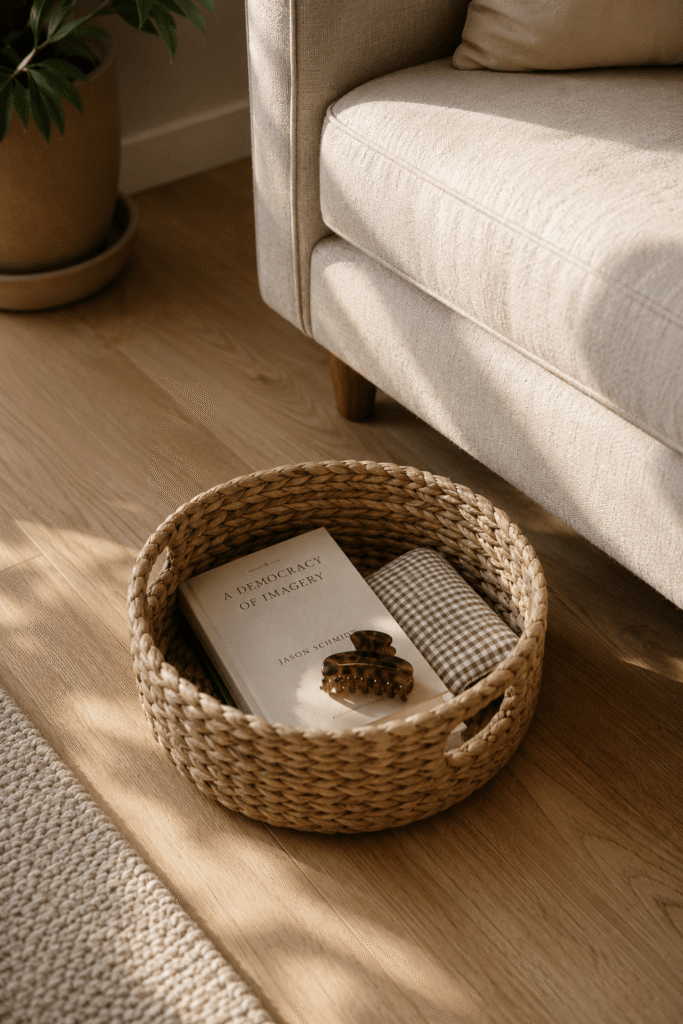
The hair clip on the kitchen counter. The book on the bathroom shelf. The charger on the dining table.
One basket — placed somewhere central — collects every item that’s in the wrong room. Once a day, the basket gets emptied: each item returned to where it actually lives.
No more decision fatigue mid-tidy. No more carrying one thing at a time across the apartment. Just one beautiful basket doing all the heavy lifting.
Choose something that looks like decor. A round woven basket, a linen bin, a cotton rope bowl. The basket lives in plain sight — so it needs to earn its place aesthetically.
3. Declutter by Category, Not by Room
Most people declutter room by room. And it never fully works.
Why? Because your stuff doesn’t live in one room. Your books are in the bedroom, the living room, and the bathroom. Your candles are scattered across three surfaces. Your bags live in four places.
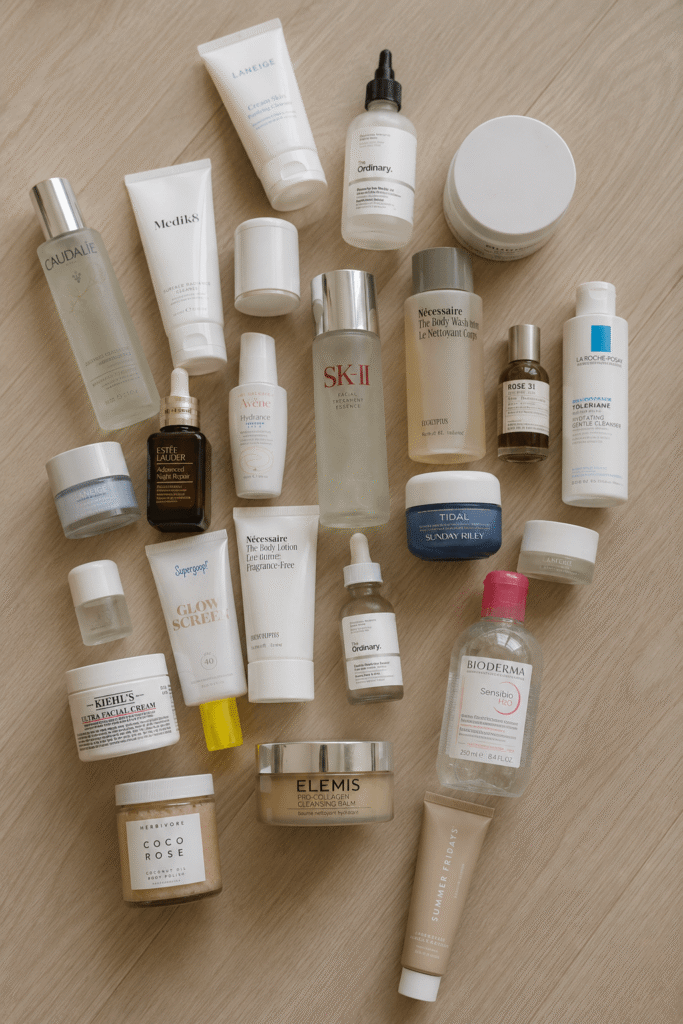
Decluttering by category collects everything of one type from the entire home before you decide what stays.
All books together. All candles together. All bags together. All skincare together.
When you see the full quantity of one category at once, the decision becomes effortless. You can’t unknow that you own eleven candles when they’re all lined up in front of you.
Start with one category this weekend. Just one. Also Read: Small Space Organization Ideas
4. The One-Tray Rule for Every Surface
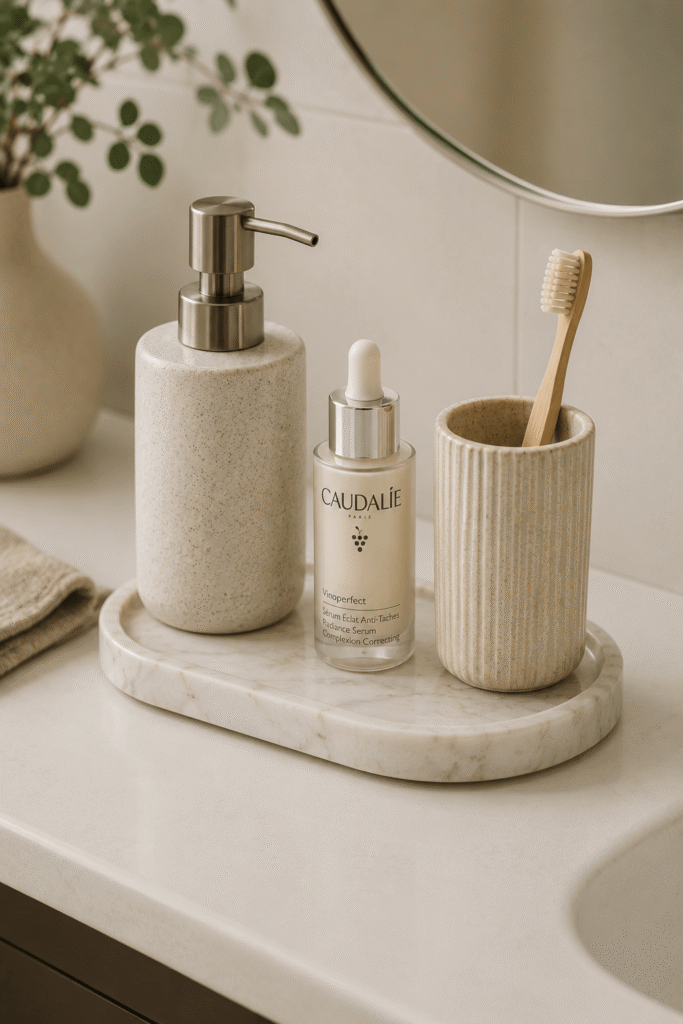
Every surface in your home gets one tray. That tray defines the boundary.
What fits on the tray, beautifully, can stay. What doesn’t fit — doesn’t belong on that surface.
Kitchen counter: a wooden tray with olive oil, salt, and a small plant. Nightstand: a marble tray with a candle, lip balm, and a book. Bathroom counter: a ceramic tray with soap, moisturizer, and a toothbrush holder.
The tray does two things simultaneously: it contains the items so they look curated instead of scattered, and it creates a physical boundary that prevents creep.
Surfaces stay calm because the tray says: this is all that lives here.
5. Empty the Junk Drawer (For Real This Time)
Every home has one. The drawer where intention goes to die.
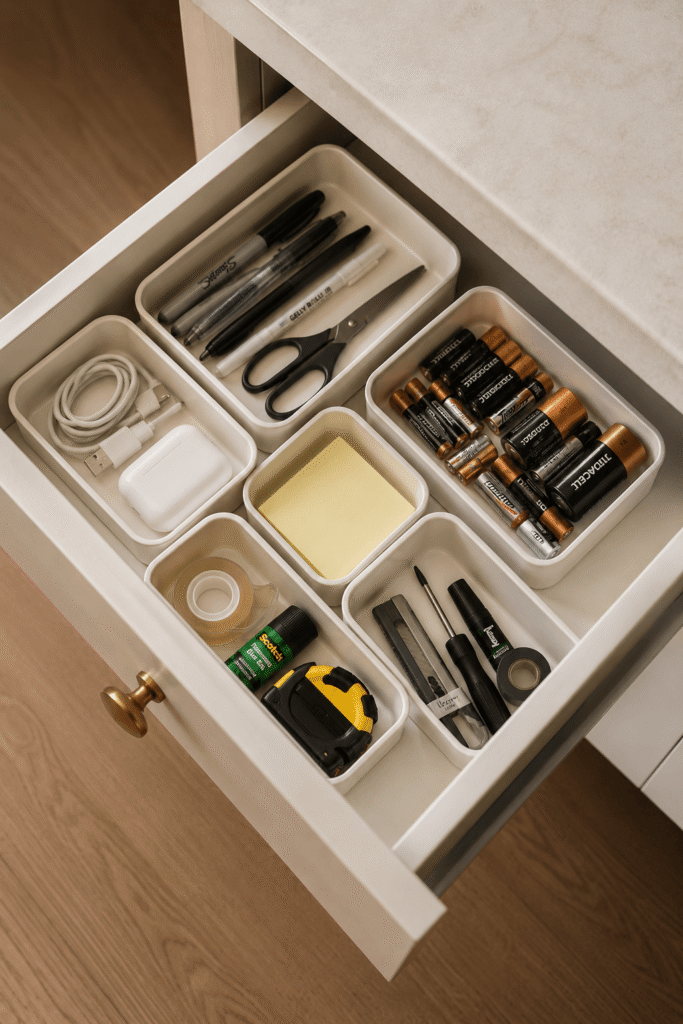
Pull it completely out. Dump it on the counter. Sort into three piles: keep and use regularly, find a real home for, toss immediately.
The result will surprise you. Most junk drawers contain things that either belong somewhere specific or belong in the trash. Very little actually belongs in a drawer with no category.
What remains gets organized into small bins or a divided drawer insert. Batteries together. Pens together. Tape and scissors together.
The junk drawer becomes a utility drawer. Intentional. Useful. Something you can open without a small surge of anxiety.
6. The 12-Item Closet Declutter Method
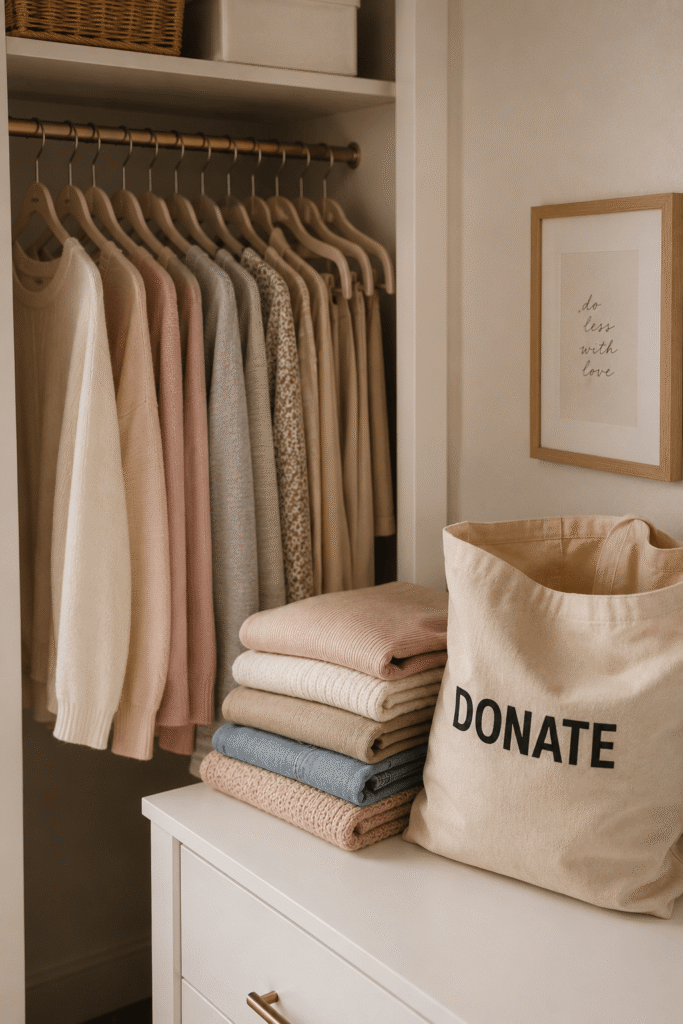
Open your closet. Pull out twelve items you haven’t worn in the last three months.
Not twelve bags of donations. Not a full weekend overhaul.
Twelve items.
That’s the whole method.
It’s small enough to feel doable without resistance. But done consistently — twelve items every season — it adds up to a closet that contains only what you actually wear, actually love, and actually reach for.
The clothes you keep start to feel intentional. Getting dressed feels easier. The closet breathes.
Bag those twelve items immediately. Don’t let them re-enter the bedroom. Donate within 48 hours before second-guessing begins. More Inspiration: Bedroom Organization Ideas
7. Clean Out What Expired (In Every Room)
This one is underrated — and immediately satisfying.
Go room by room with one goal: remove everything expired, empty, or finished.
Kitchen: expired pantry items, empty spice jars, oils past their prime. Bathroom: skincare and makeup past expiry, shampoos down to nothing, old prescriptions. Bedroom: old candles burned to the wick, dried-out pens, dead plants. Living room: old magazines, melted candles, dead batteries in remotes.
No emotional decisions. No “does this spark joy” deliberation.
If it’s expired, empty, or done — it leaves.
The space created by removing only the finished items is immediate and significant.
8. The 20-Minute Declutter Sprint
Set a timer. Twenty minutes. One room.
No overthinking. No organizing. Just decluttering.
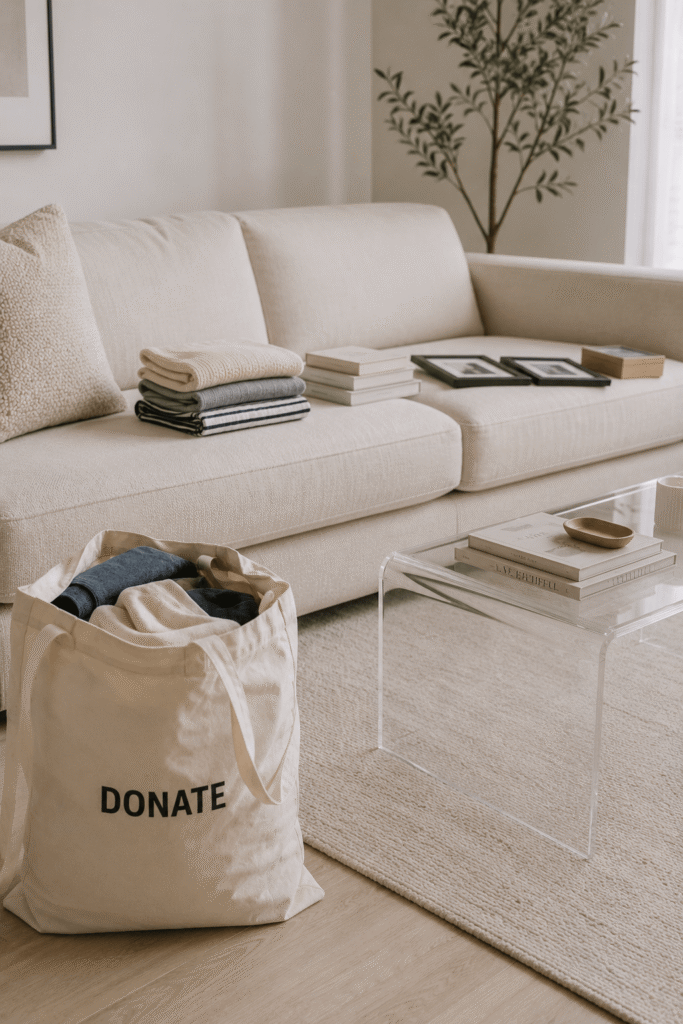
Grab a bag and move fast — too fast for the second-guessing voice to keep up. If you haven’t used it in months, it goes in the bag. If you don’t know what it is, it goes in the bag. If it’s broken and you’ve been meaning to fix it for two years, it goes in the bag.
When the timer goes off, the bag goes directly to your car for donation. Not to a holding spot. Not back in the closet. The car.
Speed removes the emotional weight from the process. You’re not making permanent life decisions. You’re just moving quickly through a room with a bag.
Twenty minutes. One room. Lighter immediately.
9. Decant Everything Into Matching Containers
Mismatched packaging is quiet visual chaos.
Different fonts, clashing colors, irregular shapes — even when everything is organized, mismatched containers make a shelf feel cluttered.
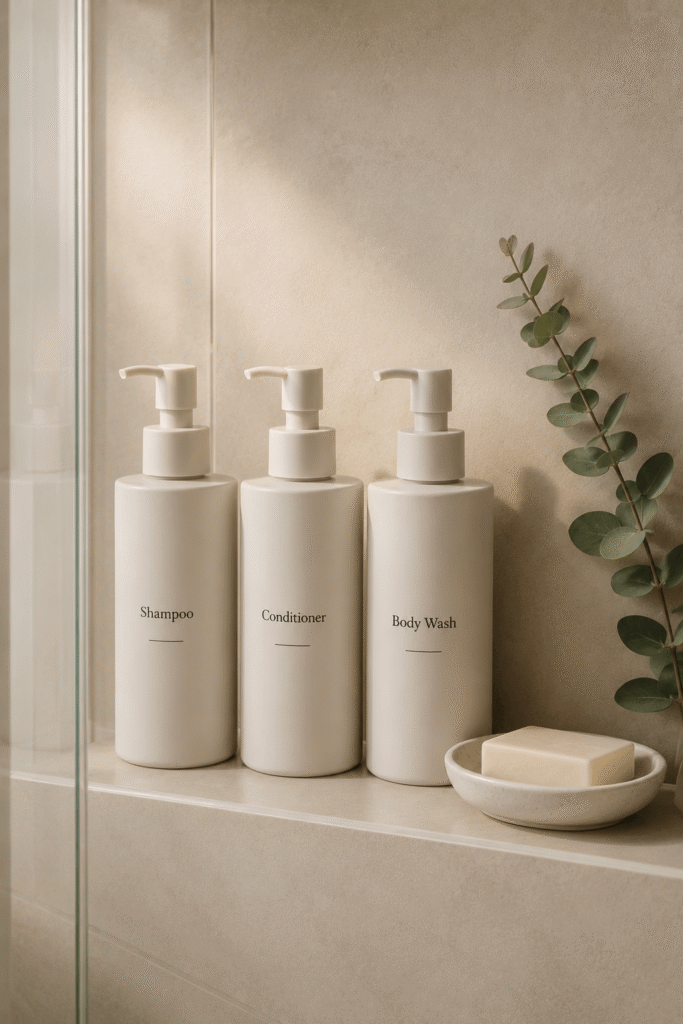
Decanting into matching vessels solves this instantly.
Bathroom: matching pump dispensers for shampoo, conditioner, and body wash. Skincare: uniform glass or ceramic jars. Kitchen: matching airtight containers for pantry staples. Desk: matching pen cups and supply holders.
The items don’t change. The quantity doesn’t change.
But the shelf suddenly looks like a clean girl’s dream — calm, cohesive, considered.
This is the aesthetic shift that makes organization feel like luxury. Keep Reading: Living Room Organization Ideas
10. Let the Counter Be Empty
This is the hardest one. And the most transformative.
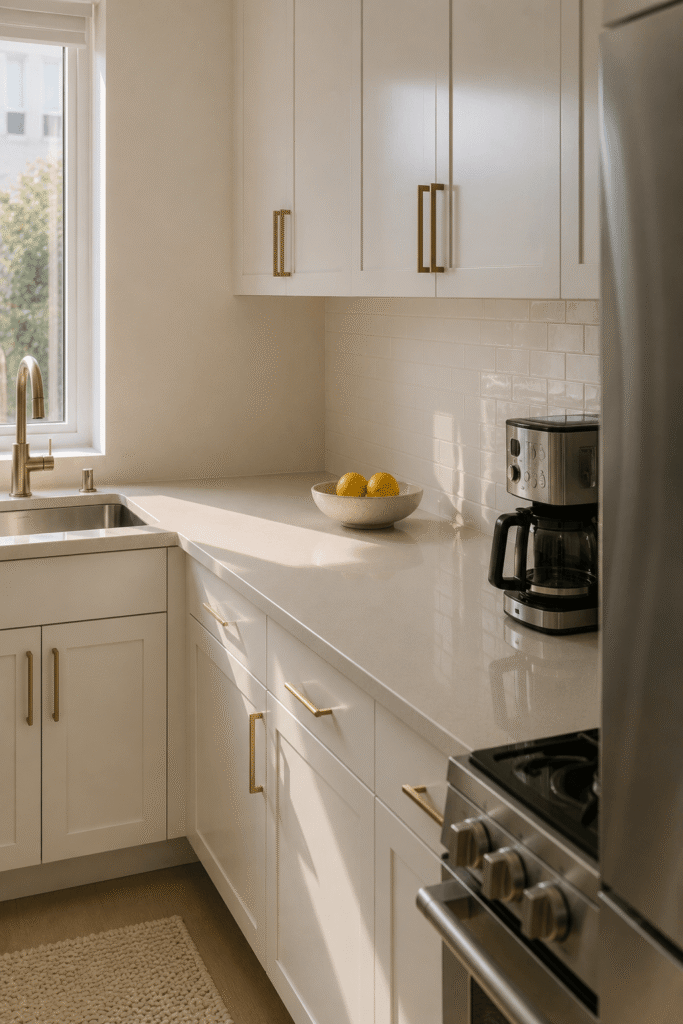
The kitchen counter holds nothing except what gets used every single day. The coffee maker if you use it daily. A fruit bowl if it’s always full. That’s the list.
Everything else — the blender, the toaster, the air fryer, the knife block — lives in a cabinet. Appliances go in. Appliances come out when needed.
The counter becomes wide, clear, and calm. The kitchen feels bigger. Cooking feels less stressful. Cleaning becomes effortless because there’s nothing to clean around.
Most people’s kitchen counters are appliance graveyards. Free yours.
That clear expanse of counter is one of the most satisfying things a small apartment can offer.
11. The “Love It or Leave It” Wardrobe Edit
Not the full capsule wardrobe overhaul. Just one honest question, asked of every item you own:
Do I love this — or am I just keeping it?
Not “it was expensive.” Not “I might need it someday.” Not “it still fits technically.”
Do I actually love it?
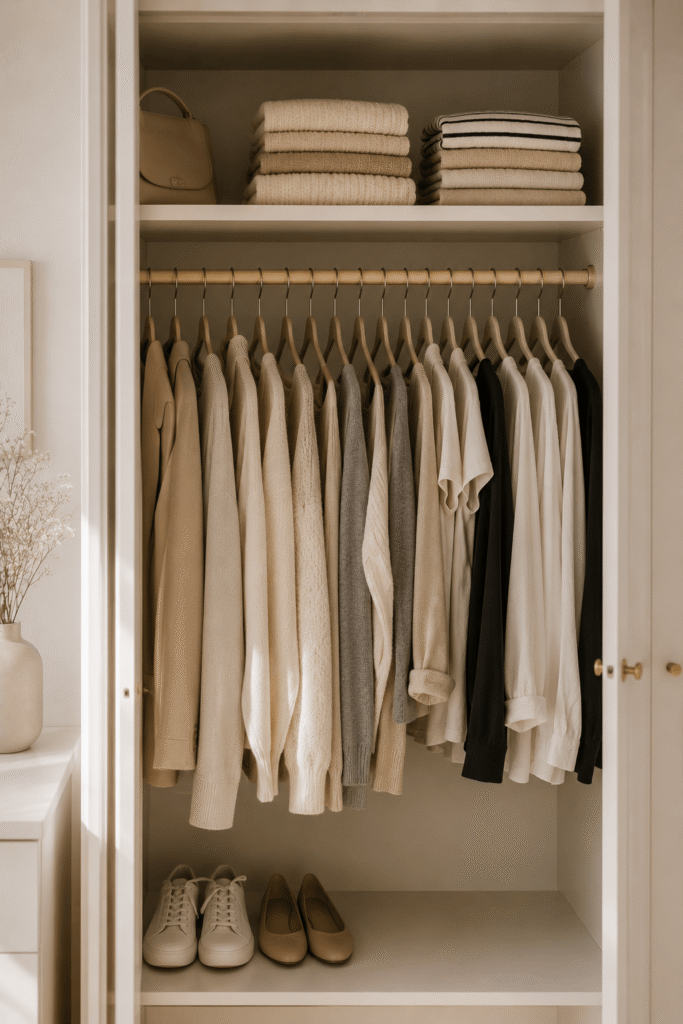
The items that don’t earn a genuine yes belong to someone else now. Someone who will actually wear them. Actually love them. Actually reach for them.
What remains is a wardrobe of things you’re happy to see every morning. Getting dressed shifts from a chore to a quiet pleasure.
A small, loved wardrobe always outperforms a large, tolerated one.
12. Create One Beautiful Empty Space
Most people fill every surface, every shelf, every corner.
Try the opposite.
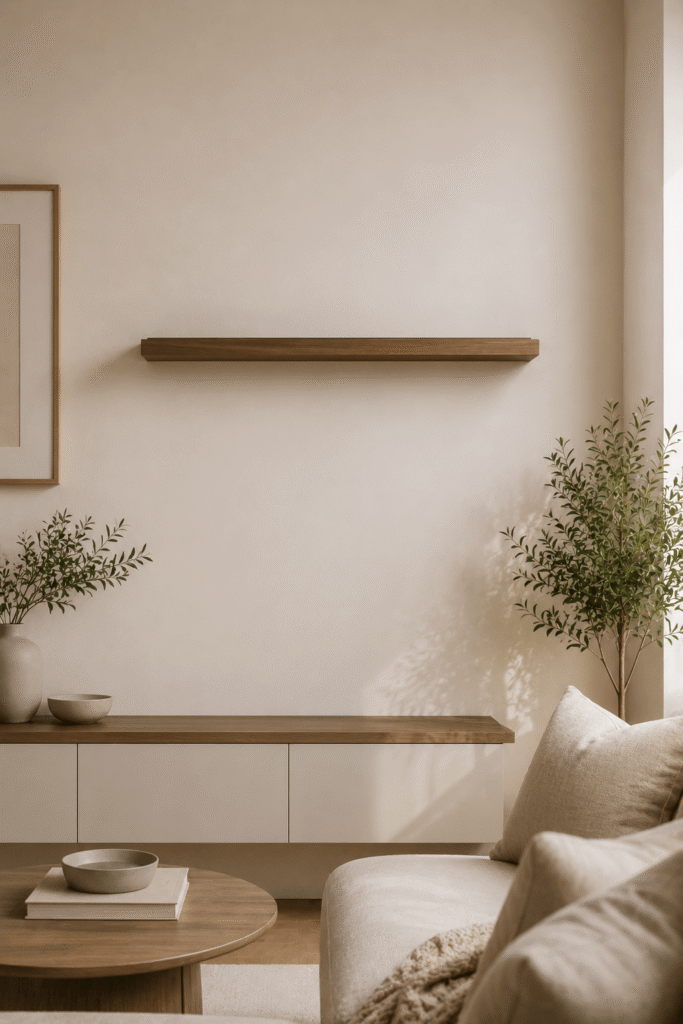
Choose one surface — a shelf, a console table, a corner of the counter — and leave it intentionally empty. No decor. No storage. No “just one little thing.”
Just space.
Empty space in a home does something remarkable to the eye and the nervous system. It creates visual rest. It makes everything around it feel more intentional. It signals that this home belongs to someone who doesn’t need to fill every surface.
That empty shelf becomes the most elegant thing in the room. You May Also Like: Home Organization Products
13. Declutter the Digital Surface (Your Charging Station)
Charging cables are the clutter nobody talks about.
A tangle of cords on the nightstand. A pile of cables on the kitchen counter. Chargers plugged into every available outlet with nothing attached.
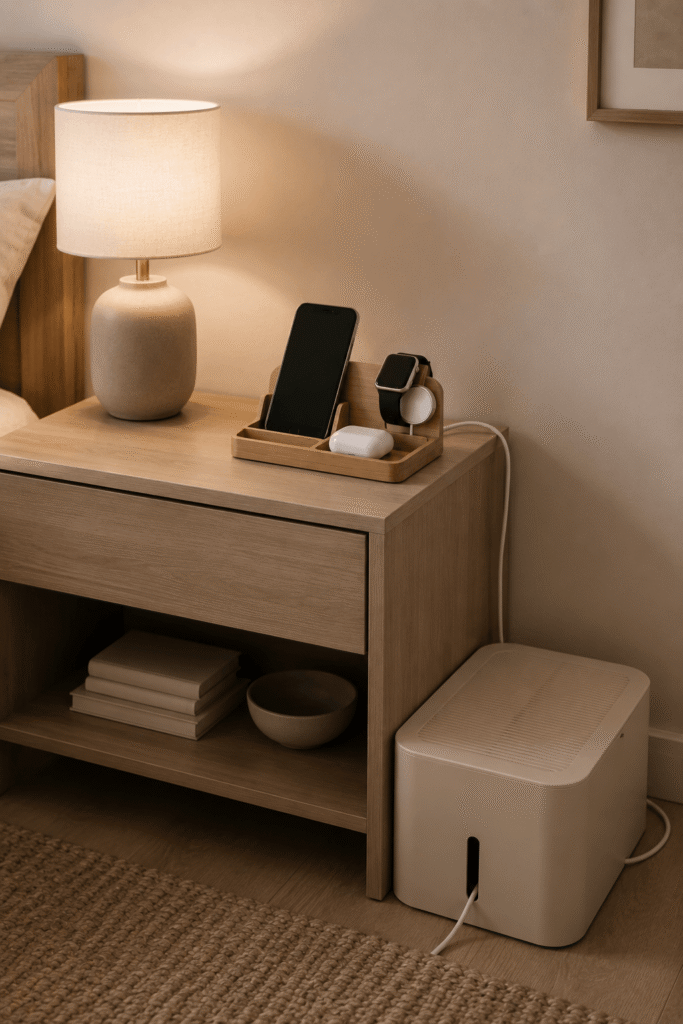
One small charging station — a single organized hub — consolidates everything. Cables stay contained. Devices charge in one designated spot. The rest of the surface is free.
Add a cable management box to hide the power strip completely. Run cables through the back. One clean cord comes out.
The nightstand breathes. The counter clears. The room stops looking like a tech store floor display.
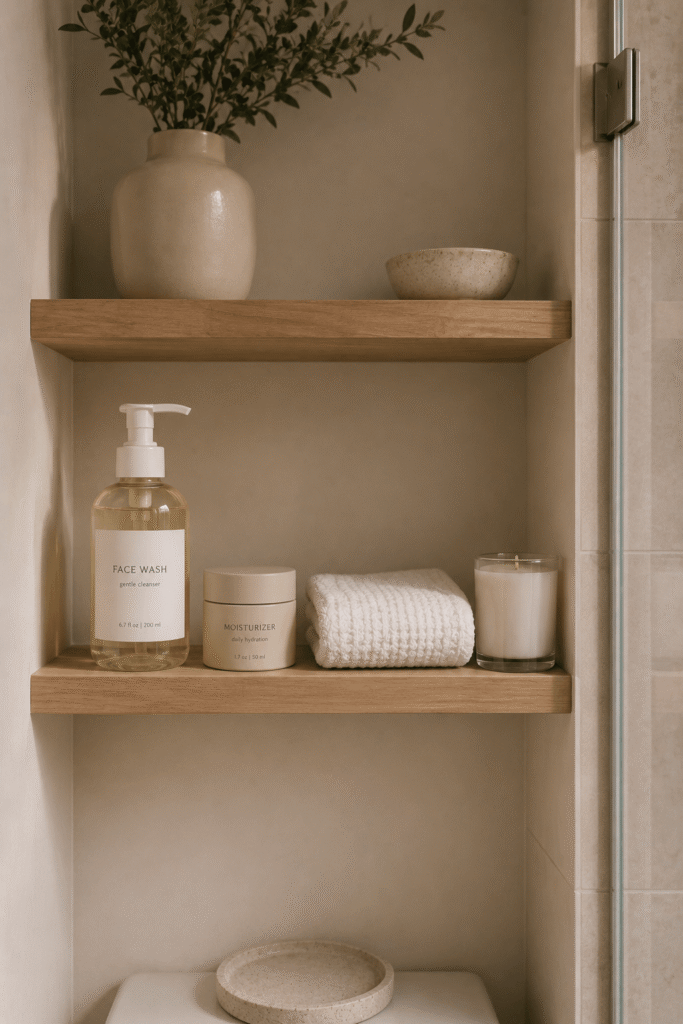
14. The Bathroom Shelf Reset
Pull everything off the bathroom shelf or cabinet.
Everything.
Now edit ruthlessly: what do you actually reach for in this room, in this week? Not theoretically. Actually.
The half-used face mask from eight months ago — gone. The duplicate moisturizer you bought because you forgot you had one — consolidate. The three nearly-empty dry shampoos — finish one, toss the rest.
What remains gets grouped by use. Daily items in front. Weekly items behind. Products you’re keeping but rarely using go under the sink.
The shelf holds less. Looks more beautiful. Functions more efficiently.
Calm mornings start with calm shelves.
15. Donate the Duplicates
Open any drawer, cabinet, or closet and look for one thing:
Duplicates.
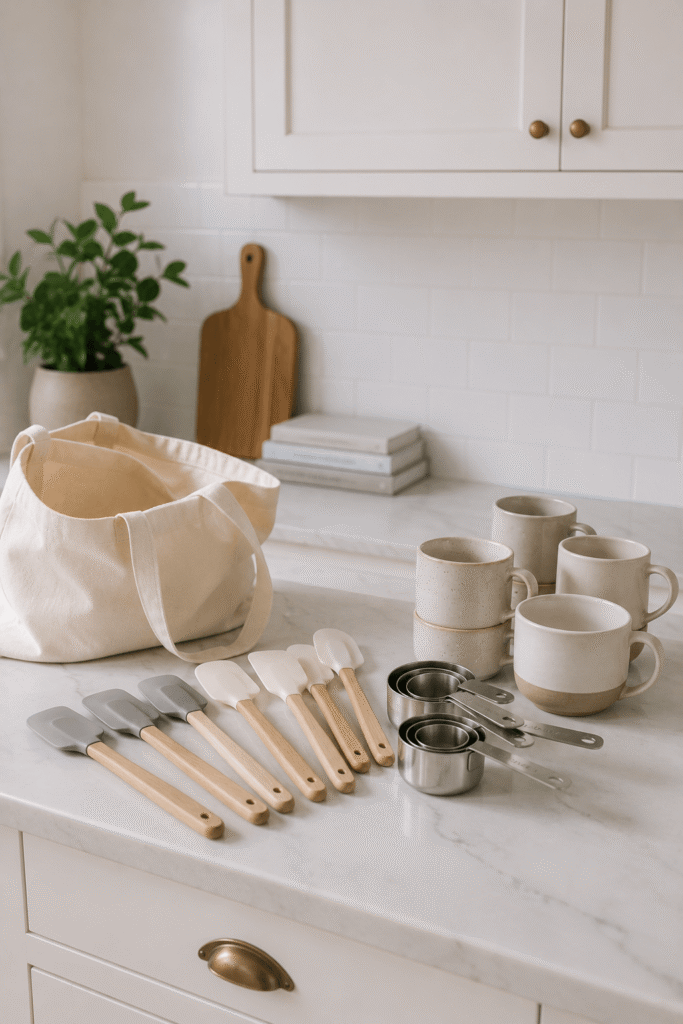
Three spatulas. Four sets of measuring cups. Seven tote bags. Eleven mugs. Four pairs of black leggings. Three sets of white sheets.
You only need one. Maybe two.
Duplicates are the most painless category to declutter because there’s no emotional attachment argument — you’re keeping the item. You’re just keeping fewer of them.
Pull every duplicate from every room. Keep the best version. Let the rest go.
The space created is significant. And the decisions are easy. Explore Next: Home Organization Labels
16. Style What Stays
Once the clutter is gone, what remains deserves to be placed beautifully.
This is the step most people skip — and it’s the step that makes the difference between organized and visually peaceful.
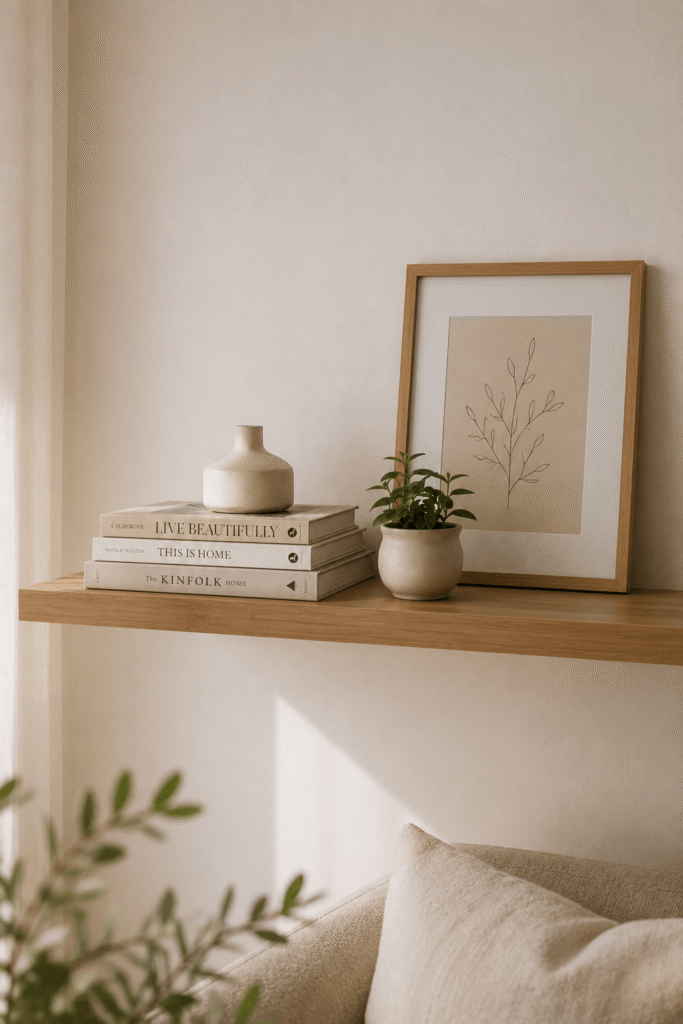
Group items by color, height, and texture. Place books spine-out or stacked horizontally with an object on top. Arrange three items in an odd-number cluster. Leave deliberate space between groupings.
Fold towels the same way every time. Face product labels forward. Hang artwork at eye level. Angle a tray slightly rather than placing it perfectly parallel to the wall.
These micro-decisions are what separate a Pinterest-worthy home from a merely tidy one. Organization handles the function. Styling creates the feeling.
17. The Sunday Reset Ritual
Not a deep clean. Not a reorganization project.
A ritual.
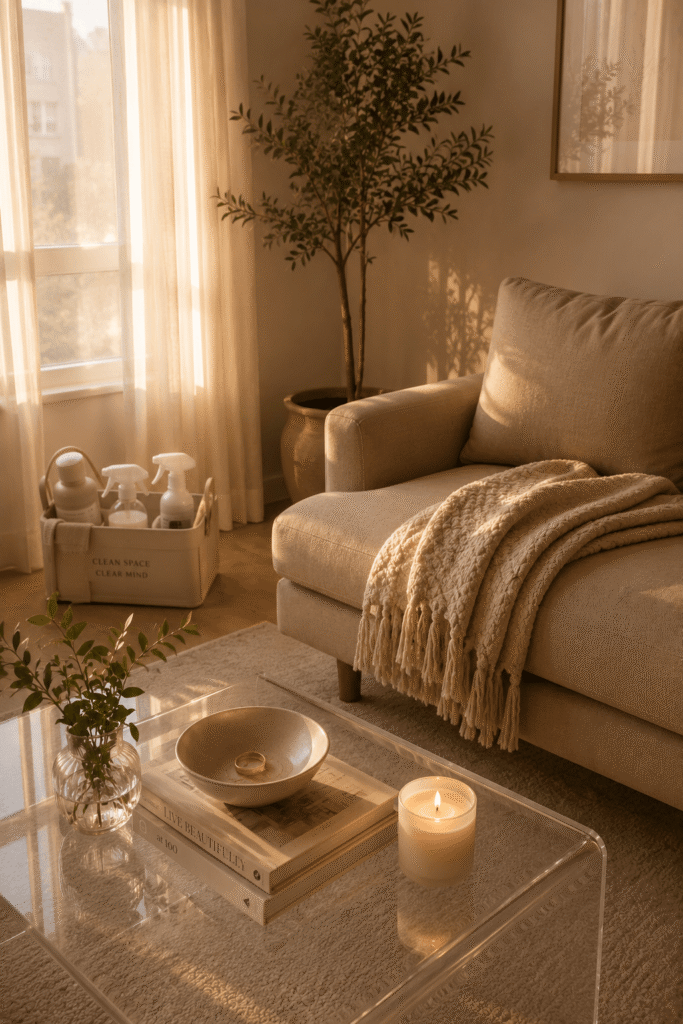
Every Sunday — twenty minutes. You walk through the apartment and return it to baseline. Surfaces cleared. Items back where they live. Anything that accumulated during the week gets sorted, donated, or put away.
Light a candle before you start. Put on a playlist you love. Make it feel like something you do for yourself — not something you do to your apartment.
The reset isn’t about perfection. It’s about maintaining the peace you worked to create. Protecting the calm. Keeping your home a place that holds you rather than stresses you.
And there’s something deeply satisfying about ending a Sunday in a home that’s quiet, clean, and completely yours.
Monday arrives and the week starts from a place of calm instead of chaos.
That shift alone is worth everything.
Peace Isn’t a Place. It’s What’s Left When the Clutter Goes.
You don’t need a bigger home.
You don’t need a full weekend overhaul or a perfect minimalist aesthetic or every product on this list.
You need one decision made slightly more intentionally. One surface cleared. One category edited. One habit started this Sunday.
The calm builds slowly — the way all lasting things do.
And one day soon, you’ll walk into your home and the first thing you feel won’t be tension or overwhelm.
It’ll be ease.
Quiet, beautiful, completely earned ease.
That’s the whole point.


