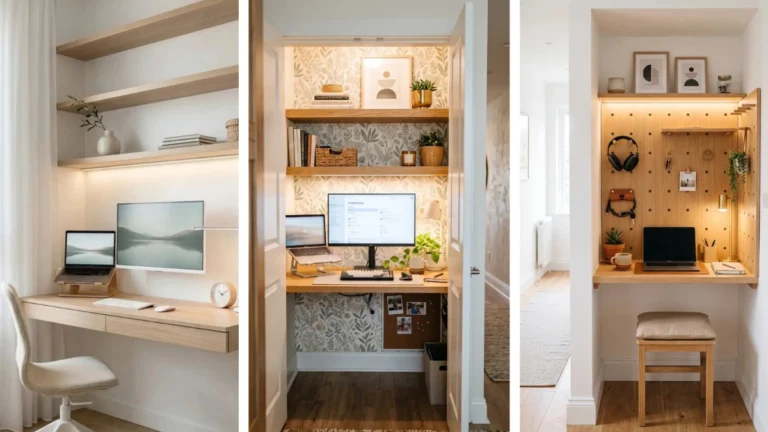
Working from a studio often means your desk never really leaves. It sits in the middle of the room, collects clutter, and keeps the space feeling like an office long after the laptop is closed. Most remote workers want a real surface for focus, yet hate looking at it all evening.
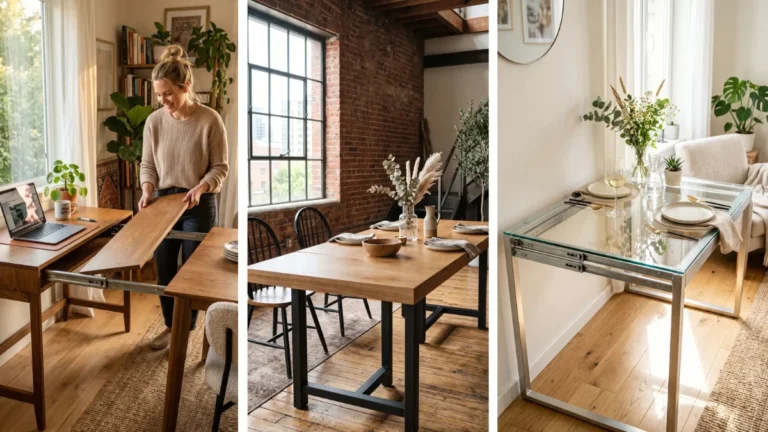
That is where pull out desk ideas for small spaces solve the problem. A desk that slides from a closet, folds down from a door, rolls under a counter, or hides behind a cabinet front gives you full work capacity by day and a calm living room by night. The fifteen ideas ahead cover floating shelves with trays, window nooks, Murphy-style panels, corner brackets, and more—so you can keep productivity without giving up your floor or your peace of mind.
1.Mount a Floating Light-Wood Desk with Hidden Drawers
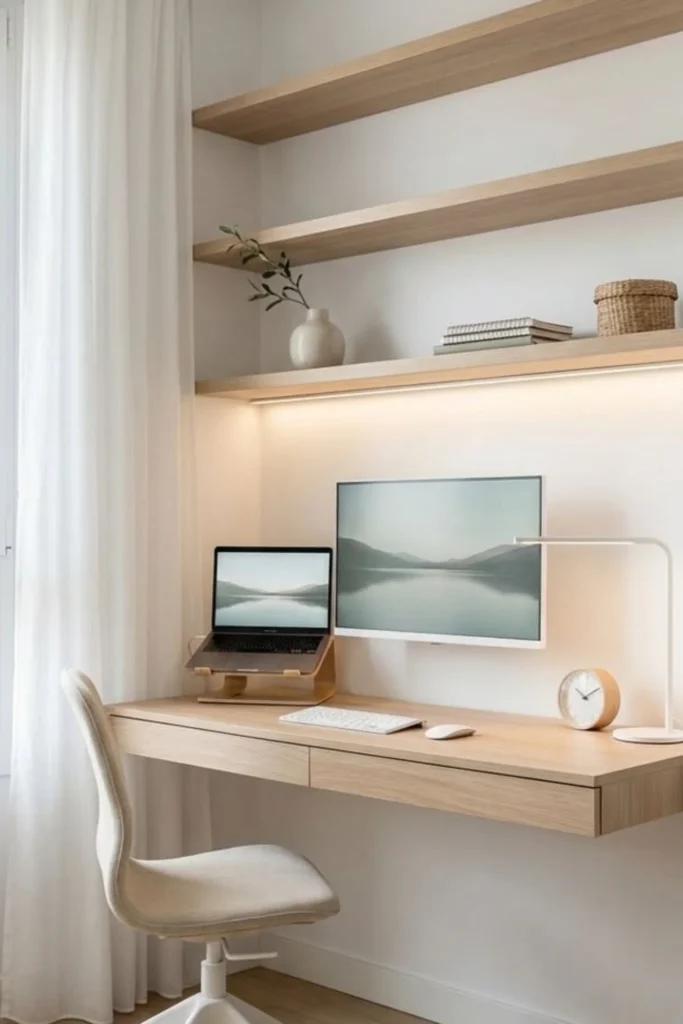
A slim light-oak desk mounts directly to the wall and holds a laptop on a stand plus a full monitor. Two shallow drawers tuck underneath so cables and supplies stay out of sight. Open shelves above carry a vase, books, and a basket while a soft LED strip lights the work surface.
Sheer curtains and a pale swivel chair keep the corner airy. When the chair slides underneath, the whole setup reads as built-in cabinetry rather than a permanent office.
2.Slide a Full-Width Pull-Out Desk from Closed Cabinetry
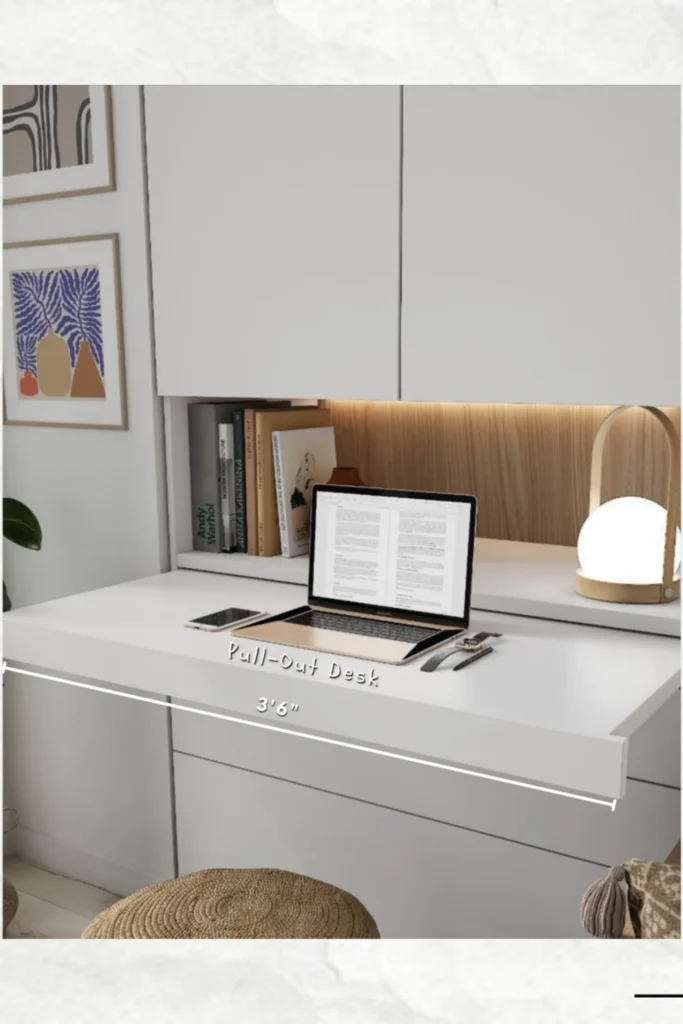
White cabinetry hides a 3-foot-6-inch pull-out desk surface that extends only when needed. Open shelf space behind the desk holds books while an arched lamp and warm wood back panel create a focused niche.
Upper doors stay closed so the wall looks like ordinary storage. A woven stool tucks completely underneath once work ends.
📌 Good To Know
A pull-out depth of about 3.5 feet gives laptop room without crowding a studio walkway when the desk is extended.
3.Fit an L-Shaped Corner Unit with Tall Side Shelving
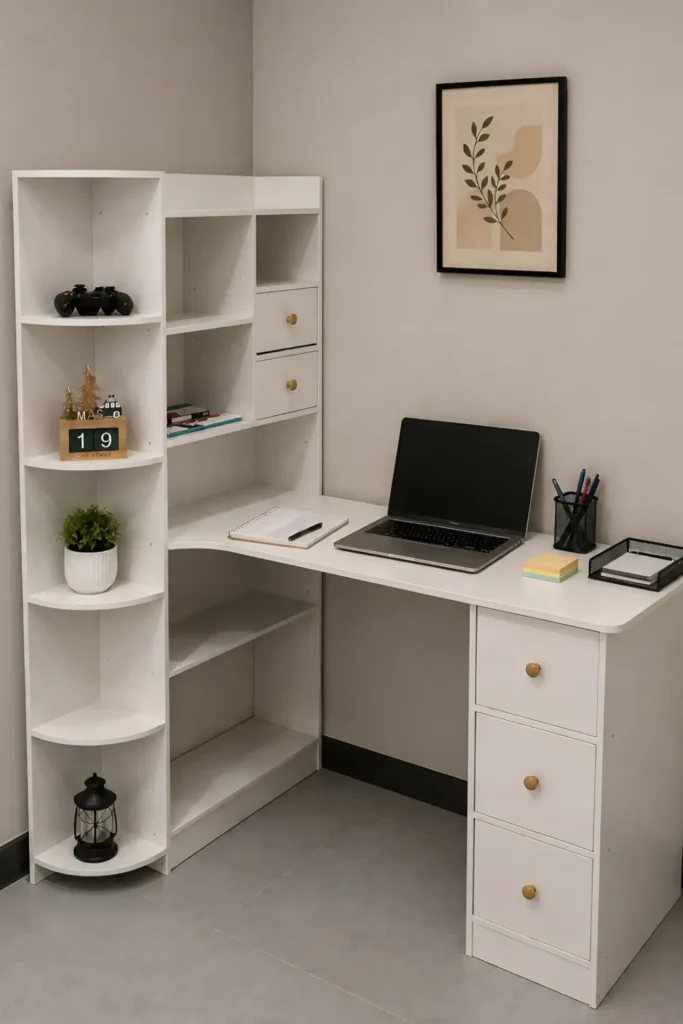
A white L-desk wraps the corner and pairs with a tall open shelving tower on the left. Drawers on the right hold files while open cubbies display plants, books, and small objects.
The continuous surface supports a laptop and notebook without needing a second table. Everything stays in one footprint so the rest of the room stays open.
Place the tall shelf tower against the shorter wall to maximize vertical storage.
Keep the desk return clear for a laptop and writing space.
Use the lower open shelves for items you reach for daily.
4.Fold a Wall-Mounted Oak Desk Flat Against the Wall
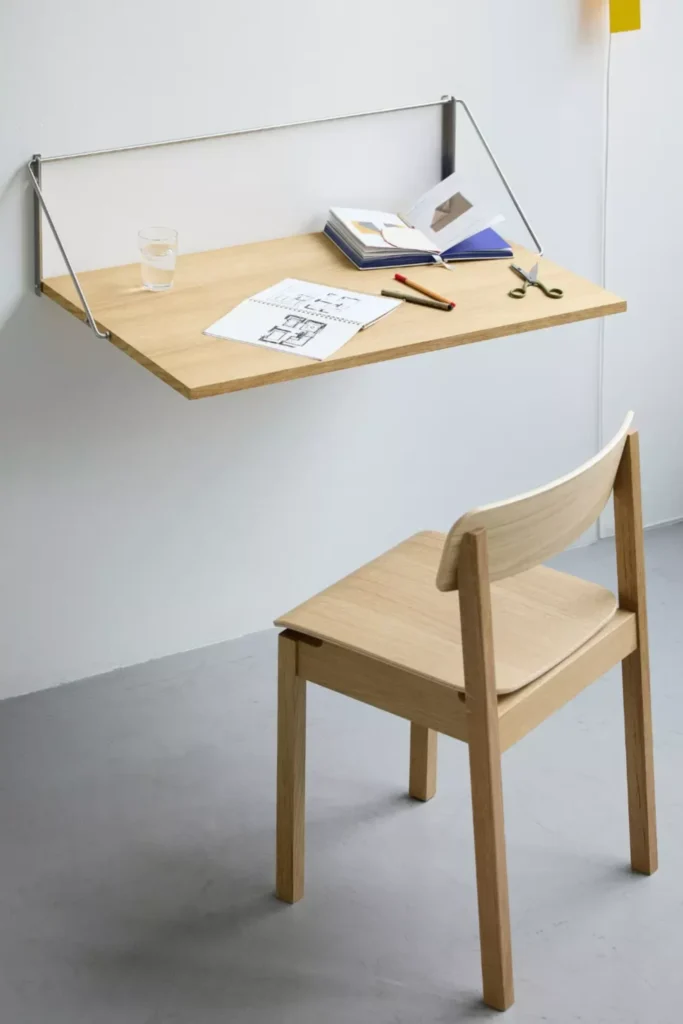
A light oak surface hangs on slim metal supports and folds down only when you need it. A matching wood chair slides underneath. Sketches, pens, and a glass of water sit ready during work hours.
When the day ends, the desk lifts flush to the wall and the chair moves aside. Floor space returns instantly.
5.Run a Long White Desk with Open Hutch Storage
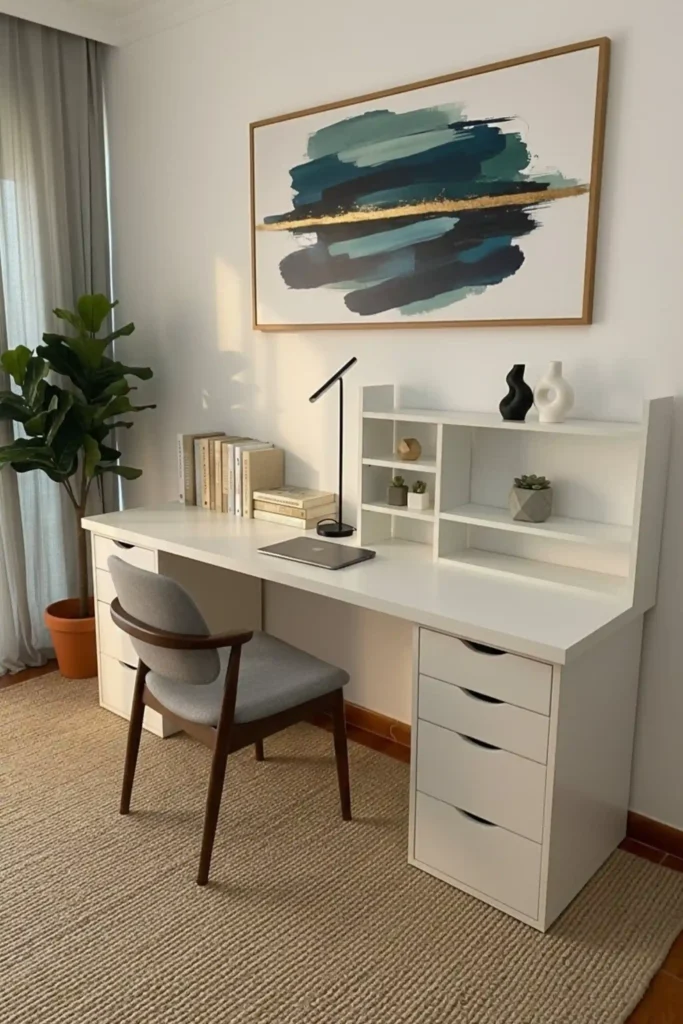
A continuous white desk stretches along the wall with drawers on both ends and an open hutch on the right. A laptop, black task lamp, and a few books sit on the surface while small plants and vases fill the cubbies.
A wood-framed chair and large abstract art keep the corner feeling finished. The low profile lets the desk blend into the room when not in active use.
Keep only daily essentials on the desktop.
Use the hutch cubbies for decor and small plants.
Piling papers that make the desk look permanent.
Blocking the chair path with extra floor storage.
6.Combine a Wood-Top Desk with Upper Cabinets and Deep Drawers
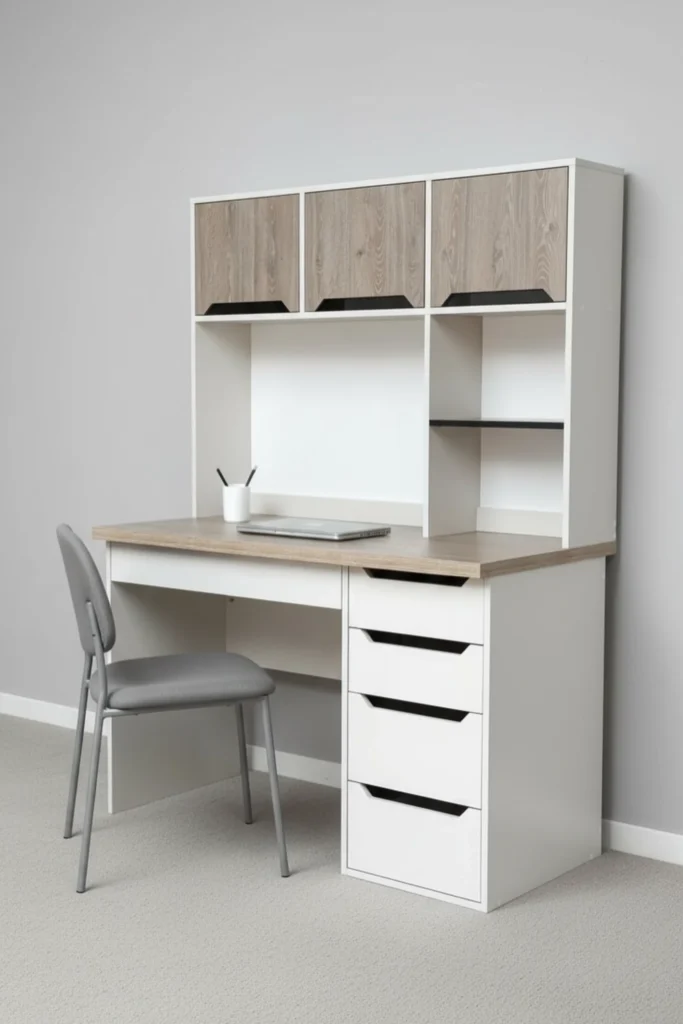
A clean white frame carries a light wood work surface, five stacked drawers on the right, and three upper cabinets with open cubbies below them. A simple grey chair pulls up for laptop work.
Closed cabinets hide visual noise so the piece looks more like a storage wall than an always-on office. The mix of wood and white keeps it warm.
Laptop open, drawers and cubbies in use for supplies.
Surface cleared, cabinets closed, chair pushed in — room feels open again.
7.Build a Window-Nook Desk That Doubles as a Seat Ledge
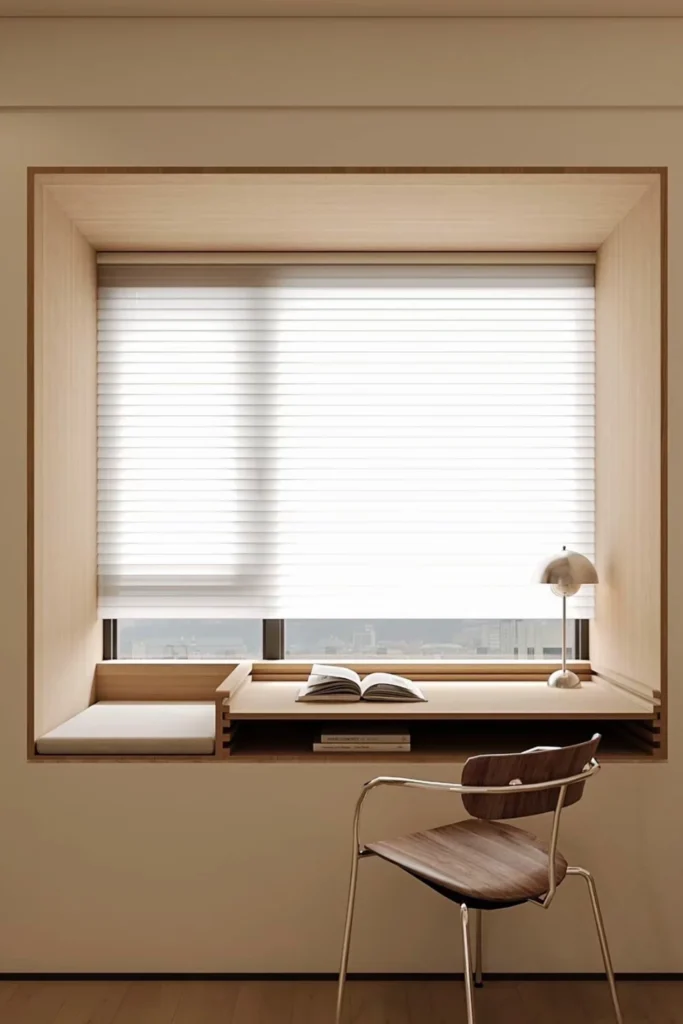
Light wood framing turns a deep window into a compact desk and seat. A pull-forward surface holds an open book and lamp while a cushioned ledge beside it offers a place to sit.
City views and soft blinds make the nook feel calm. When work finishes, the surface stays tidy and the space reverts to a quiet reading spot.
The desk lives inside the window architecture so it never competes with the rest of the room for floor space.
8.Bracket a Solid Wood Desk into a Corner with Vertical Shelves
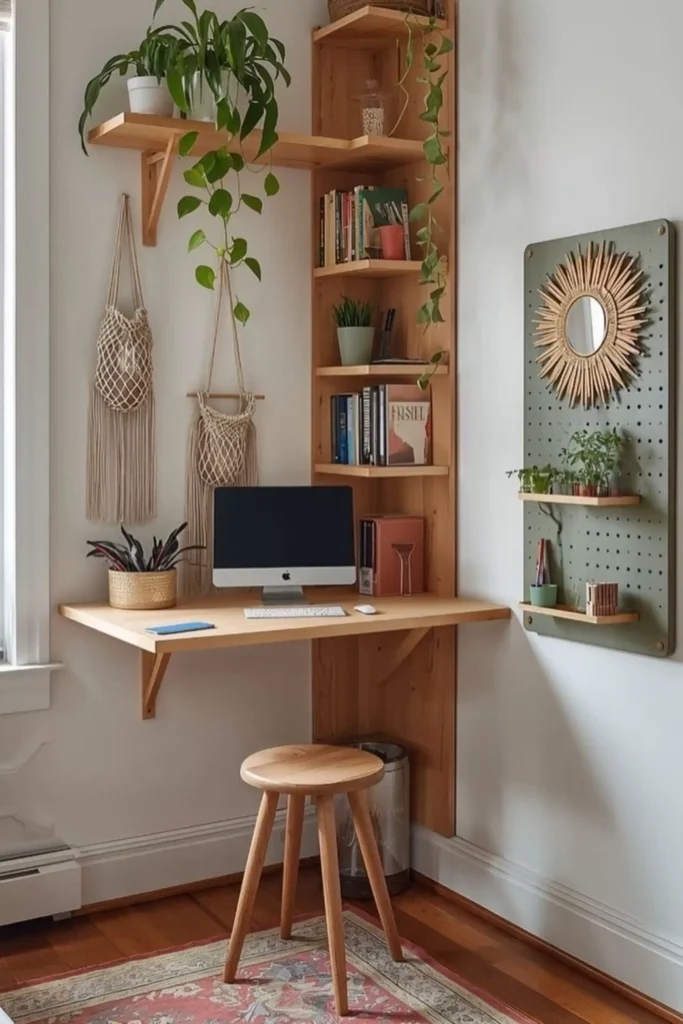
A thick wood desk mounts on sturdy brackets in the corner and pairs with a tall open shelving column. A simple round stool tucks underneath. Plants, books, and a pegboard on the side wall keep supplies close but off the work surface.
Macramé hangers and a sunburst mirror add personality without clutter. The whole corner works hard yet can be cleared in minutes.
Recreate this look
9.Hide a Slim Desk Inside a Hallway Closet
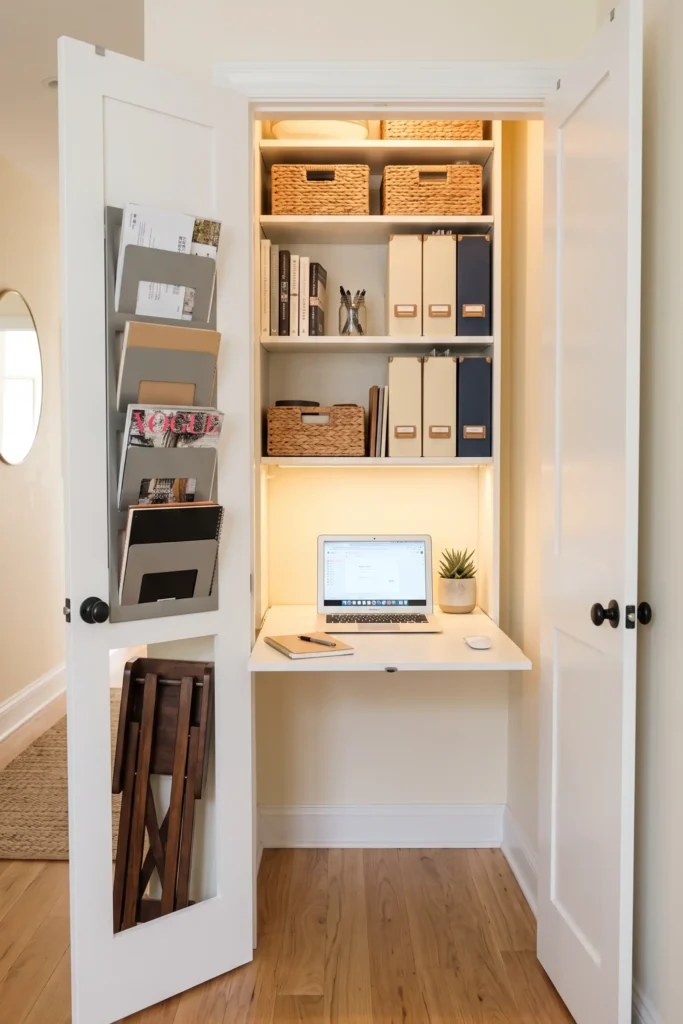
A shallow closet gets fitted with a pull-out desk surface on full-extension slides. When work starts you open the doors and slide the desk forward. When the day ends the surface slides back and the doors close so the hallway looks like ordinary storage.
- Install LED strip lighting inside the closet for task light.
- Add a narrow vertical file pocket on one door.
- Keep a folding stool nearby that stores flat against the wall.
Remote workers in studios gain a full desk that vanishes completely after hours.
| Element | Purpose |
|---|---|
| Full-extension slides | Desk pulls out completely |
| Closet doors | Hide the entire workstation |
10.Install a Drop-Down Desk on the Back of a Door
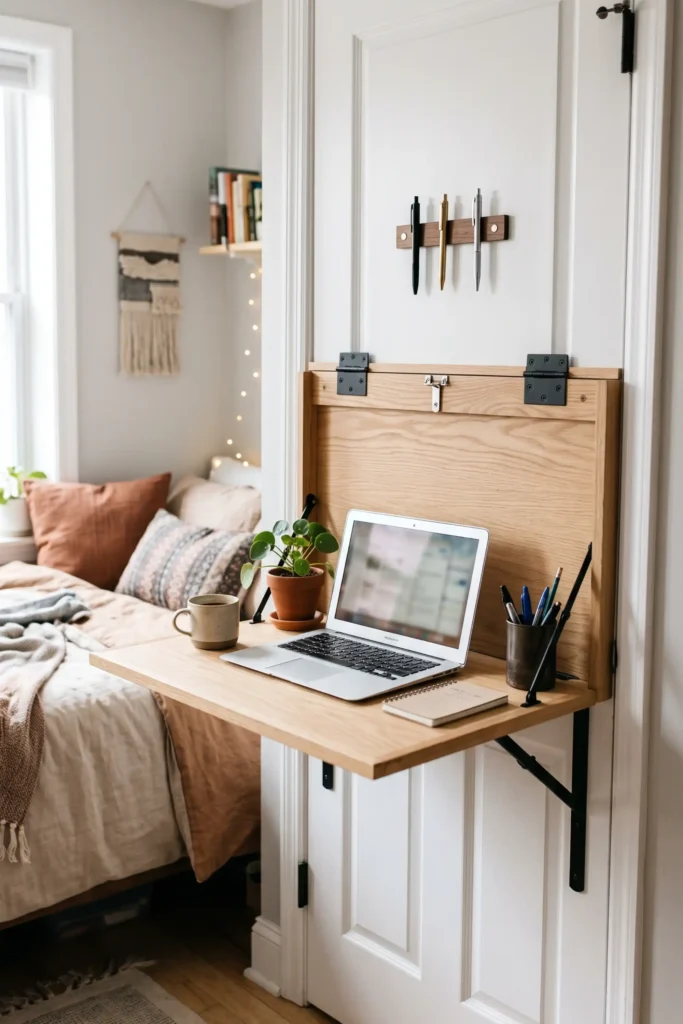
The back of a bedroom or closet door receives a fold-down desk panel on sturdy hinges. A simple prop arm locks it horizontal for laptop use. Lift it up and latch it flat when you finish.
This idea uses zero floor space and works in the tightest studios. A small magnetic strip holds pens so nothing falls when the panel closes.
💡 Quick Tip
Choose a lightweight hollow-core door or reinforce a solid door so the hinges stay secure over time.
11.Build a Rolling Desk Cart That Tucks Under a Counter
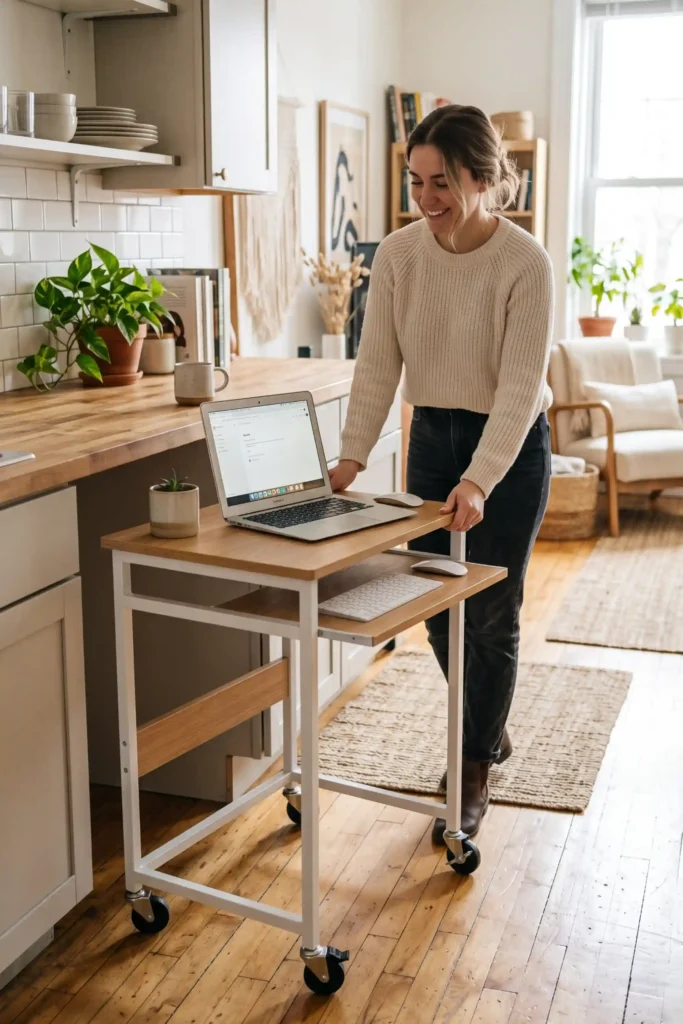
A compact desk surface on locking casters rolls out from under a kitchen counter or console. The top holds a laptop and the lower shelf stores a keyboard and notebook. At the end of the day you roll it back underneath and the room returns to living mode.
Height matches standard counter clearance so it disappears cleanly.
Measure counter height and leave 1 inch of clearance.
Fit locking casters so the cart stays still while you type.
Add a shallow lip on the back edge to stop items sliding off.
12.Create a Murphy-Style Desk That Folds into a Picture Frame
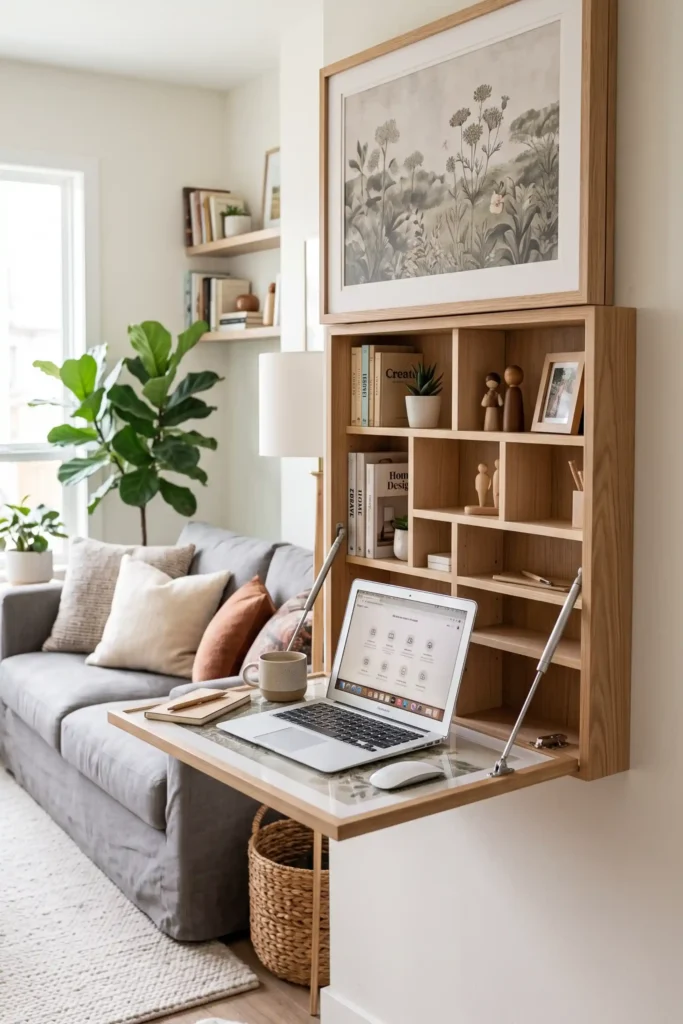
A shallow wall cabinet looks like a large framed artwork. The front panel folds down on gas struts to become a desk. Inside you find a small shelf for a laptop and a couple of cubbies for supplies.
Close the panel and the living room wall looks decorative again. Ideal for people who want zero visual reminder of work after hours.
13.Mount a Pull-Out Keyboard Tray Under a Floating Shelf
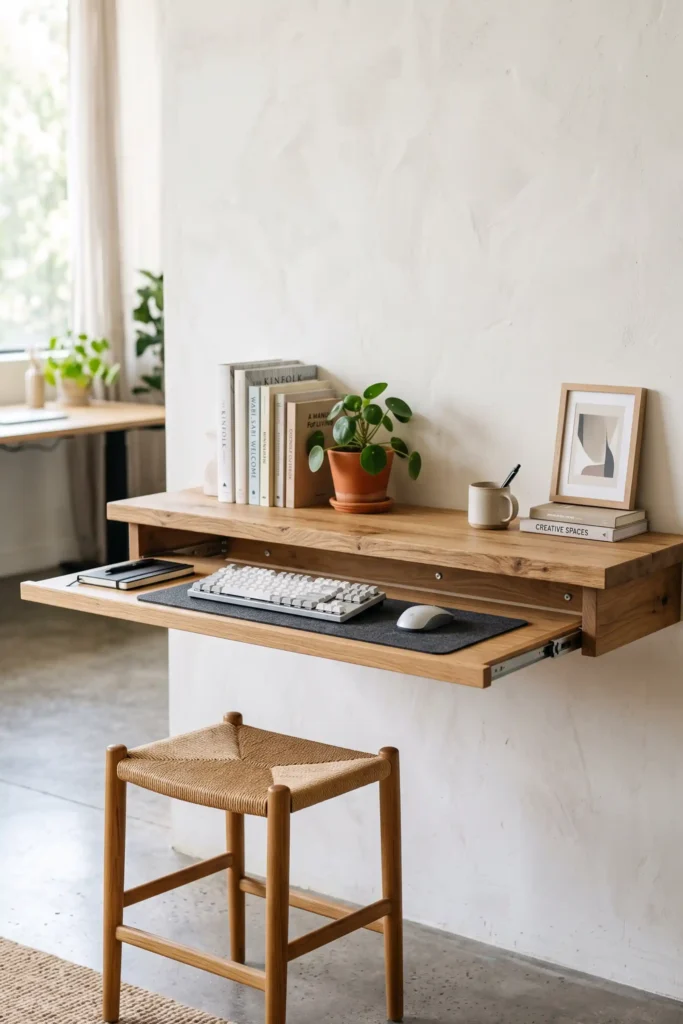
A wide floating shelf already holds books or display objects. Underneath, a full-extension keyboard tray pulls out to create a quick standing or stool-height work spot. Push it back and the shelf returns to pure décor.
This keeps the desk function almost invisible while still giving a solid surface for short work sessions.
14.Convert a Deep Drawer into a Temporary Laptop Desk
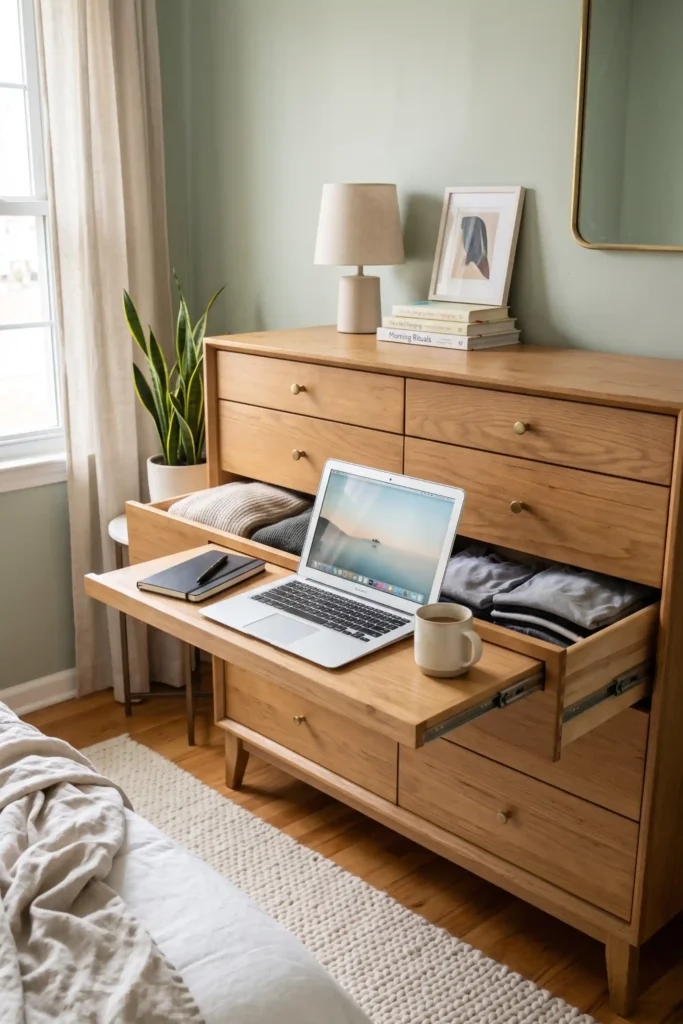
A wide, deep drawer in a dresser or sideboard is reinforced and fitted with a pull-out tray. Open the drawer, pull the tray forward, and you have a stable surface for a laptop. Close everything and the furniture looks unchanged.
Best for short work bursts or evening emails when you do not want a full desk out.
Looks like normal bedroom or living room storage
Stable laptop surface ready in seconds
15.Pair a Wall Bed with a Pull-Out Desk Panel Below
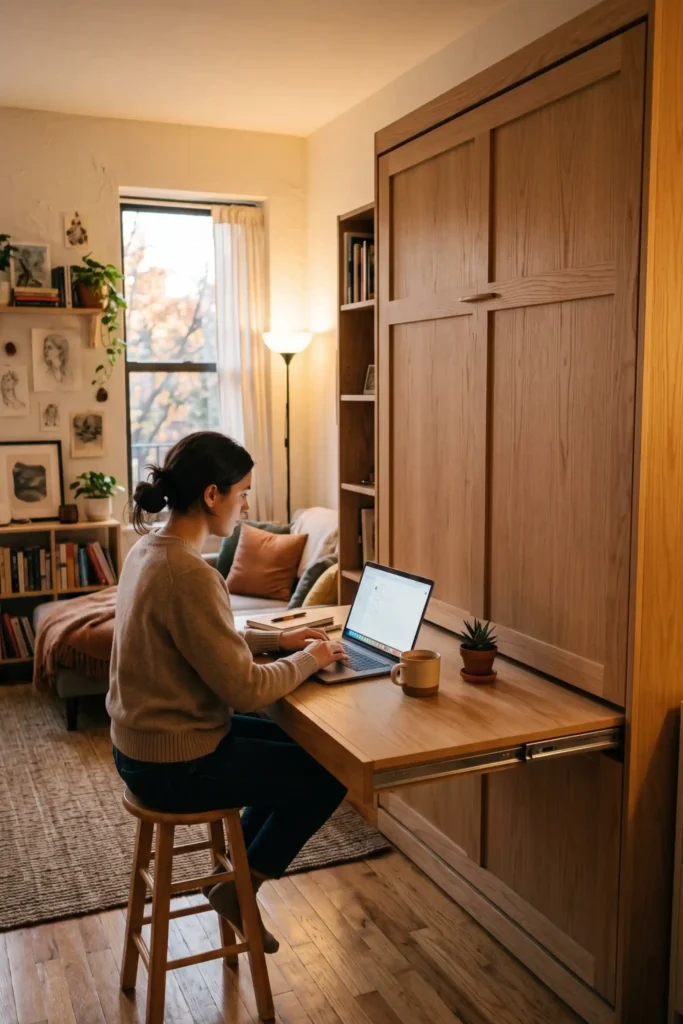
The lower section of a Murphy bed cabinet contains a wide pull-out desk. During the day the bed stays up and the desk slides out for work. At night the desk slides in and the bed lowers over it.
One wall handles both sleeping and working so a studio never needs a separate office zone.
Sleep and work share the exact same wall footprint so your floor stays open for living.
Conclusion
A pull-out desk lets your studio switch roles in seconds. Choose the version that fits your walls and habits—closet slides, door panels, rolling carts, picture-frame cabinets, or a desk that shares space with a wall bed. Measure clearances, pick sturdy slides or hinges, and clear the surface at the end of each day. Save your favorite setups to a Pinterest board so you can compare details when you are ready to build or buy. Your work stays efficient, and your home gets to feel like home again.