Moving into a tiny home or small apartment often means wrestling with furniture that refuses to fit your floor plan. Traditional fixed sofas take up rigid square footage, making it tough to host guests, clear space for morning workouts, or adapt when you move to a new rental.
Exploring smart modular sofa ideas for tiny homes solves this layout headache by breaking a couch down into independent, multi-functional blocks. You can reconfigure these pieces to face windows, split them into facing armchairs, or slide ottomans out of main walkways whenever your daily schedule shifts. These nineteen setup ideas show you how to pick the right frame scales, connector hardware, and fabric finishes so your small space stays open, flexible, and comfortable.
Modular seating lets your living room switch from a quiet home office to a guest lounge in under two minutes.
1.Anchor Small Nooks with a Curved Emerald Velvet Settee
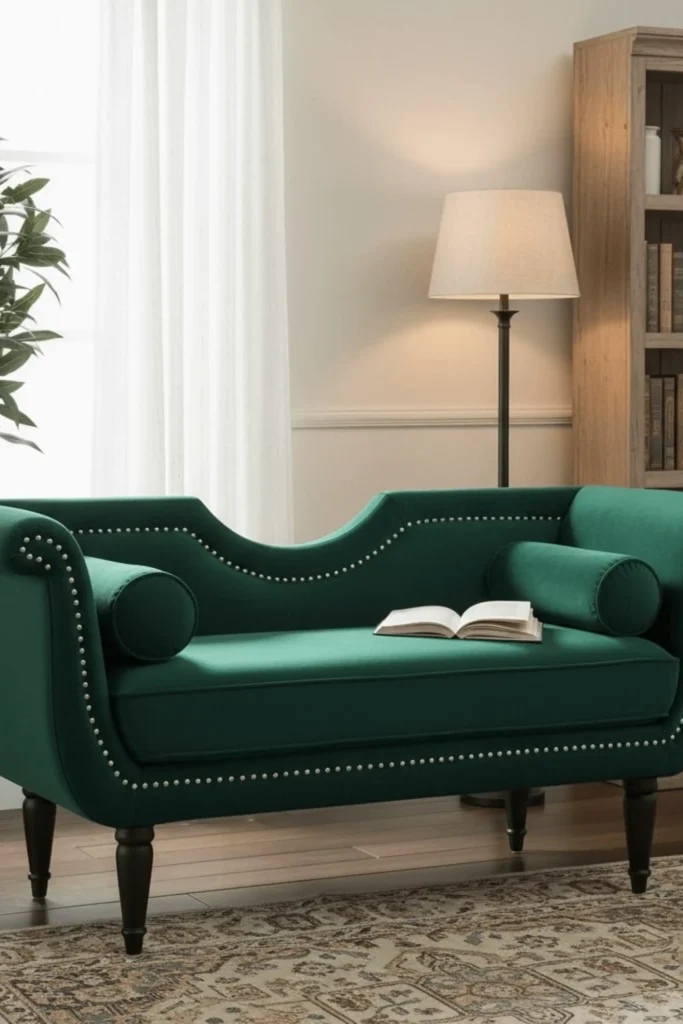
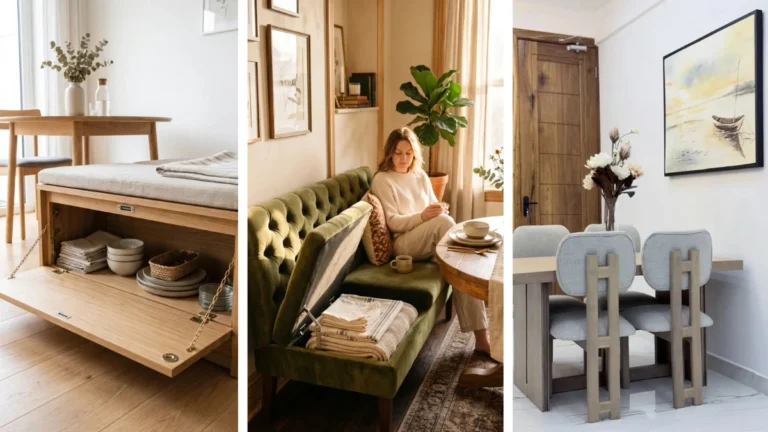
Deep jewel tones and traditional curves turn a tight reading corner into a purposeful accent space. A compact green velvet settee uses rolled arms and stud trim to add architectural interest without taking up the floor depth of a full sofa.
- Position the bench near a tall bookcase to create a dedicated reading zone in a studio.
- Use slender turned legs to elevate the frame so light passes underneath the seat.
- Place bolster pillows against the curved arms to keep the seating profile neat.
Tucking a tall standing lamp behind the curved back gives you cozy evening task light without needing an extra side table.
2.Choose a Kidney-Shaped Loveseat with a Recessed Brass Base
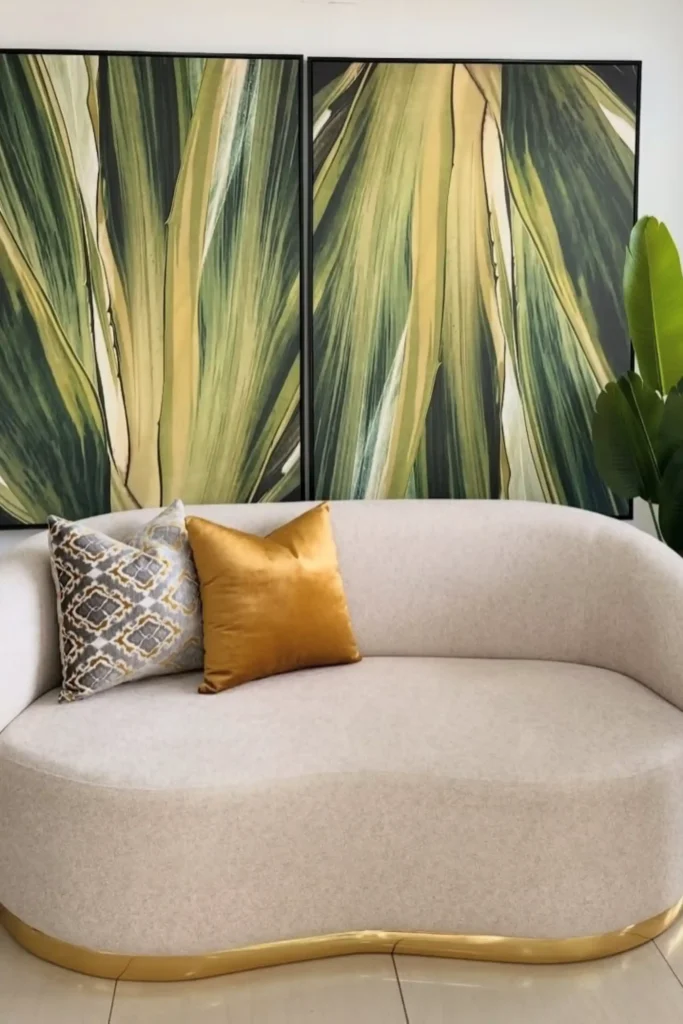
Rounded furniture edges make narrow living room walkways feel wider because traffic glides right past smooth corners. A beige organic curved loveseat resting on a plinth brass base anchors the seating zone while keeping the overall footprint compact.
💡 Traffic Flow Tip
Curved sofa backs prevent harsh corners from blocking sightlines near entryway doors or open kitchen walkways.
Pairing textured oat fabric with ochre velvet cushions brings warm color contrast into a neutral room.
3.Swap Fixed Arms for Movable Weighted Backrest Cushions
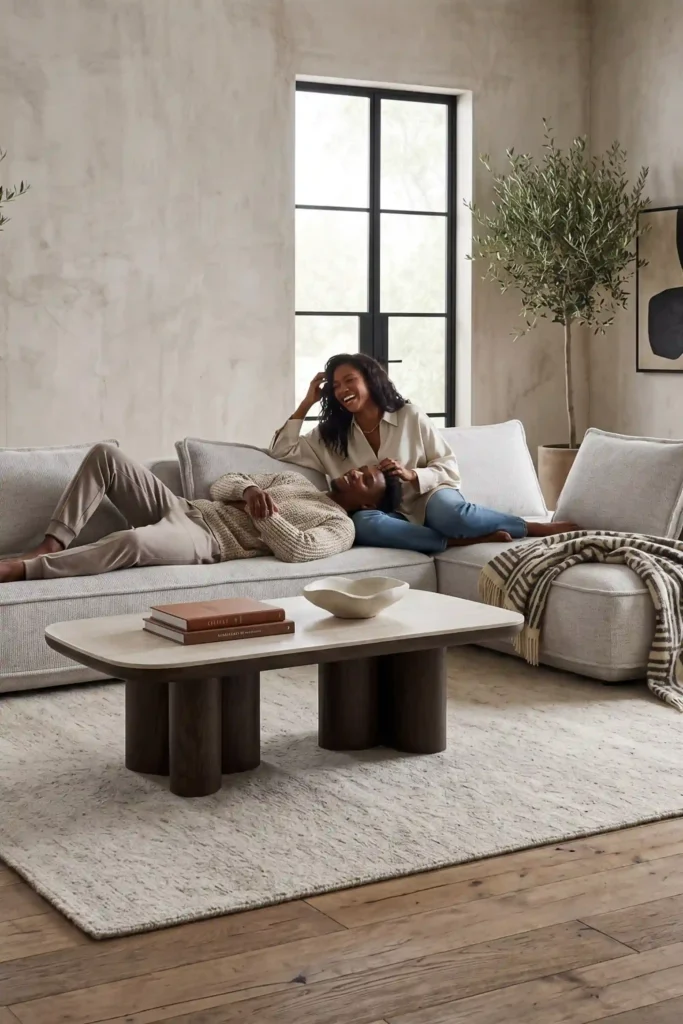
Low-slung modular sofa bases with unattached, weighted back pillows give tiny homes complete seating freedom. You can reposition the backrests to face the window during the day, then shift them to the perimeter to convert the base into a wide guest bed at night.
Arrange weighted cushions centrally to form an L-shaped conversational couch.
Remove back pillows completely to create a flat, open mattress surface.
- Select rubber-bottomed back cushions so they grip textured fabric bases without slipping under pressure.
- Layer a low-profile coffee table nearby to keep drinks stable when the sofa converts.
4.Reconfigure Modular Pit Blocks for Work and Relaxation
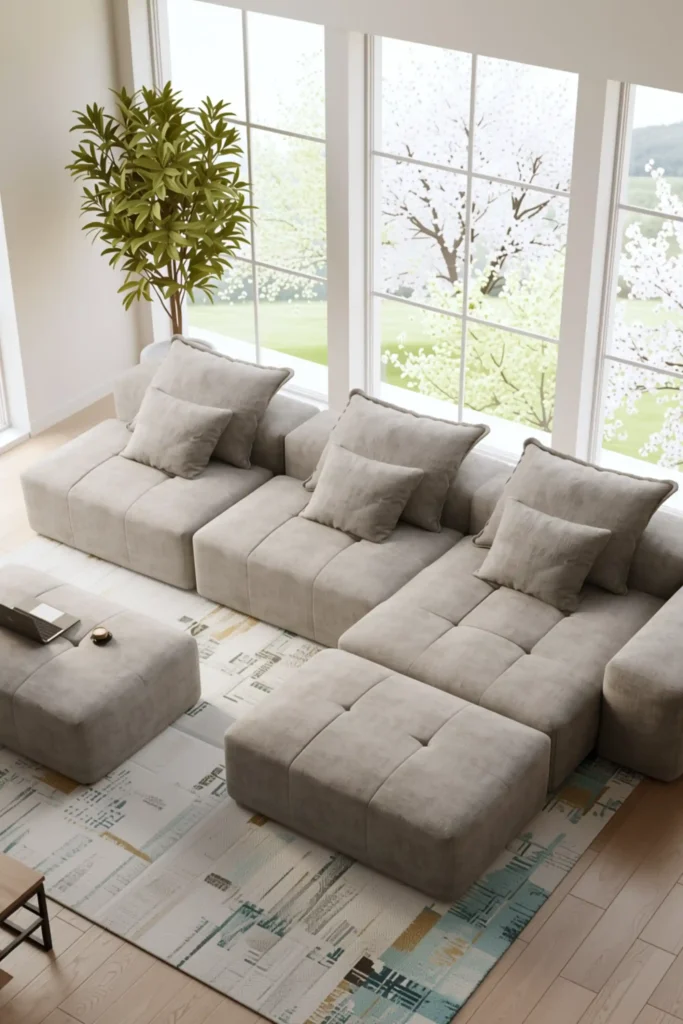
Large square ottoman blocks with low channel tufting offer quick layout changes for multi-use living rooms. Moving an ottoman to the center creates a laptop workstation, while sliding it flush against the chaise extends your legroom for movie nights.
Separate central ottomans to create clear walkways during daytime hours.
Use flat-topped ottomans as flexible coffee tables by adding a wooden tray.
Push all seating blocks together to form a full daybed for weekend guests.
Keeping modular sofa ideas for tiny homes versatile ensures a small footprint adapts as your daily routine changes.
5.Soften Sharp Room Angles with Sculptural Bouclé Seating
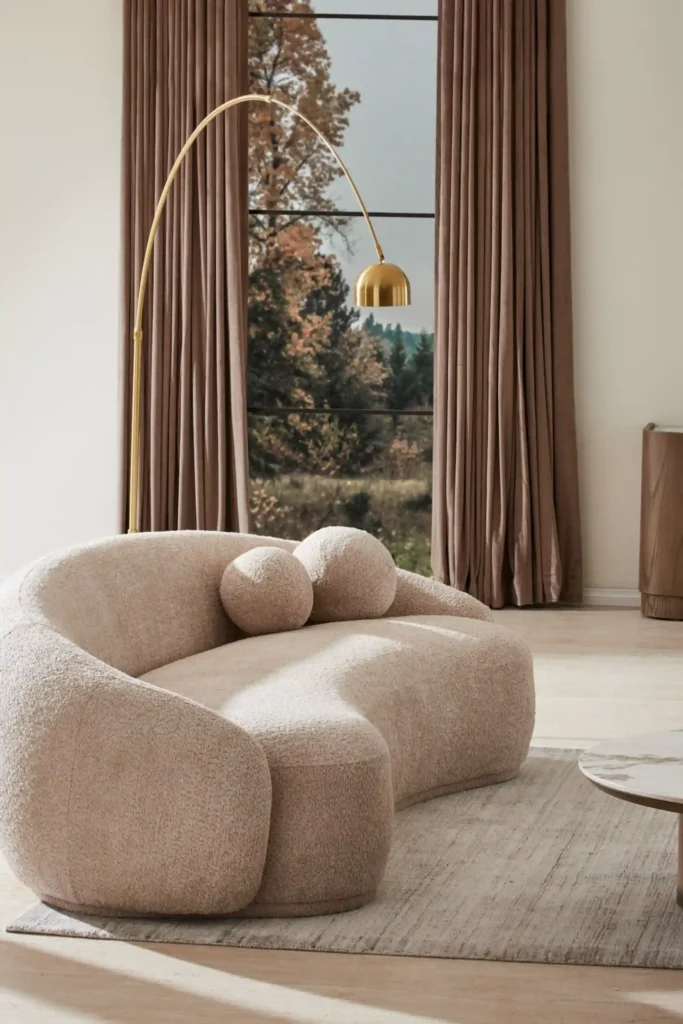
Plush bouclé fabric paired with an asymmetrical curved back frame transforms a plain studio corner into a cozy reading nook. Spherical throw pillows break up straight wall lines while adding fun geometric interest to the seating.
Recreate this look
Full-length drapes behind the sofa help frame the curved shape while making low ceilings feel taller.
6.Expand Seating with an Ivory Double-Chaise Modular Setup
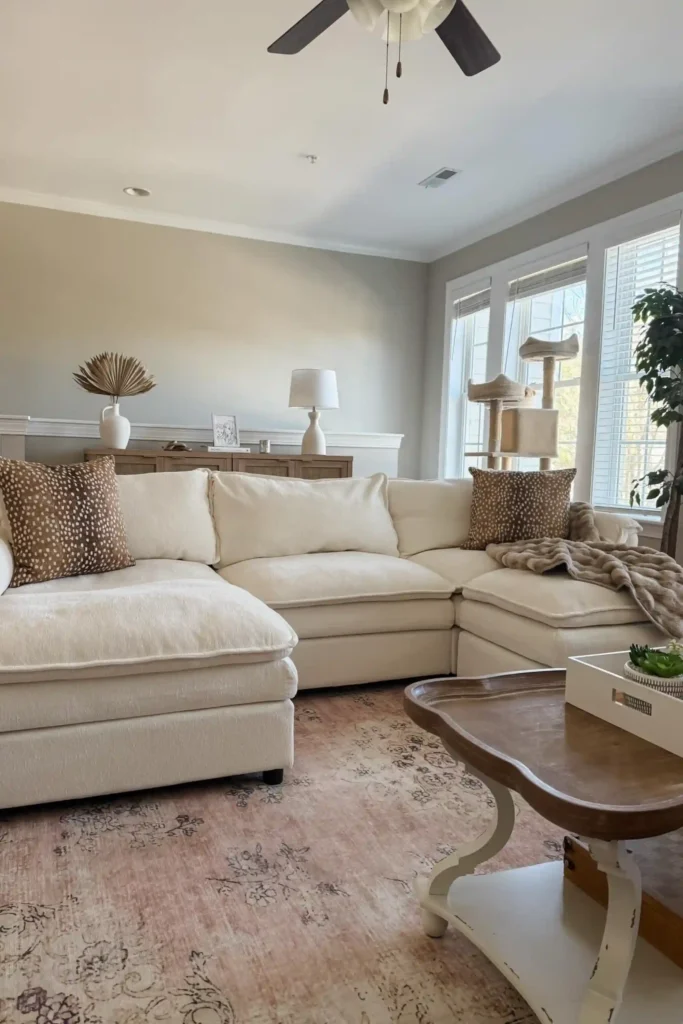
U-shaped modular sectionals with wide double chaises maximize corner square footage in square living spaces. Deep chenille seat cushions provide plenty of lounge area without needing extra armchairs that clutter the floor.
Pick low-profile backrest cushions to keep room views open.
Anchor light-colored fabrics with patterned fawn throw pillows.
Overloading small coffee tables with oversized decor pieces.
Pushing modular sections so close that window handles get blocked.
Watch out for wide chaise extensions blocking doorway entries by checking floor clearances before lock-fitting your modules.
7.Warm Up Grey Fabric Modules with Chunky Terracotta Knits
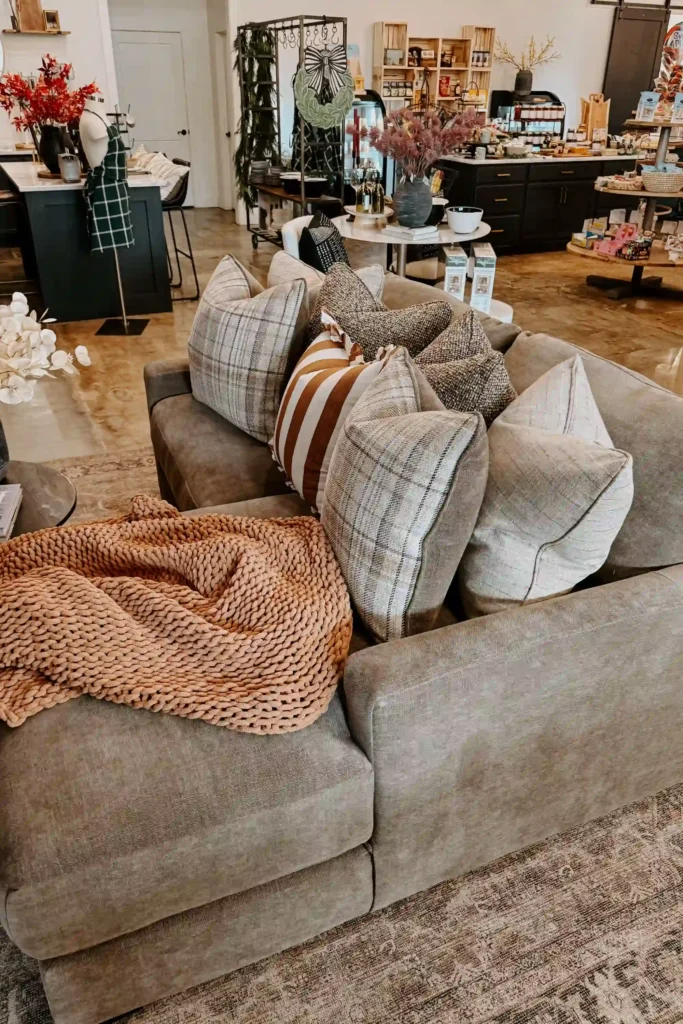
Neutrally upholstered modular couches can look plain without rich accent layers. Draping a heavy terracotta knit blanket over a grey chaise corner adds instant warmth and inviting texture.
| Layer Type | Styling Function |
|---|---|
| Chunky Knit Throw | Softens structured module edges and adds color contrast |
| Plaid & Striped Pillows | Connects grey upholstery tones with warm wood floor finishes |
- Mix textured woven pillow covers with smooth cotton fabrics for a balanced look.
- Fold throw blankets across chaise ends to protect high-traffic seat cushions.
Mixing warm accent colors with grey modular furniture makes small living rooms feel cozy and intentionally designed.
8.Choose Swing-Out Armrests with Built-In Side Trays
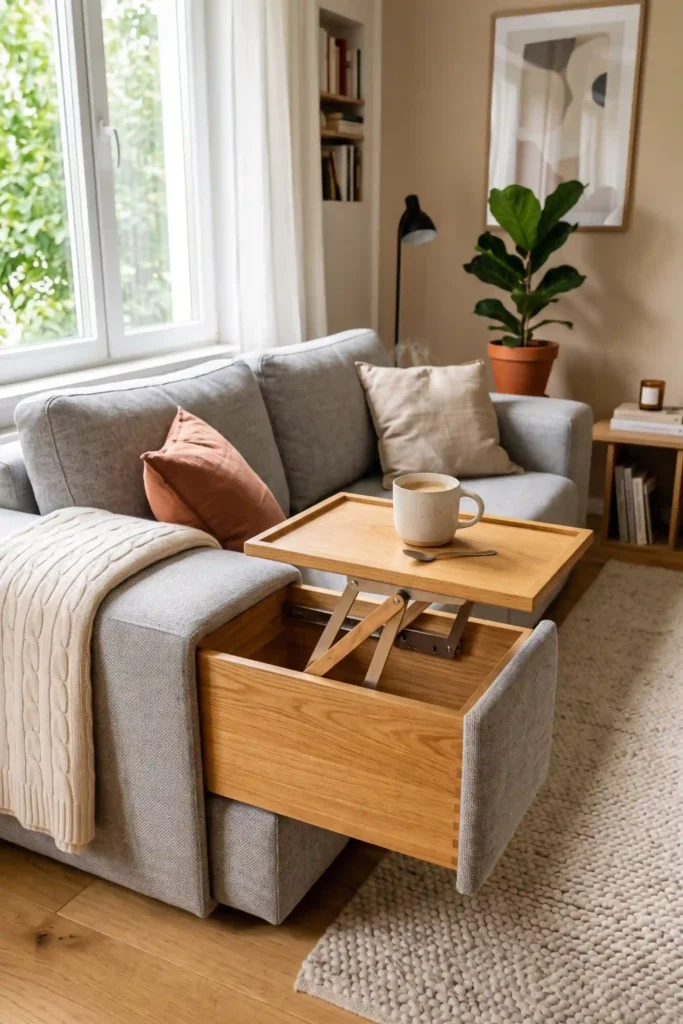
Modular armrest units that feature built-in flip-top trays eliminate the need for separate side tables in narrow rooms. Swinging the armrest outward reveals a flat wooden surface for coffee mugs or laptops, keeping your floor walkways clear.
- Look for armrest modules with hidden interior storage for remote controls.
- Select solid wood tray tops that wipe clean easily after snacks.
- Keep heavy floor lamps behind the main sofa back so the armrests swing freely.
Positioning these swing-out units on outer couch edges gives your living space custom flexibility without adding extra furniture clutter.
9. Split an L-Sectional into Two Facing Conversation Chairs
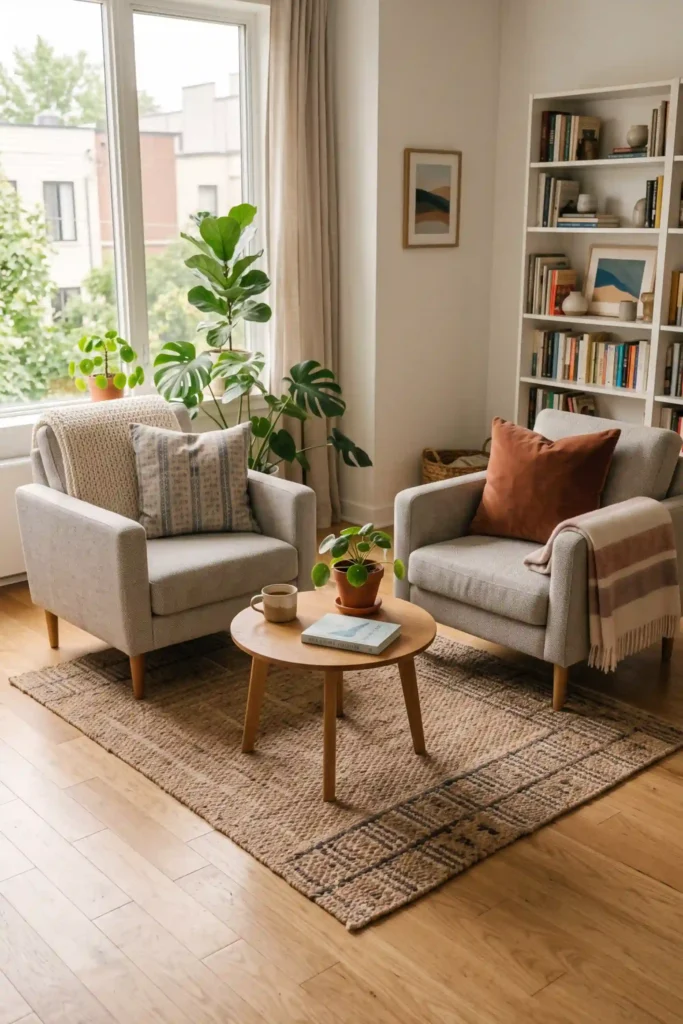
When hosting game night, unlatching the corner wedge of an L-shaped modular couch lets you separate the piece into two independent armchairs. Positioning them opposite each other creates an instant conversational circle without buying extra living room seating.
💡 Latch Safety Tip
Choose alligator or drop-in bracket clips on bottom frames so modules decouple smoothly without scratching hardwood floors.
Rejoining the pieces at the end of the evening takes under a minute, returning your living room to its open lounge layout.
Add felt glides beneath corner legs to slide modules easily across rugs.
Forcing modules apart without releasing bottom locking levers first.
10.Store Extra Cushion Modules Inside a Lift-Top Storage Ottoman
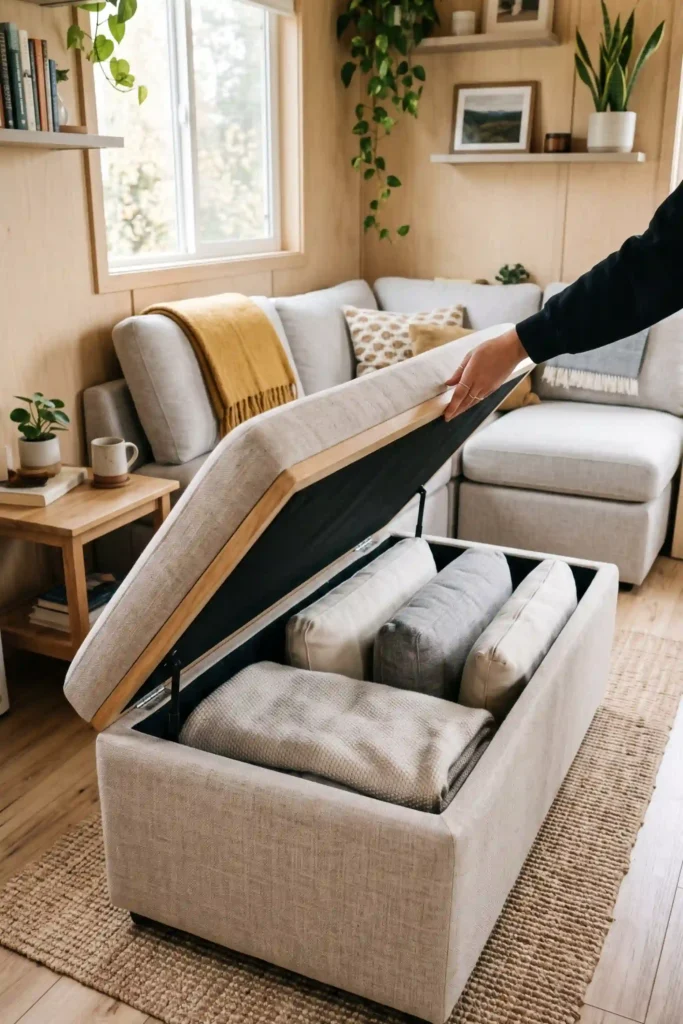
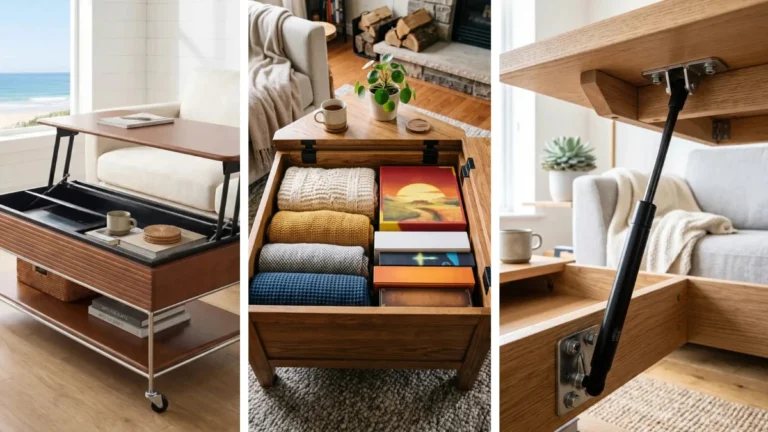
Multipurpose storage ottomans give you a place to stash spare armrests or back cushions when you want a streamlined seating layout. Lifting the top reveals a deep hollow core that swallows extra living room clutter in seconds.
- Lift the pneumatic hinged lid to access the internal compartment.
- Pack extra pillow inserts or seasonal throws inside.
- Drop the lid back down to use the top as a firm coffee table surface.
Keeping modular accessories inside the footstool ensures every piece stays clean and accessible whenever houseguests arrive.
11.Interlock Floor-Level Japandi Blocks with Hidden Base Latches
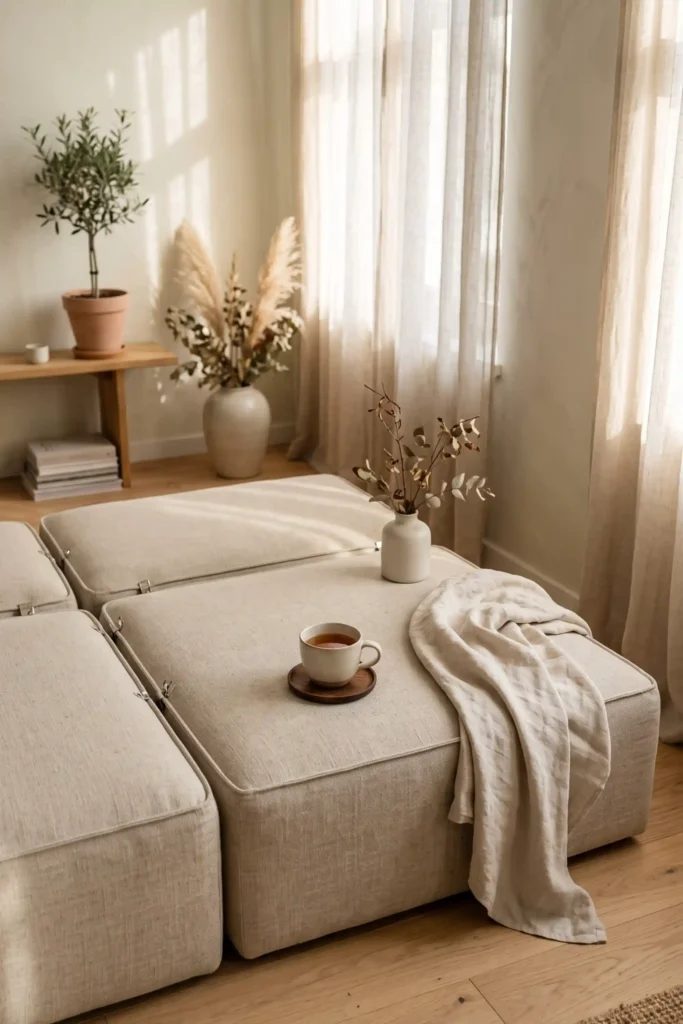
Low-profile Japandi seating blocks sit close to the floor, making small living rooms feel taller and airier. Heavy-duty metal latches concealed beneath the wood frames clip the modules together tightly so they never drift apart on slick hardwood floors.
Selecting dense foam cores prevents low floor cushions from sagging after daily lounge use.
12.Drop the Center Backrest to Unveil a Built-In Drinks Console
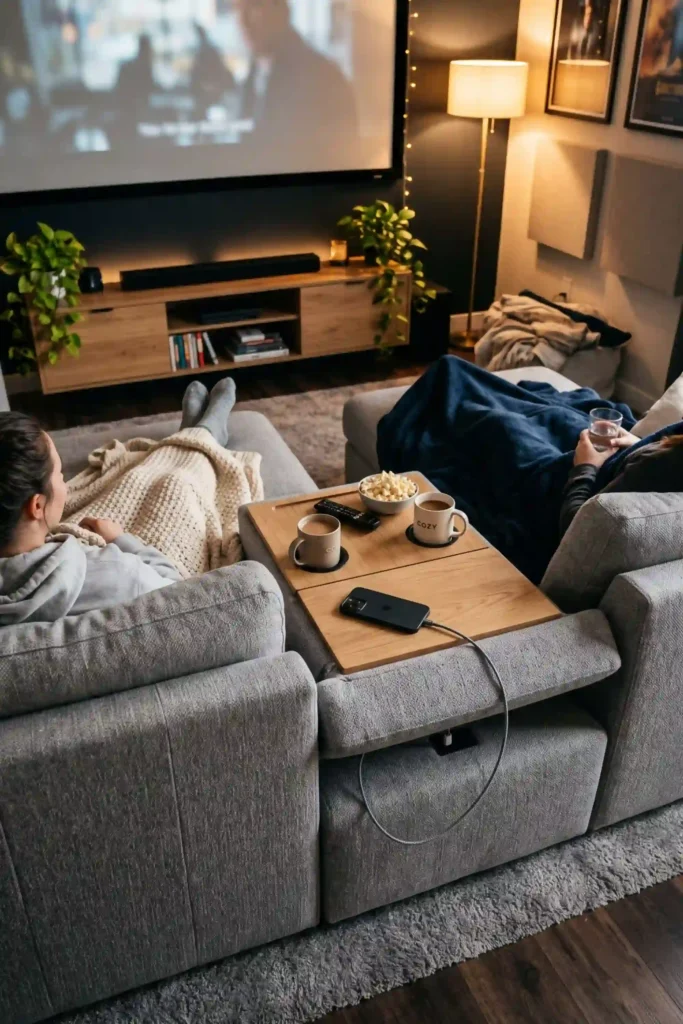
Three-seat modular couches with flip-down center backrests switch from standard seating to a home theater setup in seconds. Folding the middle cushion forward exposes a hard tray with dual cup holders and power charging ports for movie nights.
| Feature | Benefit |
|---|---|
| Fold-Down Backrest | Creates an instant armrest tray between seats |
| Embedded Outlets | Keeps phones charged without long wall cords |
This console feature removes the need for bulky coffee tables in front of the sofa, giving you back open floor space for walking.
13.Select Shallow 30-Inch Modules for Narrow Hallway Living Rooms
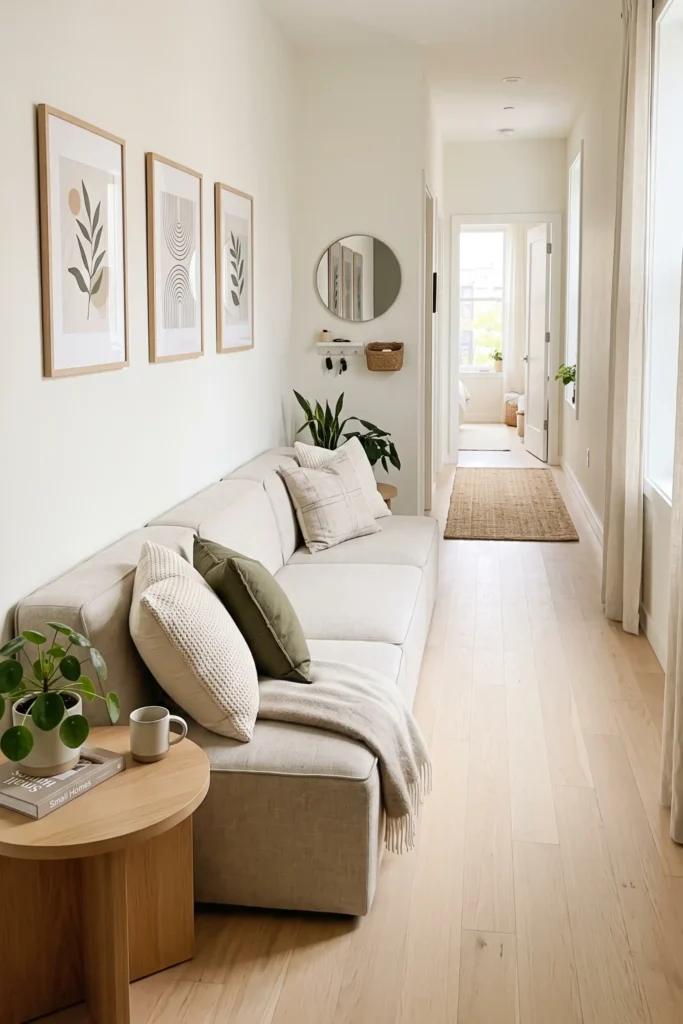
Standard deep sectionals can block traffic in long, narrow apartment layouts. Choosing shallow modular bases measuring 30 inches deep preserves walking space while still providing comfortable upright seating for guests.
Shallow seating frames work especially well when positioned directly against main living room walls.
14.Stack Cube Modules Vertically When Extra Floor Space Is Needed
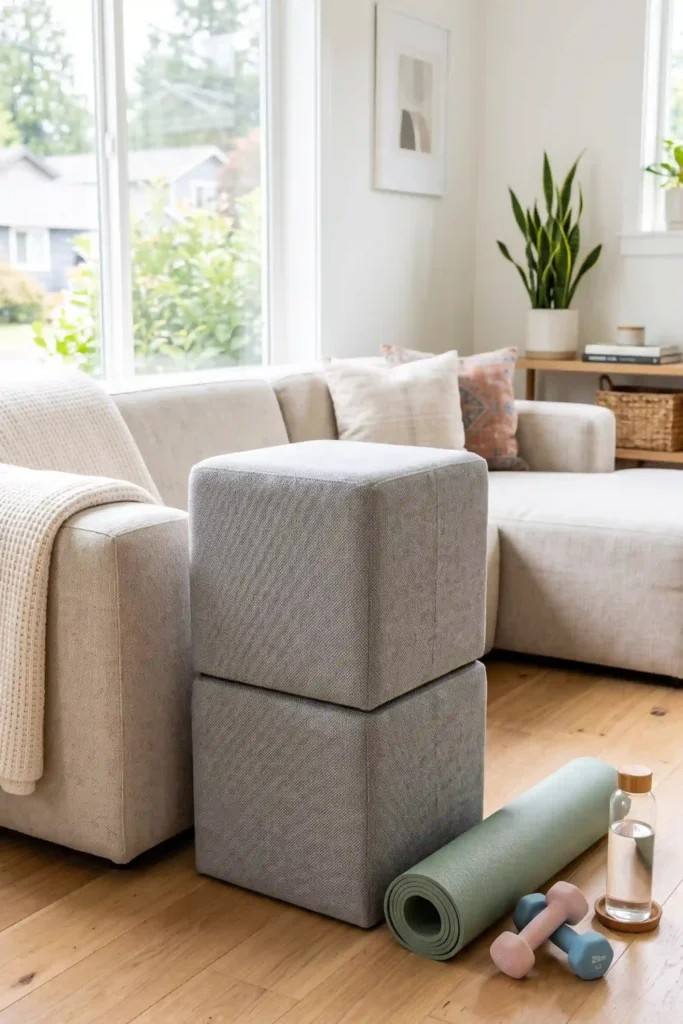
Firm foam cube seats give you vertical flexibility when floor space gets tight during workouts or gatherings.
- Stack two cubes vertically to form a temporary end table beside the main frame.
- Line them up horizontally along a wall to create an entryway bench.
- Nest smaller ottoman cubes underneath main seat frames when not in use.
Always choose high-density foam cores that hold their crisp square shape when stacked on top of each other.
15.Create Private Work Nooks with High-Back Acoustic Modules
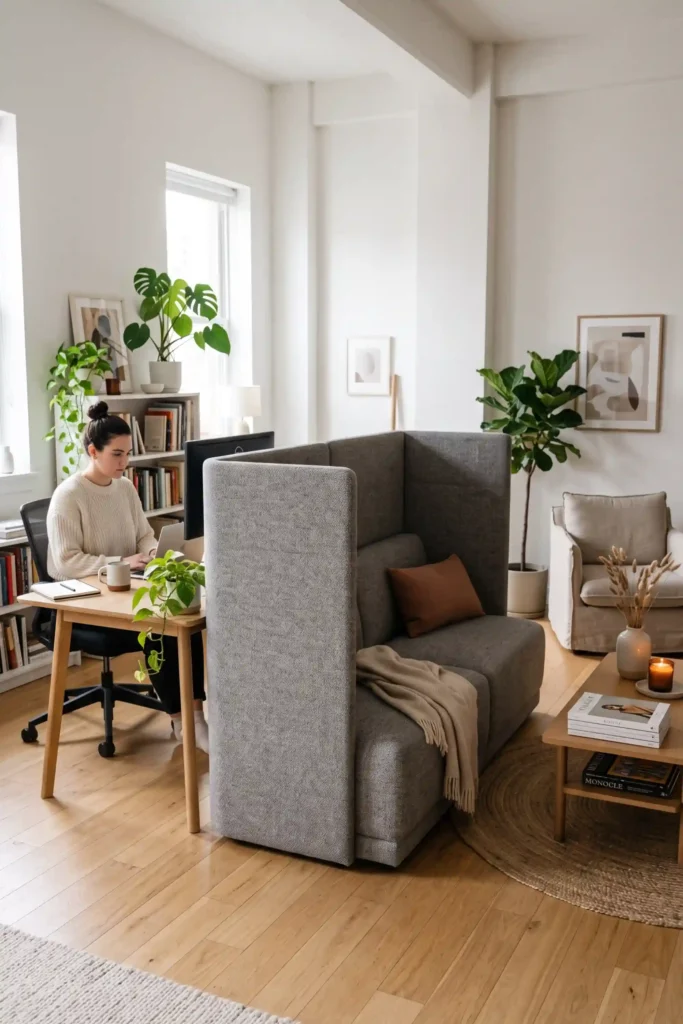
Remote workers in studio apartments often struggle to separate work life from relaxation. High-backed modular couch units act as room dividers, blocking visual distractions and absorbing sound when placed in the center of the room.
Turning the high backrest toward your main entry door creates an instant private foyer area in open studio plans.
16.Choose Backrest Cabinets with Built-In Bookshelf Ledges
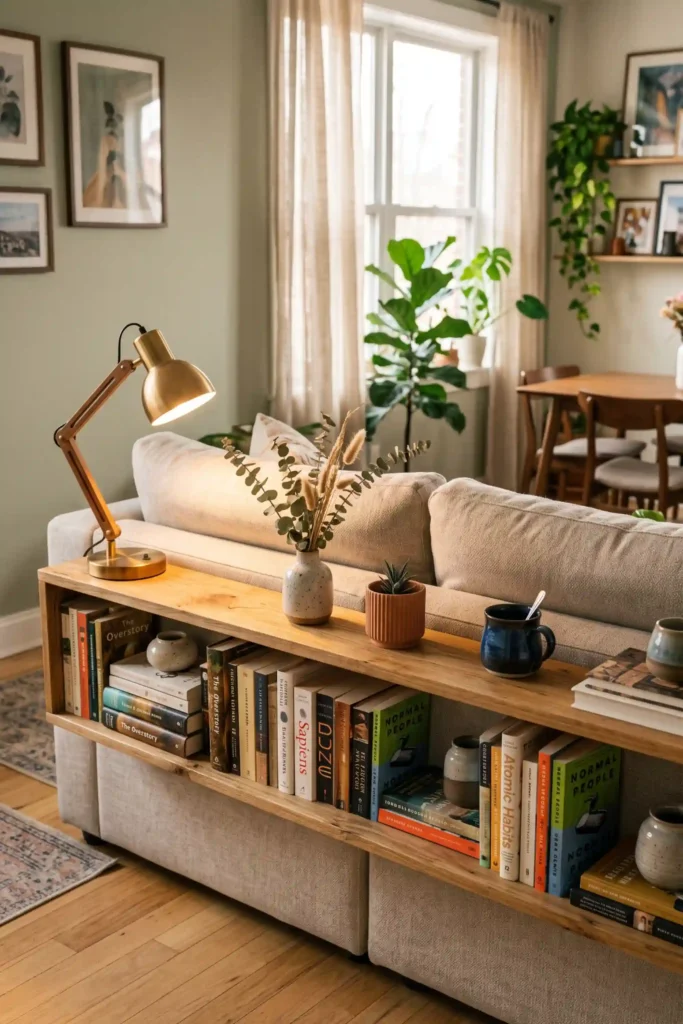
Integrated shelving running along the back of a modular frame replaces the need for a separate console table behind the couch.
- Store hardcover books and small ceramic vases directly on the built-in ledge.
- Plug phone chargers into flush-mounted USB outlets along the top trim.
- Position the couch away from walls so the shelving stays accessible.
Placing low table lamps on the back ledge gives you cozy reading light without taking up side table space.
17.Switch Layouts Fast with a Tool-Free Reversible Chaise
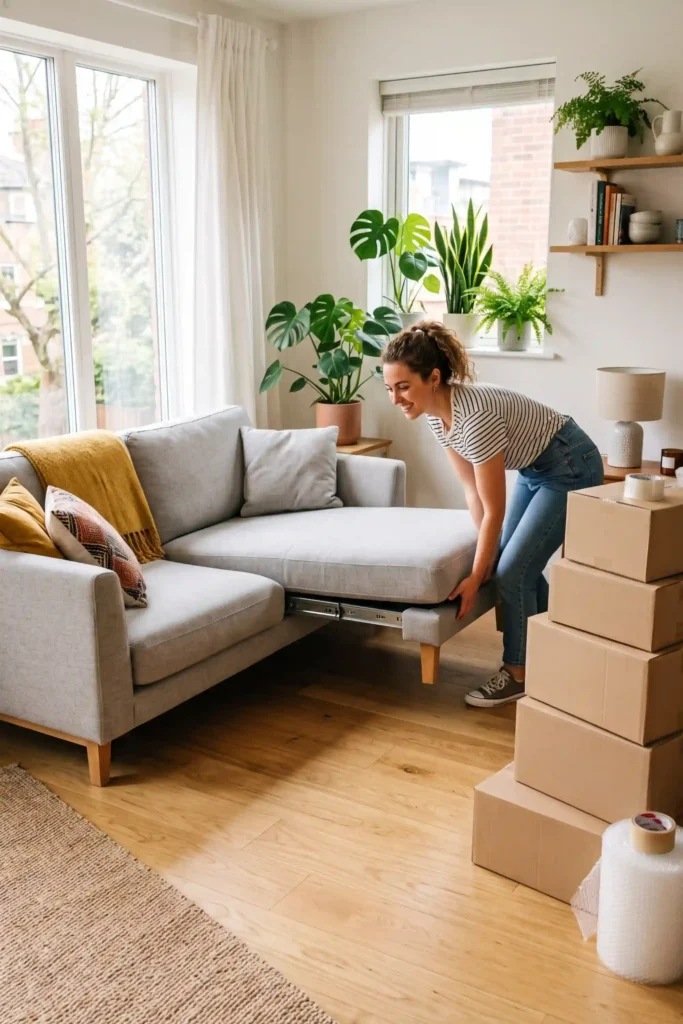
Moving to a new apartment often means discovering your old sectional chaise blocks the balcony door. Reversible modular chaises use drop-in bracket pins that let you move the extension from left to right in under two minutes without using tools.
This simple flexibility makes reversible modular couches one of the smartest investments for frequent movers.
18.Slide Ottoman Seats Under Main Base Frames when Unused
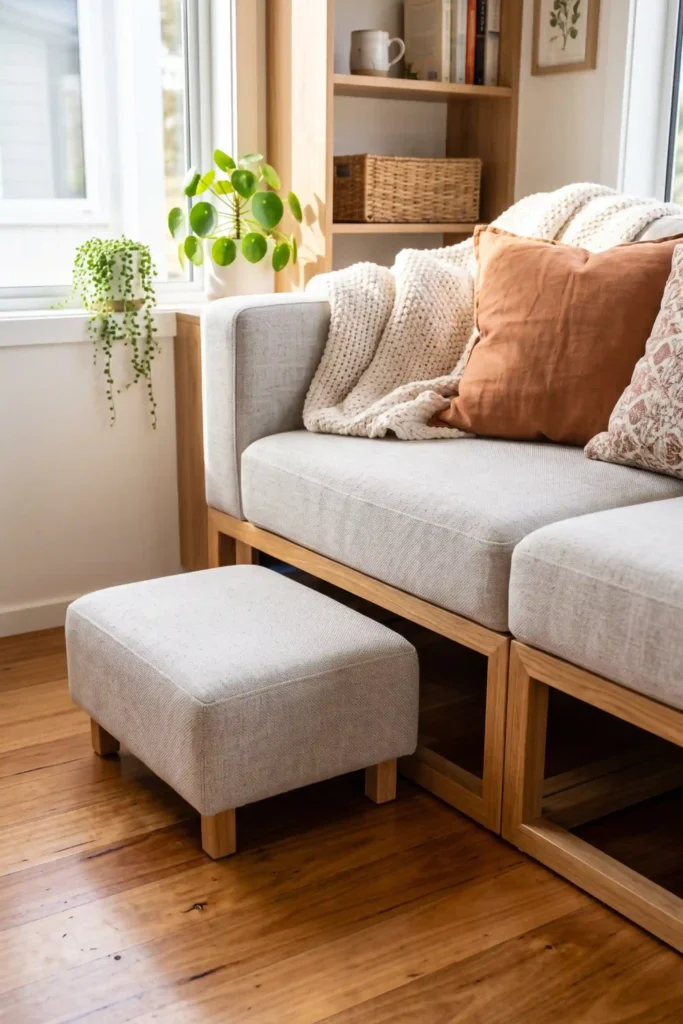
Nesting modular designs feature hollow main couch bases that allow footrest ottomans to slide underneath when you need open floor space for stretching or yoga. Pulling the footrest forward gives you instant lounge comfort during evening hours.
Choose smooth-gliding carpet casters on bottom ottomans so they slide out effortlessly without tugging on rug fibers.
19.Fill Awkward Room Corners with 90-Degree Modular Wedges
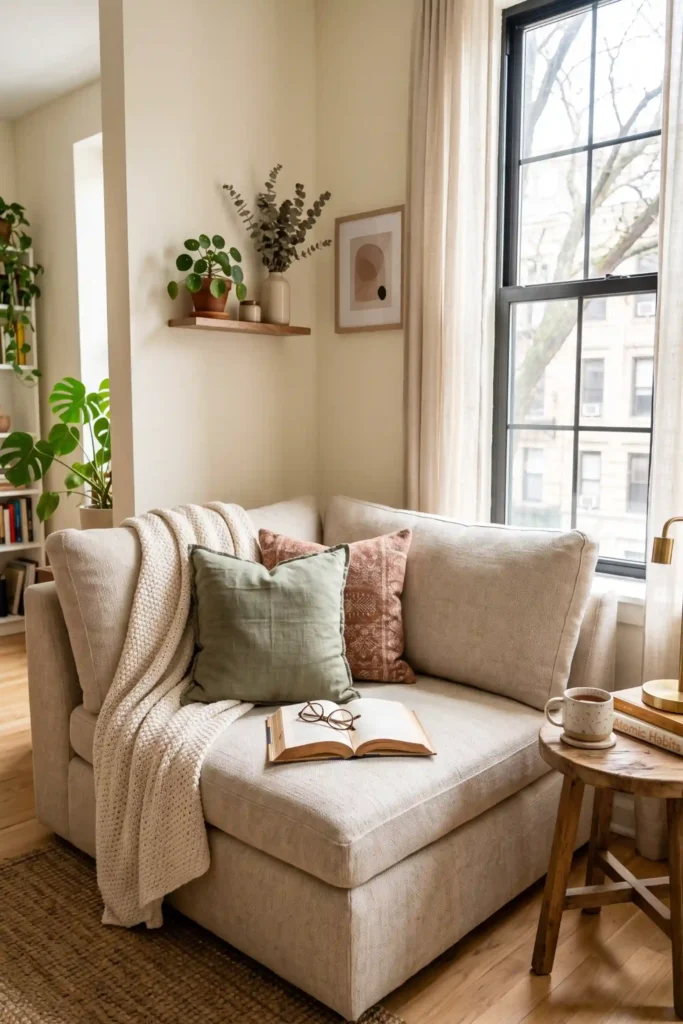
Curved or angled corner wedges prevent wasted dead space behind living room furniture. Placing a dedicated wedge module directly into 90-degree wall corners turns forgotten nooks into comfortable reading seats.
Pairing an angled wedge module with two armless side blocks builds a complete corner sectional tailored to your exact wall measurements.
Final Thoughts on Flexible Seating
Flexible seating lets your living room change functions throughout the day without sacrificing real comfort. Choose modular pieces with heavy-duty connector latches, durable performance fabrics, and scale that fits your daily walking paths. Measure narrow doorways and main wall lengths before buying so every block sits flush against your room perimeter. Save your favorite modular layouts to your Pinterest home decor boards so you can reference these setup tips when planning your next move!