Sofa beds get a bad reputation for a reason. Most of them look like an awkward compromise the second you walk into the room—frumpy back cushions, visible metal frame gaps, and seat cushions that slide forward whenever someone sits down. You do not have to accept that saggy, temporary look in your living space.
Learning how to style a sofa bed so it looks like a regular couch takes about 15 minutes using simple textile tricks that hide the pull-out seams completely. By changing how you tuck the upholstery and layering structured, heavy-fill cushions over the weak spots, you can firm up the profile into a tailored piece of furniture. Guests will sink right in without ever suspecting there is a folded mattress hidden inside the frame.
What You Need
Steps At a Glance
1. Tuck a Fitted Linen Cover Tight into the Seat Creases

Push non-slip foam grip strips deep into the gaps between the seat cushions and the armrests. Pull your fabric cover smooth across the seating area, shoving at least 3 to 4 inches of excess material into the rear frame crack where the mattress hinges sit.
If the fabric pops out when you sit down, push a 1-inch wooden dowel rod down into the back seam behind the seat cushions. The dowel locks the fabric against the internal bed frame so the surface remains smooth.
⚠️ HEADS UP
Avoid thin synthetic stretchy slipcovers. They cling tight to uneven cushions and accentuate every dip or lump in your sofa bed frame rather than smoothing them out.
2. Anchor the Base with Heavy Square Throw Pillows
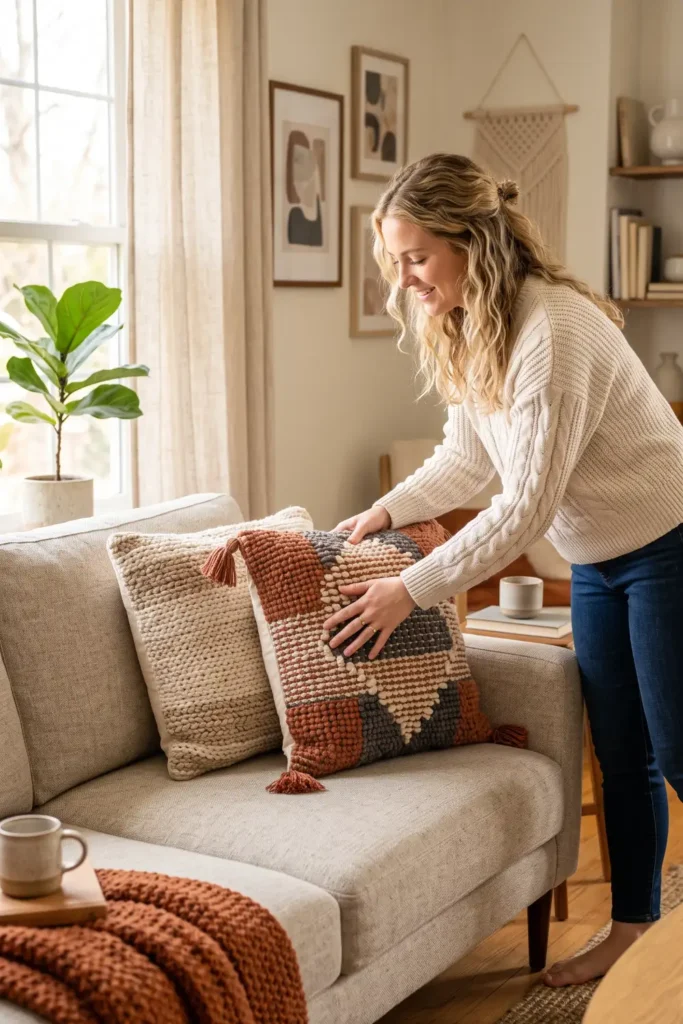
Standard sofa bed back cushions are notoriously thin, revealing the hard wooden or metal top rail of the hidden bed mechanism. Stand two 22×22 inch square pillows directly against the left and right armrests, tilting them slightly inward toward the center.
Use duck feather or heavy down-blend inserts instead of cheap polyester fill. Feather inserts weight the corners down, creating a structured, tailored silhouette that hides flimsy back padding.
3. Layer Oversized Lumbar Cushions to Hide Mid-Back Gaps
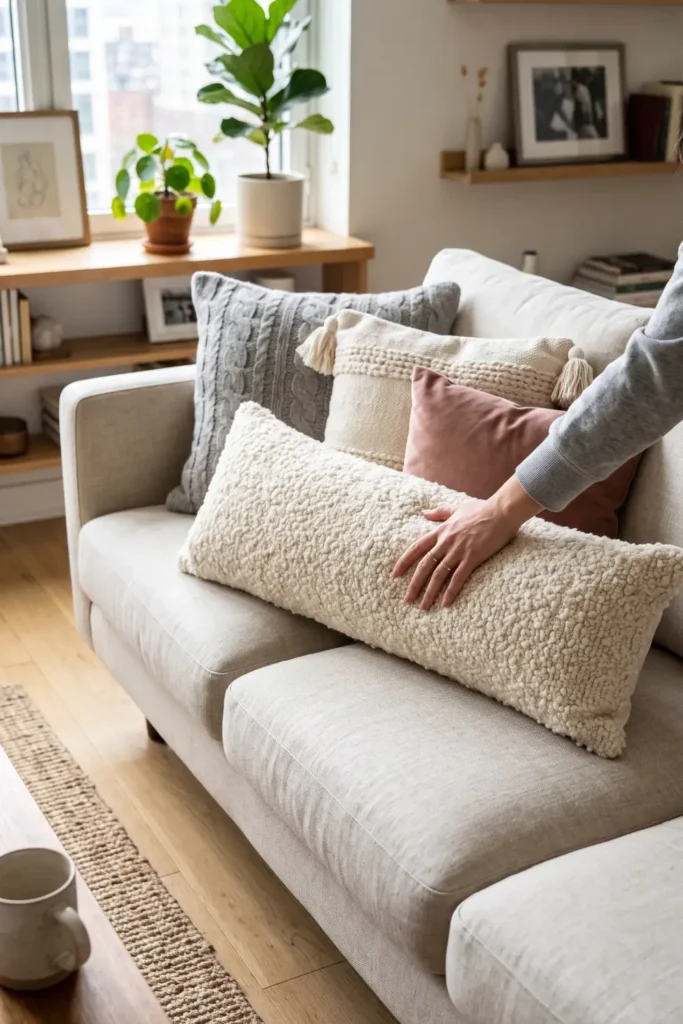
Place one long 12×24 inch lumbar cushion horizontally across the center of the seat, overlapping the inner edges of your corner pillows. This creates a low-slung, modern profile while completely blocking the split seam where the sofa bed seats meet the backrest.
Choose a cushion cover with a heavy woven texture, such as bouclé or linen-wool blends. Flat cotton covers draw attention to uneven cushion padding, whereas rough textiles mask dips in the underlying foam.
Buy pillow inserts that are 2 inches larger than your pillow covers. Putting a 24×24 insert inside a 22×22 cover gives your couch a firm, high-end upholstery look that holds its shape when people sit down.
4. Drape a Textured Throw Blanket Over the Back Frame
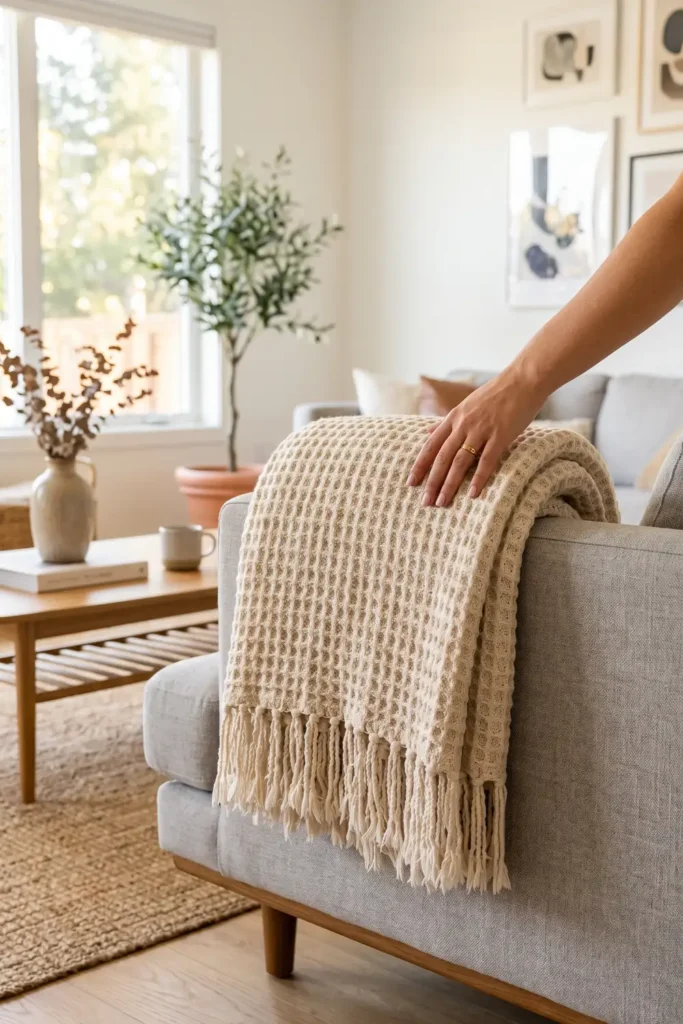
When the back cushions of your sofa bed look uneven or lumpy, fabric layering hides the structural flaws instantly. Fold a heavy 50×60 inch knit throw blanket in thirds lengthwise.
Drape it cleanly over the back center of the sofa frame, letting it hang down 10 to 12 inches over the top of the seat cushions. This layer breaks up the flat visual plane of the backrest and draws the eye away from sagging seams.
💡 PRO TIP
Choose a throw blanket with fringe or a waffle texture. Smooth fleece or satin throws slide off leather and linen sofa backs every time someone leans back.
5. Stash Guest Bedding in Nearby Storage Ottomans
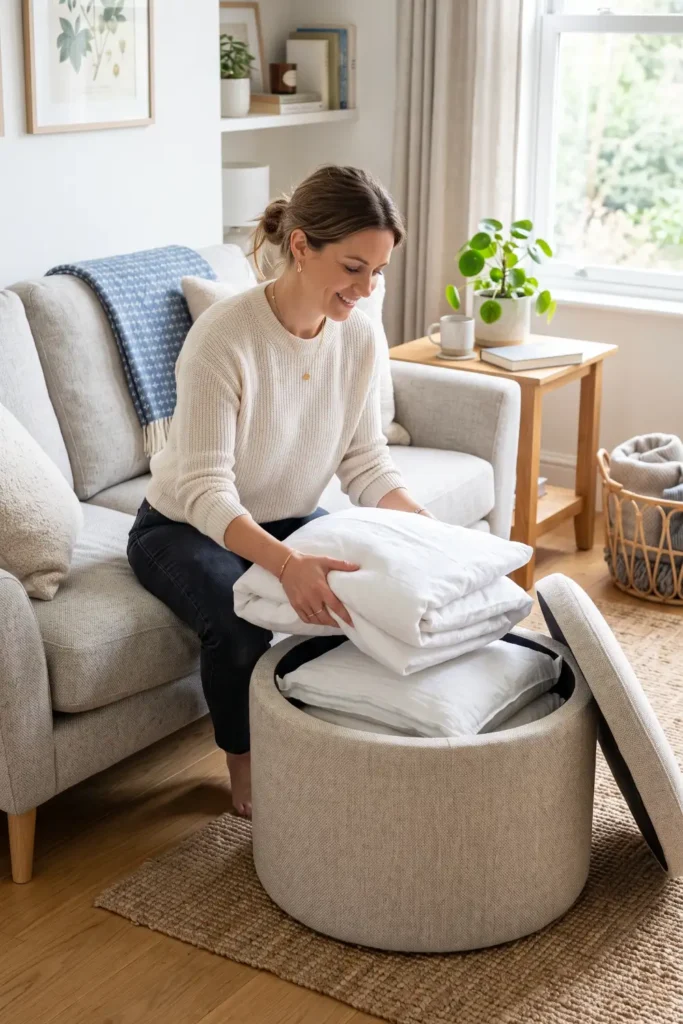
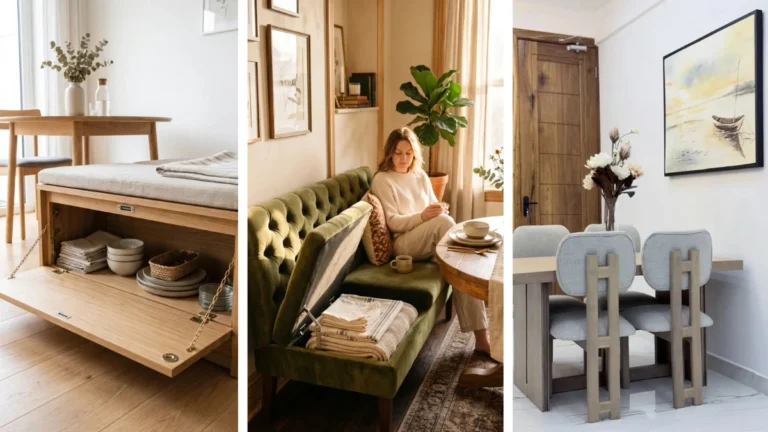
Bedding stuffed inside the sofa frame causes internal mattress mechanisms to bulge, which distorts the cushion alignment. Keep sheets, mattress toppers, and sleeping pillows inside an 18-inch upholstered storage bench or ottoman placed next to the couch instead.
Storing bedding separately allows the sofa frame to close completely flush. Your living room stays clutter-free while giving guests immediate access to extra blankets when night falls.
6. Place a Rigid Coffee Table Directly in Front of the Seat

Positioning a solid wooden or stone coffee table 14 to 18 inches away from the front seat frame creates a strong visual anchor in the room. Solid furniture pieces draw the eye forward and partially block the lower view of metal couch legs or sagging front dust ruffles.
Choose a table with an enclosed base or solid side panels rather than open glass legs. The solid mass masks the bottom 10 inches of the sofa frame where pull-out bed hinges usually expose themselves to the room.
Common Mistakes & FAQ
3 Mistakes That Keep Sofa Beds Looking Like Beds
Light fill collapses in hours and reveals the thin factory back cushions. Heavy feather or down-blend inserts hold the tailored shape all day.
Sheets and mattress toppers push the seat cushions forward and create visible bulges. Store them in a nearby ottoman instead.
Without a solid table 14–18 inches away, the lower metal legs and pull-out hinges stay fully visible from every angle of the room.
Frequently Asked Questions
Will a slipcover stop me from opening the sofa bed quickly?
No. A properly tucked cover with the excess pushed into the rear crease lifts off in under a minute. Keep the wooden dowels loose so they slide out easily when guests arrive.
Do I need to buy all new pillows?
Only the inserts matter for structure. You can keep pillow covers you already own as long as you upgrade to heavier 22×22 and 12×24 feather inserts that fill them completely.
What if my sofa bed has leather cushions?
Skip stretchy fabric slipcovers. Use a heavy textured throw draped over the back and rely on the oversized square and lumbar pillows to hide seams. Non-slip grip pads still work underneath the seat cushions.
How often do I need to re-tuck everything?
Most people fluff and re-tuck once a week or after heavy use. The wooden dowel trick keeps the main cover locked in place between cleanings.
Quick Reference Card & Conclusion
Your sofa bed now reads as a real couch. The seams stay hidden, the cushions hold their shape, and guests will never guess a mattress is waiting inside.
Next time you open it for overnight company, pull the cover and pillows off in one minute, then rebuild the look the next morning using the same six steps.
Pin this guide to your small-space living room board so you always have the exact pillow sizes and tucking tricks ready when you want how to style a sofa bed so it looks like a regular couch to look effortless again.