You step through your front door after a long day, drop your bag on the counter, and instantly feel trapped. In a small space, even three misplaced items or a floor lamp in the wrong corner makes the main room feel crowded. I spent six months living in a 320-square-foot cabin, constantly bumping into furniture before realizing that floor space wasn’t my real problem—visual weight was.
This guide walks you through exactly how to feel less cramped in a tiny home using a practical room reset. You will lift heavy shadows off your floor, open sightlines across your living zone, and maximize incoming natural light without spending money on a major remodel. The entire project takes about 2.5 hours from start to finish. Grab a tape measure, a screwdriver, and a storage bin—let’s make your home feel wide open again.
1. Clear every flat surface down to three core items
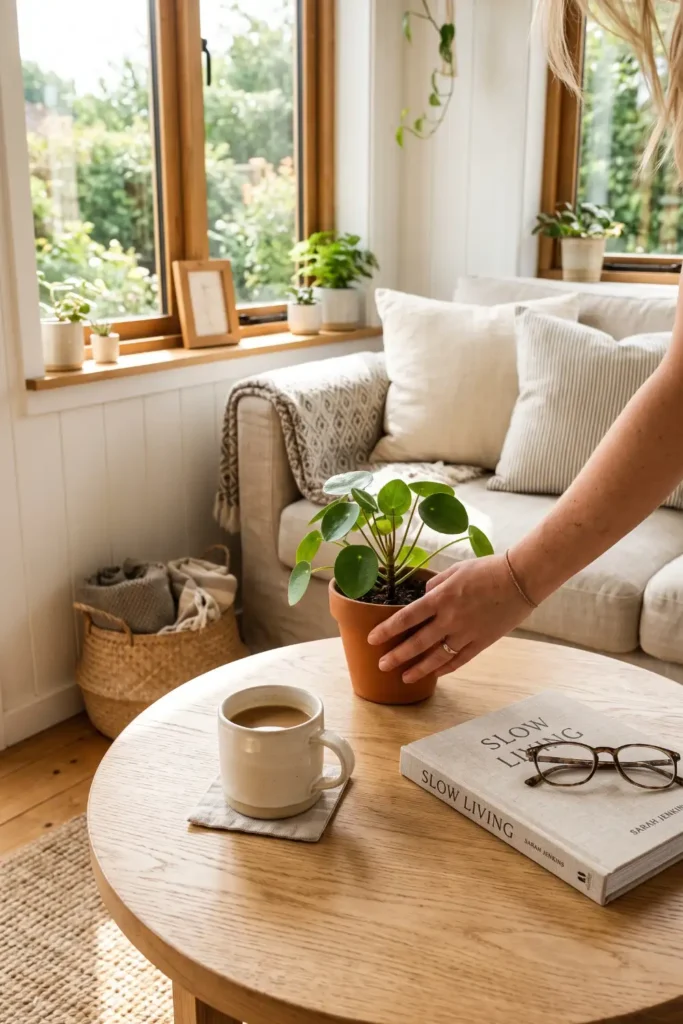
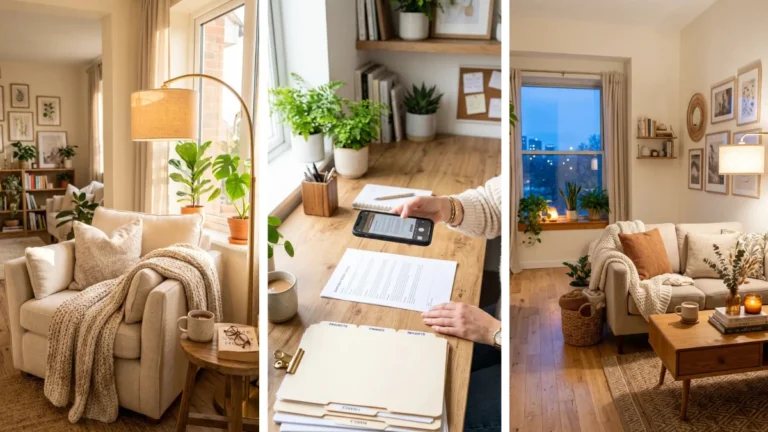
Pick up every loose object sitting on your kitchen counters, coffee tables, and window sills. Move everything into a temporary sorting bin on the floor. Leave only 3 items on any single flat surface—such as a plant, a reading lamp, and a small tray. Clearing visual clutter gives your eyes an uninterrupted line across the room, which tricks your brain into perceiving double the actual square footage. Set a timer for 15 minutes and tackle one table at a time.
2. Hang window drapes at the ceiling line
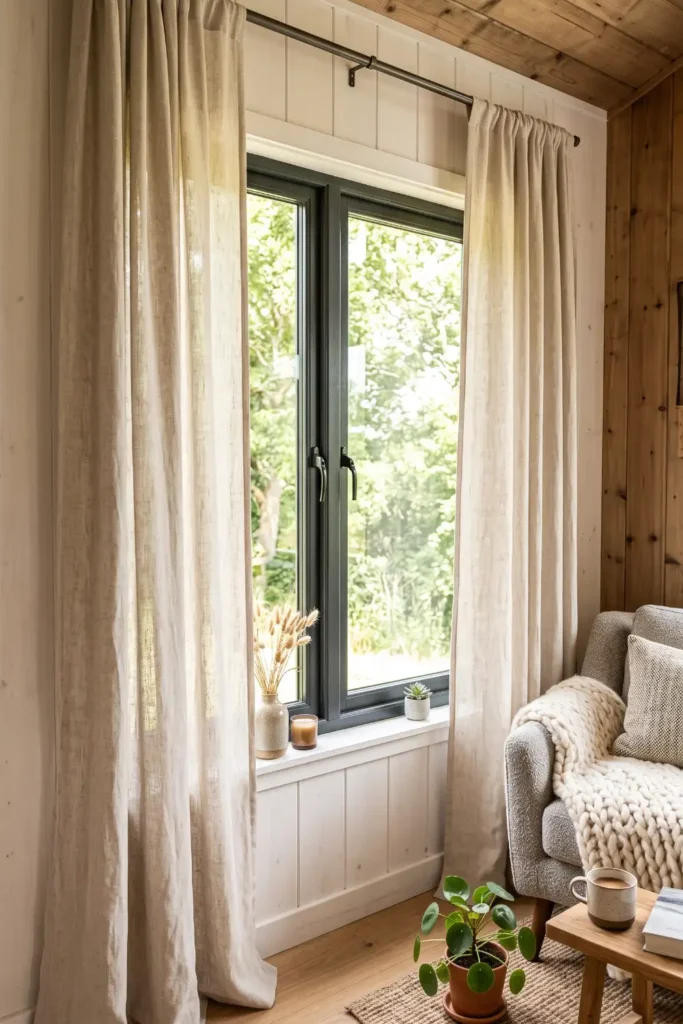
Measure the distance from the top of your window frame straight up to your ceiling molding. Mount your curtain rod brackets 2 inches below the ceiling line rather than directly above the window trim. Choose long curtain panels—typically 84 inches or 96 inches—so the fabric reaches all the way down to the floorboards. Hanging drapes near the ceiling draws the eye vertically, creating the illusion of much taller walls.
3. Swap heavy floor lamps for wall-mounted sconces
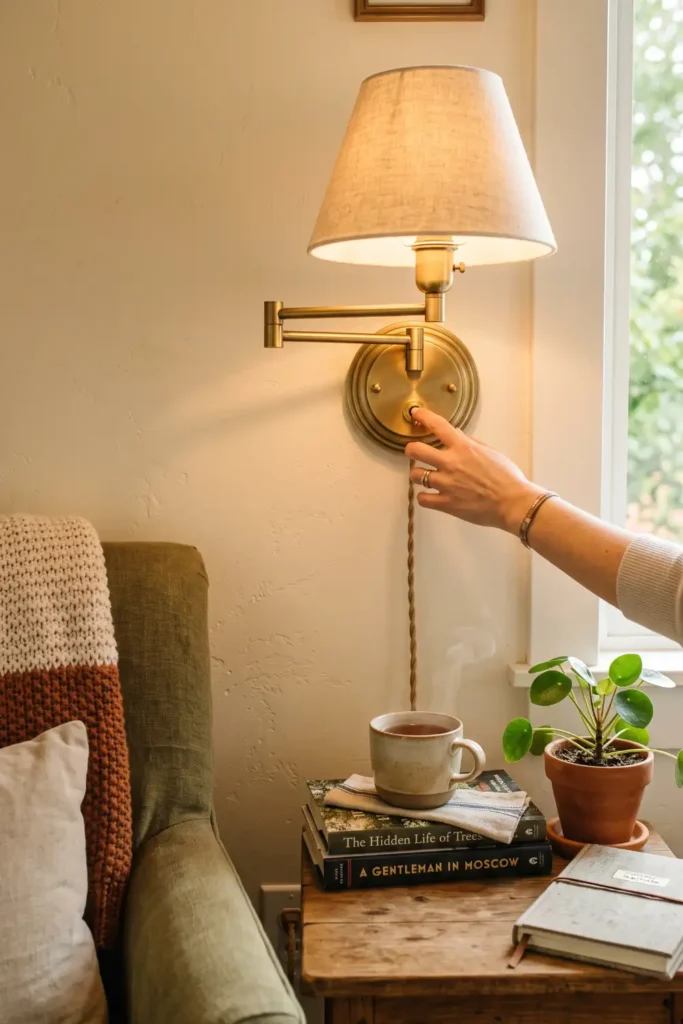
Unscrew your bulky floor lamp base and move it out of the main walking path. Floor lamp bases consume precious square feet of carpet area that your eyes automatically register as closed-off space. Install plug-in wall sconces 5 feet above the floor using adhesive wall strips or basic drywall screws. Lifting your light source onto the wall frees up the floor beneath it while casting bright, elevated light into dark room corners.
4. Pull major seating pieces four inches away from walls
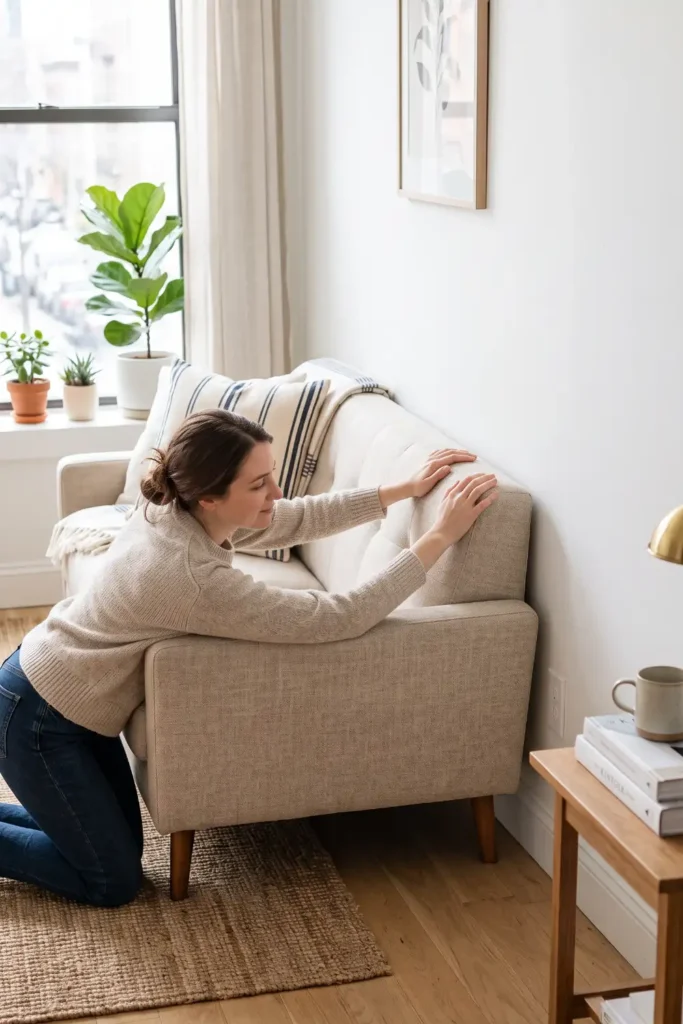
When furniture is smashed flat against drywall, it actually shrinks your room visually. Slide your sofa forward 4 inches so shadow lines can form behind the back cushions. This small air gap makes the layout feel floating and spacious instead of crammed against the perimeter.
5. Store loose floor items inside solid lidded baskets
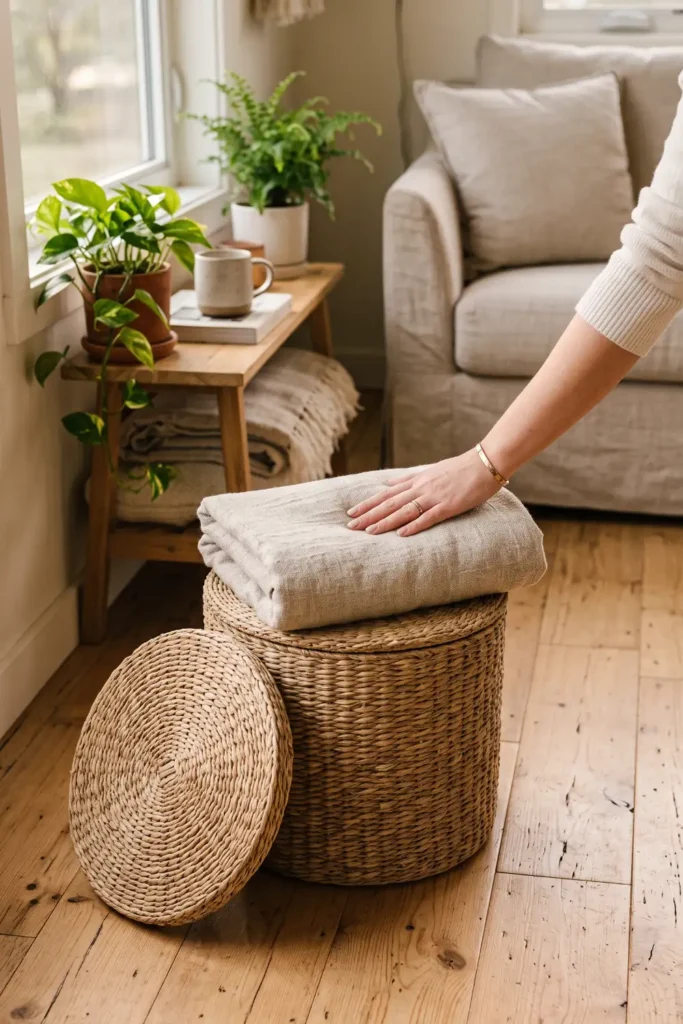
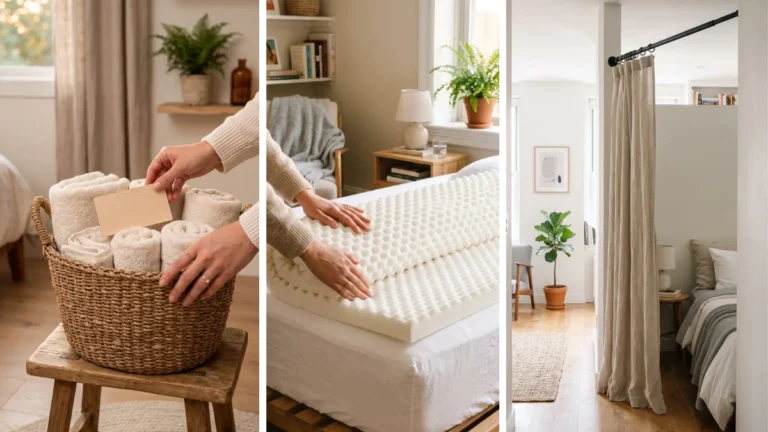
Open wire baskets show every single wire, cord, and shoe inside them, adding to visual clutter. Replace clear bins or open crates with opaque woven baskets that have flat wooden or fabric lids. Drop scattered items inside—extra throws, pet toys, or shoe stacks—and close the lid. Keeping floor items hidden behind solid textures instantly calms the room perimeter.
6. Mount one large mirror opposite your biggest natural light window
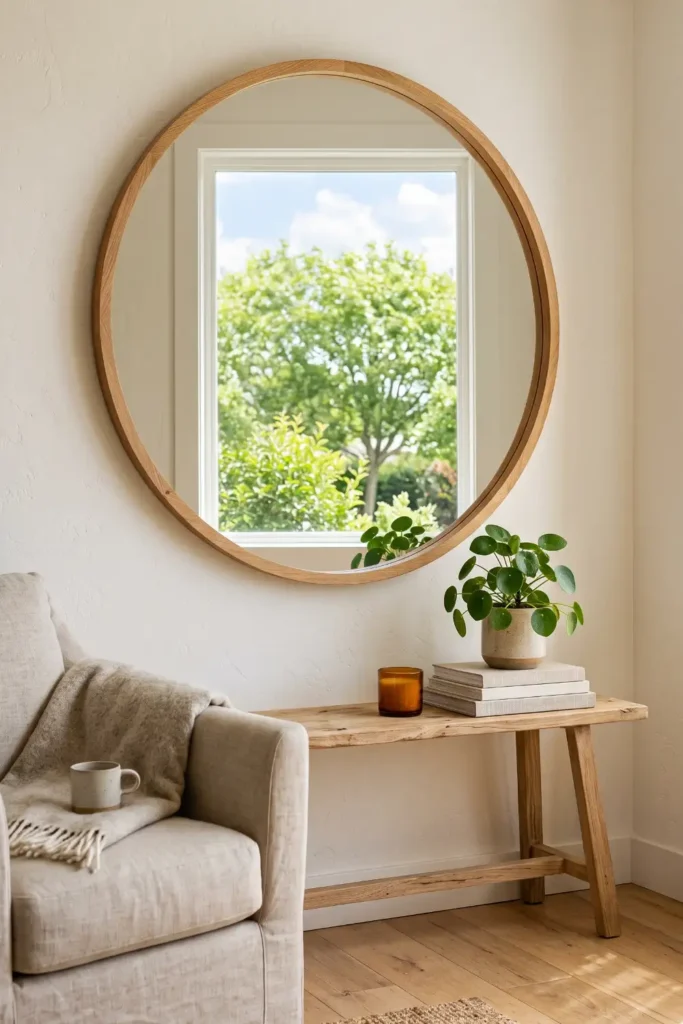
Positioning a mirror on an interior wall without checking what it reflects is a missed opportunity. Measure the wall area directly across from your main window, then secure a mirror at least 24 by 36 inches at eye level using 50-pound wall anchors. The glass catches incoming daylight and bounces it back into the darkest corner, effectively doubling your visible room depth in about 15 minutes.
2. Hang window drapes 2 inches below ceiling line.
3. Replace heavy floor lamps with wall-mounted sconces.
4. Pull sofas and armchairs 4 inches from walls.
5. Hide loose floor clutter inside lidded woven baskets.
6. Mount a mirror directly opposite your main window.
Now you know exactly how to feel less cramped in a tiny home without spending thousands on new furniture or knocking down walls. Lifting your lighting, clearing sightlines, and raising curtain rods completely changes how air and light move through your main room. Enjoy your open, restful living space tonight. Bookmark this guide to your Pinterest home organization board so you can run through these steps whenever your space starts feeling full again!