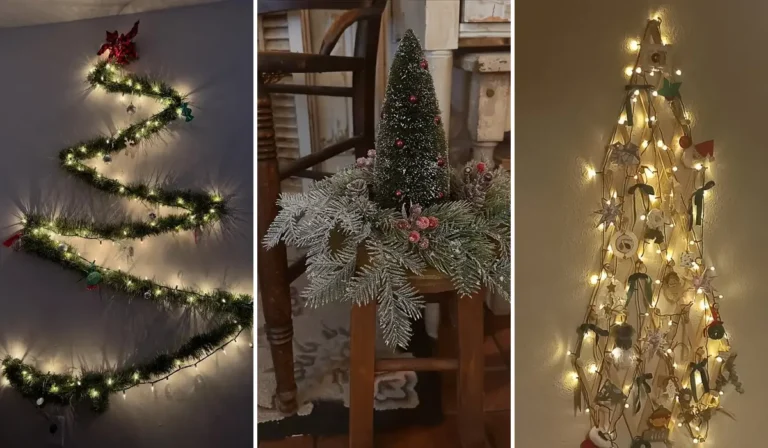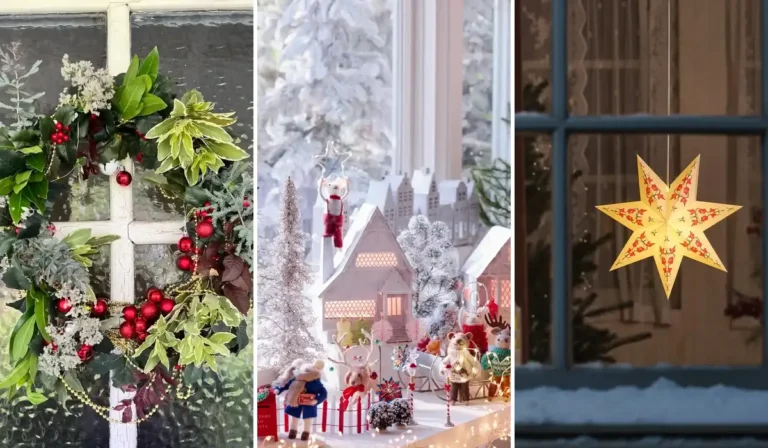
Eight friends, four chairs, and one room that has to hold the cooking, the eating, and the talking. That is the puzzle of hosting friendsgiving in a small apartment, and it has less to do with square footage than with how you use it. These twenty-five ideas cover the three things that make or break the night: seating that fits people without buying chairs, food that feeds a crowd without clogging the kitchen, and flow that keeps everyone moving. Count your chairs first. The rest builds from there.
1. Floor Cushions and Poufs That Seat Friends Without a Single Extra Chair

Your guest list has eight names and your chairs number four. Floor cushions and poufs close that gap without a trip to the store or a chair borrowed from the bedroom. Set two or three on the rug near your low table and each one becomes a seat that guests can pull closer or push aside as the night moves along.
Pick cushions with firm filling so no one sinks too low to reach the food, and keep a folded throw nearby for anyone who wants a little extra softness under their knees. When dinner ends, stack the cushions in a corner and your living room is back to normal in about a minute.
Tip: Let the rug set the seating circle
Place the cushions on the rug, not on bare floor, so they stay put and knees stay warm. Leave a clear path to the kitchen so no one has to climb over a seated friend.
Best for: groups of 6 to 10 in one room | Cost: low, use what you own | Effort: low, set out in minutes
2. A Bench Along the Wall That Seats Three Where Chairs Seat One

Your longest wall is probably doing nothing right now except holding a picture frame. A bench turns that dead stretch into seating for three friends, and it needs no pull-out room the way chairs do. Guests slide in from the end, plates stay put, and the walkway stays open.
Pick a bench that fits your table: – Seat height near 18 inches so knees clear the table edge – Length close to the table so three people fit without squeezing – A flat, wipe-clean top that handles spills and stacked plates – Cushions you can toss in the wash after the night ends
Slide it under the table when dinner ends, and the room opens back up.
Bench check
Before the bench goes against the wall
Bench length matches the table length
Seat height lets knees slide under the table
Cushions lift off for washing
Wall behind it stays clear so guests can lean back
Best for: nights when every seat counts
Effort: one afternoon to place and style
Cost: low when you use a bench you already own
3. Folding Chairs That Look Planned, Not Borrowed

Borrowed chairs give the game away. One is metal, one is plastic, one wobbles, and the whole table looks like a waiting room instead of a dinner. The fix is not new chairs. It is making the ones you have match. Start by picking one finish for every chair, even if that means borrowing four of the same kind from one friend instead of one chair from four friends. Add the same cushion to each seat and tie it on so it stays put through dessert. Drape a throw or tie a ribbon on each chair back for one shared detail. Set them around your foldable dining table and step back. Same height, same cushion, same finish, and suddenly the borrowed chairs look like a set you chose.
Make borrowed chairs match in 3 steps
Borrow one set. Four of the same chair from one friend beats one chair from four friends.
Same cushion, tied on. One cushion style on every seat, tied so it stays put all night.
One shared detail. A throw, ribbon, or small wreath on each chair back ties the set together.
Best for: a table that seats six or more on borrowed chairs.
4. Stools and Ottomans Pulled From Every Room to Fill the Table

Start at the bedroom and work your way back to the table, gathering every seat your place already owns. Do pull the ottoman from the foot of the bed, the stool from the vanity, and the pouf from the living room corner, then slide each one under the table edge so legs still fit. Do give the tallest guest the real chair and save the low pouf for the friend who sits cross-legged anyway. Don't drag in the desk chair with wheels, since it rolls away mid-bite and bumps the table. Don't stack cushions on a wobbly stool to fake height, because a tipsy seat ruins the meal. Count heads first, then count seats, and let the room itself fill the gaps.
Which seat to pull, and which to leave
Match the seat to the guest, not just to the empty spot.
| Seat you already own | Height | Best for | Effort |
|---|---|---|---|
| Foot-of-bed ottoman | Low, firm | The friend who sits cross-legged | Carry it in |
| Vanity stool | Near dining height | A full plate and a wine glass | Slide it over |
| Living-room pouf | Low, soft | A short visit at the table | Roll it across the rug |
| Desk chair on wheels | Rolls away | Nobody at dinner | Leave it at the desk |
Rule of thumb: if it rolls or wobbles, it stays out of the dining spot.
5. The Sofa Becomes a Dinner Seat With Lap Trays That Actually Work
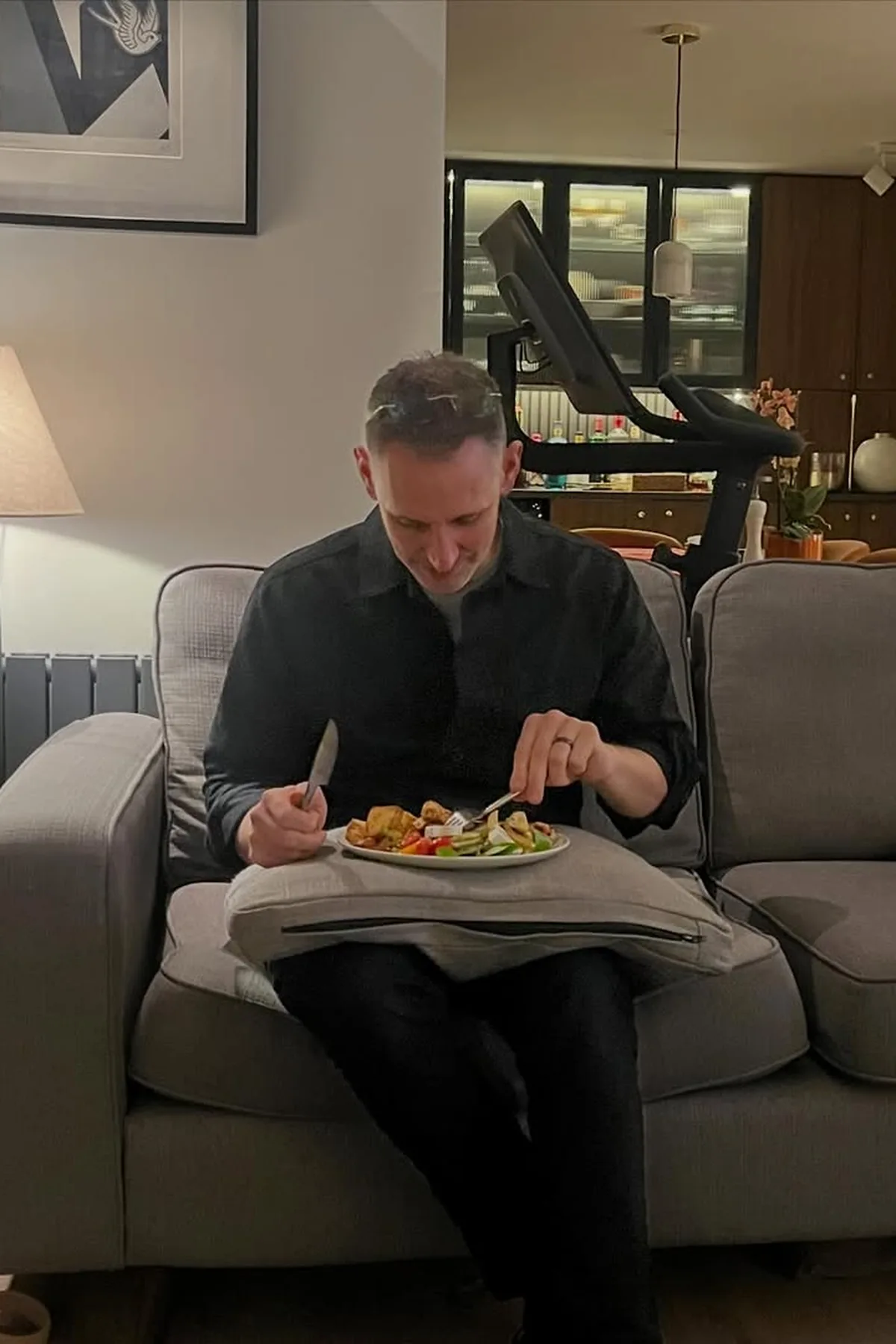
Your sofa is already the most comfortable seat in the room, so give it a job at dinner. A firm lap tray with a raised edge turns each cushion into a steady spot for a plate, a glass, and a fork, and your friends can sit back, eat, and talk without balancing food on their knees. Keep the trays wide enough for a plate, and set a small side table nearby for refills.
On the plus side, nobody waits for a chair, and the room feels calm. On the other side, soft trays tip, drinks need a safe spot, and crumbs land where people sit, so pick trays with a firm base and a cup ring, and shake out the cushions once everyone leaves.
What makes a lap tray work
- • Firm, flat base that stays level on a soft cushion
- • Raised edge so plates and cutlery stay put
- • Cup ring or deep spot for a glass
- • Wide enough for a plate plus a fork
- • Folds flat or stacks away after the night
Best for: sofa seats with no table nearby · Effort: low · Cost: low
6. Place Cards That End the Hovering and Get Everyone Seated

Why does everyone end up standing near the door, plate in hand, waiting for someone else to sit first? That pause eats up the first ten minutes of the night. A place card fixes it in one move. Write each friend's name on a small folded card and set one at every seat before the door opens. Guests scan the table, spot their name, and sit down without the shy shuffle. Keep the cards plain so the names are easy to read from a step back. A leaf, a sprig of rosemary, or a plain kraft card all work fine. Put the talkers next to the quiet ones and keep couples apart so the talk spreads around the table.
Pick your card style
Three ways to mark a seat
Folded kraft card
Best for: large groups
Cost: low
Effort: quick
Leaf name tag
Best for: a fall table
Cost: low
Effort: some tying
Rosemary sprig tag
Best for: tiny tables
Cost: low
Effort: quick
7. A Coffee Table Second Table for the Friends Who Do Not Fit
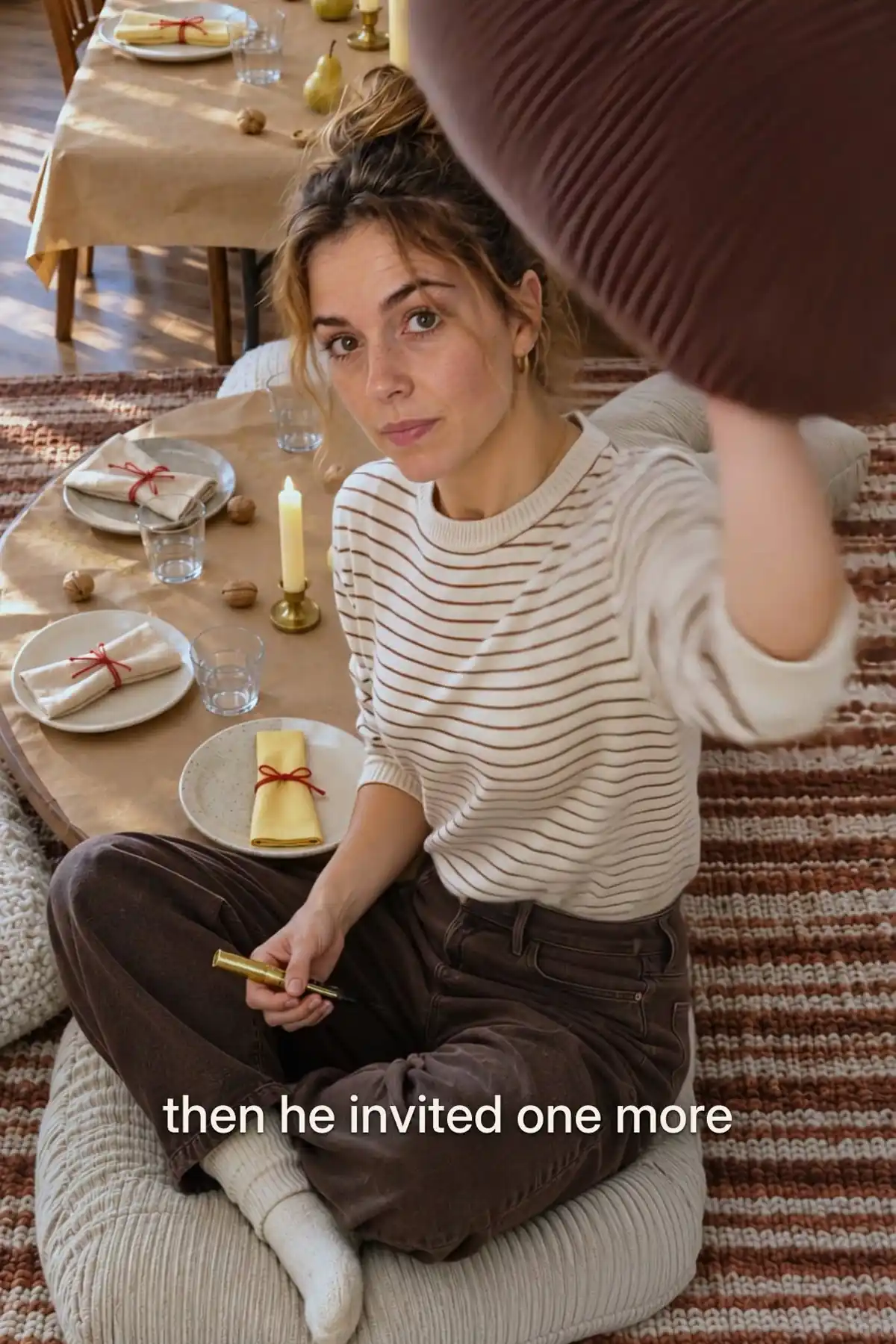
Ten friends said yes and your table seats six. That is the moment to stop counting chairs and start counting cushions. Clear the coffee table, lay a cloth or a sheet of kraft paper over it, and set it the same way you set the big table, with plates, glasses, and a candle in the middle. Put a thick cushion on each side and one at each end so four friends sit low and close. Keep the food you pass most on the main table and send the plates, drinks, and dessert to the low table. The friends on the floor get the same meal, the same candlelight, and the best seat for the stories that run long after the plates are cleared.
BEFORE AND AFTER
BEFORE
One table, six chairs
Ten friends, six seats. Four friends eat standing up, plates in hand, with nowhere to set a glass down.
AFTER
Two tables, ten seats
Six friends at the main table, four on cushions at the coffee table. Everyone sits, everyone eats together.
Best for: 10 to 14 friends | Cost: Low, use cushions you own | Effort: Low, one quick setup
8. Start Standing, Then Sit: A Two-Part Night That Needs Fewer Chairs
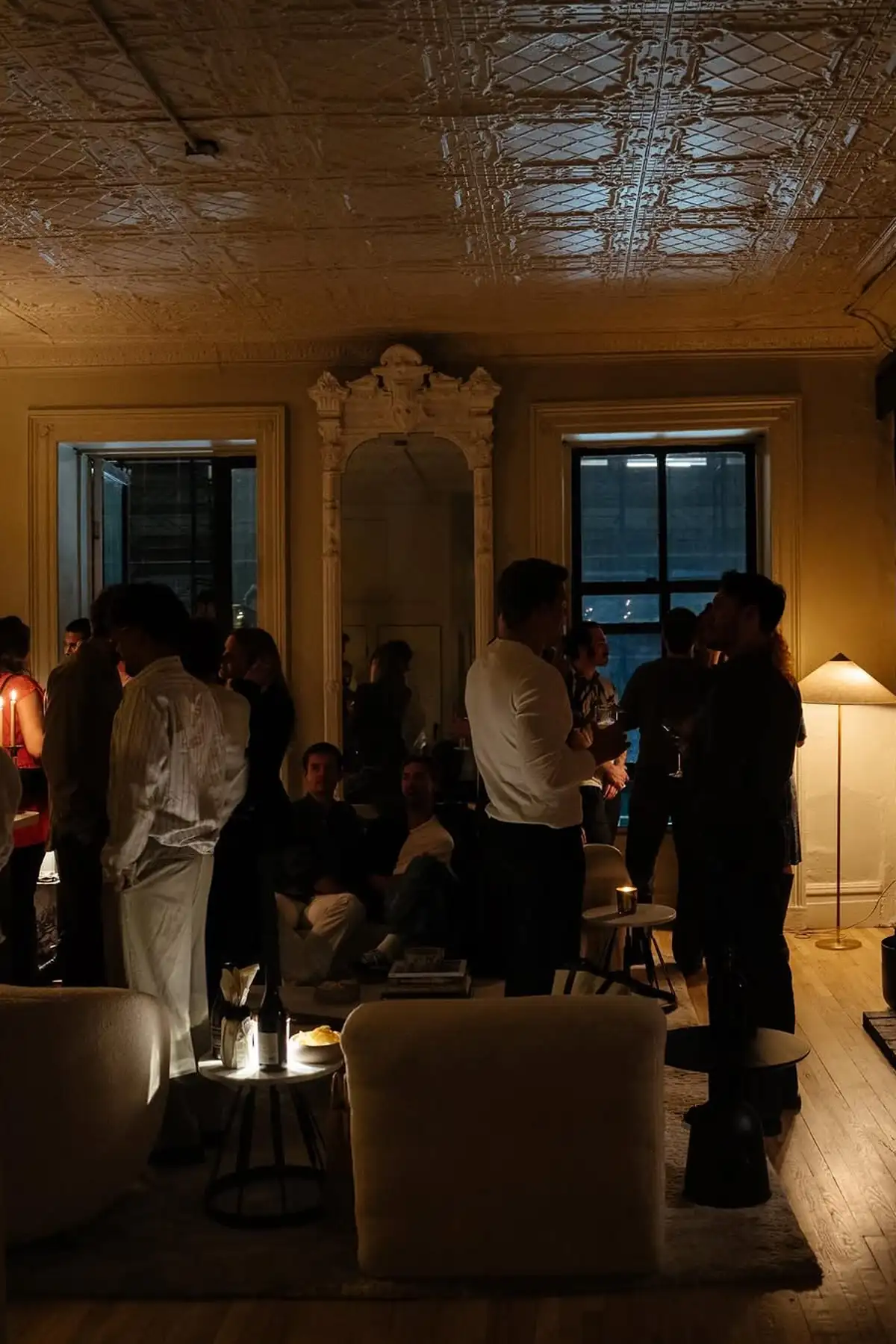
The first twenty minutes set the tone for the whole night. Your friends walk in, coats still on, and nobody wants to claim a chair yet, so let them stay on their feet. Put drinks and a small plate of bites on a counter or side table where people can gather, and keep the dining table half set and out of the way. Conversation warms up faster when everyone is upright and moving, and the room feels full even with a small group. When the food is ready, call everyone to sit, and the table will feel like the natural next step instead of a cold start.
Tip: Set out only two or three bites for the standing part, and save the rest for the table.
At a glance
|
Style Standing first, then seated |
Cost Low, no new buys |
Effort Low, one tray and one table |
9. A Potluck Sign-Up That Keeps You From Cooking the Whole Night

By four in the afternoon, you are out of burners and counter space, still chopping while the first guest texts that they are on their way. Cooking the whole meal alone turns a fun night into a shift in your own kitchen, and the turkey is not even in the oven yet.
A shared sign-up list fixes that before the week starts. You cook the main dish, then each friend claims one slot: a starch, a green vegetable, rolls, a dessert, or drinks and ice. Ask everyone to bring the dish ready to serve and to write the real dish name, not just side. Your stove stays clear, the table fills with food you did not make, and you sit down with your friends at last.
Do it this way, not that way
|
Do One slot per friend, claimed by name Write the real dish, not just side Bring it ready to serve |
Don’t Let five friends bring dessert Leave slots blank until the day Ask for dishes that need your oven |
Best for: groups of 6 to 12 · Cost: low, no new buys · Effort: low, one shared list
10. One Pot, One Main: A Slow Cooker That Frees Your Whole Stove
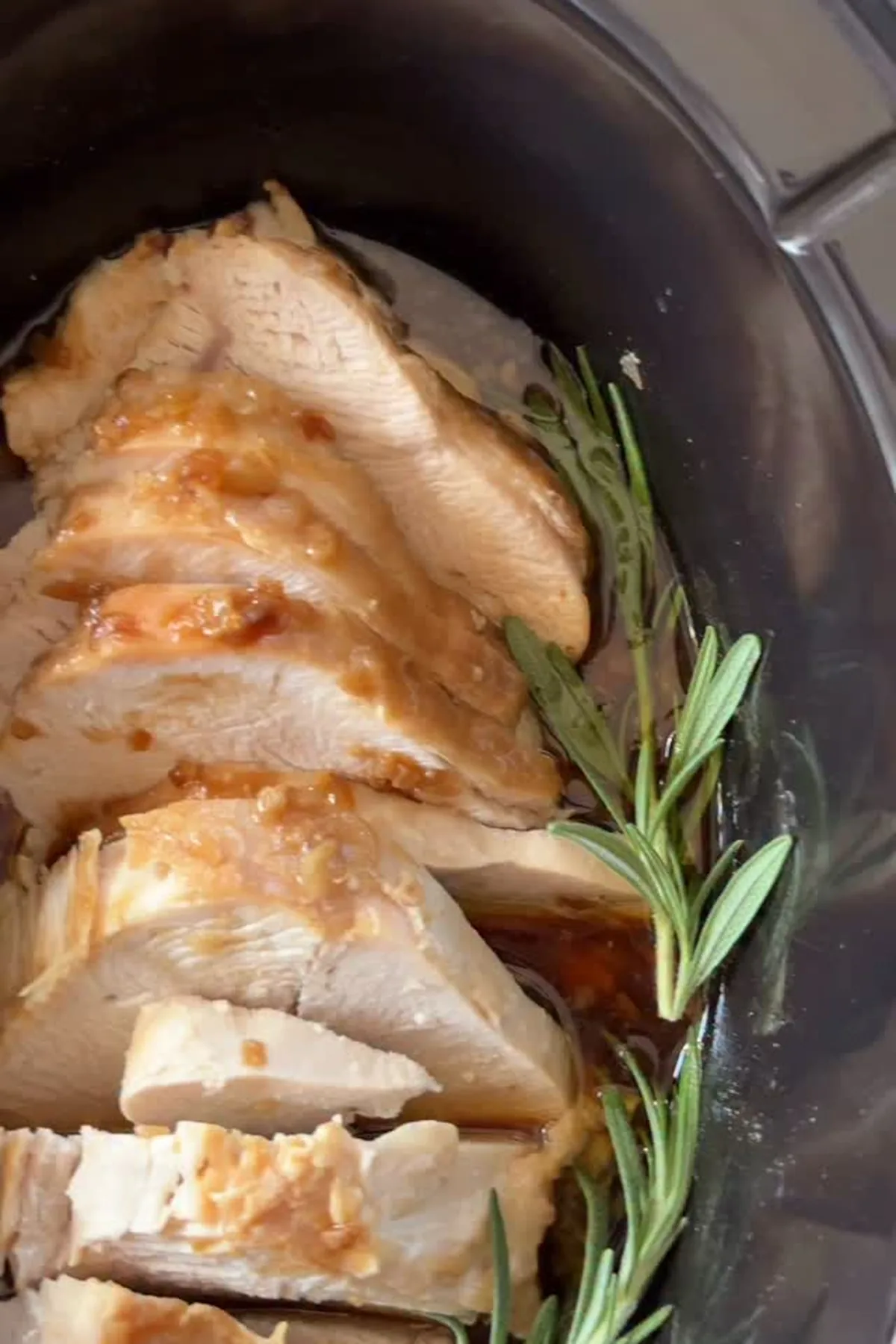
Your stove has four burners, and the night seems to need eight. Sides, gravy, rolls, and the main all fight for the same square of heat, and someone always ends up waiting with a dish in hand. Give the main to the slow cooker instead. First, season a turkey breast and set it in the pot in the morning, then add broth and herbs and put the lid on. Next, set it to low and leave it alone while you set the table and welcome friends. Last, lift the lid near dinner, slice the meat in the pot, and let guests serve themselves from the counter. Your burners stay free for the sides, the kitchen stays calm, and the main takes care of itself while you visit.
The takeaway
One pot holds the main, so your burners stay open for the sides.
Best for: a turkey breast, braised chicken, or a hearty stew | Effort: season it in the morning, then leave it alone
11. A Drinks Station on a Bar Cart That Keeps Everyone Out of the Kitchen

Your kitchen doorway turns into a traffic jam the second someone needs a refill, with friends squeezed in the gap and one more waiting behind them. Roll a bar cart into the living room instead and let the drinks come to the guests. Stock it like a checklist the night before so nothing gets missed. Top shelf: bottles, a shaker, and glasses, with ice in a small bucket and tongs. Middle shelf: mixers, sliced citrus, and a small glass of mint. Bottom shelf: napkins and a spare bottle opener. Keep a water pitcher on the cart too, so non-drinkers never have to hunt for a glass. Park it near the seats but clear of the path to the food, and the same setup serves a dinner party just as well.
The one move that clears the kitchen
“Roll the drinks out to the guests, and the doorway stops being a waiting room.”
Stock the cart the night before, park it near the seats, and refills happen without a single trip to the kitchen.
12. A Grazing Board That Feeds Everyone While the Main Cooks

Hungry friends walk in while the turkey still has an hour to go, and the fastest way to keep the night calm is a board that is already on the table. Do build it in zones so hands do not cross: cheese in one corner, crackers fanned beside it, fruit tucked into the gaps, nuts in a small bowl. Do set it out before anyone arrives so early guests graze instead of hovering near the stove. Do not pile everything in the middle, where the board turns into a scramble. Do not put out the whole spread at once; hold back a refill so the board still looks full at dessert time.
Four zones, one board
1
Cheese corner
Two or three kinds, cut and ready
2
Cracker fan
Fanned beside the cheese, easy to grab
3
Fruit gaps
Grapes and figs fill every bare spot
4
Nut bowl
One small bowl keeps the loose bits tidy
Hold back a refill so the board still looks full at dessert time.
13. Sheet-Pan Sides That Cook Together at One Temperature
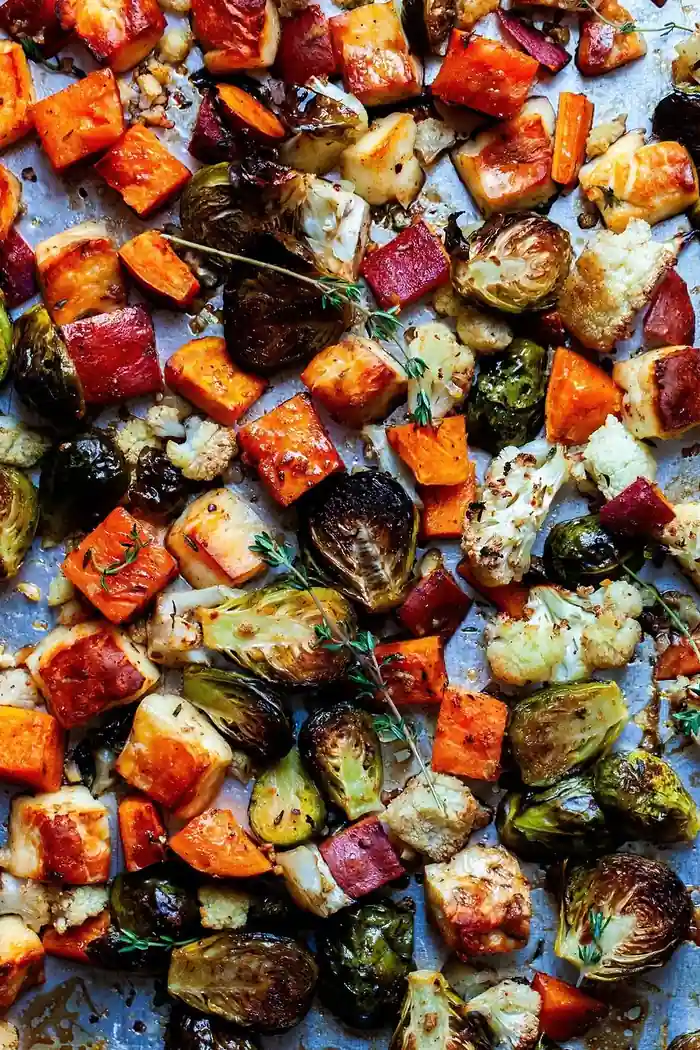
Your oven is one box, and four dishes all need a spot inside it at the same time. How do you fit them all in without a cold side or a burnt one? Pick one heat that works for everything, usually 400 degrees, and build your menu around it. Cut the slow vegetables small so they cook fast, and give the quick ones a later start. Slide the pans in together, swap the top and bottom racks halfway through, and let the pan that finishes first rest under foil while the last one catches up. Your sides land on the table hot, together, and your one oven never had to choose a favorite.
One oven, four dishes, one timeline
0 min: Pans in together
Every side shares one heat, 400 degrees, on two racks.
20 min: Swap the racks
Top pan goes down, bottom pan goes up, quick sides join now.
35 min: First pan out
Rest it under foil so it stays warm while the rest finish.
45 min: Last pan out
Every side reaches the table hot, at the same moment.
14. A Dessert Table That Is the Decor Until It Gets Eaten
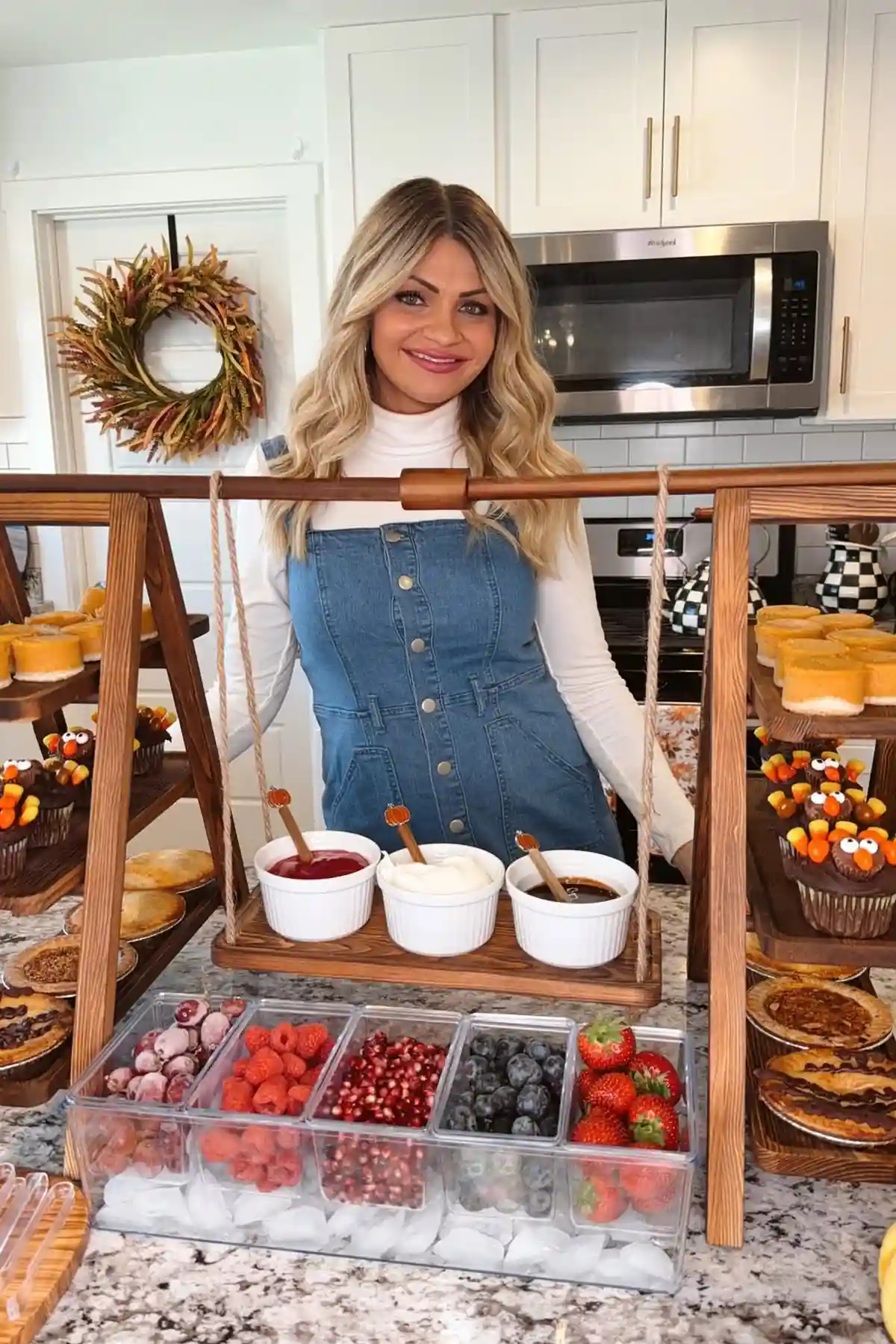
Dessert usually sits in the kitchen doing nothing until the last hour, while your one decorated corner runs out of steam by dinner. Give it a job early instead. Set the pies, cakes, and a few treats out on a side table or a cleared counter before friends arrive, with a runner, a candle, and a few pumpkins between the plates, and the table reads as part of the room, not an afterthought. Friends circle it, snack early, and ask what is what, which keeps the night moving. The trade-off is real: uncovered sweets dry out, and a crowded table invites sticky fingers near your plates. Cover the pies until serving, keep spoons in each dish, and let seasonal decor swaps do the styling so the food stays the star.
TWO WAYS TO RUN THE TABLE
Out all night
Pies and cakes on display from the first hello. Best look, but cover slices loosely and expect early grazers.
Revealed at dessert time
Stands and candles set early, sweets kept covered in the kitchen. Less to guard, and the big reveal lands.
Either way, the stands, the runner, and the candle do the decorating, so the food can do the talking.
15. Make-Ahead Dishes That Only Need Reheating When Friends Arrive

Your stove has four burners, your oven has one rack free, and five dishes all want heat at the same minute. That pile-up is the whole reason to cook ahead. Spread the work across the week before, and the night itself turns into reheating, not cooking. Pick dishes that hold well in the fridge, like mashed potatoes, dressing, green bean casserole, and gravy, and store each one in the dish it will reheat in so you skip extra washing. Label every lid with the dish name and the oven temperature. The table below shows a simple plan for what to make and when.
16. A Spatchcock Turkey That Cooks Faster and Fits a Small Oven

Your turkey is wider than your oven rack, and the roasting pan crowds out every side dish. Spatchcocking fixes both problems at once. Ask your butcher to remove the backbone, or cut it out at home with sturdy kitchen shears, then press the bird flat until it lies open on a rimmed sheet pan. The flat shape cooks in about half the time of a tall whole bird, and the skin crisps all over because heat reaches every part at once. A 12 to 14 pound bird fits one large sheet pan, and you can slide a second pan of vegetables underneath while it roasts.
Tip: Dry the skin with paper towels and season it the night before so it crisps instead of steaming.
Your spatchcock plan, in four moves
Night before: cut out the backbone, press the bird flat, season it, and chill it uncovered on the sheet pan.
Day of: set the pan out while the oven heats so the bird loses its chill before it goes in.
Roast: slide the pan onto the middle rack and turn it once halfway through for even browning.
Rest and carve: let it rest on the pan, then carve right there and save the pan juices.
17. Pretty Plates You Can Toss, So the Night Ends at the Table, Not the Sink

Your sink is full of plates, and your friends are laughing at the table over one more story. That is the moment to love toss-away plates. Pick sturdy compostable plates with a scalloped or gold rim, add matching cutlery, and set each place like you would with your dishes. Your table still looks dressed up, and no one has to guess the plates will go in the bin.
Keep a small bin or paper bag near the table so clearing feels quick. At the end of the night, gather the plates, tie the bag, and sit back down for one last cup of coffee with your friends. You get the warm, full table and the easy goodbye, with no stack of dishes waiting for you after everyone leaves.
Pick one
Which toss-away set fits your table?
A. Fibre plates
Plain compostable plates in cream or kraft brown, with wooden cutlery. Sturdy for saucy mains, quiet and low-key on the table.
B. Printed paper plates
Scalloped edges and gold rims that read as real china, with gold-tone cutlery. Dressier look, same toss-in-the-bin ending.
Either way, the night ends at the table, not the sink.
18. A Traffic Loop That Keeps the Door, the Food, and the Seats Connected
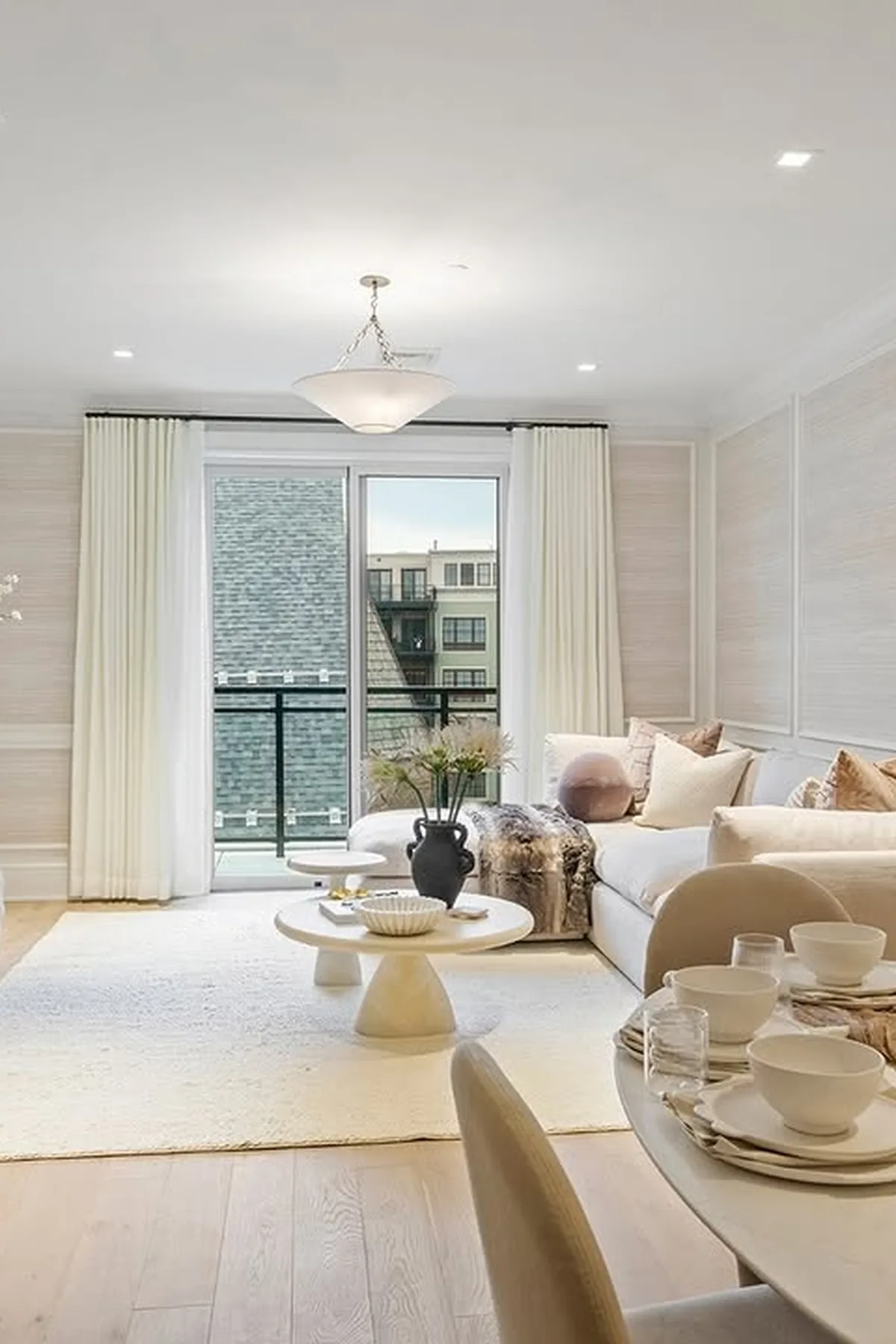
The doorbell rings and your first three guests arrive at once, coats in hand, dishes to pass off, and nowhere to step except into each other. A loop keeps that crush from setting the tone for the night. Walk the path yourself before anyone arrives and check it off: door to food without a single chair leg in the way, food to seats without crossing the doorway, and seats back to the door without a squeeze. Push the rug flat, slide the coffee table two inches toward the sofa, and park the shoe pile in the bedroom. These small space hosting hacks work because the route stays open all night, not just at the start, so your friends keep moving, grazing, and finding their seats without a single bottleneck.
Your traffic loop, checked
Four links, one open path from the door to the food and back to the seats.
Door to food
One open lane, no chair legs in the way.
Food to seats
A straight walk that never crosses the doorway.
Seats to door
Room to leave without squeezing past anyone.
All night
Rug flat, shoes in the bedroom, lane stays clear.
19. A Coat and Bag Drop by the Door That Saves the Whole Room

Coats land on the bed, the sofa, and every chair you own, and by dessert nobody can find a seat that is not buried. Give the door a job before the first friend knocks. First, clear one short stretch of wall beside the door, even if it is only as wide as your shoulders. Next, put up a row of four or five strong hooks at shoulder height, and set one big basket on the floor below them. Then, when friends arrive, point to the hooks for coats and the basket for bags, and keep the path past them clear. At the end of the night, every coat and bag is in one spot, and your seats stay free for sitting.
Your Door Drop Checklist
20. A Timeline for the Night, So Nobody Wonders What Happens Next
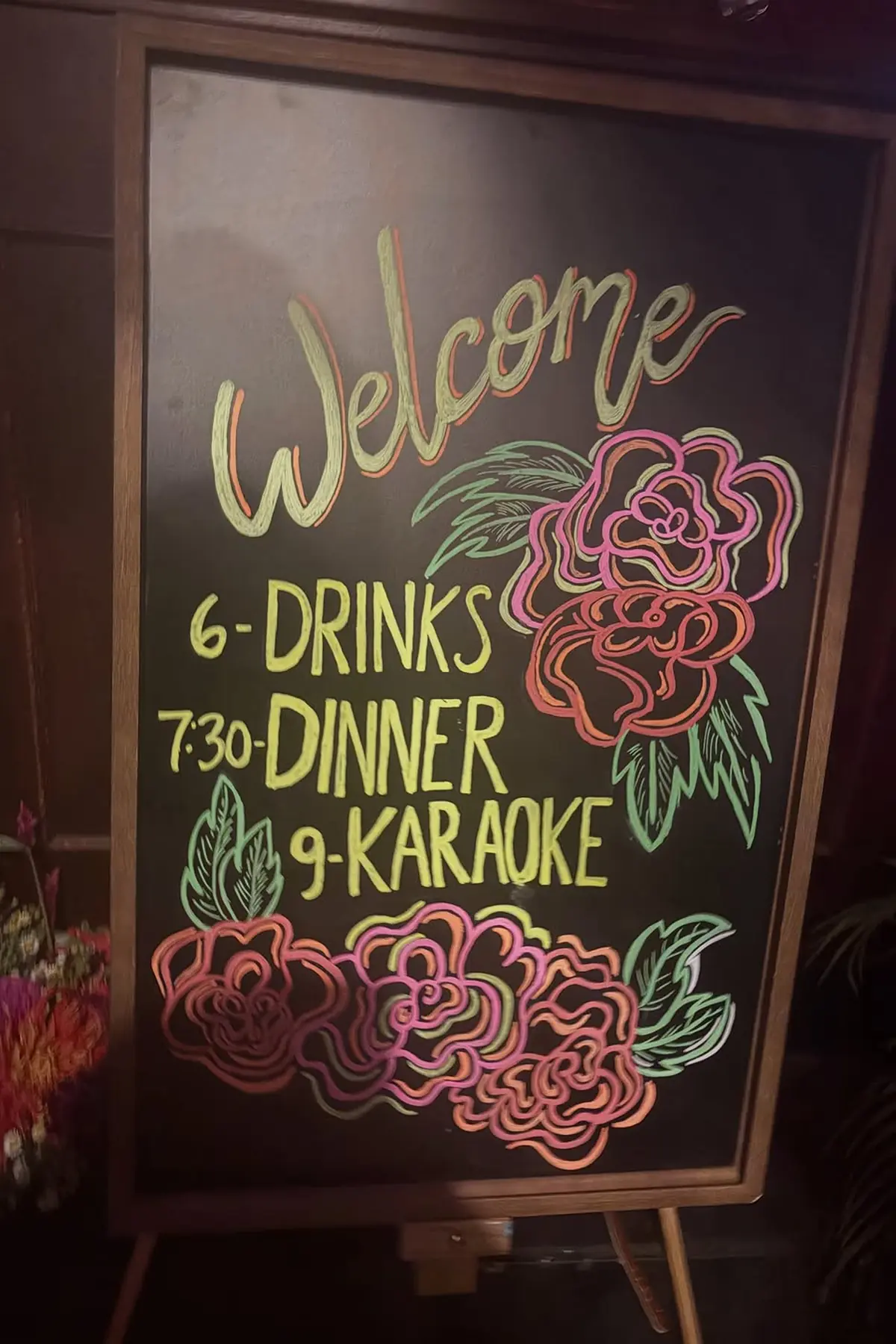
The night starts strong, then it drifts. Glasses sit empty and someone asks what happens next while no one has an answer. Do write out three or four time blocks on a card or a small board and set it where everyone can see it when they walk in: drinks at six, dinner at seven thirty, dessert, then games. Do keep the times loose so the night still feels easy and no one watches the clock. Do not pack the board with ten tiny steps or times down to the minute, since that turns a fun night into a school day. Do not hide the plan in a group chat. When your friends can see the flow, they relax, they stay, and the night moves on its own.
A night that flows
A simple run of the night
6:00 Drinks out, friends arrive
7:30 Sit down to dinner
9:00 Dessert, then games
Pin it by the door so everyone sees it on the way in.
21. Music and Candlelight That Set the Mood Without Adding Clutter
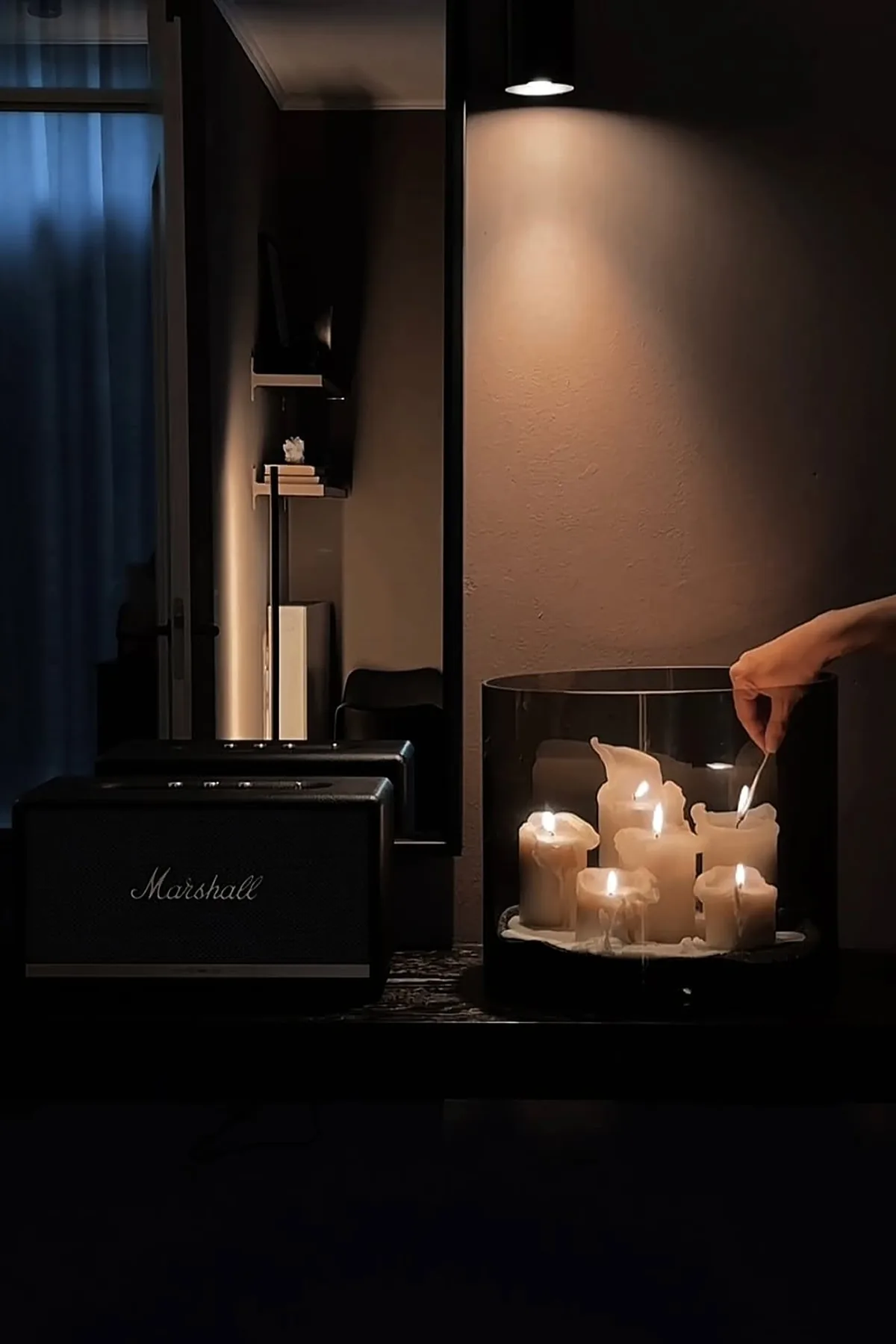
By dusk your one room can go flat. The overhead light feels harsh, the corners go dark, and the whole night starts to feel more like a waiting room than a party. A small speaker and a few candles fix that fast, and they take up almost no space. Keep the music low enough that nobody has to raise their voice, and group the candles on one tray so the glow reads as one warm pool instead of scattered flames.
Pros: the room feels warm right away, and you can change the mood just by switching the playlist. Cons: real flames need watching near sleeves and napkins, and a speaker left too loud will drown out the talk at the table.
Four music and light pairings for one room
Soft playlist + pillar candles
Low songs under the talk, with tall candles grouped on one tray.
Slow jazz + tea lights
A relaxed set with small flames lined along the windowsill.
Acoustic guitar + one lantern
Gentle strings with a single glow by the door, so the entry feels warm.
Dinner playlist + taper candles
Familiar songs with tall tapers down the middle of the table.
Keep the volume low enough that nobody leans in to hear, and keep every flame on a tray.
22. A Photo Corner in the One Spot Nobody Needs to Walk Through

Where do your friends stand when someone pulls out a phone for a group shot? Right now, the answer is probably in front of the fridge or squished by the front door, with coats and shoes in the frame. Pick the corner nobody walks through, the dead space beside a bookshelf or past the table, and give it one job. Hang a leaf garland across the top, lean a plain board or sheet behind it, and set a small basket of props on the floor: paper hats, silly signs, a few fake mustaches. A phone on a stack of books works as the camera stand. Friends drift over on their own, and your night ends with real photos instead of blurry ones taken in a doorway.
23. Conversation Cards That Keep the Table Talking After Dessert
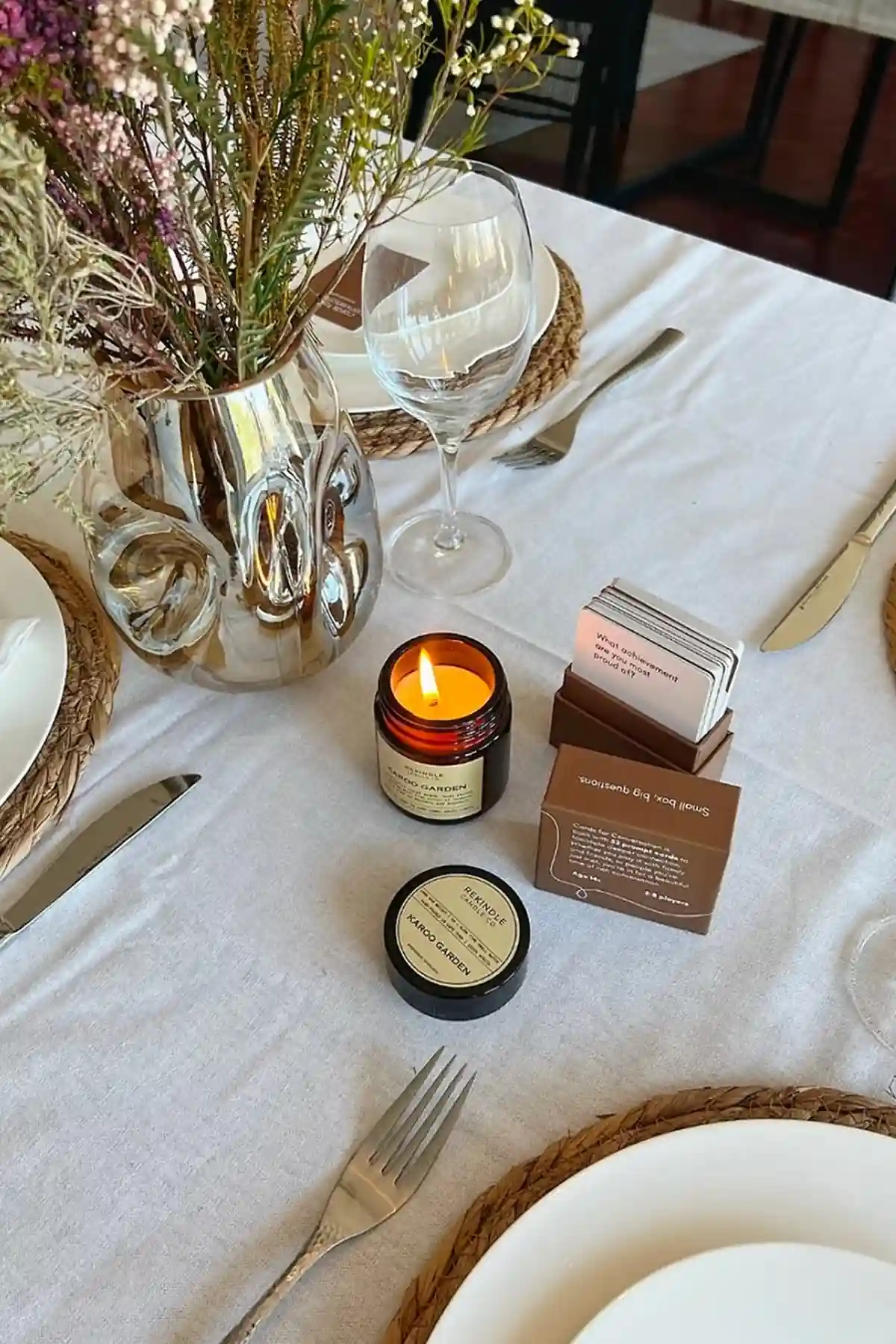
Dessert plates are empty, the pie is down to crumbs, and the room goes quiet. Nobody wants to leave yet, but nobody knows what to say next, so phones come out and the night starts to thin. A small stack of question cards fills that lull without a big plan. Set the deck in the middle of the table before dessert, and let the first card do the work.
Write your own prompts on plain index cards, or use a boxed deck you already own. Keep the questions light and short, one per card, and let anyone pass with no fuss. One friend reads a card aloud, everyone answers if they want to, and the talk rolls on its own. Twenty cards is plenty for one night.
Now vs later
One deck, two parts of the night
|
Right after dessert Deck sits in the middle of the table You read the first card aloud Anyone may pass, no fuss |
An hour later Cards pass hand to hand on their own Stories run past the planned end Phones stay face down on the table |
Keep 20 cards out and tuck the rest away, so the deck feels light instead of endless.
24. A Coffee Station and Leftover Boxes That Wind the Night Down

By the last hour, the plates are empty, the talking has slowed, and everyone is a little too full to move. That is your cue to wind the night down with coffee instead of one more round of food. Set up a small station before guests arrive: the coffee maker on a side table or a cleared counter corner, mugs lined up beside it, sugar and spoons in a small bowl. Put a stack of takeout boxes next to the mugs so friends can pack up leftovers while their coffee brews. The station gives the night a soft ending and keeps the kitchen clear while everyone says goodbye.
Tip: Brew a half pot, not a full one, so the last cup is still hot and nothing goes to waste.
Wind the night down
Coffee out, boxes open, and the night ends on a warm note.
Set the station up before guests arrive so the last hour takes care of itself.
25. A Cleanup Kit Ready Before Anyone Arrives, So Morning Is Easy
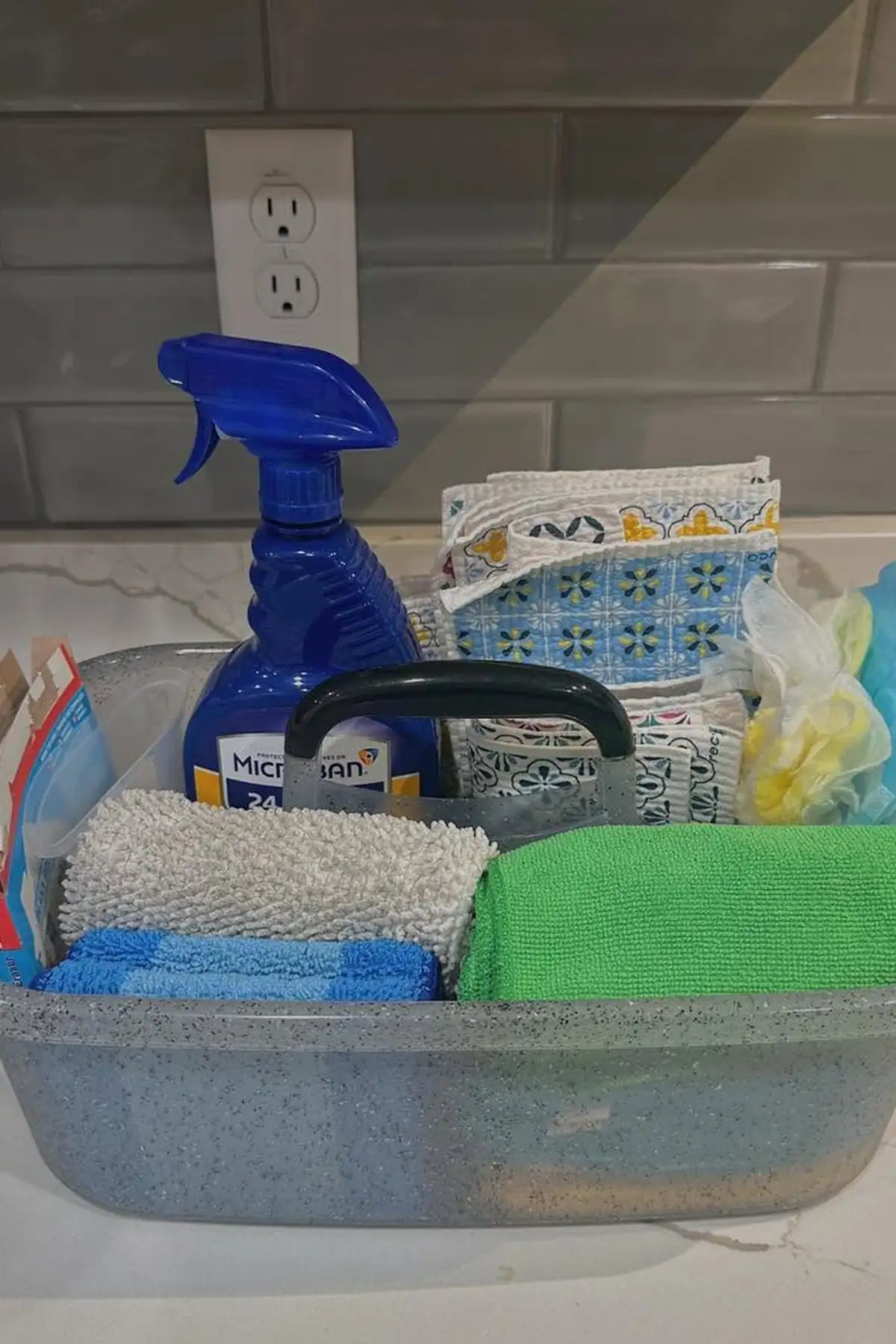
Morning light finds the sink full of plates, the floor sticky under your feet, and your head still tired from the night before. Right now, before the first guest knocks, you get to choose how that morning feels. A small kit by the door can turn a long cleanup into a short one.
Pack a caddy or a basket with trash bags, an all-purpose spray, a stack of cloths, and a few extra bags for leftovers. Set it where you can reach it without digging through a closet. When the last plate is cleared, you grab the kit, wipe the counters, bag the trash, and wake up to a kitchen that feels calm again.
YOUR MORNING-AFTER FLOW
1
Pack it tonight
Bags, spray, cloths, and a spare bag for leftovers
→
2
Park it by the door
Within reach, so no one hunts for supplies at midnight
→
3
Wipe, bag, done
Counters wiped and trash bagged before you sleep
Ten minutes tonight saves an hour tomorrow.
Frequently Asked Questions
How many people can I host in a small apartment for Friendsgiving?
Count seats, not square feet. If you can seat eight people between chairs, a bench, floor cushions, and stools, you can host eight, even in one room. Walk the room and count every seat before you send the invites, and keep the guest list at or under that number.
How do I seat more people than I have chairs?
Borrow the rest from the room itself: floor cushions and poufs, a bench along the wall, stools and ottomans from the bedroom, and lap trays for the sofa crowd. A coffee table set as a second low table takes the overflow. Nobody needs a matching chair, just a real seat.
What food should the host cook, and what should be potluck?
Cook the main and one side yourself, and assign everything else through a sign-up list so nothing doubles up. Sides, desserts, and drinks travel well, so they are the easiest asks. Put your name on the dishes only you can make, and let friends bring the rest.
How do I keep the kitchen from getting crowded during dinner?
Move the drinks station out of the kitchen to a bar cart or side table, and let the food serve itself from the table or a sideboard. Give the night a loose timeline so everyone is not up at once, and keep one clear path from the door to the food to the seats.
How do I handle coats, bags, and shoes with no entryway?
Set up a drop spot by the door before anyone arrives: a few hooks or a tension rod for coats, a basket for bags, and a tray for shoes. When the drop spot is obvious, coats never land on the bed, the sofa, or the chairs your guests need to sit on.
What is the easiest cleanup plan for after Friendsgiving?
Build the cleanup kit before the party starts: trash bags, a spray bottle, dish cloths, and takeout boxes for leftovers, all in one spot. Use plates you can toss, pack leftovers while the coffee brews, and clear the table before anyone leaves so morning is a ten-minute job.
When the last friend leaves, the test is simple: did everyone have a seat, did the food reach the table hot, and did the room feel easy instead of crowded. If the answer is yes, the size of your apartment had nothing to do with it. Your hosting friendsgiving worked because the chairs, the dishes, and the path through the room were planned before anyone arrived. Save this list, pick the three ideas that fit your room, and set them up the night before. Next year, the same room will hold even more friends.