Buying a storage bed seems like an easy fix when your bedroom closet is bursting at the seams. You pick a frame online, drag the boxes inside, assemble the base, and then discover the side drawers hit your nightstand every time you try to open them. I have been there, and it is frustrating to realize your new frame blocks the only walking path to your door. Knowing how to choose a storage bed for a small bedroom comes down to understanding the physical clearance required for drawer slides versus hydraulic lift mechanisms.
This guide walks you through measuring your floor clearance, checking mattress weights, and matching frame styles to what you actually store. By auditing your space before ordering, you will buy the right storage frame the first time without blocking doorways or hitting side furniture. The measuring process takes about 30 minutes, and you only need a tape measure, painter’s tape, and a notepad.
Grab your tape measure, clear your floorboards, and let us find the right storage frame for your layout.
2. Categorize Your Belongings by How Often You Reach for Them
3. Check Your Mattress Weight Against Gas-Lift Piston Ratings
4. Choose Drawer Mechanisms for Daily Clothing Items
5. Calculate Delivery Route Clearances Before Purchasing
1. Measure the Floor Clearance Around Your Bed Perimeter
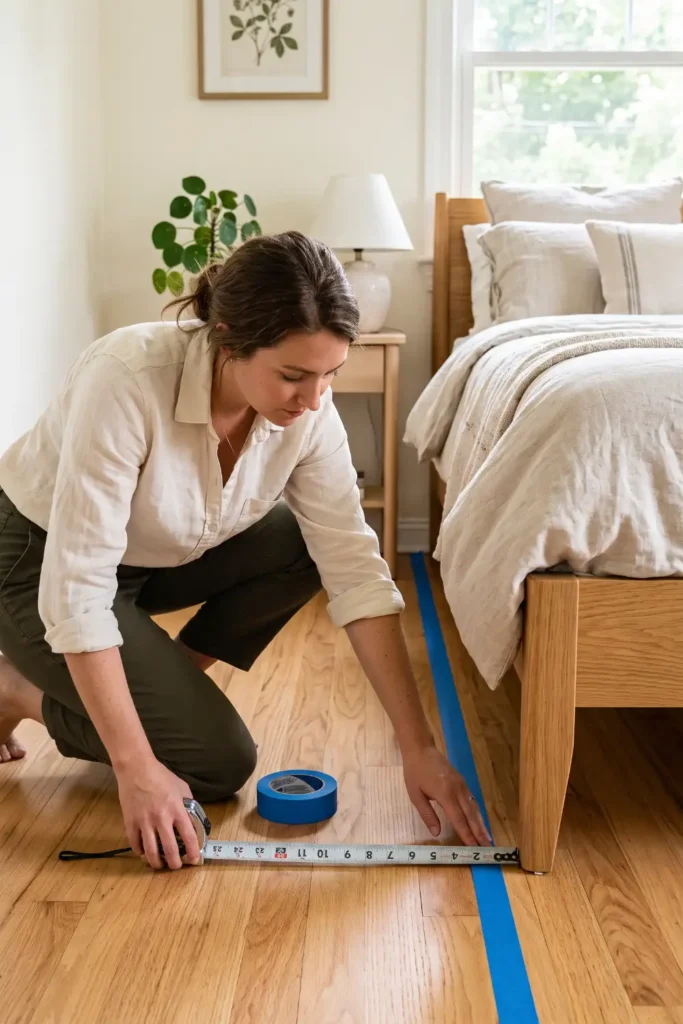
Stretch your tape measure from the edge of your mattress outline to the nearest wall, nightstand, or wardrobe. Outline a 24-inch border on the floor using painter’s tape along both sides of the frame. Pulling out side drawers requires at least 20 inches of open floor space beyond the bed edge, plus standing room for your feet. If your nightstand sits closer than 22 inches to the side rail, drawers will collide with the furniture, making a lift-up ottoman frame your only practical choice.
💡 Pro Tip
If side clearance is tight, look for storage beds with footboard drawers instead. Footboard drawers open into the main room pathway where you usually have more floor space.
2. Categorize Your Belongings by How Often You Reach for Them

Write a two-column list separating items you use weekly from seasonal gear stored for months at a time. Lift-up ottoman beds excel at hiding large, bulky items like extra duvets, suitcases, and winter coats because you lift the entire mattress slab in one motion. Side drawers work much better for socks, extra sheets, and daily clothes because opening a drawer takes two seconds. Match your storage style to your access habits to avoid lifting a heavy mattress every morning just to grab clean socks.
3. Check Your Mattress Weight Against Gas-Lift Piston Ratings
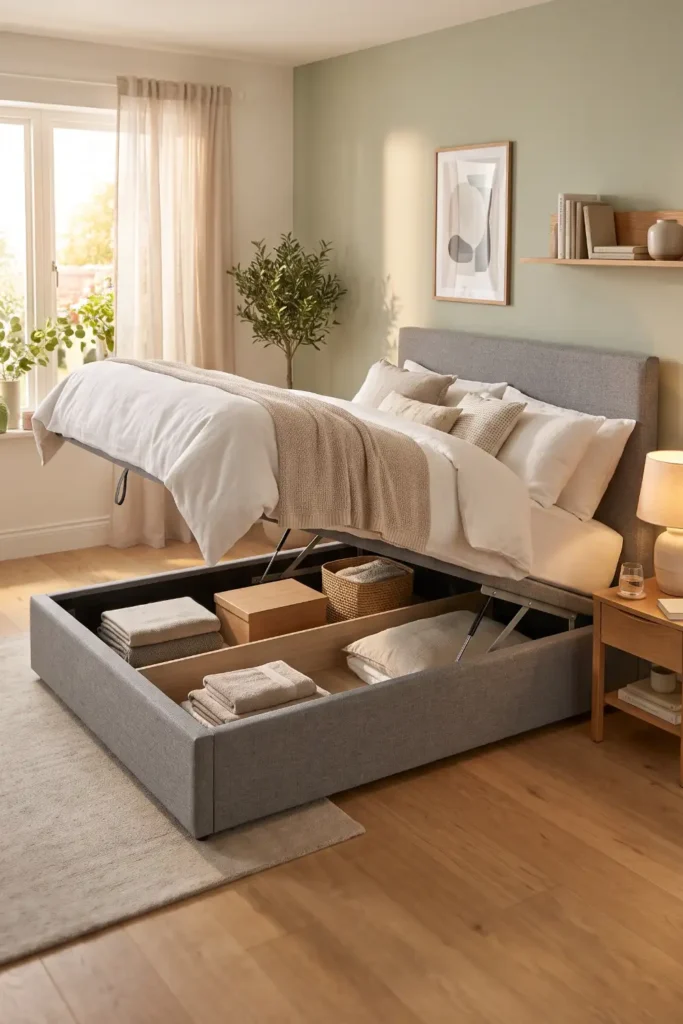
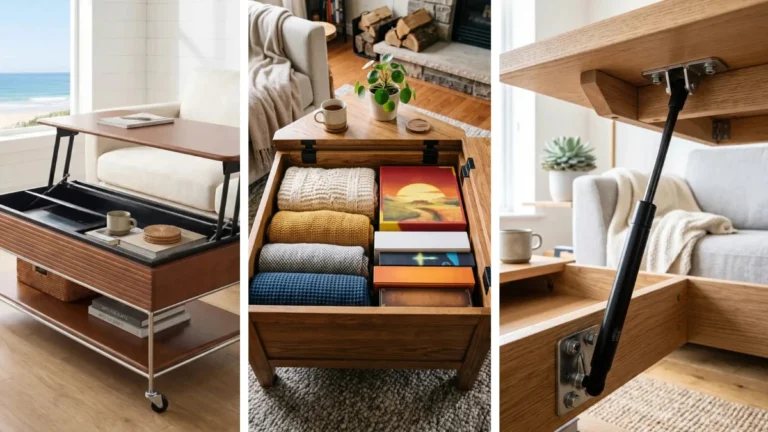
Examine your mattress manufacturer label to find its exact weight in pounds. Hydraulic lift beds rely on gas-filled pistons rated for specific weight ranges, typically between 60 and 110 pounds. Installing a heavy hybrid or latex mattress weighing over 90 pounds on undersized pistons makes lifting the frame dangerous and difficult. Conversely, using a thin foam mattress under 40 pounds on strong pistons causes the bed frame to spring up aggressively or refuse to stay closed when unlatched.
⚠️ Heads Up
Never operate a hydraulic lift mechanism without the mattress resting on top. Unweighted pistons release with extreme force and can cause injury if triggered empty.
4. Choose Drawer Mechanisms for Daily Clothing Items
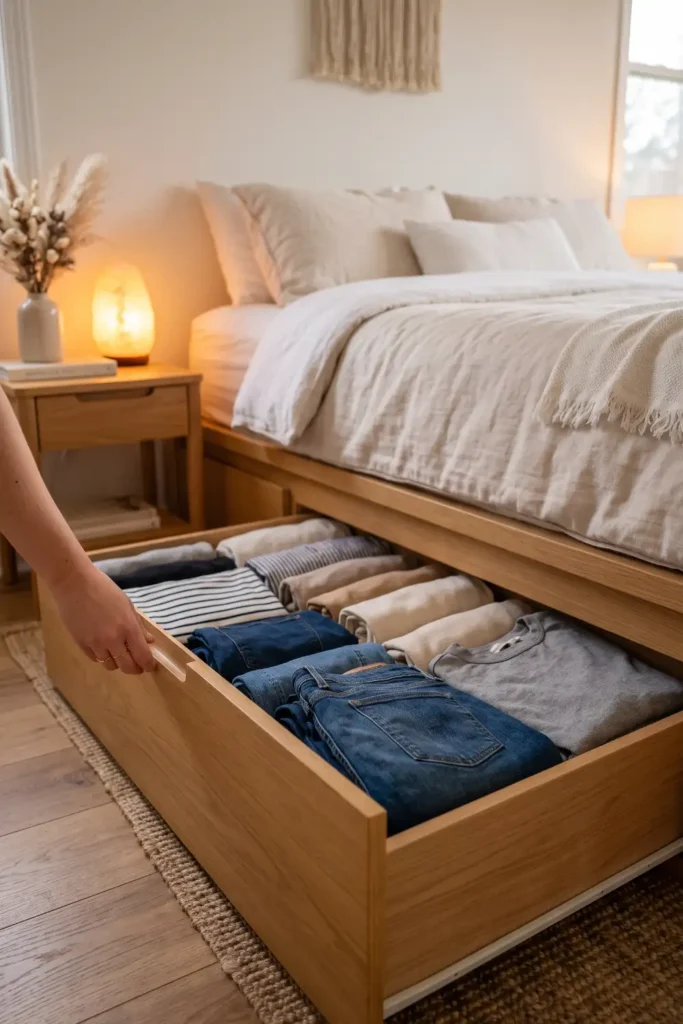
Running daily errands or dressing for work requires quick visual access to your wardrobe. Verify that side drawers feature steel ball-bearing glides rated for at least 50 pounds per drawer rather than cheap plastic roller wheels. Ball-bearing slides pull out smoothly without sticking, even when packed with heavy denim or winter sweaters. Pick drawers constructed with wooden box joints and solid bottoms at least 0.25 inches thick to prevent sagging over time.
5. Calculate Delivery Route Clearances Before Purchasing
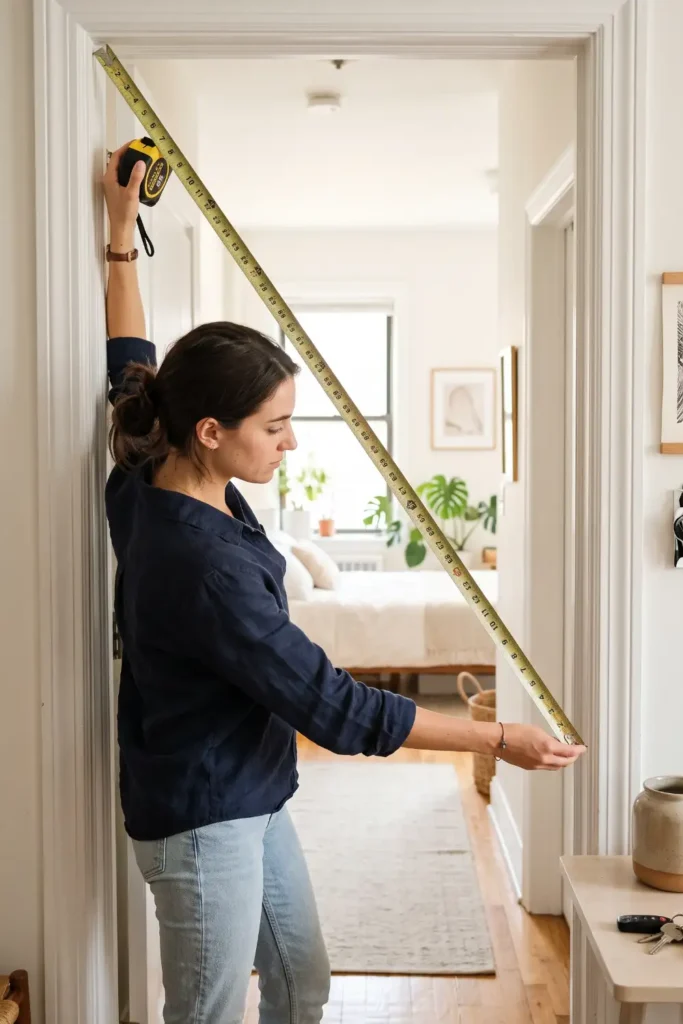
Measure your front doorway, stairwells, and interior hallway turns before placing an order. Hydraulic lift frames usually ship in 2 or 3 large, rigid steel sub-assemblies that cannot bend around tight 90-degree hallway corners. Ensure every door frame along the delivery path has at least 32 inches of diagonal clearance. Skipping this check is the most common reason buyers have to return fully upholstered lift-up storage frames right at the front door.
2. Audit Storage: Pick lift-up frames for seasonal gear; pick drawers for daily clothes.
3. Check Mattress Weight: Verify mattress weight matches gas-lift piston ratings (60 to 110 lbs).
4. Inspect Glides: Choose steel ball-bearing slides over plastic wheels for daily drawers.
5. Check Delivery Routes: Confirm stairways and doors have 32 inches of diagonal clearance.
Conclusion
Now you know exactly how to choose a storage bed for a small bedroom without blocking doors or hitting nightstands. Measuring your floor clearance and matching the frame style to your daily habits ensures your bedroom stays organized and easy to navigate. Grab your tape measure, outline your floor clearance with painter’s tape today, and pick the perfect frame for your space.
Save this guide to your small bedroom ideas board on Pinterest so you can reference these measurements when shopping!