Small homes work harder when every surface, wall, and hidden gap has a clear job. The trouble is that many room makeovers rely on costly furniture, custom cabinets, or major changes that renters cannot make. These small space balcony living ideas and indoor apartment fixes take a more realistic approach. They use secondhand furniture, removable organizers, fabric, simple shelves, and items you may already own.
Inside this list, you will find ways to divide a studio without blocking light, clear narrow walkways, hide everyday clutter, and create storage without filling the floor. There are also simple fixes for tiny kitchens, cramped bedrooms, awkward entryways, and multipurpose living rooms. Several ideas cost almost nothing if you reuse boxes, curtains, tables, or baskets from around your home.
Start with the spot that causes the most frustration. One cleared counter, hidden storage zone, or better furniture layout can make a small home easier to use without draining your savings.
1. Split One Room Into Two With a See Through Shelf

Living in one open box feels messy until sleep and sitting get their own spots. This studio uses a tall open back shelf as a soft wall between the sofa and the bed, so light still moves through.
- Keep the back open and leave air around each shelf
- Face books and baskets both ways so both sides look tidy
- Tuck closed bins low for chargers, socks, and clutter
The budget win is no tools and no landlord drama. Hunt secondhand for the shelf and style it with books you own.
2. Push Furniture to the Walls to Free a Walk Lane in a Galley Studio

Skinny rooms feel calmer when the middle stays clear. Here the bed, small sofa, and wood table hug the sides, and a long runner draws the eye to the window and daylight.
- Keep a straight walk lane from door to window with nothing in the way
- Choose a slim table that can switch from meals to laptop work
- Lift storage high with wall shelves and one hanging plant
A runner close to the floor color makes the lane look longer, and wall hooks hold bags off the floor for a few dollars.
Thrift First List for a Galley Layout
Grab these before you buy anything new
3. Layer Low Warm Lights to Make a Tiny Corner Feel Larger at Night

Overhead lights can make a small rental feel flat after dark. This corner skips the big ceiling glare and builds coziness with little pools of light at chair and table height.
A small lamp on the side table plus an arc floor lamp plus a candle on the coffee table. Together they soften the sofa and two compact chairs and make the rug zone feel close and calm.
Keep bulbs warm and low for that sleepy evening glow. Battery candles in glass holders give flicker with no worry if you doze off.
Turn off the overhead after dark. Low pools make walls feel farther.
4. Wall Mount the TV and Swap in a Round Table for Tight Paths

Floating the TV on the wall hands back floor space in a tight living room. This setup pairs a slim wall hung bench with a small round wood table that is easy to circle around.
- Round tops mean no sharp corners to bump on the way by
- A lower open shelf fits baskets for remotes and throws
- Sheers plus a light rug let daylight travel farther
Look secondhand for a solid side table to use as a coffee table. Heavy wood reads high end and wipes clean fast.
5. Stretch Light With a Leaning Mirror and a Pale Rug

Corner windows do half the work if you let the light bounce. This boxy rental keeps seating low under the glass, spreads a pale patterned rug wide, and leans a tall arch mirror to catch the skyline view.
Pale and reflective wins when daylight is your best free tool.
Finish with one tall leafy plant and a slim globe floor lamp. Both lift the eye up with no bulk, and both turn up used for little cash.
6. Skirt a Table to Hide Storage You Already Own

A skirted table earns its floor space twice. It gives you a surface, then hides the stuff you do not want to see.
Hide under it:
- Extra blankets
- Toilet paper packs
- Board games
- Off season shoes
- Chargers in a small bin
Use a thrifted side table, an old round table, or a basic stool with a tray on top. A flat sheet, curtain panel, or scrap fabric can become the skirt. Keep the tabletop simple with one lamp or tray so it reads like furniture, not a storage pile.
7. Build a Tiny Door Wall Drop Zone

Tiny entry zones fail when everything lands on the nearest chair. A narrow strip by the door can hold the daily mess without needing a console table.
Put hooks at hand height for keys, a bag, and a light jacket. Add a small basket for mail and a tray for wallet, earbuds, or lip balm. Keep shoes to one pair out and slide the rest into a basket below.
Renter friendly hooks make this easy to undo later. The goal is simple: stop clutter before it walks into the room.
8. Replace a Nightstand With a Floating Ledge

Bedside storage does not need a whole table. In a cramped bedroom corner, a shallow wall ledge can hold the real basics: phone, book, water glass, and glasses.
Swap the bulky setup:
Nightstand becomes a slim ledge.
Table lamp becomes a clip light or wall sconce style plug in lamp.
Drawer clutter becomes one small pouch or basket.
Use the lightest items possible and check the weight limit before you load the shelf. The payoff is a clearer floor next to the bed, which makes the room feel easier to move through.
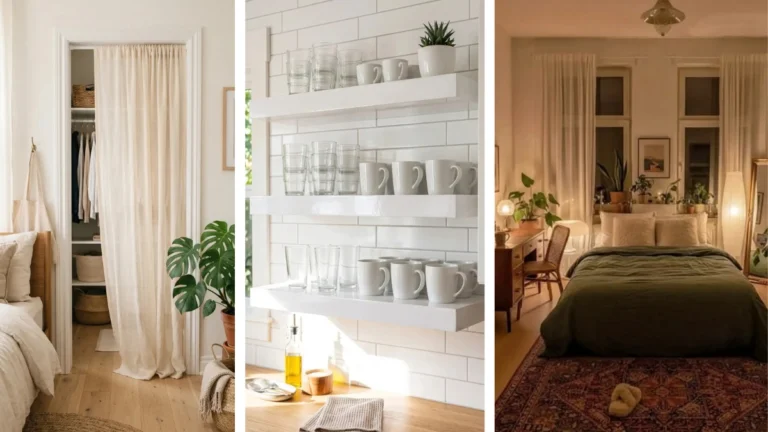
9. Cover Open Storage With a Tension Rod Curtain

Renter closets rarely come with enough doors or calm. A tension rod and a plain curtain can hide bins, cleaning supplies, luggage, or pantry overflow without building anything.
Good spots to use it:
- An open closet
- A weird alcove
- A laundry corner
- A shelf wall that looks busy
Choose fabric close to your wall color if you want it to disappear. Choose a soft neutral if the room needs texture. Avoid hiding damp items behind fabric, and do not overload shelves just because you can close the curtain.
10. Use a Peg Rail as a One Wall Utility Strip

A peg rail turns one blank wall into a tiny helper zone. It is slimmer than a shelf, easier to style, and useful in almost every small room.
Use it for different jobs:
- Kitchen towels and mugs
- Entry bags and hats
- Bedroom robes and necklaces
- Office scissors and headphones
Keep the rail low enough to reach, but high enough that bags do not drag on furniture. Small baskets with handles can hang from the pegs too. That gives you storage without eating floor space.
11. Choose Nesting Tables Instead of One Big Coffee Table

Nesting tables solve the “where do I put my drink” problem without parking a chunky table in the middle of the room.
Here is the rule: keep the largest table out, then pull the smaller ones only when you need them. Use one for snacks, one for a laptop, and one as a plant stand near the window.
They also work better than a wide coffee table in narrow rooms because you can split them apart. A mismatched secondhand set still looks good if the colors are close.
12. Stack the Kitchen Counter With Shelf Risers

Open kitchen counters look smaller when every mug and spice jar sits flat. Shelf risers use the air above the counter instead of spreading items sideways.
Best places to try them:
- Coffee corner
- Spice area
- Sink side soap and sponge zone
- Mug shelf under a cabinet
Keep daily items on the lower level and lighter pieces up top. Skip stacking heavy pans unless the riser is made for it. This works best when you edit first, then stack what actually stays.
13. Make One Rolling Cart Serve Three Rooms

One small cart can be the cabinet a studio never had. The trick is not filling it with random clutter.
Load it by need:
Top shelf: items you grab every day.
Middle shelf: hobby, desk, or beauty supplies.
Bottom shelf: refills, towels, or extra paper goods.
Roll it beside the sofa during work hours, into the bathroom at night, and back to the kitchen when you cook. Pick a cart that fits your narrowest doorway, not the biggest one you can find.
14. Hang Fabric Behind the Bed for a Soft Headboard

Fabric behind the bed gives you warmth without buying a real headboard. It also hides a blank wall, tiny marks, or an awkward outlet line.
Use what you can find: a curtain panel, thrifted textile, lightweight blanket, or leftover fabric. Hang it from a slim rod, removable hooks, or clips if the fabric is not too heavy.
Choose one calm color or a small pattern so the room does not feel busy. Bonus points if it can go in the wash. Small rooms need pretty things that are easy to clean.
15. Use a Sofa Arm Caddy Instead of a Side Table

Chair arms are wasted space in a small living room. A soft arm caddy can hold the remote, book, tablet, charging cord, and reading glasses without adding another table leg to the floor.
This is best for a tight sofa wall, a sleeper sofa, or a room where the walkway sits right beside the couch. Pick one with flat pockets so it does not bulge into the seat.
Keep food and open drinks on a tray instead. Fabric pockets are great for small stuff, but they are not a stable tabletop.
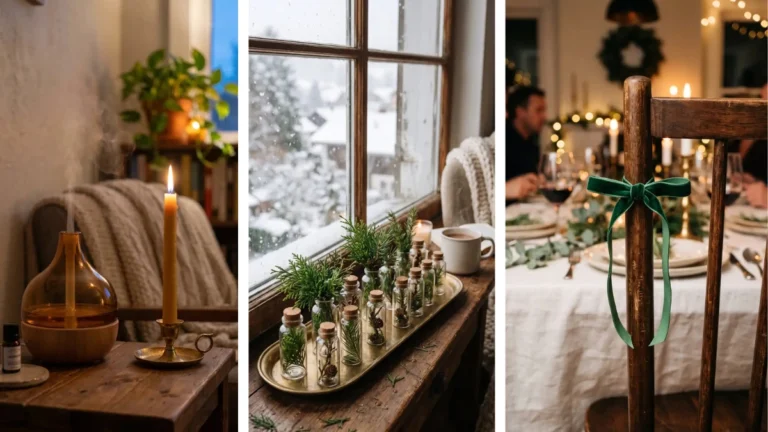
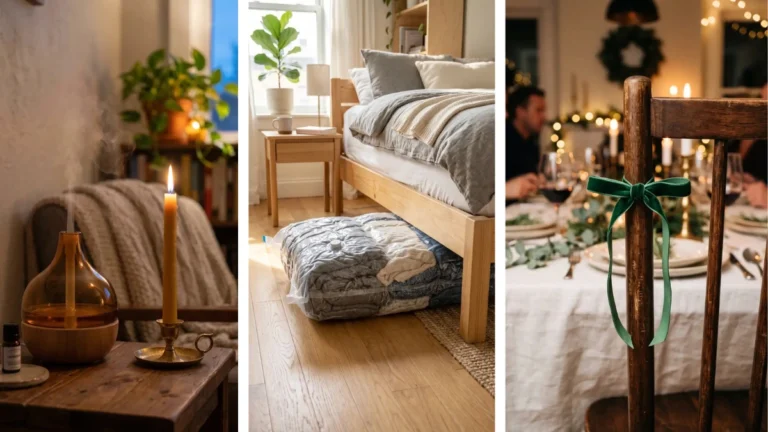
16. Raise the Bed Just Enough for Hidden Storage

The biggest unused cabinet may be under your mattress. Low bed risers can create room for shallow containers without changing the rest of the layout.
Store items by how often you need them:
- Daily shoes near the open side
- Spare sheets near the head of the bed
- Seasonal clothes toward the center
- Luggage near the wall
Measure the open height before finding containers, and choose lids if dust gathers quickly. Matching bins are optional. Secondhand baskets, clean boxes, and old luggage work too. Keep the heaviest container within easy reach so you are not dragging it across the floor.
Measure first. Leave vents and floor heaters clear.
17. Turn the Back of a Door Into a Mini Closet

An over-door organizer gives a crowded room storage without taking a single patch of floor. Clear pockets make sense for small supplies, while fabric pockets keep the view softer.
Use the top for things you reach for rarely. Place daily items at eye level, then reserve the lowest pockets for heavier pieces such as slippers or rolled towels.
This works behind a bedroom, pantry, bathroom, or utility door. Check that the door still closes freely before filling every pocket. A packed organizer can become bulky fast, so assign it one job instead of making it a home for random leftovers.
18. Hang Curtains Near the Ceiling to Stretch the Walls

Short curtains can make a small room feel cut in half. Raise the rod closer to the ceiling and extend it beyond the window frame so the fabric rests beside the glass when open.
The change helps in two ways. More of the window stays uncovered during the day, and the long fabric line pulls the eye upward. Reuse current panels if they are long enough, or join simple curtain panels with iron-on hem tape.
Let the fabric stop close to the floor rather than forming a large heap. Keep radiators and heaters uncovered. That small safety check matters more than a dramatic puddled look.
19. Add a Fold-Down Desk That Disappears After Work

Working from the sofa gets old, but a full desk can swallow a tiny room. A wall-mounted folding surface creates a real laptop station and closes when the workday ends.
Set it up in three moves:
- Mount it into suitable supports according to its hardware instructions
- Place a folding chair or stool underneath
- Keep supplies in one portable pouch instead of covering the wall
A secondhand drop-leaf table can offer a similar result if wall mounting is not allowed. Check the surface rating before leaning on it or adding a monitor. The win is getting the walkway back each evening.
Check wall support and surface limits before use.
20. Put Small Tools Inside Cabinet Doors

Cabinet doors can hold the light items that usually jam a drawer. Adhesive hooks, slim holders, and removable pockets create an easy grab zone without changing the outside of the room.
In the kitchen, hang measuring spoons, pot holders, or a lightweight cleaning cloth. In the bathroom, use the same trick for hair ties, brushes, or a small cleaning glove.
Test one organizer before covering every door. Make sure shelves still clear it when the cabinet closes. Keep heavy bottles on the cabinet floor, since an adhesive pocket may loosen under too much weight or moisture.
21. Make Free Storage Boxes Look Like One Set

Matching containers calm exposed shelves, but buying a full set can drain the budget. Start with sturdy delivery boxes or shoe boxes in similar sizes, then cover only the visible fronts with leftover paper, fabric, or neutral gift wrap.
Give every box a clear job, such as cables, paperwork, craft supplies, or extra toiletries. Add simple handwritten labels so you do not have to open three boxes to find one cord.
Keep the treatment limited to one or two colors. Repetition does the visual work here. Replace any crushed or damp cardboard rather than hiding damage under another layer.
Cover the fronts, repeat two colors, and label each job.
22. Slip a Narrow Shelf Behind the Sofa

Sometimes the missing side table is hiding behind the couch. A narrow shelf placed between the sofa and wall can hold a reading lamp, charging tray, and small plant without blocking the walkway.
Choose a ready-made ledge, repurpose a slim bench, or build a basic top from suitable wood and stable supports. The surface should not wobble or rise where it could tip items onto someone sitting below.
Route charging cords along the back and leave plugs easy to reach. Keep drinks toward the ends, not directly above cushions. This idea works especially well when both sofa arms touch busy walking paths.
23. Use Magnetic Strips to Clear Tiny Surfaces

Loose metal tools take up surprising room in drawers and on counters. A magnetic strip moves the right pieces onto a wall, cabinet side, or other safe vertical spot.
In the kitchen, it can hold suitable metal utensils. At a desk, it can catch scissors and small clips. Near a vanity, it can organize metal grooming tools.
Check that each item holds firmly before trusting it above a sink or work area. Keep sharp tools away from children and busy walkways. Do not place magnets near devices, cards, or anything the maker says should avoid them. A short strip is often enough.
Small space living on a tight budget is mostly about using overlooked areas well. The wall behind a door, the gap under a bed, or the strip behind a sofa can solve a daily problem without another bulky cabinet.
Pick one or two ideas that suit your layout, then shop your home before buying supplies. Secondhand finds and removable hardware can help keep the full project under $300. Save these small space balcony living ideas and indoor fixes to your Pinterest board, then return when you are ready to tackle the next crowded corner.