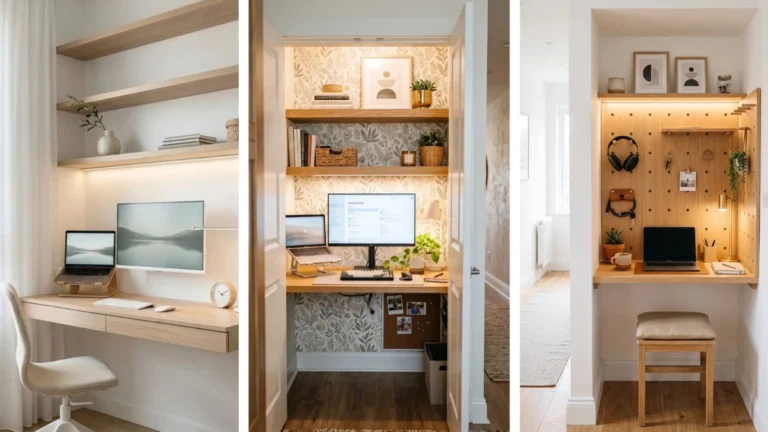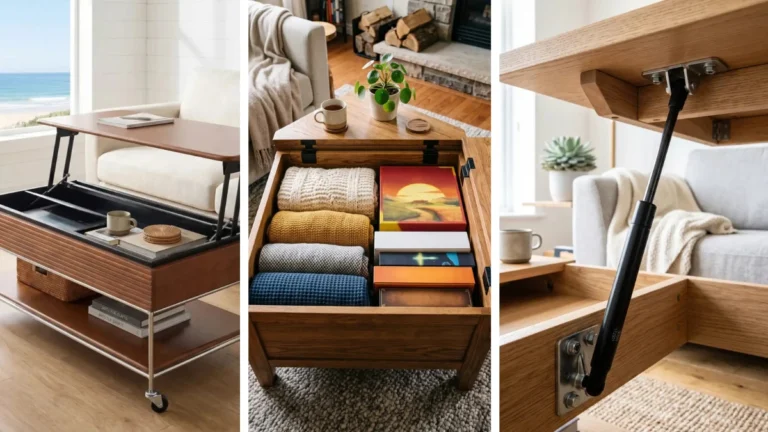
Remote work and tiny apartments do not always get along. You need a real desk for focus during the day and a comfortable bed at night, yet most studios only give you one wall to work with. Stacking a separate desk and bed quickly eats the floor and makes the room feel crowded.
That is why wall bed office combo ideas have become the go-to solution for studio dwellers. A Murphy-style bed paired with smart desk surfaces, side towers, rolling carts, or fold-down panels lets the same footprint switch jobs in seconds. By day you have a full work zone. By night the mattress drops and the office clutter disappears. The fifteen ideas ahead show every practical layout—from L-shaped desks that wrap the cabinet to headboard work surfaces that hide when you sleep—so you can keep both productivity and rest without sacrificing square footage.
1. Line Up a Twin Bed and Desk Under Shared Wall Shelving

A single bed and a full-length desk sit side by side against a textured grey wall, sharing one continuous run of open wood shelves and white upper cabinets. Warm LED strip lighting under the shelves lights both the sleeping side and the work surface at once.
Books, small plants, and framed prints fill the open cubbies while the desk holds a laptop, dual black task lamps, and a slim white drawer unit. A light wood floor and grey rug keep the small footprint feeling calm.
2. Pair a Built-In Desk Niche with a Soft Bed Alcove

Light wood cabinetry wraps the left wall into a deep desk niche while the right side holds a low bed under glossy black upper cabinets. A long horizontal light bar and two wall sconces give focused task light over the desk and soft glow over the pillows.
Open side shelves display books and small objects. A curved desk corner and pale rug keep the whole unit feeling open even in a tight studio footprint.
📌 Good To Know
Black upper cabinets hide visual clutter while the warm wood desk niche keeps the work area inviting for long remote days.
3. Run a Daybed with Drawers Straight into a Window Desk

A long upholstered daybed with deep base drawers sits against a fluted wood accent wall lit by a continuous LED strip. Grey overhead cabinets and open display niches run the full length, then turn the corner into a wood desk facing the window.
Pampas grass, a mesh office chair, and soft throw pillows in mustard and grey make the sleeping side feel like a lounge by day. The desk stays clear for a laptop and a simple vase.
4. Build a Full Wall of Cabinetry with a Floating Desk Surface

Floor-to-ceiling light wood cabinets with long brass handles form one solid wall. A deep desk surface is cut into the lower section, complete with a monitor, keyboard, and rolling chair. Drawers and tall cupboard doors hide everything else.
Opposite the desk wall sits a grey sofa and leather ottomans, turning the same room into a living space after work hours. Large glass doors and a statement brass pendant keep the light moving.
Mount tall cabinets wall-to-wall for maximum closed storage.
Cut a continuous desk surface at seated height with power access.
Keep the opposite wall free for a sofa so the room works day and night.
5. Slide a Simple Desk Under the Window Next to a Wood Bed

A light wood platform bed with white bedding and chunky knit pillows sits against a clean white wall. Right beside it, a slim white desk with light wood top tucks under the window blinds. A black spindle chair, white ceramic lamp, small plant, and candle finish the work spot.
The whole setup stays bright and uncluttered. Nothing feels heavy, which helps a tiny studio breathe.
Keep the desk surface shallow so it does not block the bed path.
Use one simple lamp that serves both reading and working.
Crowding the window sill with too many objects.
Choosing a bulky chair that cannot tuck fully under the desk.
6. Carve a Lit Desk Niche into a Floor-to-Ceiling Wardrobe Wall

Glossy cream and taupe cabinet doors with long gold handles form a solid storage wall. One section is left open as a desk niche with two floating shelves, LED strip lighting, a laptop surface, and three drawers on the right. A beige office chair rolls right up to the work spot.
A bed edge peeks into the frame, showing how the same wall system serves both sleeping and working without extra freestanding furniture.
Separate closet, desk, and bed pieces eating up floor space.
One continuous wardrobe wall with a built-in lit desk niche ready for remote work.
7. Drop a Murphy Bed Beside a Clean White Desk Run

A white wall bed is lowered in the center of the room, dressed in beige linens and a chunky knit throw. To the left, open white shelving holds baskets and books. To the right, a long white desk with drawers sits under the window, complete with a laptop, desk lamp, and small plant.
The bed folds up against the wall when not needed, leaving the desk and open floor free for daytime work. Soft natural light and a simple ceiling fixture keep the look calm.
The Murphy bed disappears completely so the desk and open floor become a full office by day.
8. Turn the Murphy Front Panel into a Fold-Down Desk

The entire face of the wall bed becomes your work surface. When the bed is stored upright, a hinged desktop drops forward on sturdy supports so you can sit and work. At night you simply fold the desk flat and pull the mattress down.
- Add a shallow pencil ledge so pens and a notebook stay put when the panel moves.
- Choose a matte finish so the desk does not show every fingerprint.
- Keep the chair lightweight so it tucks against the wall when the bed is open.
Recreate this look
9. Build an L-Shaped Desk That Wraps a Vertical Wall Bed

One leg of the desk runs along the wall beside the Murphy cabinet. The other leg extends forward to create a corner work zone. When the bed drops, it rests parallel to the longer desk run so you still have surface space for a glass of water or phone.
The corner shape gives you room for a monitor on one side and writing space on the other without needing a second table.
| Desk Leg | Best Use |
|---|---|
| Wall-side run | Monitor, lamp, charging hub |
| Forward run | Keyboard, notebook, coffee |
10. Hide a Pull-Out Keyboard Tray Inside the Side Tower

Tall storage towers flank the wall bed. One tower contains a full-extension keyboard tray and a slim monitor shelf that slide out only when you need them. The rest of the day the tower looks like ordinary closed cabinetry.
This keeps the floor completely clear and protects your tech from dust when the bed is in use.
💡 Quick Tip
Mount the tray at standard desk height so you can use a regular chair instead of a specialty stool.
11. Mount a Standing Desk Converter on the Cabinet Side Panel

A vertical Murphy bed sits against the main wall. On the outer side panel of the cabinet, a wall-mounted standing desk converter folds down to give you an upright work option. When you finish, the converter folds flat and disappears into the cabinet profile.
Remote workers who like to switch between sitting and standing get both postures without a second piece of furniture.
12. Place a Low Console Desk Directly Under a Horizontal Wall Bed

A horizontal Murphy bed opens sideways above a long low console. During the day the console works as a full desk with room for a laptop and supplies. At night the bed lowers and rests just above the console, which then becomes a handy headboard shelf.
The horizontal orientation needs less floor depth, making it ideal for narrow studio walls.
Install the horizontal bed mechanism first and confirm clearance.
Build or place the console at the exact height that clears the lowered mattress.
Add outlets inside the console for overnight device charging.
13. Combine a Murphy Bed with a Rolling Desk Cart That Tucks Beside It

The wall bed stays fixed. A compact desk cart on locking casters rolls out for work and then slides into a shallow niche beside the cabinet when you need the floor for the open bed. The cart holds a laptop, a small drawer, and a cup of pens.
This option works well for renters who cannot install a permanent desk surface.
14. Create a Dual-Purpose Headboard Desk Behind a Drop-Down Bed

When the Murphy bed is closed, the back of the cabinet reveals a shallow desk surface and open cubbies that act like a headboard office. You work facing the wall. At night the bed pulls down and covers the desk completely, so the sleep surface stays clean and free of office clutter.
A single wall does two jobs without any extra depth.
Desk and cubbies exposed for laptop and supplies
Bed lowers and hides the entire work surface
15. Frame the Wall Bed with Matching Desk-Height Sideboards

Two low sideboards sit on either side of the Murphy cabinet at exact desk height. A removable wood bridge piece can span across the front of the closed bed to create one long continuous desk when you need extra surface. Remove the bridge and lower the bed for sleep.
The sideboards stay in place permanently and hold drawers for files, chargers, and office supplies.
You get a full-length desk when the bed is up and clear walkways when the bed is down, all from the same wall footprint.
Conclusion
A wall bed and office combo turns one wall into your entire work-sleep system. Choose the version that matches how you move through the day: a fold-down desk on the bed face, a rolling cart that tucks away, sideboards that bridge into a long surface, or a simple console under a horizontal bed. Measure twice, pick durable hinges and smooth drawer slides, and keep only what you actually use on the work surface. Save your favorite layouts to a Pinterest board so you can compare details when you are ready to build or buy. Your studio can finally support both focused work and real rest.