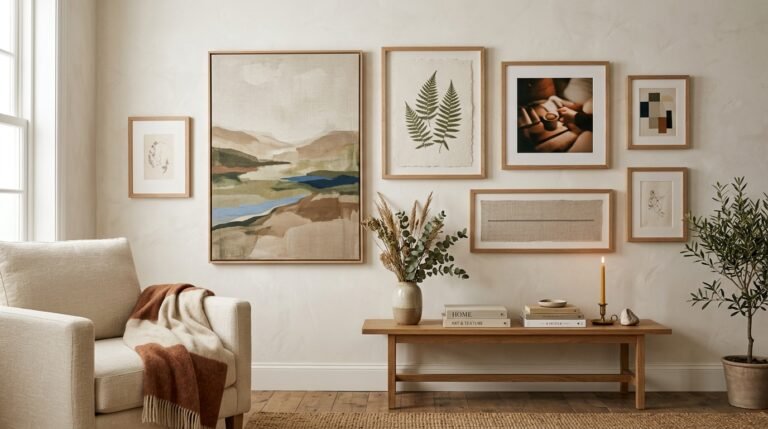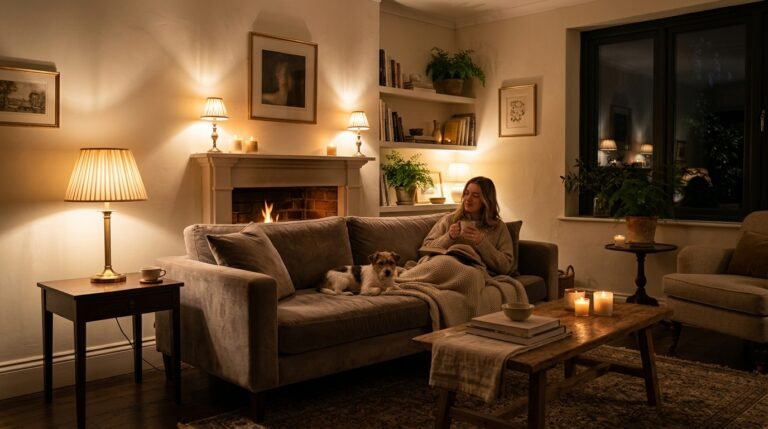
A shelf is never just storage.
It’s the place where a room reveals itself. Where the books you actually read sit beside the ceramic you found at a weekend market, beside the small plant you’ve somehow kept alive, beside the photo from the trip that still makes you smile when you catch it from across the room.
A beautifully styled shelf doesn’t look designed. It looks accumulated. Warm. Like someone who genuinely loves beautiful things lives here and has been slowly, carefully building something real.
That’s the feeling these 21 living room shelf decor ideas are chasing.
Not showroom perfect. Cozy and collected.
1. The Rule of Three on Every Shelf
Start here. Always.
Three objects per shelf grouping — varying in height, texture, and material — creates visual rhythm without visual noise.
One tall element. One medium. One low.
Ceramic beside woven beside natural. A plant beside a book beside a candle.
The rule of three is the foundation every great shelf styling idea builds on. Master this and every other idea becomes easier.
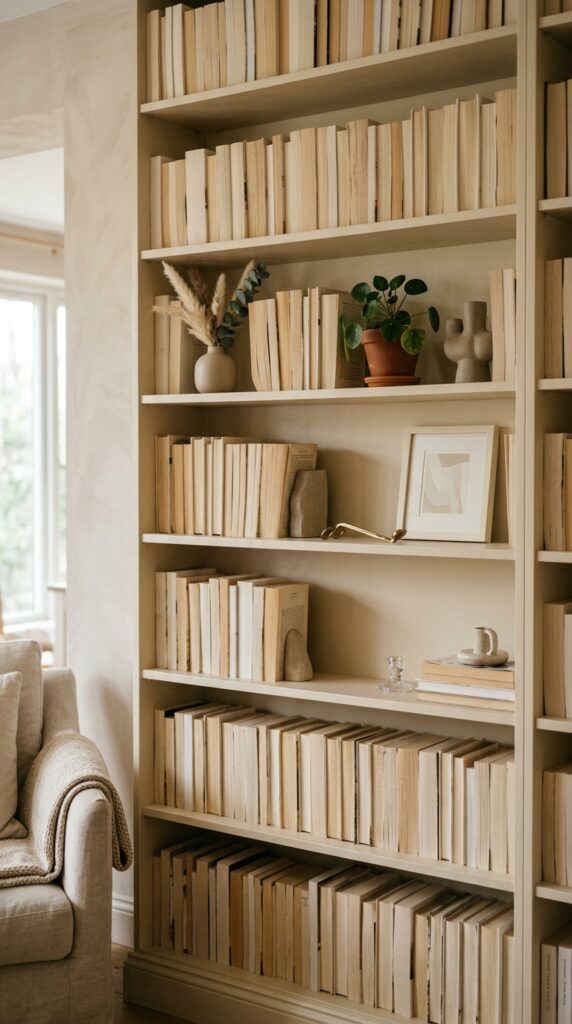
2. Books Facing Spine-In for a Clean Look
One of the most popular bookshelf styling tricks on Pinterest right now — and for good reason.
Turning books so the pages face outward and the spines face inward creates instant visual calm. No competing colors. No clashing fonts. Just a wall of soft cream and ivory page edges.
Mix with a few forward-facing books for variation. Alternate spine-out sections with styled vignettes.
The shelf goes from colorful chaos to something that feels almost editorial.
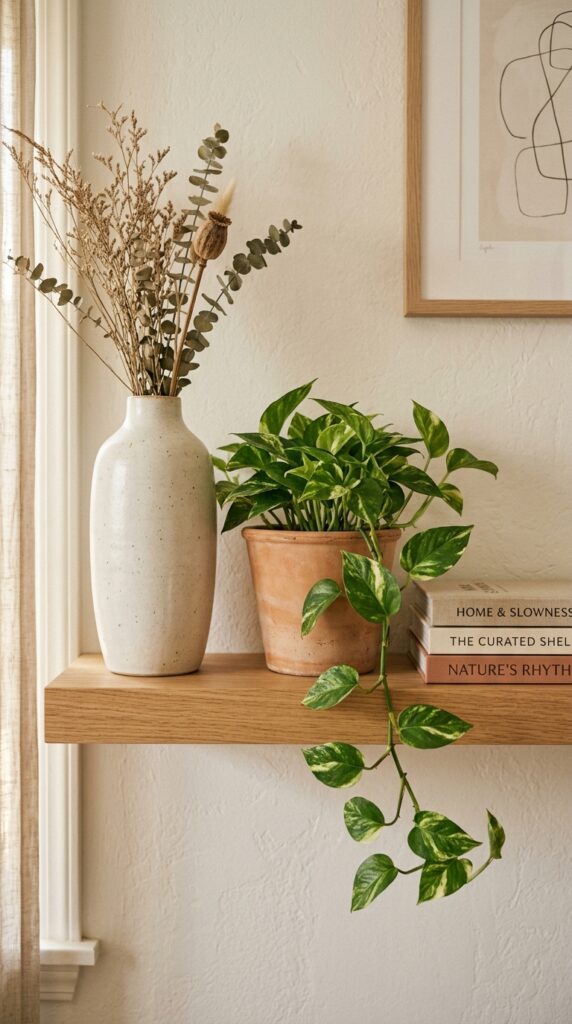
3. Layer a Small Plant on Every Level
One plant on a shelf looks decorative.
A small plant on every level — different species, different pot sizes, different heights — makes the entire bookshelf feel alive.
A small pothos on the top shelf. A tiny succulent mid-level. A trailing plant on the bottom shelf that slowly spills downward.
The greenery connects every shelf visually, adding organic warmth that ties even the most mismatched objects together.
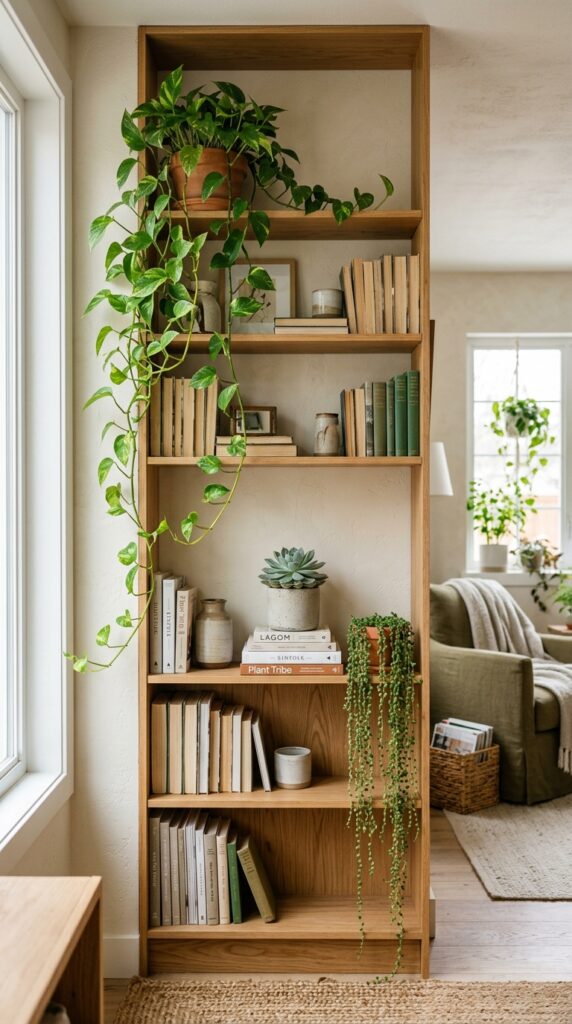
4. Mix Tall and Short Objects Intentionally
A shelf where everything sits at the same height looks flat. Monotonous. Like objects were placed without thought.
Vary intentionally.
A tall candlestick beside a short ceramic dish beside a medium plant. A large book stack with a tiny object on top beside a tall vase beside a low woven tray.
The eye moves up and down through the arrangement. That movement is what makes a shelf feel interesting rather than merely filled.
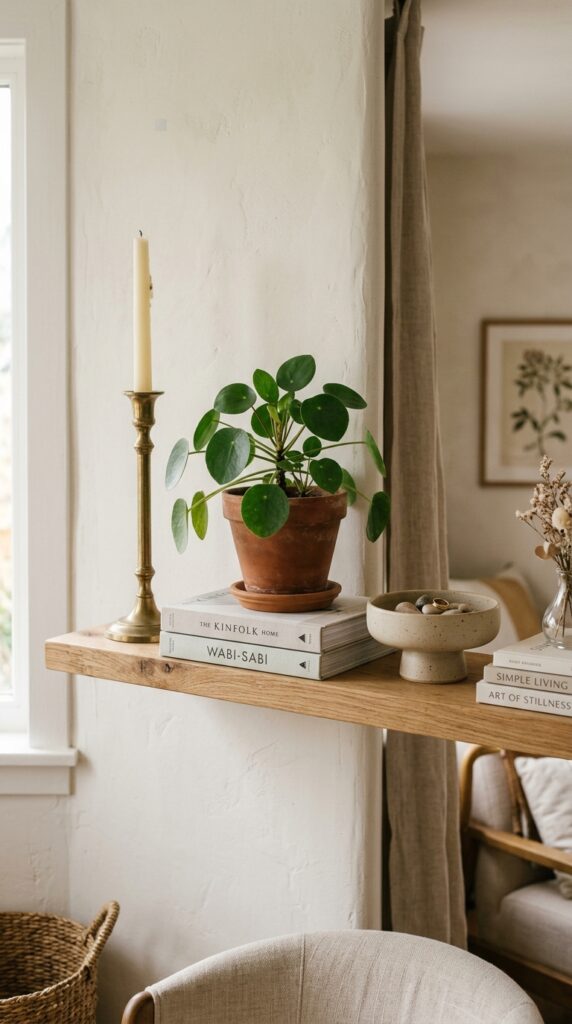
5. A Candle on Every Other Shelf
Not every shelf. Every other shelf.
A candle repeated at intervals through a bookshelf creates visual rhythm — the eye finds it once, expects it again, and the repetition gives the whole arrangement a sense of intention.
Vary the candle styles slightly. A pillar here. A votice in glass there. A small soy candle in a ceramic vessel on another level.
Same element. Slight variation. Consistent warmth throughout.
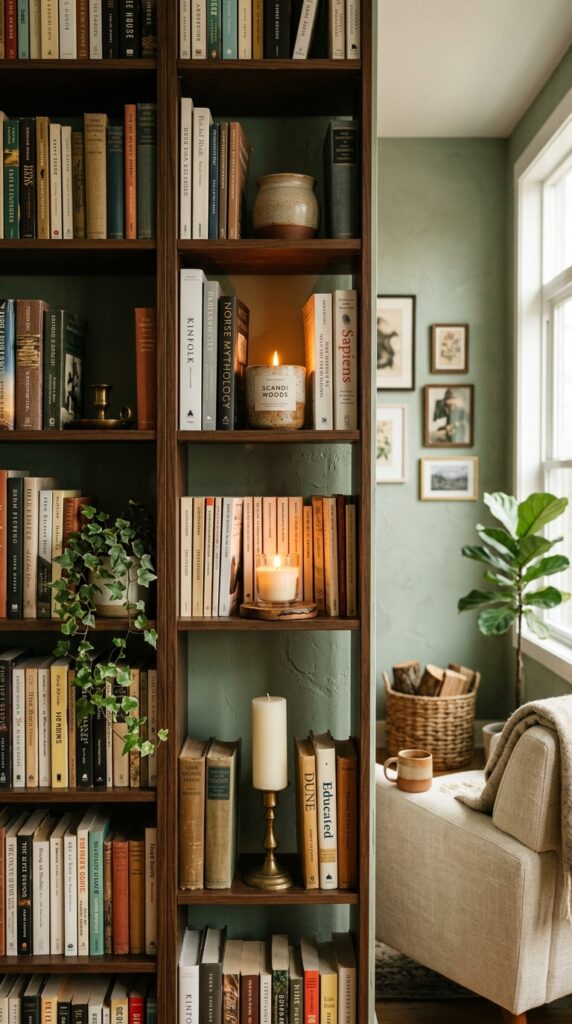
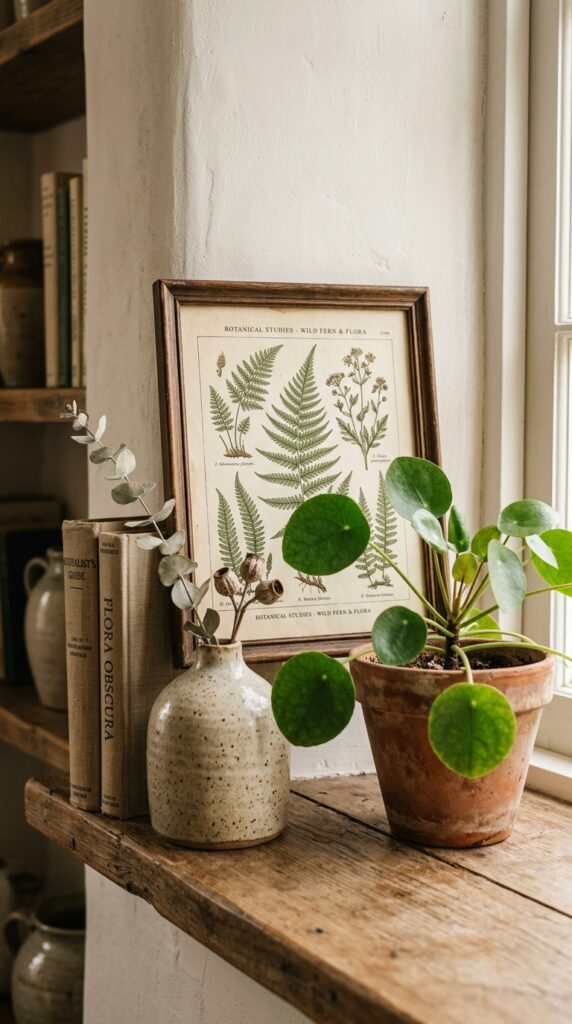
6. The Leaned Art Trick
Hang art on walls. Lean art on shelves.
A small framed print leaned casually against the back wall of a shelf — slightly overlapping the objects in front of it — adds depth, personality, and that effortlessly styled quality that makes a shelf look like it was arranged by someone with genuine aesthetic instinct.
No nails. No measuring. Just lean and layer.
One small print per shelf, maximum. More than that and it starts to compete.
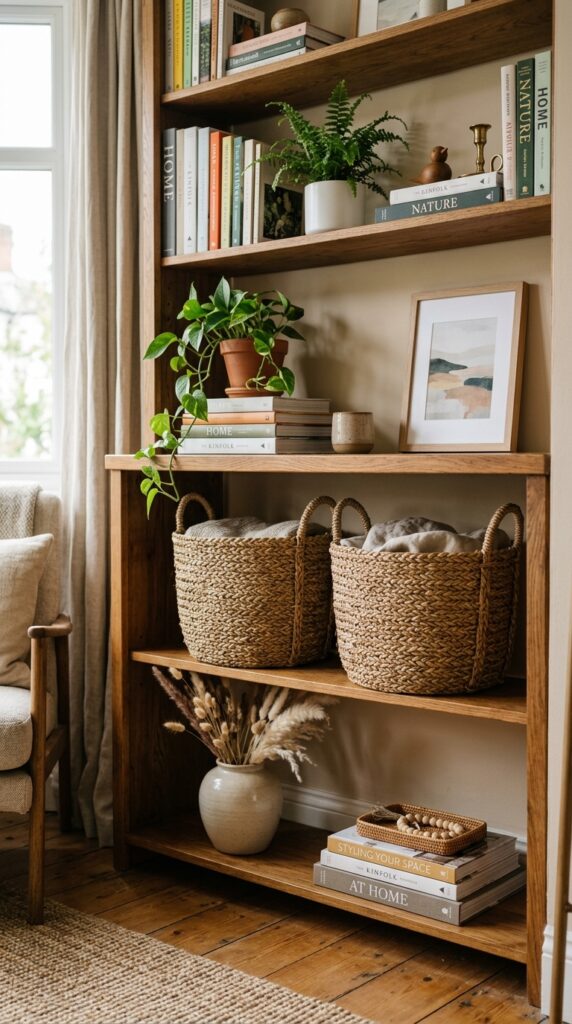
7. Woven Baskets for the Lower Shelves
The lower shelves of a bookcase are the hardest to style beautifully — and the easiest to make functional.
Woven baskets on the lowest one or two shelves hold everything that needs to be hidden: remotes, charging cables, extra candles, small throws.
They look intentional. They store everything.
And the natural texture of seagrass, jute, or rattan at the base of a shelf grounds the whole arrangement with organic warmth.
8. One Empty Shelf on Purpose
This is the shelf styling idea most people resist — and the one that makes the biggest difference.
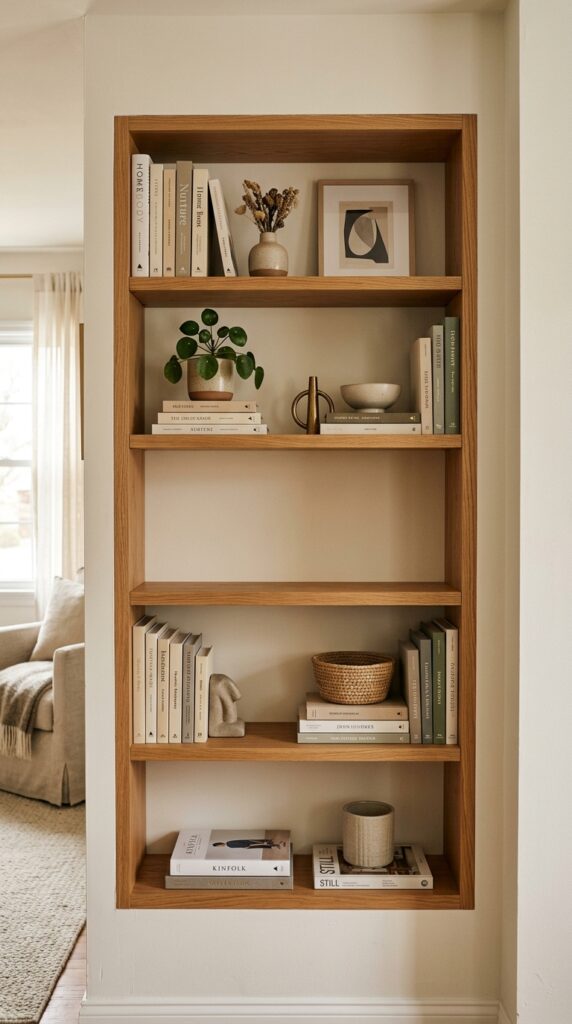
Leave one shelf intentionally empty.
Not forgotten. Not waiting to be filled. Chosen.
The empty shelf gives the eye a place to rest. It makes every other styled shelf look more deliberate by contrast. It creates breathing room in what could otherwise become a wall of visual noise.
Negative space is a design decision, not an oversight.
9. Warm Wood Shelf Styling
The shelf material sets the entire mood.
Warm honey oak. Light walnut. Unfinished pine with visible grain.
When the shelf itself is warm wood, every object placed on it looks richer — ceramics warmer, plants greener, books more inviting. The wood does half the styling work before a single object is placed.
If your current shelves are cold white or laminate, a warm wood peel-and-stick contact paper update changes the entire atmosphere.
10. The Monochrome Shelf Moment
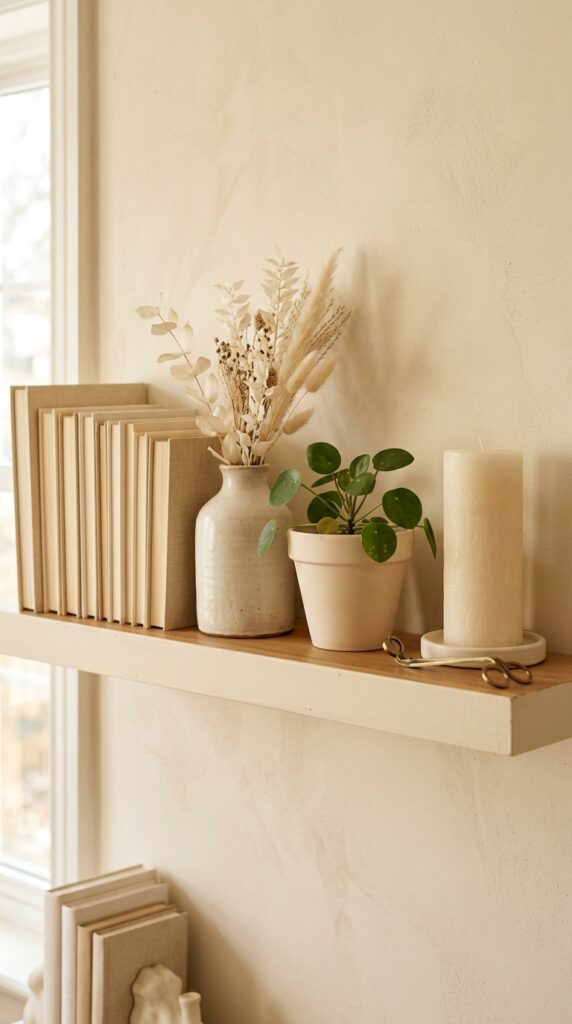
One shelf. One color family. Every object in the same tonal range.
All cream and ivory — white books, a cream ceramic, a pale plant pot, an ivory candle.
Or all warm terracotta — a rust vase, an amber glass candle, a small orange-toned book, a clay pot.
A monochrome shelf within a larger, more varied bookcase creates a moment of visual calm that makes the whole arrangement look more intentional.
One curated shelf among many changes the energy of the entire unit.
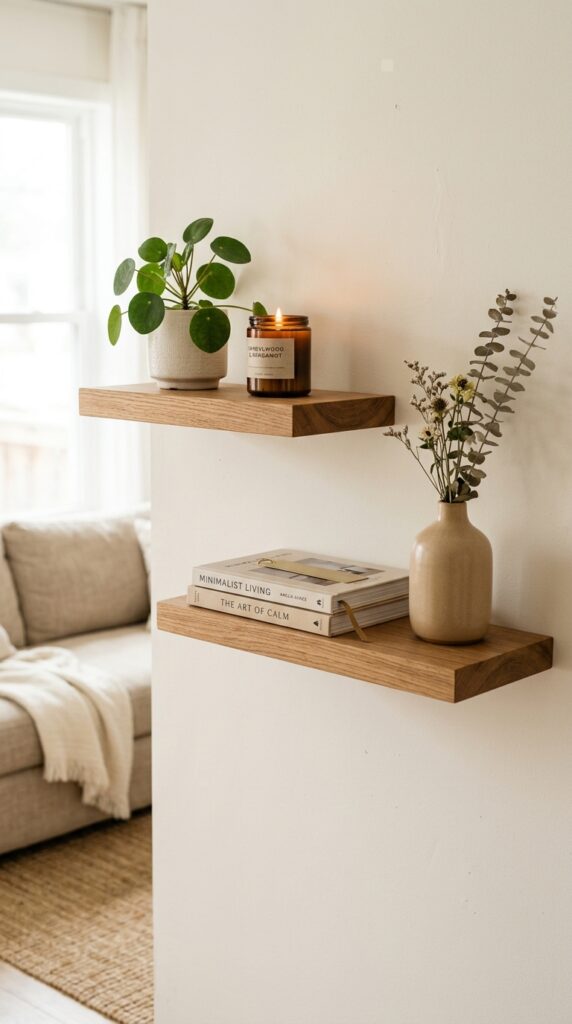
11. Styling Floating Shelves in the Living Room
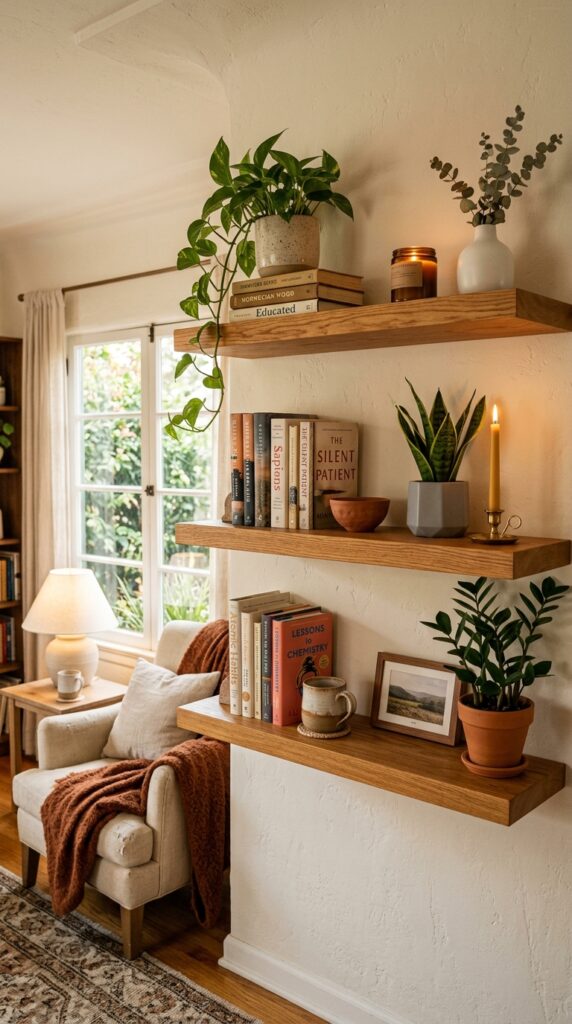
Floating shelves are a small space gift — they add display and storage without touching the floor plan.
But they require tighter editing than full bookcases. With only one shelf of depth, every object is fully exposed.
Keep it to three items maximum per shelf. Vary heights. One plant, one candle, one object — or two books and a small vase. Clean lines, breathing room, nothing crowded.
Less feels like more on a floating shelf. Every single time.
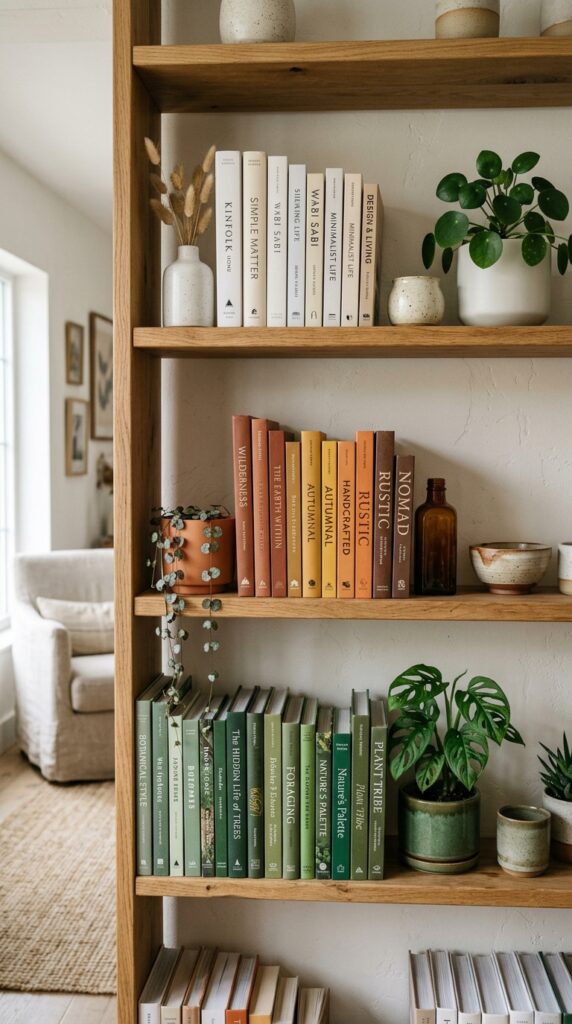
12. Books as Color Blocks
Instead of spine-in books — try the opposite.
Group books by spine color into intentional color blocks. All the cream and white books together. All the warm earth tones together. All the greens.
The shelf becomes an abstract color composition. Calm, cohesive, and visually interesting in a way that random spine arrangement never is.
Pair the color blocks with small objects in matching tones for a shelf that looks genuinely curated.
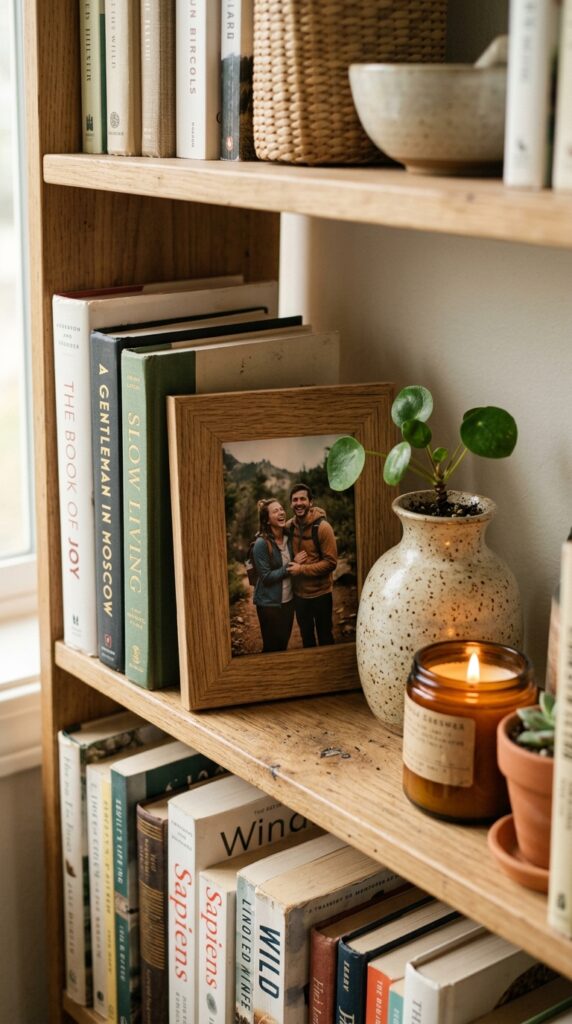
13. Small Framed Photos Mixed In
A shelf full of only decorative objects can feel impersonal.
One or two small framed photos tucked between ceramics and books make a shelf feel lived in. Like this is an actual home, not a showroom.
The photo doesn’t need to be large. A 4×6 in a simple thin frame. A small square print in a warm wood frame. Leaned casually against books or standing with a tiny easel.
Personal without being sentimental. Warm without being busy.
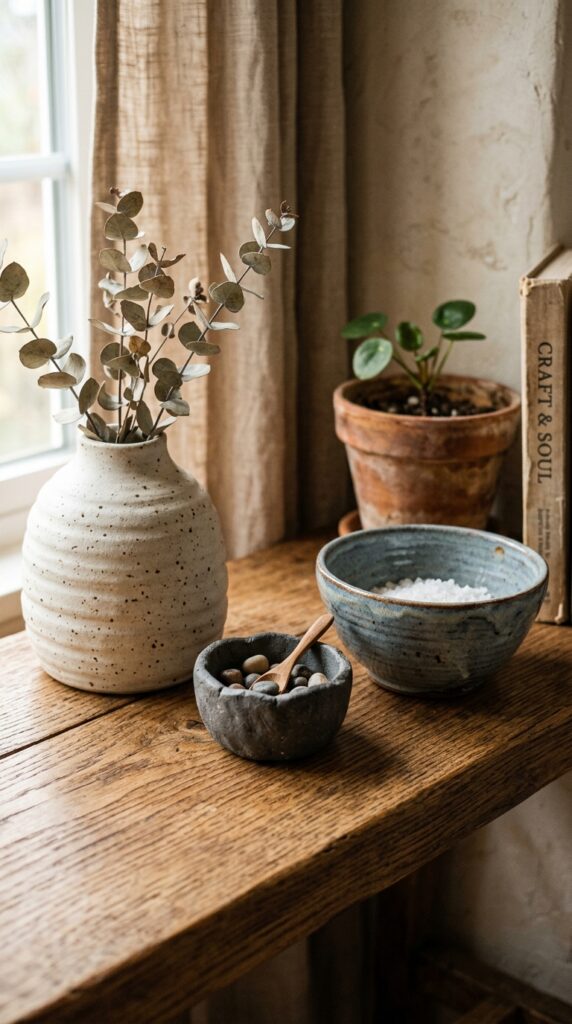
14. Ceramic Objects That Add Soul
Ceramics are the soul of a well-styled shelf.
Not mass-produced plastic. Not generic resin. Handmade or handmade-looking ceramics — slightly irregular, slightly imperfect, with visible texture and warmth.
A small pinch pot. A textured vase with a matte glaze. A hand-thrown bowl with an organic rim. A simple ceramic bud vase.
Each one looks like it came from somewhere. Like it was chosen. Like someone held it in their hands in a small shop and decided it belonged on their shelf.
That’s the quality that makes a room feel real.
15. The Trailing Plant Shelf
Place a trailing plant on the highest shelf and let it do what it naturally wants to do.
Spill downward. Drape over the shelf edge. Reach toward the light.
A trailing pothos. A string of pearls. A heartleaf philodendron.
Over time, the trailing stems create a living curtain down the side of the bookshelf — one of the most visually striking shelf styling moments possible, and one that requires almost no effort.
Nature does the styling. You just have to start it.
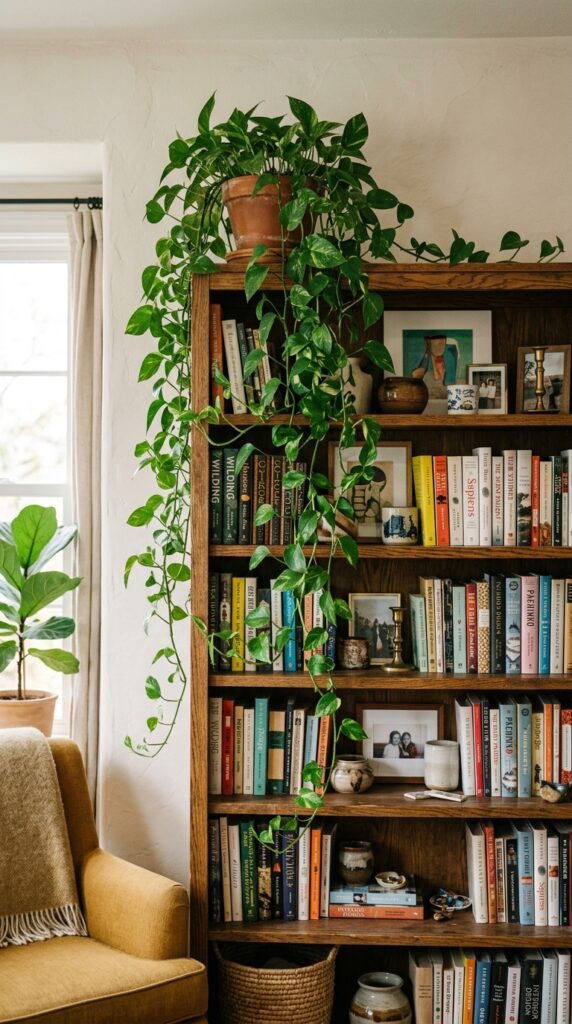
16. Seasonal Shelf Refreshes
The bones of the shelf stay. The details change.
Swap two or three objects with the season — a small pumpkin in autumn, a sprig of evergreen in winter, a bud vase with fresh flowers in spring, something light and airy in summer.
The shelf feels current. The room feels intentional. And the act of refreshing a shelf seasonally becomes one of those small rituals that makes a home feel genuinely cared for.
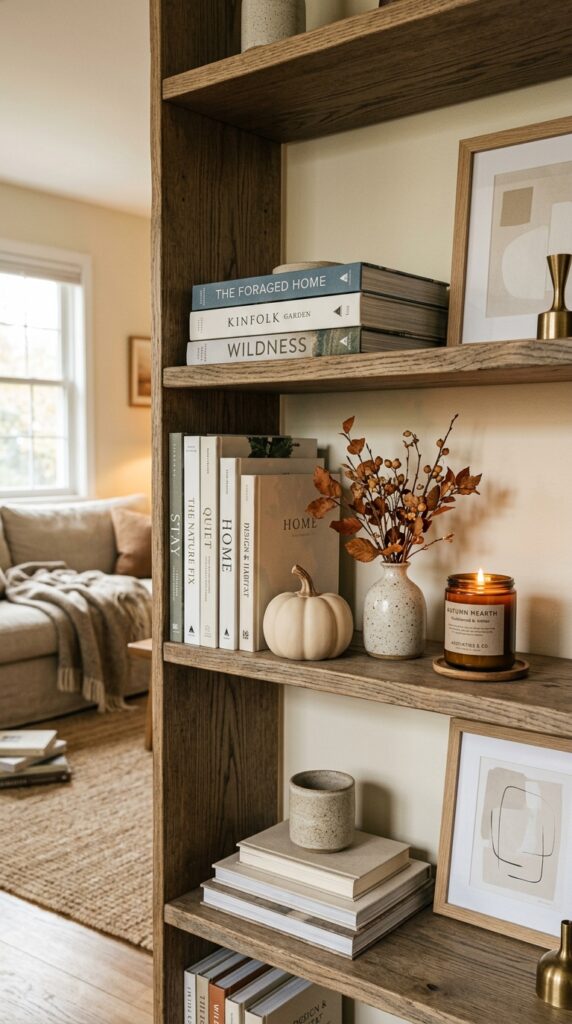
17. Bookshelf Styling for a Cozy Aesthetic
Cozy bookshelf styling has a specific feeling.
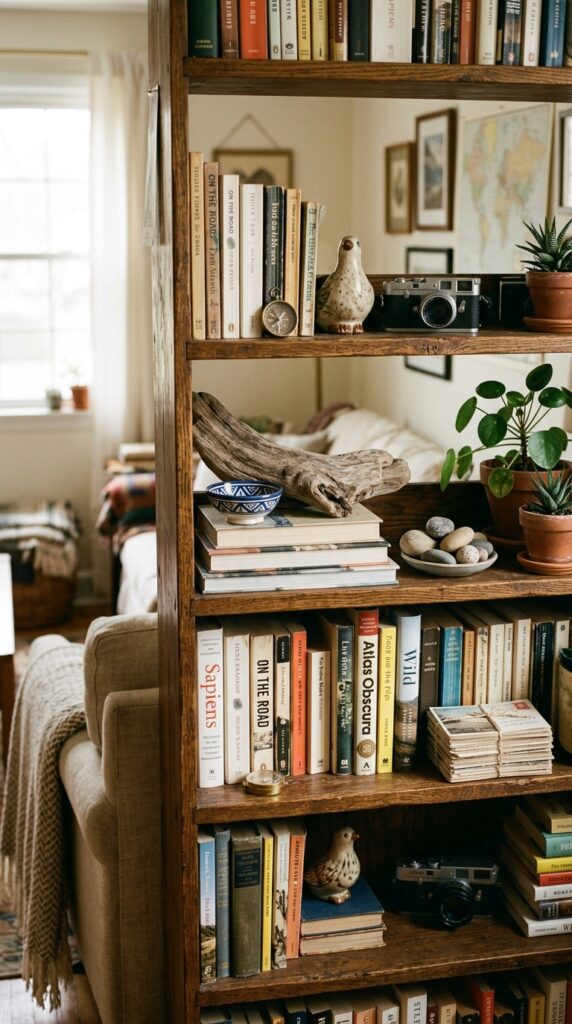
Warm wood. Books stacked and leaned, not perfectly lined. A chunky knit draped over one shelf edge. A small lamp tucked at eye level. A candle. A plant. A framed photo.
The shelf looks like someone actually uses it — reaches for books, sets things down, notices the plant needs water, lights the candle on quiet evenings.
Imperfect on purpose. Warm always.
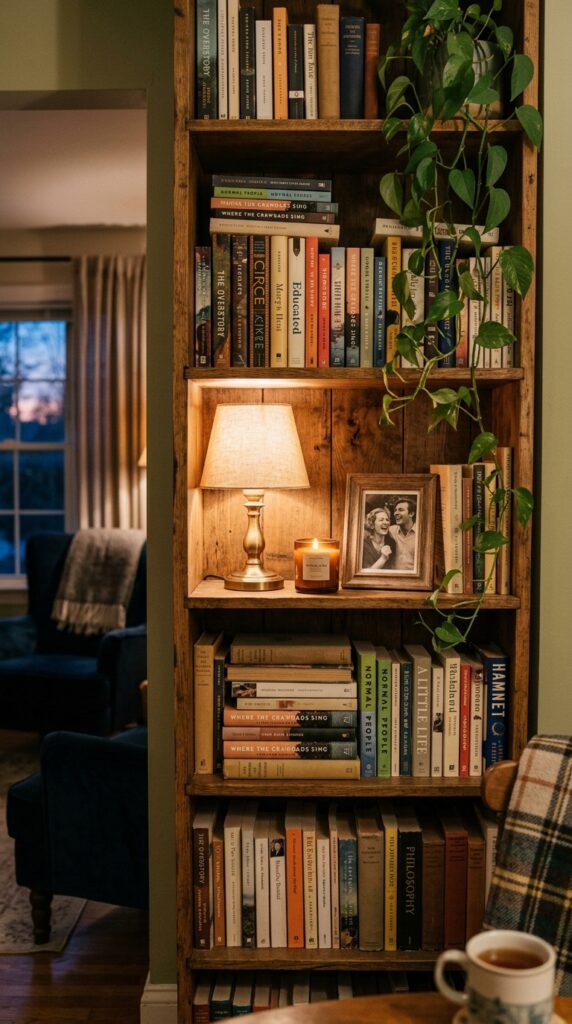
18. Styling Corner Shelves
Corner shelves present a unique challenge — they’re small, awkward, and easy to either over-fill or completely ignore.
The solution: treat each corner shelf as a single, complete vignette.
One plant. One candle. One small object. Three things only. The corner becomes intentional without competing with the rest of the room.
Floating corner shelves in warm wood installed at staggered heights create something genuinely architectural — and one of the most saved shelf styling setups on Pinterest.
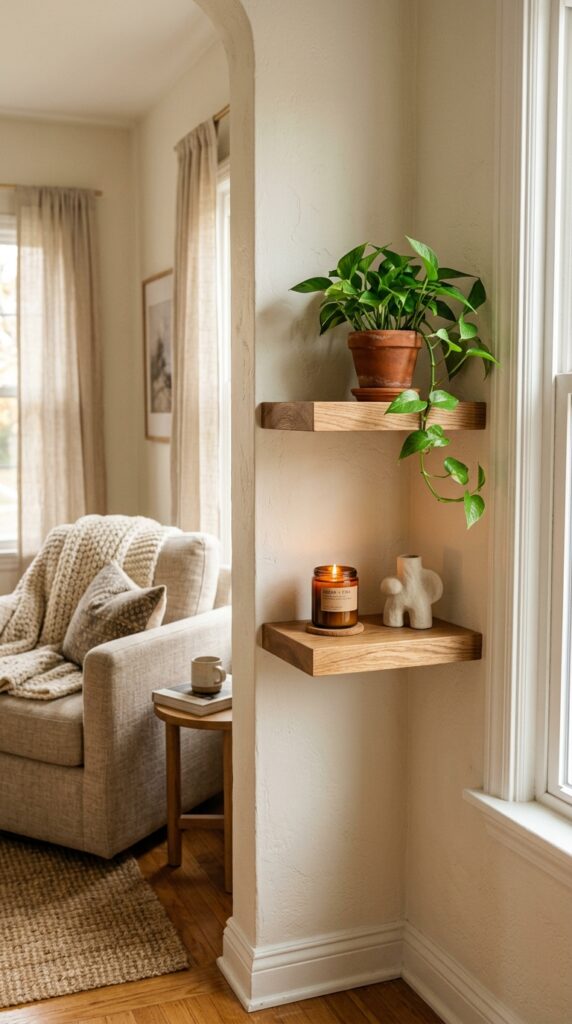
19. The Collected Traveler Shelf
Not everything on a shelf needs to be purchased for the shelf.
A small piece of driftwood from a beach trip. A stone from a hike. A tiny souvenir ceramic from a city you loved. A foreign-language book from a trip abroad.
Mixed with styled objects, these pieces give a shelf genuine soul. The kind that takes years to build and can’t be replicated by a single shopping haul.
If you have collected objects in drawers or boxes, this is their moment.
20. Shelf Lighting That Changes Everything
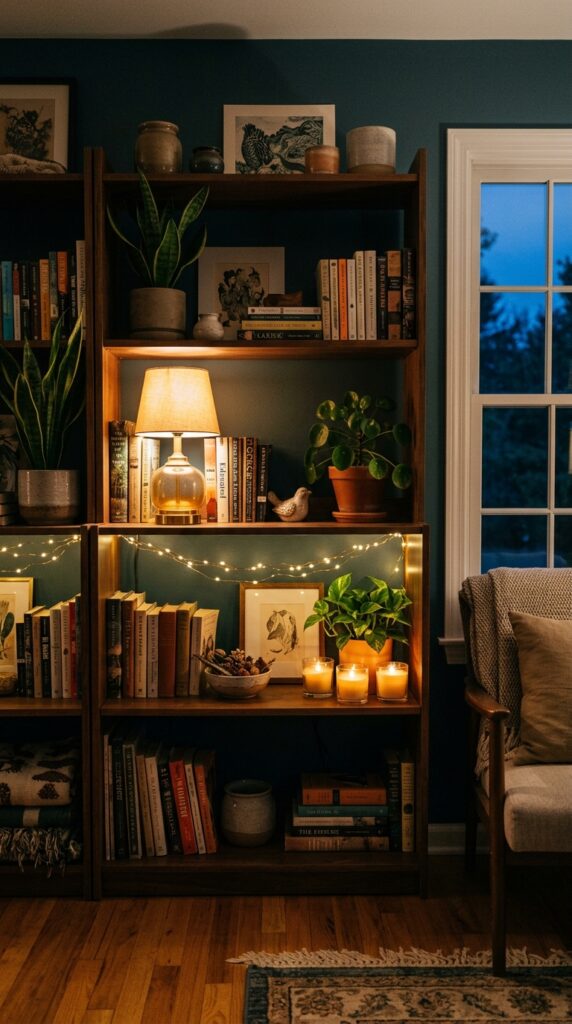
A small lamp on a shelf. A battery-operated LED puck light tucked behind objects. A strand of warm fairy lights draped across a shelf back.
Shelf lighting transforms the atmosphere of an entire bookcase after dark — and makes the objects on each shelf look intentionally lit rather than simply present.
The warm glow hitting a ceramic object. The shadows it creates behind a tall vase. The way a plant seems to glow from within.
This is the shelf styling detail most people overlook — and the one that makes the most dramatic difference.
21. The Final Edit
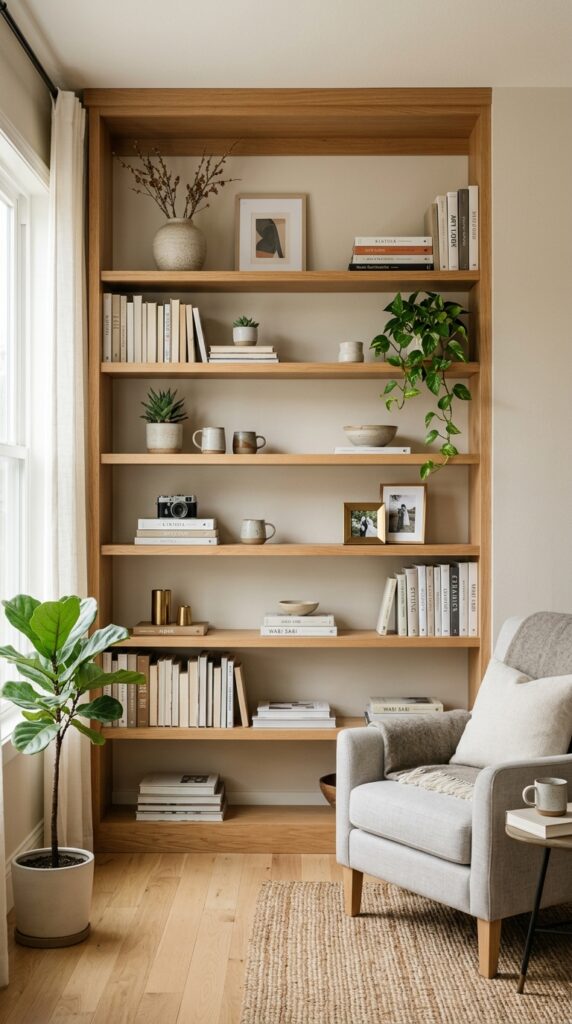
Before the shelf is done — edit it.
Step back. Look at the whole unit. Find the one object on each shelf that the arrangement doesn’t actually need and remove it.
Too many small objects fighting for attention? Remove two. A color that’s competing rather than contributing? Remove it. A shelf that feels heavy? Take one thing away.
The final edit is the most important styling step. And it’s the one most people skip because removing something feels like undoing work.
It isn’t. It’s finishing it.
The shelf after the edit is always more beautiful than the shelf before it.
A Shelf Styled With Soul Tells the Story of the Person Who Lives There
The most beautiful shelves on Pinterest aren’t the ones with the most expensive objects.
They’re the ones that feel specific. Like this shelf belongs to this person in this home and couldn’t exist anywhere else.
The books they actually read. The ceramic they couldn’t leave behind. The plant they’ve named. The photo that means something real.
That’s what all 21 of these ideas are building toward — not a perfect shelf, but a personal one.
Style it. Edit it. Light the candle on it.
Then step back and notice how differently the whole room feels.